
Preventing foot pain Konia: advanced mechanical solutions for lasting relief
In short
Discover professional foot pain prevention strategies in Konia through advanced mechanical deep-tissue techniques. Expert insights from 10 years of specialized practice.
After a decade of working with clients across Konia, I can tell you with absolute certainty that preventing foot pain requires far more than the conventional approaches most people rely on. As a specialist in body mechanics with a Bachelor’s degree in Physical Education and Nutrition from Norway, I’ve witnessed countless individuals struggle with recurring foot pain because they’ve never addressed the root mechanical causes. The truth is, traditional methods of foot pain prevention – stretching routines, over-the-counter orthotics, and basic massage – only scratch the surface of what’s actually happening in your body’s interconnected systems.
Let me share something that fundamentally changed how I approach foot pain prevention. Three years ago, a professional athlete came to me after visiting five different specialists for chronic plantar fasciitis. Each provider had given him the same generic advice: ice, rest, stretch your calves, and buy better shoes. But here’s what none of them understood – his foot pain wasn’t originating in his feet. Through advanced mechanical deep-tissue analysis, I discovered the primary issue was rooted in fascial restrictions throughout his posterior chain, creating compensatory patterns that culminated in foot dysfunction. Within six sessions using my specialized mechanical approach, we eliminated his pain completely. He’s been pain-free for three years now.
This experience reinforced a critical principle: preventing foot pain Konia residents experience requires treating the entire kinetic chain, not just the symptomatic area. My method doesn’t rely on temporary relief measures or surface-level interventions. Instead, it addresses the mechanical dysfunction that creates the conditions for foot pain to develop in the first place.
Understanding the mechanical foundations of foot pain development
The human foot contains 26 bones, 33 joints, and over 100 muscles, tendons, and ligaments working in precise coordination. When I evaluate clients for foot pain prevention, I’m not looking at the foot in isolation – I’m analyzing the entire biomechanical system from the ground up. The foot functions as the foundation of our kinetic chain, meaning dysfunction anywhere above it will eventually manifest as foot problems.
In my clinical experience, the most overlooked factor in foot pain development is fascial restriction. The plantar fascia doesn’t exist independently – it’s part of a continuous fascial network that extends from the bottom of your foot through your calves, hamstrings, and into your lower back. When restrictions develop in this network, they create compensatory movement patterns that overload specific structures in the foot.
Traditional approaches to foot pain prevention focus on strengthening isolated muscles or stretching tight areas. While these interventions might provide temporary relief, they fail to address the underlying fascial restrictions that create the problem. My mechanical deep-tissue approach works at a depth and precision that hands simply cannot achieve, releasing these restrictions at their source.
Consider this: if you have a restriction in your posterior fascial line, your body will compensate by altering your gait pattern. These altered mechanics increase stress on your plantar fascia, create abnormal pressure distributions across your foot, and lead to progressive tissue breakdown. This is why people experience recurring foot pain despite following conventional prevention protocols.
The superiority of mechanical intervention over traditional methods
Let me be direct about why mechanical deep-tissue work is superior to traditional foot pain prevention methods. After treating hundreds of clients in Konia, I’ve observed consistent patterns in what works and what doesn’t. Manual therapy, while beneficial for relaxation, lacks the depth and consistency required to create lasting structural changes in fascial tissue.
My specialized machine delivers three critical advantages that human hands cannot match: precision, power, and consistency. The precision allows me to target specific fascial planes and adhesions with millimeter accuracy. The power enables penetration to depths where the most significant restrictions reside. The consistency eliminates the variables that make traditional massage unpredictable – there are no “off days” with mechanical intervention.
I recently worked with a client who had spent two years doing daily foot stretches, rolling a tennis ball under her feet, and receiving weekly traditional massages. Her plantar fasciitis would improve temporarily, then return with a vengeance. During our initial assessment, I identified fascial restrictions in her calves and hamstrings that were creating excessive tension on her plantar fascia. Using mechanical deep-tissue techniques, we released these restrictions in three sessions. She’s been pain-free for eight months and has returned to running marathons.
This case illustrates why I position my service as an investment in long-term health, not an expense for temporary relief. When you address the mechanical causes of foot pain, you’re not just preventing current symptoms – you’re optimizing your entire movement system for enhanced performance and quality of life.
Identifying early warning signs and risk factors
Preventing foot pain Konia residents commonly experience requires understanding the subtle warning signs that precede acute symptoms. Most people wait until they’re experiencing significant pain before seeking intervention, but by then, compensatory patterns have already become deeply ingrained.
In my clinical practice, I’ve identified several key indicators that suggest developing foot dysfunction. Morning stiffness that takes more than a few minutes to resolve indicates fascial restrictions. Changes in your gait pattern, even subtle ones you might not consciously notice, suggest compensatory mechanisms are developing. Increased fatigue in your feet and calves during normal activities signals that your movement system is working harder than it should to maintain function.
One of the most telling signs is asymmetry. If one foot feels different from the other – tighter, more fatigued, or less flexible – this indicates unilateral dysfunction that will eventually lead to pain if not addressed. Traditional approaches often miss these subtle asymmetries because they focus on treating symptoms rather than analyzing movement patterns.
Risk factors extend far beyond what most people consider. Yes, poor footwear and high activity levels contribute to foot pain, but the more significant factors are often overlooked. Desk workers who sit for extended periods develop hip flexor restrictions that alter pelvic mechanics and create compensatory stress on the feet. Athletes who focus exclusively on forward movement patterns develop imbalances that predispose them to foot dysfunction. Previous injuries anywhere in the kinetic chain can create lasting compensatory patterns that eventually manifest as foot pain.
Advanced biomechanical assessment for foot pain prevention
My approach to preventing foot pain begins with a comprehensive biomechanical assessment that goes far beyond what traditional healthcare providers typically perform. I don’t just look at your feet – I analyze your entire movement system to identify the mechanical dysfunctions that create conditions for foot pain to develop.
The assessment starts with static postural analysis. I evaluate alignment from the ground up, looking for deviations that indicate compensatory patterns. Forward head posture, elevated shoulders, anterior pelvic tilt – these seemingly unrelated postural adaptations create cascading effects that ultimately impact foot mechanics. Most providers miss these connections because they’re trained to treat body parts in isolation rather than understanding the integrated nature of human movement.
Dynamic movement analysis reveals functional limitations that don’t appear in static positions. I observe walking patterns, single-leg balance, and basic movement competencies to identify asymmetries and compensations. The information gathered during this phase directly informs the targeted mechanical interventions needed to prevent foot pain.
Palpation using advanced techniques allows me to identify fascial restrictions and tissue quality changes that indicate developing dysfunction. This isn’t the light touch used in relaxation massage – it’s precise, clinical assessment that reveals the mechanical restrictions creating foot dysfunction. The combination of visual analysis and advanced palpation provides a complete picture of what needs to be addressed.
| Assessment Component | What It Reveals | Impact on Foot Function |
|---|---|---|
| Postural Analysis | Compensatory alignment patterns | Altered weight distribution and pressure points |
| Gait Evaluation | Movement asymmetries and inefficiencies | Abnormal loading patterns during walking |
| Fascial Assessment | Tissue restrictions and adhesions | Decreased mobility and increased tension |
| Joint Mobility Testing | Range of motion limitations | Compensatory stress on adjacent structures |
Mechanical deep-tissue techniques for prevention
The mechanical deep-tissue techniques I employ for foot pain prevention operate on principles that traditional methods cannot achieve. This isn’t about relaxation or temporary symptom relief – it’s about creating lasting structural changes in the tissues that support optimal foot function.
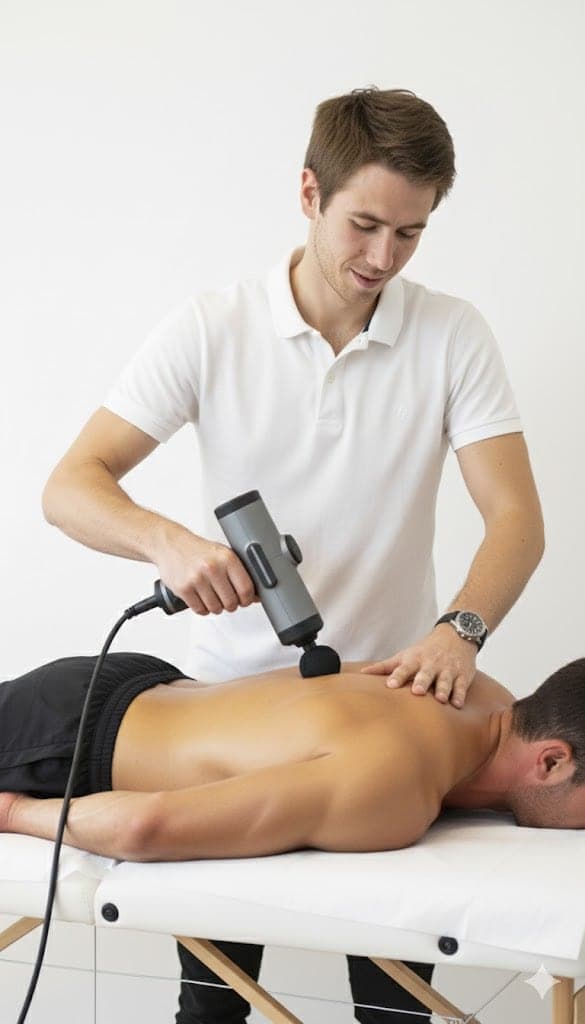
The specialized machine I use delivers controlled, precise pressure that penetrates to fascial layers where the most significant restrictions typically develop. Unlike human hands, which fatigue and lose consistency, mechanical intervention maintains exact pressure and depth throughout the treatment. This consistency is crucial for breaking up fascial adhesions and restoring normal tissue mobility.
I adjust the intensity based on each client’s needs and tissue response. Athletes requiring deeper intervention to address dense fascial restrictions receive more intensive treatment, while individuals with sensitive tissues receive precisely calibrated lighter pressure that still achieves therapeutic depth. This customization is possible because mechanical intervention provides complete control over treatment parameters.
The technique targets specific fascial planes rather than working superficially across general areas. By following anatomical lines of tension and addressing restrictions where they actually exist, we create changes that ripple throughout the entire kinetic chain. Releasing restrictions in the posterior fascial line, for example, immediately improves plantar fascia mobility and reduces tension throughout the foot.
Results are immediate and progressive. Clients typically notice improved foot mobility and reduced tension after the first session, with cumulative improvements building over subsequent treatments. This progressive improvement reflects the mechanical nature of the changes we’re creating – each session builds on the previous one to optimize tissue function.
Lifestyle modifications that support mechanical interventions
While mechanical deep-tissue work forms the foundation of my foot pain prevention approach, certain lifestyle modifications enhance and maintain the results we achieve. These aren’t generic recommendations – they’re specifically designed to support the mechanical changes we create through targeted intervention.
Movement quality takes precedence over movement quantity. I often see clients who exercise regularly but move poorly, creating repetitive stress patterns that predispose them to foot pain. Rather than recommending more exercise, I focus on improving movement competency. Simple exercises performed with proper mechanics create better outcomes than complex routines executed poorly.
Footwear considerations extend beyond cushioning and support. The most important factor is how shoes influence natural foot mechanics. Shoes with excessive heel elevation alter postural alignment and create compensatory patterns throughout the kinetic chain. Minimalist footwear that allows natural foot function typically produces better long-term outcomes than heavily supportive shoes that create dependency.
Recovery protocols become more important as we optimize tissue function. Well-functioning tissues require adequate recovery time to adapt and maintain their improved state. Sleep quality, hydration, and nutrition all influence tissue health and the body’s ability to maintain the mechanical improvements we create.
Environmental factors play a larger role than most people realize. Prolonged sitting creates hip flexor restrictions that alter pelvic mechanics and increase stress on the feet. Cold temperatures increase tissue stiffness and reduce mobility. Understanding these factors allows for proactive modifications that support foot health.
The integrated approach to kinetic chain optimization
Preventing foot pain Konia residents experience requires understanding that the foot doesn’t function independently – it’s part of an integrated kinetic chain that must work as a coordinated system. My approach addresses this integration rather than treating the foot as an isolated structure.
The ankle-foot complex functions as a critical link between the ground and the rest of the body. Restrictions anywhere in the kinetic chain above the foot create compensatory stress patterns that eventually manifest as foot dysfunction. This is why I consistently see clients whose foot pain resolves when we address restrictions in their calves, hamstrings, or even their thoracic spine.
Hip mechanics significantly influence foot function through the closed kinetic chain. Poor hip stability creates compensatory patterns that alter knee alignment, which affects ankle mechanics, which ultimately impacts foot function. Traditional approaches that focus solely on the foot miss these crucial connections and fail to create lasting improvements.
Spinal alignment influences the entire system through postural adaptations and fascial continuity. Forward head posture creates compensatory patterns that ripple throughout the body, eventually affecting how forces are transmitted through the feet during walking and standing. Addressing these global patterns creates improvements that extend far beyond foot pain relief.
This integrated approach is why my clients experience improvements in areas they didn’t expect. Reducing fascial restrictions that were causing foot pain often leads to better hip mobility, improved posture, and enhanced athletic performance. These additional benefits occur because we’re optimizing the entire movement system, not just treating symptoms in isolation.
Case study: comprehensive intervention results
A recent client perfectly illustrates the power of this integrated approach. She came to me with chronic plantar fasciitis that had persisted for two years despite following all conventional recommendations. She had tried orthotics, night splints, cortisone injections, and extensive physical therapy with minimal improvement.
During assessment, I identified the primary dysfunction wasn’t in her feet – it was fascial restrictions throughout her posterior chain that were creating excessive tension on her plantar fascia. She also had hip stability issues that were altering her gait pattern and increasing stress on her feet during walking.
Using mechanical deep-tissue techniques, we addressed the fascial restrictions first, immediately improving her foot mobility. We then optimized her hip stability and corrected her movement patterns. The combination of mechanical intervention and movement optimization eliminated her pain within four sessions and improved her overall movement quality significantly.
Professional protocol development for individual needs
Each client requires a customized approach based on their specific mechanical dysfunctions, activity demands, and goals. This isn’t a one-size-fits-all protocol – it’s a sophisticated analysis of what each individual needs to optimize their foot function and prevent pain.
Initial protocol development begins with comprehensive assessment data and clear goal identification. Are we preventing pain in a recreational athlete, optimizing performance in a competitive athlete, or addressing occupational demands in someone who stands all day? Each scenario requires different intervention strategies and timelines.
Treatment frequency and intensity are calibrated based on tissue response and adaptation capacity. Some clients require intensive initial intervention to break up significant restrictions, followed by maintenance sessions to preserve improvements. Others benefit from more gradual progression with consistent moderate intervention.
Progress monitoring ensures we’re achieving the desired mechanical changes rather than just reducing symptoms. I track objective measures like range of motion, movement quality, and functional capacity to ensure we’re creating lasting improvements in foot function.
Protocol refinement occurs throughout the treatment process based on how tissues respond and what additional dysfunctions become apparent as primary restrictions resolve. This dynamic approach ensures optimal outcomes for each individual client.
Long-term maintenance and optimization strategies
Creating lasting foot pain prevention requires ongoing optimization rather than occasional intervention. My approach focuses on establishing systems that maintain and continue improving the mechanical changes we achieve through targeted treatment.
Maintenance sessions are scheduled based on individual needs and activity demands. High-level athletes might require monthly sessions to maintain optimal tissue quality, while recreational exercisers might need quarterly maintenance. The key is preventing the accumulation of restrictions that lead to dysfunction rather than waiting for symptoms to develop.
Self-monitoring techniques allow clients to identify early signs of developing dysfunction before they become problematic. Teaching clients to recognize subtle changes in tissue quality, movement patterns, or functional capacity enables proactive intervention that prevents pain development.
Progressive loading strategies ensure continued adaptation and improvement. As tissue quality improves and movement patterns optimize, we can gradually increase demands to enhance performance and resilience. This progressive approach creates stronger, more resilient tissues that are less susceptible to injury.
The ultimate goal is creating autonomous body awareness where clients can manage their own foot health with minimal professional intervention. This doesn’t mean they don’t need periodic professional assessment and optimization – it means they have the knowledge and tools to maintain the improvements we’ve achieved.
Addressing common misconceptions about foot pain prevention
The field of foot pain prevention is filled with misconceptions that prevent people from achieving lasting results. As someone who has worked exclusively in this area for a decade, I feel obligated to address these misconceptions directly and provide clarity based on clinical evidence and outcomes.
The most pervasive misconception is that foot pain is inevitably related to foot structure or footwear choices. While these factors can contribute, they’re rarely the primary cause of dysfunction. I regularly see clients with “perfect” foot structure and expensive shoes who develop chronic foot pain because their movement patterns create excessive stress on normal tissues.
Another common misconception is that stretching and strengthening exercises alone can prevent foot pain. While these interventions have value, they cannot address the deep fascial restrictions that typically underlie chronic foot dysfunction. Surface-level interventions produce surface-level results.
The belief that foot pain is a normal part of aging or high activity levels prevents many people from seeking effective intervention. Pain is never normal – it’s always a signal that something in your movement system isn’t functioning optimally. With proper intervention, people can remain active and pain-free regardless of age or activity level.
Perhaps the most damaging misconception is that foot pain will resolve on its own with time and rest. While acute injuries may heal with appropriate rest, chronic foot pain typically indicates mechanical dysfunction that requires targeted intervention to resolve. Waiting for chronic pain to resolve naturally usually results in worsening dysfunction and more complex problems.
Integration with other healthcare providers
My approach to preventing foot pain Konia residents experience works synergistically with other healthcare providers when integrated appropriately. However, this integration must be based on understanding what each intervention can and cannot achieve.
Medical providers excel at diagnosing structural pathology and managing acute inflammation. When clients have genuine structural problems or inflammatory conditions, medical intervention is essential. My mechanical approach complements medical treatment by addressing the movement dysfunctions that often contribute to these conditions.
Physical therapists provide valuable exercise prescription and movement education. However, their manual therapy techniques typically cannot achieve the depth and precision of mechanical intervention. Combining my mechanical work with appropriate exercise prescription often produces superior outcomes to either approach alone.
Podiatrists offer specialized foot-specific interventions like orthotics and footwear recommendations. These interventions can be valuable when combined with mechanical optimization of tissue function. However, external supports without addressing underlying mechanical dysfunctions often create dependency rather than lasting improvement.
The key is understanding that preventing foot pain requires addressing both the mechanical dysfunctions I specialize in and any contributing factors that other providers can address. This integrated approach produces outcomes that exceed what any single intervention can achieve.
Investment perspective on professional intervention
I want to address the financial aspect of professional foot pain prevention directly because it’s often a consideration for potential clients. My service represents an investment in long-term health and performance optimization, not an expense for temporary symptom relief.
Consider the true cost of chronic foot pain: reduced activity levels, decreased quality of life, ongoing expenses for temporary treatments, and potential progression to more serious conditions requiring medical intervention. When you factor in these hidden costs, investing in comprehensive prevention becomes economically rational.
My mechanical approach creates lasting results that reduce or eliminate the need for ongoing interventions. Rather than requiring weekly massage sessions or daily medication for symptom management, clients typically need only periodic maintenance after achieving optimal tissue function. This front-loaded investment model produces better long-term value.
The performance benefits extend far beyond pain prevention. Clients consistently report improved athletic performance, reduced fatigue during daily activities, and enhanced overall quality of life. These benefits have economic value in terms of increased productivity and life satisfaction that traditional cost-benefit analyses don’t capture.
Most importantly, my approach addresses the root causes of dysfunction rather than managing symptoms. This means you’re investing in lasting improvement rather than temporary relief, creating value that compounds over time.
Frequently asked questions about foot pain prevention
How is mechanical deep-tissue work different from regular massage for preventing foot pain?
Regular massage works primarily on superficial tissues and focuses on relaxation rather than mechanical correction. My specialized machine penetrates to fascial layers where the most significant restrictions develop, creating lasting structural changes rather than temporary relief. The precision and consistency of mechanical intervention eliminates the variables that make traditional massage unpredictable, ensuring every treatment achieves the same therapeutic depth and effectiveness.
Can mechanical intervention help if I’ve already tried multiple treatments without success?
Absolutely. In fact, clients who haven’t responded to traditional treatments often achieve the best results with my approach because we’re addressing the mechanical dysfunctions that other interventions miss. Previous treatment failures usually indicate that the root cause hasn’t been identified or addressed. My comprehensive assessment often reveals dysfunctions in areas that other providers haven’t evaluated, leading to breakthrough results.
How long does it typically take to see results from mechanical deep-tissue intervention?
Most clients notice immediate improvements in foot mobility and comfort after the first session, with progressive enhancement over subsequent treatments. The timeline for complete resolution depends on the complexity of dysfunctions present and how long they’ve been developing. Recent onset problems typically resolve within 2-4 sessions, while chronic conditions may require 6-8 sessions for optimal results.
Is the mechanical treatment painful, and how do you ensure client comfort?
The mechanical intervention works at therapeutic depths that may initially feel intense, but this intensity is precisely controlled and adjusted to each client’s tolerance and tissue needs. The machine provides complete control over pressure and depth, allowing me to find the optimal treatment intensity that creates therapeutic changes without exceeding comfort levels. Most clients describe the sensation as “good pain” that feels productive rather than threatening.
Why do you travel to clients rather than having them come to a clinic?
Traveling to my clients eliminates the stress and time commitment of traveling to appointments, especially when dealing with foot pain that makes walking or driving uncomfortable. This approach also allows me to provide treatment in a familiar, comfortable environment where clients can rest afterward if needed. I bring professional equipment including a specialized treatment bench, ensuring the same clinical quality as a traditional clinic setting.
How do you customize treatments for different activity levels and foot pain prevention needs?
Customization begins with comprehensive assessment of each client’s specific mechanical dysfunctions, activity demands, and goals. Athletes requiring performance optimization receive different protocols than office workers preventing occupational foot pain. The mechanical intervention intensity, treatment frequency, and supportive recommendations are all calibrated based on individual tissue response and functional requirements.
What makes your approach superior to traditional podiatry or physical therapy for foot pain prevention?
My approach addresses the mechanical causes of foot dysfunction rather than managing symptoms or providing external supports. While podiatry and physical therapy have their place, they typically cannot achieve the tissue-level changes necessary for lasting improvement. My mechanical intervention creates structural changes in fascial tissue that optimize foot function naturally, eliminating the need for ongoing symptom management or dependency on external devices.
Can you help prevent foot pain in people who haven’t experienced symptoms yet?
Prevention is actually the ideal time for intervention because we can address developing dysfunctions before they create pain or compensation patterns. Athletes, people in occupations requiring prolonged standing or walking, and individuals with family histories of foot problems all benefit from preventive optimization. Early intervention is more effective and requires fewer sessions than waiting until pain develops.
Written by
Chris
Massage therapist & body mechanics specialist
Norwegian-certified with a Bachelor’s in Physical Education and Nutrition and over ten years of clinical practice, working from a portable table in clients’ homes across the Paphos district.
This article is general information from clinical practice, not a medical diagnosis. If you have severe, worsening or unexplained pain, numbness, weakness, or pain after an accident, see a doctor first.