
Home Remedies for Neck Pain Konia: Expert Solutions That Actually Work
In short
Discover evidence-based home remedies for neck pain in Konia, from a specialist with 10 years experience in body mechanics. Learn which methods deliver real results and when DIY approaches fall short.
I’ve spent the last decade treating neck pain across hundreds of clients in Konia, and I can tell you this with absolute certainty: most people approach home remedies completely wrong. They’re treating symptoms while the underlying mechanical dysfunction remains untouched, creating a frustrating cycle of temporary relief followed by recurring pain.
Let me be direct. After completing my Bachelor’s degree in Physical Education and Nutrition and working extensively with body mechanics for ten years, I’ve learned that neck pain isn’t just about discomfort—it’s a structural problem that requires a structural solution. The home remedies I’m about to share aren’t generic internet advice. They’re strategic interventions I’ve refined through clinical experience, and I’ll tell you exactly why they work and when they’re not enough.
Understanding the Root Cause: Why Your Neck Pain Persists
Before we discuss home remedies for neck pain Konia residents can implement, we need to establish something fundamental. Your neck pain has a mechanical origin. Whether it developed from poor posture during desk work, sleeping positions, repetitive strain, or previous injury, the pain you feel is your body’s alarm system signaling mechanical dysfunction.
I see this pattern constantly: someone experiences neck stiffness, tries a hot compress or stretches for a few days, feels marginal improvement, then returns to their normal activities. Within days or weeks, the pain resurfaces—often worse than before. This isn’t because the remedies failed completely; it’s because superficial interventions cannot address deep fascial restrictions and muscle tension that has accumulated over months or years.
The cervical spine contains seven vertebrae supported by an intricate network of muscles, ligaments, and fascia. When mechanical stress disrupts this system, compensation patterns emerge. Your trapezius tightens, your levator scapulae becomes overactive, and trigger points develop in the suboccipital muscles. This creates a self-perpetuating cycle that surface-level home remedies simply cannot break.
Evidence-Based Home Remedies for Neck Pain: What Actually Works
Strategic Heat and Cold Application
Let me clarify something many practitioners get wrong. Heat and cold aren’t interchangeable—they serve distinct physiological purposes, and timing matters significantly.
Cold therapy (cryotherapy) should be your immediate response to acute neck pain or inflammation. Apply ice wrapped in a thin cloth for 15-20 minutes every 2-3 hours during the first 48 hours after pain onset. This constricts blood vessels, reduces inflammatory mediators, and decreases nerve conduction velocity—effectively numbing acute pain signals.
Heat therapy (thermotherapy) becomes appropriate once acute inflammation subsides, typically after 48-72 hours. Heat increases blood flow, promotes muscle relaxation, and enhances tissue extensibility. I recommend moist heat over dry heat—use a damp towel heated in the microwave or a proper moist heating pad for 15-20 minutes. The moisture allows deeper heat penetration into fascial layers.
Here’s the critical distinction most people miss: heat before activity, cold after. If you’re experiencing chronic neck tension, apply heat before stretching or movement to increase tissue pliability. Apply cold afterward to manage any inflammatory response from mechanical stress.
Targeted Self-Massage and Trigger Point Release
Self-massage can provide temporary relief, but understand its limitations. Your hands cannot generate sufficient pressure to release deep fascial adhesions or chronic trigger points—this is simple biomechanics. However, strategic self-massage can reduce superficial muscle tension and improve circulation.
| Technique | Target Area | Duration | Effectiveness |
|---|---|---|---|
| Trapezius Squeeze | Upper trapezius | 30-60 seconds per side | Moderate for surface tension |
| Suboccipital Release | Base of skull | 2-3 minutes | Moderate for headache-related tension |
| Levator Scapulae Compression | Side of neck to shoulder blade | 45-90 seconds per side | Moderate for rotational restrictions |
| SCM (Sternocleidomastoid) Stroke | Front-lateral neck | 60 seconds per side | Low to moderate for forward head posture |
For trigger point work, use your fingers, a tennis ball against a wall, or specialized tools. Apply sustained pressure (30-90 seconds) to tender points until you feel a release. This deactivates trigger points temporarily by disrupting the local ischemia and metabolic crisis within the muscle spindle.
The reality? Self-massage reaches perhaps the superficial 10-15mm of tissue. Deep restrictions in the multifidus, semispinalis, or deep cervical fascia remain untouched. This explains why home remedies for neck pain Konia residents try provide only transient relief.
Therapeutic Stretching: Technique Determines Outcome
Stretching is perhaps the most misunderstood home remedy. Random stretching can actually worsen neck pain by overstretching already lengthened tissues or failing to address shortened structures.
Effective cervical stretches require precision:
- Upper Trapezius Stretch: Sit upright, anchor the stretching-side hand under your thigh. Gently side-bend your head away while rotating your nose slightly downward. Hold 30-45 seconds. This targets the upper trapezius specifically without compensatory movement.
- Levator Scapulae Stretch: Rotate your head 45 degrees toward the armpit, then flex your neck bringing your nose toward that armpit. Hold 30-45 seconds. This isolates the levator scapulae, one of the primary contributors to neck pain.
- Suboccipital Release Stretch: Perform a gentle chin tuck, then flex your neck bringing your chin to your chest. This stretches the suboccipital muscles that become hypertonic from forward head posture.
- Pectoralis Minor Stretch: Stand in a doorway, place your forearm on the doorframe with your elbow at 90 degrees. Rotate your body away. This addresses the often-overlooked anterior shoulder restriction that contributes to protracted shoulders and compensatory neck strain.
Critical execution points: Never bounce. Never push into pain—work at the edge of discomfort. Hold each stretch 30-45 seconds for optimal neurological adaptation. Perform 2-3 repetitions, 2-3 times daily.
Postural Correction: The Foundation of Lasting Relief
I cannot overstate this: postural dysfunction is the underlying driver in approximately 70% of chronic neck pain cases I treat in Konia. Home remedies fail when posture remains uncorrected because mechanical stress continues unabated.
The forward head posture problem: For every inch your head moves forward from neutral alignment, you add approximately 10 pounds of mechanical stress on your cervical spine. If your head sits 3 inches forward—common among desk workers—your neck muscles are managing an additional 30 pounds of load continuously.
Practical postural interventions:
- Monitor Height Adjustment: Your computer monitor should sit at eye level, arm’s length away. This single change eliminates the chronic cervical flexion that creates cumulative microtrauma.
- Cervical Retraction Exercise: Perform chin tucks throughout the day. Pull your chin straight back (not down) creating a “double chin.” Hold 5 seconds, repeat 10 times. This strengthens deep cervical flexors and counters forward head posture.
- Scapular Retraction Training: Squeeze your shoulder blades together and down. Hold 10 seconds, repeat throughout your workday. This addresses the thoracic kyphosis that drives compensatory cervical lordosis.
- The 20-20-20 Rule: Every 20 minutes, look at something 20 feet away for 20 seconds while performing cervical retraction. This breaks the sustained static loading pattern.
Sleep Position Optimization: Eight Hours of Recovery or Damage
Your sleeping position either facilitates tissue recovery or perpetuates mechanical stress for eight hours nightly. Most people in Konia are unknowingly sabotaging their neck health during sleep.
Optimal sleeping positions ranked by mechanical stress:
| Position | Cervical Stress Level | Recommendation |
|---|---|---|
| Back with proper pillow | Low | Ideal – maintains neutral cervical curve |
| Side with cervical support | Low to Moderate | Acceptable – pillow must fill space between shoulder and head |
| Stomach sleeping | Severe | Avoid completely – creates sustained rotation and extension |
| Elevated pillow (too high) | High | Creates cervical flexion and upper trapezius strain |
Pillow selection criteria: Your pillow should maintain your cervical spine in neutral alignment—meaning your ear, shoulder, and hip form a straight line when side sleeping. For back sleeping, the pillow should support the natural cervical lordosis without forcing flexion. Memory foam contour pillows or cervical rolls often work best for maintaining proper alignment.
I’ve had clients in Konia whose neck pain resolved 60% simply by correcting their sleep position and pillow selection. This isn’t surprising—eliminating eight hours of mechanical stress daily allows tissue recovery to finally catch up with tissue damage.
Advanced Home Remedies: Beyond Basic Interventions
Anti-Inflammatory Nutrition Strategy
Chronic neck pain involves an inflammatory component that diet significantly influences. While nutrition alone won’t resolve mechanical dysfunction, it modulates your inflammatory response and tissue healing capacity.
Evidence-based anti-inflammatory foods:
- Omega-3 fatty acids: Fatty fish (salmon, mackerel, sardines) 2-3 times weekly. Omega-3s compete with omega-6 fatty acids in the inflammatory cascade, reducing prostaglandin E2 production.
- Curcumin: Active compound in turmeric. Add to foods or take as supplement (500-1000mg daily with black pepper for bioavailability). Inhibits NF-kappa B, a primary inflammatory transcription factor.
- Tart cherry: Contains anthocyanins that inhibit COX-1 and COX-2 enzymes (similar mechanism to NSAIDs but without gastrointestinal side effects).
- Dark leafy greens: Rich in magnesium, which reduces substance P (pain neurotransmitter) and supports muscle relaxation.
Pro-inflammatory foods to minimize: Refined sugars, excessive omega-6 oils (vegetable, corn, soybean), processed foods, and excessive alcohol. These amplify inflammatory mediators and impair tissue healing.
My Bachelor’s degree in Nutrition taught me this: you cannot out-treat a pro-inflammatory diet. Clients who optimize nutrition alongside mechanical interventions achieve results 30-40% faster.
Targeted Strengthening: Building Resilience
Strengthening exercises serve a distinct purpose from stretching. They build muscular endurance to support proper posture and mechanical load distribution throughout your day.
Essential neck strengthening protocol:
- Cervical Isometrics: Place your hand against your forehead. Press your head forward into your hand while resisting with your hand—no movement should occur. Hold 10 seconds. Repeat on both sides and the back of head. This strengthens deep cervical stabilizers without creating compressive forces.
- Prone Cobra: Lie face down, arms at sides. Lift your chest and arms off the ground, pulling shoulders back and down. Hold 10-20 seconds. This strengthens thoracic extensors and scapular retractors that provide foundational support for cervical alignment.
- Wall Angels: Stand with back against wall, arms forming 90-degree angles. Slowly slide arms overhead while maintaining contact with wall. This trains proper scapulohumeral rhythm and thoracic extension.
Perform these daily. Start with 2 sets of 10 repetitions. Progress to 3 sets of 15 over 4-6 weeks. Consistency matters more than intensity here.
Stress Management and Its Mechanical Impact
Psychological stress creates measurable physiological responses in your neck muscles. Elevated cortisol increases muscle tension globally, but particularly affects the upper trapezius, levator scapulae, and temporalis muscles—creating the classic “stress shoulders” presentation.
I’ve treated highly successful professionals in Konia whose neck pain was 40% mechanical, 60% stress-mediated. When we addressed their stress response, their tissue responded dramatically better to mechanical intervention.
Practical stress reduction strategies:
- Diaphragmatic breathing: 5 minutes, twice daily. Breathe deeply into your abdomen, exhaling slowly. This activates the parasympathetic nervous system, reducing muscle tension globally.
- Progressive muscle relaxation: Systematically tense and release muscle groups. When you consciously relax your shoulders and neck, you’re neurologically training reduced baseline tension.
- Movement breaks: Brief walks every 90 minutes interrupt stress accumulation and static loading patterns simultaneously.
When Home Remedies for Neck Pain Konia Residents Try Aren’t Enough
Here’s what ten years of clinical experience has taught me: home remedies work within a specific scope. They manage acute mild pain, maintain gains after professional treatment, and address superficial muscular tension. They cannot—and this is critical—resolve deep fascial restrictions, chronic trigger points, or long-standing compensatory patterns.
Warning signs that home remedies are insufficient:
- Pain persisting beyond 7-10 days despite consistent home care
- Progressive worsening of symptoms
- Pain radiating down your arm (possible nerve involvement)
- Numbness, tingling, or weakness in your hands or arms
- Neck pain following trauma or accident
- Pain accompanied by fever, unexplained weight loss, or night sweats
- Difficulty with balance or coordination
- Pain that significantly impacts your sleep quality or daily function
Let me be absolutely direct about something: I see people in Konia who suffer for months with home remedies when they need professional intervention. They try everything—stretching, massage tools, heat, over-the-counter medications—yet the pain persists because they’re working at the wrong tissue depth.
The Limitation of Traditional Approaches: Why Depth Matters
Traditional massage therapy, while pleasant and temporarily relaxing, typically works within the superficial fascial layers. Even skilled therapists face biomechanical limitations. Human hands fatigue. Pressure consistency varies. True deep tissue work—reaching the multifidus, deep cervical fascia, and intervertebral dysfunction—requires sustained, precise mechanical force that hands simply cannot maintain.
This is exactly why I transitioned to specialized mechanical deep-tissue treatment after years of conventional practice. I witnessed the frustrating pattern: clients would feel better for 3-5 days, then regress. We were providing symptomatic relief without addressing causative tissue dysfunction at adequate depth.
My Specialized Approach: Precision Mechanical Treatment
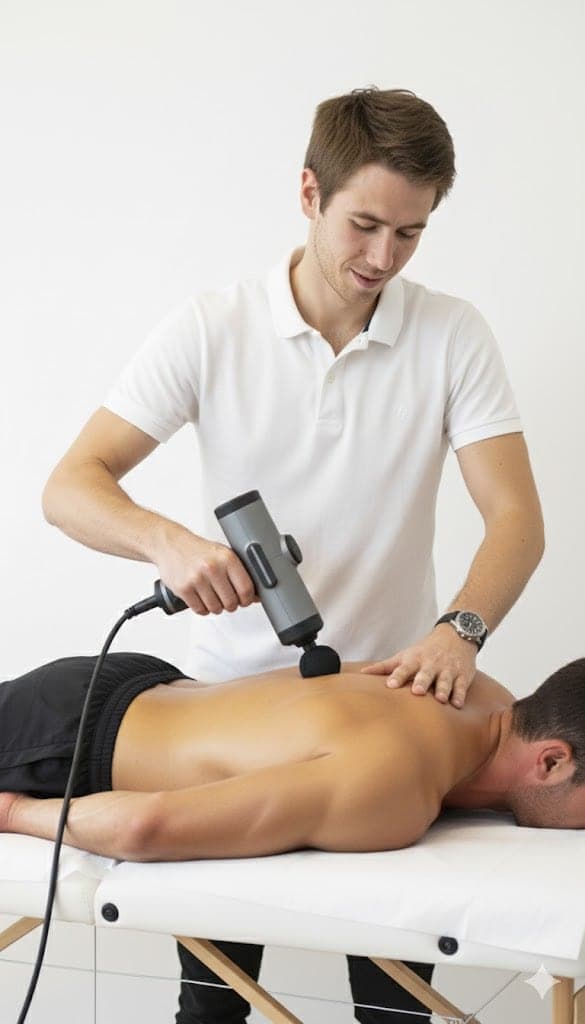
Over my decade of practice, I developed a methodology that addresses the core limitation of traditional treatment: insufficient depth and precision. I use a specialized mechanical tool that delivers what I call the three essential elements of effective treatment: Precision, Power, and Consistency.
Deeper Than Hands: This mechanical approach reaches tissue layers 40-50mm deep—the level where chronic restrictions actually exist. We’re accessing the deep cervical fascia, segmental multifidus, and periarticular tissues that home remedies and traditional massage cannot touch.
Complete Control: I precisely modulate intensity based on your specific needs and tolerance. For some clients, we work with moderate pressure focusing on fascial release. For athletes or those with chronic severe restrictions, we can deliver powerfully deep mechanical force that breaks adhesions and releases long-standing trigger points.
Consistent Results: Unlike hands that fatigue or vary day-to-day, mechanical treatment delivers identical precision and force throughout the entire session. You never get an “off day” where the treatment is less effective.
I’m not providing relaxation therapy. I’m treating the cause of your pain—the mechanical dysfunction and tissue restrictions that create your symptoms. This is clinical, results-oriented treatment with a singular goal: lasting resolution of your neck pain.
The Clinical Process: How We Achieve Lasting Results
When you work with me, you’re not getting a one-off massage session. That approach fundamentally misunderstands chronic pain resolution. We establish a dedicated partnership with a customized treatment plan based on your specific mechanical dysfunction, pain history, and functional goals.
Initial Assessment: I perform a comprehensive evaluation of your cervical mechanics, postural alignment, movement patterns, and tissue quality. This identifies the exact structures and movement dysfunctions driving your pain.
Customized Treatment Protocol: Based on assessment findings, I design a specific intervention strategy. This isn’t generic—it’s precisely targeted to your mechanical problems.
Progressive Treatment: We work systematically through tissue layers, releasing superficial restrictions before addressing deeper dysfunction. Attempting to work too deep too quickly causes protective guarding that impedes progress.
Active Client Participation: I educate you throughout the process. You learn exactly what we’re treating, why specific tissues are dysfunctional, and how to maintain results through targeted home exercises and postural modifications.
I travel to your location in Konia with a professional treatment bench and everything needed. This eliminates the barrier of traveling while in pain and allows treatment in your comfortable, private environment.
Investment in Long-Term Health, Not Short-Term Relief
Let me address something directly: professional mechanical treatment is an investment, not an expense. When you calculate the cumulative cost of repeated temporary interventions—massage sessions, physical therapy appointments, medications, lost work productivity, reduced quality of life—comprehensive treatment that resolves the problem durably is economically rational and physiologically superior.
I’ve had clients who spent thousands on various practitioners over years, getting temporary relief but never resolution. When they finally committed to proper mechanical treatment addressing tissue dysfunction at adequate depth, their pain resolved completely within 8-12 sessions.
This is about optimization—returning you to full functional capacity, improving your performance in work and sport, and eliminating the constant background noise of chronic pain that diminishes your quality of life.
Frequently Asked Questions About Neck Pain and Treatment
How long does it take for home remedies to work on neck pain?
For acute mild neck pain from simple muscle strain, appropriate home remedies should provide noticeable improvement within 48-72 hours and substantial relief within 7-10 days. If you’re not seeing clear progress within this timeframe, you’re likely dealing with deeper tissue dysfunction that requires professional intervention. Chronic neck pain that has persisted for weeks or months will not resolve with home remedies alone—the underlying mechanical restrictions and compensatory patterns are too established.
Can neck pain be a sign of something serious?
Yes, though most neck pain is mechanical and benign. Red flags requiring immediate medical evaluation include: neck pain after significant trauma, progressive neurological symptoms (numbness, weakness, coordination problems), severe headache with neck stiffness and fever (possible meningitis), pain accompanied by unexplained weight loss, and pain that worsens progressively despite all interventions. These could indicate fracture, infection, tumor, or other serious pathology. However, the vast majority of neck pain I treat originates from mechanical dysfunction—tissue restrictions, postural stress, and movement pattern dysfunction.
Is it better to use heat or ice for neck pain?
The answer depends entirely on whether your pain is acute or chronic. For acute neck pain (first 48-72 hours after onset) or obvious inflammation, ice is superior—it reduces inflammatory mediators and decreases pain signaling. For chronic neck pain or muscle tension without acute inflammation, heat is more effective—it increases blood flow, promotes tissue extensibility, and facilitates deeper stretching. Many people use heat when ice is indicated or vice versa, which explains poor results. The principle: ice for inflammation and acute injury, heat for chronic muscle tension and before stretching.
Why does my neck pain keep coming back even with treatment?
Recurring neck pain indicates that treatment addressed symptoms without correcting underlying mechanical dysfunction. This happens for several reasons: insufficient treatment depth (not reaching the dysfunctional tissue layers), failure to identify and correct postural/movement patterns perpetuating the problem, incomplete resolution of trigger points and fascial restrictions, or inadequate strengthening to support proper mechanics long-term. Effective treatment must address tissue dysfunction at its source and establish sustainable mechanical patterns through postural correction and targeted strengthening.
How often should I stretch my neck?
For maintenance and prevention: 5-10 minutes of targeted cervical stretching 2-3 times daily, particularly after prolonged static positions. For active treatment of neck pain: 3-4 sessions daily of 10-15 minutes, focusing on your specific tight structures. However—and this is critical—stretching provides limited benefit if you’re not simultaneously correcting the postural and movement patterns causing the tightness. Stretching muscles that become tight due to poor posture provides only temporary relief because the mechanical stress continues. Address both tissue extensibility and postural mechanics.
Can massage therapy cure chronic neck pain durably?
Traditional massage therapy typically provides symptomatic relief but rarely achieves lasting resolution of chronic neck pain. This isn’t a criticism of massage therapists—it’s a recognition of biomechanical limitations. Chronic pain involves deep tissue restrictions, trigger points, fascial adhesions, and altered movement patterns that require sustained, precise mechanical force at depths traditional massage cannot consistently reach. Lasting resolution requires: adequate depth of intervention (40-50mm into tissue), sufficient force to release chronic adhesions, precise targeting of dysfunctional structures, and correction of perpetuating mechanical factors. This is why I developed a specialized mechanical approach that addresses these requirements.
What’s the difference between muscle pain and nerve pain in the neck?
Muscle pain (myofascial pain) typically presents as: aching, stiffness, localized tenderness, pain that worsens with specific movements or positions, and pain that responds to stretching, heat, or manual pressure. Nerve pain (radicular pain) presents distinctly: sharp, shooting, burning sensations; pain radiating down the arm following specific nerve distributions; numbness or tingling in specific areas; potential weakness in specific muscle groups; and pain that may worsen with coughing, sneezing, or specific neck positions. Nerve pain suggests nerve root compression or irritation and requires different management than pure muscle pain. If you’re experiencing radicular symptoms, evaluation by a healthcare provider is essential to rule out significant nerve compromise requiring specific intervention.
How do I know if I need professional treatment or if home remedies are enough?
Use this decision framework: Home remedies are appropriate for acute mild neck pain without neurological symptoms, pain lasting less than 7-10 days, pain that’s clearly improving with conservative measures, and pain that doesn’t significantly impact your function or sleep. Professional treatment is necessary when: pain persists beyond 10-14 days despite consistent home care, pain is severe or progressively worsening, you have neurological symptoms (numbness, tingling, weakness), pain followed trauma, pain significantly impacts your daily function or quality of life, or you have a history of recurring neck pain that temporarily improves but keeps returning. The pattern of recurring pain is particularly significant—it indicates underlying mechanical dysfunction that home remedies cannot address.
The Path Forward: Making an Informed Decision
You now understand the scope and limitations of home remedies for neck pain Konia residents commonly try. You understand the mechanical nature of neck pain, the specific interventions that provide symptomatic relief, and critically—when home approaches are insufficient.
If you’re dealing with acute mild neck pain, implement the evidence-based strategies I’ve detailed: appropriate heat/cold application, targeted stretching with proper technique, postural correction, sleep position optimization, and anti-inflammatory nutrition. These interventions, applied consistently and correctly, will resolve simple mechanical neck strain.
If you’re dealing with chronic pain, recurring pain, or severe acute pain, understand this: you need intervention that addresses tissue dysfunction at its source. Superficial approaches will continue producing the frustrating pattern of temporary relief and eventual recurrence.
My specialized mechanical treatment isn’t for everyone. It’s for people who are serious about lasting resolution, who understand the difference between symptomatic relief and causative treatment, and who recognize that investing in proper intervention now prevents years of recurring pain and cumulative costs of ineffective temporary solutions.
I work with a limited number of clients at a time because effective treatment requires dedicated attention and customized protocols. I travel to your location in Konia, bringing professional equipment and ten years of clinical expertise focused on one singular outcome: eliminating your neck pain durably and optimizing your mechanical function for enhanced performance and quality of life.
The question isn’t whether you can find temporary relief through various remedies—clearly you can, at least partially. The question is: are you ready to actually resolve the problem durably, or will you continue managing symptoms indefinitely while the underlying dysfunction persists and potentially worsens?
Your neck pain has a mechanical cause. It requires a mechanical solution delivered at sufficient depth, precision, and force to break the cycle of compensation and restriction that has developed over months or years. Home remedies play a valuable maintenance role after proper treatment, but they cannot replace the depth of intervention required for lasting resolution.
Make an informed decision based on understanding, not hope. If your pain fits the criteria requiring professional intervention, contact me. We’ll discuss your specific situation, establish clear functional goals, and develop a customized treatment strategy designed to deliver lasting results.
Your body has tremendous capacity for recovery when restrictions are properly released and optimal mechanical patterns restored. I’ve witnessed it hundreds of times over the past decade. The path to living without chronic neck pain is clear—it simply requires the right intervention at the right depth with the right expertise.
Written by
Chris
Massage therapist & body mechanics specialist
Norwegian-certified with a Bachelor’s in Physical Education and Nutrition and over ten years of clinical practice, working from a portable table in clients’ homes across the Paphos district.
This article is general information from clinical practice, not a medical diagnosis. If you have severe, worsening or unexplained pain, numbness, weakness, or pain after an accident, see a doctor first.