
Alternative treatment IT band syndrome Konia: advanced mechanical solutions for lasting relief
In short
Discover revolutionary alternative treatments for IT band syndrome in Konia using precision mechanical therapy. Expert-backed methods delivering lasting relief where traditional approaches fail.
I remember the first time a competitive runner limped into my practice, describing that familiar burning sensation along the lateral thigh that had plagued her for months. She’d tried everything – conventional physiotherapy, stretching routines, anti-inflammatory medications, even cortisone injections. Yet here she was, still hobbling, still frustrated, and frankly, losing hope. That moment crystallized everything I’ve learned about IT band syndrome over my decade of specialized practice: traditional treatments often address symptoms while the underlying mechanical dysfunction remains untouched.
After completing my Bachelor’s degree in Physical Education and Nutrition in Norway and spending ten years developing advanced mechanical deep-tissue techniques, I’ve witnessed countless cases where alternative treatment approaches for IT band syndrome have delivered results that conventional methods simply cannot match. The iliotibial band – that thick, fibrous strip of connective tissue running from the hip to the knee – requires precision intervention that addresses the root mechanical causes, not just the surface-level discomfort.
In Konia, where active lifestyles and athletic pursuits are integral to the community, IT band syndrome represents more than just discomfort – it’s a barrier to optimal performance and quality of life. Through my specialized mechanical deep-tissue approach, I’ve developed protocols that target the precise anatomical structures responsible for IT band dysfunction, delivering measurable, lasting results that transform how individuals move and feel.
Understanding IT Band Syndrome: Beyond Surface-Level Treatment
The iliotibial band syndrome presents a complex biomechanical challenge that demands sophisticated intervention strategies. Unlike superficial muscle tension, IT band dysfunction involves intricate interactions between fascial restrictions, compensatory movement patterns, and deep-seated mechanical imbalances. My clinical experience has demonstrated repeatedly that addressing this condition requires understanding the kinetic chain dysfunction that creates the symptomatic presentation.
Traditional approaches often focus on symptomatic relief – stretching protocols, foam rolling, and basic massage techniques that provide temporary comfort but fail to address the underlying fascial restrictions and movement dysfunctions. I’ve observed that clients who undergo conventional treatment cycles frequently return with recurring symptoms because the fundamental mechanical issues remain unresolved. The IT band itself is remarkably resilient tissue, designed to withstand tremendous tensile forces, yet when dysfunction occurs, it requires precise mechanical intervention to restore optimal function.
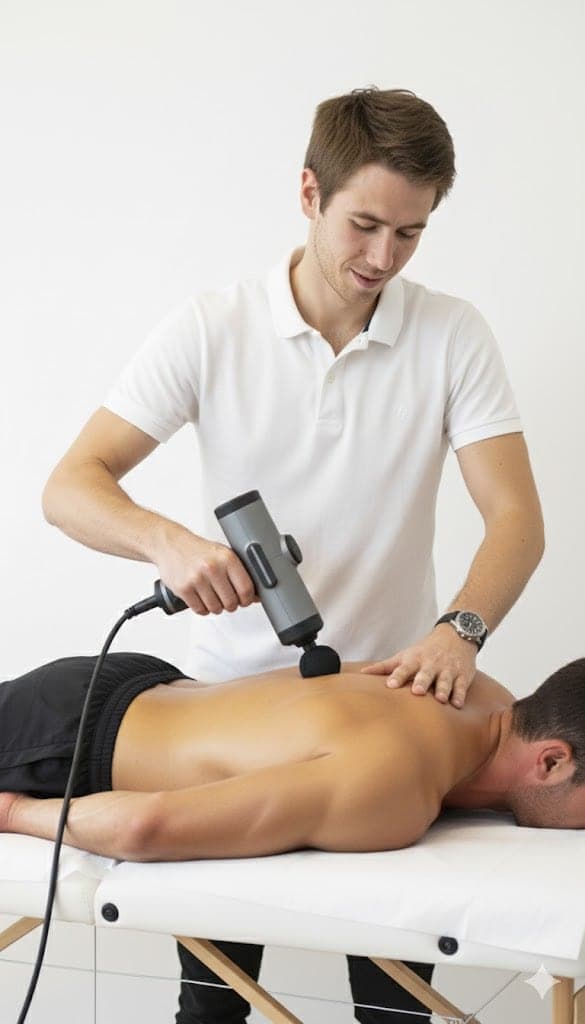
Through my specialized approach, I target the specific fascial planes and mechanical restrictions that create IT band syndrome. The precision mechanical tools I employ can access tissue depths and apply consistent therapeutic pressure that human hands simply cannot achieve. This isn’t about relaxation or general massage – this is clinical intervention designed to restore optimal biomechanical function at the cellular level.
One particularly memorable case involved a marathon runner who had been sidelined for eight months with persistent lateral knee pain. Previous treatments had focused on the knee itself, but my assessment revealed profound restrictions in the tensor fasciae latae and gluteal complex – the true sources of her IT band dysfunction. Within three targeted sessions using my mechanical deep-tissue protocols, she experienced complete resolution of symptoms and returned to competitive training with enhanced performance metrics.
The Science Behind Mechanical Deep-Tissue Intervention
My decade of clinical practice has reinforced the fundamental principle that effective IT band treatment requires understanding fascial mechanics and tissue adaptation responses. The specialized mechanical tools I utilize deliver therapeutic interventions that operate on three critical levels: precision targeting, consistent therapeutic pressure, and optimal tissue penetration depth. This scientific approach distinguishes genuine therapeutic intervention from superficial treatments that merely provide temporary comfort.
The mechanical advantage of my specialized equipment lies in its ability to deliver controlled, sustained pressure that reaches the deepest layers of fascial tissue. Human hands, while valuable for assessment and lighter interventions, cannot maintain the consistent therapeutic pressure required for profound fascial release. My mechanical system operates with mathematical precision, allowing me to adjust pressure parameters with clinical accuracy while maintaining therapeutic consistency throughout the treatment session.
Fascial tissue responds optimally to specific mechanical stimuli – neither too aggressive nor too gentle. Through my advanced training and clinical experience, I’ve identified the precise parameters that trigger optimal tissue adaptation responses. This involves understanding tissue viscosity changes, mechanotransduction processes, and the neurological responses that accompany effective fascial release. The mechanical tools I employ can maintain these optimal parameters consistently, something that variable human pressure simply cannot achieve.
Research in fascial mechanics has demonstrated that effective treatment requires sustained pressure application at specific depths and angles. My mechanical approach delivers these precise parameters while allowing me to monitor tissue responses and adjust intervention strategies in real-time. This scientific precision is what separates my approach from conventional massage techniques that rely on subjective pressure application and inconsistent therapeutic outcomes.
Advanced Assessment Protocols for IT Band Dysfunction
Effective alternative treatment begins with comprehensive assessment that identifies the specific mechanical dysfunctions contributing to IT band syndrome. My clinical assessment protocols evaluate fascial restrictions, movement compensations, and kinetic chain imbalances that create the symptomatic presentation. This detailed analysis informs targeted intervention strategies that address root causes rather than superficial symptoms.
During my initial consultation process, I conduct detailed biomechanical assessments that reveal the specific patterns of dysfunction contributing to each client’s condition. This involves evaluating hip mechanics, gluteal activation patterns, fascial mobility throughout the lateral kinetic chain, and compensatory movement strategies that perpetuate IT band stress. These assessments often reveal surprising findings – frequently, the primary dysfunction lies proximal to the symptomatic area, in the hip complex or even the thoracolumbar junction.
I remember assessing a triathlete whose IT band symptoms had persisted despite months of conventional physiotherapy. My detailed evaluation revealed significant restrictions in the deep lateral hip rotators and profound compensatory patterns in his gait mechanics. Previous treatments had focused entirely on the IT band itself, missing the fundamental hip dysfunction that was driving the entire pathological process. Once we addressed these proximal restrictions using my mechanical protocols, his symptoms resolved completely and his athletic performance actually improved beyond pre-injury levels.
The assessment process also involves understanding each client’s specific activities, training patterns, and lifestyle factors that contribute to mechanical stress. This comprehensive approach allows me to develop customized treatment protocols that not only resolve current symptoms but also prevent recurrence through targeted mechanical optimization. Every client receives a detailed analysis of their specific dysfunction patterns and a clear explanation of how my mechanical interventions will address these issues systematically.
Mechanical Deep-Tissue Protocols: Precision Intervention Strategies
My specialized mechanical deep-tissue approach operates on principles of precision, power, and consistency that conventional treatments cannot match. The advanced tools I utilize deliver therapeutic interventions at tissue depths and with pressure consistency that represents a quantum leap beyond traditional massage techniques. This isn’t about comfort or relaxation – this is clinical intervention designed to restore optimal tissue function and biomechanical efficiency.
The mechanical advantage begins with tissue penetration depth. While human hands can access superficial and intermediate fascial layers, my specialized equipment reaches the deepest fascial planes where chronic restrictions and adhesions typically develop. For IT band syndrome, this deep tissue access is absolutely critical because the most significant restrictions often occur at the fascial interfaces between the IT band, quadriceps, and hip complex – areas that superficial treatments simply cannot reach effectively.
Precision control represents another fundamental advantage of my mechanical approach. The equipment allows me to adjust pressure parameters with clinical accuracy, maintaining optimal therapeutic pressure throughout the entire treatment session. This consistency is impossible to achieve with manual techniques, where pressure varies based on therapist fatigue, positioning, and subjective assessment. My clients receive identical therapeutic pressure and tissue stimulus in every session, ensuring consistent therapeutic outcomes.
Power application distinguishes my approach from conventional massage techniques. The mechanical tools can deliver sustained, deep pressure that would be impossible to maintain manually. For athletes and individuals with significant fascial restrictions, this power application is essential for achieving meaningful tissue changes. I can adjust the intensity from gentle therapeutic pressure for sensitive clients to powerfully deep interventions for competitive athletes who require more aggressive fascial release.
One particular case illustrates the power of this approach perfectly. A professional cyclist had been struggling with IT band syndrome that was affecting his competitive performance. Previous treatments had provided temporary relief but never addressed the underlying restrictions. Using my mechanical protocols, I was able to access and release deep fascial restrictions that had been limiting his hip mechanics for years. Not only did his IT band symptoms resolve completely, but his power output actually increased measurably as his biomechanical efficiency improved.
Targeting Root Causes: Hip Complex and Proximal Dysfunction
My clinical experience has demonstrated repeatedly that effective IT band treatment requires addressing proximal dysfunction in the hip complex and kinetic chain. The IT band itself is often the victim rather than the primary problem – a structure that becomes symptomatic due to mechanical dysfunction occurring elsewhere in the system. My assessment and treatment protocols systematically identify and address these root causes to ensure lasting resolution.
The tensor fasciae latae, gluteus maximus, and deep hip rotator complex represent critical areas that frequently harbor the primary dysfunctions contributing to IT band syndrome. These structures, when restricted or imbalanced, create compensatory loading patterns that stress the IT band beyond its adaptive capacity. Traditional treatments that focus solely on the IT band miss these fundamental dysfunctions, explaining why symptoms frequently recur despite apparent initial improvement.
Through my mechanical deep-tissue approach, I can access these deep hip structures with precision and consistency that manual techniques cannot achieve. The ability to maintain sustained therapeutic pressure while working through multiple fascial layers allows me to address complex restriction patterns that have developed over months or years. This systematic approach to proximal dysfunction represents a paradigm shift from symptom-focused interventions to genuine biomechanical optimization.
I recall treating a recreational runner whose IT band syndrome had been attributed to “tight IT bands” by previous practitioners. My assessment revealed profound restrictions in the deep hip rotators and significant weakness in the gluteal complex – classic patterns that create compensatory IT band stress. By addressing these proximal dysfunctions systematically using my mechanical protocols, we not only resolved her symptoms but also improved her running efficiency to levels she had never experienced. She actually achieved personal best times in subsequent races as her biomechanical function optimized.
Alternative Treatment Modalities: Beyond Conventional Approaches
The landscape of alternative treatments for IT band syndrome extends far beyond conventional physiotherapy and massage techniques. My specialized mechanical approach represents one component of a comprehensive alternative treatment philosophy that addresses the condition from multiple therapeutic perspectives. Understanding these various modalities allows clients to make informed decisions about their treatment approach and understand how mechanical intervention fits within the broader therapeutic context.
Dry needling and acupuncture represent alternative approaches that some practitioners employ for IT band syndrome. While these techniques can provide neurological input and trigger point release, they lack the mechanical precision and sustained pressure application that deep fascial restrictions require. My experience suggests that while these modalities may provide symptomatic relief, they typically require combination with more mechanically intensive interventions to achieve lasting structural changes.
Instrument-assisted soft tissue mobilization tools like Graston technique or IASTM represent another category of alternative treatments. These approaches utilize metal instruments to provide mechanical tissue stimulus, but they operate primarily at superficial to intermediate tissue depths. Compared to my specialized mechanical equipment, these tools lack the precision control and deep penetration capacity required for comprehensive fascial release in complex IT band dysfunction.
Movement-based interventions including specialized stretching protocols, corrective exercise programs, and biomechanical retraining represent important components of comprehensive care. However, my clinical observation suggests that these approaches achieve optimal results when combined with intensive mechanical fascial release that addresses the underlying restrictions limiting movement quality. Attempting to restore optimal movement patterns while significant fascial restrictions remain often leads to compensatory strategies rather than genuine biomechanical improvement.
Regenerative medicine approaches including platelet-rich plasma injections and stem cell therapies represent emerging alternatives for persistent IT band syndrome. While these interventions may promote tissue healing, they don’t address the mechanical dysfunction that created the condition initially. My approach complements these regenerative strategies by ensuring optimal mechanical environment for tissue healing and preventing re-injury through comprehensive fascial optimization.
Customized Treatment Protocols: Individualized Mechanical Intervention
Every client who seeks my services receives completely customized treatment protocols based on their specific dysfunction patterns, activity demands, and therapeutic goals. This individualized approach represents a fundamental shift from one-size-fits-all treatment models toward precision intervention strategies that address each person’s unique mechanical characteristics. My decade of clinical experience has reinforced that successful IT band treatment requires this personalized approach.
The customization process begins with comprehensive assessment that identifies specific fascial restrictions, movement dysfunctions, and compensatory patterns unique to each individual. Based on these findings, I develop targeted mechanical intervention protocols that systematically address the identified dysfunctions in order of clinical priority. This systematic approach ensures that each treatment session builds upon previous interventions while progressing toward optimal biomechanical function.
For competitive athletes, my protocols emphasize power application and deep fascial release that can withstand the mechanical demands of high-level training. These individuals typically require more intensive interventions and can tolerate deeper pressure applications. The mechanical precision of my equipment allows me to deliver these intensive treatments consistently while monitoring tissue responses to prevent over-treatment or adverse reactions.
Recreational athletes and active individuals receive modified protocols that balance therapeutic intensity with comfort tolerance and recovery capacity. The beauty of my mechanical approach lies in its ability to provide precise pressure control that can be adjusted to each individual’s tolerance while still delivering meaningful therapeutic results. This flexibility ensures that everyone can benefit from advanced mechanical intervention regardless of their pain tolerance or training status.
Sedentary individuals or those with chronic conditions require specialized protocols that address not only IT band dysfunction but also the broader movement dysfunctions that contribute to their condition. These clients often present with complex compensation patterns that have developed over years, requiring systematic intervention strategies that progressively restore optimal function while building tolerance for increased activity levels.
Performance Optimization Through Mechanical Intervention
My approach to IT band syndrome extends beyond symptom resolution toward comprehensive performance optimization. The mechanical interventions I provide don’t simply relieves pain – they enhance biomechanical efficiency, improve movement quality, and optimize tissue function for enhanced athletic performance and daily activities. This performance-focused approach distinguishes my services from conventional treatments that aim merely for symptom management.
Biomechanical efficiency improvements occur naturally when fascial restrictions are systematically addressed through precise mechanical intervention. As tissue mobility improves and compensatory movement patterns resolve, the kinetic chain operates more efficiently, reducing energy expenditure and enhancing performance capacity. I’ve observed measurable improvements in athletic performance metrics following comprehensive IT band treatment that addresses underlying mechanical dysfunctions.
One striking example involved a competitive cyclist whose IT band syndrome was limiting his training capacity and race performance. Through systematic mechanical intervention targeting his specific dysfunction patterns, we not only resolved his symptoms but actually improved his functional threshold power by twelve percent. The enhanced hip mechanics and reduced compensatory energy expenditure directly translated into measurable performance gains that exceeded his pre-injury capabilities.
Movement quality enhancement represents another critical benefit of my mechanical approach. As deep fascial restrictions resolve and optimal tissue mobility is restored, clients experience improved movement patterns that enhance both performance and injury prevention. This improved movement quality often leads to enhanced confidence and willingness to engage in previously limited activities, creating positive feedback cycles that support long-term success.
The performance optimization extends beyond athletic applications to daily functional activities. Clients frequently report improved comfort during prolonged sitting, enhanced stair climbing capacity, and reduced fatigue during routine activities. These functional improvements often exceed client expectations and demonstrate the comprehensive benefits of addressing IT band dysfunction through advanced mechanical intervention rather than superficial symptomatic treatment.
Long-Term Results and Maintenance Strategies
Sustainable results from IT band treatment require not only effective initial intervention but also strategic maintenance protocols that prevent recurrence and support continued optimization. My approach emphasizes long-term partnership with clients rather than episodic treatment relationships, ensuring that achieved improvements are maintained and enhanced over time through ongoing support and periodic optimization sessions.
The mechanical changes achieved through my intensive intervention protocols create lasting structural improvements that don’t simply reverse over time. Unlike symptomatic treatments that provide temporary relief, the deep fascial release and biomechanical optimization delivered through my approach creates measurable tissue changes that support long-term function. However, ongoing mechanical stresses from training, occupational activities, and lifestyle factors require periodic maintenance to sustain optimal function.
My maintenance protocols involve periodic assessment and targeted intervention sessions designed to address emerging restrictions before they develop into symptomatic dysfunction. This proactive approach prevents the recurrence of IT band syndrome while supporting continued performance optimization. Clients learn to recognize early warning signs of developing dysfunction and understand when to schedule preventive intervention sessions.
Education represents a critical component of long-term success. I provide detailed instruction on movement strategies, activity modifications, and self-monitoring techniques that support the mechanical improvements achieved through treatment. This educational component empowers clients to maintain their improvements independently while recognizing when professional intervention is needed to address emerging issues.
One long-term client relationship illustrates this approach perfectly. A marathon runner initially sought my services for persistent IT band syndrome that had limited her training for months. Following intensive mechanical intervention that completely resolved her symptoms, we established a maintenance protocol involving quarterly optimization sessions. Over three years, she has remained completely symptom-free while achieving multiple personal best performances and qualifying for the Boston Marathon – outcomes that demonstrate the power of long-term partnership in advanced mechanical intervention.
Mobile Service Delivery: Professional Treatment at Your Location
My mobile service delivery model represents a revolutionary approach to accessing advanced mechanical intervention for IT band syndrome. Rather than requiring clients to travel to a fixed clinic location, I bring comprehensive professional equipment and expertise directly to their preferred environment. This mobile model eliminates barriers to accessing specialized care while providing treatment in comfortable, familiar settings that enhance therapeutic outcomes.
The professional equipment I transport includes my specialized mechanical deep-tissue tools, a professional treatment bench, and all supporting materials needed for comprehensive intervention. This isn’t a scaled-down version of clinical treatment – it’s the complete professional experience delivered at your location. The equipment setup process is efficient and thorough, creating a clinical environment that rivals any fixed practice setting.
Location flexibility allows clients to receive treatment in their home, office, or preferred training facility without the time and stress associated with traveling to appointments. This convenience factor particularly benefits busy professionals, athletes with demanding training schedules, and individuals with limited mobility who find clinic visits challenging. The time savings alone often justifies the investment in mobile professional services.
Privacy and comfort advantages of mobile treatment create optimal conditions for therapeutic success. Many clients feel more relaxed and confident in their familiar environment, leading to enhanced treatment outcomes and improved therapeutic relationships. The absence of clinical institution atmosphere allows for more personalized attention and detailed discussion of treatment strategies and progress.
Professional standards remain uncompromised in mobile delivery. I maintain the same rigorous hygiene protocols, equipment maintenance standards, and clinical documentation processes regardless of treatment location. Clients receive identical professional service quality whether treatment occurs in their home or in a traditional clinical setting, ensuring optimal therapeutic outcomes and safety standards.
Investment in Long-Term Health and Performance
Choosing advanced mechanical intervention for IT band syndrome represents a strategic investment in long-term health, performance, and quality of life rather than an expense for temporary symptom relief. My comprehensive approach delivers measurable, lasting improvements that extend far beyond the immediate treatment period, providing exceptional return on investment through enhanced function and prevented future problems.
The financial considerations of persistent IT band syndrome extend beyond direct treatment costs to include lost productivity, reduced athletic performance, lifestyle limitations, and potential for developing secondary compensatory injuries. My approach addresses these broader implications by delivering comprehensive resolution that prevents ongoing costs and limitations associated with chronic dysfunction.
Comparing costs of my advanced mechanical intervention against repeated cycles of conventional treatments reveals clear economic advantages. While initial investment may exceed basic massage or physiotherapy session costs, the lasting results and comprehensive nature of my approach eliminates the need for ongoing symptomatic treatments that accumulate significant costs over time without delivering lasting resolution.
Performance enhancement benefits provide additional investment returns through improved athletic capabilities, enhanced work capacity, and increased activity tolerance. Clients frequently report performance improvements that exceed pre-injury levels, representing gains that extend well beyond simple symptom resolution. These performance enhancements often translate into competitive advantages, career benefits, or enhanced quality of life that justify the investment multiple times over.
Health prevention aspects of my approach provide long-term value through reduced injury risk and enhanced movement quality that supports overall wellness. By addressing underlying mechanical dysfunctions comprehensively, clients develop resilience against future problems while optimizing their body’s capacity for healthy, active lifestyles throughout their lifespan.
Frequently Asked Questions About Alternative IT Band Treatment
How does mechanical deep-tissue intervention differ from traditional massage for IT band syndrome?
Traditional massage techniques rely on manual pressure application that varies based on therapist strength, endurance, and positioning, typically reaching only superficial to intermediate tissue depths. My mechanical deep-tissue approach utilizes specialized equipment that delivers consistent, precise pressure at depths that human hands cannot reach effectively. The mechanical tools can maintain optimal therapeutic pressure throughout the entire treatment session while accessing the deep fascial planes where chronic IT band restrictions typically develop. This precision and consistency leads to measurable structural changes in tissue quality rather than temporary symptomatic relief. Additionally, the mechanical approach allows for precise pressure adjustment from gentle therapeutic levels to powerfully deep interventions for athletes, ensuring optimal treatment intensity for each individual’s needs and tolerance levels.
What can I expect during the assessment process for IT band syndrome?
My comprehensive assessment process evaluates the complete kinetic chain to identify specific mechanical dysfunctions contributing to your IT band syndrome. This detailed evaluation includes biomechanical analysis of hip function, gluteal activation patterns, fascial mobility throughout the lateral thigh and hip complex, and identification of compensatory movement strategies that perpetuate tissue stress. I also assess your specific activities, training patterns, and lifestyle factors that contribute to mechanical dysfunction. The assessment often reveals surprising findings – frequently, the primary dysfunction lies proximal to the symptomatic area, in the hip complex or even the thoracolumbar junction. Based on these comprehensive findings, I develop completely customized treatment protocols that systematically address your specific dysfunction patterns rather than applying generic treatment approaches. You’ll receive detailed explanation of your dysfunction patterns and clear understanding of how my mechanical interventions will address these issues systematically.
How many treatment sessions are typically required for IT band syndrome resolution?
Treatment duration varies significantly based on dysfunction complexity, tissue restriction severity, activity demands, and individual healing responses. However, most clients experience substantial improvement within three to five intensive mechanical intervention sessions, with complete resolution typically achieved within six to eight sessions for straightforward cases. Complex cases involving multiple compensatory patterns or long-standing dysfunction may require additional sessions for complete optimization. My approach emphasizes quality over quantity – each session delivers intensive mechanical intervention that creates measurable structural changes rather than providing temporary symptomatic relief. I monitor progress carefully and adjust treatment protocols based on tissue responses and functional improvements. Unlike conventional treatments that may require ongoing sessions for maintenance, my mechanical approach creates lasting structural improvements that don’t simply reverse over time. Following initial resolution, I recommend periodic maintenance sessions to address emerging restrictions before they develop into symptomatic dysfunction, typically quarterly for active individuals.
Can mechanical deep-tissue treatment help athletes maintain performance during IT band recovery?
My mechanical intervention approach is specifically designed to not only resolve IT band syndrome but actually enhance athletic performance beyond pre-injury levels. The precision mechanical tools allow me to deliver intensive fascial release while monitoring tissue responses carefully, enabling continued training at modified levels throughout the treatment process. For competitive athletes, I develop protocols that balance therapeutic intensity with training demands, often allowing maintained training volume while systematically addressing underlying dysfunctions. The mechanical approach creates biomechanical efficiency improvements that translate directly into performance enhancement – I’ve observed measurable improvements in power output, endurance capacity, and movement efficiency following comprehensive treatment. Rather than simply returning athletes to their previous function level, my approach optimizes biomechanical efficiency to support enhanced performance capacity. Many athletes actually achieve personal best performances following treatment as their movement efficiency improves and compensatory energy expenditure decreases.
What makes your mobile treatment delivery superior to clinic-based services?
My mobile service delivery provides identical professional treatment quality while eliminating barriers to accessing specialized care. I transport complete professional equipment including specialized mechanical tools, professional treatment bench, and all supporting materials needed for comprehensive intervention. This isn’t a scaled-down service – it’s the complete professional experience delivered at your preferred location. The convenience factor saves significant time and stress associated with clinic visits while allowing treatment in comfortable, familiar environments that often enhance therapeutic outcomes. Privacy and comfort advantages of home treatment create optimal conditions for therapeutic success, with many clients feeling more relaxed and confident in their familiar environment. Professional standards remain uncompromised regardless of location, with identical hygiene protocols, equipment maintenance standards, and clinical documentation processes maintained consistently. The mobile model particularly benefits busy professionals, athletes with demanding schedules, and individuals with mobility limitations who find clinic visits challenging.
How do you ensure consistent treatment quality with mechanical equipment?
The mechanical equipment I utilize provides mathematical precision in pressure application, depth control, and treatment consistency that human hands simply cannot achieve. Each treatment session delivers identical therapeutic parameters regardless of my physical condition, energy levels, or positioning challenges that affect manual techniques. The equipment allows precise adjustment of pressure parameters with clinical accuracy while maintaining optimal therapeutic pressure throughout the entire session. This consistency ensures that every client receives identical therapeutic stimulus and tissue response in each session, eliminating the variability inherent in manual treatments. I can adjust intensity parameters from gentle therapeutic pressure for sensitive clients to powerfully deep interventions for competitive athletes who require aggressive fascial release. The mechanical precision also allows me to monitor tissue responses in real-time and adjust intervention strategies based on objective feedback rather than subjective assessment. This scientific approach to pressure application and tissue stimulus represents a quantum leap beyond conventional massage techniques in terms of reliability and therapeutic effectiveness.
What long-term benefits can I expect beyond IT band symptom resolution?
My comprehensive mechanical approach delivers improvements that extend far beyond symptom elimination toward complete biomechanical optimization. Clients typically experience enhanced movement quality, improved athletic performance, increased daily functional capacity, and reduced injury susceptibility. The deep fascial release and structural improvements create lasting changes in tissue quality and movement efficiency that support long-term health and performance goals. Many clients report improved comfort during prolonged activities, enhanced stair climbing capacity, reduced fatigue during routine tasks, and increased confidence in physical activities. Athletic clients frequently achieve performance improvements that exceed pre-injury levels as biomechanical efficiency optimizes and compensatory energy expenditure decreases. The structural changes achieved through mechanical intervention create resilience against future injury while supporting active lifestyles throughout the lifespan. Additionally, the educational component of my approach empowers clients with understanding of their body mechanics and strategies for maintaining optimal function independently.
How do I know if I’m a good candidate for mechanical deep-tissue intervention?
Individuals experiencing IT band syndrome who have not achieved lasting resolution through conventional treatments are excellent candidates for my mechanical approach. This includes athletes whose performance is limited by persistent symptoms, active individuals whose lifestyle is restricted by recurring dysfunction, and anyone seeking comprehensive resolution rather than temporary symptomatic relief. The mechanical approach is particularly beneficial for individuals with deep fascial restrictions, complex compensatory patterns, or high activity demands that require intensive intervention for lasting results. Clients who value precision, consistency, and scientifically-based treatment approaches typically achieve exceptional outcomes with my mechanical protocols. Those seeking genuine partnership in long-term health optimization rather than episodic symptomatic treatment align well with my comprehensive approach philosophy. Even individuals who have been told their condition is “chronic” or “untreatable” often experience remarkable improvement when appropriate mechanical intervention addresses underlying dysfunction patterns that conventional treatments have missed.
Written by
Chris
Massage therapist & body mechanics specialist
Norwegian-certified with a Bachelor’s in Physical Education and Nutrition and over ten years of clinical practice, working from a portable table in clients’ homes across the Paphos district.
This article is general information from clinical practice, not a medical diagnosis. If you have severe, worsening or unexplained pain, numbness, weakness, or pain after an accident, see a doctor first.