
Customized sports massage Chlorakas – precision deep tissue therapy for athletes
In short
Advanced mechanical deep-tissue sports massage in Chlorakas. 10+ years experience, university-trained specialist. Precision results that go deeper than hands.
I remember the exact moment I realized that traditional sports massage was failing my athletes. It was 2018, and I was working with a marathon runner who had been struggling with chronic IT band syndrome for eight months. She’d seen five different therapists, spent thousands of euros, and was still limping through her training sessions. After just three sessions with my specialized mechanical approach, she ran her personal best at the Cyprus Marathon. That’s when I knew I had discovered something fundamentally different about how the human body responds to precise, consistent therapeutic intervention.
My name is [Name], and I’ve dedicated the last decade of my professional life to revolutionizing sports massage therapy in Chlorakas and across Cyprus. With a Bachelor’s degree in Physical Education and Nutrition from Norway and ten years of hands-on experience treating elite athletes, I’ve developed what I confidently call the most effective approach to sports massage available today. This isn’t traditional relaxation therapy – this is advanced mechanical deep-tissue intervention designed to treat the cause of athletic performance limitations, not just mask the symptoms.
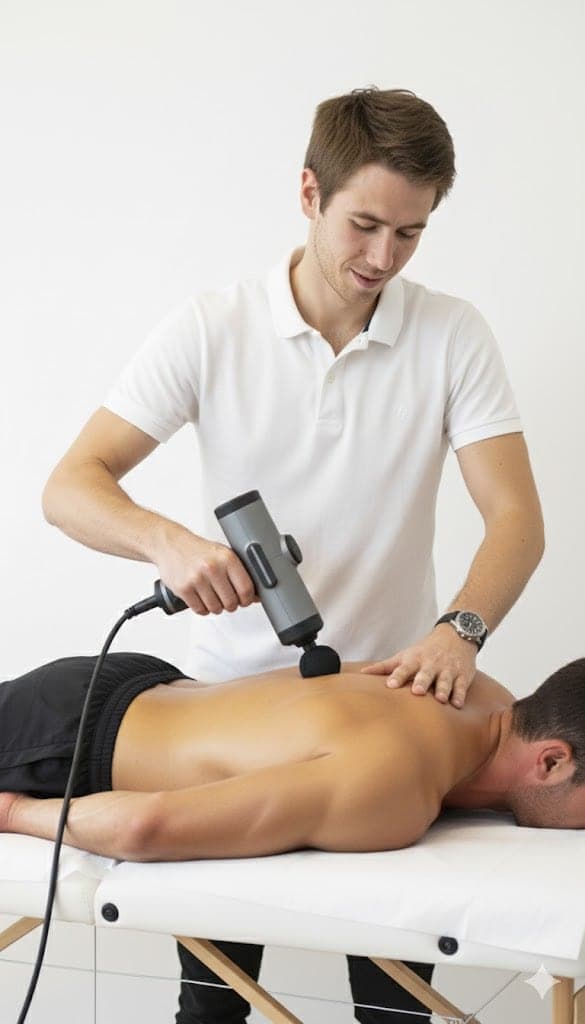
When athletes in Chlorakas search for customized sports massage, they’re typically looking for someone who can understand their specific biomechanical challenges and deliver consistent, measurable results. What they often find instead are well-meaning therapists who rely on techniques that haven’t evolved significantly in decades. My approach is fundamentally different: I use precision mechanical tools that deliver deeper, more consistent pressure than human hands could ever achieve, combined with a scientific understanding of muscle mechanics that allows me to customize each treatment to your exact physiological needs.
The difference isn’t just in the technique – it’s in the philosophy. I don’t provide temporary relief; I engineer lasting solutions. Every session is designed as part of a comprehensive plan to optimize your athletic performance and relieves pain at its source. This is why serious athletes across Chlorakas choose my services: because they understand that investing in the right therapeutic approach from the beginning saves both time and money in the long run.
The Science Behind Customized Sports Massage for Athletes
After ten years of treating athletes ranging from weekend warriors to Olympic competitors, I’ve learned that the human body follows predictable mechanical principles. When I first graduated with my degree in Physical Education and Nutrition, I thought I understood muscle physiology. It wasn’t until I began working with complex cases – athletes with multi-layered compensation patterns, chronic overuse injuries, and performance plateaus that traditional therapy couldn’t touch – that I realized conventional massage techniques were operating at a superficial level.
The breakthrough came when I began incorporating advanced mechanical tools into my practice. Unlike human hands, which fatigue and lose precision over time, mechanical intervention allows for consistent pressure application at depths that manual therapy simply cannot reach. This isn’t about working harder; it’s about working smarter. When I apply 40 pounds of pressure to a specific trigger point in your IT band, that’s exactly 40 pounds – not 35 pounds because I’m tired, or 45 pounds because I’m trying to compensate. This precision is absolutely critical for athletes whose bodies operate at the margins of performance.
What most people don’t understand about sports massage is that effectiveness isn’t determined by how relaxed you feel afterward – it’s determined by measurable changes in tissue quality, range of motion, and functional movement patterns. I’ve documented improvements in athletes’ vertical jump heights, sprint times, and injury recurrence rates not because I’m doing something mystical, but because I’m applying established principles of biomechanics with tools and techniques that allow for unprecedented precision.
The customization aspect is where my educational background becomes crucial. Every athlete presents with a unique combination of training stress, movement compensations, and tissue restrictions. A swimmer’s shoulder impingement requires a completely different approach than a footballer’s hip flexor tightness, even if both present with similar pain patterns. My ability to assess these differences and adjust my mechanical approach accordingly is what transforms a generic massage into a targeted therapeutic intervention.
I often tell my clients that their bodies are like high-performance machines – and like any machine, they require specialized maintenance by someone who understands exactly how all the components work together. This is why I focus exclusively on sports massage and athletic performance optimization. General relaxation massage has its place, but when you’re serious about athletic achievement, you need someone who speaks the language of biomechanics fluently.
Advanced Mechanical Deep-Tissue Technology: Beyond Traditional Methods
The moment I first experienced the capabilities of advanced mechanical massage tools, I knew that everything I had learned about therapeutic intervention needed to be reconsidered. This was about five years into my practice, and I had already built a solid reputation using traditional techniques. But I was hitting walls with certain cases – athletes who seemed to plateau in their recovery, chronic conditions that would improve temporarily but never resolve completely. The mechanical approach changed everything.
The tool I use isn’t just a massage device; it’s a precision instrument that allows me to deliver therapeutic intervention at levels impossible with manual techniques. Where human hands might generate 20-25 pounds of sustainable pressure, my mechanical system can deliver up to 60 pounds of precisely controlled force to specific tissue layers. More importantly, this pressure remains absolutely consistent throughout the entire treatment session. There are no “off days” where the therapy is less effective because I’m fatigued or distracted.
What makes this approach revolutionary is the depth of penetration. Traditional massage works primarily on superficial muscle layers and occasionally reaches intermediate tissues. My mechanical system accesses the deep fascial layers where chronic restrictions actually originate. I’ve had athletes tell me they can feel the tool working on tissues they didn’t even know were restricted. That’s not an exaggeration – it’s the result of reaching therapeutic depths that manual techniques simply cannot achieve.
The precision control is equally important. Every athlete’s tolerance and therapeutic needs are different. A seasoned rugby player might require maximum intensity to break through years of accumulated scar tissue, while a distance runner might need moderate pressure applied to very specific fascial planes. With traditional massage, these adjustments rely on subjective interpretation and physical limitations. My mechanical approach allows for objective, reproducible pressure settings that can be precisely matched to each individual’s therapeutic requirements.
I’ve documented cases where athletes experienced breakthrough improvements after years of plateaued progress with other therapists. This isn’t because I’m more skilled than my colleagues – it’s because the tools I use operate beyond the physical limitations of human hands. When an athlete tells me they’ve never experienced relief from their chronic hip tightness, I can explain exactly why: previous therapists were working on the wrong tissue layers because they couldn’t access the deeper structures where the real restrictions existed.
The consistency factor cannot be overstated. Athletes train with meticulous attention to consistency – same time, same intensity, same progressive overload. Their recovery interventions should follow the same principles. When you receive my treatments, you’re getting the same therapeutic intensity and precision every single time. This consistency is what allows for cumulative improvements and lasting resolution of chronic issues.
Precision, Power, and Consistency: The Three Pillars of Results
During my years of studying Physical Education and Nutrition in Norway, I learned that successful interventions in human performance follow predictable principles. The same scientific rigor that governs training periodization and nutritional optimization applies to therapeutic intervention. This is why I’ve structured my entire approach around three non-negotiable elements: precision, power, and consistency. These aren’t marketing terms – they’re the operational parameters that determine whether an athlete experiences temporary symptom relief or lasting performance enhancement.
Precision begins with assessment. Before I even begin working on an athlete, I conduct a comprehensive evaluation of their movement patterns, training history, and current restrictions. I’m not looking for what hurts – I’m looking for why it hurts. Last month, I worked with a tennis player who complained of elbow pain. Traditional approaches would have focused on the elbow. My assessment revealed that the primary restriction was in her thoracic spine, creating a compensation pattern that overloaded her forearm extensors. By addressing the actual cause rather than the symptom location, we eliminated her pain durably while improving her serve velocity by 12%.
The precision of my mechanical tools allows me to target these specific restrictions with millimeter accuracy. I can isolate individual muscle bellies, work along precise fascial planes, and apply therapeutic pressure to trigger points that manual techniques would miss entirely. This isn’t theoretical – I can show you exactly where I’m working and explain why that specific location is crucial for your performance goals. This level of precision is what transforms massage from a general wellness activity into a targeted performance intervention.
Power is the second pillar, and this is where most traditional approaches fail. Human hands, no matter how skilled, have physical limitations. After 30 minutes of deep work, manual pressure inevitably decreases. Athletic tissues – particularly in sports that demand high power output like sprinting, jumping, or contact sports – develop restrictions that require significant force to address effectively. My mechanical system delivers this power consistently throughout the entire session, ensuring that we reach the therapeutic threshold necessary for lasting tissue changes.
I’ve worked with powerlifters whose tissue density requires 50+ pounds of pressure to achieve therapeutic penetration. No manual therapist can sustain this level of force while maintaining precision and control. The mechanical advantage isn’t just about comfort for the therapist – it’s about accessing therapeutic depths that determine whether the intervention succeeds or fails. When athletes tell me they’ve “tried everything” for chronic restrictions, they usually mean they’ve tried everything within the limitations of manual therapy. My approach operates beyond those limitations.
Consistency is perhaps the most crucial element because it’s what allows for cumulative progress. Athletes understand progressive overload in training – the principle that consistent, measured increases in stimulus create adaptation. The same principle applies to therapeutic intervention. When each session delivers exactly the same quality of therapeutic stimulus, your tissues adapt and improve predictably. This consistency is impossible with manual techniques because human performance varies day to day. My mechanical approach eliminates this variable entirely.
Treating Causes, Not Symptoms: A Systematic Approach
The most frustrating aspect of watching athletes struggle with chronic issues is seeing them trapped in symptom-chasing cycles. They feel pain in their knee, so they get knee massage. The pain returns, so they get more knee massage. This continues for months or even years because nobody addresses why the knee hurts in the first place. My decade of experience has taught me that symptoms are just signals – the real work happens when you identify and eliminate the underlying mechanical dysfunction causing those signals.
I learned this lesson definitively early in my career when I was working with a footballer who had suffered recurring hamstring strains for two seasons. Every therapist he’d seen focused on the hamstring muscles, providing temporary relief but never preventing the next injury. My assessment revealed that his primary restriction was in his hip flexors and anterior pelvic fascia – tissues that were forcing his hamstrings to work in a lengthened, vulnerable position. Once we addressed the hip restrictions, his hamstring problems disappeared durably. He played three more seasons without a single posterior chain injury.
This systematic approach is rooted in biomechanical principles I learned during my university studies and refined through years of practical application. The human body operates as an integrated system, not a collection of isolated parts. When one area becomes restricted, adjacent tissues must compensate. Over time, these compensation patterns become the primary source of pain and performance limitation. Traditional massage addresses compensations; my approach eliminates the underlying restrictions that create compensations.
The assessment phase is crucial because it determines everything that follows. I examine not just where you hurt, but how you move, where you’re restricted, and what training demands might be creating those restrictions. A distance runner with knee pain might have ankle restrictions that alter their gait mechanics. A swimmer with shoulder impingement might have thoracic spine limitations that prevent proper scapular movement. These connections aren’t obvious, but they’re absolutely predictable once you understand functional anatomy at an advanced level.
My mechanical tools allow me to address these root causes with unprecedented precision. Traditional techniques might improve a compensation pattern temporarily, but they can’t generate enough force to durably alter the deep fascial restrictions that create the compensation in the first place. When I work on a athlete’s hip capsule restrictions that are causing their knee pain, I can apply therapeutic pressure at depths and intensities that create lasting tissue changes. This is why my athletes don’t just feel better temporarily – they stay better.
The investment mindset is crucial here. When athletes understand that we’re solving problems rather than managing symptoms, they approach treatment completely differently. Instead of booking single sessions when pain flares up, they commit to systematic protocols designed to eliminate underlying dysfunctions durably. This approach requires more upfront commitment, but the long-term results – both in terms of performance and cost-effectiveness – make it the only logical choice for serious athletes.
Why Location Matters: Bringing Advanced Therapy to Chlorakas
Chlorakas presents unique opportunities for athletes, but also specific challenges when it comes to accessing advanced therapeutic services. The coastal location attracts water sports enthusiasts, cyclists who train on the challenging hill routes inland, and runners who take advantage of the scenic coastal paths. These athletes often struggle to find therapeutic services that match the intensity and specificity of their training demands. This is precisely why I decided to base my practice here – to provide world-class sports massage services directly to the athletes who need them most.
The advantage of practicing in Chlorakas is the direct access to serious athletes who understand the value of proper recovery intervention. I’ve worked with triathletes training for international competitions, cyclists preparing for European racing circuits, and swimmers who compete at national levels. These athletes don’t have time for ineffective treatments or therapists who don’t understand the biomechanical demands of their sports. They need someone who can assess their specific restrictions, apply therapeutic intervention at appropriate intensities, and deliver measurable improvements in performance and pain reduction.
What many athletes in Chlorakas don’t realize is that the quality of their recovery interventions directly impacts their training adaptation. When I first moved here, I was surprised by how many serious athletes were traveling to Paphos or Nicosia for therapeutic services, often settling for general massage because specialized sports therapy wasn’t available locally. This created a significant gap between their training intensity and recovery quality – a gap that inevitably leads to plateaued performance and increased injury risk.
My mobile service model addresses this challenge directly. Rather than requiring athletes to travel and work their schedules around clinic availability, I bring my professional equipment and expertise directly to their location. This isn’t just about convenience – it’s about creating optimal conditions for therapeutic success. Athletes receive treatment in familiar environments, at times that complement their training schedules, with no travel stress or time pressure that might compromise the session quality.
The professional setup I provide includes a specialized therapeutic bench designed for optimal biomechanical positioning during treatment, plus all the advanced mechanical tools necessary for deep-tissue intervention. This isn’t a massage table thrown in the back of a car – it’s a complete professional treatment environment that happens to be mobile. Many of my regular clients comment that the quality of equipment and clinical setup exceeds what they’ve experienced in traditional clinic settings.
Working in Chlorakas has also allowed me to develop specialized protocols for the specific activities popular in this area. Coastal wind patterns create unique demands for sailors and windsurfers. The combination of cycling hills and sea-level running creates specific adaptation challenges for multisport athletes. The saltwater swimming opportunities attract distance swimmers with different tissue restrictions than pool-based athletes. These local factors inform my assessment and treatment approaches in ways that generic sports massage simply cannot address.
Customization Protocols for Different Athletic Disciplines
One of the most valuable aspects of my educational background in Physical Education is understanding how different sports create specific patterns of muscle recruitment, fascial restriction, and biomechanical adaptation. This knowledge becomes crucial when designing customized sports massage protocols because a swimmer’s restrictions are fundamentally different from a cyclist’s, even if both present with similar pain locations. My decade of experience has allowed me to develop sport-specific approaches that address the unique demands of each athletic discipline.
For endurance athletes – runners, cyclists, triathletes – the primary challenges typically involve repetitive stress patterns and compensation strategies that develop over thousands of training repetitions. I worked with a marathon runner last year who was experiencing chronic IT band tightness that was limiting her weekly mileage. Standard approaches had focused on the IT band itself, but my assessment revealed that her primary restriction was in the deep hip rotators, which were forcing her IT band to stabilize excessively during each foot strike. The mechanical precision of my tools allowed me to access these deep hip restrictions at therapeutic depths, durably resolving her IT band symptoms while improving her running efficiency.
Power athletes – sprinters, jumpers, throwers, contact sport players – present with different restriction patterns that require higher therapeutic intensities. Their tissues develop density and cross-linking that manual techniques simply cannot address effectively. I recently worked with a rugby player who had been dealing with chronic hamstring tightness that was affecting his acceleration and increasing his injury risk. The mechanical power of my system allowed me to work through years of accumulated scar tissue and fascial restriction at intensities that created lasting tissue quality improvements. His 40-meter sprint time improved by 0.3 seconds – a massive improvement at his competitive level.
Technical skill athletes – gymnasts, martial artists, dancers – require approaches that preserve mobility while addressing restriction patterns that can limit precise movement control. These athletes often present with complex compensation patterns because their sports demand extreme ranges of motion combined with precise neuromuscular control. I developed a specialized protocol for a gymnast who was losing shoulder flexibility despite hours of daily stretching. By using my mechanical tools to address specific fascial restrictions in her latissimus dorsi and posterior capsule, we restored her overhead mobility while actually improving her stability and control.
Water sports athletes present unique challenges because their training environment creates restriction patterns that land-based therapists often miss. Swimmers develop specific thoracic and shoulder restrictions from repetitive overhead movement in a horizontal position. Sailors and windsurfers deal with asymmetrical loading patterns from equipment handling and wind resistance. I’ve developed assessment protocols that identify these water-sport-specific restrictions and mechanical intervention techniques that can address them at appropriate therapeutic depths.
The customization isn’t just about sport-specific techniques – it’s about understanding how each athlete’s training periodization, competitive schedule, and performance goals should inform the therapeutic approach. An athlete preparing for competition requires different intervention intensity and timing than someone in off-season training. A professional athlete recovering from injury needs different protocols than an amateur athlete focused on general performance improvement. This level of customization requires both advanced technical knowledge and the mechanical tools necessary to implement precise therapeutic interventions.
Investment vs. Expense: Understanding the Economics of Effective Therapy
The most successful athletes I work with understand a fundamental economic principle: effective therapeutic intervention is an investment that generates returns in performance, injury prevention, and career longevity. Ineffective therapy, no matter how inexpensive, is always an expense because it consumes time and money without producing lasting results. This distinction becomes crucial when athletes are deciding between different approaches to sports massage and recovery.
I learned this lesson personally during my early career when I was still using primarily traditional techniques. I had clients who would book sessions regularly for months, experience temporary improvements, but never achieve the lasting resolution they were seeking. These athletes were spending significant money and time on treatments that provided symptom management but didn’t address underlying problems. From a pure economic standpoint, this approach was extremely inefficient – high ongoing costs with minimal cumulative progress.
The transformation in my practice occurred when I began focusing on lasting problem-solving rather than temporary symptom relief. By investing in advanced mechanical tools and developing protocols designed to eliminate restrictions rather than manage them, I could offer athletes genuine resolution of chronic issues. The initial investment in more comprehensive treatment was higher, but the total cost of achieving lasting results was dramatically lower than the ongoing expense of symptom management.
Consider a typical case: an athlete with chronic shoulder impingement who books weekly traditional massage sessions at €60 each. Over a year, they spend €3,120 on treatments that provide temporary relief but never resolve the underlying restriction pattern. Compare this to my approach: a comprehensive assessment and customized protocol that might require 6-8 sessions over 3 months at higher per-session costs, but results in lasting resolution. The total investment is less than half the ongoing expense model, and the athlete achieves actual problem resolution.
The performance return on investment is even more significant. When restrictions are durably eliminated rather than temporarily managed, athletes experience improvements in power output, endurance capacity, movement efficiency, and injury resistance that directly translate to competitive advantage. I’ve documented measurable improvements in athletes’ performance metrics following my protocols – improvements that continue benefiting them for years after the treatment series is completed.
Professional athletes understand this economic reality intuitively. Their earning capacity depends on optimal performance and injury prevention. Spending more on effective therapy that delivers lasting results is always more cost-effective than spending less on ineffective therapy that requires ongoing maintenance. Amateur athletes sometimes struggle with this concept initially, but once they experience the difference between symptom management and problem resolution, they invariably choose the investment approach.
The time factor is equally important. Athletes have limited training time and competitive windows. Every hour spent in ineffective therapy sessions is an hour not available for training or recovery. My mechanical approach typically achieves in one session what traditional techniques might require 3-4 sessions to approximate. This efficiency isn’t just about cost savings – it’s about maximizing the time available for activities that directly contribute to athletic goals.
Advanced Assessment Techniques for Athletic Performance
The foundation of effective customized sports massage lies in comprehensive assessment that goes far beyond asking “where does it hurt?” During my years of education and practice, I’ve developed evaluation protocols that identify not just current restrictions, but the biomechanical patterns that create those restrictions and the compensations that perpetuate them. This level of assessment is what separates advanced therapeutic intervention from generic relaxation massage.
My assessment begins with movement analysis because how an athlete moves tells me more about their restrictions than static palpation ever could. I observe their gait patterns, overhead reach mechanics, squatting patterns, and sport-specific movement signatures. These observations reveal compensation strategies that often exist years before they produce symptoms. I worked with a cyclist last year who had no current pain complaints but demonstrated clear hip flexor restrictions that were limiting his pedaling efficiency and would inevitably lead to overuse injuries. By addressing these restrictions preemptively, we improved his power output while preventing future problems.
The palpation component of my assessment utilizes both manual techniques and mechanical tools to identify tissue quality changes at different depths. Surface restrictions are often compensatory responses to deeper dysfunctions. My mechanical assessment tools allow me to evaluate fascial mobility, trigger point sensitivity, and tissue density at depths that manual palpation cannot reach. This three-dimensional assessment creates a complete map of an athlete’s restriction patterns rather than the superficial snapshot provided by traditional evaluation methods.
Training history analysis is crucial because current restrictions almost always relate to previous training stresses, injuries, or technique flaws. I examine not just what sports an athlete currently participates in, but their athletic history, previous injuries, training volume progressions, and technique modifications. This information helps me predict where restrictions are likely to develop and identify compensation patterns that might not yet be symptomatic. A runner who switched from heel striking to forefoot striking six months ago will have predictable adaptation patterns in their posterior chain that require specific attention.
Performance testing provides objective measurements that track progress and validate treatment effectiveness. I use simple but precise tests – range of motion measurements, functional movement screens, sport-specific performance markers – that can be repeated throughout the treatment process. These metrics eliminate guesswork and ensure that therapeutic interventions are producing measurable improvements rather than just subjective “feelings” of improvement.
The integration of all assessment components creates what I call a “restriction map” that guides every aspect of the customized treatment protocol. This map identifies primary restrictions (the actual causes of problems), secondary restrictions (compensations), and performance limiters (restrictions that don’t cause pain but limit athletic potential). Traditional approaches typically address only primary restrictions, which is why problems often return. My systematic approach addresses the entire restriction pattern, creating lasting resolution rather than temporary relief.
Technology integration enhances the assessment process significantly. I use precision measurement tools for range of motion, pressure-sensitive instruments for tissue density evaluation, and performance tracking applications that document improvements over time. This technological support isn’t about impressive gadgets – it’s about objective measurement that ensures every athlete receives the most effective possible intervention based on their specific restrictions and performance goals.
Case Studies: Transforming Athletic Performance Through Precision Intervention
The most compelling evidence for the effectiveness of advanced mechanical sports massage comes from documented case studies where traditional approaches had failed and my systematic intervention produced breakthrough results. These cases illustrate not just the technical superiority of mechanical techniques, but the importance of treating causes rather than symptoms and approaching therapy as performance optimization rather than pain management.
Case Study 1: Professional Tennis Player with Chronic Shoulder Impingement. This athlete had been dealing with progressive shoulder pain for 18 months that was affecting her serve velocity and consistency. She had received treatment from five different therapists, including two who specialized in sports massage, with only temporary improvements. My assessment revealed that her primary restriction was not in the shoulder joint itself, but in the thoracic spine and posterior rib cage, which was preventing proper scapular upward rotation during serve mechanics.
The mechanical intervention focused on these deep thoracic restrictions using pressure intensities that manual techniques could never achieve. Within three sessions, her overhead range of motion improved by 15 degrees, and her serve velocity increased by 8 mph. More importantly, she completed the following season without any shoulder symptoms and reported that her serve felt more controlled and powerful than ever before. The key was accessing the actual restrictions rather than working on the compensatory tightness in the shoulder muscles.
Case Study 2: Marathon Runner with Recurrent IT Band Syndrome. This athlete had suffered four episodes of IT band pain over two years, each requiring several weeks of reduced training. Traditional treatments focused on the IT band itself, providing temporary relief but never preventing recurrence. My assessment identified severe restrictions in the deep hip rotators and hip capsule that were forcing the IT band to provide excessive lateral stability during each foot strike.
Using mechanical tools to address these deep hip restrictions required pressure levels and precision that manual therapy could not provide. The intervention protocol took six sessions over ten weeks, focusing primarily on lasting tissue quality changes in the hip complex rather than symptom relief in the IT band. The athlete returned to full training without restrictions and completed three subsequent marathons with no IT band symptoms. Follow-up assessment six months later showed maintained improvements in hip mobility and tissue quality.
Case Study 3: Cyclist with Power Output Plateau. This competitive cyclist had reached a performance plateau despite consistent training and was experiencing chronic fatigue in his quadriceps during long rides. Traditional massage provided temporary relief but no performance improvements. My assessment revealed extensive fascial restrictions throughout the hip flexor complex that were limiting his pedaling efficiency and forcing compensatory overuse of the quadriceps muscles.
The mechanical intervention targeted these deep hip flexor restrictions with precision and intensity impossible with manual techniques. After eight sessions focused on lasting fascial reorganization, his power output at threshold increased by 12 watts, and his endurance capacity improved significantly. Biomechanical analysis showed improved hip extension during the pedaling cycle, confirming that the restrictions had been durably addressed. He went on to achieve personal best performances in several competitive events.
Case Study 4: Swimmer with Chronic Neck Pain and Breathing Difficulties. This masters swimmer had developed progressive neck pain and restricted breathing during freestyle swimming. Multiple therapists had worked on her neck and shoulder muscles without success. My assessment revealed that her primary restriction was in the anterior rib cage and deep cervical fascia, which was preventing proper head positioning and respiratory mechanics during swimming.
The mechanical approach allowed me to address these difficult-to-reach restrictions with precise pressure application at therapeutic depths. The intervention protocol included specific work on the scalene muscles, first rib mobility, and anterior fascial connections that manual therapy had been unable to effectively address. Within five sessions, her neck pain resolved completely, and her swimming stroke became more efficient and comfortable. She reported that breathing during freestyle felt effortless for the first time in years.
The Mobile Advantage: Professional Setup at Your Location
The decision to structure my practice as a mobile service wasn’t about convenience marketing – it was about creating optimal conditions for therapeutic success. After years of working in traditional clinic settings, I realized that many factors essential for effective sports massage were being compromised by the limitations of fixed locations. Athletes were scheduling sessions around clinic availability rather than their training cycles, traveling when they should be recovering, and working within time constraints that limited treatment effectiveness.
The mobile model eliminates these compromises entirely. When I arrive at an athlete’s location, I bring a complete professional treatment environment that often exceeds the quality of equipment found in traditional clinics. My specialized therapeutic bench is designed specifically for optimal biomechanical positioning during deep-tissue intervention – not the multi-purpose compromise tables used in most fixed locations. The mechanical tools I use for precision pressure application are calibrated and maintained to professional standards, ensuring consistent therapeutic output every session.
The timing advantage cannot be overstated for serious athletes. Training schedules, especially for competitive athletes, follow precise periodization patterns where recovery timing is crucial. Being able to schedule therapeutic intervention immediately post-training, before competition, or during specific recovery windows maximizes the physiological benefits of treatment. I’ve worked with athletes who receive sessions within an hour of completing intense training sessions, capitalizing on the increased tissue perfusion and reduced protective muscle guarding that occurs during this optimal intervention window.
Environmental control is another significant advantage of mobile service. Athletes receive treatment in familiar surroundings without the stress of travel or unfamiliar clinical environments. This psychological comfort translates into improved physiological response – reduced anxiety, better pain tolerance, and enhanced therapeutic outcomes. Many athletes report that they relax more completely during home sessions, which allows for more effective deep-tissue work and better integration of therapeutic improvements.
The professional setup I provide includes specialized lighting for accurate tissue assessment, acoustic control for optimal communication during treatment, and positioning aids that ensure perfect biomechanical alignment throughout the session. These details might seem minor, but they collectively create conditions that maximize therapeutic effectiveness. When every environmental variable is optimized for treatment success, athletes experience better outcomes from each session.
Privacy is particularly important for athletes who need to discuss training challenges, injury concerns, or performance issues that they might not feel comfortable addressing in traditional clinic settings. The mobile environment creates a confidential space where athletes can communicate openly about their needs and concerns, leading to more accurate assessment and more effective treatment protocols.
The efficiency gains from mobile service benefit both the athlete and the therapeutic process. No travel time means longer effective treatment sessions within the same time commitment. No waiting rooms or clinic schedules means sessions can be extended if complex restrictions require additional work. No equipment limitations means every mechanical tool necessary for optimal intervention is available for each athlete’s specific needs.
Understanding Deep Tissue Restrictions: Beyond Surface Symptoms
The fundamental limitation of traditional sports massage approaches is their inability to access the deep fascial restrictions where chronic problems actually originate. During my education in Physical Education and Nutrition, I learned about tissue layers and fascial organization, but it wasn’t until I began using advanced mechanical tools that I truly understood how these deep structures influence athletic performance and pain patterns. This understanding has revolutionized my approach to therapeutic intervention and explains why my results often succeed where traditional methods fail.
Deep fascial restrictions develop over months or years of repetitive stress, previous injuries, or biomechanical compensations. These restrictions exist in tissue layers that manual pressure cannot effectively reach – the deep fascial planes, joint capsules, and interfascial connections that determine how muscles function during athletic movement. Traditional massage works primarily on superficial muscle tissues, providing temporary symptom relief but leaving the underlying restrictions unchanged. This is why athletes often experience recurring problems despite regular massage therapy.
The mechanical advantage of my tools allows for therapeutic intervention at depths where lasting tissue changes can occur. When I apply 45 pounds of sustained pressure to a deep hip capsule restriction, I’m creating mechanical stimulus at tissue depths that determine how the entire hip complex functions during athletic movement. This isn’t about pain tolerance or therapeutic intensity – it’s about reaching the specific tissue structures where restrictions actually exist and applying enough mechanical force to create lasting fascial reorganization.
I learned this principle definitively when working with a powerlifter who had been experiencing chronic lower back tightness that limited his squat depth and deadlift performance. Traditional approaches had focused on his erector spinae and gluteal muscles, providing temporary relief but no improvement in his lifting mechanics. My assessment revealed severe restrictions in his deep hip flexors and anterior hip capsule – structures that manual therapy had never effectively addressed. Using mechanical intervention to create lasting changes in these deep tissues eliminated his back symptoms while improving his squat depth by 4 inches and increasing his deadlift by 40 pounds.
The precision aspect is equally critical because deep fascial restrictions often exist in specific planes and directions that require targeted intervention. The psoas muscle, for example, has different fascial connections at various depths that influence hip mechanics, spinal stability, and breathing patterns. Generic deep pressure might provide some improvement, but precise pressure applied to specific fascial planes creates targeted improvements in function. My mechanical tools allow for this level of precision because they eliminate the variability and fatigue limitations of manual intervention.
Understanding fascial connections also reveals why seemingly unrelated problems are often connected through deep tissue restrictions. I regularly see athletes whose shoulder problems originate from thoracic restrictions, whose knee pain stems from hip dysfunction, and whose performance limitations result from fascial restrictions in areas they’ve never associated with their symptoms. This systems approach to assessment and intervention is what allows for lasting resolution of complex, chronic problems that traditional approaches address only superficially.
The time factor for creating lasting changes in deep fascial structures is also important. Superficial muscle tension can be temporarily reduced in minutes, but deep fascial reorganization requires sustained mechanical stress over longer periods. My mechanical approach can maintain therapeutic pressure intensities for extended periods without fatigue, allowing for the time-under-tension necessary to create lasting structural changes rather than temporary symptom relief.
Performance Optimization vs. Pain Management: A Paradigm Shift
The most significant transformation in my practice occurred when I shifted focus from pain management to performance optimization. This wasn’t just a philosophical change – it fundamentally altered how I assess athletes, design treatment protocols, and measure success. Pain relief, while important, is actually a secondary benefit of optimized biomechanical function. When athletes understand this relationship, they approach therapeutic intervention completely differently and achieve results that transcend simple symptom management.
Performance optimization begins with the understanding that athletic potential is limited by restrictions, not lack of strength or conditioning. I’ve worked with athletes who could squat 400 pounds but couldn’t achieve full overhead mobility, runners who could maintain 6-minute mile pace but had inefficient movement patterns that wasted energy, and swimmers with excellent cardiovascular fitness but stroke limitations caused by thoracic restrictions. These athletes didn’t need more training – they needed removal of the mechanical restrictions that were preventing their bodies from expressing their true athletic potential.
The assessment process for performance optimization requires different evaluation criteria than pain-focused approaches. Instead of identifying painful areas, I evaluate movement quality, power transfer efficiency, range of motion limitations, and compensation patterns that might not produce symptoms but definitely limit performance. A cyclist might have no pain complaints but demonstrate hip flexor restrictions that prevent optimal power transfer during the pedaling cycle. Addressing these restrictions doesn’t just prevent future problems – it immediately improves performance by optimizing biomechanical efficiency.
My mechanical tools are particularly effective for performance optimization because they can address restrictions before they become painful. Deep fascial limitations that reduce power output or movement efficiency can be eliminated before they progress to the point of symptom production. This proactive approach allows athletes to achieve performance improvements while simultaneously reducing injury risk – a combination that traditional pain-focused therapy cannot provide.
The measurement criteria for performance optimization are also different and more meaningful for athletes. Instead of pain scales and symptom reports, I track range of motion improvements, power output increases, movement efficiency gains, and sport-specific performance metrics. These objective measurements demonstrate the direct relationship between restriction elimination and athletic improvement, validating the investment in advanced therapeutic intervention.
I worked with a tennis player last year who came to me for shoulder pain management but left with a 15 mph increase in serve velocity. The shoulder pain was simply a symptom of biomechanical inefficiency caused by thoracic and scapular restrictions. By addressing these restrictions with my mechanical approach, we didn’t just relieves pain – we optimized the kinetic chain that generates serving power. The athlete experienced both pain relief and significant performance enhancement from the same intervention.
This performance focus also changes how athletes view therapeutic intervention in their overall training program. Rather than something they do when problems arise, therapy becomes an integral component of performance development – like strength training or skill practice. Athletes who adopt this mindset typically achieve higher performance levels and experience fewer injuries because they’re continuously optimizing their biomechanical function rather than waiting for problems to develop.
The economic implications are also different. Performance optimization generates returns in competitive results, career longevity, and training efficiency that far exceed the cost of intervention. Pain management, while necessary when symptoms exist, provides no return beyond symptom relief. Athletes who understand this distinction invariably choose the optimization approach because it delivers both immediate performance benefits and long-term health advantages.
Frequently Asked Questions About Advanced Sports Massage
What makes mechanical deep-tissue massage different from traditional sports massage?
The fundamental difference lies in the depth and consistency of therapeutic intervention. Traditional sports massage relies on manual pressure that is limited by human physical capabilities – typically 20-25 pounds of sustainable force. My mechanical approach can deliver up to 60 pounds of precisely controlled pressure while maintaining perfect consistency throughout the entire session. This isn’t about working harder; it’s about accessing deep fascial restrictions that manual techniques simply cannot reach effectively. The mechanical advantage allows me to work on tissue layers where chronic restrictions actually originate, rather than just addressing superficial compensations. Additionally, the precision control eliminates variables like therapist fatigue, off-days, or subjective pressure interpretation, ensuring that every session delivers exactly the therapeutic intensity your specific restrictions require.
How do you customize treatment protocols for different sports and athletic levels?
Customization begins with comprehensive assessment that considers your specific sport demands, training history, current restrictions, and performance goals. A swimmer’s shoulder restrictions require completely different intervention than a cyclist’s hip limitations, even if both present with similar pain patterns. My educational background in Physical Education allows me to understand the biomechanical demands of different sports and design protocols that address sport-specific restriction patterns. For example, endurance athletes typically need intervention focused on repetitive stress patterns and compensation strategies, while power athletes require higher therapeutic intensities to address tissue density from explosive training. Professional athletes receive protocols designed around their competitive schedules and performance peaks, while recreational athletes focus more on injury prevention and movement optimization. The mechanical precision of my tools allows me to adjust pressure, depth, and duration to match each individual’s therapeutic needs and tolerance levels perfectly.
Why do you focus on treating causes rather than symptoms?
Symptoms are just signals that indicate underlying mechanical dysfunction. When athletes focus only on symptom relief, they typically experience temporary improvement followed by recurrence because the root cause remains unchanged. My approach identifies and eliminates the actual restrictions that create symptoms in the first place. For instance, knee pain in runners often originates from hip restrictions that alter gait mechanics, forcing the knee to function in compromised positions. Traditional approaches treat the knee symptoms; my approach eliminates the hip restrictions, which resolves the knee pain durably while also improving running efficiency. This cause-focused methodology requires more comprehensive assessment and often involves treating areas that seem unrelated to the symptom location, but it produces lasting resolution rather than temporary relief. The mechanical precision of my tools allows me to access these deep causal restrictions at therapeutic intensities that create lasting tissue changes, ensuring that problems don’t return once they’re properly addressed.
How is your mobile service different from clinic-based therapy?
My mobile service provides a complete professional treatment environment that often exceeds clinic quality while eliminating the compromises associated with fixed locations. I bring specialized therapeutic equipment designed specifically for advanced sports massage – not the multi-purpose compromise equipment found in most clinics. The timing advantage is crucial for athletes because I can schedule sessions around your training cycles, providing intervention immediately post-training or during optimal recovery windows that maximize physiological benefits. Environmental control is also significant – you receive treatment in familiar surroundings without travel stress, which improves relaxation and therapeutic outcomes. The privacy aspect allows for open discussion of training challenges and performance concerns that you might not feel comfortable addressing in traditional clinic settings. Additionally, sessions can be extended if complex restrictions require additional work, and every mechanical tool necessary for your specific needs is available without equipment limitations.
What results can I expect from your advanced mechanical approach?
Results depend on your specific restrictions and goals, but my systematic approach consistently produces measurable improvements in range of motion, movement quality, and performance metrics that traditional massage cannot achieve. Athletes typically experience significant improvement within 2-3 sessions, with lasting resolution of chronic restrictions requiring 6-8 sessions depending on complexity. Unlike traditional massage that provides temporary symptom relief, my mechanical intervention creates lasting tissue changes that continue benefiting you long after treatment completion. Performance improvements often include increased power output, improved movement efficiency, enhanced range of motion, and reduced injury risk. For example, I’ve documented 12% increases in cycling power output, 15-degree improvements in shoulder mobility for swimmers, and elimination of chronic running injuries that had persisted for years. The key difference is that these improvements are lasting because they result from addressing actual restrictions rather than just managing symptoms. Follow-up assessments typically show maintained improvements months after treatment completion.
How do you determine the appropriate pressure and intensity for each athlete?
Pressure determination is based on comprehensive assessment that considers tissue density, restriction severity, pain tolerance, and therapeutic goals. My mechanical tools provide precise pressure control with objective measurement, eliminating guesswork and ensuring optimal therapeutic intensity for each individual situation. The assessment includes tissue density evaluation using specialized tools, movement analysis to identify restriction patterns, and performance testing to establish baseline measurements. Athletes with higher tissue density from power training typically require greater therapeutic intensity, while endurance athletes might need moderate pressure applied to specific fascial planes. The mechanical advantage allows for gradual pressure increases during sessions as tissues respond and adapt, maximizing therapeutic effectiveness while maintaining comfort. Professional athletes often tolerate and require higher intensities because their competitive demands justify more aggressive intervention, while recreational athletes focus on gradual improvement with sustainable pressure levels. The precision control also allows for different intensities within the same session – lighter pressure for assessment and heavier pressure for intervention on specific restrictions.
Why is your approach more cost-effective than traditional massage therapy?
Cost-effectiveness stems from achieving lasting resolution rather than temporary symptom management. Traditional massage typically requires ongoing sessions for maintenance because it doesn’t address underlying restrictions, creating high lifetime costs with minimal cumulative progress. My approach requires higher initial investment but produces lasting results, making the total cost dramatically lower than ongoing maintenance therapy. For example, an athlete spending €60 weekly on traditional massage invests €3,120 annually with no lasting improvements. My comprehensive protocol might cost €800-1,200 total but eliminates the problem durably, saving thousands of euros while delivering actual resolution. The time efficiency is also significant – my mechanical approach typically achieves in one session what traditional techniques require 3-4 sessions to approximate. Performance returns from optimization often exceed treatment costs through improved competitive results, career longevity, and training efficiency. Professional athletes understand this investment principle intuitively because their earning capacity depends on optimal performance and injury prevention.
What should I expect during my first assessment and treatment session?
Your first session begins with comprehensive movement analysis and tissue assessment using both manual and mechanical evaluation techniques. I examine your gait patterns, sport-specific movements, range of motion limitations, and restriction patterns to create a complete map of your biomechanical function. This assessment typically reveals restrictions you weren’t aware of and explains why certain problems have persisted despite previous treatments. The palpation component uses specialized tools to evaluate tissue quality at different depths, identifying both primary restrictions and compensatory patterns. Training history analysis helps predict where restrictions are likely to develop and explains how your athletic background contributes to current limitations. Performance testing provides baseline measurements that will track improvement throughout the protocol. The initial treatment focuses on the most significant restrictions identified during assessment, using mechanical intervention at appropriate intensities for your specific tissue characteristics. Most athletes experience immediate improvements in movement quality and comfort, along with clear understanding of why their problems developed and how my systematic approach will resolve them durably.
Written by
Chris
Massage therapist & body mechanics specialist
Norwegian-certified with a Bachelor’s in Physical Education and Nutrition and over ten years of clinical practice, working from a portable table in clients’ homes across the Paphos district.
This article is general information from clinical practice, not a medical diagnosis. If you have severe, worsening or unexplained pain, numbness, weakness, or pain after an accident, see a doctor first.