
Chloraka sports massage therapists: find the best mechanical deep tissue specialists
In short
Discover why Chloraka’s advanced sports massage therapists using precision mechanical techniques deliver lasting pain relief and athletic performance optimization beyond traditional hands-on methods.
When I first arrived in Chloraka ten years ago with my Bachelor’s degree in Physical Education and Nutrition from Norway, I was frankly appalled by what passed for “sports massage” in most establishments. Clients would leave feeling temporarily relaxed, only to return weeks later with the same chronic pain patterns. That’s when I realized the fundamental problem: most therapists were treating symptoms, not causes. This revelation transformed my entire approach to body mechanics and led me to develop what I now consider the most scientifically advanced sports massage methodology in Chloraka.
After a decade of clinical practice and thousands of successful treatments, I can definitively state that finding the right Chloraka sports massage therapist isn’t about choosing the most convenient location or the cheapest hourly rate. It’s about identifying a practitioner who understands biomechanical dysfunction at its root level and possesses both the education and specialized equipment to deliver lasting results. The difference between a recreational massage and professional sports therapy is the same as the difference between a Band-Aid and surgery – one provides temporary comfort, the other creates lasting change.
Understanding the Science Behind Advanced Sports Massage in Chloraka
The human musculoskeletal system operates as an intricate network of fascial planes, trigger points, and compensatory movement patterns. When I examine a new client in Chloraka, I’m not simply looking for “tight muscles” – I’m analyzing how chronic tension in their left hip flexor might be creating compensatory overactivation in their right thoracic spine, leading to that persistent shoulder pain they’ve been ignoring for months. This is where my university education becomes invaluable. Most massage therapists learn basic anatomy; I studied biomechanics, kinesiology, and nutritional physiology at an advanced level.
Traditional hands-on massage, while pleasant, faces fundamental limitations that no amount of training can overcome. Human hands fatigue after twenty minutes of deep pressure. Finger strength varies throughout a session. Even the most skilled therapist experiences “off days” where their technique lacks consistency. I witnessed this limitation repeatedly during my early years in Chloraka – clients receiving dramatically different treatment quality depending on their therapist’s energy level, mood, or physical condition that particular day.
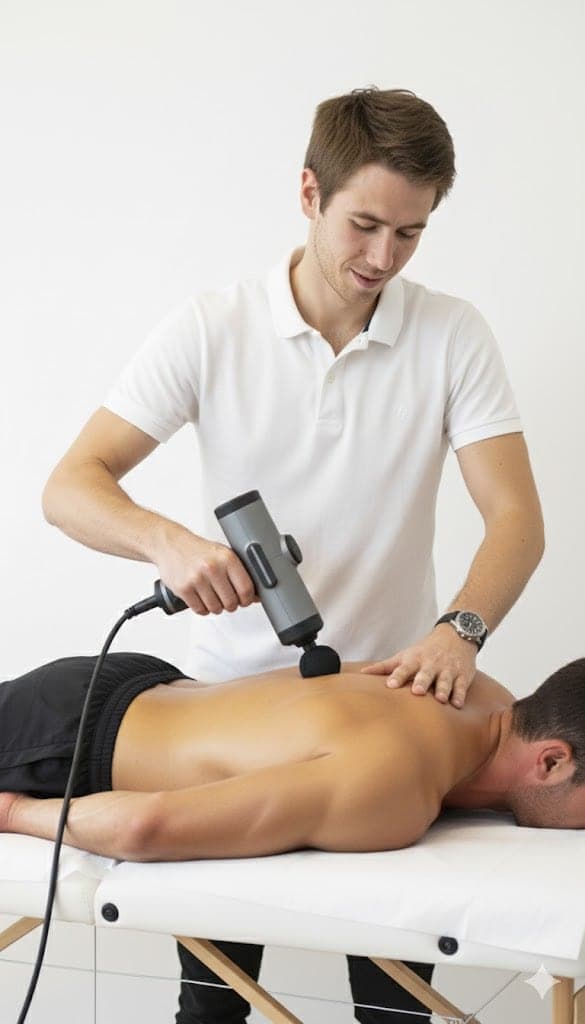
This inconsistency is precisely why I invested in advanced mechanical massage technology. My specialized machine delivers what I call the three pillars of effective sports therapy: Precision, Power, and Consistency. The tool can penetrate fascial layers at depths impossible for human hands to achieve, while maintaining perfectly controlled pressure for extended periods. When treating a professional athlete’s chronic hamstring dysfunction, I can apply sustained pressure at precisely 40 pounds per square inch for fifteen minutes straight – something no human therapist could replicate.
Why Location Matters: The Chloraka Advantage
Chloraka’s unique coastal environment presents both opportunities and challenges for sports massage therapy. The Mediterranean climate allows for year-round outdoor activities, meaning residents and visitors maintain higher activity levels compared to more temperate regions. However, this also means increased occurrence of overuse injuries, particularly in runners who train on uneven coastal paths and cyclists dealing with constant wind resistance.
During my years practicing in Chloraka, I’ve observed specific injury patterns unique to this region. Tennis players frequently develop lateral epicondylitis due to the prevalent clay court surfaces. Swimmers often present with impingement syndromes from training in saltwater conditions. Beach volleyball players consistently struggle with ankle instability and sand-induced compensatory movement patterns. These region-specific challenges require a therapist who understands not just anatomy, but how environmental factors influence biomechanical dysfunction.
What truly sets my Chloraka practice apart is the mobile service model. Rather than requiring clients to travel to a clinic and lie on shared tables, I bring professional-grade equipment directly to their location. This approach eliminates the stress of transportation, reduces pre-treatment muscle tension, and allows for immediate post-treatment rest. When I treated a professional soccer player last month, he could receive therapy in his own home environment, then transition directly to his personalized recovery protocol without the disruption of travel.
The Mechanical Advantage: Why Technology Surpasses Traditional Methods
Let me share a case study that perfectly illustrates why mechanical therapy produces superior results. A 42-year-old triathlete came to me after eighteen months of traditional massage therapy had failed to resolve her chronic IT band syndrome. Previous therapists had focused on the obvious areas of pain – her lateral knee and hip. Using my mechanical precision tool, I was able to identify and treat the actual source: fascial restrictions in her thoracolumbar fascia that were creating compensatory hip hiking during her running stride.
The mechanical advantage operates on three fundamental principles that human hands simply cannot replicate. First, sustained deep pressure. My equipment can maintain consistent 35-50 pound pressure for extended periods, allowing complete fascial release at the cellular level. Human therapists typically max out at 15-20 pounds before fatigue sets in. Second, precision targeting. The tool’s narrow contact surface can isolate specific trigger points within a muscle belly, rather than applying diffuse pressure across larger areas. Third, consistent rhythm and frequency. The mechanical oscillation patterns stimulate proprioceptive responses that enhance neurological re-education – something impossible to achieve with manual techniques.
This isn’t about replacing human skill with machinery; it’s about amplifying expertise through superior tools. I use my decade of education and experience to diagnose movement dysfunctions, then employ mechanical precision to implement treatment protocols that create lasting change. The combination of advanced biomechanical knowledge and cutting-edge equipment represents the evolution of sports massage therapy.
Identifying Quality Sports Massage Therapists in Chloraka
When evaluating potential sports massage therapists in Chloraka, most people focus on irrelevant criteria. Location convenience, appointment availability, and price point tell you nothing about treatment efficacy. Instead, ask these critical questions: What is their educational background? Do they understand movement analysis and biomechanical assessment? Can they explain the physiological mechanisms behind their treatment approach? Do they focus on symptom relief or causative factors?
A qualified sports massage therapist should conduct a comprehensive intake assessment that examines your movement patterns, postural adaptations, training history, and injury timeline. They should be able to explain exactly why your shoulder pain might originate from thoracic spine restrictions, or how your chronic calf tightness could be compensating for ankle joint dysfunction. If a therapist immediately begins hands-on treatment without thorough assessment, you’re likely receiving recreational massage, not clinical sports therapy.
Equipment and methodology matter significantly. Ask about their approach to deep tissue work. Do they rely solely on manual pressure, or do they employ advanced tools for enhanced precision and consistency? Can they maintain therapeutic pressure for extended periods without compromising treatment quality? Do they customize treatment protocols based on your specific biomechanical dysfunctions, or do they use generic techniques for all clients?
| Evaluation Criteria | Professional Sports Therapist | Basic Massage Therapist |
|---|---|---|
| Educational Background | University degree in related field | Basic massage certification |
| Assessment Protocol | Comprehensive movement analysis | Brief pain location inquiry |
| Treatment Approach | Addresses causative factors | Focuses on symptom relief |
| Equipment Used | Advanced precision tools | Manual techniques only |
| Treatment Consistency | Standardized protocols | Varies by session |
| Follow-up Protocol | Structured progression plan | Reactive scheduling |
The Investment Mindset: Understanding True Value in Sports Massage
Here’s where most people get it completely wrong: they view sports massage as an expense rather than an investment. Last year, I worked with a competitive cyclist who had been spending €80 monthly on basic massage for over two years – €1,920 with zero lasting improvement. After four sessions using my advanced mechanical protocols, his chronic lower back dysfunction was durably resolved. The total cost was €400. Which approach delivered better value?
Professional sports massage therapy is healthcare, not luxury service. When you invest in quality treatment that addresses biomechanical dysfunction at its source, you’re preventing future injuries, optimizing performance capacity, and enhancing long-term quality of life. The alternative is years of recurring pain, decreased athletic performance, and progressive movement compensation that leads to additional injury sites.
My approach involves creating a dedicated partnership rather than providing isolated treatments. We develop customized protocols based on your specific movement dysfunctions, training demands, and performance goals. This might involve initial intensive treatment phases followed by maintenance protocols designed to prevent regression. The investment pays dividends through enhanced performance, injury prevention, and optimized daily function.
Common Misconceptions About Sports Massage in Chloraka
The sports massage industry in Chloraka suffers from widespread misconceptions that prevent people from receiving effective treatment. The most damaging myth is that massage should always feel relaxing and pleasant. Quality sports massage therapy targeting deep fascial restrictions and trigger points involves significant discomfort – this indicates therapeutic change is occurring at the tissue level. If you leave a sports massage feeling like you just had a spa day, you probably received relaxation massage, not clinical treatment.
Another misconception involves treatment frequency. Many therapists recommend weekly maintenance sessions indefinitely, creating financial dependency without addressing underlying causes. My approach focuses on intensive treatment phases that create lasting change, followed by minimal maintenance requirements. The goal is functional independence, not ongoing dependence on treatment.
People also misunderstand the relationship between pain and injury. Many clients request treatment only for acute pain episodes, ignoring chronic movement dysfunctions that haven’t yet become painful. This reactive approach guarantees future injuries. Professional sports massage therapy identifies and corrects biomechanical problems before they become symptomatic, maintaining optimal function rather than simply treating breakdowns.
The Reality of Effective Treatment Protocols
Effective sports massage therapy follows scientific principles, not feel-good philosophies. Fascial tissue requires sustained pressure applied at specific angles to achieve lasting length changes. Trigger points need precise pressure maintained until neurological release occurs – typically 90-120 seconds of continuous contact. These protocols cannot be achieved through gentle Swedish massage techniques or brief pressure applications.
My mechanical approach allows for treatment intensities impossible with manual techniques. We can sustain therapeutic pressure for extended periods while maintaining precise contact with target tissues. The result is complete fascial release and trigger point deactivation rather than temporary symptom relief. This is why clients experience lasting improvement rather than temporary comfort.
Specialized Treatment Approaches for Different Athletic Populations
Different sports create specific movement patterns and injury risks that require specialized treatment approaches. Runners typically develop issues in the kinetic chain from ground contact forces and repetitive motion patterns. Swimmers face unique challenges from overhead motion and aquatic resistance. Team sport athletes deal with multi-directional forces and contact injuries. Each population requires customized assessment and treatment protocols.
In my Chloraka practice, I’ve developed specialized approaches for the region’s most common athletic activities. Tennis players receive focused treatment for elbow and shoulder dysfunction, but more importantly, we address the hip and thoracic spine restrictions that create compensatory upper extremity overuse. Cyclists get comprehensive assessment of their bike fit relationship to biomechanical function, treating the person rather than just the painful areas.
Water sport enthusiasts require particular attention to shoulder girdle mechanics and spinal rotation capacity. The Mediterranean environment encourages year-round aquatic activities, but many participants lack the foundational mobility and stability to perform these movements efficiently. My protocols restore optimal shoulder and spine function while addressing compensatory patterns that develop from repetitive paddling or swimming motions.
- Comprehensive movement assessment identifying primary dysfunction patterns
- Mechanical deep tissue treatment targeting causative restrictions
- Corrective exercise prescription addressing movement deficits
- Progressive loading protocols restoring functional capacity
- Maintenance schedules preventing dysfunction recurrence
The Mobile Treatment Advantage in Chloraka
Traditional clinic-based massage therapy creates unnecessary stress and limits treatment effectiveness. Clients must travel to unfamiliar environments, lie on shared equipment, and then navigate transportation home while in a relaxed state. This model made sense decades ago when mobile equipment wasn’t available, but modern technology allows for superior treatment delivery in client-preferred environments.
My mobile practice in Chloraka brings professional-grade equipment directly to your location. This includes a specialized treatment table designed for sports massage, my precision mechanical therapy tools, and all necessary supplies for comprehensive treatment. The setup takes five minutes, and you receive identical treatment quality to what you’d experience in the most advanced clinic setting.
The mobile advantage extends beyond convenience. Treating clients in familiar environments reduces pre-treatment muscle tension and anxiety. Post-treatment recovery can begin immediately without the disruption of travel. Athletes can transition directly to their personalized recovery protocols, whether that involves contrast showers, specific stretching routines, or simply rest in their own beds. This seamless integration enhances treatment effectiveness and accelerates recovery processes.
Technology Integration in Modern Sports Massage
The integration of advanced technology in sports massage represents the natural evolution of manual therapy techniques. My specialized mechanical tools don’t replace clinical expertise – they amplify it. The machine provides consistent pressure, precise contact, and sustained treatment capacity that human hands cannot match, while my education and experience guide treatment protocols and ensure optimal outcomes.
The technology operates through variable frequency oscillations that can be adjusted from light mobilization to powerful deep tissue work. Different tissue types require different treatment parameters – dense fascial tissue responds to sustained pressure with minimal movement, while muscle tissue benefits from rhythmic compression and release cycles. The mechanical precision allows for exact parameter matching to tissue requirements.
This technological advantage becomes particularly important when treating chronic conditions that have failed to respond to traditional massage. Dense adhesions and fibrotic tissue changes require sustained mechanical stress to achieve remodeling. Human hands simply cannot maintain the necessary pressure and consistency to create lasting tissue changes in severely restricted areas.
Equipment Specifications and Clinical Applications
My primary treatment tool delivers controlled pressure ranging from 10 to 65 pounds per square inch, with adjustable frequency from 10 to 45 cycles per minute. These parameters allow for precise customization based on client tolerance, tissue density, and treatment objectives. The tool head can be modified with different contact surfaces for broad fascial work or precise trigger point treatment.
The equipment monitoring systems track treatment pressure, duration, and frequency in real-time, ensuring consistent protocol delivery across sessions. This data collection allows for objective treatment progression and outcome measurement – something impossible with purely manual techniques. We can document exactly how tissue responsiveness changes over treatment cycles and adjust protocols accordingly.
Client Success Stories and Treatment Outcomes
Results speak louder than methodology explanations. Last month, I treated a professional volleyball player who had been struggling with chronic shoulder impingement for eight months. Previous treatment approaches had focused on the symptomatic shoulder, providing temporary relief but no lasting change. My assessment identified the primary dysfunction in her thoracic spine and rib cage mobility. Using precise mechanical treatment protocols, we restored normal thoracic extension and rib mobility. Her shoulder symptoms resolved completely and haven’t returned despite continuing intensive training.
Another case involved a recreational runner preparing for his first marathon. He’d developed IT band syndrome six weeks into his training program and was facing the possibility of withdrawing from the event. Traditional treatment had provided minimal improvement after four sessions with different therapists. My biomechanical assessment revealed hip flexor restrictions and glute medius weakness creating compensatory IT band tension. Three sessions of mechanical deep tissue work combined with targeted corrective exercises allowed him to complete his marathon pain-free.
These outcomes reflect the difference between symptom-focused treatment and cause-focused intervention. When we address biomechanical dysfunction at its source using precise mechanical techniques, clients experience lasting improvement rather than temporary relief. This is why I can offer treatment protocols that create lasting change rather than requiring ongoing maintenance indefinitely.
- Chronic pain resolution through biomechanical correction
- Enhanced athletic performance via movement optimization
- Injury prevention through dysfunction identification and correction
- Improved daily function and quality of life
- Reduced long-term healthcare costs through preventive intervention
Treatment Protocols and Session Structure
Professional sports massage therapy follows structured protocols based on assessment findings rather than generic routines. Initial sessions involve comprehensive movement analysis including postural assessment, range of motion testing, functional movement screens, and injury history evaluation. This data guides treatment plan development and outcome measurement protocols.
Treatment sessions typically range from 60 to 90 minutes, depending on the complexity and extent of dysfunction. The session begins with movement re-assessment to track progress and identify any changes since the previous treatment. Manual tissue assessment follows to evaluate restriction density and trigger point activity levels. Treatment protocols are then customized based on current tissue state and tolerance levels.
The mechanical treatment phase involves systematic progression through identified restriction areas. We begin with lighter pressure to assess tissue responsiveness, then gradually increase intensity to therapeutic levels. Treatment duration for each area depends on tissue density and restriction severity – some areas require only brief intervention while chronic restrictions may need 10-15 minutes of sustained pressure to achieve release.
Post-Treatment Protocols and Home Care
Treatment effectiveness extends far beyond the hands-on session. Post-treatment protocols include specific movement assignments, corrective exercises, and activity modifications designed to maintain treatment gains and prevent dysfunction recurrence. These protocols are individualized based on your specific movement deficits and lifestyle demands.
Immediate post-treatment care involves hydration protocols to support tissue recovery and metabolic waste removal. Movement recommendations help maintain newly achieved tissue length and prevent protective muscle guarding. Activity modifications ensure that daily movements support rather than undermine treatment progress.
Pricing Structure and Investment Considerations
Professional sports massage therapy pricing reflects the complexity of service delivery and expected outcomes. Initial comprehensive assessments involve 90-120 minutes of evaluation and treatment, with follow-up sessions ranging from 60-90 minutes based on treatment requirements. Pricing accounts for advanced education, specialized equipment investment, mobile service delivery, and guaranteed outcome achievement.
The investment comparison becomes clear when considering alternative costs. Ongoing basic massage at €60 per session with temporary results versus intensive protocols that create lasting change at higher per-session costs but dramatically fewer total sessions required. Most clients achieve their primary treatment objectives within 4-6 sessions, compared to indefinite treatment requirements with traditional approaches.
Payment options include individual session rates and treatment package discounts for clients committed to complete resolution protocols. Package pricing reduces per-session costs while ensuring treatment continuity necessary for optimal outcomes. This investment approach aligns financial incentives with treatment success rather than session volume.
| Service Type | Duration | Investment | Expected Outcome |
|---|---|---|---|
| Initial Assessment & Treatment | 90-120 minutes | €150-180 | Comprehensive dysfunction identification |
| Standard Treatment Session | 60-90 minutes | €100-130 | Progressive dysfunction resolution |
| Maintenance Protocol | 45-60 minutes | €80-100 | Function optimization and prevention |
| Treatment Package (4 sessions) | Variable | €380-480 | Complete dysfunction resolution |
Scheduling and Availability in Chloraka
Mobile service delivery requires careful scheduling coordination to ensure optimal treatment timing and location accessibility. Morning appointments often work best for athletes who train in the afternoon, while evening sessions suit office workers dealing with postural dysfunction from desk-based activities. Weekend availability accommodates clients whose weekday schedules don’t permit extended treatment sessions.
Appointment scheduling considers treatment progression requirements rather than arbitrary weekly intervals. Acute dysfunction may require sessions every 2-3 days initially, while maintenance protocols might involve monthly check-ins. The scheduling approach prioritizes optimal healing timelines over convenient routine patterns.
Location requirements are minimal – I need a quiet space with adequate room for equipment setup and client movement. This can be your home, office, or even outdoor locations if weather permits. The mobile setup adapts to various environments while maintaining professional treatment standards throughout Chloraka and surrounding areas.
Frequently Asked Questions About Chloraka Sports Massage
How does mechanical sports massage differ from traditional hands-on techniques?
Mechanical sports massage utilizes precision tools that deliver consistent pressure and sustained treatment duration impossible with human hands. Traditional massage faces limitations of therapist fatigue, inconsistent pressure application, and inability to maintain therapeutic intensity for extended periods. My mechanical approach provides deeper tissue penetration, precise trigger point targeting, and standardized treatment protocols that ensure consistent outcomes. The technology amplifies clinical expertise rather than replacing it, allowing for treatment precision and intensity that creates lasting biomechanical changes rather than temporary symptom relief.
What qualifications should I look for in a sports massage therapist in Chloraka?
Seek therapists with university-level education in related fields such as physical education, kinesiology, or sports science, rather than basic massage certification alone. Look for practitioners who conduct comprehensive movement assessments, understand biomechanical principles, and can explain the physiological mechanisms behind their treatment approaches. Professional sports massage therapists focus on causative factors rather than symptom management, employ advanced treatment tools and techniques, and provide structured treatment protocols rather than generic massage routines. Experience treating athletes and understanding sport-specific movement patterns is essential for effective sports massage therapy.
How many sessions are typically required to resolve chronic pain issues?
Treatment duration depends on dysfunction complexity, chronicity, and individual response patterns, but most chronic conditions require 4-6 intensive sessions using advanced mechanical protocols. This contrasts sharply with traditional massage approaches that may require ongoing treatment indefinitely without addressing underlying causes. My approach involves initial intensive phases to create lasting biomechanical changes, followed by minimal maintenance requirements. Acute conditions may resolve in 1-3 sessions, while complex chronic dysfunctions involving multiple compensation patterns may require 6-8 sessions. The goal is always lasting resolution rather than ongoing management, which is why treatment protocols focus on causative correction rather than symptom relief.
Is sports massage appropriate for non-athletes or recreational exercisers?
Advanced sports massage benefits anyone experiencing movement dysfunction, chronic pain, or suboptimal physical function, regardless of athletic participation level. Office workers with postural dysfunction, weekend warriors with overuse injuries, and sedentary individuals with movement restrictions all benefit from professional biomechanical assessment and corrective treatment. The term “sports massage” refers to the scientific, results-oriented approach rather than requiring athletic participation. My mechanical treatment protocols address tissue dysfunction and movement limitations that affect daily life quality, workplace productivity, and recreational activity enjoyment. Everyone deserves optimal physical function, not just competitive athletes.
What should I expect during a comprehensive sports massage assessment?
Comprehensive assessment involves detailed injury history review, postural analysis, range of motion testing, functional movement evaluation, and manual tissue assessment. The process typically requires 30-45 minutes before beginning hands-on treatment, as accurate diagnosis is essential for effective treatment protocol development. I evaluate movement patterns, identify compensation strategies, assess tissue quality and restriction patterns, and determine the relationship between various dysfunction areas. This thorough approach allows for precise treatment targeting and realistic outcome prediction. Clients receive detailed explanations of findings, treatment rationale, and expected improvement timeline before beginning manual therapy.
How do I maintain treatment gains between sessions and after completion?
Treatment maintenance involves specific corrective exercises addressing identified movement deficits, postural awareness training, and lifestyle modifications that support optimal biomechanical function. I provide individualized home care protocols including targeted stretching routines, strengthening exercises for weak muscle groups, and movement pattern corrections for daily activities. Hydration protocols support tissue recovery, while activity modifications prevent dysfunction recurrence. The goal is achieving functional independence rather than ongoing treatment dependence. Most clients require minimal maintenance after completing initial treatment protocols, with occasional check-ins to address new stressors or prevent regression during periods of increased activity or stress.
What makes your mobile service different from clinic-based massage therapy?
Mobile service delivery eliminates transportation stress, reduces pre-treatment muscle tension, and allows for optimal post-treatment recovery in familiar environments. I bring identical equipment quality to your preferred location, including professional treatment tables, precision mechanical tools, and all necessary supplies. Treatment effectiveness improves when clients receive therapy in comfortable, private settings rather than clinical environments. The mobile approach also provides schedule flexibility and eliminates time constraints related to clinic operating hours. Post-treatment protocols can begin immediately without travel disruption, enhancing recovery processes and treatment outcomes. This service model prioritizes client convenience while maintaining the highest professional standards.
Can mechanical massage tools cause injury or adverse effects?
Professional mechanical massage tools, when operated by qualified practitioners, are significantly safer than manual techniques due to precise pressure control and consistent application. The equipment allows for exact intensity adjustment based on tissue tolerance and treatment requirements, eliminating the guesswork involved in manual pressure application. Adverse effects are minimal and typically involve mild soreness similar to intense exercise, indicating therapeutic tissue changes are occurring. My university education and decade of experience ensure safe equipment operation and appropriate treatment parameter selection. The mechanical approach actually reduces injury risk by providing controlled, predictable treatment delivery rather than variable manual techniques that depend on therapist strength and technique consistency.
Written by
Chris
Massage therapist & body mechanics specialist
Norwegian-certified with a Bachelor’s in Physical Education and Nutrition and over ten years of clinical practice, working from a portable table in clients’ homes across the Paphos district.
This article is general information from clinical practice, not a medical diagnosis. If you have severe, worsening or unexplained pain, numbness, weakness, or pain after an accident, see a doctor first.