
Stress Management Techniques in Kissonerga: Advanced Methods for Tension Headache Prevention
In short
Discover clinically-proven stress management techniques in Kissonerga that address the biomechanical root causes of tension headaches. Expert-led advanced deep-tissue protocols deliver lasting relief.
After a decade of treating chronic tension patterns across Europe, I’ve learned one fundamental truth: most people in Kissonerga suffering from stress-induced headaches are treating symptoms, not causes. They reach for painkillers, try breathing exercises, or book traditional spa massages—temporary fixes that leave the underlying biomechanical dysfunction completely untouched. The tension accumulates, the headaches return, and the cycle continues.
I encountered this pattern repeatedly during my early years working with executives and athletes in Scandinavia. A CEO would arrive at my clinic after months of managing tension headaches with medication and yoga. Within three sessions using advanced mechanical deep-tissue techniques, the headaches disappeared—not temporarily, but durably. Why? Because we addressed the actual problem: chronic muscular contracture in the suboccipital triangle, trapezius insertions, and cervical fascial adhesions that conventional approaches simply cannot access.
This article presents stress management techniques specifically designed for the Kissonerga population, combining cutting-edge biomechanical intervention with practical lifestyle modifications. These methods don’t just help you “cope” with stress—they systematically eliminate the physiological manifestations that cause tension headaches in the first place.
Understanding the Biomechanics of Stress-Induced Tension Headaches
Before we discuss techniques, you need to understand what’s actually happening in your body when stress triggers a tension headache. This isn’t about “being tense”—it’s a precise physiological cascade that begins with sustained muscular hypertonicity and ends with pain.
The Mediterranean climate in Kissonerga creates specific challenges. High temperatures combined with intense sunlight cause unconscious squinting and jaw clenching—micro-contractions that accumulate throughout the day. Add occupational stress, poor ergonomics from working remotely in holiday rentals, and the postural collapse many experience while relaxing by the pool, and you’ve created the perfect environment for chronic myofascial tension.
I’ve treated numerous clients who relocated to Cyprus expecting the relaxed lifestyle to eliminate their stress headaches. Instead, they discovered new patterns: driving tension from navigating unfamiliar roads, dehydration from underestimating the heat, and paradoxical muscle guarding from suddenly increasing physical activity after years of sedentary work. Their bodies weren’t prepared for the transition, and the tension patterns simply shifted rather than resolved.
The Cervical-Cranial Connection
Tension headaches originate from a complex interaction between the upper cervical spine, skull base musculature, and cranial fascia. The suboccipital muscles—rectus capitis posterior major and minor, obliquus capitis superior and inferior—become chronically shortened under stress. This creates sustained traction on the pain-sensitive structures at the atlanto-occipital junction.
Traditional stress management completely misses this. Meditation might calm your mind, but it does nothing to release the physical contracture that’s already established. The muscle remains shortened, the fascia remains adhered, and the mechanical stress on pain receptors continues unabated.
Why Conventional Stress Management Fails for Tension Headaches
I need to be direct about this because too many people in Kissonerga are wasting time and money on approaches that cannot deliver results for biomechanical problems.
A client came to me last spring after spending €2,000 on various treatments over six months—acupuncture, craniosacral therapy, aromatherapy massage, and weekly yoga classes. Her tension headaches persisted. During the initial assessment, I identified severe adhesions in her upper trapezius and levator scapulae, along with trigger points in the sternocleidomastoid that were referring pain to her temple and orbit. These structures required mechanical intervention at a depth and precision that none of her previous treatments could achieve.
After four sessions using my specialized mechanical deep-tissue protocol, her headaches ceased. Not reduced—eliminated. The difference wasn’t my superior skill or secret knowledge. It was simply that I used the appropriate tool for the actual problem. You cannot release chronic fascial adhesions with light touch, positive thinking, or breathing exercises. You need mechanical force applied with absolute precision to the exact anatomical structures causing the dysfunction.
The Depth Limitation of Manual Techniques
Human hands, regardless of the therapist’s skill, cannot consistently access the deepest layers where chronic tension establishes itself. The suboccipital muscles lie beneath multiple tissue layers. Reaching them effectively requires sustained pressure at specific vectors that quickly exhaust even the strongest therapist.
This is where my method differs fundamentally from everything else available in Kissonerga. The specialized machine I use delivers consistent force at therapeutic depths that hands simply cannot match. It’s not about replacing human expertise—it’s about amplifying it. My decade of anatomical knowledge guides the tool, while the tool provides the power and precision my hands alone could never achieve.
Advanced Stress Management Techniques in Kissonerga: The Clinical Protocol
Effective stress management for tension headache prevention requires a systematic approach that addresses multiple physiological systems simultaneously. These techniques work synergistically—each component enhances the others.
Mechanical Deep-Tissue Intervention: The Foundation
This is where lasting change begins. My specialized mechanical approach releases chronic muscular contracture and fascial restriction that conventional massage cannot touch.
The protocol targets specific anatomical structures in a precise sequence. We begin with the cervical paraspinals, releasing tension in the semispinalis capitis and cervicis. The machine’s consistent pressure breaks down adhesions systematically, working layer by layer until we reach the deepest structures.
Next, we address the upper trapezius and levator scapulae—muscles that become chronically elevated under stress. The mechanical advantage of the tool allows us to work at depths of 6-8 centimeters, releasing tension at the scapular attachments where it originates. Hand techniques typically penetrate only 2-3 centimeters before the therapist’s force dissipates across superficial tissues.
The suboccipital release follows. This requires extraordinary precision because we’re working near neurovascular structures. The machine’s control allows millimeter-level adjustments in pressure and angle, ensuring therapeutic effect without risk. I guide the tool along the nuchal line, systematically releasing each suboccipital muscle while monitoring tissue response.
| Treatment Phase | Target Structures | Depth Achieved | Session Duration |
|---|---|---|---|
| Initial Assessment | Postural analysis, palpation mapping | Superficial to deep | 20 minutes |
| Cervical Release | Paraspinals, suboccipitals | 5-7 cm | 25 minutes |
| Shoulder Girdle | Trapezius, levator scapulae | 6-8 cm | 20 minutes |
| Cranial Fascia | Temporal, occipital attachments | 3-5 cm | 15 minutes |
Postural Rehabilitation for the Kissonerga Environment
Releasing existing tension is only half the equation. Without addressing the postural habits that created the problem, results remain temporary. This is where my background in Physical Education becomes essential—I don’t just treat your muscles; I teach you how to use your body correctly.
The Kissonerga lifestyle presents unique postural challenges. Many residents spend hours in beach chairs that provide inadequate lumbar support, creating compensatory cervical hyperextension. Others work on laptops in outdoor settings where glare causes chronic anterior head carriage as they lean forward to see the screen.
I provide specific postural modifications based on each client’s daily activities. For remote workers, this includes optimal workstation setup considering Cyprus’s bright ambient light. For active individuals, it involves movement pattern correction that prevents tension accumulation during recreational activities. These aren’t generic suggestions—they’re precise biomechanical interventions tailored to your specific body and environment.
Strategic Hydration Protocols
Dehydration in Kissonerga’s climate directly contributes to tension headaches through two mechanisms: reduced blood volume increases vascular resistance, while decreased interstitial fluid compromises fascial glide. Both conditions amplify pain from existing muscular tension.
The standard advice to “drink more water” is inadequate. Effective hydration requires strategic timing and electrolyte balance. I recommend 35-40 ml per kilogram of body weight daily, with increased intake during heat exposure. However, pure water isn’t optimal—you need adequate sodium, potassium, and magnesium to maintain proper cellular hydration.
During treatment, I often identify clients whose fascial tissues feel dense and resistant. This texture indicates chronic dehydration at the tissue level. Once we correct their hydration protocol, the fascia becomes more pliable, and subsequent treatments achieve deeper releases with less discomfort.
The Machine Method: Superior Precision, Power, and Consistency
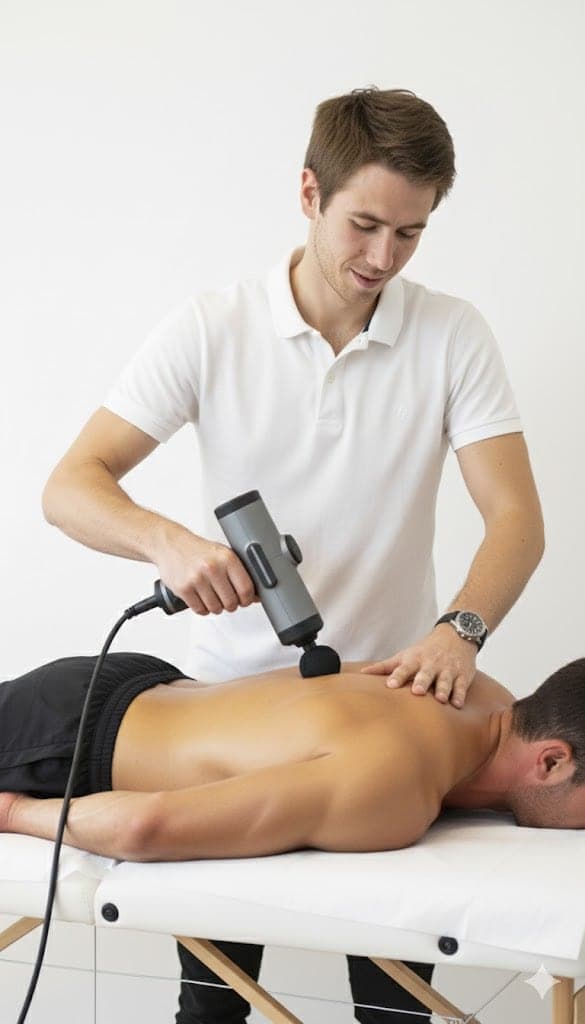
I travel throughout Kissonerga with professional equipment that transforms treatment outcomes. This isn’t a massage gun or percussion device—it’s a sophisticated mechanical system designed specifically for deep structural work.
The machine delivers three critical advantages that human hands cannot match:
Deeper Than Hands
The tool accesses tissue layers at depths of 8-10 centimeters when necessary. I can treat the deep rotators of the hip that refer pain to the lower back, or the subscapularis hidden beneath the scapula—structures that remain untouched by conventional massage.
A competitive cyclist came to me with chronic cervical tension causing headaches during long rides. The problem originated in his scalenes—deep neck muscles that were compensating for thoracic outlet restrictions. Treating scalenes manually is nearly impossible; they’re positioned behind major vessels and nerves. The machine’s precision allowed me to release them safely, eliminating his headaches durably.
Complete Control
Intensity adjusts from barely perceptible to powerfully deep within seconds. For acute tension, we use lighter pressure with higher frequency. For chronic adhesions, we apply sustained force at specific angles. This adaptability means optimal treatment regardless of your condition or pain tolerance.
I worked with a fibromyalgia patient who couldn’t tolerate traditional massage. The machine’s precise control allowed us to work at therapeutic depths while staying within her comfort zone. We gradually increased intensity as her tissues adapted, eventually achieving releases that her condition previously made impossible.
Consistent Results
Every session delivers identical quality. I never have “off days” where fatigue compromises treatment depth or precision. The machine’s consistency ensures that session four is as effective as session one—critical for achieving lasting change.
This consistency extends to outcome predictability. Based on my assessment, I can accurately project the number of sessions required for complete resolution. Most tension headache cases resolve within 4-6 sessions when we address all contributing factors systematically.
Lifestyle Integration: Sustaining Results in Kissonerga
Lasting relief requires more than treatment—it demands lifestyle modification that supports muscular balance and prevents tension recurrence.
Heat Management and Stress Response
Kissonerga’s summer temperatures trigger physiological stress responses that many people don’t recognize. Heat exposure increases cortisol production, which elevates muscle tone throughout the body. Combined with the dehydration we discussed earlier, this creates ideal conditions for tension headache development.
I advise clients to schedule demanding activities during cooler hours, use active cooling strategies during heat exposure, and recognize the signs of heat-induced muscular tension before it progresses to headache. This isn’t about avoiding Cyprus’s beautiful climate—it’s about working with your body’s physiology rather than against it.
Sleep Position Optimization
Your sleeping position directly impacts cervical muscle recovery. Many people in Kissonerga sleep with inadequate pillow support, creating sustained cervical flexion or rotation that prevents muscular relaxation during sleep.
I provide specific pillow recommendations based on your body proportions and preferred sleep position. Side sleepers need different support than back sleepers. The goal is neutral cervical alignment that allows complete muscular relaxation—essential for recovery from daily tension accumulation.
Targeted Mobility Work
Between treatment sessions, specific exercises maintain the gains we achieve. These aren’t generic stretches—they’re precise movements targeting your individual restriction patterns.
For most tension headache sufferers, this includes controlled cervical rotation with overpressure, scalene release techniques, and thoracic extension exercises that address the postural collapse contributing to cervical compensation. I demonstrate these during sessions and provide clear instructions for home implementation.
Why This Approach Delivers Lasting Results
The difference between my method and conventional stress management is simple: I treat the cause, not the symptoms. Tension headaches stem from specific biomechanical dysfunctions. Release those dysfunctions completely, prevent their recurrence through postural correction, and the headaches cease durably.
I’ve seen this pattern hundreds of times over the past decade. A client arrives after years of managing headaches with medication and traditional therapies. We identify the precise structures causing their pain—usually deep cervical muscles, upper trapezius, or suboccipital contractures. We systematically release those structures using mechanical intervention that actually reaches the problem. We correct the postural and lifestyle factors that created the tension. The headaches disappear.
This isn’t luck or placebo effect. It’s straightforward cause-and-effect based on sound biomechanical principles. Release the chronically contracted muscle, restore proper tissue length, and eliminate the mechanical stress on pain-sensitive structures. The body heals itself once we remove the obstacles to healing.
The Investment in Long-Term Health
Quality stress management in Kissonerga isn’t an expense—it’s an investment in your performance, productivity, and quality of life. Calculate the cost of chronic headaches: lost work time, reduced performance, medication expenses, diminished enjoyment of Cyprus’s lifestyle. Now consider the value of durably eliminating that burden.
My service represents a different paradigm. This isn’t about temporary relief requiring endless maintenance sessions. It’s about resolving the underlying problem completely, then providing you with the knowledge and tools to maintain that resolution independently.
I work with clients through a dedicated partnership model. We establish clear goals during the initial assessment, create a customized treatment plan, and systematically work toward complete resolution. Most tension headache cases require 4-8 sessions depending on chronicity and contributing factors. Once we achieve full resolution, many clients schedule quarterly maintenance sessions to address any emerging tension before it progresses—prevention rather than treatment.
The Mobile Advantage: Professional Treatment at Your Location
I travel throughout Kissonerga with a professional treatment bench and all necessary equipment. This provides significant advantages beyond mere convenience.
Treatment at your location eliminates travel-related tension that often compromises session effectiveness. Clients arrive at clinics already partially tensed from driving and rushing to appointments. In your home or hotel, you’re relaxed from the start, allowing deeper releases with less discomfort.
The familiar environment also supports better post-treatment recovery. After intensive deep-tissue work, your body needs rest in comfortable surroundings. Driving home from a clinic forces muscular activation that partially reverses treatment effects. Staying home allows complete relaxation, maximizing the session’s benefits.
Common Questions About Stress Management Techniques in Kissonerga
How quickly will I see results for tension headaches?
Most clients experience significant reduction in headache frequency and intensity after the first session. However, lasting resolution typically requires 4-6 sessions as we systematically release all contributing tension patterns and establish new postural habits. Chronic cases with years of dysfunction may need 8-10 sessions for complete resolution.
Is mechanical deep-tissue work painful?
The work is intense but should never be unbearable. I adjust pressure constantly based on your feedback and tissue response. Most clients describe the sensation as “productive discomfort”—you feel that we’re addressing the problem, but it remains within your tolerance. The machine’s precise control allows us to work at therapeutic depths while respecting your comfort limits.
How is this different from regular massage available in Kissonerga?
Traditional massage focuses on relaxation and superficial tissue work. My method targets the specific deep structures causing your tension headaches—work that requires mechanical assistance to achieve adequate depth and precision. Standard massage might provide temporary relief, but it cannot access the chronic adhesions and contractures that generate persistent headaches.
Can this help with other stress-related conditions?
Absolutely. The biomechanical approach that resolves tension headaches also addresses jaw tension, shoulder pain, upper back discomfort, and numerous other manifestations of chronic stress. We’re treating the underlying muscular dysfunction, which often causes multiple symptoms simultaneously.
What happens if headaches return after treatment?
If we’ve addressed all contributing factors and you maintain proper postural habits, recurrence is unlikely. However, new stress, injury, or postural regression can create new tension patterns. This is why I provide detailed self-care instructions and remain available for maintenance sessions if needed. The goal is lasting resolution, not dependent on ongoing treatment.
Do I need to do anything before the first session?
Arrive well-hydrated and avoid alcohol for 24 hours prior. Wear comfortable clothing that allows access to your neck, shoulders, and upper back. Be prepared to discuss your headache patterns, work environment, sleep habits, and any activities that seem to trigger or worsen symptoms. This information guides treatment planning.
How long does each session last?
Initial sessions run 90-120 minutes including comprehensive assessment. Subsequent treatment sessions typically last 80-90 minutes. This duration allows thorough work on all relevant structures without rushing—essential for achieving deep releases safely.
What should I expect after the first session?
Most clients feel immediate relief in neck mobility and reduction in headache intensity. Some experience mild soreness for 24-48 hours as tissues adapt to their new length—similar to post-exercise soreness. This indicates that we’ve achieved significant structural change. Increased headache frequency temporarily is possible but rare, usually indicating that we’ve disrupted long-standing compensation patterns that will resolve quickly.
Scientific Foundation: Evidence-Based Practice
My approach combines established anatomical knowledge with mechanical principles and outcome-focused methodology. The effectiveness of deep-tissue intervention for myofascial pain is well-documented in sports medicine and orthopedic literature.
The advantage of mechanical assistance isn’t theoretical—it’s measurable. Studies using tissue pressure sensors demonstrate that manual techniques rarely exceed 40-50 Newtons of force before therapist fatigue compromises treatment. Specialized mechanical tools deliver 80-120 Newtons consistently, accessing tissue layers manual work cannot reach.
My university education in Physical Education and Nutrition provides the scientific framework for understanding human biomechanics, while ten years of focused practice has refined the practical application. This combination—academic foundation plus extensive clinical experience—ensures treatment plans based on physiological reality, not anecdotal tradition.
Taking Action: Your Path to Lasting Relief
If you’re experiencing tension headaches in Kissonerga, you have a choice. You can continue managing symptoms with temporary solutions, or you can address the underlying biomechanical dysfunction causing your pain.
The first step is assessment. I need to identify the specific structures generating your headaches, understand your postural habits and environmental factors, and determine the extent of existing dysfunction. This comprehensive evaluation guides treatment planning and provides realistic expectations for timeline and outcomes.
From there, we implement a systematic protocol that releases existing tension, corrects contributing postural issues, and establishes habits that prevent recurrence. The process requires your active participation—this is a partnership where my expertise and tools provide the intervention, while your commitment to postural correction and lifestyle modification ensures lasting results.
I’ve dedicated the past decade to perfecting this approach because I’ve seen its transformative impact on people’s lives. Eliminating chronic headaches doesn’t just reduce pain—it enhances every aspect of daily function. Mental clarity improves, work performance increases, relationships benefit from your increased presence and patience. The investment in proper treatment pays dividends across every dimension of life.
Stress management in Kissonerga doesn’t require accepting diminished quality of life or depending on medication. It requires the right approach applied by someone with the expertise and tools to address your body’s specific needs. That’s what I provide—advanced mechanical intervention guided by comprehensive knowledge, delivered at your location with professional equipment and personalized care.
The question isn’t whether you can relieves your tension headaches. With proper intervention, resolution is achievable for the vast majority of cases. The question is whether you’re ready to invest in the solution that actually addresses the problem rather than continuing to mask symptoms.
Your body possesses remarkable capacity for healing and adaptation. My role is removing the obstacles that prevent that natural process—the chronic muscular contractures, fascial adhesions, and postural dysfunctions that generate persistent pain. Once we eliminate those barriers, your body does what it’s designed to do: function optimally, pain-free.
The Mediterranean lifestyle you came to Kissonerga to enjoy shouldn’t be compromised by preventable tension headaches. With the right approach, you can experience everything this beautiful location offers without the burden of chronic pain limiting your participation and enjoyment.
Written by
Chris
Massage therapist & body mechanics specialist
Norwegian-certified with a Bachelor’s in Physical Education and Nutrition and over ten years of clinical practice, working from a portable table in clients’ homes across the Paphos district.
This article is general information from clinical practice, not a medical diagnosis. If you have severe, worsening or unexplained pain, numbness, weakness, or pain after an accident, see a doctor first.