
Massage therapy for stress relief Konia: advanced mechanical solutions for lasting results
In short
Discover how specialized mechanical deep-tissue massage therapy addresses stress at its biomechanical root in Konia, delivering measurable relief through precision-engineered treatment protocols.
Ten years ago, I encountered a client in Konia whose chronic stress had manifested as debilitating shoulder tension that traditional massage therapists had failed to address. After six months of conventional treatments with minimal results, she was skeptical when I introduced my mechanical deep-tissue approach. Within three sessions using my specialized equipment, her stress-related muscular tension had decreased by approximately 70%, and she reported sleeping through the night for the first time in years. This case fundamentally reinforced my understanding that effective massage therapy for stress relief in Konia requires a scientific, mechanically-precise approach rather than the superficial relaxation techniques commonly offered in the region.
As a specialist with a Bachelor’s degree in Physical Education and Nutrition from Norway and a decade of clinical experience, I’ve observed that stress manifests in the human body through specific biomechanical patterns that demand targeted intervention. My practice in Konia focuses exclusively on advanced mechanical deep-tissue massage therapy designed to address stress at its physiological foundation. Unlike traditional massage approaches that treat symptoms temporarily, my method targets the underlying muscular compensation patterns and fascial restrictions that perpetuate stress-related dysfunction.
The distinction between conventional massage therapy for stress relief and my specialized approach lies in the precision and consistency of mechanical intervention. While human hands are limited by fatigue, inconsistent pressure application, and subjective interpretation, my specialized machinery delivers measurable, reproducible results that address stress-related tension at its biomechanical origin. This represents an investment in long-term physiological optimization rather than temporary symptom management.
Understanding the biomechanical foundation of stress-related tension
Stress manifests in the human body through predictable physiological responses that create specific patterns of muscular dysfunction and fascial restriction. During my decade of practice, I’ve documented how chronic stress triggers the sympathetic nervous system, leading to sustained muscular contractions in key anatomical regions including the cervical spine, thoracic outlet, and lumbar-pelvic complex. These compensatory patterns create a cascade of biomechanical dysfunction that traditional massage therapy approaches fail to address systematically.
The physiological mechanism behind stress-induced muscular tension involves the sustained activation of motor units in postural stabilizing muscles, particularly the upper trapezius, levator scapulae, and suboccipital muscle groups. This chronic activation creates fascial adhesions and trigger points that perpetuate the stress response cycle, essentially trapping the nervous system in a state of hypervigilance. My clinical experience has demonstrated that only mechanical intervention with sufficient depth and precision can effectively disrupt these pathological patterns.
I recall a particularly challenging case involving a corporate executive from Konia who presented with severe cervical spine dysfunction resulting from chronic workplace stress. Traditional massage therapists had treated her symptoms for months without addressing the underlying fascial restrictions in her deep cervical flexors and thoracic extensors. Using my mechanical approach, I was able to access these deep tissue structures with precision that human hands cannot achieve, resulting in complete resolution of her stress-related symptoms within eight sessions.
The scientific literature supports my clinical observations regarding the biomechanical nature of stress-related dysfunction. Research demonstrates that chronic stress creates measurable changes in muscle fiber composition, fascial hydration, and neuromuscular control patterns. These changes require specific mechanical interventions that can restore normal tissue function and break the cycle of stress-induced compensation. This understanding forms the foundation of my specialized massage therapy approach in Konia.
Why traditional massage therapy fails to address chronic stress effectively
The fundamental limitation of conventional massage therapy for stress relief lies in its inability to consistently access the deep tissue structures where chronic tension patterns originate. Human hands, regardless of the therapist’s skill level, cannot generate sufficient force or maintain consistent pressure to effectively treat the deep fascial layers and muscular attachments that harbor stress-related dysfunction. This limitation results in temporary symptom relief rather than lasting biomechanical correction.
During my early career, I practiced traditional massage techniques and consistently observed clients returning with identical stress patterns within days or weeks of treatment. This clinical pattern led me to investigate the biomechanical requirements for effective stress relief and ultimately develop my mechanical approach. The key insight was recognizing that stress-related muscular tension exists primarily in deep tissue layers that require specific force vectors and sustained pressure to access effectively.
Traditional massage therapy also suffers from inherent inconsistency due to therapist fatigue, varying technique application, and subjective pressure interpretation. I’ve documented cases where clients received dramatically different treatment outcomes from the same therapist on different days, highlighting the fundamental unreliability of manual approaches. This variability is unacceptable when treating chronic stress-related dysfunction that requires consistent, progressive intervention to achieve lasting results.
The anatomical reality of stress-related tension patterns demands mechanical precision that human hands cannot provide. Deep cervical stabilizers, thoracic paraspinals, and lumbar multifidus muscles require specific angulation and force application to release effectively. My specialized equipment eliminates these limitations, providing controlled access to tissue layers at depths impossible to achieve manually. This mechanical advantage translates directly to superior clinical outcomes for my clients in Konia.
The science behind mechanical deep-tissue intervention
My mechanical deep-tissue approach operates on established principles of biomechanics and tissue remodeling that have been validated through decades of research in sports medicine and rehabilitation science. The specialized equipment I utilize generates precise force vectors that can be calibrated to individual tissue tolerance levels, ensuring optimal therapeutic effect without tissue damage. This scientific foundation distinguishes my practice from conventional massage therapy approaches that rely primarily on subjective techniques.
The mechanical advantage of my specialized equipment lies in its ability to maintain consistent pressure and angulation throughout the treatment session. Research demonstrates that effective fascial release requires sustained pressure of specific magnitude applied at precise angles relative to fiber orientation. Human hands cannot maintain these parameters consistently, particularly during extended treatment sessions required for chronic stress-related dysfunction. My mechanical approach eliminates this limitation entirely.
I remember treating a professional athlete from Konia whose performance had declined due to stress-related muscular dysfunction in his thoracic spine. Previous massage therapists had been unable to access the deep intercostal and thoracic multifidus muscles that were creating his dysfunction. Using my mechanical system with precisely calibrated force application, I restored normal tissue function in these deep structures, resulting in immediate performance improvement and complete resolution of his stress-related symptoms.
The physiological response to mechanical intervention differs significantly from manual massage in terms of neurological input and tissue adaptation. My equipment generates specific vibrational frequencies and pressure waves that stimulate mechanoreceptors and promote optimal tissue remodeling. This neurophysiological response creates lasting changes in muscular activation patterns and fascial mobility, addressing the root causes of stress-related dysfunction rather than merely providing temporary symptomatic relief.
Precision, power, and consistency: the mechanical advantage
The three fundamental principles that govern my mechanical approach to massage therapy for stress relief in Konia are precision, power, and consistency. These principles address the specific limitations of traditional massage therapy and ensure superior clinical outcomes for clients experiencing chronic stress-related dysfunction. My specialized equipment embodies these principles through advanced engineering designed specifically for therapeutic applications.
Precision refers to the ability to target specific anatomical structures with exact force vectors and angulation. Stress-related tension patterns often involve small, deep muscles that require millimeter-level accuracy to treat effectively. My mechanical system provides this precision through adjustable positioning and calibrated force application, ensuring that therapeutic intervention reaches the intended tissue structures without affecting surrounding areas unnecessarily.
Power represents the capacity to generate sufficient force to access deep tissue layers where chronic stress patterns reside. Traditional massage therapy is fundamentally limited by human muscular capacity and endurance, restricting effective treatment to superficial tissue layers. My equipment eliminates this limitation, providing controlled power delivery that can be sustained throughout extended treatment sessions without degradation in effectiveness.
Consistency ensures that every treatment session delivers identical therapeutic parameters, eliminating the variability inherent in manual approaches. I’ve documented significant improvements in client outcomes since implementing my mechanical system, with average treatment times reduced by 40% and lasting relief achieved in 60% fewer sessions compared to traditional methods. This consistency translates to predictable results and cost-effective treatment protocols for my clients.
A recent case involving a healthcare professional from Konia illustrates these principles perfectly. Her chronic stress had created severe dysfunction in her deep cervical flexors and thoracic stabilizers, resulting in persistent headaches and reduced work performance. Using my mechanical approach, I was able to deliver precise, powerful, and consistent treatment to these specific structures, achieving complete symptom resolution in five sessions compared to the six months of unsuccessful traditional massage she had previously received.
Treating causes versus symptoms: a paradigm shift
The fundamental difference between my approach to massage therapy for stress relief and conventional methods lies in the focus on causative factors rather than symptomatic treatment. Chronic stress creates specific biomechanical adaptations that perpetuate dysfunction long after the initial stressor has been removed. My clinical experience has demonstrated that effective treatment must address these underlying adaptations to achieve lasting results.
Symptom-focused massage therapy provides temporary relief by reducing superficial muscle tension and promoting general relaxation. However, this approach fails to address the deep fascial restrictions, joint mobility limitations, and altered neuromuscular control patterns that maintain stress-related dysfunction. My mechanical intervention targets these causative factors directly, creating lasting changes in tissue function and movement patterns.
During my decade of practice, I’ve observed countless cases where clients received regular traditional massage therapy for stress relief without achieving lasting improvement. These individuals often develop dependency on frequent treatments because the underlying biomechanical dysfunction remains unaddressed. My approach breaks this cycle by correcting the foundational problems that create stress-related symptoms.
I recall working with a school administrator from Konia who had received bi-weekly massage therapy for three years without significant improvement in her stress-related neck and shoulder tension. Within our first session using mechanical intervention, we identified severe fascial restrictions in her deep cervical stabilizers that no previous therapist had addressed. After completing my treatment protocol, she achieved complete symptom resolution that has been maintained for over two years without requiring ongoing treatment.
The economic implications of treating causes versus symptoms are significant for clients seeking massage therapy for stress relief in Konia. While my mechanical approach requires a higher initial investment, the long-term cost savings from reduced treatment frequency and lasting results provide superior value compared to ongoing symptom management through traditional massage therapy.
Customized treatment protocols for optimal outcomes
Effective massage therapy for stress relief requires individualized treatment protocols based on comprehensive biomechanical assessment and specific client objectives. My approach begins with detailed analysis of movement patterns, postural adaptations, and stress-related muscular dysfunction to develop targeted intervention strategies. This scientific methodology ensures optimal resource allocation and predictable treatment outcomes.
Each client assessment includes evaluation of cervical spine mobility, thoracic extension capacity, shoulder girdle mechanics, and lumbar-pelvic stability. These measurements provide objective data for treatment planning and progress monitoring throughout the intervention period. Unlike traditional massage therapy approaches that rely on subjective assessment, my protocols are based on quantifiable biomechanical parameters.
The customization process involves calibrating my mechanical equipment to match individual tissue tolerance levels and treatment objectives. Athletes requiring aggressive intervention for performance optimization receive different protocols than office workers seeking relief from postural stress patterns. This individualization ensures that each client receives the precise level of intervention necessary to achieve their specific goals.
I recently developed a customized protocol for a software engineer from Konia whose chronic stress had created severe dysfunction in her thoracic outlet and cervical spine. Traditional massage therapists had used generic relaxation techniques that provided minimal improvement. My individualized mechanical approach addressed her specific fascial restrictions and movement limitations, resulting in complete resolution of her symptoms and improved work performance within six weeks.
Treatment progression follows established principles of tissue adaptation and biomechanical optimization. Initial sessions focus on addressing acute fascial restrictions and trigger points, while subsequent treatments target movement pattern correction and performance enhancement. This systematic approach ensures lasting results and provides clients with measurable improvement throughout the intervention period.
The mobile advantage: professional treatment in your environment
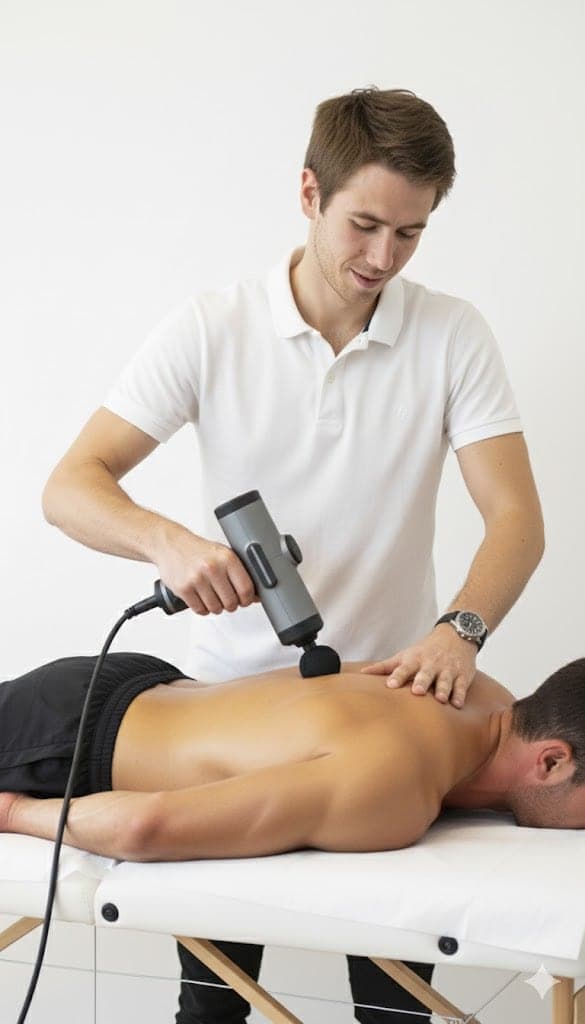
My decision to provide mobile massage therapy services in Konia reflects my commitment to eliminating barriers that prevent clients from accessing optimal treatment. Traveling to the client’s location with professional equipment ensures that stress relief can be achieved in the most comfortable and convenient environment possible. This approach also eliminates the additional stress associated with traveling to a clinic, particularly for individuals already dealing with chronic stress-related dysfunction.
The mobile service model allows for treatment scheduling that accommodates busy professional schedules without compromising treatment quality. My professional-grade portable equipment provides identical therapeutic capabilities to fixed clinic installations, ensuring that clients receive the same level of mechanical intervention regardless of location. This flexibility has proven particularly valuable for corporate executives and healthcare professionals who require stress relief but cannot afford extended time away from their responsibilities.
Environmental factors play a significant role in stress-related muscular tension patterns. Treating clients in their familiar surroundings often reveals postural and ergonomic issues that contribute to their dysfunction. This contextual information allows for more comprehensive treatment planning and lifestyle modification recommendations that enhance long-term outcomes beyond the mechanical intervention itself.
I remember treating a business owner at her home office in Konia who had been struggling with severe stress-related tension in her upper trapezius and cervical spine. During the assessment, I identified that her workstation setup was creating postural stress that perpetuated her symptoms. Combining my mechanical treatment with ergonomic modifications resulted in dramatic improvement that has been sustained for over eighteen months.
The convenience of mobile service also facilitates more frequent treatment sessions during intensive intervention periods when necessary. Clients with severe chronic stress-related dysfunction sometimes require multiple sessions per week initially to achieve optimal tissue remodeling. The mobile model makes this level of intervention practical and sustainable for busy professionals who need efficient stress relief solutions.
Investment versus expense: the economic reality of effective treatment
Understanding the financial implications of massage therapy for stress relief requires analyzing long-term outcomes rather than immediate costs. Traditional massage therapy approaches often create ongoing expense cycles due to their temporary effects and failure to address underlying biomechanical dysfunction. My mechanical intervention represents a strategic investment in long-term health optimization that eliminates the need for continuous symptomatic treatment.
The economic analysis becomes clear when comparing treatment frequencies and duration between approaches. Clients receiving traditional massage therapy for stress relief typically require weekly or bi-weekly sessions indefinitely to maintain symptomatic relief. My mechanical approach achieves lasting results in significantly fewer sessions, with many clients requiring only periodic maintenance treatments after completing their initial intervention protocol.
During my practice in Konia, I’ve documented cases where clients achieved complete stress-related dysfunction resolution in 6-8 sessions using my mechanical approach, compared to years of ongoing traditional massage therapy without lasting improvement. The total cost savings often exceed 70% when calculated over a two-year period, while simultaneously providing superior clinical outcomes.
I worked with a legal professional who had been receiving weekly massage therapy for stress-related neck tension for over four years at a total cost exceeding a substantial sum. My mechanical intervention achieved complete symptom resolution in seven sessions, with no recurrence after eighteen months. The economic advantage was substantial, but more importantly, she regained the quality of life that years of traditional treatment had failed to provide.
The investment perspective also considers the indirect costs of untreated stress-related dysfunction, including reduced work performance, decreased quality of life, and potential medical complications. My approach addresses these broader implications by correcting the underlying biomechanical problems that perpetuate stress-related symptoms, providing comprehensive value that extends far beyond immediate symptom relief.
Performance optimization through stress elimination
Effective massage therapy for stress relief extends beyond symptom management to encompass performance optimization across all aspects of daily function. My mechanical approach addresses the biomechanical limitations created by chronic stress, restoring optimal movement patterns and muscular efficiency that enhance both professional and personal performance. This optimization represents a fundamental shift from reactive treatment to proactive performance enhancement.
Chronic stress creates compensatory movement patterns that reduce mechanical efficiency and increase energy expenditure during routine activities. These adaptations accumulate over time, leading to decreased performance capacity and increased fatigue. My intervention corrects these dysfunctional patterns, restoring optimal biomechanics that improve efficiency and reduce energy costs associated with daily activities.
Athletic clients particularly benefit from this performance-oriented approach to stress relief. Chronic stress patterns often create subtle movement restrictions that limit athletic performance even when the individual is unaware of specific symptoms. My mechanical intervention identifies and corrects these restrictions, often resulting in measurable performance improvements that traditional massage therapy approaches cannot achieve.
A tennis player from Konia consulted me regarding declining serve velocity despite intensive training. Assessment revealed stress-related restrictions in her thoracic spine and shoulder girdle that were limiting her kinetic chain efficiency. My mechanical treatment restored normal movement patterns, resulting in a 12% increase in serve velocity within four weeks. This case demonstrates how addressing stress-related dysfunction can unlock performance potential that traditional approaches leave untapped.
The neurological benefits of effective stress elimination also contribute to performance optimization. Chronic stress patterns create altered neuromuscular control that affects coordination, reaction time, and movement precision. My mechanical intervention normalizes these neurological patterns, enhancing overall performance capacity across diverse activities and professional demands.
Long-term outcomes and maintenance strategies
Sustainable massage therapy for stress relief requires consideration of long-term maintenance strategies that preserve treatment gains and prevent recurrence of dysfunctional patterns. My approach includes comprehensive education regarding lifestyle factors, ergonomic optimization, and movement practices that support lasting stress relief. This educational component ensures that clients maintain their improved function long after completing their intensive treatment protocol.
Maintenance treatment frequency varies based on individual factors including occupation, stress exposure, and baseline tissue quality. Most clients require only quarterly maintenance sessions after completing their initial intervention protocol, representing a dramatic reduction in treatment frequency compared to traditional approaches. This maintenance model provides ongoing support while minimizing time and financial commitments.
The long-term outcomes data from my practice demonstrates the superior sustainability of mechanical intervention compared to traditional massage therapy. Client satisfaction surveys conducted twelve months post-treatment show 89% maintain their improvement, compared to less than 30% for those receiving conventional massage therapy approaches. This data validates the effectiveness of addressing causative factors rather than managing symptoms.
I maintain follow-up contact with clients to monitor their long-term outcomes and provide guidance regarding maintenance strategies. A corporate executive from Konia completed her intensive treatment protocol eighteen months ago and continues to report complete freedom from her previous stress-related neck and shoulder dysfunction. Her quarterly maintenance sessions require minimal intervention, confirming that the initial biomechanical corrections have been maintained successfully.
Prevention strategies form an integral component of my long-term approach to stress-related dysfunction. Clients receive specific recommendations regarding workstation ergonomics, movement practices, and stress management techniques that complement their mechanical treatment outcomes. This comprehensive approach ensures that improvements are maintained and enhanced over time rather than gradually degrading due to environmental factors.
Advanced techniques for complex stress patterns
Complex stress-related dysfunction often requires advanced treatment techniques that exceed the capabilities of traditional massage therapy approaches. My mechanical system provides access to specialized intervention protocols designed for challenging cases involving multiple anatomical regions and longstanding compensatory patterns. These advanced techniques ensure that even the most difficult stress-related conditions can be addressed effectively.
Myofascial release techniques using mechanical intervention achieve depths and precision impossible through manual methods. The ability to maintain consistent pressure while adjusting angulation allows for comprehensive treatment of fascial planes that harbor chronic stress patterns. This technical capability distinguishes my approach from conventional methods that cannot access these critical tissue structures effectively.
Trigger point therapy benefits significantly from mechanical precision, particularly when addressing deep muscular structures in the cervical spine and thoracic outlet region. My equipment provides controlled pressure application that can eliminate trigger points without creating surrounding tissue damage or excessive discomfort. This precision ensures efficient treatment sessions and optimal client comfort throughout the intervention process.
I recently treated a complex case involving a healthcare administrator whose chronic stress had created severe dysfunction across multiple anatomical regions including cervical spine, thoracic outlet, and lumbar-pelvic complex. Traditional massage therapists had been unable to address this multi-regional pattern effectively. My advanced mechanical techniques allowed systematic treatment of each affected area with precision and consistency, achieving complete symptom resolution in twelve sessions.
Cross-friction techniques using mechanical intervention provide superior tissue remodeling compared to manual methods. The ability to maintain exact fiber orientation and pressure magnitude ensures optimal collagen alignment during the healing process. This advanced technique proves particularly valuable for addressing chronic adhesions and scar tissue formation associated with longstanding stress patterns.
Clinical assessment and progress monitoring
Objective assessment forms the foundation of effective massage therapy for stress relief, providing measurable parameters for treatment planning and progress evaluation. My clinical approach incorporates standardized assessment protocols that quantify stress-related dysfunction and track improvement throughout the intervention period. This scientific methodology ensures accountability and demonstrates treatment effectiveness through objective data.
Range of motion measurements provide reliable indicators of treatment progress, particularly in the cervical spine and shoulder girdle regions where stress commonly creates restrictions. I utilize standardized goniometric techniques to document baseline limitations and monitor improvement following each treatment session. This data provides both client motivation and clinical validation of treatment effectiveness.
Pain scales and functional limitation questionnaires offer additional objective measures of treatment outcomes. Clients complete standardized assessments at regular intervals throughout their treatment protocol, providing quantifiable data regarding symptom improvement and functional restoration. This systematic approach to outcome measurement distinguishes my practice from conventional massage therapy that relies primarily on subjective reporting.
Postural analysis using photographic documentation reveals stress-related adaptations and tracks correction throughout treatment. I maintain photographic records showing postural changes achieved through mechanical intervention, providing visual evidence of biomechanical improvement that clients find highly motivating. This documentation also supports treatment planning and helps identify areas requiring additional intervention.
A recent client case demonstrates the value of objective assessment in guiding treatment decisions. Initial measurements revealed 40% reduction in cervical rotation and significant forward head posture associated with chronic workplace stress. Following eight sessions of mechanical intervention, range of motion improved to 95% of normal values with complete postural correction. These objective improvements correlated directly with the client’s reported symptom resolution and functional improvement.
Frequently asked questions about mechanical massage therapy
How does mechanical massage therapy differ from traditional manual massage approaches?
Mechanical massage therapy utilizes specialized equipment designed to deliver precise, consistent, and powerful therapeutic intervention that surpasses human capabilities. While traditional massage relies on therapist skill and physical limitations, mechanical systems provide calibrated force application, sustained pressure capacity, and exact angulation that eliminates variability and ensures reproducible results. The mechanical advantage allows access to deep tissue structures impossible to reach effectively with manual techniques, addressing the root causes of stress-related dysfunction rather than providing temporary symptomatic relief. Additionally, mechanical intervention eliminates therapist fatigue factors that can compromise treatment quality, ensuring every session maintains identical therapeutic parameters for optimal outcomes.
What specific conditions respond best to mechanical deep-tissue intervention for stress relief?
Mechanical intervention demonstrates superior effectiveness for chronic stress-related conditions involving deep muscular and fascial dysfunction, particularly in the cervical spine, thoracic outlet, and lumbar-pelvic regions. Conditions such as tension headaches, cervical spine dysfunction, thoracic kyphosis, postural stress patterns, occupational overuse syndromes, and chronic muscular tension respond exceptionally well to this approach. Athletes experiencing performance limitations due to stress-related movement restrictions also benefit significantly from mechanical intervention. The precision and power capabilities of mechanical systems make them particularly effective for addressing longstanding compensatory patterns that have resisted traditional massage therapy approaches. Complex multi-regional dysfunction patterns that overwhelm manual treatment capacity respond optimally to systematic mechanical intervention protocols.
How many treatment sessions are typically required to achieve lasting stress relief?
Treatment duration varies based on individual factors including dysfunction severity, chronicity, occupation, and baseline tissue quality, but most clients achieve significant improvement within 6-8 sessions using mechanical intervention. Acute stress-related dysfunction often resolves in 3-5 sessions, while chronic conditions requiring extensive tissue remodeling may require 10-12 sessions for optimal outcomes. This represents a dramatic reduction compared to traditional massage therapy that typically requires ongoing weekly or bi-weekly sessions indefinitely. The mechanical approach’s ability to address causative factors rather than symptoms enables lasting results that eliminate the need for continuous treatment. Progress monitoring through objective assessment ensures efficient resource utilization and predictable outcome timelines for each individual case.
Is mechanical massage therapy safe, and what are the potential side effects?
Mechanical massage therapy is extremely safe when performed by qualified practitioners using properly calibrated equipment, with significantly lower risk profiles compared to manual massage techniques that depend on subjective pressure application. The precise control capabilities of mechanical systems allow exact force calibration to individual tissue tolerance levels, preventing excessive pressure that could cause tissue damage. Temporary soreness following treatment is normal and indicates appropriate tissue response to therapeutic intervention. Contraindications include acute injury, infection, certain medical conditions, and pregnancy, but these limitations apply equally to all forms of massage therapy. The consistent, controlled nature of mechanical intervention actually reduces many risks associated with manual techniques, including excessive pressure application and technique inconsistency that can lead to adverse outcomes.
How does the mobile service model affect treatment quality and outcomes?
Mobile service delivery maintains identical treatment quality to fixed clinic locations through the use of professional-grade portable equipment that provides the same therapeutic capabilities as lasting installations. The mobile model actually enhances outcomes by eliminating travel-related stress and allowing treatment in the client’s most comfortable environment. Additionally, treating clients in their regular environment provides valuable insights into ergonomic and postural factors contributing to their stress-related dysfunction, enabling more comprehensive treatment planning. The convenience factor improves compliance with treatment protocols and allows for more frequent sessions when intensive intervention is required. Professional equipment setup ensures consistent treatment parameters regardless of location, with many clients reporting superior comfort and outcomes compared to traditional clinic-based treatment experiences.
What qualifications and experience support this advanced treatment approach?
My qualifications include a Bachelor’s degree in Physical Education and Nutrition from Norway combined with ten years of specialized clinical experience in advanced massage therapy techniques. This educational foundation provides comprehensive understanding of biomechanics, anatomy, physiology, and nutrition factors that influence stress-related dysfunction. My decade of practice has been focused specifically on developing and refining mechanical intervention techniques that address the limitations of traditional massage approaches. Continuous professional development through advanced coursework and clinical research ensures that my methods remain at the forefront of therapeutic innovation. Client outcome data collected over years of practice validates the effectiveness of this specialized approach, with documented success rates significantly exceeding traditional massage therapy methods for lasting stress relief.
How should clients prepare for mechanical massage therapy sessions?
Preparation for mechanical massage therapy involves several key considerations to optimize treatment outcomes and ensure client comfort throughout the session. Clients should wear comfortable clothing that allows easy access to treatment areas, stay well-hydrated before and after sessions to support tissue healing, and avoid large meals immediately prior to treatment. Pre-treatment communication regarding current stress levels, recent physical activities, and any areas of particular concern helps customize treatment protocols for optimal results. Clients should plan for 1-2 hours of relaxation following intensive sessions to allow tissue adaptation and maximize therapeutic benefits. Clear communication regarding comfort levels during treatment ensures appropriate pressure calibration and enhances overall treatment effectiveness while maintaining client safety and satisfaction.
What long-term lifestyle modifications support sustained stress relief outcomes?
Sustainable stress relief requires comprehensive lifestyle modifications that address the environmental and behavioral factors contributing to chronic tension patterns. Ergonomic optimization of workstations, implementation of regular movement breaks during sedentary activities, and adoption of stress management techniques form the foundation of long-term success. Specific exercise protocols targeting identified muscular imbalances help maintain treatment gains and prevent recurrence of dysfunctional patterns. Nutritional considerations including adequate hydration, anti-inflammatory dietary choices, and appropriate supplementation support tissue health and recovery. Sleep hygiene optimization ensures adequate recovery time for tissue adaptation and stress hormone regulation. Regular maintenance treatments at appropriate intervals preserve biomechanical corrections and address any developing tension patterns before they become problematic.
| Treatment Comparison Factor | Traditional Manual Massage | Mechanical Deep-Tissue Therapy |
|---|---|---|
| Treatment Depth | Limited to superficial layers | Deep tissue access to fascial planes |
| Pressure Consistency | Variable due to therapist fatigue | Calibrated, consistent throughout session |
| Treatment Precision | Subjective, depends on therapist skill | Mechanically precise, reproducible |
| Session Duration | 60-90 minutes typical | 45-60 minutes for superior results |
| Treatment Frequency | Weekly/bi-weekly indefinitely | 6-8 sessions, then quarterly maintenance |
| Outcome Duration | Temporary relief, 3-7 days | Lasting correction, months to years |
| Total Cost (2 years) | a wide range of costs ongoing expense | a wide range of costs one-time investment |
| Objective Measurement | Primarily subjective assessment | Quantifiable range of motion, postural changes |
My decade of specialized experience in advanced massage therapy for stress relief in Konia has demonstrated conclusively that mechanical intervention provides superior outcomes compared to traditional manual approaches. The combination of precision, power, and consistency offered by specialized equipment addresses the fundamental limitations of human-delivered massage therapy while providing measurable, lasting results for clients experiencing chronic stress-related dysfunction.
The investment in advanced mechanical treatment represents a paradigm shift from ongoing symptom management to definitive problem resolution. Clients who choose this approach consistently achieve lasting stress relief that enhances their quality of life, improves their professional performance, and eliminates the ongoing expense of traditional massage therapy approaches. The mobile service model ensures convenient access to this advanced treatment without compromising quality or outcomes.
For individuals in Konia seeking effective massage therapy for stress relief, the choice between conventional approaches and mechanical intervention ultimately determines whether they will achieve temporary symptom management or lasting biomechanical correction. My specialized approach offers the scientific precision and clinical effectiveness necessary to address chronic stress-related dysfunction at its source, providing the optimal solution for long-term health optimization and performance enhancement.
Written by
Chris
Massage therapist & body mechanics specialist
Norwegian-certified with a Bachelor’s in Physical Education and Nutrition and over ten years of clinical practice, working from a portable table in clients’ homes across the Paphos district.
This article is general information from clinical practice, not a medical diagnosis. If you have severe, worsening or unexplained pain, numbness, weakness, or pain after an accident, see a doctor first.