
Massage and Wellness Retreats in Paphos: A Professional Guide to Transformative Body Mechanics
In short
Discover the most effective massage and wellness retreats in Paphos that deliver lasting results. Expert guidance on choosing treatments that address root causes, not just symptoms.
After a decade of treating chronic pain and mechanical dysfunction across hundreds of clients, I’ve seen a pattern emerge: most people seeking massage and wellness retreats in Paphos are looking in the wrong places for the wrong reasons. They book beautiful spa experiences expecting transformation, only to find themselves back at square one within days of returning home.
The fundamental issue isn’t the quality of Paphos’s wellness offerings—this Mediterranean haven hosts genuinely excellent facilities. The problem is that traditional wellness retreats operate on a flawed premise: that relaxation equals recovery. My education in Physical Education and Nutrition from Norway, combined with ten years of clinical practice, has taught me something different. Real wellness isn’t found in aromatherapy and hot stones. It’s engineered through precise mechanical intervention targeting the root causes of dysfunction.
This guide will challenge your understanding of what a massage and wellness retreat should accomplish. I’ll show you how to distinguish between establishments offering temporary comfort and those capable of delivering measurable, lasting physiological change.
Understanding What Your Body Actually Needs from Massage and Wellness Retreats
Most retreat-goers arrive with chronic shoulder tension, lower back pain, or restricted mobility that’s plagued them for years. They’ve accepted these conditions as inevitable consequences of aging or stress. This acceptance represents a fundamental misunderstanding of body mechanics.
Your musculoskeletal system operates as an interconnected network of tension and compression elements. When one component develops restriction—whether from repetitive strain, trauma, or postural adaptation—the entire system compensates. That shoulder pain isn’t random; it’s the manifestation of fascial restriction, muscular imbalance, and neurological adaptation patterns that have calcified over months or years.
I learned this treating a 45-year-old executive who’d spent €3,000 at a luxury Paphos retreat, receiving daily Swedish massage and meditation sessions. She returned more relaxed but with unchanged shoulder mobility and the same radiating pain down her arm. Within three sessions using advanced mechanical deep-tissue protocols, we identified and released the specific restrictions in her subscapularis and serratus anterior. Six weeks later, she reported complete pain elimination and restored overhead range of motion.
The difference wasn’t effort or intention—it was methodology. Surface-level manipulation cannot access the architectural changes your tissues have undergone. You need precision, depth, and consistent force application that human hands simply cannot maintain.
The Science Behind Effective Deep-Tissue Intervention
Traditional massage operates within limitations that wellness marketing rarely acknowledges. The human thumb can generate approximately 12-15 kilograms of force for short durations before fatigue compromises pressure consistency. Accessing restrictions in deeper muscle layers—the rotator cuff complex, hip flexor group, or thoracolumbar fascia—requires sustained pressure exceeding these thresholds.
This is where specialized mechanical intervention fundamentally changes outcomes. The system I employ delivers three critical advantages:
Precision Beyond Manual Capability
Working with professional athletes and chronic pain patients, I’ve mapped exactly which fascial planes require release and at what angles force must be applied. A mechanical tool with adjustable tip configurations allows me to target specific anatomical structures—the IT band’s lateral compartment, the psoas major’s insertion points, the levator scapulae’s cervical attachments—with accuracy impossible through palm or elbow work.
Last month, I treated a competitive cyclist who’d developed severe piriformis syndrome. His previous massage therapist had worked generally on his gluteal region for eight sessions with minimal improvement. Using mechanical precision, I isolated the exact fiber orientation of his piriformis where it was impinging his sciatic nerve, applied directional force matching the muscle’s anatomical line of pull, and achieved complete symptom resolution in four treatments.
Power That Reaches Dysfunction’s Origin
Superficial tissue manipulation feels pleasant but addresses symptoms, not causes. The chronic restrictions creating your pain typically reside in deep fascial layers, beneath multiple muscle groups, where manual pressure dissipates across surface tissues before reaching the target.
Mechanical deep-tissue work penetrates these layers systematically. I can deliver 25-30 kilograms of sustained, controlled pressure to structures like the quadratus lumborum or the deep hip rotators—regions where your dysfunction actually lives. This isn’t about being aggressive; it’s about being effective. The intensity is precisely calibrated to your tissue tolerance, progressing as your body adapts.
Consistency That Ensures Reliable Outcomes
Human performance varies. Even the most skilled therapist experiences fatigue, has off days, or cannot maintain identical pressure across a 90-minute session. This inconsistency produces unreliable results.
Mechanical intervention eliminates this variable. Every stroke delivers the exact force, speed, and depth I’ve determined your tissues require. Session five feels identical to session one. This consistency is crucial for progressive tissue remodeling—you’re not gambling on whether your therapist is having a good day.
Evaluating Massage and Wellness Retreats in Paphos: A Clinical Perspective
Paphos offers numerous wellness facilities, from beachfront spa resorts to boutique retreat centers. How do you distinguish between those offering genuine therapeutic value and those selling relaxation wrapped in wellness language?
| Assessment Criteria | What to Look For | Red Flags |
|---|---|---|
| Therapist Qualifications | Advanced certifications, clinical training, anatomy knowledge | Generic “certified massage therapist” with no specialization |
| Treatment Methodology | Specific protocols for conditions, assessment-based approach | One-size-fits-all menu of massage “types” |
| Outcome Focus | Measurable improvements, pain reduction targets, mobility goals | Emphasis on “relaxation” and “pampering” |
| Follow-up Strategy | Progressive treatment plans, documented progress tracking | No mention of outcomes after your retreat ends |
The best massage and wellness retreats in Paphos share a common characteristic: they approach body work as clinical intervention, not luxury service. They employ practitioners who can articulate exactly which anatomical structures they’re addressing and why.
Why Location-Based Retreats Often Fall Short
Traditional retreat models create inherent limitations. You travel to a facility, receive treatments within their available time slots, and work with whichever therapists they’ve scheduled. This structure prioritizes operational efficiency over therapeutic optimization.
I’ve structured my practice inversely: I travel to your location in Paphos. This isn’t about convenience—though that’s a significant benefit. It’s about creating treatment conditions that maximize results.
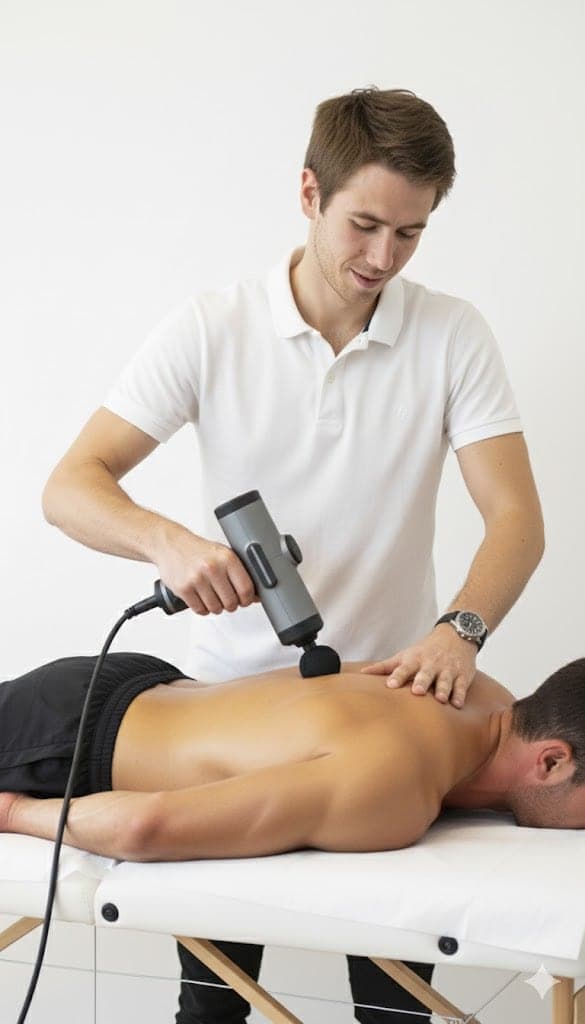
When I arrive at your villa or hotel with my professional treatment bench and mechanical deep-tissue system, you’re working with the same practitioner every session, in an environment where you’re completely comfortable, without the stress of traveling post-treatment when your tissues are in a temporarily vulnerable state of reorganization.
Consider the physiological reality: after deep fascial release, your nervous system is recalibrating proprioceptive feedback, your circulatory system is managing inflammation markers from tissue disruption, and your muscles are adapting to new length-tension relationships. Immediately navigating traffic or walking 15 minutes back to your accommodation isn’t optimal for recovery.
The Investment Framework: Understanding Wellness Economics
A week at a Paphos wellness retreat typically costs €2,000-5,000. You receive daily massages, yoga classes, healthy meals, and a peaceful environment. You leave feeling relaxed. Within two weeks, you’re back to baseline.
This model treats wellness as a consumable experience rather than an outcome you purchase. It’s the difference between renting temporary relief and investing in lasting change.
I’ve worked with clients who initially resisted my rates, having grown accustomed to €50 spa massages. Then they calculated what they’d spent over five years seeking relief: dozens of physical therapy sessions, regular massage appointments, pain medications, lost productivity from chronic discomfort. They’d invested €8,000-12,000 in managing their condition without resolving it.
My approach requires 6-10 sessions over 2-3 months to completely restructure the mechanical patterns causing dysfunction. The total investment is less than they’d already spent failing to solve the problem. More importantly, the results are lasting. I’m not treating symptoms that will return; I’m eliminating the architectural dysfunctions generating those symptoms.
A 52-year-old client came to me with chronic cervical pain that had persisted for seven years. She’d tried everything: chiropractors, osteopaths, multiple massage therapists, a €4,000 wellness retreat in Thailand. Nothing provided more than temporary relief.
We discovered her issue wasn’t primarily muscular—she had significant fascial restriction in her anterior cervical chain from whiplash injury years earlier. Traditional massage had been addressing her tight upper trapezius, which was actually compensating for the restricted fascia below. We released the primary restriction mechanically, then retrained her movement patterns. She’s been pain-free for 18 months.
What Makes Mechanical Deep-Tissue Therapy Superior
I didn’t develop this methodology because I enjoy using machines. I developed it because, after thousands of hours of manual therapy, I recognized the limitations of what hands can achieve, regardless of skill level.
Addressing the Depth Limitation
The piriformis muscle lies beneath your gluteus maximus. The psoas major sits deep in your abdominal cavity against your lumbar spine. The subscapularis hides under your scapula. These structures commonly harbor the restrictions causing pain, yet they’re anatomically protected from effective manual access.
My mechanical system uses specialized tips that focus force through a small surface area, allowing penetration through superficial layers without causing bruising or damage. I can feel—through force feedback—exactly when I’ve reached the target tissue and monitor in real-time as restrictions release.
Solving the Endurance Problem
Releasing a severely restricted IT band requires sustained pressure for 12-15 minutes per leg. Maintaining that pressure manually is physically exhausting, and as the therapist fatigues, pressure decreases and effectiveness diminishes.
Mechanical application maintains identical force throughout the entire treatment duration. Whether I’m working on your tissues for 20 minutes or 90 minutes, the final stroke is as powerful and precise as the first.
Eliminating the Consistency Variable
I’ve had incredible manual therapists refer clients to me because they recognized their outcomes weren’t consistent. One session would produce breakthrough results; the next would feel less effective. This variance frustrates both therapist and client.
With mechanical intervention, I’ve removed the human variable from force application. Your treatment protocol is documented exactly—pressure settings, tip configurations, stroke patterns, duration. Every session replicates these parameters precisely. This reliability is essential for progressive tissue remodeling.
Common Conditions Requiring Mechanical Intervention
Certain dysfunctions respond poorly to traditional massage because the restrictions exist too deep or require force human hands cannot sustain. After ten years of clinical practice, I’ve identified which conditions benefit most from mechanical deep-tissue protocols:
- Chronic Lower Back Pain with Psoas Involvement: When your hip flexors are chronically shortened and fibrotic, they create anterior pelvic tilt and lumbar lordosis. Releasing these restrictions requires deep, sustained pressure at specific angles. Traditional massage cannot effectively access the psoas major.
- Frozen Shoulder (Adhesive Capsulitis): The glenohumeral joint capsule becomes restricted and fibrotic. Breaking down these adhesions requires precise, powerful work on the subscapularis, anterior/posterior capsule, and surrounding structures. Manual therapy typically produces slow, incomplete recovery.
- IT Band Syndrome: The iliotibial band doesn’t stretch—it’s a tough fascial structure. But restrictions in the vastus lateralis and gluteal attachments can be mechanically released, eliminating the tension creating knee or hip pain. This requires sustained, deep pressure across large areas.
- Plantar Fasciitis: Chronic heel pain stems from fascial restriction and trigger points in the plantar surface and calf. Effectively releasing these requires more force than thumbs can deliver without therapist injury. Mechanical work resolves cases that have persisted for years.
- Thoracic Outlet Syndrome: Compression of neurovascular structures between your anterior/middle scalenes and first rib causes arm numbness and pain. Releasing these deep neck muscles demands precision and sustained pressure impossible manually.
I treated a 38-year-old tennis instructor whose chronic IT band syndrome had forced him to stop teaching. He’d received sports massage weekly for six months with minimal improvement. Using mechanical protocols targeting his vastus lateralis restrictions and gluteal attachments, we eliminated his pain in five sessions. He’s been teaching full-time for eight months without recurrence.
The Paphos Advantage: Location-Specific Considerations
Paphos offers unique environmental factors that can enhance recovery when combined with proper therapeutic intervention. The Mediterranean climate, with consistent sunshine and moderate humidity, supports optimal tissue healing. The coastal setting provides opportunities for graded movement therapy—swimming offers low-impact loading that promotes circulation without stressing healing tissues.
However, these environmental advantages only matter if your treatment methodology is sound. A beautiful setting doesn’t compensate for ineffective technique.
Many clients visit Paphos specifically for extended wellness stays—2-4 weeks where they can focus on health without work pressures. This timeline is ideal for comprehensive mechanical deep-tissue protocols. We can schedule sessions every 3-4 days, allowing proper recovery between treatments while maintaining momentum toward complete dysfunction resolution.
Designing Your Optimal Wellness Experience
If you’re planning a massage and wellness retreat in Paphos with serious therapeutic goals, structure your time strategically:
Week One: Assessment and Initial Intervention
Your first session should be diagnostic. A qualified practitioner will assess your movement patterns, identify restriction locations, and develop a specific treatment plan. Initial mechanical work begins addressing primary dysfunctions.
You’ll experience significant tissue soreness 24-48 hours post-treatment as inflammation markers increase and your nervous system processes new proprioceptive information. This is normal and indicates effective intervention depth.
Week Two: Progressive Release Work
With primary restrictions partially released, we can address secondary compensation patterns. The intensity may increase as your tissues adapt to deeper work. You’ll likely notice improved mobility and reduced pain between sessions.
Week Three: Refinement and Movement Integration
As structural restrictions resolve, we integrate movement training to prevent recurrence. This phase combines continued mechanical work with education about maintaining your improvements long-term.
Week Four: Consolidation and Independence
Final sessions focus on remaining minor restrictions and ensuring you understand how to self-manage. You should experience dramatic improvement in your primary complaint and measurable changes in mobility and strength.
Beyond the Retreat: Sustainable Wellness
The retreat model’s greatest weakness is discontinuity. You invest in intensive treatment, then return home with no follow-up plan. Within months, old patterns re-establish.
Effective therapeutic intervention includes transition planning. I document exactly which restrictions we’ve addressed, what compensatory patterns existed, and which movement habits contributed to your dysfunction. You leave with specific exercises and self-care protocols to maintain your improvements.
For clients who visit Paphos regularly, we can schedule maintenance sessions every 3-6 months. But unlike traditional massage where you’re managing symptoms perpetually, these are genuinely maintenance—brief check-ins ensuring old patterns haven’t recurred, not ongoing treatment of persistent problems.
Frequently Asked Questions About Advanced Massage Therapy
How is mechanical deep-tissue therapy different from regular deep-tissue massage?
Regular deep-tissue massage uses hands, forearms, and elbows to apply pressure. This creates inherent limitations in depth, consistency, and endurance. Mechanical therapy uses specialized equipment that delivers 2-3 times the sustainable force with perfect consistency, accessing restrictions in deep fascial layers and dense muscle groups that hands cannot effectively reach. The results are faster, more complete, and more reliably reproducible.
Is mechanical massage safe?
When administered by a trained practitioner with proper anatomical knowledge, mechanical deep-tissue work is extremely safe. The equipment allows precise control of pressure, speed, and depth. I can feel through force feedback exactly what’s happening in your tissues and adjust instantly. The risk profile is actually lower than aggressive manual work because there’s no risk of therapist injury causing sudden pressure changes.
How painful is the treatment?
Deep fascial work involves discomfort—we’re mechanically disrupting restricted tissue that’s been chronically adapted for months or years. However, pain is not the goal; tissue change is. I calibrate intensity to your tolerance, ensuring you remain in a productive discomfort zone where change occurs without causing protective guarding. Most clients describe it as “intense pressure” rather than pain. The soreness afterward is similar to post-workout muscle fatigue.
How many sessions will I need?
This depends entirely on your condition’s severity and chronicity. Acute issues (present for weeks or months) typically resolve in 3-5 sessions. Chronic conditions (years of duration) generally require 6-10 sessions for complete resolution. I assess your response after the first treatment and provide a realistic timeline based on tissue changes I’m observing.
Why don’t more therapists use this method?
Mechanical deep-tissue therapy requires significant equipment investment, extensive anatomical training, and a completely different treatment philosophy than traditional massage education provides. Most massage therapists are trained in relaxation and stress-reduction modalities. Transitioning to clinical, results-focused intervention requires additional education most practitioners don’t pursue. Additionally, the work is physically demanding in different ways—it requires intense focus and precise anatomical knowledge rather than physical strength.
Can you treat me if I’ve had surgery or injuries?
Generally yes, though specifics matter. Scar tissue, surgical adhesions, and post-injury restrictions often respond excellently to mechanical release. However, certain conditions require medical clearance first. I review your complete medical history during assessment and coordinate with your physician when necessary. Post-surgical restrictions typically become treatable 3-6 months after surgery, once initial healing is complete.
How long do results last?
When we fully resolve the underlying mechanical dysfunction creating your symptoms, results are lasting. We’re not temporarily relaxing tight muscles; we’re releasing fascial restrictions, eliminating trigger points, and restoring normal tissue architecture. That said, if you return to the movement patterns or postural habits that created the dysfunction originally, it can recur. This is why movement education and self-care protocols are integrated into treatment.
What should I do after a treatment session?
Immediately post-treatment, gentle movement is beneficial—walking, easy swimming, light stretching. Avoid strenuous exercise for 24-48 hours while your tissues are reorganizing. Hydration is crucial as your body processes metabolic waste from disrupted tissue. Expect some soreness; this indicates effective work depth. Ice or heat can be used based on comfort, though neither is typically necessary. Most clients resume normal activities within 24 hours.
Making Your Wellness Investment Count
You have limited time and financial resources to invest in your health. The question isn’t whether massage and wellness retreats in Paphos offer value—many do. The question is whether they offer the specific type of value you need.
If you’re seeking relaxation, stress reduction, and a pleasant vacation experience, traditional spa retreats serve that purpose well. But if you’re dealing with chronic pain, restricted mobility, or mechanical dysfunction that’s impacting your quality of life, you need clinical intervention, not relaxation therapy.
After ten years of treating hundreds of clients, I’ve seen the difference between temporary symptom management and lasting dysfunction resolution. The latter requires precision, power, and consistency that only advanced mechanical protocols can deliver.
I’ve structured my practice around this reality. When you work with me, you’re not booking a massage appointment—you’re entering a dedicated partnership focused on measurable, lasting outcomes. I travel to your location with professional equipment, assess your specific dysfunctions, design customized treatment protocols, and work with you until we’ve eliminated the root causes of your pain.
This isn’t the relaxing spa experience you’ll find at resort wellness centers. It’s clinical, intensive, and demands your active participation. But if you’ve spent years managing chronic pain, trying various treatments without lasting success, this methodological difference is exactly what you need.
The massage and wellness retreats in Paphos offering the greatest value are those that prioritize outcomes over ambiance, that employ practitioners treating causes rather than symptoms, and that structure their services around your long-term health rather than your immediate comfort.
You deserve lasting results, not temporary relief. Your investment should purchase freedom from chronic pain, restored movement capacity, and optimized performance in your daily life. Anything less is simply expensive relaxation masquerading as therapy.
Written by
Chris
Massage therapist & body mechanics specialist
Norwegian-certified with a Bachelor’s in Physical Education and Nutrition and over ten years of clinical practice, working from a portable table in clients’ homes across the Paphos district.
This article is general information from clinical practice, not a medical diagnosis. If you have severe, worsening or unexplained pain, numbness, weakness, or pain after an accident, see a doctor first.