
Leg Massage Techniques Pafos: Advanced Mechanical Deep-Tissue Methods for Athletes and Active Individuals
In short
Discover the most advanced leg massage techniques in Pafos, combining mechanical precision with clinical expertise for lasting results in mobility, performance, and pain relief.
When I first arrived in Pafos a decade ago with my Bachelor’s degree in Physical Education and Nutrition from Norway, I quickly realized something critical: most people seeking massage for their legs were treating symptoms, not causes. They’d get temporary relief from a spa treatment, feel better for a few days, then return to the same limited range of motion, the same chronic tightness in their calves, the same knee discomfort during their morning run along the coastal paths.
After ten years of specialized work in leg massage techniques here in Pafos, I’ve developed a methodology that doesn’t just relax your legs—it mechanically rebuilds their function. This guide explores the specific leg massage techniques I employ, why they produce lasting results where traditional methods fail, and how the biomechanics of your lower limbs respond to precision treatment.
Understanding Lower Limb Biomechanics: Why Most Leg Massages Fail
Your legs contain the largest muscle groups in your body—the quadriceps, hamstrings, gastrocnemius, and soleus—working in intricate coordination with fascia, tendons, and ligaments. The problem I see repeatedly in Pafos, particularly with active individuals and athletes training in our Mediterranean climate, is this: superficial treatment of deep structural problems.
When you experience chronic calf tightness, IT band syndrome, or plantar fasciitis, you’re not dealing with a surface-level issue. You’re confronting fascial adhesions that have developed over months or years, restricting blood flow, limiting lymphatic drainage, and creating compensation patterns throughout your kinetic chain.
Traditional manual leg massage has three fundamental limitations:
- Insufficient depth penetration to reach the fascial layers where adhesions form
- Inconsistent pressure application due to therapist fatigue during extended sessions
- Limited precision in targeting specific trigger points within dense muscle bellies
I learned this not from textbooks, but from working with dozens of trail runners tackling the Akamas Peninsula, cyclists training on the Troodos routes, and tennis players whose calves seized during tournaments. They’d received countless massages. None addressed the mechanical dysfunction at the tissue level.
The Mechanical Deep-Tissue Approach to Leg Massage Techniques in Pafos
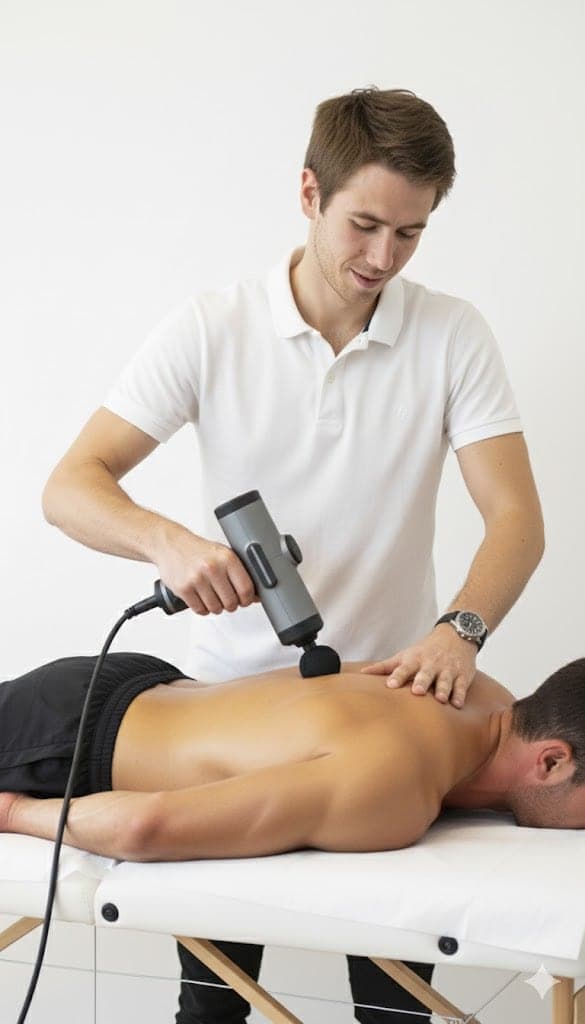
My methodology centers on a specialized mechanical device that delivers what I call the three pillars of effective leg treatment: Precision, Power, and Consistency. This isn’t a vibration tool or a percussion device you’ve seen in advertisements. It’s a clinical-grade instrument designed for deep fascial release and myofascial restructuring.
Precision Targeting of Lower Limb Structures
When I treat legs, I’m working with specific anatomical targets based on your movement patterns and pain presentation. The mechanical head of my device allows me to focus treatment on:
The gastrocnemius-soleus complex where runners develop chronic tension from repetitive ground contact. I can isolate the medial versus lateral heads, treating them independently based on your gait mechanics.
The hamstring insertion points at the ischial tuberosity and along the posterior knee, areas where manual pressure simply cannot generate sufficient force to release chronic adhesions.
The IT band and tensor fasciae latae, notorious for their resistance to conventional massage. The mechanical advantage of my tool allows me to work through this dense fascial structure in ways that hands cannot replicate.
The tibialis anterior and peroneals, frequently overlooked muscles that contribute significantly to ankle stability and foot mechanics. These respond exceptionally well to targeted mechanical pressure.
Power: Reaching the Fascial Root of Dysfunction
Let me be direct: if you’re not experiencing some intensity during deep tissue leg work, you’re not receiving therapeutic treatment. You’re receiving a pleasant relaxation session that will produce temporary results at best.
The mechanical power I can deliver through my specialized device reaches 8-12 millimeters into your tissue—far beyond what even the strongest manual therapist can achieve consistently. This depth is where fascial adhesions live, where trigger points maintain their grip on your muscle fibers, and where true structural change occurs.
I worked with a 42-year-old marathon runner last year who’d suffered IT band syndrome for three seasons. She’d tried foam rolling, stretching, and six different massage therapists. Within four sessions using precise mechanical deep-tissue work along her vastus lateralis and IT band, we eliminated the adhesions causing her lateral knee pain. She completed the Limassol Marathon pain-free. That’s not luck—that’s treating the cause.
Consistency: Every Session Delivers Identical Therapeutic Effect
Here’s an uncomfortable truth about manual massage: your therapist’s effectiveness depends entirely on their energy level that day. Third client of the morning? Excellent pressure. Sixth client after a demanding week? Significantly diminished force and precision.
My mechanical approach eliminates this variable completely. Whether you’re my first appointment or my last, the treatment intensity, depth, and precision remain absolutely constant. This consistency is essential for progressive treatment protocols where each session builds on the previous work.
Specific Leg Massage Techniques I Employ in Pafos
My treatment methodology integrates several distinct techniques, each serving specific therapeutic purposes within the comprehensive treatment plan.
Longitudinal Stripping for Muscle Fiber Realignment
This technique involves sustained mechanical pressure applied along the length of muscle fibers from origin to insertion. For the quadriceps, I begin at the anterior superior iliac spine and rectus femoris origin, working distally toward the patellar tendon with controlled, deep pressure.
The therapeutic goal is twofold: breaking down fascial adhesions that bind adjacent muscle fibers together, and mechanically encouraging proper fiber alignment within the muscle belly. This is particularly effective for athletes who’ve developed compensation patterns from previous injuries.
| Muscle Group | Primary Technique | Typical Session Duration | Target Outcome |
|---|---|---|---|
| Quadriceps Complex | Longitudinal Stripping + Cross-Fiber | 20-25 minutes | Improved knee extension power, reduced patellofemoral pain |
| Hamstring Group | Deep Sustained Pressure + Pin-and-Stretch | 18-22 minutes | Enhanced hip extension, reduced sitting discomfort |
| Calf (Gastrocnemius/Soleus) | Layered Release Protocol | 15-20 minutes | Increased ankle dorsiflexion, eliminated chronic tightness |
| Tibialis Anterior | Precision Point Release | 8-12 minutes | Improved ankle stability, reduced shin splints |
| IT Band/TFL | Sustained Mechanical Compression | 12-18 minutes | Eliminated lateral knee pain, improved hip mechanics |
Cross-Fiber Friction for Tendon Rehabilitation
When I encounter tendinopathy—whether Achilles, patellar, or hamstring insertions—cross-fiber friction becomes essential. This technique applies mechanical pressure perpendicular to tissue fiber orientation, creating controlled microtrauma that stimulates collagen remodeling and proper scar tissue organization.
I recently worked with a tennis instructor who’d developed chronic Achilles tendinopathy from years of court movement. Manual cross-fiber work had produced minimal improvement. Using mechanical precision to deliver consistent cross-fiber pressure at the musculotendinous junction, combined with eccentric loading protocols, we achieved complete symptom resolution in eight weeks.
Trigger Point Compression and Release
Trigger points—hyperirritable nodules within taut muscle bands—require sustained pressure to deactivate. The mechanical advantage of my device allows me to maintain precise compression for 45-90 seconds at specific points within the gastrocnemius, soleus, or quadriceps without the positional fatigue that limits manual treatment.
The therapeutic mechanism involves ischemic compression followed by reactive hyperemia—essentially starving the trigger point of oxygen to disrupt its sustained contraction, then flooding it with fresh blood carrying oxygen and nutrients when pressure releases.
Fascial Plane Separation Technique
This advanced technique addresses adhesions between fascial layers—between the superficial and deep fascia, or between adjacent muscle compartments. In the lower leg, adhesions between the anterior and lateral compartments frequently contribute to chronic shin splints and compartment syndrome symptoms.
Using angled mechanical pressure with controlled gliding motion, I can mechanically separate these adhered layers, restoring independent tissue movement and eliminating the restrictive pull that creates pain during activity.
The Clinical Treatment Protocol: How I Structure Leg Massage Sessions
When you work with me, you’re not receiving a standardized “leg massage.” You’re receiving a customized treatment protocol based on comprehensive assessment of your movement patterns, pain presentation, and performance goals.
Initial Assessment and Movement Analysis
Before I touch your legs, I’m watching how you walk, observing your standing posture, testing your range of motion at ankle, knee, and hip. I’m identifying where restrictions exist, where compensations have developed, and which structures require priority treatment.
A cyclist will present differently than a runner. A tennis player’s requirements differ from someone with chronic venous insufficiency. Generic treatment produces generic results.
Layered Treatment Approach
Effective leg treatment works progressively through tissue layers. I don’t immediately attack deep adhesions with maximum pressure—that creates defensive muscle guarding and potentially damages tissue.
Instead, I begin with superficial fascial release to prepare the tissue, gradually increasing depth as the layers become receptive to treatment. This might mean spending the first session primarily on superficial work, establishing tissue tolerance before progressing to deeper mechanical treatment in subsequent sessions.
Integration with Functional Movement
The most sophisticated leg massage technique means nothing if we don’t integrate it with movement. Throughout treatment, I incorporate active and passive range of motion, asking you to contract specific muscles while I maintain mechanical pressure, or guiding your leg through movement patterns while treating targeted structures.
This approach, called pin-and-stretch or active release, ensures that the tissue changes we create mechanically translate into improved functional movement when you return to your activities.
Why Location and Setting Matter: The Mobile Treatment Advantage
I travel to your location throughout Pafos with my professional treatment bench and equipment. This isn’t merely convenient—it’s therapeutically superior for several reasons.
After intensive leg work, your muscles are in a temporarily vulnerable state, having been mechanically disrupted and restructured. Immediately walking to your car, driving, and resuming normal activity can partially negate the treatment effects. When I come to you, you can rest, hydrate, and allow the tissue changes to stabilize before returning to activity.
Additionally, I can assess your home environment, training equipment, and daily movement patterns that might contribute to the issues we’re addressing. That information directly informs treatment decisions and home care recommendations.
Leg Massage Techniques for Specific Conditions Common in Pafos
Runner’s Legs: Chronic Calf Tightness and Achilles Issues
The coastal paths and Troodos mountain trails attract serious runners to Pafos. They also create specific mechanical demands on the lower legs. Repetitive plantarflexion during push-off, combined with eccentric loading during downhill running, creates particular patterns of fascial restriction.
For runners, I focus intensive mechanical work on the gastrocnemius-soleus complex, the deep posterior compartment (tibialis posterior, flexor digitorum longus, flexor hallucis longus), and the Achilles tendon structure. The goal is eliminating the chronic tension that limits ankle dorsiflexion—a restriction that changes your entire gait mechanics and running efficiency.
Cyclist’s Legs: Quadriceps Dominance and IT Band Syndrome
Cyclists develop pronounced quadriceps hypertrophy with relative hamstring weakness and chronic IT band tightness. The fixed position on the bike, combined with repetitive knee extension under load, creates specific fascial restrictions along the lateral thigh.
My treatment protocol for cyclists emphasizes deep longitudinal work along the vastus lateralis and IT band, combined with trigger point release in the tensor fasciae latae and gluteus medius. We’re not just loosening tight muscles—we’re mechanically reshaping tissue that has adapted to repetitive single-plane motion.
Sedentary Legs: Venous Insufficiency and General Stiffness
Many people in Pafos work desk jobs or have retired to our beautiful climate but find themselves surprisingly immobile. Prolonged sitting creates hip flexor tightness that inhibits glute function, hamstring shortening, and poor calf muscle pump function that contributes to venous pooling.
For sedentary individuals, treatment focuses on restoring length to chronically shortened structures—hip flexors, hamstrings, and calves—while activating weakened muscle groups. The mechanical work is often less intense initially but equally therapeutic, progressively improving tissue quality and movement capacity.
The Difference Between Relaxation and Rehabilitation
Let me make a critical distinction that many people in Pafos don’t understand until they experience it: there’s a fundamental difference between a massage that makes you feel good temporarily and treatment that changes your tissue structure durably.
Relaxation massage has its place. It reduces stress, promotes general well-being, and provides pleasant sensory experience. I’m not opposed to it. But it’s not what I do, and it’s not what you should seek if you have chronic leg pain, movement restrictions, or performance limitations.
Rehabilitation-focused leg massage is uncomfortable during treatment. You should feel significant pressure, sometimes bordering on pain, as we mechanically break down adhesions and release trigger points. This intensity is not arbitrary—it’s the minimum force required to create structural tissue change.
I’ve had clients tell me that previous massage therapists told them “it shouldn’t hurt.” That’s fine advice for relaxation work. It’s terrible advice for corrective treatment. If you’re not feeling significant mechanical work in your tissues, you’re not receiving therapeutic treatment.
The Investment Versus Expense Mindset
When you pay for spa massage, you’re purchasing an experience—temporary relaxation that lasts hours or days. That’s an expense: money spent for transient benefit.
When you work with me, you’re making an investment in lasting improvement of your leg function, mobility, and pain-free movement. The tissue changes we create are structural and lasting. The benefits compound over time rather than dissipating after a few days.
I typically work with clients through a series of 4-8 sessions, progressively addressing layers of dysfunction and building toward optimal leg mechanics. This isn’t because I want recurring revenue—it’s because meaningful tissue remodeling requires consistent, progressive treatment. You cannot undo years of fascial restriction and movement compensation in a single session.
Frequently Asked Questions About Advanced Leg Massage Techniques
How painful is mechanical deep-tissue leg massage compared to manual techniques?
The intensity is greater than most manual massage, but pain is always controlled and purposeful. We’re working at the threshold of your tissue tolerance—enough pressure to create change, not so much that you develop protective muscle guarding. I continuously adjust based on your feedback and tissue response. Most clients describe it as “intense but manageable” and report that the discomfort during treatment is minor compared to the chronic pain they’ve been living with.
How quickly will I see results from specialized leg massage techniques?
Most clients notice immediate improvement in range of motion after their first session—measurable increases in ankle dorsiflexion or hip flexion. However, lasting resolution of chronic conditions typically requires 4-8 sessions over 6-10 weeks. This timeline allows for progressive tissue remodeling and adaptation. Acute issues, like post-event muscle soreness, respond more quickly than chronic conditions that have developed over years.
Can mechanical leg massage help with conditions like plantar fasciitis or knee pain?
Absolutely. Plantar fasciitis rarely originates in the foot—it’s typically a downstream consequence of calf tightness and altered ankle mechanics. By addressing gastrocnemius and soleus restrictions, we often eliminate plantar fascia symptoms. Similarly, many knee pain presentations stem from quadriceps imbalances, IT band tightness, or hamstring restrictions that we can address mechanically. However, I always recommend coordinating with your physician for proper diagnosis, particularly if pain is acute or associated with trauma.
What’s the difference between your mechanical approach and percussion massage devices?
Percussion devices deliver rapid, superficial impacts—they’re excellent for general muscle relaxation and post-workout recovery. My mechanical device delivers sustained, deep compression with precise control over pressure, angle, and depth. The therapeutic mechanisms are completely different: percussion primarily affects muscle tone and blood flow, while my technique creates structural fascial release and trigger point deactivation. One is not inherently better—they serve different purposes. For chronic pain and movement dysfunction, sustained deep pressure is therapeutically superior.
How do I know if I need specialized leg treatment versus general massage?
If you have any of the following, you need specialized treatment: chronic pain that hasn’t responded to previous massage, limited range of motion that affects your activities, specific injury history in your legs, performance plateaus in your sport, or pain that worsens with activity. If you simply want relaxation and stress relief, general massage is appropriate. If you want to actually fix something, you need targeted mechanical intervention.
Do you treat both legs in one session or focus on one at a time?
This depends entirely on your condition and treatment goals. For bilateral issues like general tightness or symmetric restrictions, I treat both legs in a single extended session. For unilateral problems or when one leg shows significantly greater dysfunction, I may focus an entire session on that side, ensuring we thoroughly address all involved structures. The decision is made after assessment based on what will produce the best therapeutic outcome.
How should I prepare for a leg massage session and what should I expect afterward?
Come well-hydrated and avoid eating a large meal immediately beforehand. Wear comfortable clothing that allows access to your legs—shorts are ideal. After treatment, expect some soreness similar to post-workout muscle soreness, typically peaking 24-36 hours post-session. This is normal and indicates tissue remodeling. Drink plenty of water, avoid intense leg workouts for 24 hours, and apply ice if soreness is significant. Most clients find that this post-treatment soreness is far less bothersome than their chronic pain, and it resolves within 2-3 days while improvements in mobility remain.
Can athletes continue training between leg massage sessions?
Yes, with modifications. After intensive leg treatment, I recommend reducing training volume and intensity for 24-48 hours to allow tissue adaptation. However, light activity is beneficial—it promotes blood flow and helps integrate the mechanical changes into functional movement patterns. I provide specific guidelines based on your sport and training schedule. The goal is progressive improvement, not forced rest that deconditions you.
The Long-Term Partnership Approach to Leg Health
I don’t view my work as transactional—you pay for a session, I massage your legs, we part ways. That approach produces mediocre results. Instead, I develop dedicated partnerships with clients who are serious about durably resolving their leg issues and optimizing their lower body function.
This means customized treatment plans that evolve as your tissues change. It means ongoing assessment and modification based on your progress. It means education about movement patterns, strengthening protocols, and self-care strategies that complement the mechanical work we do together.
Some clients work with me intensively for two months to resolve a specific issue, then transition to maintenance sessions every 4-6 weeks. Others, particularly competitive athletes, maintain regular sessions as part of their performance optimization strategy. The structure is determined by your goals and your tissue’s requirements, not by arbitrary package deals or membership structures.
Why Leg Massage Techniques in Pafos Require Specialized Expertise
After a decade working specifically with legs in Pafos, I can tell you that this specialization matters profoundly. The lower limbs are mechanically complex, bearing your entire body weight while generating force for movement. Treating them effectively requires deep understanding of biomechanics, gait analysis, and sport-specific demands.
My Bachelor’s degree in Physical Education and Nutrition provides the scientific foundation for this work. But equally important is the accumulated clinical experience of working with hundreds of individuals—runners, cyclists, tennis players, hikers, and people simply trying to walk without pain.
I’ve learned which techniques produce results for specific presentations. I’ve refined my assessment protocols to identify the true source of dysfunction rather than treating symptoms. I’ve developed progressions that safely advance clients from chronic pain to optimal function.
This expertise cannot be purchased from a weekend certification course or learned from online videos. It’s the product of dedicated focus on a specific area of the body, informed by continuous study and refined through thousands of treatment hours.
Conclusion: Moving Beyond Temporary Relief Toward Lasting Results
If you’ve been tolerating chronic leg pain, accepting limited mobility as inevitable, or repeatedly seeking massage that provides only temporary relief, you’re settling for less than what’s possible. Your legs are capable of far better function than you’re currently experiencing.
The advanced mechanical leg massage techniques I’ve described aren’t theoretical concepts—they’re proven protocols that have restored pain-free movement to athletes, active individuals, and people who simply want to walk comfortably through Pafos’s beautiful streets and coastal paths.
The question isn’t whether these techniques work—a decade of consistent results has answered that definitively. The question is whether you’re ready to invest in lasting resolution rather than temporary relief, whether you’re willing to experience therapeutic intensity rather than superficial relaxation, and whether you’re serious about optimizing your leg function for the rest of your life.
I bring precision, power, and consistency to every session, traveling to your location throughout Pafos with professional equipment and a comprehensive treatment plan customized to your specific needs. This is not massage as you’ve experienced it before. This is mechanical intervention designed to durably change your tissue structure and movement capacity.
Your legs carry you through life. They deserve more than generic treatment and temporary relief. They deserve specialized expertise and mechanical precision that creates lasting change.
Written by
Chris
Massage therapist & body mechanics specialist
Norwegian-certified with a Bachelor’s in Physical Education and Nutrition and over ten years of clinical practice, working from a portable table in clients’ homes across the Paphos district.
This article is general information from clinical practice, not a medical diagnosis. If you have severe, worsening or unexplained pain, numbness, weakness, or pain after an accident, see a doctor first.