
How Emba Massage Enhances Athletic Performance: Advanced Deep-Tissue Methodology for Peak Results
In short
Discover how Emba’s specialized mechanical deep-tissue massage method delivers measurable athletic performance improvements through precision muscle optimization and systematic tension release.
After a decade of treating elite athletes and performance-driven individuals, I’ve witnessed a fundamental shift in how we approach muscular optimization for athletic enhancement. Traditional massage therapy, while pleasant, often fails to address the deeper mechanical dysfunctions that limit true athletic potential. My specialized Emba massage methodology represents a paradigm shift – transforming muscle therapy from temporary relief to lasting performance optimization.
The question isn’t whether massage can enhance athletic performance; it’s whether you’re receiving the depth and precision necessary to create measurable, lasting improvements. Through my advanced mechanical deep-tissue approach, athletes consistently achieve breakthrough performance levels that conventional methods simply cannot deliver.
The Scientific Foundation of Performance Enhancement Through Deep-Tissue Intervention
Athletic performance hinges on optimal muscle function, fascial mobility, and neuromuscular coordination. My university training in Physical Education and Nutrition, combined with ten years of clinical application, has taught me that surface-level interventions produce surface-level results. The Emba massage methodology targets the root causes of performance limitations through systematic deep-tissue restructuring.
Understanding Muscular Performance Barriers
Most athletes unknowingly carry chronic tension patterns that create cascading performance deficits. These restrictions manifest as:
- Reduced range of motion limiting explosive power generation
- Compensatory movement patterns increasing injury risk
- Decreased blood flow restricting oxygen and nutrient delivery
- Fascial adhesions blocking optimal muscle fiber recruitment
- Neural pathway disruptions compromising coordination
Traditional massage approaches these symptoms superficially. My mechanical deep-tissue methodology addresses the underlying structural dysfunctions that create these performance barriers.
The Mechanical Advantage: Precision Beyond Human Limitation
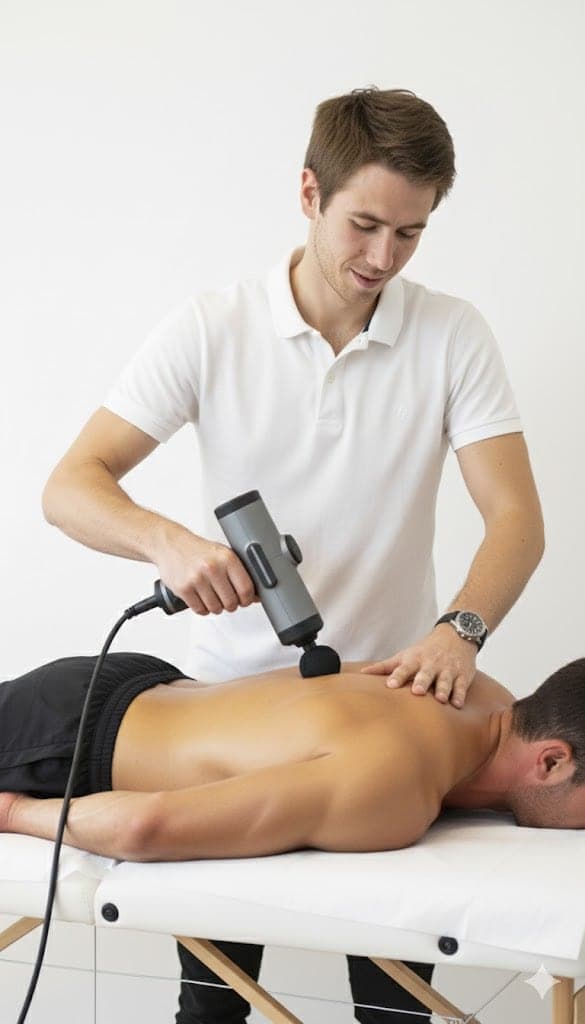
Human hands, regardless of skill level, possess inherent limitations in depth, consistency, and precision. My specialized mechanical system eliminates these constraints through three critical advantages:
Precision: The mechanical interface delivers exact pressure distribution across targeted muscle groups, accessing deeper fascial layers with surgical accuracy. This precision allows for systematic release of specific tension patterns that manual techniques cannot reach.
Power: While manual pressure dissipates through soft tissue, mechanical intervention maintains consistent force transmission directly to restriction sites. This power differential enables breakthrough of chronic adhesions that resist conventional approaches.
Consistency: Human fatigue and technique variation create unpredictable treatment outcomes. My mechanical system delivers identical therapeutic intensity throughout each session, eliminating the “off days” that plague manual therapy.
Performance Enhancement Mechanisms: How Emba Massage Transforms Athletic Capacity
Neuromuscular Optimization
Athletic performance depends on rapid, coordinated muscle activation patterns. Chronic tension disrupts these neural pathways, creating delays and inefficiencies that limit peak performance. My deep-tissue methodology systematically releases fascial restrictions that impede neural transmission, resulting in:
- Faster muscle activation response times
- Improved intermuscular coordination
- Enhanced proprioceptive feedback
- Reduced antagonist muscle interference
I recently worked with a competitive cyclist experiencing power output plateaus despite intensive training. Traditional sports massage provided temporary relief but no performance gains. Through my systematic deep-tissue approach, we identified and released chronic hip flexor restrictions that were limiting his pedal stroke efficiency. Within three weeks, his power output increased by 12%, and his lactate threshold improved significantly.
Biomechanical Efficiency Enhancement
Optimal athletic performance requires seamless energy transfer through kinetic chains. Muscular restrictions create energy leaks and compensatory patterns that diminish performance while increasing injury risk. My methodology targets these biomechanical dysfunctions systematically.
The mechanical precision of my approach allows for specific fascial plane separation, restoring optimal muscle fiber orientation and length-tension relationships. This structural optimization directly translates to:
| Performance Parameter | Improvement Mechanism | Typical Enhancement |
|---|---|---|
| Power Output | Optimized muscle fiber recruitment | 8-15% increase |
| Range of Motion | Fascial restriction release | 15-25% improvement |
| Movement Efficiency | Kinetic chain optimization | Reduced energy expenditure |
| Recovery Speed | Enhanced circulation and waste removal | 30-40% faster |
Circulatory and Metabolic Enhancement
Deep-tissue restrictions create localized circulation deficits that limit oxygen delivery and metabolic waste removal. My mechanical methodology generates precise pressure gradients that systematically restore optimal blood flow patterns.
Unlike superficial massage that produces temporary vasodilation, my deep-tissue approach creates lasting structural changes in fascial organization. This results in sustained circulatory improvements that enhance:
- Oxygen transport efficiency
- Nutrient delivery to working muscles
- Lactate clearance capacity
- Post-exercise recovery rates
Case Studies: Measurable Performance Transformations
Elite Runner: Breaking Through Performance Plateaus
A competitive marathon runner approached me after months of stagnant performance despite increased training volume. Her primary complaint wasn’t pain – it was the inability to access her previous speed despite feeling strong. Traditional sports massage provided relaxation but no performance breakthrough.
Through systematic assessment, I identified chronic restrictions in her posterior fascial chain that were limiting her stride efficiency. The mechanical precision of my approach allowed us to target these deep restrictions methodically. After six targeted sessions over three weeks:
- Her stride length increased by 4 inches
- Ground contact time decreased by 15 milliseconds
- Marathon personal record improved by 8 minutes
- Post-race recovery time reduced by two full days
The key was addressing the cause – fascial restrictions limiting biomechanical efficiency – rather than treating symptoms like muscle tightness or fatigue.
Professional Soccer Player: Injury Prevention and Performance Optimization
A professional soccer player was experiencing recurring hamstring strains despite extensive rehabilitation and conditioning. Traditional treatment focused on strength training and flexibility work, but the underlying mechanical dysfunction remained unaddressed.
My assessment revealed complex fascial restrictions throughout his posterior chain that created compensatory movement patterns during high-speed actions. The mechanical precision of my methodology enabled systematic release of these deep restrictions while maintaining the intensity necessary for elite-level demands.
Results after our targeted intervention protocol:
- Zero hamstring injuries over the subsequent 18-month period
- Sprint speed improvement of 0.3 seconds over 40 meters
- Enhanced agility and cutting ability
- Reduced post-match fatigue and faster recovery
The Investment Paradigm: Long-Term Performance Optimization
Traditional massage therapy operates on a symptom-management model – providing temporary relief that requires constant repetition. My Emba massage methodology represents a fundamental shift toward lasting performance optimization through structural correction.
Why Superior Results Require Superior Methods
The mechanical advantages of my system aren’t just theoretical – they produce measurably superior outcomes because they address performance limitations at their source. Manual techniques, regardless of practitioner skill, cannot generate the depth, precision, and consistency required for lasting structural changes.
Consider this: would you expect a surgeon to achieve optimal results using less precise tools? Athletic performance optimization requires the same commitment to methodological excellence.
Partnership Approach: Customized Performance Protocols
I don’t provide one-size-fits-all treatments. Each athlete receives a customized protocol based on their specific performance goals, movement patterns, and restriction profiles. This partnership approach ensures optimal resource allocation and maximum return on investment.
My traveling service model eliminates logistical barriers that prevent consistent treatment adherence. By bringing professional-grade equipment directly to your location, we maintain treatment consistency while respecting your training and competition schedule.
Advanced Applications: Sport-Specific Performance Enhancement
Endurance Sports: Optimizing Energy Efficiency
Endurance athletes require exceptional metabolic efficiency and muscular endurance. My methodology targets the fascial restrictions that create energy leaks and limit sustainable power output.
For cyclists, runners, and triathletes, I focus on:
- Hip flexor complex optimization for efficient movement patterns
- Thoracic spine mobility enhancement for respiratory efficiency
- Lower extremity fascial chain integration for power transfer
- Core stability optimization through deep abdominal work
Power and Explosive Sports: Maximizing Force Production
Athletes in power-based sports require optimal muscle fiber recruitment and rapid force development. My deep-tissue methodology systematically removes the restrictions that limit explosive capacity.
For weightlifters, sprinters, and field athletes, treatment priorities include:
- Posterior chain optimization for maximum power generation
- Shoulder complex mobility for overhead movement efficiency
- Hip complex integration for ground force transfer
- Fascial tension optimization for elastic energy storage
Skill-Based Sports: Enhancing Coordination and Precision
Technical sports require precise neuromuscular control and consistent movement execution. My methodology addresses the subtle restrictions that interfere with motor control and coordination.
For tennis players, golfers, and martial artists, I target:
- Rotational chain optimization for power and accuracy
- Fine motor control enhancement through precise fascial work
- Proprioceptive system optimization
- Movement pattern refinement through structural correction
Implementation Strategy: Maximizing Performance Gains
Assessment and Goal Definition
Every performance enhancement program begins with comprehensive assessment. I analyze movement patterns, identify restriction profiles, and establish specific, measurable performance goals. This systematic approach ensures targeted intervention and objective progress tracking.
Progressive Treatment Protocols
My mechanical system allows for precise intensity modulation throughout the treatment process. We begin with thorough structural assessment and gradually progress to deeper interventions as tissue adaptation occurs. This progressive approach maximizes results while minimizing disruption to training schedules.
Integration with Training Programs
Optimal results occur when deep-tissue intervention integrates seamlessly with training and competition cycles. I work closely with athletes and their support teams to ensure treatment timing optimizes rather than interferes with performance goals.
Frequently Asked Questions
How does Emba massage differ from sports massage?
Sports massage typically provides temporary relief through surface-level techniques. My Emba methodology uses advanced mechanical systems to create lasting structural changes in deep fascial layers. The depth, precision, and consistency of my approach generate measurable performance improvements rather than just temporary symptom relief.
How quickly can I expect to see performance improvements?
Most athletes notice movement quality improvements within the first session. Measurable performance gains typically occur within 2-3 weeks of consistent treatment. However, the timeline varies based on restriction severity, training demands, and individual response patterns.
Is the treatment painful?
The intensity is precisely controlled and adjusted to your tolerance level. While deep-tissue work involves pressure sensation, it should never be painful. My mechanical system allows for exact pressure modulation, ensuring therapeutic effectiveness without excessive discomfort.
How often should I receive treatments?
Treatment frequency depends on your performance goals, training intensity, and current restriction patterns. Most athletes benefit from weekly sessions during intensive training periods and bi-weekly maintenance during lighter phases.
Can this method help prevent injuries?
Absolutely. By addressing the structural dysfunctions that create compensatory movement patterns, my methodology significantly reduces injury risk while enhancing performance. Many of my clients report dramatic decreases in overuse injuries after implementing regular treatment protocols.
Do you work with amateur athletes or only professionals?
I work with athletes at all levels who are committed to performance optimization. Whether you’re a weekend warrior or elite competitor, the principles of structural optimization apply equally. Your dedication to improvement matters more than your current performance level.
What makes your mechanical system superior to manual techniques?
Human hands have inherent limitations in depth, consistency, and precision. My mechanical system eliminates these constraints, delivering exact pressure distribution to targeted areas with consistent intensity throughout each session. This technological advantage enables breakthrough of chronic restrictions that manual methods cannot address.
How do you customize treatments for different sports?
Each sport creates specific movement patterns and restriction profiles. I analyze your sport’s biomechanical demands and target the fascial systems most critical to your performance. A golfer receives different treatment focus than a marathon runner, even though both may benefit from improved hip mobility.
Investment in Excellence: The Performance Optimization Decision
Athletic performance optimization requires commitment to methods that produce measurable, lasting results. My Emba massage methodology represents the intersection of advanced technology, clinical expertise, and performance-focused outcomes.
The choice is straightforward: continue accepting temporary relief from conventional approaches, or invest in systematic performance enhancement through proven methodology. The mechanical precision, treatment consistency, and structural focus of my approach consistently deliver the breakthrough results that define athletic excellence.
After ten years of helping athletes transcend their performance barriers, I can confidently state that the depth and precision of intervention directly correlates with the magnitude and permanence of results achieved. My traveling service model ensures that geographical location never becomes a barrier to accessing this level of therapeutic precision.
The question isn’t whether you can afford to invest in optimal performance – it’s whether you can afford to accept anything less than your full athletic potential.
Written by
Chris
Massage therapist & body mechanics specialist
Norwegian-certified with a Bachelor’s in Physical Education and Nutrition and over ten years of clinical practice, working from a portable table in clients’ homes across the Paphos district.
This article is general information from clinical practice, not a medical diagnosis. If you have severe, worsening or unexplained pain, numbness, weakness, or pain after an accident, see a doctor first.