Back pain Paphos: home remedies that help and the ones that waste your time
In short
The back pain Paphos clients describe to me is usually muscular and responds to a short routine: a ball against the wall, spinal movement and heat. When self-treatment stalls, mechanical deep tissue at home reaches what hands and balls cannot.
After ten years treating backs across the district, I know most people searching for back pain Paphos advice have tried everything online before they call me. Some of it is worth keeping. Much is not. This is my honest sort of the two, and where mechanical deep tissue in Paphos fits when self-care stalls.
I am not writing this to talk you out of helping yourself. A good home routine is the reason many of my clients need me less often, not more. But the routine has to match what is actually going on in the tissue, and that is where most guides go wrong.
What is actually happening in a sore back
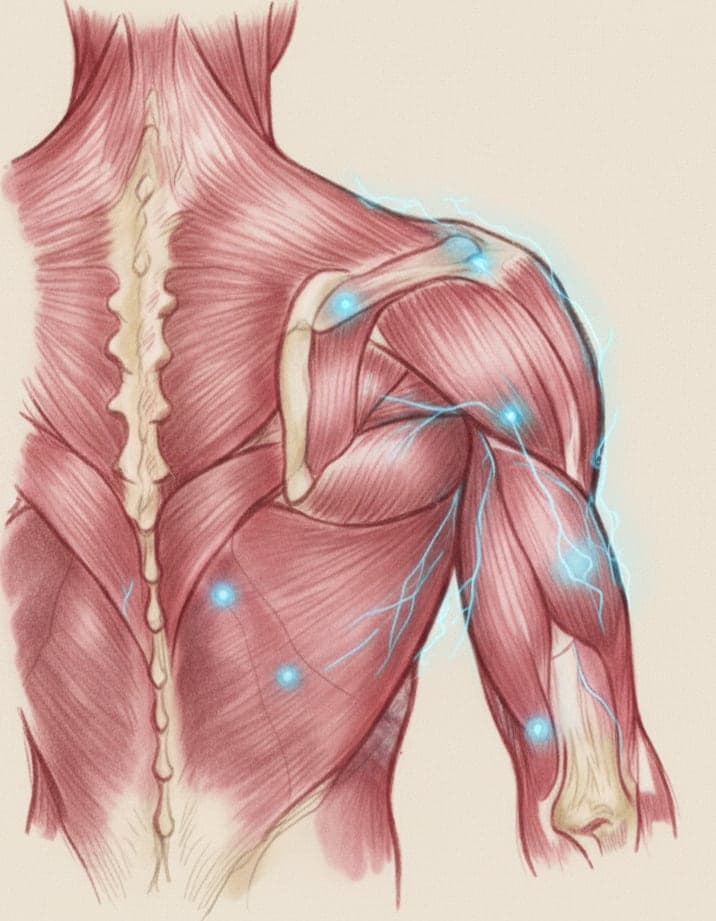
The back pain I see most often around Paphos is not a disc, a fracture or anything sinister. It is muscle and fascia that has been asked to hold one position for too long, or to work hard without preparation, and has responded by tightening and staying tight. The erector spinae along the spine, the quadratus lumborum in the flank, the gluteals and the deep hip flexors are the usual players.
The pattern I see most often is a person who sits for work, drives everywhere because the hills make walking unappealing, and then does something physical at the weekend. Their hip flexors shorten from the sitting, the pelvis tips forward, and the lower back is left to extend and brace all day. The weekend garden or beach session is simply the moment the tired tissue complains.
None of this needs surgery or a scan in most cases. It needs the tissue to be worked, lengthened, moved and then loaded again in a sensible order. Some of that you can do yourself. The deeper, more stubborn part is what I bring the machine for.
Home remedies I would keep
I have no interest in telling clients that only I can help them. These are the things I ask people in Paphos to do between sessions, because they genuinely change how the tissue behaves.
| Remedy | What it does | How to do it well |
|---|---|---|
| Firm ball against a wall | Compresses tender points in the gluteals and lower back | Lean into it, find the sore spot, hold 60 to 90 seconds, breathe |
| Gentle spinal movement | Restores blood flow and reminds the nervous system the back is safe | Cat-cow, pelvic tilts, slow rotations, little and often |
| Heat before movement | Softens tissue and lowers guarding | 10 to 15 minutes, then move; do not just lie under it |
| Walking | Loads the back rhythmically without bracing | 20 minutes on flat ground, most days |
| Hip flexor lengthening | Reduces the forward pelvic pull that overloads the lower back | Half-kneeling, tuck the tailbone under, hold 60 seconds each side |
Two notes on technique. With the ball, most people go far too lightly and give up after ten seconds. Useful pressure is a seven out of ten on discomfort, deep and dull rather than sharp, held long enough for the tissue to soften under it. And with stretching, the target is almost always the front of the hip and the gluteals, not the lower back itself. The lower back is usually already long and overworked; stretching it feels nice for a minute and changes nothing.
Heat deserves a defence. It gets dismissed as passive, and it is, but used as preparation for movement rather than as the treatment itself it makes everything else work better. In the cooler months a hot shower before the routine is enough.
Home remedies I would drop
The other half of the list. I am not saying these are dangerous, only that in the presentation I see most often they cost time and produce little.
- Ice on a chronic back. Ice has a place in the first day or two after a genuine strain. On a back that has ached for months it makes the tissue guard harder and does nothing to the underlying tightness.
- Static stretching of the lower back. Forward folds and knee hugs feel relieving because they briefly unload the muscles. They do not lengthen anything that is actually short.
- Percussion guns skimmed across the surface. Used the way most people use them, hovering and vibrating, they warm the skin and not much else. If you own one, use it slowly, with real pressure, on the gluteals and flank, not the spine.
- Long bed rest. A day of taking it easy is reasonable. Beyond that, the tissue stiffens further and the fear of moving grows.
- Random core exercises. Planks and crunches on a back that is bracing all day add more bracing. Strength work belongs after the tissue has been freed, not instead of it.
The mistake behind all of these is treating the painful spot rather than the reason it is painful. The lower back is very often the victim of tight hips and a stiff mid-back, not the culprit. Work on the hips and the thoracic spine and the lower back frequently settles on its own.
A ten-minute routine that fits into a Paphos day
People do not need a forty-minute programme; they need something short enough to do daily. This is the order I give clients after a session, and it works just as well as a standalone routine.
Consistency matters far more than intensity here. Five ordinary sessions a week outperform one heroic one, because tightness re-establishes itself between long gaps. And the routine should get less necessary over time, not more. If after three or four weeks of honest daily effort the back is no better, that tells you the restriction is deeper than a ball and a stretch can reach.
A word about the local specifics. Sitting in air conditioning at 21 degrees and stepping out into 38 makes many backs seize, so warm the tissue before you work it in summer. Long drives to Nicosia or Limassol are a reliable trigger; a stop and a two-minute walk halfway costs nothing. And the hills of Tala, Tsada and Peyia are excellent for the back once it is moving well, and unhelpful when it is not, so build up to them.
Back pain Paphos: when home care is not enough
The line I use is simple. Home remedies are good at maintaining tissue and dealing with tightness that is recent and superficial. They are poor at breaking up restrictions that have been there for years, that sit deep under the gluteals or along the flank, or that keep returning within days despite good habits. That is where mechanical deep tissue earns its place.
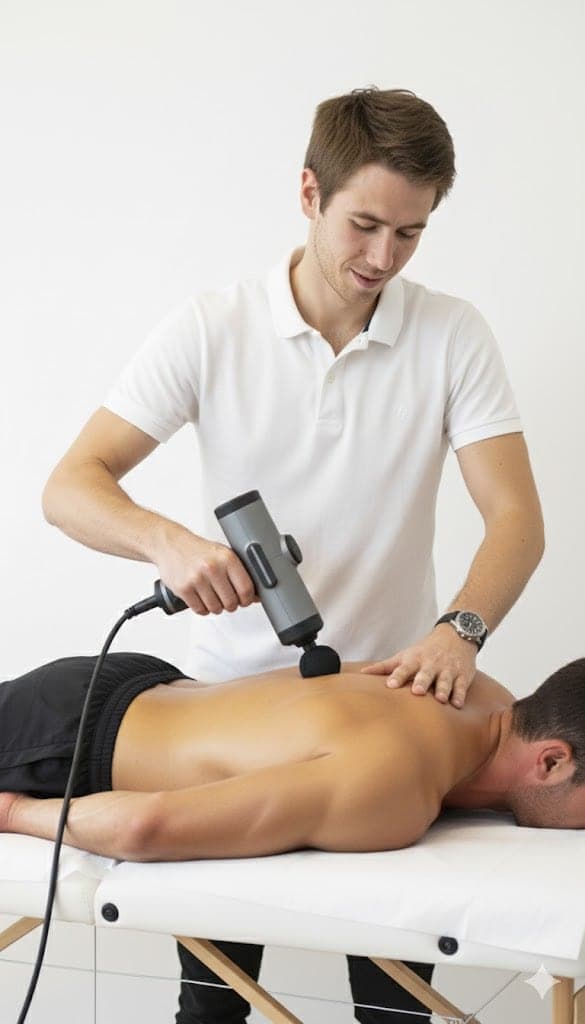
The machine I work with applies steady, sustained pressure at a depth and consistency that hands, balls and percussion guns cannot match, and it does so without fatiguing, so the pressure profile stays even for the whole session. In practice that means I can address the deep hip rotators, the quadratus lumborum and the thickened fascia over the sacrum in a way that self-treatment cannot. I bring the table and the equipment to your home anywhere in the Paphos district, and the visit is timed so you can rest afterwards rather than drive.
- A 60-minute session at €90 is usually enough for one region, most often lower back, hips and gluteals together.
- A 90-minute session at €130 lets me work the full chain, from the mid-back down through the hips and thighs, which is what most chronic backs need.
- Every fifth session is free, which suits people who want a monthly maintenance visit alongside their own routine.
- Full details are on the pricing page, and how a home visit works is on the Paphos area page.
What I can help with is muscular and fascial back pain: the stiff, aching, tight kind that changes with position and movement. What I cannot help with is anything structural or medical, so see a doctor first if your back pain came with numbness or weakness in the legs, any change in bladder or bowel control, fever, unexplained weight loss, pain that is worse at night or at rest, or if it followed a fall or accident. Those need a diagnosis, not a massage.
The most productive arrangement I see is a session every three to four weeks and the ten-minute routine most days in between. My work opens the tissue; your work keeps it open. Neither does the whole job alone.
Frequently asked questions
How long should a home routine take to make a difference?
Most people notice easier movement within a week or two of doing the routine daily, and a meaningful drop in ache over three to four weeks. If nothing has shifted after a month of honest effort, the restriction is probably deeper than self-treatment can reach, and that is a reasonable point to book a mechanical deep tissue session rather than keep repeating the same thing.
Is it normal for ball work to hurt?
Yes, within limits. Useful pressure on a tender point is a deep, dull discomfort of around seven out of ten that eases as you hold it. Sharp, shooting or electric pain, or anything that travels down the leg, means you are on the wrong spot or pressing on a nerve, so move off it. Soreness the next day should be mild and gone within 24 hours.
Should I use heat or ice for back pain?
For the back pain most people in Paphos have, which is chronic and muscular, heat is more useful, especially before movement or ball work. Ice belongs in the first day or two after a sudden strain, when the tissue is genuinely inflamed. Using ice on a back that has ached for months usually makes it guard harder and does nothing to the underlying tightness.
Can I combine home care with mechanical deep tissue sessions?
That is exactly how I prefer to work. A session every three to four weeks reaches the deep restrictions that a ball and stretch cannot, and the ten-minute routine keeps the tissue moving between visits. Clients who do both generally need fewer sessions overall than those who rely on either alone, and every fifth session is free, which suits a monthly rhythm.
Is there a mobile massage therapist near me in Paphos?
Yes. I am based in Chlorakas, just north of Paphos town, and I travel with a table and my equipment to homes and villas across the district, from Kato Paphos and Universal to Tala, Peyia and Coral Bay. Sessions are €90 for 60 minutes or €130 for 90 minutes, booked directly by WhatsApp or phone.
When should I see a doctor instead of trying home remedies?
See a doctor first if your back pain came with numbness, tingling or weakness in the legs, any change in bladder or bowel control, fever, unexplained weight loss, pain that is worse at rest or at night, or if it followed a fall or accident. Those are not massage problems. If a doctor has ruled those out and called it muscular, home care and deep tissue work are appropriate.
Written by
Chris
Massage therapist & body mechanics specialist
Norwegian-certified with a Bachelor’s in Physical Education and Nutrition and over ten years of clinical practice, working from a portable table in clients’ homes across the Paphos district.
- Norwegian-certified
- BSc Physical Education & Nutrition
- 10+ years clinical practice
- Based in Chlorakas · all of Paphos district
- No call-out fee anywhere in Paphos district
Last reviewed
This article is general information from clinical practice, not a medical diagnosis. If you have severe, worsening or unexplained pain, numbness, weakness, or pain after an accident, see a doctor first.