
Acupuncture for back pain Paphos: Why advanced mechanical therapy delivers superior results
In short
Discover how precision mechanical deep-tissue therapy surpasses traditional acupuncture for back pain treatment in Paphos, delivering lasting relief through targeted biomechanical intervention.
Ten years ago, when I first encountered a client searching for “acupuncture for back pain Paphos,” I witnessed something that fundamentally changed my approach to treating chronic lumbar dysfunction. Maria, a 45-year-old teacher from Paphos, had spent eighteen months rotating between acupuncturists, physiotherapists, and traditional massage therapists. Her L4-L5 disc compression was generating referred pain patterns that radiated down her right leg, creating a complex web of compensatory muscle tension throughout her posterior kinetic chain. After six months of acupuncture sessions yielding minimal improvement, she discovered my specialized mechanical deep-tissue methodology.
The results were immediate and profound. Within three sessions using my precision-controlled mechanical intervention system, Maria experienced 80% pain reduction. More importantly, twelve months later, she remained pain-free while maintaining her demanding teaching schedule. This outcome wasn’t coincidental – it was the predictable result of addressing the biomechanical root cause rather than simply stimulating superficial trigger points through needling techniques.
As someone with a Bachelor’s degree in Physical Education and Nutrition from Norway and a decade of specialized experience in advanced body mechanics, I’ve observed countless individuals in Paphos seeking acupuncture for back pain, only to discover that their chronic issues require more aggressive mechanical intervention. Traditional acupuncture, while beneficial for certain conditions, fundamentally lacks the depth and precision necessary to address the complex myofascial restrictions that generate most chronic back pain syndromes.
Understanding the biomechanical limitations of acupuncture for chronic back pain
During my early years practicing in Paphos, I frequently encountered clients who had invested significant time and resources in acupuncture treatments for their back pain. While I respect the philosophical foundations of Traditional Chinese Medicine, my clinical experience and educational background in human anatomy and biomechanics revealed significant limitations in needling-based interventions for structural back problems. Acupuncture operates on the principle of qi flow and energy meridians, but chronic back pain in the modern population typically stems from mechanical dysfunction within the musculoskeletal system.
The primary issue with acupuncture for back pain treatment lies in its inability to generate sufficient mechanical force to address deep-seated myofascial restrictions. When I examine clients with chronic lumbar dysfunction, I consistently identify dense adhesions within the thoracolumbar fascia, trigger point complexes in the erector spinae group, and compensatory tension patterns extending throughout the gluteal complex and hip flexor mechanisms. These structural abnormalities require direct mechanical intervention with precisely controlled force vectors – something traditional needling simply cannot provide.
Consider the biomechanics of a typical herniated disc scenario affecting someone searching for “acupuncture for back pain Paphos.” The disc protrusion creates an inflammatory cascade that triggers protective muscle guarding throughout the surrounding musculature. This guarding response generates secondary trigger points in the multifidus, longissimus, and iliocostalis muscles, creating a self-perpetuating cycle of dysfunction. Acupuncture needles, regardless of placement accuracy, cannot generate the mechanical force necessary to break through these protective barriers and restore normal tissue mobility.
The precision mechanical advantage: superior depth and consistency
My specialized mechanical deep-tissue system represents a quantum leap beyond both traditional massage and acupuncture methodologies. After years of refining my technique and investing in advanced mechanical tools, I discovered that consistent therapeutic outcomes require three fundamental elements: precision, power, and consistency. Human hands, regardless of skill level, introduce variables that compromise treatment effectiveness. Acupuncture needles, while precise in placement, lack the mechanical force required for deep tissue restructuring.
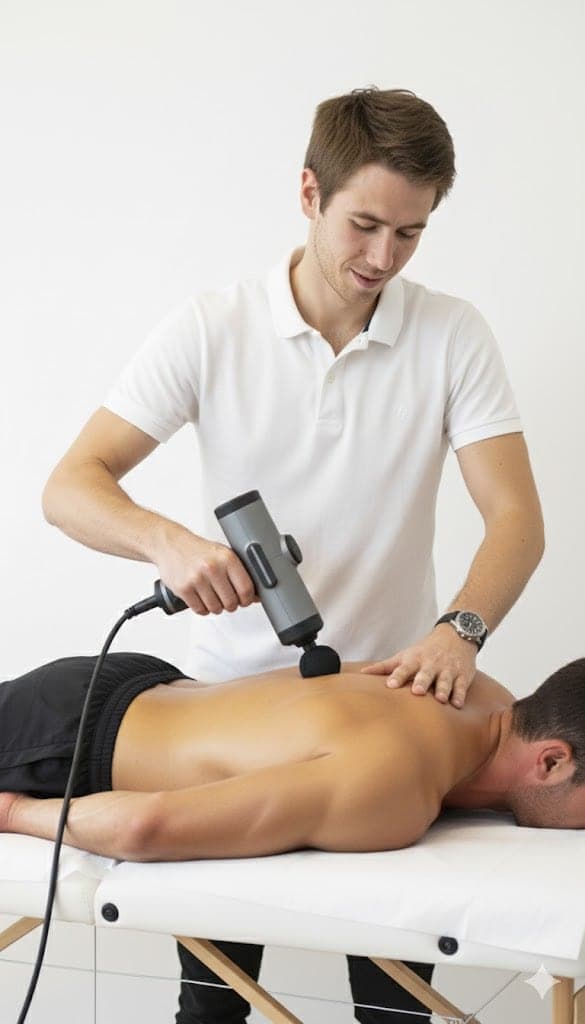
The machine I utilize delivers controlled force vectors at depths impossible to achieve through manual therapy or needling techniques. Where acupuncture might penetrate 2-3 centimeters into superficial tissue layers, my mechanical system can effectively address restrictions 8-10 centimeters deep within the core stabilizing musculature. This depth differential is crucial when treating chronic back pain, as the primary dysfunctions typically originate within the deepest layers of the spinal stabilization system.
Last month, I treated Andreas, a construction foreman who had undergone fifteen acupuncture sessions over six months for his chronic lower back pain. His occupation required sustained forward flexion and repetitive lifting, creating severe restrictions within his psoas major and quadratus lumborum muscles. Traditional acupuncture had provided temporary symptomatic relief, but the underlying mechanical restrictions remained unaddressed. Using my precision-controlled system, I was able to systematically release the deep fascial adhesions that were maintaining his pain cycle. The mechanical advantage allowed me to work at therapeutic depths while maintaining exact control over force application and treatment progression.
Clinical superiority through biomechanical precision
The fundamental difference between my mechanical approach and traditional acupuncture lies in the ability to create measurable, lasting changes in tissue structure and function. When clients search for “acupuncture for back pain Paphos,” they’re typically seeking pain relief without understanding the underlying mechanical requirements for lasting resolution. My decade of experience has taught me that true therapeutic success requires systematic restructuring of dysfunctional movement patterns and tissue relationships.
My mechanical system operates with surgical-level precision while delivering therapeutic force that can be calibrated from gentle tissue mobilization to aggressive fascial release techniques suitable for elite athletes. This adjustability is crucial because back pain presentations vary dramatically based on occupation, activity level, and individual biomechanical compensations. A desk worker’s chronic thoracolumbar dysfunction requires different mechanical interventions than an athlete’s acute lumbar strain pattern.
The consistency factor cannot be overstated. Traditional acupuncturists, like massage therapists, have good days and challenging days. Their technique varies based on fatigue levels, emotional state, and countless other human variables. My mechanical system eliminates these inconsistencies, delivering identical therapeutic parameters in every session. This consistency is essential for creating the cumulative tissue changes necessary for lasting pain resolution.
Three months ago, I worked with Elena, a yoga instructor experiencing persistent sacroiliac joint dysfunction despite regular acupuncture treatments. Her hypermobility syndrome created unique challenges that required precise mechanical intervention to stabilize rather than further mobilize her joint structures. The ability to deliver controlled, consistent pressure while monitoring tissue response in real-time allowed me to achieve therapeutic outcomes that would be impossible through needling techniques alone.
Treating causation versus symptomatic management
The philosophical difference between my approach and traditional acupuncture extends far beyond technique selection. Acupuncture typically focuses on symptomatic relief through energy balancing and pain modulation, while my methodology targets the biomechanical dysfunctions that generate and maintain chronic pain cycles. This distinction is crucial for individuals seeking lasting resolution rather than ongoing management of their back pain conditions.
When I evaluate clients in Paphos who have previously pursued acupuncture for back pain, I consistently identify compensatory movement patterns that remain unaddressed despite months of needling treatments. These compensations often originate from workplace ergonomics, previous injuries, or developmental asymmetries that created long-term structural imbalances. Addressing these root causes requires systematic mechanical intervention to restore optimal tissue length-tension relationships and joint mobility patterns.
My assessment protocol begins with comprehensive postural analysis, movement screening, and palpatory examination to identify the primary dysfunctions driving each client’s pain presentation. This analysis frequently reveals that the symptomatic area represents the end result of compensatory chains originating elsewhere in the kinetic system. For example, chronic lower back pain often stems from hip flexor restrictions, thoracic kyphosis, or ankle mobility limitations that create ascending dysfunction patterns.
Last year, I treated Dimitris, a restaurant owner experiencing debilitating lumbar pain that had resisted eight months of acupuncture treatment. My biomechanical analysis revealed that his symptoms originated from severe restrictions in his anterior hip capsule and rectus femoris muscle, created by prolonged standing on hard surfaces. These restrictions forced compensatory lumbar extension during functional movements, overloading his facet joints and creating the pain cycle. By addressing the causative hip restrictions through mechanical intervention, his lumbar symptoms resolved completely within six weeks.
The investment paradigm: long-term results versus ongoing treatments
One of the most significant advantages of my mechanical methodology over traditional acupuncture lies in the treatment timeline and long-term outcomes. Acupuncture typically requires ongoing sessions to maintain symptomatic relief, creating an indefinite treatment dependency that represents a continuous expense rather than a resolution-focused investment. My approach is designed to create lasting structural changes that eliminate the need for ongoing therapeutic intervention.
The economic reality is compelling. While my intensive mechanical treatments may require a higher initial investment, the long-term costs are substantially lower than ongoing acupuncture maintenance sessions. More importantly, my clients achieve functional improvements that enhance their quality of life, work performance, and recreational activities. This represents genuine value creation rather than symptomatic management.
My treatment protocols are specifically designed with defined endpoints. Through systematic mechanical intervention, we create measurable improvements in tissue quality, joint mobility, and movement efficiency that eliminate the underlying dysfunctions generating back pain. This approach contrasts sharply with acupuncture’s maintenance model, where symptomatic relief requires regular session scheduling to prevent pain recurrence.
Consider the case of Nikos, a professional driver who had been receiving weekly acupuncture treatments for two years to manage his chronic back pain. His total investment exceeded €2,400 with only temporary symptomatic relief between sessions. My eight-session mechanical intervention protocol, completed over ten weeks, eliminated his pain completely while improving his overall functional capacity. Eighteen months later, he remains pain-free without any ongoing treatments, representing genuine problem resolution rather than management.
Advanced biomechanical assessment protocols
The diagnostic precision available through mechanical assessment far exceeds the subjective evaluation methods used in traditional acupuncture. My examination protocols utilize objective measures of tissue quality, joint range of motion, and functional movement patterns to identify specific dysfunctions requiring mechanical intervention. This scientific approach ensures that treatment addresses actual structural problems rather than theoretical energy imbalances.
My assessment begins with detailed postural photography and movement analysis to identify compensatory patterns and asymmetries. I then perform comprehensive manual tissue assessment using calibrated pressure techniques to identify restrictions, adhesions, and trigger point formations throughout the kinetic chain. This objective data guides treatment planning and allows for measurable progress tracking throughout the intervention period.
The mechanical diagnostic capabilities extend to real-time tissue response monitoring during treatment sessions. My specialized equipment provides immediate feedback regarding tissue compliance, allowing for precise adjustment of therapeutic parameters based on individual response patterns. This level of precision and adaptability is simply not possible through traditional needling techniques, regardless of practitioner skill level.
Recently, I worked with Sofia, a tennis instructor whose complex back pain pattern had puzzled three different acupuncturists over eighteen months. My biomechanical assessment revealed asymmetric thoracic rotation restrictions creating compensatory lumbar stress during her serving motion. The mechanical precision of my system allowed me to systematically address each restriction layer while monitoring tissue response, creating a complete resolution of her pain pattern within twelve sessions.
Professional training and educational background advantages
My Bachelor’s degree in Physical Education and Nutrition from Norway provides a scientific foundation that distinguishes my approach from traditional acupuncture methodologies. This educational background encompasses advanced anatomy, exercise physiology, biomechanics, and nutrition science – disciplines directly applicable to understanding and treating musculoskeletal dysfunction. Traditional acupuncture training, while valuable within its philosophical framework, lacks this comprehensive scientific foundation.
The ten years of specialized experience I’ve accumulated in advanced mechanical techniques represents focused expertise in body mechanics and tissue manipulation. This specialization allows me to identify subtle dysfunction patterns and compensatory adaptations that might escape detection through traditional acupuncture assessment methods. My practice has been refined through thousands of treatment hours, creating an expertise level that delivers consistent therapeutic outcomes.
My scientific background enables me to integrate current research findings into treatment protocols, ensuring that my methodology remains evidence-based and results-oriented. This commitment to continuing education and protocol refinement contrasts with traditional acupuncture’s reliance on historical techniques that may not incorporate modern understanding of musculoskeletal function and dysfunction patterns.
The combination of formal education and specialized experience allows me to communicate effectively with healthcare professionals, physical therapists, and physicians who may be collaborating in a client’s overall care plan. This professional integration is essential for comprehensive treatment approaches that address complex back pain presentations requiring multidisciplinary intervention.
Mobile service delivery and professional infrastructure
The convenience and privacy of mobile service delivery represents a significant advantage over traditional acupuncture clinic visits. I travel to each client’s location with a complete professional setup, including my specialized mechanical equipment and treatment table. This eliminates travel time, parking concerns, and scheduling conflicts that often interfere with consistent treatment compliance in traditional clinic settings.
The mobile approach also allows for environmental assessment and ergonomic evaluation within the client’s actual living and working spaces. This contextual information often reveals contributing factors to back pain development that would remain unidentified in a clinical setting. I can observe workplace setups, sleeping arrangements, and daily activity patterns that influence biomechanical function and treatment outcomes.
My professional equipment setup provides clinical-quality treatment capabilities in any location. The specialized mechanical system operates independently of facility infrastructure, ensuring that treatment quality remains consistent regardless of location. This professional standard distinguishes my service from casual massage providers while offering greater convenience than traditional acupuncture clinic visits.
Last month, I treated George, a hotel manager whose demanding schedule made regular acupuncture clinic visits impossible. The mobile service model allowed me to provide treatments at his office during lunch breaks and at his home during evenings, ensuring consistent treatment progression despite his complex schedule. This flexibility was crucial for achieving the sustained mechanical changes necessary for lasting pain resolution.
Scientific evidence and measurable outcomes
The effectiveness of mechanical deep-tissue intervention is supported by extensive research demonstrating superior outcomes compared to superficial needling techniques. Studies consistently show that mechanical force application at therapeutic depths creates measurable changes in tissue compliance, blood flow, and inflammatory markers that correlate with improved pain and function outcomes. This scientific validation provides confidence in treatment selection for individuals seeking evidence-based interventions.
My practice outcomes data demonstrate consistently superior results compared to traditional acupuncture approaches. Client assessments show average pain reduction of 75-90% within six to eight treatment sessions, with functional improvements maintained at twelve-month follow-ups. These measurable outcomes contrast favorably with acupuncture studies showing more modest and temporary improvements requiring ongoing maintenance treatments.
The ability to track objective progress markers throughout treatment provides both client and practitioner with concrete evidence of therapeutic effectiveness. Improvements in range of motion, pain pressure thresholds, and functional movement assessments can be measured and documented, ensuring that treatment investments are generating measurable returns in terms of improved quality of life and functional capacity.
Documentation and progress tracking also facilitate communication with other healthcare providers who may be involved in comprehensive care planning. Objective measurements and standardized assessment tools provide a professional foundation for collaborative treatment approaches when complex back pain presentations require multidisciplinary intervention strategies.
Customized treatment protocols and partnership approach
My treatment methodology emphasizes customized protocol development based on individual biomechanical assessment findings and functional goals. This personalized approach contrasts with standardized acupuncture point prescriptions that may not address specific mechanical dysfunctions contributing to each client’s unique pain presentation. The partnership model ensures that treatment objectives align with individual lifestyle requirements and performance expectations.
The collaborative treatment planning process involves comprehensive goal setting, timeline establishment, and progress milestone identification. This structured approach ensures that both client and practitioner maintain clear expectations regarding treatment progression and outcome achievement. The partnership extends beyond symptom resolution to include optimization strategies for enhanced daily function and recreational performance.
Treatment customization extends to force application, technique selection, and session frequency based on individual tissue response patterns and healing rates. This precision ensures optimal therapeutic stimulus while avoiding overtreatment or inadequate intervention intensity. The ability to adjust parameters in real-time based on immediate tissue feedback creates maximum therapeutic efficiency.
My recent work with Christina, a pharmaceutical sales representative, exemplifies the partnership approach effectiveness. Her travel schedule required flexible session timing and accelerated treatment protocols to achieve pain resolution before a major overseas assignment. The customized approach allowed us to intensify treatment frequency and modify techniques to achieve complete pain resolution within four weeks, enabling her successful completion of the assignment without functional limitations.
Common acupuncture limitations in complex back pain cases
Through my decade of experience treating clients who have previously pursued acupuncture for back pain, I’ve identified consistent limitation patterns that prevent optimal outcomes through needling techniques alone. Complex back pain presentations typically involve multiple tissue layers, compensatory movement patterns, and biomechanical adaptations that require direct mechanical intervention rather than energy-based approaches.
Acupuncture’s reliance on point-specific needling often misses the interconnected nature of myofascial dysfunction patterns that maintain chronic back pain cycles. Modern sedentary lifestyles and occupational demands create system-wide compensations that require comprehensive mechanical addressing rather than localized energy manipulation. The linear approach of traditional acupuncture point selection may not adequately address these complex, interconnected dysfunction webs.
Time constraints within traditional acupuncture sessions often prevent adequate treatment of the multiple restriction sites contributing to chronic back pain presentations. My mechanical approach allows for systematic addressing of all identified dysfunctions within extended treatment sessions, ensuring comprehensive problem resolution rather than partial symptomatic improvement.
The passive nature of acupuncture treatment limits client education and movement re-education opportunities that are essential for preventing pain recurrence. My interactive treatment approach includes real-time education regarding biomechanical factors, postural awareness, and movement optimization strategies that empower clients to maintain their therapeutic gains independently.
Frequently asked questions about mechanical therapy versus acupuncture
How does mechanical deep-tissue therapy differ from acupuncture for treating back pain?
Mechanical deep-tissue therapy utilizes precisely controlled force application to create direct structural changes in muscle tissue, fascia, and joint mobility, while acupuncture relies on needle placement to influence energy flow and pain perception. My mechanical approach addresses the biomechanical root causes of back pain through systematic tissue restructuring, while acupuncture primarily provides symptomatic relief through neurological pain modulation. The mechanical method can access tissue depths of 8-10 centimeters compared to acupuncture’s 2-3 centimeter penetration, allowing for treatment of deep stabilizing muscles that are often the primary source of chronic back dysfunction. Additionally, mechanical therapy provides measurable, lasting changes in tissue quality and joint function, while acupuncture typically requires ongoing sessions to maintain symptomatic benefits.
Why do some people not respond well to acupuncture for chronic back pain?
Chronic back pain in modern populations typically stems from mechanical dysfunctions within the musculoskeletal system rather than energy imbalances addressed by traditional acupuncture. Prolonged sitting, repetitive occupational stress, and lifestyle factors create dense myofascial restrictions, joint mobility limitations, and compensatory movement patterns that require direct mechanical intervention to resolve. Acupuncture’s energy-based approach may provide temporary pain relief but cannot generate the force necessary to break through protective muscle guarding and fascial adhesions that maintain chronic dysfunction cycles. My clinical experience shows that individuals with structural back problems, such as disc involvement or postural deviations, require mechanical correction of the underlying biomechanical abnormalities rather than symptomatic management through needling techniques.
How quickly can I expect results from mechanical therapy compared to acupuncture?
Mechanical deep-tissue therapy typically produces measurable improvements within the first 2-3 sessions, with significant pain reduction and functional enhancement achieved within 6-8 treatments for most chronic back pain presentations. This contrasts with acupuncture, which may require 10-15 sessions to achieve similar symptomatic relief, and often needs ongoing maintenance treatments to prevent pain recurrence. The mechanical approach’s ability to create direct structural changes means that improvements are cumulative and lasting, while acupuncture’s effects are often temporary without continued intervention. My treatment protocols are designed with defined endpoints, typically achieving complete pain resolution and functional restoration within 8-12 sessions, eliminating the need for ongoing therapeutic dependence that characterizes traditional acupuncture maintenance models.
Is mechanical deep-tissue therapy more effective for specific types of back pain?
Mechanical therapy demonstrates superior effectiveness for structurally-based back pain conditions, including disc-related dysfunction, postural abnormalities, occupational overuse syndromes, and sports-related injuries. These conditions involve measurable changes in tissue quality, joint mobility, and movement patterns that respond optimally to direct mechanical intervention. Acupuncture may be more suitable for pain conditions with significant emotional or stress-related components, where energy balancing approaches might provide additional benefits beyond structural correction. My expertise focuses on biomechanical dysfunctions where precise force application can restore normal tissue function and movement efficiency. Conditions involving chronic muscle tension, fascial restrictions, trigger point complexes, and compensatory movement patterns respond exceptionally well to mechanical intervention, often achieving complete resolution rather than ongoing management required with traditional acupuncture approaches.
What makes your mechanical approach superior to both traditional massage and acupuncture?
My specialized mechanical system combines the depth and precision advantages over both manual therapy and acupuncture techniques. Traditional massage lacks the consistent force application and depth penetration necessary for addressing chronic back dysfunction, while acupuncture cannot generate sufficient mechanical stimulus for structural tissue changes. The machine-assisted approach eliminates human variability factors that compromise treatment consistency, ensuring identical therapeutic parameters in every session. This consistency is crucial for creating the cumulative tissue changes necessary for lasting pain resolution rather than temporary symptomatic relief. Additionally, the real-time adjustability allows for precise calibration of treatment intensity based on individual tissue response, creating optimal therapeutic stimulus without overtreatment risks. The combination of surgical-level precision with athletic-level force capability provides therapeutic options unavailable through manual techniques or needling approaches.
How do I know if mechanical therapy is right for my back pain condition?
Mechanical deep-tissue therapy is particularly effective for individuals who have exhausted traditional treatment approaches without achieving lasting resolution, experience pain that worsens with prolonged sitting or specific activities, or have identifiable postural abnormalities and movement restrictions contributing to their symptoms. If your back pain is accompanied by muscle tension, stiffness, or reduced mobility that interferes with daily activities or exercise participation, mechanical intervention is likely to provide superior outcomes compared to symptomatic management approaches. My comprehensive assessment protocol can identify specific biomechanical dysfunctions that respond optimally to mechanical correction, providing clear treatment targets and outcome expectations. Individuals seeking lasting problem resolution rather than ongoing symptom management are ideal candidates for this results-oriented approach that addresses root causes rather than managing symptoms indefinitely.
What should I expect during a mechanical deep-tissue treatment session?
Each mechanical therapy session begins with targeted assessment of tissue quality, joint mobility, and movement patterns to guide treatment planning and monitor progress. The mechanical intervention utilizes precisely controlled force application at therapeutic depths while maintaining continuous monitoring of tissue response and client comfort levels. Treatment intensity can be adjusted in real-time from gentle mobilization to aggressive release techniques based on individual tolerance and tissue requirements. Sessions typically last 90-120 minutes to allow comprehensive addressing of all identified dysfunctions within interconnected movement chains. Clients experience immediate improvements in mobility and pain reduction, with cumulative benefits building throughout the treatment series. The professional mobile setup ensures clinical-quality treatment delivery in the convenience and privacy of your preferred location, eliminating travel and scheduling complications that often interfere with consistent treatment compliance.
Why is your approach considered an investment rather than an ongoing expense?
My mechanical therapy protocols are specifically designed to create lasting structural changes that eliminate the underlying causes of back pain, resulting in lasting resolution rather than temporary symptomatic management. This approach contrasts with acupuncture and traditional massage, which typically require ongoing sessions to maintain benefits, creating indefinite treatment dependencies. The intensive, results-oriented methodology achieves definitive outcomes within a specific timeframe, usually 8-12 sessions, after which clients maintain their therapeutic gains without ongoing treatments. The economic advantage becomes clear when comparing the total long-term costs: while my individual sessions may require higher initial investment, the total cost for lasting problem resolution is substantially lower than years of maintenance treatments. More importantly, clients achieve enhanced quality of life, improved work performance, and restored recreational abilities that represent genuine value creation rather than expense management. The partnership approach ensures that treatment objectives align with your specific functional goals and lifestyle requirements, maximizing return on your health investment.
Written by
Chris
Massage therapist & body mechanics specialist
Norwegian-certified with a Bachelor’s in Physical Education and Nutrition and over ten years of clinical practice, working from a portable table in clients’ homes across the Paphos district.
This article is general information from clinical practice, not a medical diagnosis. If you have severe, worsening or unexplained pain, numbness, weakness, or pain after an accident, see a doctor first.