
Geroskipu Physiotherapy Services: Advanced Deep-Tissue Treatment for Lasting Pain Relief
In short
Discover specialized Geroskipu physiotherapy services combining 10 years of clinical experience with mechanical deep-tissue technology for lasting results, superior performance, and complete body optimization.
I’ve spent a decade perfecting a physiotherapy approach that fundamentally differs from what most people expect when they hear the word “massage.” In Geroskipu, where tourists and residents alike often search for quick-fix relaxation treatments, I provide something considerably more valuable: a clinical, results-driven service that addresses the mechanical root causes of pain, restricted movement, and diminished physical performance. This isn’t about temporary comfort—it’s about lasting resolution.
My background combines a Bachelor’s degree in Physical Education and Nutrition from Norway with ten years of hands-on clinical experience working with everyone from chronic pain sufferers to elite athletes. What I’ve learned through thousands of treatment hours is this: the human body responds to precision, consistency, and sufficient depth of intervention. Traditional manual techniques, while valuable, have inherent limitations that prevent many clients from achieving the outcomes they deserve. That’s why I’ve developed a specialized approach using advanced mechanical deep-tissue technology that delivers what hands simply cannot.
What Makes Geroskipu Physiotherapy Services Different: The Clinical Reality
When prospective clients contact me about physiotherapy services in Geroskipu, I’m direct about what distinguishes my practice. I don’t offer relaxation massage, aromatherapy sessions, or spa-like experiences. What I provide is advanced mechanical deep-tissue intervention designed to durably resolve musculoskeletal dysfunction. The distinction matters because most people waste considerable time and money on treatments that address symptoms rather than causes.
Consider the typical scenario: someone experiences chronic lower back pain. They visit a traditional massage therapist who applies oil and uses manual techniques that feel pleasant but provide only hours or days of relief. The pain returns because the underlying mechanical problem—whether it’s fascial adhesions, trigger points, or compensatory muscle tension—remains unaddressed. The client returns repeatedly, spending money on temporary comfort rather than investing in lasting resolution.
My approach differs fundamentally. I assess the body’s mechanical systems to identify precisely where dysfunction originates. Often, the location of pain isn’t the source of the problem. A client might report knee pain when the actual issue stems from hip restrictions creating compensatory movement patterns. Or shoulder discomfort that actually originates from thoracic spine immobility and scapular stabilizer weakness. This diagnostic precision, developed through years of clinical observation and continuous education in biomechanics, allows me to target interventions where they’ll produce lasting results.
The Technology Behind Superior Geroskipu Physiotherapy Services
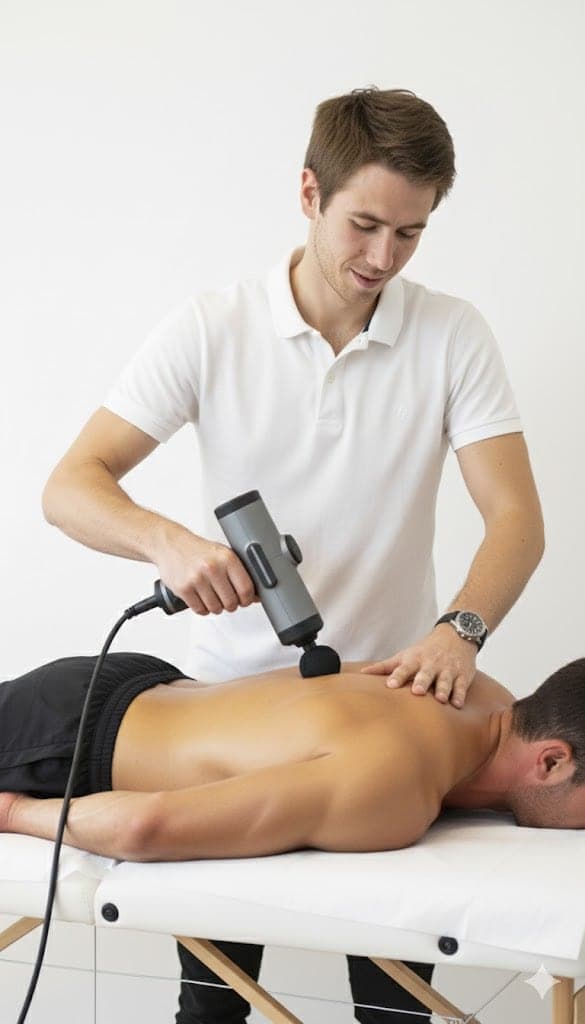
I use a specialized mechanical deep-tissue device that represents the most significant advancement in soft tissue therapy I’ve encountered in my career. This isn’t a vibration tool or percussion massager you can purchase online. It’s a professional-grade instrument that delivers three critical advantages: precision, power, and consistency.
Precision: Targeting the Exact Source of Dysfunction
The machine’s design allows me to access tissue layers and specific anatomical structures with accuracy that human hands cannot match. When I identify a trigger point in the subscapularis muscle, for example, I can apply focused pressure to that exact location without dispersing force across surrounding tissues. This precision means faster results with less overall discomfort and no wasted treatment time on areas that don’t require intervention.
Power: Reaching Depths That Matter
Here’s what ten years of clinical work has taught me: superficial techniques produce superficial results. To create lasting change in chronic tension patterns, fascial restrictions, and deep muscle adhesions, you must reach the tissue layers where these problems exist. Manual techniques, limited by human strength and hand fatigue, rarely achieve sufficient depth in larger muscle groups or with clients who have significant muscle mass.
My mechanical approach delivers controlled, sustained pressure that penetrates to the depths required for structural change. I’ve worked with bodybuilders whose muscle density makes traditional massage virtually ineffective, with chronic pain patients whose tissue restrictions developed over decades, and with athletes whose performance demands require optimal tissue quality. The machine reaches tissue depths that resolve problems other therapists can’t access.
Consistency: Every Session Delivers Equal Quality
Manual therapists have “off days.” Fatigue, minor injuries, or simply the physical demands of back-to-back sessions affect treatment quality. I’ve eliminated this variable. The mechanical device delivers identical force, pressure, and technique quality in every session, whether it’s my first treatment of the day or my sixth. My clients never receive inferior treatment because I’m tired. This consistency accelerates progress because each session builds optimally on the previous one.
Geroskipu Physiotherapy Services: Who Benefits Most
While I can help virtually anyone experiencing musculoskeletal pain or movement restrictions, certain populations benefit particularly dramatically from my specialized approach.
Chronic Pain Sufferers Who’ve Tried Everything
I regularly work with clients who’ve spent years—sometimes decades—trying various treatments without lasting success. They’ve seen chiropractors, traditional massage therapists, done physical therapy exercises, taken medications, and accepted their pain as inevitable. When they finally experience deep mechanical tissue work that actually reaches the source of their dysfunction, the results often seem remarkable to them, though they’re simply the natural outcome of appropriate intervention.
One client, a British expatriate living in Geroskipu, came to me after eight years of chronic neck and shoulder pain. She’d tried everything available locally and during trips back to the UK. Within three sessions using my mechanical deep-tissue approach, her pain reduced by approximately 70%. After completing our treatment protocol, she’d been pain-free for eighteen months when she last contacted me. This isn’t exceptional in my practice—it’s representative of what happens when you address mechanical problems with mechanically appropriate solutions.
Athletes Demanding Peak Performance
Competitive athletes and serious fitness enthusiasts understand that tissue quality directly affects performance. Fascial restrictions limit range of motion. Trigger points create compensation patterns that reduce power output and increase injury risk. Accumulated muscle tension impairs recovery between training sessions.
I’ve worked with professional cyclists preparing for major competitions, CrossFit athletes competing at high levels, and martial artists whose performance depends on optimal movement quality. These clients appreciate that I don’t treat them like patients—I treat them like high-performance machines requiring precise maintenance. We target specific performance limitations, address movement pattern inefficiencies, and optimize tissue quality for their competitive demands.
Desk Workers and Digital Professionals
Modern work creates predictable musculoskeletal problems: forward head posture, rounded shoulders, thoracic kyphosis, and hip flexor tightness. These aren’t minor postural issues—they’re mechanical dysfunctions that produce pain, headaches, reduced breathing capacity, and progressive structural deterioration.
I work with numerous professionals in Geroskipu’s growing remote work community who spend eight to twelve hours daily at computers. My approach systematically reverses the mechanical damage their work creates. We release the shortened anterior structures, restore proper shoulder blade position, decompress cervical spine segments, and reestablish normal thoracic extension. This isn’t about giving them an hour of comfort—it’s about structurally counteracting the forces their profession imposes on their bodies.
The Treatment Process: What to Expect from Professional Geroskipu Physiotherapy Services
When you book a session with me, you’re not scheduling a generic massage appointment. You’re beginning a structured intervention designed to produce specific, measurable outcomes.
Initial Assessment: Identifying Mechanical Dysfunction
Our first session includes a comprehensive biomechanical assessment. I observe your posture, movement patterns, and how your body compensates for restrictions. I palpate tissues to locate adhesions, trigger points, and areas of abnormal tension. I ask detailed questions about your pain patterns, what activities aggravate symptoms, and what you’ve tried previously.
This assessment isn’t superficial. I’m identifying the mechanical chain of dysfunction that produces your symptoms. Pain in one location often originates from restrictions elsewhere. My decade of clinical experience allows me to recognize these patterns quickly and design intervention strategies that address root causes rather than chasing symptoms.
Customized Treatment Protocol
Based on assessment findings, I develop a specific treatment plan. This isn’t a generic protocol applied to everyone with similar symptoms—it’s a customized intervention addressing your unique mechanical dysfunctions. I explain exactly what tissues we’re targeting, why they’re problematic, and what outcomes you should expect.
Treatment sessions typically focus on specific body regions where intervention will produce the greatest improvement. I use the mechanical device to systematically release restrictions, deactivate trigger points, and restore normal tissue quality. The depth and intensity adjust precisely to your tolerance and tissue requirements. Some areas require lighter work; others demand significant depth to produce change.
Progressive Improvement and Maintenance
Acute problems often resolve within three to six sessions. Chronic conditions that developed over years naturally require more time. I’m honest about realistic timeframes. My goal isn’t to create dependency—it’s to resolve your problem and provide you with the knowledge and occasional maintenance work needed to stay optimal.
Many clients continue with monthly or quarterly maintenance sessions after their initial problem resolves. This isn’t because the original issue remains—it’s because they’ve experienced what optimal tissue quality feels like and want to maintain it. Prevention is considerably easier than correction.
Location and Logistics: Professional Service at Your Convenience
I provide mobile physiotherapy services throughout Geroskipu. I travel to your location with a professional treatment bench and all necessary equipment. This convenience matters because many clients dealing with pain find traveling uncomfortable, and busy professionals appreciate not adding commute time to their appointment.
My mobile service maintains the same professional standards you’d expect from a clinical setting. The treatment bench provides proper positioning and access to all body regions. The environment is quiet and focused, allowing for effective communication and concentration during treatment. I’ve deliberately structured my practice to eliminate the common barriers that prevent people from accessing the care they need.
Investment vs. Expense: Understanding the Value of Quality Physiotherapy Services
I charge professional rates that reflect my education, experience, and the superior technology I employ. Some people initially perceive this as expensive compared to basic massage services available in Geroskipu. This perspective misunderstands what we’re comparing.
A relaxation massage is an expense—you pay for temporary comfort that provides no lasting benefit. My service is an investment that produces lasting improvements in pain, function, and quality of life. Consider the actual costs:
| Treatment Approach | Typical Cost Per Session | Sessions Required | Total Investment | Duration of Results |
|---|---|---|---|---|
| Basic Massage | €40-50 | Ongoing (weekly/monthly) | €2,000+/year | Hours to days |
| Advanced Mechanical Deep-Tissue | €80-100 | 3-8 for resolution | €300-800 total | Lasting (with occasional maintenance) |
Beyond direct treatment costs, consider what chronic pain actually costs you: reduced work productivity, limited recreational activities, diminished quality of life, sleep disruption, and the emotional burden of constant discomfort. When you calculate the true cost of leaving problems unresolved, investing in effective treatment becomes obvious.
I’ve worked with clients who spent thousands of euros over years on treatments that never resolved their problems. They wish they’d found me earlier, not because they saved money, but because they recovered years of life quality they’d accepted as lost.
Common Conditions Successfully Treated with Geroskipu Physiotherapy Services
My mechanical deep-tissue approach effectively addresses virtually all musculoskeletal pain and dysfunction conditions. These are the problems I treat most frequently:
Spinal Pain and Dysfunction
- Chronic lower back pain from fascial restrictions and muscle imbalances
- Cervical spine pain and headaches from forward head posture
- Thoracic spine stiffness limiting breathing and shoulder function
- Sciatica symptoms from piriformis syndrome and lumbar restrictions
- Post-surgical back pain from scar tissue and compensation patterns
Shoulder Complex Problems
- Rotator cuff dysfunction and impingement syndromes
- Frozen shoulder (adhesive capsulitis) requiring capsular release
- Chronic shoulder pain from scapular dyskinesis
- Post-injury shoulder restrictions limiting overhead movement
- Shoulder pain in athletes from overuse and incomplete recovery
Hip and Lower Extremity Issues
- Hip flexor tightness creating lower back pain and movement restrictions
- IT band syndrome in runners and cyclists
- Chronic knee pain from quad dominance and poor hip stability
- Ankle restrictions affecting gait and creating compensatory problems
- Plantar fasciitis and foot pain from biomechanical dysfunction
Upper Extremity and Postural Problems
- Tennis elbow and golfer’s elbow from forearm muscle dysfunction
- Carpal tunnel symptoms from forearm and shoulder restrictions
- Chronic neck tension from upper trap and levator scapulae hyperactivity
- Forward head posture creating multiple secondary problems
- Thoracic outlet syndrome from scalene and pec minor restrictions
Why Traditional Approaches Often Fail: The Mechanical Reality
I’ve observed thousands of clients who tried multiple treatments before finding me. Understanding why conventional approaches frequently disappoint helps explain why my method produces superior results.
Insufficient Depth of Intervention
Most manual therapists work primarily in superficial tissue layers. This might feel pleasant, but chronic restrictions and trigger points typically exist in deeper structures. Reaching these layers with hands requires force that fatigues therapists and often proves insufficient for clients with significant muscle mass or dense tissue. My mechanical approach easily accesses depths where problems actually exist.
Treating Symptoms Rather Than Causes
When your shoulder hurts, most therapists massage your shoulder. But shoulder pain frequently originates from thoracic spine restrictions, scapular stabilizer weakness, or cervical spine dysfunction. Treating the painful area provides temporary relief while the actual cause continues generating symptoms. My biomechanical assessment identifies true causes, allowing intervention that produces lasting results.
Inconsistent Treatment Quality
Manual therapy quality varies based on therapist fatigue, technique variations, and subjective pressure application. Two sessions with the same therapist might produce significantly different tissue responses. My mechanical approach eliminates this inconsistency, ensuring every treatment delivers optimal intervention regardless of external variables.
Inadequate Treatment Frequency or Duration
Some conditions require sustained, frequent intervention to break chronic pain cycles and restructure tissue. Many people receive treatments too infrequently or terminate care prematurely when they experience partial improvement. I provide clear guidance on required treatment frequency and duration based on condition severity and chronicity, ensuring clients complete sufficient intervention for lasting resolution.
The Science Behind Mechanical Deep-Tissue Physiotherapy
My approach isn’t based on mystical concepts or unproven theories. It’s grounded in established principles of biomechanics, neurology, and tissue physiology.
Fascial Release and Tissue Remodeling
Fascia—the connective tissue surrounding and interpenetrating muscles—becomes restricted through injury, chronic tension, and repetitive stress. These restrictions create pulling forces throughout the body, limiting movement and generating pain far from the actual restriction site. Sufficient mechanical pressure applied to restricted fascia triggers a piezoelectric response that remodels tissue structure, restoring normal extensibility and eliminating pathological tension.
This isn’t speculation—it’s established tissue physiology. The mechanical force my device applies creates structural changes in collagen organization, increases ground substance hydration, and releases fascial adhesions that hands cannot adequately address.
Trigger Point Deactivation
Trigger points—hyperirritable spots in taut muscle bands—create local pain, referred pain, and motor dysfunction. They persist because of sustained sarcomere contraction maintained by dysfunctional neuromuscular signaling. Sufficient mechanical pressure applied to trigger points disrupts this pathological cycle, allowing the muscle segment to return to normal resting length.
Effective trigger point work requires precise location and adequate pressure maintained for sufficient duration. Many manual therapists lack either the anatomical knowledge to locate triggers accurately or the physical capacity to apply adequate pressure. My mechanical approach resolves both limitations.
Neurological Reset and Pain Modulation
Deep tissue work activates mechanoreceptors that provide strong competing signals to the central nervous system, effectively “overriding” pain signals through gate control mechanisms. Additionally, sustained pressure triggers parasympathetic nervous system activation, reducing systemic muscle tension and resetting dysfunctional neurological holding patterns.
Clients often report feeling dramatically different after treatment—not just locally where we worked, but systemically. This reflects the neurological reset that occurs when you provide sufficient stimulus to trigger central nervous system reorganization.
Client Experiences: Real Results from Professional Physiotherapy Services in Geroskipu
The measure of any treatment approach is the outcomes it produces. I’ll share several representative experiences that illustrate what clients typically achieve through my specialized physiotherapy services.
Resolving Decade-Long Chronic Pain
A German client, a 52-year-old businessman, contacted me after ten years of chronic lower back pain. He’d seen numerous specialists, tried physical therapy, taken medications, and received regular massages that provided only temporary relief. His pain limited his golf game, affected his sleep, and created constant background discomfort that diminished his quality of life.
My assessment revealed the typical pattern: chronically shortened hip flexors from extensive sitting, inhibited glute function, overactive lumbar erectors creating excessive spinal compression, and fascial restrictions throughout the posterior chain. His pain wasn’t a mysterious condition—it was predictable mechanical dysfunction from his lifestyle and insufficient corrective intervention.
We worked together for seven sessions over five weeks. I systematically released his hip flexors, deactivated trigger points in his lumbar muscles, restored proper fascial glide throughout his posterior chain, and provided specific exercises to maintain improvements. By session five, his pain had reduced by approximately 85%. After completing our protocol, he reported being pain-free for the first time in a decade. Eighteen months later, he contacts me quarterly for maintenance work and remains essentially pain-free.
Restoring Athletic Performance
A competitive cyclist contacted me during his race season experiencing chronic tightness in his IT bands and lateral knee pain that limited his training volume and power output. He’d received sports massage regularly but continued experiencing problems that threatened his competitive season.
I identified the actual problem: excessive hip internal rotation during his pedal stroke, caused by weak hip external rotators and shortened hip internal rotators and adductors. His IT band symptoms were secondary to this biomechanical dysfunction. We addressed the primary cause through targeted deep tissue work to the hip adductors and internal rotators combined with specific activation exercises for his glutes and external rotators.
Within three sessions, his knee symptoms resolved completely. More importantly, he reported increased power output because his hip mechanics improved dramatically. He completed his season with personal best performances and continues monthly maintenance sessions during training periods.
Reversing Postural Deterioration
A 38-year-old software developer working remotely in Geroskipu experienced progressive worsening of chronic neck pain, headaches, and shoulder tension over three years. Her posture had deteriorated significantly—pronounced forward head position, rounded shoulders, and visible thoracic kyphosis.
This wasn’t cosmetic—it was structural dysfunction creating mechanical stress throughout her spine and shoulder girdle. We systematically addressed the shortened anterior structures (pectorals, anterior scalenes, suboccipitals), released trigger points throughout her upper traps and levator scapulae, restored thoracic extension mobility, and repositioned her scapulae through deep work to her serratus anterior and rhomboids.
The transformation required eight sessions over ten weeks. Her headaches resolved completely after session three. Her postural changes became visibly apparent by session six. She now receives monthly maintenance treatments and reports that her neck and shoulder discomfort—which she’d accepted as inevitable from her profession—simply no longer exists.
Frequently Asked Questions About Geroskipu Physiotherapy Services
How does mechanical deep-tissue work differ from regular massage?
Regular massage primarily addresses superficial tissues using techniques designed for relaxation and basic tension relief. Mechanical deep-tissue physiotherapy uses specialized equipment to access deeper tissue layers where chronic restrictions, trigger points, and fascial adhesions actually exist. The approach is clinical rather than recreational, targeting specific mechanical dysfunctions that cause pain and movement limitations. Results are lasting rather than temporary because we address root causes.
Is the treatment painful?
Deep tissue work involves discomfort—that’s inevitable when releasing chronic restrictions and deactivating trigger points. However, I precisely control intensity to remain within therapeutic ranges that produce results without excessive pain. Most clients describe the sensation as “good pain”—discomfort they recognize as productive. The mechanical device allows for more controlled, gradual pressure increases than manual techniques, actually making treatment more comfortable overall despite reaching greater depths.
How many sessions will I need?
This depends entirely on your condition’s nature and chronicity. Acute problems—recent injuries or short-term tension—often resolve in three to five sessions. Chronic conditions that developed over years typically require six to ten sessions for complete resolution. I provide honest assessments after our initial evaluation and adjust recommendations based on your response to treatment. My goal is resolution, not dependency.
Do you provide exercise recommendations?
Yes, when appropriate. Some conditions require specific exercises to maintain improvements or address underlying weaknesses contributing to mechanical dysfunction. However, I’m selective about exercise prescription because many people already know what exercises they should do—they simply don’t have the tissue quality allowing proper execution. I focus primarily on restoring optimal tissue function, then provide targeted exercises when they’ll actually help.
Can you help with sports performance even without current pain?
Absolutely. Many athletes maintain tissue quality as performance optimization rather than pain treatment. Fascial restrictions, trigger points, and muscle tension limit range of motion, reduce power output, and impair recovery even before causing overt pain. I work with numerous athletes who view my services as performance enhancement—optimizing their mechanical function for competitive advantage.
Do you work with elderly clients or only younger people?
Age isn’t a limitation—tissue dysfunction affects people at all life stages. I’ve successfully treated clients from their twenties through their eighties. The mechanical approach adapts perfectly to individual needs, providing gentle work when required or powerful intervention when appropriate. Elderly clients often benefit dramatically because they’ve accumulated restrictions over decades that finally receive adequate treatment.
How long do results last?
When we successfully resolve a mechanical problem, the results are lasting unless you recreate the conditions that caused it originally. If your chronic lower back pain stemmed from fascial restrictions and muscle imbalances that we’ve corrected, it won’t spontaneously return. However, if you continue the behaviors that created the problem—excessive sitting without movement breaks, poor ergonomics, inadequate exercise—you might eventually develop new restrictions requiring attention. Most clients find that quarterly or semi-annual maintenance sessions keep them optimal indefinitely.
Why should I choose your service over other physiotherapy options in Geroskipu?
Three reasons: specialized technology that reaches tissue depths manual techniques cannot, ten years of clinical experience allowing accurate mechanical assessment and treatment planning, and an outcomes-focused approach that aims for lasting resolution rather than ongoing dependency. I don’t offer the cheapest service—I offer the most effective one. If you value lasting results over temporary comfort, my approach delivers superior outcomes.
Making the Decision: Investing in Long-Term Physical Health
You’re reading this article because you’re experiencing pain, movement restrictions, or performance limitations that affect your quality of life. You’ve likely tried various treatments with disappointing results. Perhaps you’ve accepted your condition as inevitable or believe nothing can really help.
I’ve worked with hundreds of people who felt exactly as you do now. They’d tried everything available, spent considerable money, and resigned themselves to lasting limitation. Then they experienced what adequate mechanical intervention actually accomplishes when delivered with sufficient depth, precision, and expertise.
The decision you’re facing isn’t whether to try another treatment—it’s whether to invest in actually resolving your problem or continue managing symptoms indefinitely. My physiotherapy services in Geroskipu offer genuine resolution for people ready to address mechanical dysfunction properly rather than settling for temporary relief.
I’m direct about what I provide because clarity serves everyone better than marketing promises. I specialize in mechanical deep-tissue intervention using advanced technology and clinical expertise developed over a decade. This approach produces superior results for specific problems: musculoskeletal pain, movement restrictions, postural dysfunction, and performance limitations stemming from tissue quality issues.
If you’re seeking relaxation, aromatherapy, or spa experiences, numerous options exist throughout Geroskipu. If you’re seeking lasting resolution of mechanical problems affecting your physical function and quality of life, my specialized service likely offers the most effective solution available.
The investment isn’t trivial, but neither is living with chronic pain, limited movement, or compromised performance. Calculate what your condition actually costs you—not just in money, but in lost experiences, reduced productivity, and diminished life quality. Then consider what lasting resolution is worth.
I travel throughout Geroskipu providing mobile physiotherapy services that bring clinical-grade treatment to your location. The convenience, combined with the superior outcomes my mechanical deep-tissue approach delivers, makes accessing the care you need straightforward.
Your body is mechanical. Mechanical problems require mechanical solutions. A decade of clinical experience has proven this principle repeatedly. When you’re ready for results rather than temporary relief, contact me to begin the assessment process. We’ll identify precisely what’s causing your problem and develop a customized intervention plan designed for lasting resolution.
That’s what professional physiotherapy services should deliver—not endless sessions creating dependency, but targeted intervention producing lasting outcomes. In Geroskipu, that’s exactly what my practice provides.
Written by
Chris
Massage therapist & body mechanics specialist
Norwegian-certified with a Bachelor’s in Physical Education and Nutrition and over ten years of clinical practice, working from a portable table in clients’ homes across the Paphos district.
This article is general information from clinical practice, not a medical diagnosis. If you have severe, worsening or unexplained pain, numbness, weakness, or pain after an accident, see a doctor first.