
Deep Tissue Massage Geroskipou: When Precision Meets Lasting Pain Relief
In short
Discover why deep tissue massage in Geroskipou delivers lasting results through advanced mechanical therapy. Expert treatment that addresses the root cause of chronic pain, not temporary relief.
I’ve spent a decade working with bodies that traditional massage couldn’t fix. Athletes who’d tried everything. Desk workers living on painkillers. People who’d resigned themselves to chronic discomfort because every therapist gave them the same temporary relief followed by the same recurring problems. When I established my practice offering deep tissue massage in Geroskipou, I knew I had to do something fundamentally different, because what most people think of as “deep tissue massage” isn’t actually addressing the mechanical dysfunction causing their pain.
My approach combines my education in Physical Education and Nutrition from Norway with a specialized mechanical system that delivers what human hands simply cannot: consistent, precise, and powerfully deep treatment that restructures tissue at the level where dysfunction actually exists. This isn’t about relaxation. This is about lasting correction of biomechanical problems that have been limiting your performance, causing your pain, and degrading your quality of life.
Understanding What Deep Tissue Massage Actually Means
The term “deep tissue massage” has been diluted in the wellness industry. Most practitioners apply slightly firmer pressure than Swedish massage and call it deep tissue work. That’s not what we’re discussing here. True deep tissue therapy targets the fascial restrictions, adhesions, and chronic tension patterns in the deepest layers of your muscular and connective tissue systems. These are the structural problems that create compensation patterns, restrict your range of motion, and generate the persistent pain that won’t respond to superficial treatment.
When someone searches for deep tissue massage in Geroskipou, they’re typically experiencing one of several scenarios. They’ve tried conventional massage and got temporary relief that lasted maybe a day or two. They’ve been told their chronic shoulder pain or lower back dysfunction is “just how it is” at their age. They’re athletes whose performance has plateaued because of restriction they can feel but haven’t been able to resolve. Or they’re dealing with postural dysfunction from years of desk work that’s creating referred pain throughout their body.
The Mechanical Reality of Chronic Tension
Your body is a kinetic chain. When one link in that chain develops dysfunction, every other component compensates. A restriction in your thoracolumbar fascia doesn’t just cause lower back pain. It alters your gait mechanics, creates compensatory tension in your hip flexors, overloads your quadratus lumborum, and eventually manifests as knee pain that seems completely unrelated to where the original problem exists. Traditional massage addresses the symptom. I treat the mechanical cause.
Through years of clinical observation, I’ve identified patterns that repeat across client populations. The office worker with chronic neck tension almost always has severe restriction in their pectoralis minor and anterior scalenes, pulling their shoulder girdle forward and loading their upper trapezius abnormally. The runner with persistent IT band pain typically has dysfunction originating in their tensor fasciae latae and gluteus medius, not in the IT band itself. These aren’t problems you can address with gentle pressure and good intentions.
Why Geroskipou Residents Choose Specialized Deep Tissue Treatment
Living in Geroskipou, you have access to numerous massage options. Spas, wellness centers, and individual practitioners all offer their version of therapeutic bodywork. What I provide is categorically different, and understanding that distinction is crucial to making an informed decision about your treatment.
The Machine-Assisted Advantage
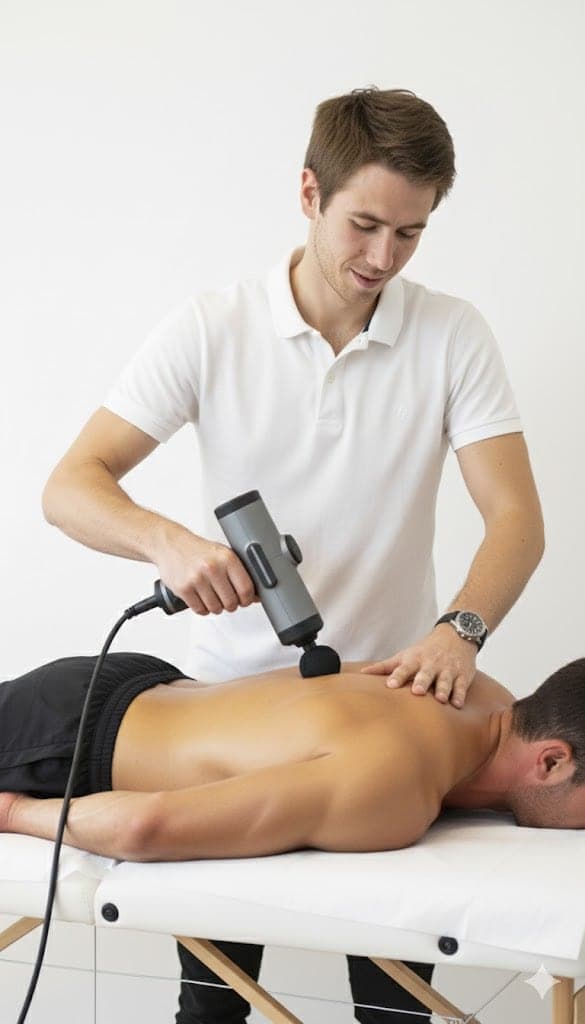
I use a specialized mechanical system that delivers three critical advantages over manual therapy: precision, power, and consistency. Human hands, no matter how skilled, have inherent limitations. They fatigue. They cannot maintain uniform pressure across extended treatment sessions. They cannot access certain depths of tissue without causing unnecessary surface trauma. My system eliminates these variables.
The precision component means I can target specific fiber directions within individual muscle bellies. When I’m treating chronic tension in the erector spinae group, I’m not just pressing on your back. I’m systematically addressing each fascicle orientation, releasing the multifidus separately from the longissimus, working through layers with controlled depth that remains constant regardless of treatment duration. This level of specificity is simply impossible to achieve manually.
Power translates to depth. I work with professional athletes whose tissue density requires force that would injure a therapist’s hands to deliver manually. The machine provides that force without fatigue, without loss of control, and without the therapist’s ego getting involved in proving how strong they are. I can go as deep as your tissue needs, calibrated precisely to your tolerance and therapeutic requirement.
Consistency Delivers Results
Every therapist has off days. They’re tired, distracted, or dealing with their own physical fatigue from previous sessions. The machine doesn’t have off days. Every treatment I deliver maintains exactly the same quality standard. When we establish your treatment protocol, you know precisely what you’re receiving in each session. This consistency is what allows us to track progress accurately and make informed adjustments to your program.
I’ve had clients transfer to my practice after years with other therapists specifically because they couldn’t rely on consistent quality. One session would be transformative, the next merely adequate. That variability makes it impossible to create the progressive treatment plans necessary for lasting correction. When you book deep tissue massage in Geroskipou with me, you’re receiving pharmaceutical-grade consistency in therapeutic delivery.
When You Should Choose Deep Tissue Massage Treatment
Not everyone requires this level of intervention. If you’re genuinely looking for stress relief and relaxation, there are excellent spa therapists in the area who provide that service well. My practice exists for the cases where relaxation therapy has failed, where the problem is mechanical rather than merely tense, and where you’re committed to lasting correction rather than temporary symptom management.
| Clinical Indication | Treatment Objective | Expected Timeline |
|---|---|---|
| Chronic lower back pain with postural component | Restore lumbar-pelvic mechanics and eliminate compensation patterns | 6-8 sessions over 3-4 weeks |
| Frozen shoulder or restricted range of motion | Release capsular restrictions and restore full function | 8-12 sessions over 4-6 weeks |
| Athletic performance plateau with mobility limitations | Optimize tissue quality and enhance movement efficiency | 4-6 sessions plus maintenance protocol |
| Repetitive strain injury (desk work, manual labor) | Correct underlying biomechanical dysfunction causing repeated injury | 6-10 sessions with ergonomic modification |
| Post-injury rehabilitation requiring soft tissue mobilization | Prevent compensatory patterns and restore normal movement | Varies by injury severity, typically 8-12 sessions |
The Athletic Population
Athletes represent a significant portion of my practice because they understand the connection between tissue quality and performance. A cyclist experiencing power loss on climbs doesn’t need relaxation. They need their hip flexors released from chronic adaptive shortening, their glutes activated properly, and their fascial restrictions eliminated so force transfer through the pedal stroke becomes efficient again.
I worked with a competitive tennis player last year whose serve velocity had declined despite consistent training. Traditional sports massage hadn’t helped. When I assessed her, the problem was obvious: severe restriction in her serratus anterior and subscapularis was limiting scapular upward rotation during the serve motion. Four sessions of targeted deep tissue work restored her mechanics. Her serve velocity increased by 12% not because she got stronger, but because we eliminated the mechanical restriction preventing her existing strength from expressing properly.
The Chronic Pain Population
People living with chronic pain have typically tried everything. Physiotherapy, chiropractic, conventional massage, medication, and often resignation. They come to my practice skeptical, having been disappointed repeatedly. What they don’t realize is that no one has actually addressed the tissue-level dysfunction causing their pain.
I had a client who’d lived with daily headaches for six years. Multiple specialists, numerous imaging studies, various medications. When she came to me, I found what no one had properly addressed: her suboccipital muscles were in constant spasm, her sternocleidomastoid was severely restricted, and her cervical fascia had essentially locked her neck into a dysfunctional pattern. Twelve sessions later, her headaches were gone. Not managed. Gone. Because we corrected the mechanical cause.
Why Traditional Approaches Fail for Mechanical Dysfunction
Understanding why conventional massage often fails to deliver lasting results requires examining what actually happens during a typical session. Most massage therapy operates on a time-based model: you book an hour, the therapist works generally on the areas you indicate are problematic, and you feel temporarily better due to increased circulation, endorphin release, and superficial muscle relaxation. This is pleasant. It’s also therapeutically insufficient for structural problems.
The Depth Problem
Chronic dysfunction doesn’t exist at the surface. The piriformis muscle, frequently implicated in sciatica-like symptoms, lies beneath the gluteus maximus. Reaching it with therapeutic pressure requires working through multiple tissue layers. Human thumbs and elbows, no matter how well-trained, cannot maintain the precise depth and angle necessary while simultaneously controlling the direction of force and monitoring tissue response. They approximate. My system doesn’t approximate.
When I treat piriformis syndrome, the machine maintains exact depth while I monitor tissue response through both visual assessment and client feedback. I can work at the precise layer where restriction exists, applying force perpendicular to fiber direction to create controlled tissue reorganization. This is clinical intervention, not wellness massage.
The Consistency Problem
Lasting change requires progressive treatment. Your tissue needs to be challenged, allowed to reorganize, challenged again at slightly different parameters, and progressively remodeled toward functional patterns. This demands consistency in treatment delivery that manual therapy cannot provide. Even the most skilled therapist delivers variable pressure, follows slightly different paths, and creates inconsistent stimulus session to session.
My machine delivers identical treatment parameters every session. We can progressively deepen the work, systematically expand the treatment area, and create truly progressive protocols because the foundation—the actual mechanical stimulus—remains constant. This is why my clients achieve lasting results rather than temporary relief.
The Assessment and Treatment Protocol
When you contact me for deep tissue massage in Geroskipou, we begin with a comprehensive assessment. This isn’t a casual conversation about where it hurts. I need to understand your movement patterns, your injury history, your daily activities, and your goals. I need to assess your posture, your gait if relevant, and your current tissue condition through both palpation and functional testing.
First Session: Establishing Baseline and Tolerance
The initial session serves multiple purposes. I’m gathering clinical data about how your tissue responds to treatment. I’m establishing your tolerance levels—some clients need to build up gradually to therapeutic depth, while others, particularly athletes, can handle intensive work immediately. I’m also educating you about what you’re feeling and why, because understanding the process is crucial to successful outcomes.
During this session, I’ll identify the primary restrictions and the compensation patterns they’ve created. Your presenting complaint—lower back pain, for example—may have its origin in thoracic spine mobility restrictions, hip flexor tightness, or even ankle mobility problems that altered your gait mechanics years ago. We treat the cause, not just the symptom site.
Progressive Treatment: The Reality of Tissue Remodeling
Tissue remodeling takes time. Fascia reorganizes slowly. Chronic adhesions don’t disappear in one session. Anyone promising instant lasting relief is either treating superficial problems or being dishonest. My protocols typically run between four and twelve sessions depending on condition severity and how long the dysfunction has existed.
Each session builds on the previous one. As we release restrictions, your body’s compensation patterns change. Areas that weren’t problematic before may suddenly become apparent as primary restrictions resolve and the kinetic chain reorganizes. This is normal and actually indicates treatment is working. We’re systematically correcting your biomechanics from the foundation up.
The Mobile Treatment Advantage
I travel to your location with my professional equipment. This eliminates your need to commute while potentially in pain, allows treatment in your comfortable environment, and means you can rest immediately afterward if needed. For athletic clients, I can treat you in your training environment, observing the actual movements causing problems and adjusting treatment accordingly.
I bring everything necessary: professional treatment bench, the specialized mechanical system, and all required equipment. Your only responsibility is providing space and being ready to commit to the process.
Investment Versus Expense: The Economic Reality
Deep tissue massage in Geroskipou from my practice costs more than conventional massage. This is appropriate because what I’m providing is categorically different. This is clinical intervention producing lasting results, not temporary relaxation requiring endless repetition.
The True Cost of Ineffective Treatment
Consider the alternative. You could book weekly massage sessions indefinitely, each providing a few days of relief followed by return of symptoms. Over a year, that’s 52 sessions of temporary improvement. Or you could invest in 6-10 sessions of targeted deep tissue work that addresses the mechanical cause and eliminates the problem durably.
Beyond direct treatment costs, consider indirect expenses. Time lost to pain and dysfunction. Reduced productivity. Medication costs. Other therapeutic interventions that haven’t worked. Diminished quality of life. When clients calculate the total cost of living with unresolved dysfunction, proper treatment becomes obviously economical.
Athletic Performance: Quantifiable Return
For athletes, the calculation is even clearer. Performance improvements are measurable. If releasing chronic hip restrictions improves your running economy by 5%, that’s quantifiable in competition results. If eliminating shoulder dysfunction increases your swimming velocity or your climbing strength, that translates directly to competitive advantage.
I had a competitive cyclist calculate that the improvement in his power output after our treatment protocol was equivalent to several thousand euros worth of equipment upgrades he’d been considering. The difference? The equipment would have added marginal gains while his body remained limited. Fixing his biomechanics actually allowed his investment in training and equipment to express fully.
Common Misconceptions About Deep Tissue Work
Several misconceptions about deep tissue massage persist, often preventing people from seeking proper treatment. These misunderstandings deserve direct address.
Misconception: Deep Tissue Must Be Painful
Therapeutic depth and unnecessary pain are not the same thing. Yes, working at the level of chronic restriction creates sensation. But good treatment finds the balance between therapeutic challenge and counterproductive pain that causes protective muscle guarding. My system’s precision allows working at maximum therapeutic depth without exceeding your tolerance.
Pain tolerance varies significantly between individuals. Some clients find deep work merely intense. Others need more gradual progression. Both can achieve identical results with appropriately calibrated treatment. The machine’s adjustability allows precise matching of intensity to your nervous system’s response patterns.
Misconception: Results Should Be Immediate
You will likely feel different after the first session. Improved range of motion, reduced pain, better movement quality. But lasting correction requires progressive treatment allowing tissue remodeling and neurological adaptation. Your body needs time to reorganize around new movement patterns.
Clients often report feeling significantly better after initial treatment, then experiencing some return of symptoms before the next session. This is normal. We’re challenging chronic patterns that have existed for months or years. They don’t disappear instantly. Progressive treatment creates cumulative improvement that eventually reaches a stable, corrected state.
Misconception: Maintenance Means Treatment Failed
After completing a treatment protocol and achieving correction, some clients benefit from periodic maintenance sessions. This doesn’t indicate treatment failure. Your body continues experiencing the stresses of training, work, and daily life. Periodic intervention prevents new dysfunctions from developing and maintains optimal tissue quality.
Athletes particularly benefit from maintenance protocols. Their training loads are high, and preventing restrictions before they become problematic maintains performance at peak levels. This is smart management, not dependency.
Specific Conditions I Treat Effectively
While I work with general mechanical dysfunction, certain conditions respond particularly well to my approach. These represent cases where conventional massage often fails because the problem requires the precision and depth my system provides.
Thoracic Outlet Syndrome and Nerve Compression
Thoracic outlet syndrome involves compression of nerves or blood vessels between the clavicle and first rib, often caused by scalene muscle tightness, pectoralis minor restriction, or postural dysfunction. Traditional massage rarely achieves sufficient release of these deep structures. My system allows precise work on the anterior and middle scalenes, subclavius, and pectoralis minor attachments with controlled depth that releases compression without aggravating surrounding structures.
I’ve treated numerous cases of misdiagnosed thoracic outlet syndrome where the actual problem was severe myofascial restriction creating symptoms mimicking nerve compression. Proper deep tissue work eliminates these restrictions, and symptoms resolve durably.
Plantar Fasciitis and Foot Mechanics
Plantar fasciitis is rarely a foot problem. It’s usually a consequence of altered gait mechanics from hip, knee, or ankle dysfunction. The plantar fascia becomes overloaded because compensatory patterns have changed how force transmits through your foot during gait. Treating only the foot provides temporary relief while the mechanical cause persists.
My protocol for plantar fasciitis addresses the entire lower kinetic chain. Yes, I work the plantar fascia itself, releasing restrictions and adhesions. But I also release the posterior chain tightness causing compensatory foot mechanics. I address hip flexor restrictions altering pelvic position. I release gastrocnemius and soleus tensions limiting ankle dorsiflexion. This comprehensive approach produces lasting results.
Chronic Shoulder Pain and Impingement
Shoulder impingement typically results from altered scapulohumeral rhythm caused by imbalances in the muscles controlling scapular position and movement. The rotator cuff gets blamed, but the problem usually involves pectoralis minor, levator scapulae, rhomboids, and serratus anterior dysfunction creating abnormal scapular mechanics.
Releasing these restrictions requires access to muscle attachments and fascial planes that manual therapy struggles to reach effectively. The subscapularis, lying between the scapula and ribcage, is particularly difficult to access manually. My system works through the axilla with precision that reaches this crucial muscle without unnecessary trauma to surrounding tissues.
Frequently Asked Questions
How is your deep tissue massage in Geroskipou different from what I can get at a spa?
Spa massage provides relaxation and temporary stress relief through general techniques. My practice provides clinical intervention targeting mechanical dysfunction with specialized equipment and advanced training. We’re addressing different needs. If you have chronic pain, restricted movement, or performance limitations from tissue dysfunction, spa massage won’t resolve those problems. My work will.
How many sessions will I need?
This depends entirely on your condition, how long it’s existed, and your goals. Simple acute issues may resolve in 2-4 sessions. Complex chronic dysfunction typically requires 6-12 sessions. During your assessment, I’ll provide a realistic timeline based on clinical experience with similar cases. I don’t extend treatment unnecessarily—when you’re corrected, we’re done.
Will the treatment be painful?
You’ll experience intense sensation during deep tissue work, but this should remain within therapeutic tolerance. My system allows precise control, so we work at the maximum therapeutic depth your nervous system can handle productively. Pain that causes protective muscle guarding is counterproductive. We find the balance between challenge and excessive stress.
Do you accept insurance?
I provide detailed receipts that clients can submit to their insurance if their policy covers massage therapy. However, I don’t bill insurance directly. Payment is due at time of service, and you handle insurance reimbursement independently.
How soon will I see results?
Most clients notice improved movement quality and reduced pain immediately after the first session. However, lasting correction requires progressive treatment. Initial improvements may partially reverse between sessions as your body defaults to familiar patterns. Progressive sessions create cumulative change that eventually stabilizes into lasting correction.
Can you help with sports performance even if I don’t have pain?
Absolutely. Many athletes have subclinical restrictions that limit performance without causing obvious pain. These show up as movement inefficiencies, power loss, or inability to achieve positions their sport requires. Systematic release of these restrictions often produces significant performance improvements. Many of my athletic clients come for optimization, not pain treatment.
What should I do after a treatment session?
Hydrate well, avoid intense training for 24 hours if we did deep work, and allow your body time to reorganize around the changes. Light movement is beneficial. Your tissue is in a remodeling phase and needs recovery time just as after intense training. I provide specific post-treatment guidance based on what we addressed in your session.
Why do you travel to clients instead of having a clinic?
This model serves my clients better. You avoid commuting while potentially in pain, you’re in your comfortable environment, and you can rest immediately after treatment if needed. For athletes, I can observe your training environment and movements. The mobile model removes barriers to consistent treatment, which is crucial for achieving results.
The Decision: Temporary Relief or Lasting Correction
You’re reading this because something isn’t working. You’ve tried other approaches. You’re experiencing pain, restriction, or performance limitations that interfere with your life or training. The question isn’t whether you need treatment—you clearly do. The question is whether you want temporary symptom management or actual correction of the mechanical dysfunction causing your problems.
I’ve built my practice around lasting results because I’m not interested in creating dependency. I want to fix your problem, teach you how to maintain the correction, and move on. Some clients return for periodic maintenance because they value optimization. But they’re not dependent—they’re choosing to maintain peak tissue quality because they’ve experienced what that enables.
The Expertise Behind the Method
My approach combines formal education in Physical Education and Nutrition with a decade of clinical experience treating complex cases. I specialized in deep tissue work because I saw too many people trapped in cycles of temporary relief, never addressing the mechanical root of their dysfunction. I invested in specialized equipment because I reached the limits of what manual therapy could achieve, and I wasn’t satisfied with those limits.
When you work with me for deep tissue massage in Geroskipou, you’re not just accessing equipment—you’re accessing the expertise to use it effectively. The machine is a tool. Knowing exactly where to apply it, at what depth, in what direction, for how long, and in what sequence within a progressive treatment plan requires extensive training and clinical experience. That’s what you’re actually paying for.
Making the Commitment
Effective treatment requires partnership. I bring expertise, equipment, and commitment to your results. You need to bring consistency, honest feedback during treatment, and follow-through on any recommendations about movement patterns or activities affecting your condition. When both sides fulfill their responsibilities, results are predictable.
If you’re ready to address the mechanical dysfunction limiting your performance or causing your chronic pain, contact me. We’ll discuss your specific situation, determine if my approach is appropriate for your condition, and establish a treatment plan designed to produce lasting results. This is an investment in your long-term physical function, not an expense for temporary relief.
Deep tissue massage in Geroskipou exists on a spectrum from relaxation therapy to clinical intervention. I operate at the clinical end because that’s where lasting correction happens. If that matches what you’re looking for, I can help. If you’re genuinely seeking relaxation, there are excellent therapists in the area who provide that service well. Know what you need, choose accordingly, and commit to the process.
Written by
Chris
Massage therapist & body mechanics specialist
Norwegian-certified with a Bachelor’s in Physical Education and Nutrition and over ten years of clinical practice, working from a portable table in clients’ homes across the Paphos district.
This article is general information from clinical practice, not a medical diagnosis. If you have severe, worsening or unexplained pain, numbness, weakness, or pain after an accident, see a doctor first.