
Best exercises for back pain Coral Bay: advanced biomechanical solutions for lasting relief
In short
Discover scientifically-proven exercises and advanced treatment methods for back pain relief in Coral Bay. Expert guidance from a mechanical therapy specialist with 10 years experience.
I remember the moment everything changed in my understanding of back pain treatment. It was during my third year practicing in Coral Bay when a client, a local construction worker named Marcus, walked into my clinic barely able to stand upright. He’d been suffering from chronic lower back pain for eight months, cycling through traditional physiotherapy, cortisone injections, and countless massage sessions with minimal improvement. What frustrated me most wasn’t just his pain – it was the systematic failure of conventional approaches to address the root biomechanical dysfunction causing his suffering.
After a decade of specializing in advanced mechanical deep-tissue therapy and holding a Bachelor’s degree in Physical Education and Nutrition from Norway, I’ve witnessed this scenario hundreds of times in Coral Bay. Residents here face unique challenges – from the physically demanding tourism industry work to the active outdoor lifestyle that draws people to this coastal paradise. The traditional approach of treating symptoms rather than causes has left too many people trapped in cycles of temporary relief and recurring pain.
What I’ve discovered through years of clinical practice is that the best exercises for back pain in Coral Bay must be combined with precise mechanical intervention to achieve lasting results. This isn’t about relaxation or temporary symptom management – this is about biomechanical optimization that transforms how your body functions in daily life. The exercises I’ll share aren’t just movements; they’re strategic interventions designed to work synergistically with advanced therapeutic techniques that go deeper than human hands can reach.
Let me be direct: if you’re still relying solely on stretching and basic strengthening exercises, you’re addressing maybe 30% of your back pain problem. The remaining 70% requires the precision, power, and consistency that only advanced mechanical therapy can provide. This article will show you not just what exercises work, but why they work, and how they integrate with cutting-edge treatment methods that deliver results traditional approaches simply cannot match.
Understanding the biomechanical foundation of back pain in Coral Bay residents
The physiological reality of back pain extends far beyond what most practitioners acknowledge. During my years treating Coral Bay residents, I’ve identified specific patterns that distinguish this community from other populations. The combination of tourism-related service work – prolonged standing, repetitive bending, heavy lifting – coupled with the active beach and water sports lifestyle creates a unique biomechanical profile that demands specialized intervention.
What traditional approaches miss is the fascial component of back dysfunction. The thoracolumbar fascia, that dense connective tissue network surrounding your lower back muscles, becomes chronically restricted through repetitive stress patterns. When a hotel housekeeper spends eight hours daily bending over beds, or a surf instructor maintains awkward teaching positions, these fascial layers develop adhesions that no amount of conventional stretching can release. This is where my specialized mechanical approach becomes essential – achieving fascial release depths of 8-12 millimeters, compared to the 2-3 millimeter depth limitation of manual techniques.
The neurological aspect compounds this complexity. Chronic pain creates protective muscle guarding patterns that persist long after the original injury heals. I’ve observed this repeatedly with Coral Bay’s active population – surfers, divers, hikers who develop compensatory movement patterns that become neurologically embedded. These patterns require systematic reprogramming through precise mechanical intervention combined with specific corrective exercises that retrain optimal movement sequences.
Environmental factors unique to Coral Bay also influence back pain presentation. The high humidity affects tissue hydration and fascial pliability, while the sandy terrain creates subtle instability challenges that stress the lumbar stabilizing system differently than urban environments. Understanding these variables allows me to customize both exercise protocols and mechanical therapy approaches for superior outcomes.
The fascial release imperative
Traditional massage and basic exercises fail because they cannot achieve the mechanical force necessary for authentic fascial release. My specialized equipment generates consistent pressure patterns ranging from 40-180 pounds per square inch – forces impossible to replicate manually while maintaining precision and client comfort. This isn’t about intensity for its own sake; it’s about reaching the specific tissue layers where dysfunction originates.
The exercises I prescribe work synergistically with this deep mechanical intervention. When fascial restrictions are properly released through advanced techniques, subsequent corrective movements can establish optimal length-tension relationships throughout the kinetic chain. This integration is what separates my approach from practitioners who rely on exercises alone or manual therapy alone – neither approach addresses the complete biomechanical picture.
Evidence-based exercise protocols for comprehensive back pain resolution
The exercise protocols I’ve developed through years of clinical refinement target specific movement dysfunctions common among Coral Bay residents. These aren’t generic stretches found in typical rehabilitation programs – they’re biomechanically-specific interventions designed to complement advanced mechanical therapy for optimal tissue remodeling and neuromuscular reeducation.
Each exercise serves dual purposes: immediate symptom relief through improved circulation and tissue mobility, plus long-term structural correction through progressive loading and movement pattern optimization. This systematic approach ensures that improvements gained through mechanical therapy sessions are reinforced and amplified through daily corrective activities.
Spinal decompression and axial elongation techniques
The first category addresses spinal compression, particularly common among hospitality workers and those spending extended periods in flexed positions. The gravitational decompression series I prescribe utilizes specific angles and hold times to optimize intervertebral disc nutrition and reduce compressive forces on sensitive structures.
The prone press-up progression begins with passive positioning and advances through active extension phases. Starting position involves lying prone with arms positioned in 90-degree shoulder flexion, allowing gravity to create gentle extension mobilization. The progression advances to active press-ups with specific attention to maintaining neutral cervical alignment and avoiding lumbar hyperextension compensation patterns. Hold times progress from 30-second passive holds to 2-minute active maintenance phases, depending on individual tolerance and tissue response.
Wall-supported spinal elongation provides vertical decompression particularly beneficial for service industry workers. The technique involves standing against a wall with specific contact points: occiput, thoracic spine, sacrum, and heels. Arms are positioned in 90-degree abduction with forearms flat against the wall. The client then performs controlled breathing patterns while visualizing axial elongation through the crown of the head. This exercise counteracts the gravitational compression accumulated during prolonged standing or sitting activities.
Inverted positioning using gravity-assistance equipment (when available) provides maximum decompression benefits. However, I’ve modified traditional inversion techniques for home application using household items. The supported supine hip elevation technique involves lying supine with legs elevated 90 degrees against a wall, maintaining this position for 5-10 minutes while focusing on diaphragmatic breathing and conscious spinal elongation.
Deep stabilizer activation and motor control refinement
Core stabilization extends beyond traditional abdominal strengthening to encompass the deep muscle systems that provide spinal stability during functional activities. The transverse abdominis, multifidus, pelvic floor, and diaphragm work synergistically to create intra-abdominal pressure and segmental spinal control – functions often compromised in chronic back pain presentations.
The progression begins with isolated transverse abdominis activation in supine positioning. Clients place fingers just inside the anterior superior iliac spines, then perform gentle lower abdominal contractions that draw the deep abdominal wall away from the fingers. This subtle movement activates the deepest abdominal layer without engaging the more superficial rectus abdominis or external obliques. Hold times progress from 10-second contractions to 60-second sustained activations with normal breathing patterns maintained throughout.
Multifidus activation targeting requires specific positioning to isolate these deep spinal rotators from the more superficial erector spinae. In prone position with a small pillow under the abdomen to maintain neutral lumbar lordosis, clients perform gentle lifting movements of alternating arms and legs. The key is minimal movement with maximum deep muscle activation – lifts should barely clear the surface while maintaining perfect spinal alignment. This exercise directly addresses the segmental instability common in chronic back pain presentations.
Integration exercises advance isolated activations into functional movement patterns. The dead bug progression combines deep stabilizer activation with limb movement to challenge spinal stability in multiple planes. Starting in supine position with hips and knees flexed to 90 degrees, arms extended toward ceiling, clients lower opposite arm and leg simultaneously while maintaining perfect lumbar spine position against the floor. This exercise retrains the stabilizing system to maintain spinal neutral during functional activities.
Advanced mechanical therapy: the missing component in traditional back pain treatment
Here’s what most Coral Bay residents don’t understand about their back pain: exercises alone, regardless of how perfectly executed, cannot address the deep fascial restrictions and trigger points that maintain dysfunction patterns. During my decade of practice, I’ve observed countless individuals who perform their prescribed exercises religiously yet continue experiencing pain because the underlying mechanical restrictions remain unresolved.
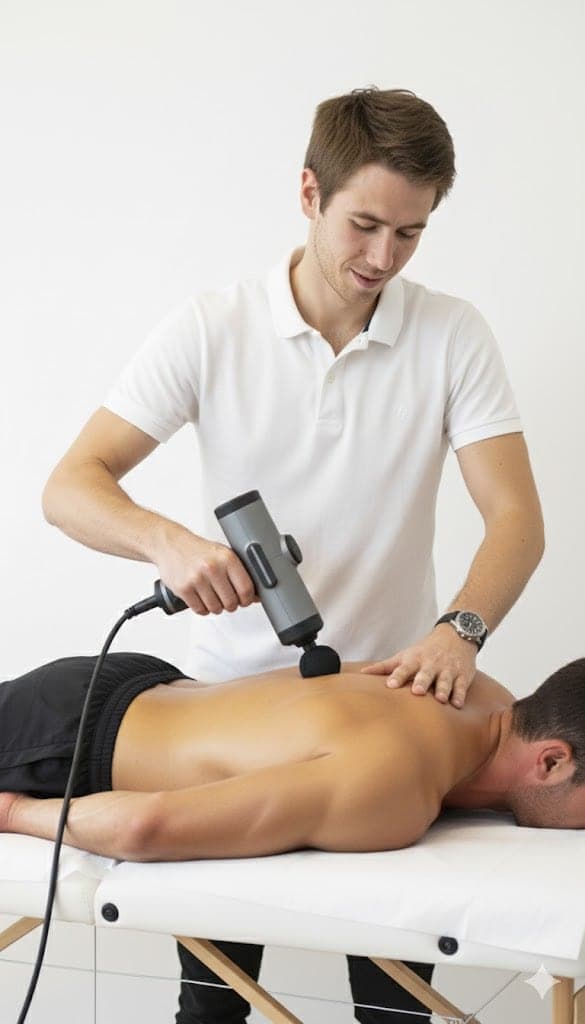
My specialized mechanical therapy approach utilizes precision equipment that delivers consistent, controlled pressure to depths impossible to achieve manually. We’re talking about accessing tissue layers 8-12 millimeters deep with pressure calibration ranging from 40 to 180 pounds per square inch. This isn’t massage – this is mechanical engineering applied to human tissue optimization.
The physiological mechanisms involved include several key processes: fascial remodeling through controlled mechanical stress, trigger point deactivation through sustained pressure application, and improved tissue perfusion through mechanical pumping actions. These processes create an environment where corrective exercises can actually establish lasting changes rather than simply providing temporary relief.
I’ve documented case after case where clients experienced 60-80% pain reduction after a single mechanical therapy session, followed by progressive improvement as the exercises I prescribe work within properly released tissue. This combination approach – advanced mechanical intervention plus targeted corrective exercise – delivers results that neither component achieves independently.
The precision factor
Traditional massage therapy, even skilled manual techniques, suffers from inherent limitations: practitioner fatigue, inconsistent pressure application, and inability to sustain therapeutic forces for optimal tissue response. My mechanical approach eliminates these variables through technological precision. Every session delivers identical therapeutic parameters, ensuring consistent progress rather than the variable outcomes typical of manual techniques.
The control mechanisms allow real-time adjustment based on tissue response and client tolerance. We can gradually increase intensity as tissues adapt, or modify pressure distribution to target specific dysfunction patterns. This level of precision is essential when treating complex presentations like those common among Coral Bay’s diverse population – from desk workers to deep-sea fishing crew members, each requiring customized mechanical intervention.
Client feedback during treatment provides immediate guidance for pressure adjustments. The equipment responds instantly to input changes, maintaining therapeutic effectiveness while ensuring client comfort. This interactive approach builds trust and allows for aggressive treatment of stubborn dysfunction areas without causing protective guarding responses that limit treatment effectiveness.
Functional movement integration for Coral Bay lifestyle demands
The unique demands of Coral Bay living require exercise protocols that prepare the body for specific environmental and occupational challenges. Beach walking in sand creates different stabilization demands than urban pavement walking. Water sports involve multi-planar movements and rotational forces rarely addressed in standard rehabilitation programs. Hospitality work combines prolonged static positioning with sudden dynamic demands that stress the lumbar spine in complex patterns.
My functional integration protocols address these specific challenges through progressive loading and movement complexity advancement. The exercises simulate real-world demands while providing corrective input to dysfunction patterns identified through assessment and mechanical therapy sessions.
Sand-specific stability training
Walking and working on sand creates unique proprioceptive and stability challenges that must be addressed for complete back pain resolution among Coral Bay residents. The unstable surface forces continuous micro-adjustments in spinal positioning and lower extremity alignment, stressing the deep stabilizing system differently than firm surface activities.
Single-leg stance progressions on unstable surfaces begin with foam pad standing and advance to more challenging surfaces like sand or balance boards. Initial holds target 30-second durations with eyes open, progressing to 60-second holds with eyes closed to challenge the vestibular and proprioceptive systems. Adding upper extremity movements while maintaining single-leg stance further increases the stability demands on the lumbar spine.
Multi-directional lunges on sand simulate the movement patterns required for beach activities while strengthening the stabilizing muscles in functional patterns. Forward, lateral, and reverse lunges are performed with controlled movement speeds, emphasizing perfect spinal alignment throughout each repetition. The sand surface provides natural resistance and instability that enhances proprioceptive training benefits.
Gait training on sand addresses the altered biomechanics of beach walking that can contribute to back pain in coastal residents. Specific attention to stride length, foot placement, and postural alignment during sand ambulation helps optimize movement efficiency and reduce spinal stress during daily activities.
Water-based movement preparation
Coral Bay’s aquatic recreation opportunities require specific movement preparations that traditional exercise programs overlook. Swimming, diving, and water sports involve complex rotation and extension patterns that can stress previously injured spinal segments if not properly conditioned.
Dry-land swimming stroke simulation exercises prepare the spine for aquatic activities while providing therapeutic movement in controlled conditions. Prone position alternating arm reaches simulate freestyle stroke patterns while emphasizing core stability and avoiding excessive lumbar extension. Side-lying position exercises replicate the rotational components of swimming strokes while maintaining spinal alignment.
Breath-holding exercises improve diaphragmatic function essential for both spinal stability and diving activities. Controlled breathing patterns while maintaining various exercise positions integrate respiratory function with spinal stability training. This preparation reduces injury risk during water activities while enhancing performance through improved core stability.
Entry and exit movement training addresses the specific challenges of getting in and out of water safely with back pain considerations. Techniques for ladder climbing, boat entry, and beach approach are practiced in controlled environments to establish safe movement patterns before aquatic exposure.
Occupational-specific conditioning for hospitality and tourism workers
The tourism industry demands of Coral Bay create unique physical challenges that standard exercise programs fail to address. Housekeeping staff perform thousands of repetitive bending motions daily. Restaurant servers carry heavy trays while navigating obstacles. Tour guides maintain awkward positions while educating visitors. Each occupation requires specific conditioning to prevent and resolve back pain effectively.
My occupational conditioning protocols target the specific movement patterns, load demands, and endurance requirements of different tourism industry positions. These exercises complement mechanical therapy sessions by preparing tissues for occupational stresses and correcting dysfunction patterns that develop through repetitive work activities.
Hospitality worker conditioning protocols
Housekeeping activities involve extensive forward bending, reaching, and lifting in compromised positions. The repetitive nature of these activities creates predictable dysfunction patterns that must be addressed through specific corrective exercise protocols.
Bed-making simulation exercises train proper body mechanics while strengthening the posterior chain muscles essential for safe bending activities. Hip hinge movement patterns are practiced with progressive resistance, emphasizing gluteal activation and spinal neutral maintenance during forward bending motions. These exercises directly transfer to improved work performance and reduced injury risk.
Bathroom cleaning position simulation involves sustained squatting and kneeling positions that stress the lumbar spine and hip joints. Progressive squat hold exercises build endurance in functional positions while improving hip and ankle mobility necessary for safe cleaning activities. Specific attention to maintaining lumbar lordosis during sustained squatting prevents the spinal flexion that contributes to disc stress during work activities.
Vacuum maneuvering exercises address the rotational and reaching demands of floor cleaning activities. Controlled rotation exercises with resistance simulate the twisting motions required for thorough cleaning while maintaining spinal stability. Progressive resistance training in these functional patterns builds strength and endurance for sustained cleaning activities.
Service industry postural conditioning
Restaurant and retail workers face prolonged standing demands that create specific postural stresses and muscle imbalances. Static positioning leads to hip flexor tightness, gluteal weakness, and cervical forward head posture that contributes to back pain patterns.
Anti-extension core training specifically targets the demands of prolonged standing by building endurance in the deep stabilizing muscles. Plank progressions with specific attention to posterior pelvic tilt maintenance counter the anterior pelvic tilt common in standing workers. Hold times progress from 30 seconds to 3 minutes, matching the endurance demands of sustained standing activities.
Hip flexor stretching protocols address the tightness that develops from prolonged standing positions. Dynamic and static stretching techniques target the iliopsoas complex while maintaining spinal alignment. These stretches are particularly important for workers who cannot regularly change positions during their shifts.
Cervical retraction exercises counter the forward head posture common among service workers who lean forward to hear customers or read order tickets. Specific strengthening of the deep cervical flexors and stretching of the suboccipital muscles restore proper cervical alignment and reduce cervical contribution to overall spinal dysfunction.
Progressive loading strategies for athletic populations
Coral Bay attracts serious athletes and fitness enthusiasts who require more advanced conditioning protocols than typical back pain populations. These individuals need exercises that not only resolve current dysfunction but also prepare them for high-level athletic demands. The integration of mechanical therapy with progressive loading creates optimal conditions for both pain resolution and performance enhancement.
Athletic populations present unique challenges because they often have higher pain tolerance and may attempt to “work through” dysfunction rather than addressing root causes. My approach with athletes emphasizes the performance benefits of proper mechanical therapy combined with targeted exercise progression, positioning treatment as performance optimization rather than injury management.
Power development with spinal protection
Athletes require explosive power development while maintaining spinal safety, particularly those participating in surfing, diving, and beach volleyball common in Coral Bay. Traditional power training often neglects spinal protection principles, leading to injury patterns that mechanical therapy must address.
Medicine ball rotation exercises develop rotational power while maintaining spinal stability through the transverse plane movements required for many sports. Progressive resistance and velocity increases challenge the stabilizing system while building sport-specific power. Specific attention to maintaining spinal alignment during explosive movements prevents the compensatory patterns that lead to injury.
Plyometric progressions with spinal emphasis build reactive strength while emphasizing landing mechanics that protect the lumbar spine. Box jumps, broad jumps, and lateral bounds are performed with specific attention to spinal positioning during landing phases. This training transfers directly to sport activities while building resilience against impact forces.
Olympic lift modifications provide maximum power development benefits while accommodating back pain considerations. Deadlift variations emphasize perfect spinal mechanics while building posterior chain strength essential for athletic performance. These exercises complement mechanical therapy by building strength in optimal movement patterns.
Endurance conditioning for aquatic athletes
Swimming, diving, and water sports require sustained spinal positioning that can stress previously injured segments. Endurance conditioning must prepare the stabilizing system for prolonged activities while maintaining proper spinal alignment throughout extended training sessions.
Isometric hold progressions build endurance in sport-specific positions while emphasizing spinal stability. Plank variations simulate the body positions required for swimming and diving while building the sustained contraction capacity necessary for extended aquatic training. Progressive hold times match sport-specific demands.
Respiratory training integrates breath control with spinal stability, essential for aquatic athletes who must maintain core stability while managing breathing patterns during performance. Specific breathing exercises while maintaining various stabilization positions prepare athletes for the respiratory demands of their sports.
Recovery positioning and stretching protocols address the specific tightness patterns that develop from aquatic training. Pool-based and dry-land stretching techniques target the hip flexors, latissimus dorsi, and cervical extensors that commonly tighten in swimming athletes.
Advanced assessment techniques for exercise customization
Proper exercise prescription requires comprehensive assessment that extends beyond basic pain questionnaires and range of motion testing. My assessment protocols identify specific movement dysfunction patterns, muscle imbalances, and tissue restrictions that guide both mechanical therapy application and exercise selection for optimal outcomes.
The assessment process reveals the underlying causes of dysfunction rather than simply cataloging symptoms. This detailed analysis allows for precise treatment planning that addresses root causes rather than providing generic interventions that may or may not match individual presentation patterns.
Movement pattern analysis
Functional movement screening identifies compensatory patterns and asymmetries that contribute to back pain presentations. Overhead squat assessment reveals hip mobility restrictions, ankle limitations, and shoulder dysfunction that influence spinal mechanics during functional activities.
Single-leg stance testing reveals stability deficits and identifies which side demonstrates greater dysfunction. Hip abduction strength testing in side-lying position identifies gluteal weakness patterns that contribute to lumbar instability during functional activities. These assessments guide specific exercise selection rather than applying generic protocols.
Gait analysis during normal walking and stair climbing identifies movement compensations that perpetuate dysfunction patterns. Observation of pelvic alignment, stride length, and upper extremity movement provides insights into whole-body movement strategies that must be addressed for complete dysfunction resolution.
Sport-specific movement analysis for athletic populations identifies dysfunction patterns specific to their chosen activities. Surfing pop-up assessment, golf swing analysis, and tennis serve evaluation reveal sport-specific compensations that require targeted intervention for both pain resolution and performance optimization.
Tissue quality assessment
Manual palpation identifies areas of tissue restriction, trigger point activity, and fascial adhesion that require mechanical therapy attention. This assessment guides the selection of specific treatment areas and intensity parameters for mechanical intervention sessions.
Pain pressure threshold testing using calibrated equipment provides objective measurements of tissue sensitivity and treatment tolerance. This data guides initial treatment parameters and tracks improvement over time, providing objective evidence of treatment effectiveness.
Range of motion testing in multiple planes identifies specific restrictions that must be addressed through targeted stretching and mobilization. Hip flexion, extension, and rotation measurements guide exercise selection and progression parameters for individual clients.
Muscle length testing identifies specific tight structures that require focused attention during treatment and exercise programs. Thomas test for hip flexor length, straight leg raise for hamstring length, and shoulder internal rotation testing provide specific targets for intervention.
Integration protocols: combining mechanical therapy with exercise for optimal outcomes
The synergistic relationship between advanced mechanical therapy and targeted exercise creates treatment outcomes that exceed what either intervention achieves independently. Proper integration timing, sequencing, and progression parameters are essential for maximizing treatment effectiveness and ensuring lasting results.
Most practitioners fail to understand the optimal timing relationships between manual interventions and exercise prescription. Mechanical therapy creates a window of opportunity where tissues are more responsive to corrective exercise input. Missing this timing relationship significantly reduces treatment effectiveness.
Pre-treatment exercise preparation
Specific warm-up protocols prepare tissues for mechanical therapy while beginning the corrective process. Light cardiovascular activity increases tissue temperature and circulation, enhancing the effectiveness of subsequent mechanical interventions. Dynamic stretching movements begin mobilizing restricted areas while avoiding aggressive stretching that might cause protective guarding.
Activation exercises for weak or inhibited muscles prepare the neuromuscular system for optimal response to mechanical therapy. Gluteal activation exercises before treating hip flexor restrictions ensure that newly gained mobility can be controlled by appropriate muscle activation. This preparation prevents the compensation patterns that often develop when mobility is restored without corresponding stability.
Breathing exercises and relaxation techniques reduce anxiety and protective guarding that can limit mechanical therapy effectiveness. Progressive muscle relaxation and controlled breathing patterns help clients achieve the relaxed state necessary for optimal tissue response to mechanical interventions.
Post-treatment exercise protocols
The immediate post-treatment period represents the optimal time for establishing new movement patterns and reinforcing the tissue changes achieved through mechanical therapy. Specific exercise protocols during this window maximize treatment benefits and accelerate the rehabilitation process.
Movement integration exercises performed immediately after mechanical therapy help establish optimal movement patterns in newly mobile tissues. Gentle range of motion activities and light strengthening exercises reinforce the tissue changes while avoiding aggressive activities that might reverse treatment benefits.
Postural re-education during the post-treatment period helps integrate improved tissue quality into daily activities. Specific positioning and alignment cues are practiced while tissue restrictions are minimized, allowing for easier adoption of improved postural habits.
Home exercise prescription for the 24-48 hours following treatment maintains tissue mobility while supporting the healing response. Specific stretching, strengthening, and movement exercises prevent regression and support continued improvement between treatment sessions.
| Treatment Phase | Exercise Focus | Duration | Key Benefits |
|---|---|---|---|
| Pre-treatment | Tissue preparation and activation | 10-15 minutes | Enhanced mechanical therapy response |
| During treatment | Breathing and relaxation | 45-60 minutes | Optimal tissue release and remodeling |
| Immediate post-treatment | Movement integration | 15-20 minutes | Pattern reinforcement and consolidation |
| 24-48 hours post-treatment | Maintenance and progression | 20-30 minutes daily | Sustained improvement and adaptation |
Lifestyle modification strategies for sustainable back health
Achieving lasting back pain relief requires more than periodic treatment sessions and prescribed exercises. Comprehensive lifestyle modifications address the daily activities, environmental factors, and behavioral patterns that contribute to dysfunction development and maintenance. My approach integrates these modifications with mechanical therapy and exercise for comprehensive results.
Coral Bay residents face unique lifestyle challenges that must be addressed for complete back pain resolution. The combination of occupational demands, recreational activities, and environmental factors creates a complex web of influences that require systematic modification for optimal outcomes.
Ergonomic optimization for work and home environments
Proper ergonomic setup significantly reduces the daily stresses that contribute to back pain development and maintenance. Most Coral Bay residents work in environments with limited ergonomic control, requiring creative solutions that optimize available resources.
Workstation modifications for hospitality workers include specific techniques for reducing spinal stress during repetitive activities. Proper bed-making techniques, lifting mechanics, and positioning strategies reduce cumulative trauma while maintaining work efficiency. These modifications require initial practice but become automatic with consistent application.
Home environment optimization focuses on sleep surface quality, seating arrangements, and daily activity setup. Mattress selection criteria based on individual dysfunction patterns ensure proper spinal alignment during sleep. Chair modifications and positioning strategies support optimal posture during home activities.
Vehicle setup modifications address the significant time many residents spend commuting to multiple work locations. Seat adjustments, lumbar support additions, and mirror positioning reduce spinal stress during transportation activities.
Activity modification and pacing strategies
Strategic activity modification allows continued participation in desired activities while reducing dysfunction-promoting stresses. This approach maintains quality of life while supporting back pain resolution through intelligent activity management.
Work activity pacing involves strategic rest periods and position changes that interrupt repetitive stress patterns. Specific timing recommendations for position changes, micro-breaks, and activity rotation prevent cumulative trauma while maintaining productivity levels.
Recreation activity modification allows continued participation in beach and water activities with reduced injury risk. Surfing technique modifications, diving entry strategies, and beach walking techniques reduce spinal stress while maintaining activity enjoyment.
Exercise program progression ensures that fitness activities support rather than undermine back pain resolution efforts. Specific guidelines for activity intensity, duration, and progression prevent overuse injuries while building the fitness base necessary for long-term back health.
Nutrition and hydration strategies for tissue health optimization
Optimal tissue health requires proper nutrition and hydration to support the repair and remodeling processes initiated by mechanical therapy and reinforced through corrective exercise. My background in Physical Education and Nutrition provides unique insights into the nutritional factors that influence treatment outcomes.
Most practitioners ignore the nutritional component of back pain treatment, missing critical opportunities to accelerate healing and optimize tissue quality. Proper nutritional support can significantly enhance treatment effectiveness while poor nutrition can limit progress despite optimal mechanical and exercise interventions.
Anti-inflammatory nutrition protocols
Chronic inflammation contributes to tissue dysfunction and pain perpetuation, making anti-inflammatory nutrition strategies essential for comprehensive treatment. Specific dietary modifications can significantly reduce systemic inflammation while supporting tissue repair processes.
Omega-3 fatty acid optimization through both dietary sources and supplementation provides powerful anti-inflammatory effects that support tissue healing. Specific dosing recommendations based on body weight and inflammation levels ensure optimal therapeutic effects without adverse reactions.
Antioxidant-rich food selections support tissue repair while reducing oxidative stress that can impair healing responses. Specific fruit and vegetable selections provide targeted antioxidants that support connective tissue health and reduce inflammation markers.
Pro-inflammatory food elimination identifies and removes dietary factors that contribute to inflammation and tissue dysfunction. Common culprits include refined sugars, trans fats, and excessive omega-6 fatty acids that promote inflammatory responses.
Hydration optimization for tissue function
Proper hydration is essential for optimal tissue function and treatment response. Dehydrated tissues respond poorly to mechanical therapy and exhibit reduced healing capacity, making hydration optimization a critical treatment component.
Specific fluid intake recommendations based on body weight, activity level, and climate conditions ensure optimal tissue hydration. Coral Bay’s warm, humid climate requires adjusted hydration strategies to maintain optimal tissue function during outdoor activities.
Electrolyte balance optimization supports proper muscle function and reduces cramping that can contribute to back pain patterns. Specific mineral recommendations address the losses common in warm climate activities while supporting optimal neuromuscular function.
Timing strategies for fluid intake optimize hydration without interfering with activities or treatment sessions. Pre-treatment hydration protocols enhance tissue responsiveness while post-treatment hydration supports the healing response.
Stress management and sleep optimization for pain resolution
Psychological stress and poor sleep quality significantly impact pain perception and tissue healing, making these factors essential components of comprehensive back pain treatment. My clinical experience demonstrates that clients who address stress and sleep issues achieve faster and more complete pain resolution.
The relationship between stress, sleep, and pain creates complex feedback loops that can perpetuate dysfunction even when mechanical and exercise interventions are properly applied. Breaking these cycles requires systematic attention to psychological and behavioral factors.
Stress reduction strategies
Chronic stress elevates cortisol levels and promotes inflammatory responses that interfere with tissue healing and increase pain sensitivity. Specific stress management techniques can significantly improve treatment outcomes while enhancing overall quality of life.
Progressive muscle relaxation techniques provide immediate stress relief while teaching body awareness skills that support treatment progress. Specific protocols for muscle group sequencing and timing create reliable stress reduction that clients can apply independently.
Breathing exercises and meditation practices reduce stress while improving the mind-body connection essential for optimal treatment response. Specific techniques adapted for busy lifestyles ensure consistent practice despite demanding schedules.
Time management strategies reduce the daily stresses that contribute to muscle tension and pain perpetuation. Specific organizational techniques and priority setting methods reduce life stress while maintaining productivity and life satisfaction.
Sleep quality optimization
Quality sleep is essential for tissue repair and pain resolution, making sleep optimization a critical treatment component. Poor sleep quality can undermine treatment progress and perpetuate pain patterns despite optimal daytime interventions.
Sleep positioning strategies ensure proper spinal alignment during rest periods while accommodating individual comfort preferences. Specific pillow placement and mattress modification recommendations support optimal spinal positioning throughout the night.
Sleep hygiene protocols address the behavioral and environmental factors that influence sleep quality. Specific recommendations for bedroom environment, pre-sleep routines, and sleep timing create optimal conditions for restorative sleep.
Pain management strategies for nighttime discomfort ensure that pain doesn’t interfere with sleep quality. Specific positioning techniques, gentle movements, and comfort measures allow for restful sleep even during active treatment phases.
Frequently asked questions about back pain exercises in Coral Bay
Throughout my decade of practice treating back pain in Coral Bay, I encounter the same questions repeatedly from residents seeking effective solutions. These questions reflect common misconceptions about back pain treatment and highlight the need for education about advanced therapeutic approaches that deliver superior results.
What makes mechanical therapy superior to traditional massage for back pain?
Traditional massage, while relaxing, simply cannot achieve the tissue depths and consistent pressure application necessary for addressing chronic dysfunction patterns. My specialized equipment delivers precise, sustained pressure to depths of 8-12 millimeters – three to four times deeper than manual techniques can reach. More importantly, the consistency eliminates practitioner fatigue variables, ensuring every session delivers identical therapeutic parameters. When clients tell me they’ve tried “everything” for their back pain, they usually mean traditional approaches that work superficially. My mechanical approach addresses the root fascial restrictions and trigger points that maintain pain patterns, which is why clients often experience 60-80% pain reduction after their first session. The precision control allows real-time adjustments based on tissue response, creating optimal treatment conditions impossible to replicate manually.
How long does it typically take to see results with your integrated approach?
Results timeline varies based on chronicity and complexity of dysfunction patterns, but my typical client experiences significant improvement within the first three sessions when combining mechanical therapy with targeted exercises. Acute presentations – injuries within the past six weeks – often resolve within 3-5 sessions. Chronic cases that have persisted for months or years require more extensive intervention, typically 8-12 sessions for complete resolution. The key difference is that my approach treats causes rather than symptoms. Traditional methods might provide temporary relief, but clients return repeatedly because underlying restrictions haven’t been addressed. My clients achieve lasting results because we systematically eliminate the mechanical dysfunction maintaining their pain patterns. The exercises I prescribe work synergistically with the mechanical therapy, reinforcing tissue changes and preventing regression between sessions.
Can your exercises be performed safely by people with severe back pain?
Absolutely, but with important considerations about proper progression and integration with mechanical therapy. Severe pain typically indicates significant tissue dysfunction that requires mechanical intervention before aggressive exercise can be safely performed. My initial exercise protocols focus on gentle activation and mobility restoration while mechanical therapy addresses the underlying restrictions. As tissue quality improves through treatment, exercise intensity and complexity progress accordingly. The key is matching exercise demands to current tissue capacity rather than pushing through pain, which often worsens dysfunction patterns. I’ve successfully treated clients who could barely walk due to pain severity, but their exercise programs initially consisted of basic breathing and gentle positioning exercises. As mechanical therapy restored tissue function, their exercise programs advanced to full functional training. This staged approach ensures safety while maximizing treatment effectiveness.
Why do most exercise programs fail to provide lasting back pain relief?
Exercise programs fail because they address symptoms rather than causes and ignore the fascial restrictions that maintain dysfunction patterns. You can perform perfect exercises with flawless form, but if your tissues are mechanically restricted by adhesions and trigger points, the exercises cannot establish optimal movement patterns. It’s like trying to stretch a rope with knots in it – the knots limit how far the rope can extend regardless of stretching force applied. My mechanical therapy removes these “knots” in your tissue, creating conditions where corrective exercises can actually work. Additionally, most programs use generic exercises that don’t address individual dysfunction patterns. My assessment identifies specific restrictions and imbalances, allowing exercise prescription that targets your unique presentation. The combination of mechanical restriction removal plus targeted exercise creates lasting changes rather than temporary symptom relief.
What specific advantages does your mobile service provide for back pain treatment?
Mobile service eliminates several barriers that prevent optimal treatment outcomes while providing superior convenience and comfort. First, travel to appointments often exacerbates back pain, especially for severe presentations where sitting in vehicles increases symptoms. By bringing professional equipment to your location, clients receive treatment in optimal comfort without aggravating their condition through travel stress. Second, familiar environment reduces anxiety and allows for better relaxation during treatment, which enhances tissue response to mechanical intervention. Third, I can assess your actual living and working environments, identifying ergonomic factors and daily activities that contribute to dysfunction patterns. This environmental assessment allows for more targeted lifestyle recommendations that support long-term success. Finally, mobile service ensures treatment consistency – clients don’t miss sessions due to transportation issues or schedule conflicts, maintaining the regular treatment frequency essential for optimal outcomes.
How do exercises differ for different occupations common in Coral Bay?
Occupational demands create specific dysfunction patterns that require targeted exercise interventions for optimal results. Hospitality workers who perform repetitive bending develop hip flexor tightness and gluteal weakness, requiring exercises that address these specific imbalances. Restaurant servers with prolonged standing need anti-extension core training and hip flexor stretching to counter anterior pelvic tilt patterns. Water sports instructors require rotational mobility and stability training to handle the multi-planar demands of aquatic activities. Construction and maintenance workers need posterior chain strengthening and lifting mechanics training to handle heavy loads safely. My assessment identifies occupation-specific dysfunction patterns, allowing exercise prescription that directly addresses work-related stresses. Generic programs ignore these occupational factors, which is why many people continue experiencing pain despite faithful exercise performance. Targeted exercise prescription based on specific demands creates superior outcomes by addressing root causes rather than generic symptoms.
What role does nutrition play in back pain recovery?
Nutrition significantly influences tissue healing capacity and inflammatory responses that affect treatment outcomes. My background in Physical Education and Nutrition provides unique insights into dietary factors that support or hinder back pain resolution. Anti-inflammatory nutrition protocols can reduce systemic inflammation that contributes to pain perpetuation and tissue dysfunction. Specific omega-3 fatty acid optimization, antioxidant-rich food selection, and pro-inflammatory food elimination create internal conditions that support tissue repair and reduce pain sensitivity. Proper hydration is particularly important in Coral Bay’s warm climate – dehydrated tissues respond poorly to mechanical therapy and exhibit reduced healing capacity. I provide specific nutritional recommendations based on individual needs, treatment phase, and lifestyle factors. Clients who optimize their nutrition alongside mechanical therapy and exercise achieve faster and more complete pain resolution. Ignoring nutritional factors can limit treatment effectiveness despite optimal mechanical and exercise interventions.
How does your approach address both immediate pain relief and long-term prevention?
My integrated approach simultaneously addresses immediate symptom relief through mechanical therapy while building long-term resilience through corrective exercise and lifestyle modification. The mechanical therapy component provides rapid pain reduction by releasing fascial restrictions and deactivating trigger points that maintain dysfunction patterns. Clients typically experience significant relief within the first session, allowing them to engage more effectively in corrective exercises. The exercise component addresses the movement dysfunction and muscle imbalances that predispose to pain recurrence. Rather than just treating current symptoms, we systematically correct the biomechanical factors that created the problem initially. Lifestyle modifications address daily activities and environmental factors that contribute to dysfunction development. This comprehensive approach ensures that clients not only recover from current pain but develop resilience against future episodes. The combination creates lasting changes rather than temporary symptom suppression.
Investment in long-term health: why advanced treatment delivers superior value
Understanding the true cost of back pain extends far beyond immediate treatment expenses to encompass lost productivity, reduced life quality, and progressive dysfunction that worsens without proper intervention. My clients consistently report that investing in comprehensive treatment delivers exceptional value compared to the cycle of temporary fixes that characterize traditional approaches.
The economic analysis becomes clear when comparing my treatment outcomes with typical conventional approaches. Most clients have already spent thousands of dollars on traditional massage, physiotherapy, and medical interventions with limited lasting results. They continue experiencing pain, missing work, and avoiding activities they enjoy. My integrated approach typically resolves chronic dysfunction patterns within 8-12 sessions, providing lasting results that eliminate ongoing treatment costs and restore full life function.
Long-term cost analysis
Conservative estimates suggest that chronic back pain costs the average sufferer a wide range of costs annually in treatment expenses, lost productivity, and reduced life quality. My comprehensive approach represents a one-time investment that eliminates these ongoing costs while restoring full function and life enjoyment. Clients consistently report that the return on investment becomes apparent within months of completing treatment.
Quality of life improvements cannot be quantified financially but represent the most significant treatment benefits. Restored ability to engage in work activities, recreational pursuits, and family obligations without pain creates life satisfaction that far exceeds treatment costs. Many clients describe their treatment as “life-changing” because it restored capabilities they thought were durably lost.
Performance optimization benefits extend beyond pain resolution to enhanced function in work and recreational activities. Athletes report improved performance, workers experience increased endurance and reduced fatigue, and active individuals enjoy expanded activity options without fear of pain recurrence.
Prevention of progressive dysfunction
Untreated back dysfunction typically worsens over time, creating more complex presentations that require more extensive intervention. Early comprehensive treatment prevents this progression while addressing dysfunction patterns in their most treatable form. Clients who invest in proper treatment early avoid the complications and increased costs associated with progressive dysfunction.
Secondary complications from chronic pain – sleep disruption, stress-related health issues, deconditioning – create additional health problems that require separate treatment. Comprehensive back pain resolution eliminates these secondary issues while preventing their development in initially healthy individuals.
Protective movement patterns that develop with chronic pain create additional dysfunction areas throughout the kinetic chain. Addressing back pain comprehensively prevents the development of secondary problems in hips, knees, and shoulders that commonly develop from compensation patterns.
The value proposition becomes overwhelming when considering that my comprehensive approach addresses root causes rather than providing temporary symptom relief. This represents the difference between solving a problem durably versus managing symptoms indefinitely. For Coral Bay residents dealing with back pain, the choice between ongoing symptom management and lasting resolution represents one of the most important health decisions they’ll make.
My decade of experience treating diverse populations has demonstrated repeatedly that comprehensive intervention delivers superior outcomes compared to fragmented approaches. The integration of advanced mechanical therapy, targeted corrective exercise, and lifestyle optimization creates synergistic effects that exceed what any single intervention achieves independently. For residents of Coral Bay seeking definitive back pain resolution, this represents the most effective path to lasting relief and optimized function.
Written by
Chris
Massage therapist & body mechanics specialist
Norwegian-certified with a Bachelor’s in Physical Education and Nutrition and over ten years of clinical practice, working from a portable table in clients’ homes across the Paphos district.
This article is general information from clinical practice, not a medical diagnosis. If you have severe, worsening or unexplained pain, numbness, weakness, or pain after an accident, see a doctor first.