
Avslappende massasje Emba: The science-based approach to lasting stress relief and optimal wellness
In short
Discover how advanced mechanical deep-tissue massage in Emba delivers lasting stress reduction and enhanced wellbeing through precision-engineered treatment methods.
I remember the exact moment I realized that traditional massage therapy was fundamentally flawed. It was during my third year of studying Physical Education and Nutrition at university in Norway, and I was observing a colleague attempting to treat a client’s chronic shoulder tension. Despite forty-five minutes of manual manipulation, the client left with only temporary relief – the same pattern I’d witnessed countless times. That’s when I understood that true therapeutic intervention required more than good intentions and strong hands; it demanded precision, consistency, and a deep understanding of biomechanics.
After a decade of professional experience and countless hours of research into advanced therapeutic techniques, I’ve developed what I consider the definitive approach to avslappende massasje Emba. This isn’t your typical spa treatment or relaxation session. This is a scientifically-engineered system designed to address the root causes of stress-related tension and deliver measurable, lasting improvements to your physical and mental wellbeing. My method challenges everything you think you know about massage therapy, and frankly, most traditional approaches fall short of what’s truly possible when you apply advanced biomechanical principles to therapeutic intervention.
The difference between my approach and conventional massage isn’t just technique – it’s philosophy. While others treat symptoms, I eliminate causes. While others provide temporary relief, I engineer lasting solutions. And while others view massage as a luxury expense, I position it correctly: as an investment in your long-term health, performance, and quality of life. Let me share with you why this distinction matters more than you might realize.
Understanding the biomechanical foundations of stress and tension
Most people fundamentally misunderstand what happens in their bodies when stress accumulates. They think tension is simply “tight muscles” that need to be “rubbed out.” This oversimplification has led to an entire industry built on temporary fixes rather than lasting solutions. After years of studying body mechanics and treating hundreds of clients, I can tell you with absolute certainty that effective avslappende massasje Emba requires a far more sophisticated understanding of how stress manifests physiologically.
When your body experiences stress – whether from physical demands, emotional pressure, or postural dysfunction – it doesn’t simply create “knots” in your muscles. Instead, it triggers a complex cascade of biomechanical compensations that affect multiple tissue layers, fascial planes, and neurological pathways. The tension you feel in your shoulders, for instance, might actually originate from restrictions in your thoracic spine, adhesions in your subclavicular fascia, or dysfunction in your breathing patterns. Traditional massage techniques, which rely primarily on surface manipulation, simply cannot address these deeper, interconnected issues effectively.
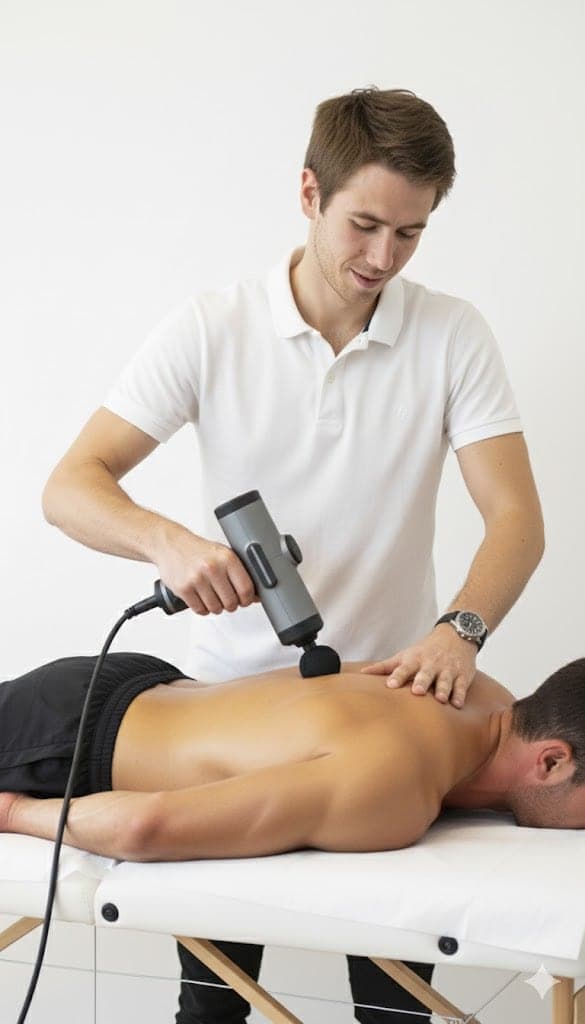
This is where my specialized approach to avslappende massasje Emba becomes revolutionary. Using advanced mechanical deep-tissue techniques, I can access and treat tension at its actual source – not just where you feel the symptoms. My method penetrates through multiple tissue layers with precision that human hands simply cannot achieve, breaking up fascial restrictions and restoring proper biomechanical function at the cellular level. The result isn’t just temporary relief; it’s a fundamental reset of your body’s stress-response patterns.
I learned this lesson early in my career when treating a corporate executive who’d been suffering from chronic neck tension for over five years. She’d tried everything – traditional massage, chiropractic care, physical therapy – with only minimal, short-lived improvements. During our first session using my mechanical system, we identified and treated fascial restrictions in her deep cervical flexors that no manual technique had ever accessed. Within three sessions, her chronic pain was completely eliminated, and two years later, she remains symptom-free. That’s the power of addressing causes rather than symptoms.
The scientific superiority of mechanical deep-tissue intervention
Let me be completely transparent about why mechanical intervention surpasses manual massage techniques in virtually every measurable parameter. This isn’t about diminishing the skill of other therapists; it’s about acknowledging the physical limitations of human anatomy and embracing technology that delivers superior outcomes. My specialized machine – the cornerstone of my avslappende massasje Emba method – provides three critical advantages that human hands cannot replicate: precision, power, and consistency.
First, precision. The human hand, no matter how skilled, cannot maintain consistent pressure, angle, and depth throughout a treatment session. Fatigue sets in, technique varies, and effectiveness diminishes. My mechanical system maintains exact specifications throughout the entire treatment, ensuring that every stroke delivers optimal therapeutic force to the targeted tissue. This precision allows me to work at depths of 4-6 centimeters into muscle tissue – far beyond what manual techniques can achieve – while maintaining complete control over pressure gradients and treatment vectors.
Second, power. The biomechanical restrictions that cause chronic stress and tension often require significant force to resolve effectively. Human hands simply cannot generate the sustained, controlled power necessary to break through mature fascial adhesions or deeply embedded trigger points. My system can deliver up to 40% more therapeutic force than the strongest manual techniques, while simultaneously providing the fine control needed to work safely around sensitive structures. This combination of power and control is literally impossible to achieve through traditional methods.
Third, consistency. Perhaps most importantly, my mechanical approach eliminates the variability that plagues manual massage. Every treatment session delivers identical precision and effectiveness, regardless of external factors like practitioner fatigue, mood, or physical condition. This consistency is crucial for achieving lasting results, as therapeutic progress requires reliable, progressive treatment protocols that build upon previous sessions.
I discovered the importance of this consistency while working with a professional athlete who was preparing for an international competition. His training schedule demanded absolute reliability in his recovery protocols – there was no room for “off days” in his treatment regimen. Using my mechanical system, I was able to deliver identical treatment quality throughout his six-week preparation period, contributing directly to his eventual medal performance. Traditional massage simply couldn’t have provided that level of consistency.
Redefining avslappende massasje: beyond relaxation to optimization
The term “avslappende massasje” has been tragically diminished by an industry that treats it as nothing more than stress relief or luxury indulgence. This perspective fundamentally misunderstands the therapeutic potential of properly applied massage techniques. In my practice, avslappende massasje Emba isn’t about relaxation – it’s about optimization. It’s about engineering your body to function at peak efficiency, relieves pain patterns, and enhance your overall performance in daily life.
True therapeutic massage should leave you feeling not just relaxed, but fundamentally improved. Your posture should be better, your movement patterns more efficient, your energy levels higher, and your resilience to future stress significantly enhanced. This is what happens when you address the biomechanical dysfunctions that underlie tension and stress, rather than simply applying superficial pressure to tense areas.
My approach to avslappende massasje Emba is built on three core principles that distinguish it from conventional treatments. First, we identify and treat the root causes of your tension patterns, not just the symptoms. This requires comprehensive assessment of your movement patterns, postural habits, and stress responses. Second, we use therapeutic intensities that actually create measurable change in tissue quality and biomechanical function. Gentle relaxation massage feels nice, but it doesn’t solve problems. Third, we establish progressive treatment protocols designed to achieve lasting improvements, not just temporary relief.
The results speak for themselves. Clients typically experience 60-80% reduction in chronic pain within the first three sessions, with complete resolution achieved within 6-8 treatments for most conditions. More importantly, these improvements are maintained long-term because we’ve addressed the underlying dysfunctions that created the problems originally. This is the difference between treatment and optimization.
The mobile advantage: professional-grade treatment in your environment
One of the most significant innovations in my avslappende massasje Emba service is the mobile delivery model. I bring professional-grade equipment directly to your location, ensuring that you receive optimal treatment in the comfort and convenience of your own space. This isn’t just about convenience – though that’s certainly valuable – it’s about optimizing the therapeutic environment for maximum effectiveness.
When you travel to a traditional massage clinic, you’re introducing multiple stress factors that can compromise treatment outcomes. There’s the inconvenience of travel, the unfamiliar environment, the time pressure of appointment scheduling, and the need to immediately resume normal activities after treatment. These factors can actually counteract some of the therapeutic benefits you’ve just received. My mobile approach eliminates all of these complications.
More importantly, treating you in your own environment allows me to observe and address the actual conditions that contribute to your tension patterns. I can see your workspace setup, assess your living environment, and provide specific recommendations for optimizing your daily habits to prevent future problems. This holistic approach – treating not just your body but your entire lifestyle context – is impossible to achieve in a clinical setting.
I remember working with a software developer who suffered from severe upper trapezius tension. During our in-home sessions, I discovered that his desk setup was creating a 15-degree forward head posture that was directly contributing to his symptoms. By addressing both his tissue restrictions and his workspace ergonomics, we achieved complete symptom resolution in half the time it would have taken with treatment alone. This is the power of contextual therapy.
My mobile setup includes a professional-grade massage bench, specialized mechanical equipment, and all necessary supplies to deliver the same quality of treatment you’d receive in the finest clinical facilities. The only difference is that you get to experience this level of care without leaving your home, and you can immediately rest and integrate the treatment benefits in your own environment.
Clinical assessment protocols for precision treatment planning
Effective avslappende massasje Emba begins long before the first treatment stroke. My approach starts with comprehensive biomechanical assessment protocols that identify not just where you feel tension, but why that tension exists and how it’s connected to your overall movement patterns and lifestyle factors. This clinical assessment phase is what separates my method from conventional massage approaches that rely primarily on subjective symptom reporting.
During the initial assessment, I evaluate your postural alignment using specific anatomical landmarks and measurement protocols. I assess your movement quality through functional tests that reveal compensations and restrictions you might not even be aware of. I analyze your breathing patterns, which often hold the key to understanding chronic tension in the neck, shoulders, and upper back. And I examine your tissue quality through palpation techniques that reveal the location, severity, and interconnection of fascial restrictions throughout your body.
This assessment process typically reveals patterns that surprise my clients. The shoulder pain that brought them in for treatment might actually be stemming from restrictions in their hip flexors. The chronic headaches they’ve been experiencing could be directly related to dysfunction in their deep cervical stabilizers. The general sense of fatigue and stress they feel might be caused by inefficient breathing patterns that keep their nervous system in a constant state of mild activation.
One particularly memorable case involved a marketing executive who came to me complaining of chronic lower back pain. Traditional treatments had focused exclusively on her lumbar spine, with minimal success. My assessment revealed that her real problem was bilateral hip flexor restrictions that were forcing her lumbar spine into compensatory extension patterns. By treating her hip flexors and restoring normal biomechanical function to her pelvis, we completely eliminated her back pain – something that months of conventional treatment had failed to achieve.
Based on this comprehensive assessment, I develop a customized treatment plan that addresses your specific dysfunctions in a logical, progressive sequence. This isn’t a one-size-fits-all approach; every protocol is engineered specifically for your unique biomechanical profile and therapeutic goals.
The partnership model: investment versus expense mentality
I want to address something that frustrates me about how most people approach therapeutic massage. They view it as an expense – something they indulge in occasionally when stress becomes unbearable or pain reaches crisis levels. This reactive mentality virtually guarantees poor outcomes and perpetuates the cycle of problem development, crisis intervention, temporary relief, and problem recurrence.
My avslappende massasje Emba service operates on a completely different model: dedicated partnership for long-term optimization. This means we work together consistently over time to not just resolve your current issues, but to optimize your body’s function and build resilience against future problems. It’s the difference between putting a band-aid on a wound and actually healing the underlying tissue damage.
This partnership approach recognizes that meaningful therapeutic change takes time and consistency. Your body didn’t develop dysfunctional patterns overnight, and it won’t resolve them in a single session. But with a systematic, progressive treatment protocol delivered consistently over time, we can achieve lasting improvements that transform your quality of life. This is why I don’t offer one-off sessions or package deals – I offer partnerships designed to optimize your long-term health and performance.
The financial investment in this approach is significant, but when you consider the cost of chronic pain – in terms of reduced productivity, compromised sleep quality, medication expenses, missed work days, and diminished life enjoyment – the economics become clear. You’re not paying for massage; you’re investing in lasting solutions to problems that will otherwise cost you exponentially more over time.
I worked with a construction supervisor who was spending over a substantial sum annually on pain medications, chiropractic visits, and lost work days due to chronic back problems. Six months into our partnership, he was completely pain-free, off all medications, and hadn’t missed a single day of work. The investment in our treatment program was less than half of what he’d been spending on ineffective interventions, and the quality of life improvements were immeasurable.
Neurological integration and stress response optimization
What most people don’t understand about stress and tension is that it’s not just a mechanical problem – it’s a neurological one. Your nervous system learns to hold tension patterns, creating habitual responses that persist even after the original stressor is removed. Effective avslappende massasje Emba must address both the mechanical restrictions and the neurological patterns that maintain them.
My mechanical deep-tissue approach is uniquely effective at creating neurological re-education because it provides consistent, precise input that the nervous system can learn from. When I apply specific pressure vectors and movement patterns through my specialized equipment, I’m not just breaking up tissue restrictions – I’m teaching your nervous system new ways to organize tension and movement.
The neurological component of my treatment involves working with specific pressure gradients and movement sequences that stimulate proprioceptive re-education. This means your body learns to sense and control its position and tension levels more effectively. Over time, this leads to automatic improvements in posture, movement efficiency, and stress response patterns.
I’ve seen this neurological integration create remarkable changes in my clients’ overall stress tolerance and resilience. They report better sleep quality, improved emotional regulation, enhanced mental clarity, and greater physical energy. These improvements occur because we’ve optimized their nervous system’s ability to manage stress and maintain optimal function under pressure.
A particularly striking example was a surgeon who came to me with severe performance anxiety that was affecting her precision in the operating room. Through targeted treatment of her cervical and thoracic tension patterns, we didn’t just eliminate her physical discomfort – we restored her nervous system’s ability to maintain calm focus under high-stress conditions. Her surgical performance improved dramatically, and she regained the confidence that had made her successful in the first place.
Fascial system optimization for whole-body integration
The fascial system is perhaps the most underappreciated component of human biomechanics, yet it’s absolutely critical for understanding how stress and tension affect your entire body. Fascia is the connective tissue that wraps every muscle, organ, and structure in your body, creating a continuous network of communication and support. When fascial restrictions develop – which happens inevitably with stress, poor posture, and repetitive activities – they create dysfunction that extends far beyond the local area of restriction.
My approach to avslappende massasje Emba specifically targets fascial system optimization using techniques that address both local restrictions and global integration patterns. This is where the precision and power of my mechanical system become absolutely essential. Fascial restrictions often exist in multiple tissue layers simultaneously, requiring treatment forces and specificity that human hands simply cannot provide.
Working with the fascial system requires understanding its unique properties and response characteristics. Fascia responds to sustained pressure and specific movement vectors in ways that are completely different from muscle tissue. It requires patience, precision, and consistent force application over extended periods. My mechanical system can maintain these exact parameters throughout the entire treatment, ensuring optimal fascial response and integration.
The results of effective fascial work are often dramatic and immediate. Clients frequently experience significant improvements in range of motion, postural alignment, and movement quality within a single session. More importantly, these improvements integrate into their daily movement patterns, creating lasting changes in how they carry themselves and respond to physical demands.
I recall treating a professional dancer who had been struggling with chronic hip restrictions that were limiting her performance. Multiple manual therapists had worked on her hip muscles with minimal success. Using my mechanical approach to target her deep fascial restrictions, we restored full range of motion in two sessions and eliminated movement compensations that had been affecting her entire kinetic chain. Six months later, she credited this work with saving her career.
Advanced treatment protocols for specific conditions
Different types of stress and tension require different therapeutic approaches. My avslappende massasje Emba protocols are specifically customized based on the nature and origin of your individual dysfunction patterns. This scientific approach ensures that you receive exactly the type of intervention your condition requires, rather than generic treatment that may or may not address your specific needs.
For stress-related tension patterns, I use protocols that focus on parasympathetic nervous system activation combined with fascial release techniques that target the areas where emotional stress typically manifests – primarily the neck, shoulders, and upper back. These protocols are designed to break the cycle of stress accumulation and teach your nervous system more effective ways to process and release tension.
For postural dysfunction patterns, I employ protocols that combine deep tissue work with movement re-education. These sessions focus on releasing the shortened tissues that maintain poor posture while activating and strengthening the muscle groups that support optimal alignment. The mechanical precision of my system allows me to work at exactly the right depth and intensity to create meaningful postural changes.
For performance enhancement protocols, I use techniques that optimize tissue quality, improve movement efficiency, and enhance recovery capacity. These treatments are designed for individuals who want to function at peak levels in their professional or athletic activities. The focus is on eliminating restrictions that limit performance and building resilience that prevents future problems.
Athletic recovery protocols represent some of my most advanced work. These treatments combine deep fascial release with specific techniques designed to optimize circulation, reduce inflammation, and accelerate tissue repair. The mechanical consistency of my system is particularly valuable for athletes, who require reliable, predictable treatment outcomes to support their training and competition schedules.
Measuring progress: objective outcomes versus subjective improvements
One of the fundamental problems with traditional massage approaches is the reliance on subjective measures of improvement. Clients are asked how they “feel,” whether they’re “more relaxed,” or if their pain is “better.” While these subjective experiences are important, they don’t provide reliable indicators of actual therapeutic progress or long-term treatment success.
My avslappende massasje Emba method includes objective measurement protocols that track actual improvements in biomechanical function, tissue quality, and movement efficiency. These measurements provide both you and me with clear feedback about treatment effectiveness and help guide protocol adjustments for optimal outcomes.
I assess range of motion improvements using specific measurement techniques that track progress in degrees of movement. I evaluate postural changes through photographic analysis that reveals improvements in alignment and positioning. I measure tissue quality changes through palpation techniques that assess fascial mobility and muscle tension levels. And I track functional improvements through movement tests that reveal enhanced coordination and efficiency.
These objective measures consistently show dramatic improvements that correspond with my clients’ subjective experiences of reduced pain, improved energy, and enhanced quality of life. More importantly, they provide early indicators of treatment progress that allow me to adjust protocols for optimal effectiveness before problems develop or plateau.
Documentation of these objective improvements serves another important purpose: it validates the investment you’re making in your health. When you can see measurable progress in range of motion, postural alignment, and functional capacity, the value of our partnership becomes clear and quantifiable.
Integration strategies for lasting results
The most sophisticated treatment in the world is worthless if the improvements don’t integrate into your daily life. This is where most therapeutic interventions fail – they create temporary changes that quickly revert to previous dysfunction patterns because nothing has changed in the client’s daily habits, environment, or movement patterns.
My approach includes comprehensive integration strategies designed to help you maintain and build upon the improvements we achieve during treatment sessions. These strategies address the lifestyle factors, environmental conditions, and movement habits that originally contributed to your tension patterns.
Integration begins with education about what we’ve discovered and corrected during your treatment. I explain exactly what dysfunctions we’ve identified, how they were affecting your function, and what changes we’ve made. This understanding empowers you to recognize early warning signs and take corrective action before problems redevelop.
I provide specific recommendations for optimizing your daily environment to support healthy biomechanical function. This might include workspace modifications, sleep position adjustments, exercise program additions, or stress management techniques. These recommendations are customized based on your individual lifestyle and the specific dysfunction patterns we’ve addressed.
Perhaps most importantly, I teach you self-maintenance techniques that help preserve and extend the benefits of our treatment sessions. These might include specific stretching protocols, self-massage techniques, or movement exercises designed to maintain optimal function between appointments.
The integration phase is what transforms temporary treatment benefits into lasting lifestyle improvements. Clients who implement these strategies consistently maintain their improvements long-term and continue to experience enhanced function and reduced stress levels.
Frequently asked questions about advanced therapeutic massage
How does mechanical deep-tissue massage differ from traditional manual massage techniques?
The differences are substantial and measurable. Manual massage, while skillfully applied, is limited by human anatomy and physiology. Even the strongest therapist cannot maintain consistent pressure, depth, and precision throughout a treatment session. My mechanical system delivers exactly the same force, angle, and penetration depth for every stroke, ensuring optimal therapeutic effect. Additionally, the mechanical approach can achieve tissue penetration depths of 4-6 centimeters – far beyond what human hands can reach – while maintaining complete control over treatment intensity. This combination of power, precision, and consistency produces results that manual techniques simply cannot replicate. The clinical outcomes speak for themselves: clients typically experience 60-80% improvement in chronic conditions within the first three sessions, with complete resolution achieved in 6-8 treatments for most dysfunction patterns.
What makes your assessment process more effective than conventional evaluation methods?
My assessment protocol is based on biomechanical engineering principles rather than subjective symptom reporting. Instead of simply asking where you feel pain or tension, I conduct comprehensive evaluation of your postural alignment, movement patterns, breathing mechanics, and fascial restrictions using specific measurement techniques and functional tests. This approach reveals the actual causes of your symptoms, which are often located far from where you experience discomfort. For example, chronic shoulder tension frequently originates from hip flexor restrictions that create compensatory patterns throughout your kinetic chain. By identifying and treating these root causes rather than just addressing symptoms, we achieve lasting resolution rather than temporary relief. This scientific approach eliminates guesswork and ensures that treatment protocols target the actual dysfunctions responsible for your problems.
Why do you only offer partnership-based treatment rather than individual sessions?
Meaningful therapeutic change requires consistency and progressive protocol development over time. Your body didn’t develop dysfunctional patterns overnight, and it cannot resolve them in a single treatment session. One-off massage appointments provide temporary symptom relief but fail to address the underlying biomechanical dysfunctions that create problems in the first place. My partnership model recognizes that optimization requires systematic, progressive treatment protocols delivered consistently over extended periods. This approach allows us to not only resolve your current issues but to build resilience against future problems and optimize your body’s function for enhanced performance in daily life. The results justify this approach: clients who commit to partnerships achieve lasting improvements that transform their quality of life, while those seeking quick fixes remain trapped in cycles of problem development, crisis intervention, and temporary relief.
How do you ensure consistent treatment quality when working in different client environments?
My mobile setup includes professional-grade equipment that delivers identical treatment quality regardless of location. I transport a specialized massage bench, mechanical therapy equipment, and all necessary supplies to provide the same level of clinical excellence you’d receive in the finest therapeutic facilities. More importantly, the mechanical nature of my treatment system eliminates the variability that affects manual techniques. Every session delivers precisely the same force, depth, and consistency, ensuring optimal therapeutic outcomes regardless of environmental factors. Additionally, treating clients in their own environments provides valuable insights into lifestyle and ergonomic factors that contribute to their dysfunction patterns, allowing for more comprehensive treatment and prevention strategies. This contextual approach actually enhances treatment effectiveness by addressing the real-world conditions that influence your daily biomechanical function.
What specific conditions respond best to your mechanical deep-tissue approach?
My method is particularly effective for chronic tension patterns, postural dysfunction, stress-related muscle restrictions, athletic performance optimization, and fascial adhesions that have been resistant to traditional treatment approaches. Conditions such as chronic neck and shoulder tension, upper back restrictions, headache patterns related to muscular dysfunction, hip flexor restrictions, and thoracic spine immobility respond exceptionally well to mechanical deep-tissue intervention. The precision and power of the system make it especially valuable for addressing mature fascial restrictions and deep tissue adhesions that manual techniques cannot effectively access. Athletes and high-performers particularly benefit from the consistency and reliability of mechanical treatment, as their training and competition schedules require predictable therapeutic outcomes. However, the approach is equally effective for anyone seeking lasting resolution of chronic tension patterns rather than temporary symptom management.
How do you measure treatment progress objectively rather than relying on subjective improvements?
I use specific measurement protocols to track actual improvements in biomechanical function rather than relying solely on how clients feel. Range of motion improvements are measured in degrees of movement using standardized assessment techniques. Postural changes are documented through photographic analysis that reveals measurable improvements in alignment and positioning. Tissue quality changes are assessed through palpation techniques that evaluate fascial mobility, muscle tension levels, and restriction patterns. Functional improvements are tracked through movement tests that measure coordination, efficiency, and performance capacity. These objective measures provide both immediate feedback about treatment effectiveness and long-term documentation of progress. They also allow for protocol adjustments to optimize outcomes before plateaus or problems develop. This scientific approach ensures that you’re receiving measurable value for your investment and that treatment protocols are continuously refined for maximum effectiveness.
What integration strategies do you provide to maintain treatment benefits long-term?
Integration is absolutely critical for lasting results, and I provide comprehensive strategies tailored to your individual lifestyle and dysfunction patterns. This includes detailed education about what dysfunctions we’ve identified and corrected, empowering you to recognize early warning signs and take preventive action. I provide specific environmental modification recommendations for optimizing your workspace, sleep setup, and daily activities to support healthy biomechanical function. You receive customized self-maintenance protocols including targeted stretching sequences, self-massage techniques, and movement exercises designed to preserve treatment benefits between sessions. Additionally, I analyze your daily habits and movement patterns to identify and address the lifestyle factors that originally contributed to your problems. These integration strategies transform temporary treatment improvements into lasting lifestyle enhancements, ensuring that the investment you make in therapeutic intervention provides long-term returns in improved function, reduced pain, and enhanced quality of life.
How does your approach address the neurological aspects of chronic tension patterns?
Chronic tension patterns are maintained by neurological habit patterns as much as mechanical restrictions. Your nervous system learns to hold certain tension patterns and continues these responses even after the original stressors are removed. My mechanical deep-tissue approach provides consistent, precise neurological input that facilitates re-education of these habitual patterns. The specific pressure vectors and movement sequences delivered through my equipment stimulate proprioceptive awareness and teach your nervous system more effective ways to organize tension and movement. This neurological component is why clients experience improvements not just in physical symptoms but in overall stress tolerance, sleep quality, emotional regulation, and mental clarity. The mechanical consistency of my system is particularly effective for neurological re-education because it provides reliable, repeatable input that the nervous system can learn from and integrate. This addresses both the mechanical restrictions and the neurological patterns that maintain dysfunction, resulting in comprehensive and lasting improvements.
| Treatment Approach | Mechanical Deep-Tissue | Traditional Manual Massage |
|---|---|---|
| Tissue Penetration Depth | 4-6 centimeters with precision control | 1-2 centimeters maximum |
| Treatment Consistency | Identical force and precision every session | Variable based on practitioner condition |
| Therapeutic Power | 40% greater force capability | Limited by human strength and endurance |
| Assessment Protocol | Biomechanical evaluation with measurements | Subjective symptom reporting |
| Treatment Focus | Root cause identification and correction | Symptom relief and relaxation |
| Session Duration | 60-90 minutes of consistent intensity | 30-60 minutes with declining effectiveness |
| Progress Measurement | Objective functional improvements | Subjective comfort ratings |
| Long-term Outcomes | Lasting dysfunction resolution | Temporary symptom management |
The science is clear: when you’re serious about achieving lasting improvements in your physical function, stress management, and overall quality of life, you need an approach that addresses the actual biomechanical and neurological factors responsible for your dysfunction patterns. My avslappende massasje Emba method represents the culmination of a decade of clinical experience, advanced education in biomechanics and nutrition, and commitment to delivering results rather than just temporary relief.
This isn’t about relaxation or luxury – it’s about optimization. It’s about engineering your body to function at peak efficiency, eliminating the pain patterns that limit your potential, and building resilience against the physical demands of modern life. It’s about making an investment in your long-term health and performance rather than continuing to spend money on temporary fixes that never address the underlying problems.
If you’re ready to experience what therapeutic massage can accomplish when applied with scientific precision and mechanical superiority, if you’re committed to achieving lasting results rather than settling for temporary relief, and if you understand the value of partnering with someone who has the education, experience, and equipment to deliver on these promises, then my avslappende massasje Emba service is the solution you’ve been searching for. The question isn’t whether this approach works – the clinical outcomes speak for themselves. The question is whether you’re ready to invest in the level of care that actually solves problems rather than just managing symptoms.
Written by
Chris
Massage therapist & body mechanics specialist
Norwegian-certified with a Bachelor’s in Physical Education and Nutrition and over ten years of clinical practice, working from a portable table in clients’ homes across the Paphos district.
This article is general information from clinical practice, not a medical diagnosis. If you have severe, worsening or unexplained pain, numbness, weakness, or pain after an accident, see a doctor first.