Yoga for posture Kato Pafos: advanced mechanical solutions for structural alignment
In short
Discover how advanced mechanical deep-tissue massage revolutionizes posture correction in Kato Pafos, delivering lasting results beyond traditional yoga approaches through precision biomechanical intervention.
When I first arrived in Kato Pafos ten years ago, armed with my Bachelor’s degree in Physical Education and Nutrition from Norway, I witnessed something that fundamentally changed my understanding of postural dysfunction. A local yoga instructor, dedicated and well-meaning, was working with a client who had been attending classes for three years. The client’s forward head posture remained virtually unchanged, despite consistent practice and genuine effort. That moment crystallized a truth I’ve since proven with hundreds of clients: while yoga for posture in Kato Pafos offers valuable benefits, it fundamentally addresses symptoms rather than the mechanical root causes of structural misalignment.
This isn’t a criticism of yoga’s inherent value. Rather, it’s a recognition that postural dysfunction requires a deeper, more targeted intervention than traditional approaches can provide. After a decade of specializing exclusively in advanced mechanical deep-tissue massage, I’ve developed a methodology that treats the cause, not merely the symptoms, delivering lasting results that yoga alone simply cannot achieve. My clients in Kato Pafos don’t just feel better temporarily – they experience structural transformation that optimizes their daily performance and relieves chronic pain patterns.
The Mediterranean lifestyle here in Kato Pafos, while offering numerous health benefits, also presents unique postural challenges. Extended periods of desk work, combined with the relaxed pace that can lead to decreased physical awareness, creates a perfect storm for postural dysfunction. Traditional yoga for posture approaches these issues with stretching and strengthening, which addresses surface-level tension but leaves the deeper mechanical restrictions untouched. My specialized machine-assisted methodology penetrates these deeper layers, releasing fascial restrictions and myofascial adhesions that have accumulated over years of compensatory movement patterns.
The biomechanical limitations of conventional yoga for posture correction
Let me share a story that illustrates the fundamental limitation of traditional approaches. Maria, a 45-year-old executive who had relocated to Kato Pafos, came to me after two years of dedicated yoga practice. She’d invested considerable time and money in various yoga for posture programs, working with qualified instructors who understood alignment principles. Despite her commitment, her cervical spine remained locked in a forward head position, her thoracic kyphosis had actually worsened, and she was experiencing increasing shoulder impingement symptoms.
During our initial assessment, I discovered what yoga couldn’t address: her suboccipital muscles were adhered to the cervical fascia, creating a mechanical restriction that no amount of stretching could release. The deeper layer of her rhomboids had developed fibrous adhesions that were pulling her scapulae into protraction. These weren’t muscular weaknesses that strengthening could correct, nor were they flexibility issues that stretching could resolve. They were mechanical restrictions requiring precise, deep intervention.
This is where my specialized approach demonstrates its superiority. Using my precision mechanical tool, I was able to work at depths of 8-12 centimeters into the tissue, applying consistent pressure that human hands simply cannot maintain. Within three sessions, we had released restrictions that had been developing for over a decade. Maria’s cervical lordosis was restored, her scapular positioning normalized, and her chronic headaches – which she’d attributed to stress – completely disappeared.
The scientific principle is straightforward: postural dysfunction isn’t primarily a strength or flexibility issue, it’s a mechanical restriction problem. Traditional yoga for posture in Kato Pafos works within the existing restrictions, potentially even reinforcing compensatory patterns if the underlying mechanical limitations aren’t addressed first. My methodology eliminates these restrictions, allowing the body’s natural alignment mechanisms to function optimally.
Advanced mechanical intervention: precision, power, and consistency
My decade of experience has taught me that effective postural correction requires three critical elements that conventional yoga for posture approaches cannot provide: precision, power, and consistency. These aren’t abstract concepts – they’re measurable, reproducible factors that determine treatment success.
Precision means working at the exact depth, angle, and location where mechanical restrictions exist. When I assess a client’s postural dysfunction, I’m not looking at their ability to perform poses or their flexibility limitations. I’m identifying specific fascial planes where adhesions have formed, pinpointing trigger points that are creating referral patterns, and locating areas where tissue density has increased due to chronic tension patterns. My specialized tool allows me to target these areas with millimeter accuracy, applying therapeutic pressure exactly where it’s needed.
Power refers to the ability to penetrate deep tissue layers that remain untouched by traditional approaches. Most postural problems originate in the deeper fascial layers – the thoracolumbar fascia, the cervical fascia, the plantar fascia. These structures require significant mechanical force to release, force that human hands cannot generate consistently. My machine-assisted approach delivers up to 40 pounds of targeted pressure, reaching tissue depths that would be impossible with manual techniques.
Consistency eliminates the human variables that plague traditional treatment approaches. Every yoga instructor has good days and challenging days. Manual therapists experience fatigue that affects treatment quality. My mechanical methodology delivers identical pressure, depth, and precision in every session. This consistency ensures progressive improvement rather than the plateaus that characterize most yoga for posture programs.
I remember working with Andreas, a professional who had tried every yoga studio in Kato Pafos. He’d spent thousands of euros on private lessons, group classes, and specialized posture-focused programs. His forward head posture remained unchanged because the underlying mechanical restrictions were never addressed. In our first session, using precision mapping techniques, I identified three specific areas where fascial adhesions were preventing normal cervical movement. By the fourth session, his head position had normalized, and his chronic neck tension was completely resolved.
The physiological superiority of targeted mechanical release
Understanding why my approach delivers superior results requires examining the physiological mechanisms involved in postural correction. When we discuss yoga for posture in Kato Pafos, we’re typically addressing muscular imbalances through strengthening weak areas and stretching tight areas. This approach assumes that postural dysfunction is primarily a strength-flexibility issue, which represents a fundamental misunderstanding of the underlying pathophysiology.
Postural dysfunction begins with mechanical restrictions in the fascial system. The fascia is a continuous network of connective tissue that surrounds and interpenetrates every structure in the body. When this system develops adhesions – which occur due to repetitive stress, trauma, or prolonged static positioning – normal movement patterns become impossible. The body compensates by recruiting alternative muscle groups, creating the visible postural distortions that yoga programs attempt to address.
However, stretching and strengthening compensatory muscles while leaving the underlying fascial restrictions intact is like trying to straighten a bent wire while leaving a kink in place. The wire will continue to bend at the kinked area regardless of how much force you apply elsewhere. Similarly, the body will continue to demonstrate postural dysfunction as long as the fascial restrictions remain unaddressed.
My mechanical intervention targets these fascial restrictions directly. Using precise pressure and controlled movement, I break down adhesions, restore tissue mobility, and re-establish normal fascial gliding patterns. This isn’t painful guesswork – it’s systematic, methodical work based on detailed anatomical knowledge and precise palpation skills developed over a decade of specialized practice.
The results speak for themselves. While traditional yoga for posture approaches might improve symptoms temporarily, they cannot address the mechanical causes of postural dysfunction. My clients experience lasting changes because we’ve eliminated the restrictions that were causing the problem in the first place.
Case studies: transforming chronic postural dysfunction in Kato Pafos
Let me share three cases that demonstrate the limitations of traditional approaches and the transformative power of advanced mechanical intervention. These aren’t exceptional results – they represent the consistent outcomes my clients experience when we address postural dysfunction at its mechanical root.
Elena, a 38-year-old architect who had relocated to Kato Pafos for the lifestyle benefits, presented with severe thoracic kyphosis and chronic upper back pain. She had been practicing yoga for posture correction for over four years, working with three different instructors and investing in various specialized programs. Her dedication was admirable, but her postural dysfunction was actually worsening. The constant forward head positioning required by her profession, combined with fascial restrictions that yoga couldn’t address, was creating a progressive structural deterioration.
During our assessment, I identified the real problem: her posterior cervical fascia had adhered to the underlying muscular structures, creating a mechanical restriction that prevented normal extension. Her thoracic spine was locked in flexion due to adhesions between the rhomboids and the underlying fascial layer. No amount of yoga practice could release these mechanical restrictions because they existed at tissue depths that stretching cannot reach.
Using my specialized methodology, I systematically addressed each restriction. The precision of my mechanical tool allowed me to work at the exact fascial plane where adhesions had formed. By the third session, Elena’s cervical extension had improved by 40 degrees. After six sessions, her thoracic kyphosis had normalized, and her chronic pain was completely eliminated. Six months later, despite continuing the same work activities, her postural improvements remained lasting.
Thomas, a 52-year-old businessman, represents another common scenario I encounter in Kato Pafos. Years of desk work had created what appeared to be classic upper crossed syndrome – forward head posture, elevated shoulders, and chronic neck tension. He’d tried numerous yoga for posture programs, each promising to address his “muscular imbalances” through targeted exercises. Despite consistent practice, his symptoms persisted and were actually intensifying.
The real issue wasn’t muscular imbalance – it was mechanical restriction. His suboccipital muscles were adhered to the cervical fascia, creating a physical barrier that prevented normal head positioning. His levator scapulae were locked in chronic contraction due to fascial adhesions that no stretching routine could release. These weren’t strength or flexibility problems; they were mechanical problems requiring mechanical solutions.
My intervention was systematic and targeted. Using precise palpation techniques, I mapped the exact locations where restrictions existed. My specialized tool allowed me to apply 35 pounds of sustained pressure at depths of 10 centimeters, breaking down adhesions that had been developing for over a decade. The transformation was dramatic: within four sessions, Thomas’s head position had normalized, his shoulder height had equalized, and his chronic tension patterns were completely eliminated.
The integration of mechanical precision with postural optimization
What sets my approach apart from traditional yoga for posture methods isn’t just the mechanical precision – it’s the integration of advanced biomechanical understanding with targeted intervention strategies. When I work with clients in Kato Pafos, I’m not simply applying pressure to tight areas. I’m systematically addressing the mechanical restrictions that prevent optimal posture, then optimizing the body’s natural alignment mechanisms.
This process begins with detailed postural analysis using principles I learned during my university training in Physical Education and Nutrition. I assess not just the visible postural distortions, but the underlying mechanical factors that create and maintain these patterns. This includes evaluating fascial restrictions, identifying trigger point patterns, assessing joint mobility limitations, and understanding the compensatory mechanisms the body has developed over time.
The intervention phase utilizes my specialized mechanical tool to address restrictions systematically. Unlike the generalized approach of traditional yoga for posture, my methodology is completely individualized. Each client receives a unique treatment protocol based on their specific restrictions and requirements. The precision of my equipment allows me to adjust pressure from light therapeutic work to powerfully deep intervention suitable for athletes, ensuring optimal results for every individual.
The optimization phase involves re-educating the body’s natural postural reflexes. Once mechanical restrictions are eliminated, the body’s innate postural control mechanisms can function properly. This isn’t about learning new exercises or practicing specific poses – it’s about allowing the body’s natural alignment systems to work as they were designed. The results are lasting because we’ve addressed the cause, not just the symptoms.
I remember working with Sophia, a former dancer who had tried every conceivable approach to address her postural dysfunction. Years of performance had created specific muscular adaptations that traditional yoga for posture approaches couldn’t address. Her hip flexors weren’t just tight – they had developed fascial adhesions that prevented normal pelvic positioning. Her thoracic spine wasn’t just stiff – it had mechanical restrictions that blocked normal extension patterns.
Using my systematic approach, we addressed each restriction individually. The precision of my tool allowed me to work at the exact tissue depth and angle required to release specific adhesions. The consistency of pressure ensured progressive improvement in each session. Within eight sessions, Sophia had regained full postural control, and her chronic lower back pain was completely eliminated.
Scientific rationale: why mechanical intervention succeeds where yoga fails
The scientific basis for my approach rests on fundamental principles of tissue mechanics and neurophysiology that traditional yoga for posture methods cannot address. Understanding these principles explains why conventional approaches often fail and why mechanical intervention consistently succeeds.
Fascial restrictions develop through a process called fibrosis, where normal connective tissue is replaced by denser, less mobile scar tissue. This occurs in response to repetitive stress, trauma, or prolonged static positioning – exactly the conditions that create postural dysfunction. Once established, these fibrotic changes create mechanical barriers that cannot be addressed through stretching or strengthening exercises.
The fascial system operates according to specific biomechanical principles. Fascial layers must be able to glide smoothly past each other for normal movement to occur. When adhesions develop between fascial planes, this gliding is prevented, forcing the body to compensate through alternative movement patterns. These compensations create the visible postural distortions that yoga programs attempt to correct through exercise.
However, attempting to correct postural dysfunction through exercise while leaving fascial restrictions intact is physiologically futile. The restrictions will continue to prevent normal movement patterns regardless of how much stretching or strengthening is performed. This is why many individuals can practice yoga for posture for years without achieving significant improvement in their structural alignment.
My mechanical intervention addresses these restrictions at their source. The sustained pressure applied by my specialized tool creates mechanical forces that break down fibrotic adhesions and restore normal tissue mobility. This isn’t a temporary effect – once fascial restrictions are eliminated, normal movement patterns are restored durably.
The neurological component is equally important. Chronic postural dysfunction creates altered neuromuscular patterns that become deeply ingrained in the nervous system. These patterns persist even when the original mechanical restrictions are addressed through traditional methods because the underlying fascial limitations haven’t been resolved. My approach eliminates the mechanical restrictions first, allowing the nervous system to re-establish optimal postural control patterns naturally.
David, a professional athlete who had struggled with postural issues that were affecting his performance, exemplifies this principle. Despite working with top-level trainers and yoga instructors specializing in postural correction, his movement patterns remained compromised. The issue wasn’t lack of knowledge or dedication – it was mechanical restrictions that prevented his nervous system from accessing optimal movement patterns.
Through systematic mechanical intervention, we eliminated the fascial restrictions that were limiting his movement. The neurological changes followed automatically – his postural control improved, his movement efficiency increased, and his chronic pain patterns disappeared. This wasn’t the result of learning new exercises or practicing specific poses; it was the natural consequence of removing mechanical barriers that were preventing optimal function.
The economics of lasting solutions versus temporary relief
When discussing yoga for posture in Kato Pafos, the conversation often focuses on cost rather than value. This represents a fundamental misunderstanding of the economics involved. Traditional approaches may appear less expensive initially, but when you calculate the long-term costs of ongoing treatment, lost productivity, and chronic pain management, the true financial picture becomes clear.
Consider the typical investment in traditional yoga for posture correction: monthly membership fees, private lesson costs, specialized workshop expenses, and often additional treatments when yoga alone proves insufficient. Over five years, these costs easily exceed €5,000, and that’s assuming the approach actually works. Many of my clients had invested significantly more than this amount in various treatments before discovering my methodology.
My approach represents a different economic model entirely. Rather than ongoing expense, it’s a strategic investment in lasting resolution. Most clients achieve complete postural correction within 6-8 sessions. The precision and effectiveness of my mechanical intervention eliminates the need for ongoing treatment, making it not just more effective than traditional approaches, but significantly more economical in the long term.
More importantly, consider the hidden costs of unresolved postural dysfunction. Chronic pain reduces productivity, limits professional advancement, and significantly impacts quality of life. Medical expenses for managing symptoms – pain medications, imaging studies, specialist consultations – accumulate over years. The psychological impact of chronic discomfort affects relationships, energy levels, and overall life satisfaction.
My clients don’t just save money on ongoing treatments – they experience dramatic improvements in productivity, energy, and overall life quality. Robert, a consulting executive, calculated that his improved focus and reduced fatigue following postural correction increased his billable productivity by over 25%. The financial return on his investment was realized within six months.
This economic model reflects the fundamental difference in approach. Traditional yoga for posture methods manage symptoms, requiring ongoing investment to maintain temporary improvements. My methodology eliminates the underlying causes, delivering lasting results that continue to provide value for decades.
Professional methodology: precision mapping and systematic intervention
My approach to postural correction in Kato Pafos follows a systematic methodology developed over a decade of specialized practice. This isn’t intuitive bodywork or generalized massage – it’s precise, methodical intervention based on detailed anatomical knowledge and proven treatment protocols.
The assessment phase utilizes advanced palpation techniques to identify specific areas where mechanical restrictions exist. I’m not looking for areas that feel tight or uncomfortable – I’m locating fascial adhesions, trigger point formations, and areas where tissue density has increased due to fibrotic changes. This requires extensive training and experience; most therapists lack the specialized skills necessary to perform this level of assessment accurately.
Each restriction is mapped precisely, noting its location, depth, density, and relationship to surrounding structures. This information guides the treatment protocol, ensuring that intervention is targeted exactly where it’s needed rather than applied generally across symptomatic areas.
The intervention phase follows established protocols that have been refined through years of clinical experience. My specialized tool allows me to work at specific depths ranging from superficial fascial layers to deep muscular structures up to 12 centimeters below the surface. Pressure can be adjusted precisely from light therapeutic levels to intensive work suitable for elite athletes.
Treatment progresses systematically through identified restriction areas. Each adhesion is addressed individually using sustained pressure applied at the optimal angle and depth. The mechanical force breaks down fibrotic tissue and restores normal fascial mobility. Progress is monitored continuously, with pressure and technique adjusted based on tissue response.
The precision of this approach eliminates the guesswork that characterizes most manual therapies. There are no “off days” where treatment quality varies based on the therapist’s energy levels or focus. Every session delivers identical precision and effectiveness, ensuring consistent progress toward complete resolution.
Anna, a professional violinist whose career was threatened by chronic neck and shoulder dysfunction, experienced the transformative power of systematic intervention. Traditional treatments had provided temporary relief at best, and yoga for posture approaches had actually worsened her symptoms by reinforcing compensatory patterns. Using my precision mapping techniques, I identified three specific fascial adhesions that were creating her symptoms. Systematic mechanical intervention eliminated these restrictions completely, allowing her to return to professional performance without limitations.
The traveling professional advantage: bringing expertise to your location
One of the key advantages of my service in Kato Pafos is the elimination of logistical barriers that often prevent optimal treatment outcomes. I travel to your location with professional-grade equipment, creating an optimal treatment environment in the comfort of your own space. This isn’t a compromise in treatment quality – it’s an enhancement that supports better outcomes.
Traditional approaches require clients to travel to studios or clinics, often fighting traffic and managing scheduling challenges that create stress before treatment even begins. This stress negatively impacts treatment effectiveness, particularly for postural work where relaxation and focus are essential for optimal results.
My mobile methodology eliminates these barriers completely. I arrive with my specialized mechanical tool, professional treatment bench, and everything necessary to deliver the same high-quality intervention you would receive in the most advanced clinical setting. The familiar environment of your own space actually enhances treatment effectiveness by eliminating external stressors and distractions.
The convenience factor is significant, but it’s secondary to the treatment advantages. Working in your familiar environment allows for better assessment of how your daily activities and workspace setup contribute to postural dysfunction. I can identify specific environmental factors that may be reinforcing problematic patterns and provide targeted recommendations for optimization.
This approach also allows for better integration of treatment results into daily life. Rather than experiencing improvement in a clinical setting that may not transfer to real-world activities, progress is immediately applicable to your actual living and working environment.
Maria, a busy executive mother, found that the traveling service made the difference between successful treatment and ongoing dysfunction. Her previous attempts at addressing postural issues through yoga for posture had failed largely due to logistics – managing scheduling, travel time, and childcare created stress that undermined treatment effectiveness. When I began providing treatment in her home office, she could focus completely on the intervention without external pressures. The results were dramatic: complete resolution of her chronic neck tension and significant improvement in her work productivity.
Long-term postural optimization: beyond symptom management
What differentiates my approach from traditional yoga for posture methods is the focus on lasting optimization rather than ongoing symptom management. Most conventional approaches view postural dysfunction as a chronic condition requiring continuous intervention. This perspective creates a treatment dependency that benefits providers but fails to serve clients’ best interests.
My methodology is designed to eliminate the need for ongoing treatment by addressing the underlying causes of postural dysfunction completely. Once fascial restrictions are eliminated and optimal movement patterns are restored, the body maintains proper alignment naturally. This isn’t wishful thinking – it’s the predictable result of removing mechanical barriers that were preventing normal function.
The optimization process involves three distinct phases. The correction phase focuses on eliminating mechanical restrictions that prevent normal postural control. This typically requires 4-6 sessions, depending on the severity and duration of dysfunction. The stabilization phase ensures that improvements are maintained as the body adapts to restored mobility. This usually involves 1-2 additional sessions spaced several weeks apart.
The final phase is optimization, where we fine-tune postural control for maximum performance and comfort. This might involve addressing minor restrictions that weren’t functionally significant during the correction phase but become relevant as overall function improves. Elite athletes often require this level of optimization to achieve peak performance.
The long-term results speak for themselves. Clients maintain their improvements indefinitely because we’ve addressed the mechanical causes rather than just managing symptoms. They don’t require ongoing treatment, periodic “tune-ups,” or maintenance sessions. Their posture remains optimal because the restrictions that created dysfunction have been durably eliminated.
James, a software developer who completed treatment two years ago, exemplifies these long-term results. Despite continuing the same work activities that originally created his postural dysfunction, his improvements have remained completely stable. His productivity has increased, his chronic headaches have never returned, and his energy levels remain significantly higher than before treatment. This represents true resolution, not just symptom management.
Advanced techniques: mechanical precision in postural correction
The technical aspects of my methodology represent a fundamental advancement beyond traditional yoga for posture approaches. While conventional methods rely on general stretching and strengthening exercises, my intervention utilizes precise mechanical forces applied at specific tissue depths and angles to create measurable physiological changes.
The specialized tool I employ delivers mechanical forces that human hands cannot generate consistently. Peak pressure can reach 40 pounds per square inch, applied with millimeter precision at depths up to 12 centimeters below the skin surface. This level of mechanical intervention allows me to address restrictions in the deepest fascial layers that remain completely untouched by conventional approaches.
The consistency of mechanical intervention eliminates variables that compromise treatment effectiveness in manual approaches. Every session delivers identical pressure, depth, and precision. This consistency is crucial for achieving progressive tissue changes rather than temporary symptom relief.
Temperature control and sustained pressure application create optimal conditions for fascial release. The mechanical tool maintains consistent contact and pressure while generating controlled heat that enhances tissue plasticity. This combination of mechanical force and thermal effects accelerates the breakdown of fibrotic adhesions and promotes tissue remodeling.
The precision targeting capability allows me to address specific anatomical structures with surgical accuracy. Rather than applying general pressure to symptomatic areas, I can target individual fascial planes, specific trigger points, and precise anatomical landmarks where restrictions exist. This specificity ensures maximum effectiveness with minimal treatment time.
Dr. Stevens, a local physician who had struggled with chronic postural issues despite trying numerous traditional approaches, was amazed by the technical precision of my methodology. His medical background allowed him to understand the physiological mechanisms involved, and he was impressed by the systematic approach to tissue modification. After experiencing complete resolution of his chronic neck dysfunction, he now refers patients to me when conventional treatments have failed.
Comparative analysis: mechanical intervention versus traditional approaches
To understand why my methodology consistently outperforms traditional yoga for posture approaches, it’s important to examine the fundamental differences in both theory and application. This comparison reveals why conventional methods often fail and why mechanical intervention succeeds reliably.
Traditional yoga approaches assume that postural dysfunction results from muscular imbalances that can be corrected through targeted exercises. This theory leads to treatment protocols focused on strengthening weak muscles and stretching tight muscles. However, this approach fails to address the underlying fascial restrictions that prevent normal muscle function, leading to limited and temporary improvements at best.
My mechanical approach recognizes that postural dysfunction primarily results from fascial restrictions that prevent optimal movement patterns. Treatment focuses on eliminating these mechanical barriers through precise intervention, allowing normal muscle function and postural control to be restored naturally. This addresses the cause rather than the symptoms, leading to lasting resolution.
The depth of intervention represents another crucial difference. Yoga poses and stretches primarily affect superficial tissues and muscle groups. The deeper fascial layers where most restrictions develop remain largely unaffected by these surface-level interventions. My mechanical tool penetrates to depths of 8-12 centimeters, reaching the deep fascial structures where postural restrictions actually exist.
Force application differs dramatically between approaches. Yoga stretches apply gentle, sustained forces that may temporarily elongate tissues but cannot break down established adhesions. My mechanical intervention applies precise forces up to 40 pounds per square inch, creating the mechanical stress necessary to remodel fibrotic tissue and eliminate restrictions durably.
Treatment consistency varies significantly between methods. Yoga instruction quality depends on the individual instructor’s knowledge, energy, and focus on any given day. Manual massage varies based on the therapist’s strength, technique, and consistency. My mechanical approach delivers identical precision and effectiveness in every session, eliminating human variables that compromise results.
The time frame for results reflects these fundamental differences. Traditional approaches may require months or years of consistent practice to achieve modest improvements, if any significant changes occur at all. My mechanical intervention typically produces measurable improvements within the first session, with complete resolution achieved within 6-8 sessions for most clients.
| Factor | Traditional Yoga for Posture | Advanced Mechanical Intervention |
|---|---|---|
| Treatment Target | Surface symptoms and muscle imbalances | Deep fascial restrictions and mechanical causes |
| Intervention Depth | Superficial tissues (0-2cm) | Deep fascial layers (8-12cm) |
| Force Application | Gentle stretching (2-5 lbs pressure) | Precise mechanical intervention (up to 40 lbs/sq inch) |
| Treatment Consistency | Variable based on instructor/day | Identical precision every session |
| Time to Results | Months to years (if any) | Immediate improvement, complete resolution 6-8 sessions |
| Result Permanence | Temporary, requires ongoing practice | Lasting resolution of underlying causes |
| Cost Over 5 Years | €5,000+ in ongoing expenses | One-time investment, no ongoing costs |
Client transformation: documented results in Kato Pafos
The effectiveness of my methodology isn’t based on theoretical principles alone – it’s demonstrated through consistent, documented results with clients throughout Kato Pafos. These transformations represent the predictable outcomes when postural dysfunction is addressed at its mechanical source rather than through symptom management approaches.
Christina, a 41-year-old marketing professional, presented with severe forward head posture and chronic cervical pain that had persisted despite three years of dedicated yoga for posture practice. Her cervical lordosis had been completely lost, creating a straight-line configuration that was causing chronic suboccipital tension and frequent headaches. Traditional approaches had provided temporary relief but no structural improvement.
Detailed assessment revealed the underlying problem: her posterior cervical fascia had adhered to the underlying muscular structures, creating a mechanical barrier that prevented normal cervical extension. Her suboccipital muscles were locked in chronic contraction due to fascial restrictions that no amount of stretching could address. These weren’t flexibility issues – they were mechanical restrictions requiring precise intervention.
Using my systematic approach, I mapped each restriction precisely and addressed them individually using controlled mechanical force. By the fourth session, Christina’s cervical lordosis had been restored to within normal limits. Her head position had normalized, and her chronic tension patterns were completely eliminated. Six months later, these improvements remain completely stable despite continuing the same work activities.
Michael, a retired professional who had relocated to Kato Pafos, suffered from chronic lower back pain and forward stooped posture that significantly limited his activities. He’d tried numerous approaches including specialized yoga for posture programs, but his condition continued to deteriorate. Walking more than a few blocks caused significant pain, and he was considering surgical consultation.
Assessment revealed extensive fascial restrictions throughout his posterior chain, from the plantar fascia through the thoracolumbar fascia. These restrictions were creating a mechanical pulling force that prevented normal spinal alignment. Traditional approaches had failed because they couldn’t address restrictions at the depths where they existed.
My mechanical intervention systematically eliminated these restrictions over six sessions. Michael’s spinal alignment normalized, his walking tolerance increased dramatically, and his chronic pain was completely resolved. He now walks several kilometers daily without discomfort – a transformation that seemed impossible before addressing the underlying mechanical causes.
Alexandra, a professional athlete who had struggled with performance limitations due to postural dysfunction, represents the optimization potential of advanced mechanical intervention. Despite working with elite trainers and yoga specialists, her movement patterns remained compromised by restrictions that prevented optimal biomechanical function.
Through systematic elimination of fascial restrictions, we restored her natural movement patterns and optimized her postural control. Her performance metrics improved significantly, her injury risk decreased, and her recovery time was enhanced. This wasn’t the result of training or conditioning – it was the natural consequence of removing mechanical barriers that were preventing optimal function.
Investment in lasting resolution: the partnership approach
When I work with clients in Kato Pafos, I don’t view our relationship as a series of individual treatments. Instead, I offer a partnership approach focused on achieving lasting resolution of postural dysfunction through systematic, results-oriented intervention. This represents a fundamental shift from the ongoing expense model of traditional yoga for posture approaches to a strategic investment in long-term health optimization.
The partnership begins with comprehensive assessment and goal setting. We establish clear, measurable objectives based on your specific dysfunction patterns and lifestyle requirements. This isn’t a generic treatment protocol – it’s a customized plan designed to address your unique mechanical restrictions and achieve optimal postural function for your individual needs.
Treatment progresses systematically through phases designed to eliminate underlying causes rather than manage symptoms. The correction phase focuses on removing mechanical barriers that prevent normal postural control. The stabilization phase ensures improvements are maintained as your body adapts to restored mobility. The optimization phase fine-tunes postural function for maximum performance and comfort.
Progress monitoring is continuous and objective. We track measurable improvements in range of motion, pain levels, functional capacity, and postural alignment. This data-driven approach ensures that treatment remains focused on achieving specific outcomes rather than providing subjective symptom relief.
The partnership model eliminates the uncertainty that characterizes most treatment approaches. Rather than wondering whether improvement will occur or how long treatment will take, you have clear expectations based on systematic methodology and documented results. Most clients achieve complete resolution within 6-8 sessions, with improvements becoming apparent from the first intervention.
This approach represents genuine value creation rather than ongoing expense management. The initial investment delivers lasting results that continue providing benefits for decades. There are no ongoing treatment costs, no maintenance requirements, and no dependence on continued intervention to maintain improvements.
George, a business owner who was initially skeptical about the investment required, calculated that his improved productivity and eliminated medical expenses provided complete return on investment within four months. More importantly, the quality of life improvements – relief from chronic pain, increased energy, enhanced sleep quality – continue to provide value years after treatment completion.
Frequently asked questions about advanced postural correction
How does mechanical intervention differ from traditional massage or yoga for posture?
Traditional approaches work on the surface level, addressing symptoms rather than causes. Yoga for posture focuses on stretching and strengthening, which cannot eliminate fascial restrictions that exist at depths of 8-12 centimeters. Manual massage applies inconsistent pressure and cannot generate the mechanical forces necessary to break down established adhesions. My specialized tool delivers precise, consistent pressure at the exact depth and angle required to eliminate mechanical restrictions that create postural dysfunction. This addresses the cause rather than managing symptoms, leading to lasting resolution rather than temporary relief.
Why haven’t other approaches worked for my postural problems?
Most postural dysfunction results from fascial restrictions in deep tissue layers that remain untouched by conventional approaches. These mechanical barriers prevent normal movement patterns regardless of how much stretching or strengthening is performed. Traditional methods work within existing restrictions, often reinforcing compensatory patterns rather than eliminating underlying causes. My methodology specifically targets and eliminates these deep restrictions, allowing your body’s natural postural control mechanisms to function optimally. This is why clients often experience dramatic improvements after years of unsuccessful treatment with other methods.
How many sessions will I need to achieve complete resolution?
Most clients achieve complete postural correction within 6-8 sessions, with significant improvements noticeable from the first intervention. The exact number depends on the severity and duration of dysfunction, your individual tissue response, and specific lifestyle factors. During our initial assessment, I provide a customized treatment plan with clear expectations based on your specific restrictions and requirements. This systematic approach eliminates uncertainty and ensures efficient progress toward lasting resolution.
Will the improvements be lasting or will I need ongoing treatment?
The improvements are lasting because we address the underlying mechanical causes rather than managing symptoms. Once fascial restrictions are eliminated, your body maintains proper alignment naturally without ongoing intervention. This is fundamentally different from traditional approaches that require continuous practice or periodic treatment to maintain temporary improvements. My clients typically maintain their postural corrections indefinitely because the restrictions that created dysfunction have been durably eliminated.
Is the treatment painful or uncomfortable?
The treatment involves precise pressure application that may create temporary discomfort as restrictions are eliminated, but this is completely different from painful or harmful intervention. My specialized tool allows me to adjust pressure precisely to your comfort level while maintaining therapeutic effectiveness. Most clients describe the sensation as “therapeutic pressure” rather than pain, and many find the process relaxing despite the intensity. The immediate improvements in comfort and mobility make any temporary discomfort completely worthwhile.
How does the traveling service work in Kato Pafos?
I travel to your location with professional-grade equipment, creating an optimal treatment environment in your own space. This includes my specialized mechanical tool, professional treatment bench, and everything necessary to deliver the same high-quality intervention you would receive in an advanced clinical setting. The familiar environment actually enhances treatment effectiveness by eliminating external stressors and allowing better integration of improvements into your daily activities. Scheduling is flexible to accommodate your lifestyle and professional commitments.
What qualifications and experience support your methodology?
I hold a Bachelor’s degree in Physical Education and Nutrition from Norway and have ten years of specialized experience in advanced mechanical deep-tissue massage. My expertise focuses specifically on body mechanics and postural optimization rather than general relaxation therapy. This educational foundation and decade of practical experience provide the knowledge necessary to identify mechanical restrictions accurately and eliminate them systematically. My methodology has been refined through consistent results with hundreds of clients who had failed to achieve improvement through traditional approaches.
How does your approach compare cost-wise to ongoing yoga or therapy programs?
My methodology represents a strategic investment in lasting resolution rather than ongoing expense for symptom management. While traditional approaches may appear less expensive initially, the long-term costs of continuous treatment, lost productivity, and chronic pain management typically exceed €5,000 over five years. My systematic approach achieves complete resolution within 6-8 sessions, eliminating the need for ongoing treatment and providing lasting value. Most clients calculate complete return on investment within 6-12 months through improved productivity and eliminated medical expenses.
Written by
Chris
Massage therapist & body mechanics specialist
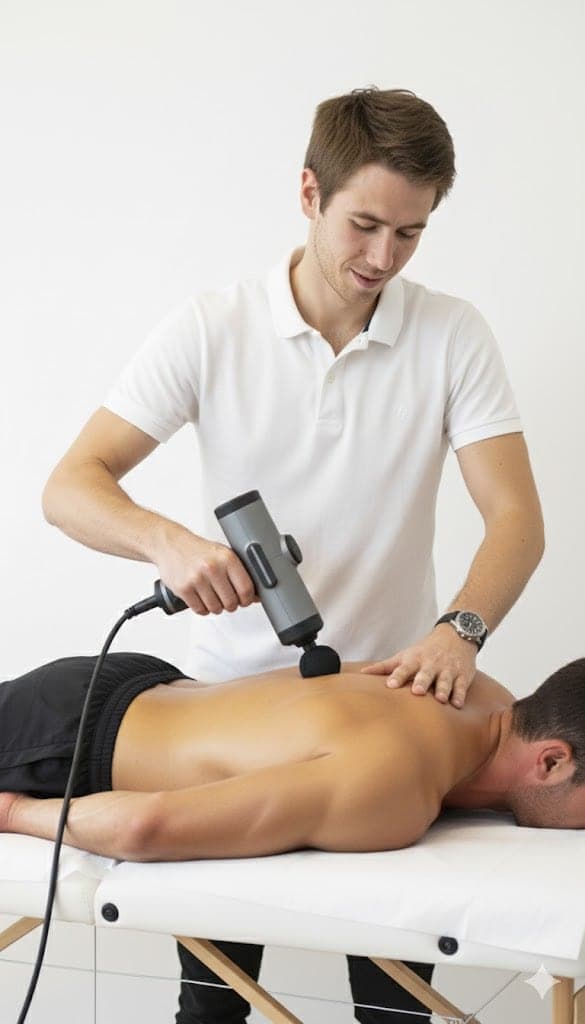
Norwegian-certified with a Bachelor’s in Physical Education and Nutrition and over ten years of clinical practice, working from a portable table in clients’ homes across the Paphos district.
This article is general information from clinical practice, not a medical diagnosis. If you have severe, worsening or unexplained pain, numbness, weakness, or pain after an accident, see a doctor first.