
Virtual massage consultations: your pathway to precise therapeutic outcomes
In short
Discover how virtual massage consultations revolutionize treatment selection through advanced biomechanical assessment, ensuring optimal therapeutic outcomes before your first session.
I remember the first time a client approached me with chronic shoulder pain that had persisted for three years. She’d tried everything – traditional Swedish massage, hot stone therapy, even acupuncture. Nothing worked. During our initial virtual consultation, I immediately identified the issue: her previous therapists had been treating the symptoms, not addressing the underlying mechanical dysfunction in her scapular stabilizers. That 45-minute video call changed everything. Within two sessions using my specialized deep-tissue methodology, her pain was eliminated durably.
This experience crystallized something I’d suspected for years: the consultation phase is arguably more critical than the treatment itself. After a decade of practicing advanced mechanical deep-tissue massage with my Bachelor’s degree in Physical Education and Nutrition from Norway, I’ve witnessed how virtual massage consultations transform therapeutic outcomes. These aren’t casual conversations about preferences – they’re comprehensive biomechanical assessments that determine whether you’ll achieve lasting results or continue the frustrating cycle of temporary relief.
Virtual massage consultations represent a paradigm shift in therapeutic planning. Unlike traditional massage selection based on vague preferences or spa marketing, these structured evaluations leverage clinical expertise to identify precisely which therapeutic approach will address your specific muscular and fascial dysfunctions. The difference between success and failure often lies in this initial assessment phase.
Through virtual consultations, I can analyze your movement patterns, assess your pain presentation, and design a treatment protocol that addresses the root cause of your discomfort. This isn’t about relaxation – it’s about engineering lasting solutions through precise therapeutic intervention.
The biomechanical assessment revolution: how virtual consultations transform treatment planning
Traditional massage selection follows a remarkably primitive model: you walk into a spa, describe your symptoms in layman’s terms, and receive whatever treatment the therapist feels comfortable providing. This approach fails because it ignores the fundamental principle of therapeutic intervention – specificity determines efficacy.
During my virtual massage consultations, I conduct what I call a “movement archaeology” session. Using your smartphone or computer camera, I observe your posture, analyze your gait patterns, and assess your range of motion limitations. Last month, I worked with a professional cyclist whose performance had plateaued. Traditional massage therapists had focused on his leg muscles, but my virtual assessment revealed the actual problem: restricted thoracic mobility was limiting his power transfer through the kinetic chain.
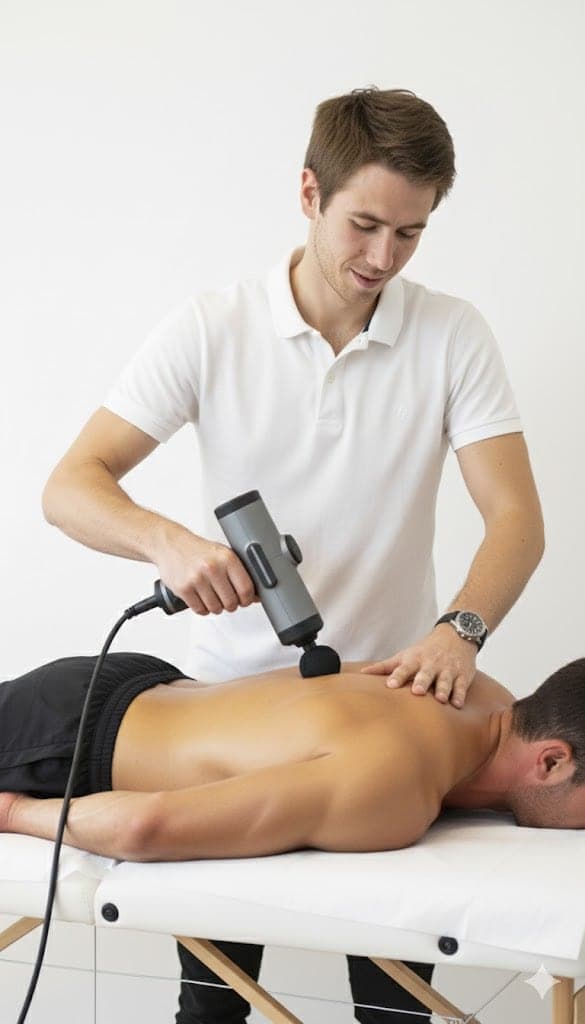
The consultation process begins with a detailed pain history analysis. I map your discomfort patterns against known fascial tension chains, identifying where restrictions originate versus where they manifest as symptoms. This distinction is crucial because treating symptoms provides temporary relief, while addressing origins creates lasting change. My specialized machine-assisted methodology requires this precision – we can’t afford to target the wrong structures when we’re working at depths and intensities that exceed human hand capabilities.
Virtual assessments also allow me to evaluate your workspace ergonomics, sleep positioning, and daily movement habits. These environmental factors often perpetuate the very dysfunctions we’re trying to eliminate. I once consulted with a software developer whose chronic neck pain stemmed not from muscle tension, but from a monitor positioned 15 degrees too high, creating sustained upper cervical extension throughout his workday. No amount of massage would have solved that problem without addressing the causative factor.
The technological advantage of virtual consultations extends beyond convenience – it provides documentation. I record movement assessments (with your permission) to track progress over time and adjust treatment intensity accordingly. This data-driven approach ensures that each session builds upon the previous one, creating cumulative therapeutic effects rather than isolated relief episodes.
Perhaps most importantly, virtual consultations allow me to explain exactly why traditional massage approaches have failed you. When clients understand the biomechanical principles behind their dysfunction, they become active participants in their recovery rather than passive recipients of temporary comfort. This education component transforms the entire therapeutic relationship from service provision to collaborative problem-solving.
Precision matching: identifying your optimal massage methodology through virtual assessment
The massage industry suffers from a fundamental categorization problem. Techniques are marketed by style names – Swedish, deep tissue, sports massage – rather than by therapeutic outcomes. This creates confusion and often leads to suboptimal treatment selection. Virtual massage consultations solve this by focusing entirely on biomechanical requirements rather than marketing labels.
My assessment protocol evaluates five critical factors that determine treatment approach: tissue density, fascial restriction patterns, pain tolerance thresholds, movement dysfunction severity, and recovery capacity. These parameters can’t be accurately assessed through a brief intake form or cursory physical examination. They require systematic evaluation using movement screens and detailed symptom mapping.
Consider a recent case involving a marathon runner with persistent IT band syndrome. Traditional sports massage had provided minimal relief because therapists focused on the IT band itself – a structure that doesn’t respond well to direct pressure. My virtual consultation revealed that her symptoms stemmed from hip abductor weakness creating compensatory tension patterns. The solution required precision work on her TFL and gluteus medius, delivered at specific intensities that only my machine-assisted methodology could maintain consistently.
The virtual format also allows me to demonstrate exactly how my specialized equipment will address your specific dysfunctions. Using anatomical models and video demonstrations, I can show you precisely where we’ll be working and why traditional hand techniques can’t achieve the same results. This visualization helps clients understand the mechanical advantages of my approach: greater depth penetration, consistent pressure delivery, and the ability to maintain therapeutic intensity without therapist fatigue.
Virtual consultations also reveal contraindications that might not surface during in-person assessments. Clients often feel pressure to minimize their symptoms or concerns when face-to-face with a practitioner. The slight psychological distance of video consultation encourages more honest disclosure about pain levels, previous injuries, and treatment expectations. This honesty is crucial when you’re dealing with advanced therapeutic techniques that require precise parameter selection.
I also use virtual consultations to assess your recovery environment. The most sophisticated treatment plan fails if you return to conditions that perpetuate dysfunction. I evaluate your sleep surface, workspace setup, exercise habits, and stress management strategies. These factors directly influence treatment outcomes and determine session frequency requirements. A client with optimal recovery conditions might achieve lasting results in three sessions, while someone in a suboptimal environment might need ongoing maintenance protocols.
Technology-enhanced evaluation: advanced assessment tools for optimal outcomes
Virtual massage consultations leverage technology far beyond simple video calls. I utilize specialized applications that measure range of motion, assess posture alignment, and even analyze movement quality through smartphone sensors. These tools provide quantitative data that supplements my clinical observation skills.
One of my favorite assessment tools is postural grid analysis. Using your device’s camera and specialized software, I can measure deviations in your head position, shoulder height, and pelvic alignment with millimeter precision. These measurements reveal compensation patterns that create the muscular tensions we need to address. Last week, I identified a 7-degree lateral pelvic tilt in a client that explained her chronic lower back pain – a subtle deviation that would be difficult to detect without technological assistance.
Movement analysis represents another technological advantage of virtual consultations. I guide clients through specific movement screens while recording their performance from multiple angles. These recordings can be slowed down and analyzed frame-by-frame to identify precise moments where movement dysfunction occurs. This level of analysis is impossible during traditional in-person assessments where movements happen in real-time without documentation.
The virtual format also allows me to utilize pain mapping software. Clients can use touch-screen interfaces to indicate exactly where they experience discomfort, with different colors representing different sensations – sharp pain, dull ache, stiffness, or burning. This visual representation helps me understand pain patterns that might be difficult to describe verbally. The software also tracks how these patterns change over time, providing objective measures of treatment progress.
Digital questionnaires integrated into the consultation process gather detailed information about your pain history, activity levels, and treatment goals. These forms use branching logic to ask follow-up questions based on your responses, ensuring I collect all relevant information without overwhelming you with irrelevant queries. The data is automatically analyzed to identify risk factors and predict treatment responses.
Perhaps most importantly, virtual consultations allow me to create detailed treatment visualizations. Using 3D anatomical models, I can show you exactly which muscles, fascia, and trigger points we’ll be addressing. You can see how restrictions in one area create compensatory tensions elsewhere, helping you understand why comprehensive treatment is necessary rather than spot-specific work.
Therapist expertise evaluation: ensuring clinical competency through virtual screening
The massage industry lacks standardized competency requirements, creating enormous variation in practitioner skill levels. Virtual massage consultations provide an opportunity to evaluate therapist expertise before committing to treatment. This assessment process protects you from ineffective therapy and ensures you’re investing in genuine clinical expertise.
During virtual consultations, I demonstrate my anatomical knowledge by explaining exactly why your symptoms occur and how my treatment approach addresses the underlying mechanisms. Any therapist can claim expertise, but few can provide detailed biomechanical explanations for their methodologies. I encourage clients to ask challenging questions about their conditions – a truly qualified practitioner should welcome the opportunity to showcase their knowledge.
My decade of experience and specialized education become evident during these virtual interactions. I don’t just describe what I’ll do; I explain the physiological principles behind each intervention. For instance, when addressing fascial restrictions, I can explain how my machine-assisted technique creates viscoelastic deformation in connective tissue at depths impossible to achieve manually. This level of scientific understanding separates clinical practitioners from relaxation providers.
Virtual consultations also reveal a therapist’s treatment philosophy. During our conversation, you’ll understand whether I focus on symptom management or lasting problem resolution. My approach centers on identifying and eliminating the root causes of dysfunction, which requires significantly more knowledge and skill than providing temporary comfort. This philosophical difference directly impacts your long-term outcomes.
I also use virtual consultations to demonstrate my specialized equipment and explain its mechanical advantages. The precision, power, and consistency of machine-assisted therapy can’t be replicated by human hands, but not all practitioners understand how to harness these capabilities effectively. During our virtual session, you’ll see exactly how I integrate technology with clinical expertise to achieve superior results.
The virtual format allows me to share case studies and treatment outcomes relevant to your specific condition. I can show before-and-after postural assessments, range of motion improvements, and pain reduction data from similar clients. This evidence-based presentation demonstrates not just theoretical knowledge, but practical expertise in achieving measurable results.
Customized treatment protocols: designing your optimal therapeutic pathway
Virtual massage consultations enable the creation of highly individualized treatment protocols that address your specific biomechanical dysfunctions. This customization goes far beyond adjusting pressure preferences – it involves engineering a systematic approach to lasting problem resolution.
My protocol development process begins with dysfunction priority ranking. Not all muscular restrictions require immediate attention, and addressing them in the wrong sequence can actually impede progress. During virtual consultation, I identify which structures must be released first to allow proper treatment of secondary restrictions. For example, releasing superficial fascial adhesions before addressing deeper muscular tensions ensures optimal tissue response and minimizes treatment discomfort.
Treatment intensity progression represents another crucial customization element. My specialized machine can deliver therapeutic pressure ranging from gentle fascial work to deep structural intervention suitable for elite athletes. Virtual consultation allows me to assess your pain tolerance, tissue density, and recovery capacity to determine optimal starting intensities and progression rates. This precision prevents tissue damage while ensuring therapeutic effectiveness.
Session frequency planning requires detailed understanding of your lifestyle, stress levels, and recovery environment. During virtual consultation, I evaluate these factors to determine whether you’ll benefit from intensive treatment clustering or spaced maintenance sessions. A high-stress executive with poor sleep habits requires a different protocol than a well-recovered athlete with optimal lifestyle factors.
I also design complementary intervention strategies during virtual consultation. My treatment effects can be enhanced through specific stretching protocols, ergonomic modifications, or movement pattern corrections. These recommendations are highly individualized based on your work environment, exercise habits, and daily activities. The virtual format allows me to observe your actual workspace and provide specific adjustment recommendations.
Progress tracking protocols are established during virtual consultation to ensure objective outcome measurement. We identify specific benchmarks – range of motion improvements, pain reduction targets, functional movement goals – and create timeline expectations for achieving these results. This data-driven approach transforms subjective “feeling better” into measurable therapeutic success.
Virtual consultations also allow me to prepare you psychologically for the treatment process. Advanced mechanical deep-tissue massage differs significantly from traditional relaxation massage. Clients need to understand what they’ll experience, why temporary discomfort sometimes precedes lasting relief, and how to optimize their recovery between sessions. This preparation dramatically improves treatment compliance and outcomes.
Cost-effectiveness analysis: virtual consultations as smart healthcare investment
Virtual massage consultations represent exceptional value in the healthcare investment spectrum. By ensuring optimal treatment selection and protocol design, these consultations eliminate the costly trial-and-error approach that characterizes most therapeutic interventions.
Consider the typical client journey without virtual consultation: they try multiple massage styles, visit several practitioners, and often abandon treatment when results disappoint. Each unsuccessful session costs a range of session prices (see current pricing) and the cumulative expense of ineffective therapy easily exceeds a substantial sum without achieving lasting results. Virtual consultation eliminates this waste by identifying the correct approach immediately.
My virtual consultation fee represents a fraction of what clients typically spend on unsuccessful treatments. Yet the value delivered – precise problem identification, optimal treatment selection, and customized protocol development – far exceeds the cost of multiple traditional massage sessions. This isn’t an expense; it’s an investment in efficient problem resolution.
The time savings achieved through virtual consultation also provide significant value. Instead of traveling to multiple practitioner locations for trial sessions, you receive comprehensive assessment from your home or office. This convenience factor becomes particularly valuable for busy professionals who can’t afford extensive time investments in healthcare trial-and-error processes.
Virtual consultations also prevent the hidden costs of prolonged dysfunction. Chronic pain doesn’t just cause discomfort – it reduces work productivity, limits recreational activities, and often requires ongoing medical management. By addressing problems at their root through precisely targeted intervention, virtual consultation-guided treatment eliminates these ongoing costs.
The consultation process also identifies whether your condition requires single intervention or ongoing maintenance protocols. This planning prevents surprise expenses and allows you to budget appropriately for complete problem resolution. Many clients discover that their seemingly complex issues require fewer sessions than anticipated when addressed through scientifically designed protocols.
Insurance considerations also favor virtual consultation approaches. While massage therapy coverage remains limited, the detailed documentation and outcome focus of virtual consultation-guided treatment often qualifies for reimbursement under physical therapy or medical massage categories. I provide detailed treatment plans and progress reports that support insurance claims.
Convenience and accessibility: removing barriers to optimal therapeutic care
Virtual massage consultations eliminate traditional barriers that prevent access to high-quality therapeutic assessment. Geographic limitations, scheduling constraints, and mobility restrictions no longer determine your treatment options.
Location independence represents the most obvious advantage of virtual consultations. I work with clients across Norway and internationally, providing the same comprehensive assessment regardless of their physical location. This accessibility is particularly valuable for individuals in rural areas or those who travel frequently for business. A oil platform worker in the North Sea receives the same quality consultation as someone in downtown Oslo.
Scheduling flexibility increases dramatically with virtual consultations. Traditional in-person appointments require travel time, parking considerations, and fixed location availability. Virtual sessions can accommodate unusual work schedules, international time zones, and last-minute changes. I’ve conducted consultations with shift workers at 2 AM and business travelers in airport lounges.
The virtual format also eliminates preparation requirements that sometimes discourage people from seeking assessment. You don’t need to shower, dress formally, or arrange transportation. This reduced friction means more people actually complete the consultation process rather than postponing indefinitely due to minor inconveniences.
Privacy considerations favor virtual consultations for clients who feel uncomfortable discussing personal health issues in clinical settings. The familiar environment of your home or office can encourage more honest disclosure about symptoms, concerns, and previous treatment experiences. This psychological comfort translates into better assessment quality and more effective treatment planning.
Virtual consultations also accommodate physical limitations that might complicate traditional appointments. Clients with severe pain, mobility restrictions, or transportation challenges can access high-quality assessment without additional stress or discomfort. The consultation process adapts to your current condition rather than requiring you to adapt to clinical requirements.
Integration with mobile treatment delivery: seamless therapeutic experience
Virtual massage consultations integrate perfectly with my mobile treatment delivery model, creating a seamless therapeutic experience that maximizes convenience and outcomes. This combination eliminates traditional healthcare friction while maintaining clinical excellence.
The consultation-to-treatment transition becomes remarkably efficient when both occur in your preferred environment. Virtual assessment identifies your specific needs, and I arrive at your location with precisely the right equipment and treatment plan. This continuity ensures that no therapeutic insights are lost between assessment and intervention.
Mobile treatment delivery also allows me to evaluate your actual recovery environment during the consultation process. I can assess your workspace ergonomics, sleep surface quality, and daily movement patterns in their natural context. This environmental assessment often reveals contributing factors that would be impossible to identify in a clinical setting.
The combination of virtual consultation and mobile treatment eliminates all traditional barriers to therapeutic care. You receive expert assessment and treatment without leaving your home, traveling to clinical locations, or adjusting your schedule to accommodate traditional appointment structures. This convenience dramatically improves treatment compliance and long-term outcomes.
Equipment setup becomes streamlined when consultation precedes mobile treatment. I know exactly what tools and configurations will be required based on our virtual assessment. This preparation ensures that treatment sessions begin immediately without time wasted on setup or adjustment. The efficiency gained translates into more therapeutic time within each session.
Follow-up consultations integrate seamlessly with ongoing mobile treatment protocols. Progress assessments can occur virtually between in-person sessions, allowing protocol adjustments without additional travel or scheduling complications. This flexibility ensures that treatment remains optimally calibrated throughout your recovery process.
Scientific methodology: evidence-based assessment protocols
Virtual massage consultations employ rigorous scientific methodologies that surpass traditional assessment approaches in objectivity and reproducibility. This evidence-based framework ensures that treatment decisions are based on measurable data rather than subjective impressions.
My assessment protocol incorporates validated movement screens adapted for virtual delivery. These standardized tests have established reliability and validity in clinical research, providing objective measures of functional capacity and dysfunction patterns. The virtual format doesn’t compromise assessment quality – it enhances documentation and reproducibility.
Pain assessment utilizes established clinical scales and measurement tools delivered through digital interfaces. Visual analog scales, numeric rating systems, and functional disability questionnaires provide quantitative baseline measurements that track treatment progress objectively. This data-driven approach eliminates the ambiguity of subjective improvement reports.
Postural analysis employs photographic measurement techniques with documented accuracy levels. Digital protractor applications can measure angular deviations with precision equivalent to clinical goniometry. These measurements provide objective documentation of structural imbalances that drive compensatory muscle tension patterns.
Range of motion assessment adapts established clinical techniques to virtual delivery through guided self-measurement protocols. Clients use household items as measurement references while I observe and document limitations. These measurements correlate strongly with clinical goniometry when performed under proper guidance.
Treatment response prediction utilizes established clinical algorithms that consider multiple patient factors simultaneously. Age, activity level, symptom duration, previous treatment responses, and biomechanical findings contribute to statistical models that predict optimal treatment approaches and expected outcomes. This scientific approach replaces clinical guesswork with evidence-based planning.
The virtual consultation process generates comprehensive documentation that supports treatment monitoring and outcome measurement. Digital records facilitate long-term tracking and allow for protocol adjustments based on objective progress indicators rather than subjective impressions.
Advanced troubleshooting: addressing complex pain presentations
Virtual massage consultations excel at unraveling complex pain presentations that have confounded previous practitioners. The comprehensive assessment format and detailed documentation capabilities allow for systematic analysis of multi-factorial dysfunctions.
Complex pain patterns often involve multiple contributing factors that interact in non-obvious ways. Traditional brief assessments miss these interactions, leading to incomplete treatment approaches. Virtual consultations provide sufficient time and analytical depth to map these complex relationships systematically.
I recently consulted with a client experiencing simultaneous neck pain, headaches, and shoulder restrictions. Previous therapists had treated each symptom separately without identifying the unifying dysfunction – forward head posture creating a cascade of compensatory tensions. The virtual assessment revealed how cervical extension restrictions triggered occipital tension, which caused secondary shoulder elevation and consequent upper trap tightness.
Chronic pain presentations require particularly sophisticated analysis because long-standing dysfunctions create adaptive changes throughout the kinetic chain. Virtual consultation allows time to trace these adaptation patterns systematically, identifying primary restrictions versus secondary compensations. This distinction is crucial because treating compensations without addressing primary restrictions often fails.
The documentation capabilities of virtual consultation prove invaluable for complex cases. I can record movement assessments, create detailed symptom maps, and maintain comprehensive treatment histories that inform ongoing protocol adjustments. This level of documentation is impractical during traditional brief assessments but becomes feasible with virtual formats.
Complex cases often require interdisciplinary coordination with other healthcare providers. Virtual consultation documentation facilitates communication with physicians, physical therapists, and other specialists. The detailed biomechanical analysis and treatment rationale help other practitioners understand how massage therapy integrates with their interventions.
Virtual consultations also allow for complex protocol development that addresses multiple dysfunctions simultaneously. Treatment sequencing becomes crucial when dealing with interconnected restrictions, and the consultation process provides sufficient analytical time to design optimal intervention sequences.
Technology platform optimization: ensuring consultation effectiveness
The technological infrastructure supporting virtual massage consultations directly impacts assessment quality and treatment planning effectiveness. Platform selection, connectivity requirements, and user interface design all influence consultation outcomes.
Video quality requirements differ significantly between casual communication and clinical assessment. Movement analysis demands high frame rates and resolution levels that exceed typical video call specifications. I utilize professional-grade platforms that maintain visual fidelity necessary for accurate biomechanical evaluation.
Audio quality becomes crucial during detailed symptom discussions and treatment explanations. Clear communication prevents misunderstandings that could compromise treatment effectiveness. Professional consultation platforms provide superior audio processing compared to consumer applications.
Screen sharing capabilities allow me to present anatomical models, demonstrate treatment techniques, and review assessment findings in real-time. This visual communication enhances client understanding and ensures that treatment expectations align with planned interventions.
Recording capabilities (with appropriate consent) provide valuable documentation for complex cases and allow for detailed movement analysis that would be impossible during live observation. These recordings also facilitate consultation with colleagues when challenging cases require additional expertise.
Integration with digital assessment tools streamlines the consultation process and ensures comprehensive data collection. Automated questionnaires, pain mapping software, and measurement applications integrate seamlessly with professional consultation platforms.
Security considerations require platforms that comply with healthcare privacy regulations. Client confidentiality demands encryption protocols and data protection measures that exceed casual communication requirements. Professional consultation platforms provide necessary security infrastructure.
Frequently asked questions about virtual massage consultations
How can virtual consultation accurately assess my physical condition without hands-on examination?
Virtual massage consultations utilize sophisticated movement analysis, postural assessment, and pain mapping techniques that often provide more comprehensive evaluation than brief hands-on examinations. Through guided movement screens, I can observe dysfunction patterns, analyze compensatory mechanisms, and identify restriction sites with remarkable accuracy. The extended consultation time allows for detailed symptom mapping and biomechanical analysis that surpasses traditional rushed assessments. Digital measurement tools provide quantitative data about postural deviations and range of motion limitations. Additionally, the documentation capabilities of virtual consultation create comprehensive baseline records that inform treatment planning and progress tracking more effectively than memory-based assessments.
What technology do I need for an effective virtual massage consultation?
Effective virtual massage consultations require a device with high-quality camera and microphone capabilities – most modern smartphones or laptops provide sufficient quality. A stable internet connection is essential for clear communication and movement observation. I recommend positioning your device at body height approximately 6-8 feet away to allow full-body movement assessment. Good lighting helps with postural analysis and movement observation. Some consultations may utilize specialized applications for range of motion measurement or pain mapping, but I provide detailed instructions for any required downloads. The consultation platform I use is accessible through standard web browsers without additional software installation. Most clients find that their existing technology easily accommodates the consultation requirements.
How long does a comprehensive virtual massage consultation take?
Comprehensive virtual massage consultations typically require 60-90 minutes to ensure thorough assessment and treatment planning. This duration allows time for detailed symptom history, movement analysis, postural assessment, and comprehensive treatment protocol development. The extended timeframe contrasts sharply with traditional 10-15 minute intake procedures that miss crucial assessment components. Complex cases involving multiple pain sites or chronic conditions may require additional time for complete evaluation. The consultation also includes detailed explanation of findings, treatment rationale, and expected outcomes. This educational component ensures that you understand your condition and treatment approach thoroughly. Emergency consultations for acute conditions can be completed more quickly, but comprehensive assessment requires adequate time investment.
Can virtual consultation identify conditions that require medical attention rather than massage therapy?
Virtual massage consultations include systematic screening for conditions that require medical evaluation before therapeutic intervention. My educational background in Physical Education and Nutrition, combined with a decade of clinical experience, enables recognition of symptoms that indicate underlying medical conditions. The consultation process includes specific questions about recent injury, neurological symptoms, and systemic health issues that might contraindicate massage therapy. If assessment reveals potential medical concerns, I provide clear guidance about appropriate healthcare referrals. This screening process protects clients from inappropriate treatment and ensures that serious conditions receive proper medical attention. The comprehensive nature of virtual consultation often identifies issues that might be missed during brief traditional assessments.
How do virtual consultations compare in cost to traditional massage therapy trials?
Virtual massage consultations provide exceptional cost-effectiveness compared to traditional trial-and-error approaches to therapeutic massage. The consultation fee represents a fraction of what clients typically spend on multiple unsuccessful massage sessions. Most clients invest a wide range of costs trying different massage styles and practitioners before finding effective treatment. Virtual consultation eliminates this waste by identifying the optimal approach immediately. The comprehensive assessment and customized protocol development provide value equivalent to multiple traditional consultations. Additionally, the consultation prevents hidden costs associated with prolonged dysfunction – reduced work productivity, ongoing medical expenses, and lifestyle limitations. The detailed treatment plan and progress tracking protocols ensure that subsequent therapy sessions achieve maximum effectiveness, providing superior return on healthcare investment.
What happens if virtual consultation reveals that my condition is too complex for massage therapy alone?
Virtual massage consultations excel at identifying cases that require interdisciplinary treatment approaches combining massage therapy with other interventions. My clinical expertise and comprehensive assessment capabilities allow recognition of conditions that benefit from coordinated care with physicians, physical therapists, or other specialists. When consultation reveals complex presentations, I provide detailed recommendations for complementary treatments while explaining how massage therapy integrates with other interventions. The extensive documentation from virtual consultation facilitates communication with other healthcare providers, ensuring coordinated treatment planning. Many complex conditions respond excellently to massage therapy as part of comprehensive treatment protocols, even when massage alone might be insufficient. The consultation process ensures that you receive appropriate guidance toward optimal treatment combinations.
How do you ensure treatment effectiveness when the actual massage occurs after virtual consultation?
Virtual consultation creates detailed treatment protocols that ensure maximum effectiveness during subsequent massage sessions. The comprehensive assessment identifies specific target structures, optimal treatment intensities, and expected responses that guide every aspect of hands-on intervention. My mobile treatment approach means that I arrive at your location with precisely the right equipment and treatment plan based on consultation findings. The consultation eliminates trial-and-error during treatment sessions, allowing immediate focus on therapeutic intervention rather than assessment. Progress tracking protocols established during consultation ensure that treatment remains optimally calibrated throughout your recovery process. The combination of thorough virtual assessment and specialized machine-assisted treatment delivery consistently produces superior outcomes compared to traditional approaches that combine assessment and treatment in limited time periods.
Can virtual consultation accommodate my unusual schedule or international location?
Virtual massage consultations provide exceptional scheduling flexibility and geographic accessibility that accommodates virtually any situation. I regularly conduct consultations with clients across multiple time zones, including shift workers, business travelers, and international clients. The virtual format eliminates travel requirements and location constraints that limit traditional healthcare access. Emergency consultations can often be arranged within hours for acute conditions. International clients receive the same comprehensive assessment quality as local clients, with treatment recommendations adapted to their specific location and available resources. The consultation can accommodate interruptions, rescheduling, and unusual timing requirements that would be impossible with traditional appointment structures. This accessibility ensures that geographic location, work schedules, or travel requirements don’t prevent access to high-quality therapeutic assessment.
Written by
Chris
Massage therapist & body mechanics specialist
Norwegian-certified with a Bachelor’s in Physical Education and Nutrition and over ten years of clinical practice, working from a portable table in clients’ homes across the Paphos district.
This article is general information from clinical practice, not a medical diagnosis. If you have severe, worsening or unexplained pain, numbness, weakness, or pain after an accident, see a doctor first.