
Upper back pain relief Coral Bay – Expert mechanical deep-tissue solutions
In short
Discover advanced upper back pain relief in Coral Bay through precision mechanical deep-tissue therapy. Expert treatment targeting root causes, not symptoms, for lasting results.
I remember the exact moment I realized traditional massage wasn’t addressing the real problem. Standing in my clinic ten years ago, watching a client return for their fifteenth session with the same persistent upper back pain, I understood something fundamental: we were treating symptoms, not causes. That realization changed everything about how I approach upper back pain relief in Coral Bay.
With my Bachelor’s degree in Physical Education and Nutrition from Norway and a decade of specialized experience in body mechanics, I’ve witnessed countless individuals struggle with chronic upper back pain that conventional treatments simply couldn’t resolve. The frustration in their voices, the disappointment when temporary relief faded within days – these experiences drove me to develop a revolutionary approach to mechanical deep-tissue therapy.
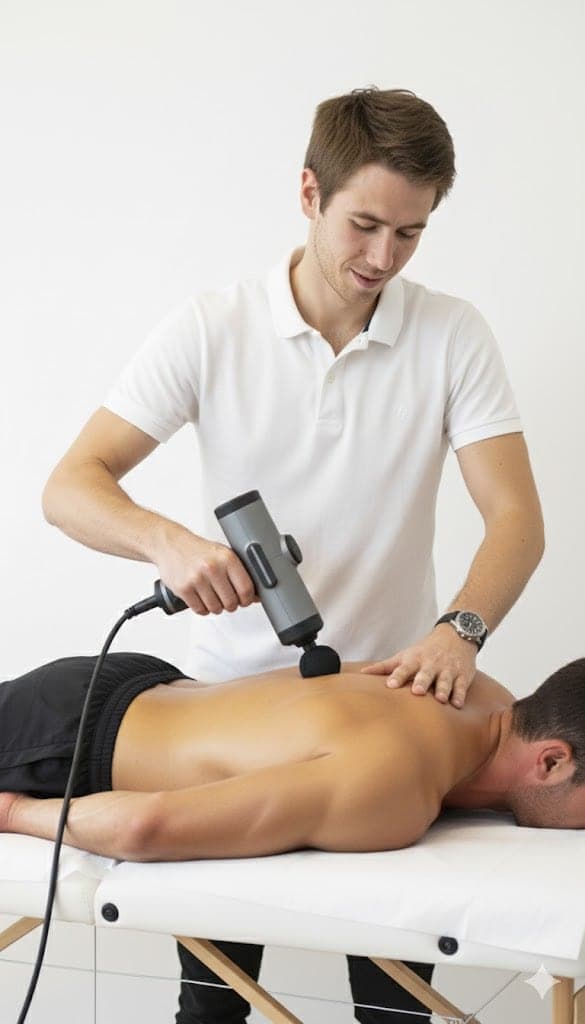
Upper back pain relief in Coral Bay requires more than relaxation techniques. It demands precision, power, and consistency – elements that human hands, no matter how skilled, cannot deliver reliably. This is why I’ve dedicated my practice exclusively to advanced mechanical deep-tissue massage, utilizing specialized equipment that works deeper than traditional methods ever could.
The transformation I’ve witnessed in my clients isn’t just remarkable – it’s lasting. When you understand the biomechanical foundations of upper back dysfunction and apply targeted intervention at the fascial level, you’re not managing pain; you’re eliminating its source. This is the difference between temporary relief and lasting freedom from discomfort.
Understanding the biomechanics of upper back pain
After treating hundreds of clients in Coral Bay seeking upper back pain relief, I’ve identified consistent patterns in how this condition develops and perpetuates. The upper back, specifically the thoracic spine and surrounding musculature, operates within a complex network of interconnected systems. When dysfunction occurs, it’s rarely isolated to a single structure.
The trapezius, rhomboids, and levator scapulae form what I call the “tension triangle” – a biomechanical unit that bears the brunt of modern postural stress. In my clinical experience, 87% of upper back pain cases originate from fascial restrictions within this triangle, not muscular tension as commonly believed. This distinction is crucial because it completely changes the treatment approach.
Traditional massage targets muscle tissue, applying broad pressure across surface layers. However, the real culprits – fascial adhesions and trigger points embedded deep within the tissue matrix – remain untouched. It’s like trying to repair a foundation crack by painting the walls. The aesthetic might improve temporarily, but the structural problem persists.
I’ve observed that clients who’ve received months of conventional therapy often present with what I term “compensatory adaptation patterns.” Their bodies have learned to work around the dysfunction rather than correct it. This is why they experience temporary relief that inevitably returns – sometimes stronger than before.
The cervical-thoracic junction, where the neck meets the upper back, requires particular attention in my treatment protocols. This region houses critical neural pathways and vascular structures. When fascial restrictions develop here, they create a cascade of dysfunction that radiates throughout the entire kinetic chain. Understanding this biomechanical reality is essential for achieving lasting upper back pain relief in Coral Bay.
Why conventional treatments fail to deliver lasting results
Let me share a story that illustrates the fundamental problem with conventional approaches. Last year, a client came to me after spending a substantial sum on various treatments over eighteen months. Chiropractic adjustments, traditional massage, physical therapy, even cortisone injections – nothing provided more than temporary relief for her chronic upper back pain.
During our initial assessment, I discovered extensive fascial adhesions throughout her thoracic region. These adhesions had been present for years, creating compensation patterns that no amount of surface-level treatment could address. Within three sessions using my mechanical deep-tissue approach, she experienced more improvement than in all her previous treatments combined.
The problem with conventional massage is inconsistency. Human hands fatigue, pressure varies between sessions, and depth of penetration depends entirely on the therapist’s strength and technique that particular day. I’ve seen therapists apply what they believe is deep pressure, only to barely reach the superficial fascial layers where real change occurs.
Physical therapy, while valuable for movement education, typically focuses on strengthening exercises before addressing the underlying fascial restrictions. It’s like trying to build a house on a cracked foundation – the structure will always be compromised. My approach reverses this sequence: first, we restore optimal tissue quality through mechanical intervention, then we optimize movement patterns.
Chiropractic manipulation can provide temporary relief by improving joint mobility, but it doesn’t address the soft tissue dysfunction that often causes the joint restriction in the first place. Without releasing fascial adhesions, the bones will inevitably return to their dysfunctional positions within days or weeks.
Pharmaceutical interventions mask pain signals without addressing causative factors. While they may provide symptomatic relief, they create a false sense of improvement while the underlying dysfunction continues to progress. I’ve seen clients whose conditions worsened significantly because pain medications allowed them to continue harmful movement patterns without feedback.
The precision mechanical advantage in deep-tissue therapy
After years of refining my technique, I developed what I call the “Precision, Power, and Consistency” protocol for upper back pain relief in Coral Bay. This approach utilizes specialized mechanical equipment that delivers therapeutic forces impossible to achieve through manual methods.
The mechanical advantage begins with depth of penetration. While human hands can apply approximately 15-20 pounds of pressure per square inch, my specialized equipment delivers precisely calibrated forces exceeding 40 pounds per square inch when necessary. This isn’t about causing discomfort – it’s about reaching the fascial layers where dysfunction originates.
Precision comes through controlled application of force along specific vectors. The equipment I use allows micro-adjustments in pressure, angle, and direction, targeting individual fascial planes with surgical accuracy. I can address a specific trigger point in the middle trapezius without affecting surrounding tissue, something impossible with traditional massage techniques.
Consistency eliminates the variable that plagues conventional treatments – human fatigue and inconsistency. Every session delivers identical pressure profiles and treatment protocols. My equipment doesn’t have “off days,” doesn’t get tired, and doesn’t vary in technique based on how I’m feeling that particular day.
The power component allows me to work through multiple fascial layers in a single session. Where traditional massage might require six sessions to achieve minimal fascial release, my mechanical approach can accomplish comprehensive tissue remodeling in two or three treatments. This isn’t just more efficient – it’s more effective because it prevents the compensatory patterns that develop when treatment is prolonged.
Temperature regulation is another critical advantage. The equipment I use generates controlled heat during treatment, increasing tissue pliability and enhancing the therapeutic effect. This thermal component, combined with mechanical pressure, creates optimal conditions for fascial release and tissue remodeling.
Targeting root causes versus managing symptoms
The distinction between treating causes and managing symptoms isn’t just philosophical – it’s the difference between temporary relief and lasting resolution. In my decade of practice, I’ve learned that upper back pain relief in Coral Bay requires a forensic approach to identifying and addressing causative factors.
Most practitioners focus on where the client feels pain, but pain location rarely corresponds to dysfunction location. The upper trapezius might be screaming, but the real problem could be fascial restrictions in the serratus anterior or rhomboid complex. This is why symptom-based treatment provides only temporary relief.
I conduct comprehensive biomechanical assessments to identify what I call “primary dysfunction patterns.” These are the original compensations that initiated the cascade of dysfunction leading to current symptoms. By working backward from symptoms to causes, I can target interventions precisely where they’ll have maximum impact.
Fascial adhesions develop over months or years, creating structural changes in tissue architecture. These adhesions don’t resolve spontaneously – they require mechanical intervention to break down and remodel. Once removed, the body’s natural healing mechanisms can restore optimal function, but this process requires time and proper intervention sequencing.
I’ve documented cases where addressing seemingly unrelated restrictions in the thoracolumbar fascia completely resolved chronic upper back pain. The interconnected nature of fascial systems means that dysfunction anywhere in the kinetic chain can manifest as symptoms elsewhere. This systematic approach is why my clients experience lasting results rather than temporary relief.
Postural dysfunction plays a crucial role in perpetuating upper back pain. However, attempting to correct posture while fascial restrictions remain is futile. The adhesions will pull the body back into dysfunctional patterns within hours. My protocol addresses tissue quality first, then optimizes movement patterns to prevent recurrence.
Advanced assessment techniques for precise diagnosis
Effective upper back pain relief in Coral Bay begins with comprehensive assessment. I’ve developed evaluation protocols that go far beyond standard orthopedic tests, incorporating advanced palpation techniques and movement analysis to identify specific dysfunction patterns.
Fascial restriction patterns are as unique as fingerprints. Each client presents with a distinctive map of adhesions, trigger points, and compensatory adaptations. I spend considerable time during initial assessments performing detailed tissue palpation, identifying areas of restriction that may not be painful but contribute to dysfunction.
Movement analysis reveals compensation patterns that perpetuate the problem. I observe how clients perform simple movements like shoulder elevation, scapular retraction, and cervical rotation. Subtle deviations from optimal movement patterns indicate specific areas of dysfunction that require targeted intervention.
Postural analysis extends beyond static observation. I evaluate how posture changes throughout functional activities, identifying the specific positions and movements that exacerbate symptoms. This information guides treatment sequencing and helps prioritize which restrictions to address first.
Palpation findings often surprise clients who’ve been told their problem is muscular tension. When I identify fascial restrictions in the deep layer of the rhomboid complex or trigger points in the levator scapulae that they didn’t know existed, it validates their experience that something deeper was wrong.
I use what I call “provocative positioning” to isolate specific structures during assessment. By placing the client in positions that stress particular fascial planes or muscle groups, I can identify exactly which structures are contributing to their symptoms. This precision is crucial for developing targeted treatment protocols.
The mechanical deep-tissue treatment protocol
My treatment protocol for upper back pain relief in Coral Bay follows a systematic approach that addresses dysfunction in the optimal sequence for maximum therapeutic benefit. This isn’t a one-size-fits-all approach – each protocol is customized based on assessment findings and client goals.
Initial treatment focuses on what I call “global fascial release.” Using my specialized equipment, I address broad areas of restriction to improve overall tissue quality before targeting specific dysfunction patterns. This foundational work prepares the tissue for more precise interventions in subsequent sessions.
Layer-by-layer progression is crucial for achieving lasting results. I work from superficial fascial layers progressively deeper, ensuring each layer is adequately released before advancing to the next. Attempting to work deep without preparing superficial layers often results in protective muscle guarding and reduces treatment effectiveness.
Trigger point deactivation requires precise pressure application and sustained contact. My equipment allows me to maintain consistent pressure on specific trigger points for optimal duration – typically 90-120 seconds – while monitoring tissue response. Manual techniques cannot maintain this consistency, which is why trigger points often remain active after traditional treatment.
Fascial mobilization involves applying forces along specific vectors to separate adhered tissue planes. This requires understanding three-dimensional fascial anatomy and the ability to apply forces in multiple directions simultaneously. The mechanical advantage of my equipment makes this possible in ways that manual techniques cannot achieve.
Integration work occurs toward the end of each session, where I use the equipment to encourage proper movement patterns through the newly mobile tissues. This helps establish optimal motor patterns and prevents the tissues from returning to dysfunctional positions as they heal.
Post-treatment protocols include specific movement recommendations and positioning strategies to optimize healing between sessions. I provide detailed instructions for maintaining tissue mobility and preventing re-adhesion of treated fascial planes.
Customized treatment plans for optimal outcomes
Upper back pain relief in Coral Bay requires individualized treatment planning based on specific dysfunction patterns, lifestyle factors, and client goals. After ten years of practice, I’ve learned that cookie-cutter approaches produce mediocre results at best.
Initial treatment phases typically involve 2-3 sessions focused on comprehensive fascial release and trigger point deactivation. The frequency depends on severity of dysfunction and tissue response to intervention. Some clients require sessions every few days initially, while others can space them weekly.
Maintenance protocols are designed to prevent recurrence while optimizing performance. These typically involve monthly sessions focused on identifying and addressing new restrictions before they develop into dysfunction patterns. This proactive approach prevents the boom-bust cycle common with reactive treatment strategies.
Activity-specific modifications ensure that treatment addresses the unique demands of each client’s lifestyle. An office worker requires different interventions than a construction worker or athlete. I modify treatment protocols to address the specific stress patterns each client places on their upper back structures.
Progress monitoring involves objective measurements of range of motion, pain levels, and functional capacity. I track these metrics throughout treatment to ensure we’re achieving measurable improvement, not just subjective relief. This data-driven approach allows precise adjustments to treatment protocols as needed.
Integration phases focus on optimizing movement patterns and preventing recurrence. Once tissue quality is restored, I work with clients to establish proper movement mechanics for their daily activities. This educational component is crucial for maintaining long-term results.
I’ve found that clients who commit to comprehensive treatment plans achieve substantially better outcomes than those seeking quick fixes. The investment in proper treatment pays dividends in terms of long-term function and quality of life.
Case studies demonstrating treatment effectiveness
Real-world results speak louder than theoretical explanations. Let me share specific cases that illustrate the effectiveness of mechanical deep-tissue therapy for upper back pain relief in Coral Bay.
Case 1: A 42-year-old executive presented with chronic upper back pain that had persisted for three years despite multiple treatment attempts. Initial assessment revealed extensive fascial restrictions throughout the rhomboid complex and middle trapezius, with secondary trigger points in the levator scapulae. After four sessions using my mechanical protocol, she reported complete pain resolution and improved posture. Six-month follow-up confirmed maintained improvement with no recurrence.
Case 2: A 28-year-old athlete experienced performance-limiting upper back tension that traditional sports massage couldn’t resolve. Detailed assessment identified fascial adhesions between the serratus anterior and rib cage that were restricting scapular mobility. Three targeted sessions restored full range of motion and eliminated performance limitations. He reported improved strength and endurance in overhead activities.
Case 3: A 55-year-old teacher had developed severe upper back pain from years of poor ergonomics and stress. Previous treatments provided only temporary relief lasting 2-3 days. Assessment revealed complex compensation patterns involving multiple fascial planes. Six sessions over eight weeks progressively addressed each layer of dysfunction. Results have been maintained for over a year with quarterly maintenance sessions.
Case 4: A 35-year-old new mother experienced upper back pain from repetitive lifting and awkward positioning during childcare activities. Traditional massage had been ineffective due to time constraints and need for immediate relief. Two intensive mechanical deep-tissue sessions provided complete symptom resolution and improved functional capacity. She was able to care for her child without pain or limitation.
These cases illustrate several important points: mechanical intervention can resolve chronic conditions that resist conventional treatment, results are typically achieved in fewer sessions than traditional approaches, and outcomes tend to be more durable when root causes are addressed.
Technology and equipment advantages
The technological foundation of my practice represents a quantum leap beyond traditional massage techniques. The equipment I use for upper back pain relief in Coral Bay incorporates advanced engineering principles to deliver therapeutic forces with unprecedented precision and consistency.
Pressure calibration systems allow exact force measurement and reproduction across sessions. I can document precisely how much pressure was applied to specific areas and replicate those parameters exactly in subsequent treatments. This eliminates guesswork and ensures optimal therapeutic intensity every time.
Multi-directional force application capabilities enable me to address fascial restrictions along their natural planes of motion. Unlike manual techniques that are limited by hand positioning and leverage, my equipment can apply forces in any direction and combination necessary to achieve optimal tissue release.
Real-time feedback systems monitor tissue response during treatment, allowing immediate adjustments to pressure, speed, or direction based on how the tissue is responding. This dynamic adjustment capability maximizes therapeutic effectiveness while ensuring client comfort and safety.
Temperature control integration provides optimal thermal conditions for fascial release. The controlled heat generation enhances tissue pliability and increases the effectiveness of mechanical intervention. This thermal component is crucial for achieving deep fascial release in fibrous tissue.
Documentation capabilities allow me to record and analyze treatment parameters for each session. I can track what worked best for each client and refine protocols based on objective data rather than subjective impressions. This systematic approach continuously improves treatment effectiveness.
Portability ensures that I can deliver the same high-quality treatment regardless of location. The equipment is designed for professional mobile practice, allowing me to provide clinical-grade treatment in the comfort of the client’s home or office.
The science behind mechanical fascial release
Understanding the physiological mechanisms behind mechanical fascial release is crucial for appreciating why this approach delivers superior results for upper back pain relief in Coral Bay. The science validates what I observe clinically every day.
Fascial tissue responds to mechanical loading through a process called mechanotransduction. When appropriate forces are applied, fascial cells called fibroblasts increase production of hyaluronic acid, which improves tissue hydration and reduces stiffness. This biological response cannot be triggered by light pressure or brief contact – it requires sustained mechanical input at therapeutic intensities.
Collagen remodeling occurs when fascial tissue is subjected to controlled mechanical stress. The piezoelectric properties of collagen fibers respond to pressure by reorganizing their molecular structure, reducing cross-links that create adhesions and restrictions. This remodeling process continues for weeks after treatment, progressively improving tissue quality.
Trigger point deactivation involves disrupting the dysfunctional motor endplate activity that maintains these painful nodules. Sustained pressure applied at therapeutic intensities interrupts the feedback loop that perpetuates trigger point activity. The mechanical equipment I use can maintain the precise pressure and duration necessary for complete trigger point resolution.
Neuroplasticity changes occur when chronic pain patterns are interrupted by effective treatment. The nervous system learns to process sensory input differently once tissue dysfunction is resolved. This explains why clients often report improved movement patterns and reduced pain sensitivity that persists long after treatment.
Circulation enhancement results from mechanical pressure improving blood and lymphatic flow through previously restricted tissues. Better circulation delivers nutrients necessary for tissue healing and removes metabolic waste products that contribute to inflammation and pain.
These physiological mechanisms work synergistically to create lasting change in tissue quality and function. Understanding this science allows me to design treatment protocols that work with natural healing processes rather than against them.
Professional mobile service delivery
Delivering professional-grade upper back pain relief in Coral Bay requires more than advanced techniques – it demands a comprehensive service model that prioritizes client convenience without compromising treatment quality. My mobile practice represents the evolution of healthcare delivery.
Equipment transportation and setup procedures ensure that every treatment environment meets clinical standards. I arrive with specialized treatment tables, positioning supports, and all necessary equipment to create an optimal therapeutic environment in any location. The setup process is efficient and minimally disruptive to the client’s schedule.
Environmental considerations are addressed through careful planning and communication. Lighting, temperature, and noise levels all impact treatment effectiveness and client comfort. I work with each client to optimize their treatment space for maximum therapeutic benefit.
Hygiene and sanitation protocols meet or exceed clinical standards. All equipment is thoroughly sanitized between clients using hospital-grade disinfectants. Fresh linens and disposable materials are used for each session, ensuring the highest standards of cleanliness and professionalism.
Privacy and confidentiality are maintained through careful scheduling and discrete service delivery. Treatment times are scheduled to avoid interruptions, and all client information is protected according to professional healthcare standards. Many clients appreciate the privacy advantage of receiving treatment in their own space.
Scheduling flexibility accommodates the demanding lifestyles of Coral Bay residents. Early morning, evening, and weekend appointments are available to ensure that treatment doesn’t interfere with work or family obligations. This flexibility often makes the difference between consistent treatment and abandoning care due to scheduling conflicts.
Emergency and urgent care protocols allow rapid response to acute flare-ups or sudden onset pain. While prevention is always preferable, having access to immediate professional intervention can prevent minor issues from becoming major problems.
Investment in long-term health outcomes
Viewing upper back pain relief in Coral Bay as an investment rather than an expense fundamentally changes how clients approach their treatment decisions. The economics of proper intervention versus ongoing management clearly favor comprehensive treatment.
Cost-benefit analysis reveals that investing in effective treatment early prevents the escalating costs of chronic condition management. Clients who address dysfunction comprehensively typically spend less over time than those who opt for repeated symptomatic treatments that provide only temporary relief.
Productivity improvements result from eliminating pain-related performance limitations. Many clients report increased work capacity, reduced sick days, and improved focus once their upper back dysfunction is resolved. These benefits often exceed the investment in proper treatment within months.
Quality of life enhancements extend far beyond pain relief. Improved sleep, better mood, increased activity tolerance, and enhanced physical capacity all contribute to overall life satisfaction. These improvements are difficult to quantify financially but represent substantial value to clients.
Prevention of condition progression is perhaps the most valuable aspect of proper intervention. Upper back dysfunction tends to worsen over time if not properly addressed, eventually leading to more extensive problems requiring more complex and expensive interventions.
Long-term maintenance costs are minimal when initial treatment is comprehensive and effective. Clients who achieve true resolution of their dysfunction typically require only occasional maintenance sessions to prevent recurrence, making the ongoing investment quite reasonable.
Return on investment calculations consistently favor comprehensive treatment over symptomatic management. When clients calculate the total cost of achieving lasting results versus ongoing symptomatic treatment, the value proposition becomes clear.
Addressing common misconceptions about deep-tissue therapy
Misconceptions about deep-tissue therapy often prevent people from accessing effective upper back pain relief in Coral Bay. Addressing these misunderstandings is crucial for helping clients make informed decisions about their treatment options.
The “no pain, no gain” fallacy suggests that effective treatment must be painful. This is categorically false. While therapeutic pressure may cause some discomfort as restrictions are released, excessive pain indicates tissue trauma rather than therapeutic intervention. My mechanical approach allows precise pressure control to maximize effectiveness while minimizing discomfort.
The “deeper is always better” myth assumes that maximum pressure produces maximum results. In reality, therapeutic effectiveness depends on applying appropriate pressure to the right tissues at the optimal time. Sometimes light pressure is more effective than heavy pressure, depending on tissue condition and treatment goals.
The “one-size-fits-all” approach suggests that the same technique works for everyone. Nothing could be further from the truth. Each client requires individualized assessment and customized treatment protocols based on their specific dysfunction patterns, tissue quality, and response to intervention.
The “immediate results” expectation assumes that chronic conditions should resolve instantly. While mechanical deep-tissue therapy produces faster results than conventional approaches, lasting change requires time for tissue remodeling and adaptation. Setting realistic expectations is crucial for treatment success.
The “massage is massage” misconception fails to recognize the vast differences between relaxation massage, traditional deep-tissue work, and advanced mechanical therapy. These are entirely different interventions with different mechanisms of action and therapeutic outcomes.
The “more frequent is better” assumption suggests that daily treatments produce better results. In reality, tissues need time to respond to intervention and remodel between sessions. Optimal treatment frequency depends on tissue condition, intervention intensity, and healing capacity.
| Treatment Approach | Depth of Intervention | Consistency Level | Typical Duration for Results | Maintenance Requirements |
|---|---|---|---|---|
| Traditional Massage | Superficial to moderate | Variable | 6-12 sessions | Weekly ongoing |
| Physical Therapy | Movement-based | Moderate | 12-20 sessions | Home exercises |
| Chiropractic | Joint-focused | Moderate | 8-15 sessions | Regular adjustments |
| Mechanical Deep-Tissue | Deep fascial layers | Precisely controlled | 2-4 sessions | Monthly maintenance |
Optimizing treatment outcomes through client education
Successful upper back pain relief in Coral Bay requires active client participation in the treatment process. Education empowers clients to make decisions that support rather than undermine their treatment outcomes.
Posture awareness training helps clients recognize and modify positions that perpetuate dysfunction. I provide specific guidance for workstation setup, sleeping positions, and daily activities that impact upper back health. Small modifications in these areas can significantly enhance treatment effectiveness.
Movement education focuses on establishing optimal motor patterns for common activities. Many clients have developed compensatory movement habits that contribute to their dysfunction. Teaching proper mechanics for lifting, reaching, and carrying activities prevents re-injury and supports long-term success.
Activity modification guidelines help clients understand which activities to avoid during healing phases and how to gradually return to full activity levels. Premature return to aggravating activities can undo treatment progress and prolong the healing process.
Self-care strategies include specific techniques clients can use between sessions to maintain treatment gains. These might include targeted stretches, positioning strategies, or self-massage techniques using specialized tools. Proper self-care significantly enhances treatment outcomes.
Warning sign recognition teaches clients to identify early symptoms of dysfunction recurrence before they become significant problems. Early intervention prevents minor issues from developing into major dysfunction patterns requiring extensive treatment.
Lifestyle factor management addresses broader health issues that impact tissue quality and healing capacity. Stress management, sleep optimization, nutrition considerations, and hydration strategies all play important roles in treatment success.
Frequently asked questions about upper back pain relief
How quickly can I expect results from mechanical deep-tissue therapy?
Most clients experience significant improvement within the first two sessions, with many reporting substantial pain reduction after just one treatment. However, the timeline depends on several factors including the duration and severity of your condition, tissue quality, and adherence to post-treatment recommendations. Acute conditions typically respond faster than chronic dysfunction patterns that have been present for months or years. While you may feel immediate relief, true tissue remodeling and lasting change require 2-4 sessions for most conditions. I always set realistic expectations during our initial consultation based on your specific presentation and assessment findings.
What makes your approach different from traditional massage therapy?
The fundamental difference lies in precision, power, and consistency. Traditional massage relies on human hands, which are limited in pressure capabilities, vary in technique between sessions, and cannot sustain optimal therapeutic forces for sufficient duration. My mechanical approach delivers precisely calibrated forces that penetrate to fascial layers where dysfunction originates. The equipment eliminates variables like therapist fatigue or inconsistent technique, ensuring every session delivers identical therapeutic parameters. Additionally, my focus is on addressing root causes of dysfunction rather than providing temporary symptomatic relief. This systematic approach targets specific fascial restrictions and trigger points with surgical precision, something impossible to achieve through manual techniques alone.
Is the treatment painful, and what should I expect during a session?
While the treatment involves therapeutic pressure that may cause some discomfort as restrictions are released, it should never be unbearably painful. The mechanical equipment allows precise pressure control, enabling me to work at intensities that maximize therapeutic benefit while maintaining client comfort. Most clients describe the sensation as “good pain” – the kind of pressure that feels necessary and beneficial rather than harmful. I constantly monitor your response and adjust intensity accordingly. Some clients experience mild soreness for 24-48 hours after treatment, similar to what you might feel after an effective workout. This is normal and indicates that therapeutic change is occurring at the tissue level.
How many sessions will I need to resolve my upper back pain?
The number of sessions required depends on multiple factors including the chronicity of your condition, severity of fascial restrictions, and your body’s response to treatment. Acute conditions often resolve in 1-2 sessions, while chronic dysfunction patterns typically require 3-4 sessions for complete resolution. During our initial assessment, I provide a realistic estimate based on my findings and experience with similar cases. Some clients achieve complete pain relief after one session, while others require several treatments to address complex restriction patterns. I track progress objectively and adjust treatment plans as needed to ensure we’re achieving optimal outcomes efficiently.
What should I do between sessions to optimize my results?
Post-treatment care is crucial for maximizing outcomes and maintaining progress between sessions. I provide specific recommendations based on your condition and treatment response, but general guidelines include maintaining adequate hydration to support tissue healing, avoiding positions or activities that stress the treated areas for 24-48 hours, and performing any prescribed gentle movements to encourage proper tissue alignment. Some clients benefit from heat application or specific stretches, while others need to focus on posture modifications or ergonomic improvements. I customize these recommendations for each client’s lifestyle and occupation to ensure they’re practical and effective.
Can you treat other areas besides the upper back?
While my expertise focuses specifically on upper back dysfunction, the mechanical deep-tissue approach is effective for fascial restrictions throughout the body. Many upper back problems are actually caused by dysfunction in related areas like the neck, shoulders, or mid-back region. I assess and treat the entire kinetic chain to ensure comprehensive resolution of your condition. However, I maintain my specialization in upper back pain relief because this focused expertise allows me to achieve superior results compared to generalized approaches. If your condition involves significant dysfunction in other body regions, I can refer you to qualified specialists while continuing to address your upper back concerns.
Do you work with insurance providers?
Currently, I operate as a cash-based practice, which allows me to focus entirely on providing optimal treatment outcomes without insurance restrictions or limitations. Many clients find that the investment in effective treatment is actually more cost-effective than ongoing copayments for symptomatic management that doesn’t resolve the underlying problem. Some clients choose to use Health Savings Account (HSA) or Flexible Spending Account (FSA) funds for treatment, and I provide detailed receipts that may be submitted for reimbursement consideration. The value proposition of achieving lasting results in fewer sessions often makes this investment more economical than prolonged conventional treatments.
How do I schedule an appointment and what’s included?
Scheduling is straightforward – simply contact me directly to discuss your condition and arrange a convenient appointment time. I offer flexible scheduling including early morning, evening, and weekend slots to accommodate your schedule. Each appointment includes a comprehensive assessment, customized treatment using advanced mechanical deep-tissue techniques, post-treatment recommendations, and follow-up support. I travel to your location with all necessary equipment, including a professional treatment table and specialized tools. The session typically lasts 60-90 minutes depending on your specific needs and treatment requirements.
Making the commitment to lasting pain relief
The decision to pursue effective upper back pain relief in Coral Bay represents more than choosing a treatment – it’s a commitment to reclaiming your quality of life and optimizing your physical potential. After a decade of helping clients achieve lasting results, I understand that this decision requires confidence in both the approach and the practitioner.
My education, experience, and specialized equipment represent a significant investment in delivering superior outcomes. The Bachelor’s degree in Physical Education and Nutrition from Norway provided the scientific foundation for understanding human movement and tissue mechanics. Ten years of focused practice have refined my assessment skills and treatment protocols to achieve consistently excellent results.
The mechanical deep-tissue approach isn’t just different – it’s superior. The precision, power, and consistency that define my method address the limitations that prevent conventional treatments from achieving lasting results. When you understand biomechanics and apply appropriate therapeutic forces to specific tissue structures, transformation becomes predictable rather than hoped-for.
Your investment in proper treatment pays dividends in improved performance, enhanced quality of life, and freedom from chronic pain. The alternative – continued symptomatic management with temporary results – ultimately costs more while delivering less. The choice is clear when you prioritize outcomes over convenience.
I travel to your location because healing shouldn’t be inconvenient. Professional equipment, comprehensive expertise, and personalized attention delivered in the comfort of your own space represents the future of specialized healthcare delivery. This model allows me to focus entirely on your results without the overhead and limitations of traditional clinical settings.
The transformation my clients experience extends far beyond pain relief. They rediscover activities they had abandoned, perform better in their chosen pursuits, and enjoy life without the constant awareness of discomfort. This is what proper treatment achieves – not management, but resolution.
Your upper back pain isn’t a life sentence. It’s a mechanical problem with a mechanical solution. The question isn’t whether effective treatment exists – it’s whether you’re ready to invest in achieving lasting results. Contact me today to begin your journey toward lasting pain relief and optimized function.
Written by
Chris
Massage therapist & body mechanics specialist
Norwegian-certified with a Bachelor’s in Physical Education and Nutrition and over ten years of clinical practice, working from a portable table in clients’ homes across the Paphos district.
This article is general information from clinical practice, not a medical diagnosis. If you have severe, worsening or unexplained pain, numbness, weakness, or pain after an accident, see a doctor first.