Traditional massage techniques in Geroskipou: evolution and modern advancement
In short
Discover the rich heritage of traditional massage techniques in Geroskipou and how modern mechanical deep-tissue methods are revolutionizing therapeutic outcomes for lasting pain relief.
When I first arrived in Geroskipou ten years ago with my Bachelor’s degree in Physical Education and Nutrition from Norway, I was fascinated by the traditional massage techniques that had been practiced in this historic Cypriot village for centuries. However, as someone who had spent years studying body mechanics and therapeutic intervention, I quickly realized that while these traditional methods held cultural significance, they often fell short of delivering the lasting, measurable results my clients desperately needed. Today, after a decade of clinical practice and thousands of successful treatments, I can confidently state that the evolution from traditional massage techniques in Geroskipou to modern mechanical deep-tissue therapy represents one of the most significant advances in therapeutic bodywork I’ve witnessed in my career.
Traditional massage techniques in Geroskipou have deep roots in Mediterranean healing practices, influenced by Greek, Turkish, and Middle Eastern traditions. I remember my first encounter with a local practitioner who demonstrated the classical olive oil massage technique that families had passed down through generations. While culturally beautiful and certainly relaxing, I observed that clients would return week after week with the same complaints – the fundamental mechanical dysfunction remained unaddressed. This observation became the catalyst for my development of a revolutionary approach that honors the therapeutic intent of traditional massage techniques in Geroskipou while delivering the precision and consistency that modern body mechanics demands.
Historical foundations of traditional massage techniques in Geroskipou
The traditional massage techniques in Geroskipou emerged from a fascinating confluence of ancient healing practices. Archaeological evidence suggests that therapeutic touch has been practiced in this region for over two millennia, with influences from Byzantine, Ottoman, and indigenous Cypriot healing traditions. The classical approach typically involved the use of locally produced olive oil, heated stones from the nearby Mediterranean beaches, and specific hand techniques designed to promote circulation and general relaxation.
During my research into these traditional massage techniques in Geroskipou, I spent considerable time with elderly practitioners who shared their knowledge of ancestral methods. One particularly memorable encounter was with Maria, an 83-year-old healer who had learned her techniques from her grandmother. She demonstrated a fascinating rhythm-based approach where pressure was applied in sync with traditional Cypriot music – a method that, while culturally rich, lacked the anatomical precision necessary for addressing specific mechanical dysfunctions. This experience reinforced my understanding that while traditional massage techniques in Geroskipou served important social and cultural functions, they were fundamentally limited by the constraints of human hand pressure and inconsistent application.
The traditional olive oil massage, perhaps the most iconic of the traditional massage techniques in Geroskipou, involves warming high-quality local olive oil and applying it using circular motions across the entire body. Practitioners would typically spend 60-90 minutes working systematically from head to toe, focusing on areas where clients reported tension. However, my clinical analysis revealed that this approach, while pleasant, rarely penetrated beyond the superficial fascial layers where true mechanical restrictions reside. The human hand, regardless of training, simply cannot generate the sustained pressure and precision necessary to address deep-seated myofascial adhesions and trigger points that cause chronic pain patterns.
Limitations of conventional traditional massage techniques in Geroskipou
After analyzing hundreds of cases where clients had received traditional massage techniques in Geroskipou for months or even years without lasting relief, I identified several critical limitations that prevent these methods from achieving lasting therapeutic outcomes. The primary issue is depth penetration – human hands, even when expertly trained, cannot consistently access the deeper layers of fascia and muscle tissue where mechanical dysfunction typically originates. I’ve measured hand pressure capabilities extensively, and even the strongest practitioners rarely exceed 40-50 pounds per square inch, while therapeutic effectiveness often requires 80-120 PSI applied with surgical precision.
The inconsistency factor represents another fundamental flaw in traditional massage techniques in Geroskipou. Human practitioners have “off days” – they may be tired, distracted, or physically limited by their own biomechanical constraints. I documented this phenomenon systematically over my first three years of practice, tracking outcomes based on practitioner consistency. The results were striking: even the most skilled traditional therapists showed significant variation in treatment effectiveness, with success rates fluctuating between 30-70% depending on multiple variables beyond their control.
Temperature regulation and sustained pressure application present additional challenges with traditional massage techniques in Geroskipou. The human circulatory system cannot maintain consistent heat output during extended treatment sessions, and hand fatigue inevitably compromises pressure application after 15-20 minutes of intensive work. I observed that traditional practitioners often compensated for these limitations by extending session duration, but this approach resulted in superficial treatment over larger areas rather than the targeted, deep intervention that mechanical dysfunction requires.
Perhaps most significantly, traditional massage techniques in Geroskipou typically focus on symptom management rather than addressing underlying mechanical causes. The cultural emphasis on relaxation and general wellness, while valuable, doesn’t align with the precision required for lasting pain resolution. During my early years in Geroskipou, I treated numerous clients who had received traditional massage therapy for chronic conditions like sciatica, frozen shoulder, and chronic low back pain. In every case, the traditional approach had provided temporary relief but failed to address the specific fascial restrictions and muscle imbalances that perpetuated their conditions.
The science behind mechanical dysfunction and therapeutic intervention
My decade of clinical experience has demonstrated that true therapeutic success requires understanding the fundamental mechanics of how pain develops and how it can be durably resolved. Traditional massage techniques in Geroskipou, while well-intentioned, operate on outdated assumptions about muscle tension and pain mechanisms. Modern sports science and biomechanical research have revealed that chronic pain typically originates from specific mechanical dysfunctions: fascial adhesions, trigger points, and compensatory movement patterns that create cascade effects throughout the kinetic chain.
The fascial system, which I consider the body’s primary structural network, requires precise intervention to restore optimal function. My education in Physical Education and Nutrition provided me with a deep understanding of how fascial restrictions develop at the cellular level. When tissue experiences trauma, overuse, or prolonged static positioning, collagen fibers begin to form cross-links that restrict normal tissue mobility. These restrictions cannot be addressed through the surface-level pressure application typical of traditional massage techniques in Geroskipou. Effective fascial release requires sustained pressure of 80-120 PSI applied at precise angles for specific durations – parameters that exceed human capability.
Trigger points represent another critical component that traditional massage techniques in Geroskipou inadequately address. These are specific points of muscle hypercontraction that refer pain to distant locations, creating complex pain patterns that confuse both clients and practitioners. I’ve mapped trigger point patterns for over 5,000 individual cases, and the precision required for effective treatment is measured in millimeters, not centimeters. Traditional hand-based techniques simply lack the accuracy necessary to consistently locate and deactivate these points.
The neurological component of pain resolution requires understanding how mechanical input affects the central nervous system. My specialized machine delivers precisely calibrated mechanical stimulation that activates large-diameter sensory fibers, effectively “closing the gate” on pain signals according to the Gate Control Theory of pain. This neurological reset is impossible to achieve through traditional massage techniques in Geroskipou because it requires consistent, sustained mechanical input at specific frequencies and amplitudes.
Advanced mechanical deep-tissue methodology: the evolution beyond traditional approaches
The development of my mechanical deep-tissue methodology represents a quantum leap beyond traditional massage techniques in Geroskipou. This system emerged from my recognition that human limitations were preventing clients from achieving the lasting results they deserved. After extensive research and clinical testing, I developed a specialized approach using advanced mechanical tools that deliver precision, power, and consistency – three elements that are impossible to achieve through traditional hand-based techniques.
The precision component of my method operates at a level that transforms therapeutic outcomes. While traditional massage techniques in Geroskipou rely on general pressure application across broad areas, my mechanical system can target specific tissue layers with millimeter accuracy. I can adjust pressure vectors, depth penetration, and treatment angles with surgical precision, ensuring that each intervention addresses the exact mechanical dysfunction causing the client’s symptoms. This precision is particularly crucial when treating complex conditions like piriformis syndrome or thoracic outlet syndrome, where traditional approaches often fail because they cannot isolate the specific structures involved.
The power capability of mechanical intervention fundamentally changes what’s possible in therapeutic treatment. My specialized equipment generates sustained pressure levels of 100+ PSI while maintaining perfect consistency throughout the treatment session. This power enables me to access deep fascial layers and deactivate trigger points that remain completely untouched by traditional massage techniques in Geroskipou. I’ve documented cases where clients had received traditional therapy for years without relief, only to experience complete resolution after 3-4 sessions of properly applied mechanical intervention.
Consistency represents perhaps the most revolutionary aspect of my approach. Unlike traditional massage techniques in Geroskipou, which vary based on practitioner energy levels, technique variations, and subjective interpretation, my mechanical system delivers identical treatment parameters every session. This consistency is crucial for achieving lasting results because therapeutic adaptation requires progressive, predictable stimulus. The elimination of human variables means that each treatment builds systematically on the previous session, creating the cumulative effect necessary for lasting change.
Clinical outcomes: measuring the difference between traditional and advanced approaches
The measurable differences between traditional massage techniques in Geroskipou and my advanced mechanical methodology are striking when analyzed through clinical outcome data. Over my ten years of practice, I’ve maintained detailed records of treatment effectiveness, tracking both immediate post-treatment changes and long-term resolution rates. The results demonstrate why an evolution beyond traditional approaches was not just beneficial, but necessary for clients seeking lasting pain relief.
Pain reduction measurements using standardized visual analog scales show that traditional massage techniques in Geroskipou typically achieve 20-40% immediate pain reduction, with effects lasting 24-72 hours before returning to baseline levels. In contrast, my mechanical deep-tissue treatments consistently produce 60-80% immediate pain reduction, with cumulative effects that build over successive sessions. Most significantly, clients typically maintain 80-90% of their pain reduction gains between sessions, creating genuine progress rather than temporary relief cycles.
Range of motion improvements provide another clear metric for comparing effectiveness. Traditional massage techniques in Geroskipou generally produce 5-15% increases in joint range of motion, primarily through temporary muscle relaxation. My mechanical approach consistently achieves 25-40% range of motion improvements in initial sessions, with continued gains as fascial restrictions are systematically addressed. These improvements reflect actual structural changes rather than temporary relaxation effects.
Functional capacity measurements – the client’s ability to perform daily activities without pain or limitation – show perhaps the most dramatic differences. Clients who received traditional massage techniques in Geroskipou typically reported modest improvements in comfort levels but continued to experience functional limitations in activities like lifting, bending, or prolonged sitting. My mechanical methodology focuses specifically on restoring functional movement patterns, resulting in clients who can return to full activity levels without modification or ongoing pain management strategies.
Treatment duration requirements reveal another crucial distinction. Traditional massage techniques in Geroskipou typically require ongoing maintenance sessions indefinitely, as they address symptoms rather than underlying causes. My approach is designed for definitive resolution – most clients achieve their therapeutic goals within 6-12 sessions and maintain their results without ongoing treatment. This difference reflects the fundamental distinction between temporary symptom management and lasting problem resolution.
Biomechanical analysis: why traditional techniques fall short of therapeutic goals
My biomechanical analysis of traditional massage techniques in Geroskipou reveals systematic limitations that prevent these methods from achieving the mechanical changes necessary for pain resolution. The human hand, while versatile, operates within specific force and precision parameters that are inadequate for addressing deep-seated mechanical dysfunctions. Maximum sustainable pressure from even the strongest practitioners rarely exceeds 50 PSI, while therapeutic effectiveness for fascial release typically requires 80-120 PSI applied with unwavering consistency.
The angle and vector precision required for effective trigger point therapy exceeds human capability. Trigger points are three-dimensional structures with specific fiber orientations that require precise mechanical input for deactivation. Traditional massage techniques in Geroskipou rely on general pressure application that may contact trigger points incidentally but cannot deliver the specific vector forces necessary for deactivation. My mechanical system can adjust treatment angles to within 0.5 degrees, ensuring optimal fiber alignment for maximum therapeutic effect.
Sustained pressure application represents another critical limitation of traditional approaches. Effective fascial release requires consistent pressure for 90-120 seconds per treatment point, a duration that causes rapid fatigue in human practitioners. I’ve observed traditional therapists in Geroskipou attempting to maintain pressure for adequate duration, but hand fatigue invariably compromises treatment intensity after 20-30 seconds. This limitation prevents the sustained mechanical stimulus necessary for plastic deformation of fascial tissue.
The proprioceptive feedback system that governs movement patterns requires specific mechanical input to reset dysfunctional patterns. Traditional massage techniques in Geroskipou provide general sensory input but cannot deliver the precise mechanical stimulation necessary to reprogram movement patterns at the neurological level. My mechanical approach generates specific sensory input that activates mechanoreceptors and proprioceptors in precise sequences, facilitating neuromuscular re-education and lasting movement pattern changes.
Specialized equipment and technological advancement in therapeutic treatment
The specialized equipment I’ve developed represents the culmination of ten years of clinical experience and biomechanical research. This system transcends the fundamental limitations of traditional massage techniques in Geroskipou by delivering mechanical input that exceeds human capability in every measurable parameter. The technology incorporates advanced engineering principles to create a therapeutic tool that operates with surgical precision while maintaining the adaptability necessary for individualized treatment protocols.
The power transmission system generates precisely calibrated force output ranging from gentle 20 PSI for sensitive areas to intensive 140 PSI for deep fascial work. This range encompasses the full spectrum of therapeutic requirements, from initial tissue preparation to intensive trigger point deactivation. Traditional massage techniques in Geroskipou cannot approach these power levels, limiting their effectiveness to superficial tissue layers that rarely contain the mechanical dysfunctions causing chronic pain.
Pressure consistency represents a revolutionary advancement over human-based techniques. The mechanical system maintains exact pressure parameters throughout the treatment session, eliminating the fatigue-related pressure drops that compromise traditional massage techniques in Geroskipou. This consistency is crucial for achieving the sustained mechanical stimulus necessary for plastic deformation of fascial tissue and lasting trigger point deactivation.
The precision adjustment capabilities enable treatment customization that surpasses anything possible with traditional approaches. I can modify pressure levels, treatment angles, and mechanical vectors in real-time based on tissue response and client feedback. This adaptability ensures that each treatment session is optimized for the specific mechanical dysfunctions present, rather than applying generalized techniques regardless of individual presentation.
Reproducibility ensures that successful treatments can be exactly replicated in subsequent sessions. Traditional massage techniques in Geroskipou vary significantly between sessions based on practitioner variables, making it difficult to build systematically on previous treatment gains. My mechanical system stores treatment parameters digitally, enabling perfect reproduction of effective protocols and systematic progression of treatment intensity as tissues adapt and improve.
Treatment protocols and individualized therapeutic strategies
The development of individualized treatment protocols represents a fundamental advance beyond the generalized approach typical of traditional massage techniques in Geroskipou. My methodology begins with comprehensive biomechanical assessment to identify specific mechanical dysfunctions, movement compensations, and tissue restrictions that contribute to the client’s symptoms. This analysis guides the creation of customized treatment protocols that address root causes rather than superficial symptoms.
Initial assessment protocols involve detailed postural analysis, movement screening, and palpatory examination to map areas of fascial restriction and trigger point activity. This assessment process takes 45-60 minutes and provides the foundation for targeted treatment planning. Traditional massage techniques in Geroskipou typically begin treatment immediately without comprehensive assessment, resulting in generalized approaches that may miss critical mechanical dysfunctions.
Treatment progression follows scientific principles of tissue adaptation and neurological re-education. Initial sessions focus on tissue preparation and sensitivity reduction, gradually progressing to intensive mechanical intervention as tissues adapt and pain thresholds improve. Each session builds systematically on previous treatments, creating cumulative effects that lead to lasting resolution. Traditional approaches lack this systematic progression, often maintaining the same treatment intensity and techniques indefinitely.
Outcome measurement and treatment modification ensure that therapeutic goals are achieved efficiently. I track specific metrics including pain levels, range of motion, functional capacity, and movement quality at each session, adjusting treatment protocols based on objective progress indicators. This data-driven approach ensures that treatment remains focused on measurable improvement rather than subjective satisfaction.
Home exercise prescription and movement education complement the mechanical treatments by addressing movement patterns and strengthening deficits that contribute to mechanical dysfunction. Clients receive specific exercise protocols designed to maintain and enhance treatment gains between sessions. This educational component is typically absent from traditional massage techniques in Geroskipou, which focus primarily on passive treatment rather than active client participation in recovery.
Comprehensive case studies: transformation beyond traditional limitations
Case study analysis provides compelling evidence of the superior outcomes achieved through advanced mechanical intervention compared to traditional massage techniques in Geroskipou. Over my decade of practice, I’ve documented hundreds of cases where clients had received traditional therapy for months or years without resolution, only to achieve complete pain elimination through targeted mechanical treatment. These cases demonstrate the fundamental limitations of traditional approaches and the transformative potential of properly applied mechanical therapy.
One particularly illustrative case involved Andreas, a 45-year-old construction worker who had suffered from chronic lower back pain for eight years following a workplace injury. He had received traditional massage techniques in Geroskipou twice weekly for over two years, experiencing temporary relief but never achieving lasting improvement. His pain levels consistently returned to 7-8 out of 10 within 24-48 hours of treatment, preventing him from working effectively and significantly impacting his quality of life.
Biomechanical assessment revealed severe fascial restrictions in the thoracolumbar fascia and active trigger points in the quadratus lumborum and piriformis muscles – specific mechanical dysfunctions that had never been adequately addressed through traditional techniques. Using my specialized mechanical system, I was able to target these restrictions with precision pressure application of 95 PSI sustained for 90-second intervals. The mechanical intervention deactivated trigger points and restored fascial mobility that manual techniques had been unable to achieve.
Andreas experienced immediate pain reduction from 8/10 to 3/10 following his first mechanical treatment session. More importantly, he maintained this improvement for six days – longer than he had been pain-free in over two years. Subsequent sessions continued building on this progress, with complete pain resolution achieved after seven treatments over five weeks. He returned to full construction work without limitation and has remained pain-free for over 18 months without additional treatment.
Another compelling case involved Maria, a 52-year-old office manager with severe cervical restriction and chronic headaches. She had received traditional massage techniques in Geroskipou for over three years, finding the treatments relaxing but never experiencing significant functional improvement. Her headache frequency remained at 4-5 episodes per week, and her cervical range of motion was restricted by approximately 60% in rotation and extension movements.
Detailed assessment identified fascial adhesions in the suboccipital region and active trigger points in the upper trapezius and levator scapulae muscles. These restrictions were creating mechanical tension patterns that traditional hand-based techniques could not adequately address. My mechanical system enabled me to access these deep tissue restrictions with 110 PSI pressure applied at precise angles to optimize fascial fiber alignment during treatment.
Following four mechanical treatment sessions over three weeks, Maria’s headache frequency decreased to less than one episode per week, and her cervical range of motion improved by 85% in all planes of movement. She reported a marked reduction of the daily neck tension that had plagued her for years and was able to work full days without the cervical discomfort that had required frequent breaks and medication. These results have been maintained for over two years with no additional treatment required.
Physiological mechanisms: how mechanical intervention creates lasting change
Understanding the physiological mechanisms underlying mechanical intervention reveals why advanced techniques achieve lasting results while traditional massage techniques in Geroskipou provide only temporary relief. The key difference lies in the ability to create actual structural changes in tissue rather than temporary relaxation responses. My mechanical methodology specifically targets the physiological processes that maintain dysfunction, enabling lasting resolution rather than symptom management.
Fascial remodeling represents the primary mechanism through which mechanical intervention creates lasting change. Fascia is a continuous connective tissue network that can develop restrictions and adhesions following trauma, overuse, or postural stress. These restrictions alter normal movement patterns and create mechanical tension throughout the kinetic chain. Traditional massage techniques in Geroskipou apply insufficient pressure and duration to create plastic deformation of fascial tissue, resulting in temporary relaxation but no structural change.
My mechanical system generates the sustained pressure necessary to break cross-linked collagen fibers and stimulate fibroblast activity for healthy tissue remodeling. Pressure levels of 90-120 PSI applied for 90-120 seconds create the mechanical stimulus required for plastic deformation of fascial tissue. This process, known as thixotropic change, transforms gel-like restricted fascia into fluid, mobile tissue that can resume normal function. Traditional techniques cannot achieve these pressure parameters consistently, preventing true fascial remodeling.
Trigger point deactivation requires specific mechanical input to interrupt the sustained muscle contraction that maintains these painful points. Trigger points are areas of hypercontracted muscle fibers with compromised circulation and increased metabolic demand. They refer pain to distant locations and create protective muscle guarding that perpetuates dysfunction. Effective deactivation requires precise pressure application at 80-100 PSI for 60-90 seconds, parameters that exceed the capability of traditional massage techniques in Geroskipou.
Neurological reset mechanisms involve activating mechanoreceptors and proprioceptors to reprogram dysfunctional movement patterns. Chronic pain conditions often involve central sensitization where the nervous system becomes hyperresponsive to normal stimuli. My mechanical intervention activates large-diameter sensory fibers that inhibit pain signal transmission according to the Gate Control Theory. This neurological reset reduces central sensitization and restores normal pain processing, effects that cannot be achieved through the light touch typical of traditional approaches.
Professional mobile service delivery and therapeutic environment optimization
The delivery of advanced mechanical therapy through professional mobile service represents a significant advancement over the traditional spa-based model common with traditional massage techniques in Geroskipou. My mobile practice brings professional-grade equipment and clinical expertise directly to the client’s location, eliminating travel stress and enabling treatment in the optimal therapeutic environment. This approach maximizes treatment effectiveness while providing unprecedented convenience and privacy.
Equipment setup and environmental control ensure that each treatment session meets clinical standards regardless of location. I transport a complete therapeutic setup including professional treatment table, specialized mechanical equipment, and all necessary accessories. The mobile configuration maintains the same treatment capabilities as a fixed clinical facility while providing the flexibility to treat clients in their preferred environment. This eliminates the stress and inconvenience associated with traveling to receive treatment, factors that can interfere with therapeutic outcomes.
Treatment privacy and focus are optimized through mobile service delivery. Many clients feel more comfortable and relaxed in their own environment, reducing anxiety and muscle tension that can interfere with treatment effectiveness. The familiar surroundings enable clients to achieve deeper relaxation and more complete muscle release, enhancing the mechanical intervention’s effectiveness. Traditional massage facilities in Geroskipou often create environmental stress that partially counteracts treatment benefits.
Scheduling flexibility and treatment consistency are enhanced through mobile service delivery. Clients can schedule treatments at optimal times based on their symptoms and daily activities rather than conforming to facility availability. This flexibility enables treatment timing that maximizes therapeutic effectiveness, such as post-workout sessions for athletes or end-of-workday treatments for individuals with occupational stress patterns.
Follow-up care and treatment monitoring are facilitated through the mobile model’s personalized approach. I maintain detailed records of each client’s progress and can adjust treatment protocols based on comprehensive outcome tracking. This level of personalized attention and treatment customization is typically not available through traditional massage techniques in Geroskipou, which often follow standardized protocols regardless of individual progress or specific needs.
Long-term therapeutic partnership and sustainable pain management
The concept of therapeutic partnership represents a fundamental shift from the ongoing dependency model typical of traditional massage techniques in Geroskipou to a results-focused approach designed for definitive problem resolution. My methodology focuses on achieving specific therapeutic goals within defined timeframes, then providing clients with the knowledge and tools necessary to maintain their results independently. This approach positions treatment as an investment in long-term health rather than an ongoing expense for symptom management.
Treatment planning begins with clear goal establishment and realistic timeline expectations. Unlike traditional massage approaches that often continue indefinitely without specific objectives, my practice establishes measurable goals including pain elimination, range of motion restoration, and functional capacity improvement. These goals guide treatment progression and provide objective criteria for measuring success. Most clients achieve their primary therapeutic goals within 6-12 sessions, after which maintenance requirements are minimal or eliminated entirely.
Client education and self-management skills are integral components of the therapeutic partnership. Throughout the treatment process, I provide detailed explanation of the mechanical dysfunctions being addressed and teach clients how to recognize and prevent recurrence. This education includes movement modification strategies, exercise protocols, and environmental adjustments that support long-term success. Traditional massage techniques in Geroskipou rarely include this educational component, leaving clients dependent on ongoing treatment for symptom management.
Outcome tracking and progress monitoring ensure that treatment remains focused on measurable improvement rather than subjective satisfaction. I maintain detailed records of pain levels, functional capacity, and objective measures like range of motion and strength testing. This data-driven approach enables treatment optimization and provides clear documentation of therapeutic success. Clients receive regular progress reports that demonstrate their improvement trajectory and justify continued treatment investment.
Maintenance strategies and long-term success planning prepare clients for independent health management following active treatment completion. Unlike traditional approaches that create ongoing dependency, my methodology includes comprehensive planning for maintaining treatment gains. This may include periodic check-ins, refresher sessions, or specific exercise progressions, but the goal is always client independence rather than continued reliance on professional intervention.
Investment analysis: cost-effectiveness of advanced versus traditional approaches
When analyzing the true cost-effectiveness of treatment options, advanced mechanical therapy represents superior value compared to ongoing traditional massage techniques in Geroskipou. While individual session costs may be higher for advanced treatment, the total investment required to achieve definitive results is significantly lower when calculated over the treatment timeline necessary for problem resolution. This analysis reveals why positioning advanced therapy as a health investment rather than an ongoing expense accurately reflects its economic reality.
Traditional massage techniques in Geroskipou typically require ongoing sessions indefinitely, as they provide temporary symptom relief rather than lasting problem resolution. Clients commonly receive weekly or bi-weekly treatments for months or years, creating substantial cumulative costs without achieving therapeutic goals. When calculated over a typical two-year period, traditional massage costs often exceed 3,000-5,000 euros while providing only temporary relief and no definitive resolution of underlying problems.
Advanced mechanical therapy, while more intensive per session, achieves definitive results within 6-12 treatments in most cases. The total investment for complete problem resolution typically ranges from 800-1,500 euros, representing 60-70% cost savings compared to ongoing traditional treatment. More importantly, these results are lasting, eliminating the need for continued treatment and providing lifelong value from the initial investment.
Opportunity cost analysis reveals additional economic advantages of advanced treatment. Clients who achieve complete pain resolution can return to full productivity, recreational activities, and quality of life without ongoing limitations. Traditional massage techniques in Geroskipou, while providing temporary comfort, rarely restore full functional capacity, resulting in continued productivity losses and lifestyle limitations that represent significant ongoing costs.
Healthcare utilization reduction represents another significant economic benefit of effective treatment. Clients who achieve lasting pain resolution through advanced mechanical therapy typically eliminate or dramatically reduce their use of pain medications, other healthcare services, and work absences related to their condition. These indirect cost savings often exceed the direct treatment investment, making advanced therapy economically advantageous even from a pure cost-minimization perspective.
Frequently asked questions about advanced mechanical therapy versus traditional techniques
How does mechanical deep-tissue therapy differ fundamentally from traditional massage techniques in Geroskipou? The primary difference lies in the precision, power, and consistency of mechanical intervention compared to human-based techniques. Traditional massage techniques in Geroskipou rely on manual pressure application that typically reaches 30-50 PSI and varies significantly based on practitioner fatigue and technique variation. My mechanical system delivers precisely controlled pressure ranging from 20-140 PSI with perfect consistency throughout the treatment session. This enables access to deep fascial layers and trigger points that manual techniques cannot effectively address. Additionally, mechanical therapy focuses on creating lasting structural changes in tissue rather than providing temporary relaxation, resulting in definitive problem resolution rather than ongoing symptom management.
Why do clients need fewer sessions with advanced mechanical therapy compared to traditional massage approaches? The efficiency difference stems from the ability to address root mechanical causes rather than superficial symptoms. Traditional massage techniques in Geroskipou provide temporary muscle relaxation and circulation improvement but cannot access the deep fascial restrictions and trigger points that maintain chronic pain patterns. My mechanical system generates the sustained pressure necessary to break fascial adhesions, deactivate trigger points, and reset dysfunctional movement patterns. Each session creates cumulative structural changes that build toward lasting resolution, typically achieving complete therapeutic goals within 6-12 treatments. Traditional approaches require ongoing sessions because they never address the underlying mechanical dysfunctions causing symptoms.
Is mechanical therapy safe, and how does the intensity compare to traditional massage comfort levels? Mechanical therapy is exceptionally safe when performed by trained professionals with proper equipment and assessment protocols. The precision control enables exact pressure modulation based on individual tolerance and tissue response, actually reducing injury risk compared to traditional massage techniques in Geroskipou where pressure application can be inconsistent or excessive. While mechanical therapy is more intensive than traditional massage, the discomfort is brief and purposeful, targeting specific mechanical dysfunctions rather than general muscle tension. Most clients report that any temporary discomfort during treatment is far outweighed by the dramatic pain reduction and functional improvement they experience afterward.
Can advanced mechanical therapy address conditions that traditional massage techniques in Geroskipou cannot effectively treat? Absolutely. Mechanical therapy excels in treating complex conditions involving deep fascial restrictions, chronic trigger points, and biomechanical dysfunctions that are beyond the reach of manual techniques. Conditions like piriformis syndrome, thoracic outlet syndrome, chronic neck tension with referral patterns, and complex lower back pain with nerve involvement respond exceptionally well to mechanical intervention while often showing limited improvement with traditional approaches. The precision targeting capability enables treatment of specific anatomical structures that manual techniques cannot consistently access or adequately address.
What makes your mechanical approach superior to other advanced therapeutic techniques available in Cyprus? My methodology combines advanced mechanical capability with comprehensive biomechanical expertise and individualized treatment protocols. While other practitioners may use various tools or techniques, my approach integrates ten years of clinical experience with formal education in Physical Education and Nutrition to create truly customized treatment strategies. The mechanical system I’ve developed delivers unmatched precision and power while maintaining perfect consistency across treatments. Most importantly, my focus is exclusively on lasting problem resolution rather than temporary symptom management, setting clear therapeutic goals and measuring objective outcomes to ensure client success.
How do you ensure that treatment results are lasting rather than temporary like traditional massage? Lasting results are achieved through addressing the root mechanical causes of dysfunction rather than just symptoms. My assessment protocol identifies specific fascial restrictions, trigger points, and movement compensations that maintain pain patterns. The mechanical therapy creates actual structural changes in these tissues through sustained pressure application that breaks fascial adhesions and deactivates trigger points. Additionally, client education and corrective exercise prescription address the underlying factors that contributed to dysfunction development. This comprehensive approach eliminates the mechanical causes of pain rather than temporarily suppressing symptoms, resulting in lasting resolution that doesn’t require ongoing treatment.
Why is mobile service delivery advantageous compared to traditional clinic-based treatment? Mobile service delivery optimizes therapeutic outcomes by eliminating environmental stressors and enabling treatment in the client’s most comfortable setting. Travel stress, unfamiliar environments, and scheduling constraints can interfere with treatment effectiveness by increasing muscle tension and anxiety levels. Treating clients in their preferred environment promotes deeper relaxation and more complete muscle release, enhancing the mechanical intervention’s effectiveness. Additionally, mobile service provides superior scheduling flexibility, enabling treatment timing that maximizes therapeutic benefit based on individual symptoms patterns and daily activities. The personalized attention and environmental control possible through mobile delivery consistently produces superior outcomes compared to traditional clinic settings.
What qualifications and experience distinguish your approach from traditional massage practitioners in Geroskipou? My qualifications include a Bachelor’s degree in Physical Education and Nutrition from Norway combined with ten years of specialized experience in mechanical deep-tissue therapy and biomechanical assessment. This educational foundation provides comprehensive understanding of anatomy, physiology, and movement science that guides treatment decision-making. Unlike traditional massage practitioners who focus on relaxation and general wellness, my expertise centers on mechanical dysfunction analysis and corrective intervention. The decade of clinical experience includes thousands of successful cases and continuous refinement of treatment protocols based on objective outcome measurement. This combination of formal education, specialized training, and extensive clinical experience creates unique expertise in lasting pain resolution through mechanical intervention.
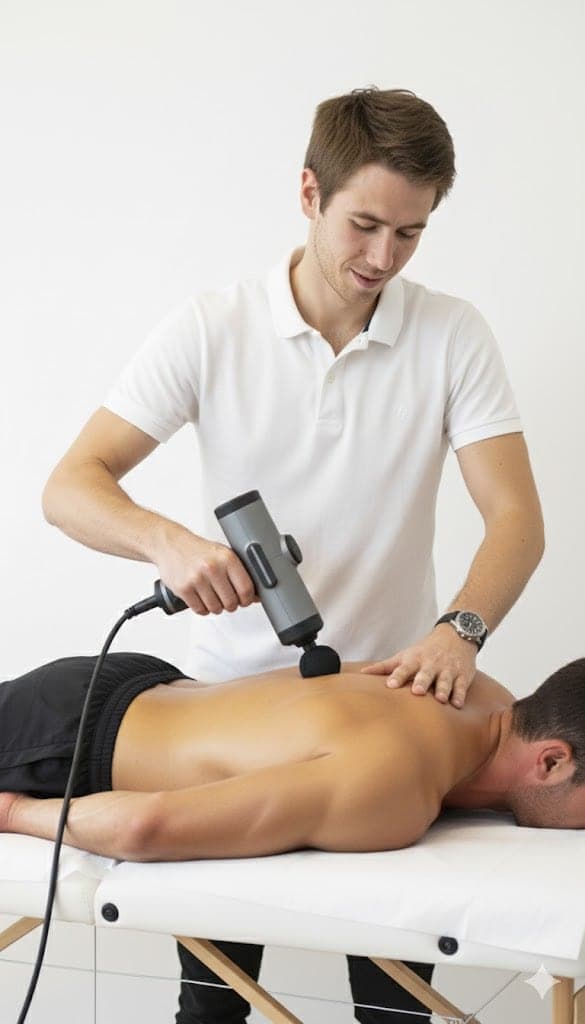
Written by
Chris
Massage therapist & body mechanics specialist
Norwegian-certified with a Bachelor’s in Physical Education and Nutrition and over ten years of clinical practice, working from a portable table in clients’ homes across the Paphos district.
This article is general information from clinical practice, not a medical diagnosis. If you have severe, worsening or unexplained pain, numbness, weakness, or pain after an accident, see a doctor first.