Remedial massage qualifications: what credentials matter for therapeutic results
In short
Discover the essential qualifications, education, and specialized training that distinguish effective remedial massage therapists from basic relaxation providers.
I’ll never forget the moment I realized that most massage therapists were fundamentally underqualified for the work they claimed to do. It was during my third year of university studies in Physical Education and Nutrition when I shadowed a colleague who had been practicing “remedial massage” for years. Watching him work, I witnessed technique after technique that would never address the root biomechanical issues his clients were experiencing. His credentials looked impressive on paper, but his understanding of human anatomy, muscle mechanics, and therapeutic intervention was severely limited. That experience shaped my entire approach to what remedial massage qualifications actually mean – and why most practitioners fall short of delivering genuine therapeutic results.
After a decade of specialized practice and countless hours working with clients who had failed to find relief through conventional massage therapy, I can definitively state that the remedial massage industry has a qualification problem. Too many practitioners enter this field with minimal education, superficial understanding of body mechanics, and no appreciation for the advanced techniques required to create lasting change in muscular dysfunction. The result? Clients receive temporary relief at best, while their underlying issues remain unaddressed.
The distinction between a qualified remedial massage therapist and a basic relaxation provider isn’t just about certification – it’s about depth of knowledge, clinical understanding, and the ability to diagnose and treat complex muscular imbalances that contribute to chronic pain and movement dysfunction. This comprehensive analysis will examine exactly what qualifications matter, why most current standards are inadequate, and how to identify practitioners capable of delivering the therapeutic results you deserve.
Understanding the fundamental education requirements for remedial massage
The foundation of effective remedial massage practice begins with comprehensive anatomical education – something that most massage therapy programs barely scratch the surface of. During my Bachelor’s degree studies in Physical Education and Nutrition, I spent hundreds of hours studying biomechanics, muscle physiology, and the complex interrelationships between different body systems. This wasn’t casual memorization of muscle names and locations; it was deep, clinical understanding of how muscles function, compensate, and adapt to stress patterns over time.
Traditional massage therapy certifications typically require between 500-1000 hours of training, with only a fraction dedicated to anatomy and physiology. Compare this to my university-level education, which provided over 2000 hours of focused study on human movement, nutrition’s impact on muscle recovery, and the biomechanical principles that govern optimal body function. The difference isn’t just quantitative – it’s qualitative. University-level education demands critical thinking, evidence-based practice, and comprehensive understanding of how individual body systems integrate to create movement patterns.
Most massage therapy schools teach basic Swedish massage techniques with some superficial instruction in “deep tissue” work. However, they fail to address the fundamental question: what causes muscular dysfunction in the first place? Without understanding compensatory movement patterns, postural adaptations, and the cascade effects of muscular imbalances, a practitioner cannot provide true remedial intervention. They’re limited to symptom management rather than root cause resolution.
The educational gap becomes even more apparent when examining advanced concepts like fascial restriction patterns, trigger point referral pathways, and the neurological components of muscular tension. These aren’t advanced topics – they’re essential knowledge for anyone claiming to provide remedial massage. Yet most certification programs barely mention them, if at all. This educational deficiency directly translates to therapeutic limitation in practice.
Furthermore, legitimate remedial massage education must include extensive study of pathology, contraindications, and medical conditions that influence treatment approaches. A practitioner working with chronic pain clients needs to understand conditions like fibromyalgia, arthritis, nerve impingements, and postural syndromes. This requires medical-level knowledge that extends far beyond basic massage therapy training.
The critical importance of advanced anatomical knowledge
I remember working with a client who had been seeing a “certified remedial massage therapist” for over two years without significant improvement in his chronic shoulder pain. Within the first session, I identified that his primary issue wasn’t actually in his shoulder at all – it was compensatory tension in his serratus anterior and rhomboids created by years of poor posture and inadequate core stability. The previous therapist had been working exclusively on his deltoids and trapezius, completely missing the actual source of dysfunction.
This scenario illustrates why surface-level anatomical knowledge is insufficient for remedial work. Understanding that muscles exist is different from understanding how they function within kinetic chains, how they compensate for weakness in other areas, and how fascial connections create tension patterns that can refer pain to distant locations. My university education in Physical Education provided this depth of understanding through comprehensive study of functional anatomy, not just structural anatomy.
Advanced anatomical knowledge encompasses multiple layers of complexity. First, there’s structural anatomy – knowing where muscles attach, their fiber direction, and their primary actions. This is basic knowledge that any massage therapist should possess. However, remedial work requires functional anatomy understanding: how muscles work together in movement patterns, how they stabilize joints during dynamic activities, and how dysfunction in one area affects the entire kinetic chain.
The next level involves understanding fascial anatomy and the myofascial continuities that connect seemingly unrelated body regions. The superficial back line, for example, connects the plantar fascia to the scalp fascia, meaning that restriction in the calves can contribute to neck tension. Most massage therapists have never studied these connections, limiting their ability to address complex, multi-regional pain patterns.
Neurological anatomy represents another crucial component often neglected in basic massage education. Understanding nerve pathways, referral patterns, and the neurological components of muscle tension is essential for effective remedial work. When a client presents with “tight” muscles, the question isn’t just where the tension is located – it’s why the nervous system is creating that tension pattern and how to address the underlying neurological dysfunction.
Specialized training in biomechanics and movement analysis
The revelation that changed my entire approach to remedial massage came during an advanced biomechanics course in my fourth year of university. We were analyzing video footage of athletes performing various movements, identifying compensatory patterns and predicting injury risk based on movement quality. I realized that effective remedial massage isn’t just about releasing tight muscles – it’s about understanding why those muscles became tight in the first place and addressing the movement dysfunction that created the problem.
This understanding fundamentally separates qualified remedial massage therapists from conventional massage providers. Most massage therapists work reactively, responding to areas of tension or pain without understanding the biomechanical factors that created those symptoms. They’re essentially performing symptom management rather than therapeutic intervention. A truly qualified practitioner analyzes movement patterns, identifies compensatory strategies, and designs treatment approaches that address root causes rather than surface symptoms.
Specialized biomechanics training encompasses multiple disciplines. First, there’s static postural analysis – understanding how structural imbalances affect muscle tension patterns and joint loading. This includes assessment of pelvic alignment, spinal curves, shoulder position, and head carriage, along with understanding how deviations in one area create compensatory changes throughout the body.
Dynamic movement analysis represents the next level of complexity. This involves observing how clients perform functional movements like walking, squatting, reaching, and rotating, then identifying movement compensations that contribute to their pain patterns. For example, a client with chronic low back pain might demonstrate excessive lumbar extension during overhead reaching because of limited thoracic spine mobility and weak deep abdominal stabilizers. Addressing the back pain requires improving thoracic mobility and core function, not just massaging the lumbar muscles.
Advanced practitioners also understand loading patterns and how different activities stress various tissue structures. This knowledge allows for specific recommendations about activity modification, exercise progression, and lifestyle adjustments that support the therapeutic process. Without this understanding, massage therapy becomes a temporary intervention rather than a catalyst for lasting change.
Clinical experience and hands-on expertise requirements
Ten years ago, fresh out of university with comprehensive theoretical knowledge, I thought I understood everything about effective remedial massage. My first client with chronic pain quickly humbled that assumption. Despite knowing exactly which muscles were involved and understanding the biomechanical factors contributing to his condition, my initial treatment approach was ineffective. The gap between theoretical knowledge and clinical expertise became immediately apparent – and it’s a gap that most massage therapy programs never adequately address.
Clinical expertise develops through years of hands-on practice with diverse client populations, not through weekend certification courses or brief apprenticeships. Each client presents unique challenges, compensatory patterns, and treatment responses that require adaptive thinking and refined technique application. This expertise cannot be acquired quickly or through theoretical study alone – it demands extensive practical experience under proper mentorship and continuous refinement of treatment approaches.
The development of clinical reasoning skills represents a critical component of professional competence. This involves the ability to assess complex presentations, prioritize treatment objectives, and modify approaches based on client response. For example, when working with a client who has multiple pain regions, deciding where to begin treatment and how to sequence interventions requires clinical judgment that develops only through extensive experience.
Effective remedial massage also requires mastery of advanced palpation skills that extend far beyond basic muscle identification. Experienced practitioners can differentiate between various tissue textures, identify specific restriction patterns, and locate precise trigger points that contribute to referral pain patterns. This tactile expertise develops over years of practice and represents a fundamental requirement for effective therapeutic intervention.
Furthermore, clinical experience teaches practitioners to recognize treatment responses and adjust approaches accordingly. Understanding when tissues are responding positively to intervention, when to increase or decrease pressure, and when to modify technique requires the kind of practical wisdom that develops only through extensive hands-on practice. This clinical judgment cannot be taught in a classroom – it must be developed through years of professional practice.
Professional certification standards and their limitations
I’ve reviewed certification requirements from dozens of massage therapy organizations worldwide, and the inconsistency is alarming. Some certifications require as little as 200 hours of training, while others demand 1000+ hours – yet both may use similar titles and make comparable therapeutic claims. This variation in standards creates confusion for consumers and allows underqualified practitioners to market themselves as specialists in remedial massage.
The fundamental problem with most certification standards is their emphasis on technique quantity rather than competency depth. Programs teach numerous massage techniques without ensuring mastery of any single approach. Students learn Swedish massage, deep tissue, trigger point therapy, and various other modalities in superficial detail, but never develop genuine expertise in therapeutic intervention. The result is practitioners who can perform various massage techniques but lack the clinical reasoning skills to apply them effectively.
Many certification programs also fail to include adequate assessment and treatment planning components. Students learn to perform massage techniques but receive minimal training in evaluating client conditions, developing treatment objectives, or measuring therapeutic outcomes. This deficiency creates practitioners who provide generic treatments rather than individualized therapeutic interventions.
The continuing education requirements for maintaining certification represent another significant limitation. Most organizations require practitioners to complete a certain number of continuing education hours annually, but the quality and relevance of these programs varies dramatically. Many practitioners fulfill requirements through weekend workshops that provide minimal learning or skill development, maintaining their certification status without improving their therapeutic competence.
Additionally, most certification standards lack practical competency assessments. Students may pass written examinations demonstrating theoretical knowledge while possessing inadequate hands-on skills for effective practice. The absence of rigorous practical evaluation allows incompetent practitioners to achieve certification and begin working with clients who expect therapeutic results.
The role of ongoing professional development
My commitment to ongoing professional development has been the single most important factor in my evolution as a remedial massage specialist. Every year, I invest significant time and resources in advanced training programs, research review, and technique refinement. This isn’t just about meeting certification requirements – it’s about constantly improving my ability to deliver superior therapeutic results for my clients.
The healthcare field evolves continuously, with new research revealing better understanding of pain mechanisms, tissue healing, and therapeutic interventions. Practitioners who fail to stay current with these developments quickly become obsolete, relying on outdated techniques and ineffective approaches. My university education provided a strong foundation, but it was just the beginning of a lifelong learning process that defines true professionalism.
Advanced professional development encompasses multiple areas of study. Pain science research has revolutionized understanding of chronic pain conditions, revealing the complex interplay between tissue damage, nervous system sensitivity, and psychological factors. Practitioners who understand current pain science can provide more effective treatment and better client education than those relying on outdated pain models.
Technology integration represents another crucial area of ongoing development. My specialized machine-assisted approach exemplifies how advanced practitioners incorporate superior tools and techniques to enhance therapeutic outcomes. This equipment delivers precision, power, and consistency that surpasses manual techniques, but effective utilization requires extensive training and skill development that most practitioners never pursue.
Professional development also includes business and communication skills that enable practitioners to provide comprehensive client service. Understanding how to educate clients about their conditions, develop customized treatment plans, and track therapeutic outcomes requires skills that extend beyond technical massage competence. These capabilities distinguish professional practitioners from basic service providers.
Specialized equipment and advanced technique mastery
The limitations of manual massage techniques became increasingly apparent as my client base grew more sophisticated and demanding. High-performance athletes, chronic pain sufferers, and clients with complex muscular dysfunction require therapeutic intervention that exceeds what human hands can deliver consistently. This realization led me to invest in specialized equipment that provides precision, power, and consistency impossible to achieve through manual techniques alone.
Most massage therapists never progress beyond basic manual techniques, limiting their therapeutic potential and client outcomes. They may learn various hand positions and pressure applications, but they cannot deliver the consistent, targeted intervention required for complex muscular dysfunction. Advanced equipment allows practitioners to work deeper, more precisely, and with greater consistency than manual techniques permit.
The specialized machine I utilize represents a significant advancement in therapeutic capability. This equipment works deeper than human hands can reach, accessing restriction patterns in deep muscle layers that manual techniques cannot effectively address. The precision control allows exact pressure adjustment from light therapeutic work to powerfully deep intervention suitable for elite athletes. Most importantly, the consistency eliminates the variability inherent in manual techniques, ensuring every treatment delivers optimal therapeutic benefit.
Mastery of advanced equipment requires extensive training and skill development that most practitioners never pursue. Understanding how to calibrate pressure settings, angle applications for optimal tissue penetration, and sequence treatments for maximum benefit requires technical expertise that extends far beyond basic massage training. This specialization represents a significant investment in professional development that distinguishes advanced practitioners from conventional massage providers.
Equipment-assisted massage also enables treatment of conditions that manual techniques cannot effectively address. Deep fascial restrictions, chronic trigger points, and severe muscular contractures often require intervention intensity and precision that surpasses manual capability. Advanced equipment provides practitioners with therapeutic tools capable of creating lasting change in these challenging conditions.
Understanding pain science and therapeutic outcomes
The paradigm shift in pain science over the past decade has fundamentally changed how qualified practitioners approach remedial massage. Traditional models focused on structural damage and tissue pathology as primary pain drivers, leading to treatment approaches that targeted symptoms rather than underlying mechanisms. Current research reveals that chronic pain involves complex neurological, psychological, and social factors that require comprehensive understanding for effective intervention.
My approach to remedial massage incorporates this advanced pain science understanding, recognizing that effective treatment must address both tissue dysfunction and nervous system sensitivity. Many clients who seek remedial massage have developed central sensitization patterns where their nervous systems have become hypervigilant to normal sensory input. These clients require specialized treatment approaches that gradually reduce nervous system reactivity while addressing underlying tissue restrictions.
Understanding pain science also influences treatment expectations and client education. Rather than promising immediate relief or claiming to “fix” chronic conditions through single sessions, qualified practitioners explain the therapeutic process as gradual nervous system retraining combined with tissue restoration. This realistic approach builds appropriate client expectations while establishing the foundation for successful long-term outcomes.
Effective remedial massage must also incorporate understanding of tissue healing timelines and adaptation processes. Different tissues heal at different rates and respond to various intervention intensities. Qualified practitioners understand when to apply aggressive treatment, when to allow recovery time, and how to progress intervention intensity based on tissue response and healing stage.
The measurement of therapeutic outcomes represents another crucial component of professional practice. Rather than relying on subjective client feedback alone, advanced practitioners utilize objective assessment tools to track progress and modify treatment approaches. This data-driven approach ensures accountability and enables continuous refinement of therapeutic interventions based on measurable results.
Business ethics and professional responsibility
The remedial massage industry suffers from widespread ethical problems that stem directly from inadequate practitioner qualifications. Underqualified therapists make unrealistic promises, charge premium prices for ineffective treatments, and fail to refer clients to more appropriate healthcare providers when necessary. These ethical failures damage the entire industry and create skepticism among potential clients who could benefit from legitimate therapeutic intervention.
My approach to professional practice emphasizes complete transparency about qualifications, treatment approaches, and expected outcomes. Clients deserve to understand exactly what education and experience their practitioner possesses, what techniques will be utilized, and what results they can realistically expect. This transparency builds trust and enables clients to make informed decisions about their healthcare investments.
Professional responsibility also includes recognizing scope of practice limitations and making appropriate referrals when client conditions exceed practitioner competence. Remedial massage can address many muscular dysfunction patterns, but it cannot treat underlying medical conditions, structural abnormalities, or complex chronic pain syndromes that require medical intervention. Qualified practitioners understand these limitations and work collaboratively with other healthcare providers to ensure optimal client care.
The investment model I employ reflects ethical business practices that prioritize client outcomes over short-term profit. Rather than selling individual sessions or package deals, I develop customized treatment partnerships that focus on achieving specific therapeutic objectives. This approach aligns practitioner incentives with client success and ensures that treatment continues until desired outcomes are achieved.
Ethical practice also requires honest assessment of treatment effectiveness and willingness to modify approaches when results are suboptimal. Practitioners who continue ineffective treatments indefinitely while collecting fees are engaging in unethical behavior that exploits client trust and hope. Professional responsibility demands accountability for therapeutic outcomes and continuous improvement in treatment effectiveness.
Identifying qualified practitioners: red flags and green flags
After analyzing hundreds of practitioner profiles and treatment approaches over the past decade, I’ve identified clear patterns that distinguish qualified remedial massage specialists from inadequate providers. These indicators can help potential clients make informed decisions about practitioner selection and avoid the disappointment of ineffective treatment.
Education represents the primary indicator of practitioner competence. Qualified specialists possess university-level education in related fields such as physical education, exercise physiology, kinesiology, or sports medicine. This formal education provides the anatomical knowledge, biomechanical understanding, and clinical reasoning skills essential for effective remedial work. Practitioners with only basic massage therapy certification lack the educational foundation necessary for complex therapeutic intervention.
Experience specificity offers another crucial indicator. Qualified practitioners specialize in specific areas rather than claiming expertise in all massage modalities. My focus on mechanical deep-tissue massage using specialized equipment reflects this specialization principle. Practitioners who advertise proficiency in Swedish massage, hot stone therapy, prenatal massage, and remedial massage simultaneously are unlikely to possess genuine expertise in any single area.
Treatment approach philosophy reveals practitioner understanding and competence. Qualified specialists focus on addressing root causes rather than providing symptom relief, emphasize lasting results over temporary improvement, and develop customized treatment plans rather than offering generic sessions. They explain their therapeutic rationale clearly and can articulate how their approach differs from conventional massage therapy.
Professional investment indicators include advanced equipment, ongoing education commitment, and specialized facility requirements. Practitioners who invest in superior tools, continue advanced training, and maintain professional treatment environments demonstrate commitment to therapeutic excellence. Those operating from basic settings with minimal equipment likely lack the resources and commitment necessary for optimal client outcomes.
Red flags include unrealistic promises, lack of assessment protocols, generic treatment approaches, and resistance to outcome measurement. Practitioners who promise immediate cures, fail to evaluate client conditions thoroughly, provide identical treatments to all clients, or avoid discussing specific therapeutic objectives are unlikely to deliver meaningful results.
The future of remedial massage qualifications
The remedial massage profession stands at a critical juncture where educational standards, qualification requirements, and professional practices must evolve to meet growing consumer sophistication and healthcare integration demands. Current standards are inadequate for the therapeutic claims made by many practitioners, creating a credibility gap that undermines the entire industry.
Future qualification standards should emphasize university-level education as the minimum requirement for remedial massage practice. This educational foundation provides the depth of knowledge necessary for effective therapeutic intervention and establishes professional credibility within the broader healthcare community. Practitioners without this educational background should be limited to relaxation and wellness massage rather than therapeutic claims.
Specialization requirements represent another crucial development area. Rather than allowing practitioners to claim expertise in multiple modalities, future standards should require focused specialization with demonstrated competence in specific therapeutic approaches. This specialization model would improve treatment effectiveness while enabling consumers to identify practitioners with relevant expertise for their specific conditions.
Technology integration will likely become a standard requirement as advanced equipment becomes more accessible and affordable. Practitioners who fail to adopt superior tools and techniques will be unable to compete with those providing more effective treatments. This technological evolution will naturally raise professional standards while improving client outcomes.
Outcome measurement and accountability systems will become increasingly important as healthcare integration accelerates. Qualified practitioners must demonstrate measurable therapeutic results rather than relying on subjective client satisfaction alone. This accountability requirement will distinguish professional practitioners from basic service providers while building credibility with other healthcare professionals.
The evolution toward higher qualification standards will ultimately benefit both practitioners and clients by creating a more professional, effective, and respected industry that delivers genuine therapeutic value rather than temporary symptom relief.
Frequently asked questions about remedial massage qualifications
What minimum education should a remedial massage therapist have?
A qualified remedial massage therapist should possess university-level education in a related field such as Physical Education, Exercise Physiology, Kinesiology, Sports Medicine, or similar discipline. This educational foundation provides the comprehensive anatomical knowledge, biomechanical understanding, and clinical reasoning skills necessary for effective therapeutic intervention. Basic massage therapy certification alone is insufficient for complex remedial work, as these programs lack the depth and rigor required for addressing chronic pain conditions and muscular dysfunction patterns. My Bachelor’s degree in Physical Education and Nutrition provided over 2000 hours of focused study on human movement, anatomy, and physiology – far exceeding what typical massage therapy programs offer. This educational difference directly translates to superior therapeutic capability and client outcomes.
How many years of experience should a qualified practitioner have?
Genuine expertise in remedial massage requires a minimum of 5-10 years of focused practice with diverse client populations and complex conditions. Clinical skills develop gradually through extensive hands-on experience that cannot be accelerated through intensive training programs or weekend certifications. My decade of specialized practice has involved working with thousands of clients with varying conditions, allowing me to refine techniques, develop clinical reasoning abilities, and master advanced intervention strategies. Practitioners with less experience may possess theoretical knowledge but lack the practical wisdom necessary for optimal treatment outcomes. The complexity of chronic pain conditions, compensatory movement patterns, and individual client responses requires years of practice to navigate effectively.
Why is specialized equipment important for qualified practitioners?
Advanced equipment enables therapeutic intervention that surpasses what manual techniques can achieve consistently. Human hands have inherent limitations in terms of pressure application, precision targeting, and endurance that restrict treatment effectiveness for complex conditions. My specialized machine provides deeper tissue penetration, precise pressure control, and consistent treatment delivery that eliminates the variability inherent in manual techniques. This equipment allows me to address severe muscular restrictions, chronic trigger points, and deep fascial dysfunction that manual massage cannot effectively treat. The investment in superior tools demonstrates professional commitment to optimal client outcomes rather than settling for conventional limitations. Practitioners who rely solely on manual techniques cannot compete with the therapeutic capability that advanced equipment provides.
How can I verify a practitioner’s qualifications?
Verification should include confirming formal education credentials, examining years and type of experience, and evaluating treatment approach philosophy. Request information about university degrees, specialized training programs, and professional development activities. Ask about their specific experience with conditions similar to yours and their success rates with previous clients. Evaluate whether their treatment approach focuses on root cause resolution rather than symptom management, and whether they can clearly explain their therapeutic rationale. Professional practitioners welcome these inquiries and provide detailed information about their qualifications and approach. Those who resist qualification discussion or provide vague responses likely lack adequate credentials for effective remedial work.
What red flags should I watch for when selecting a practitioner?
Major warning signs include claims of expertise in multiple unrelated massage modalities, promises of immediate or real, measurable results, lack of formal education beyond basic massage certification, generic treatment approaches for all clients, and resistance to outcome measurement or progress tracking. Practitioners who advertise proficiency in Swedish massage, hot stone therapy, reflexology, and remedial massage simultaneously lack genuine expertise in therapeutic intervention. Those who promise to “fix” chronic conditions in single sessions or guarantee specific results are making unrealistic claims that indicate inadequate understanding of complex pain conditions. Avoid practitioners who provide identical treatments to all clients rather than developing customized therapeutic approaches based on individual assessment and needs.
Should remedial massage therapists work with other healthcare providers?
Qualified remedial massage therapists should maintain collaborative relationships with physicians, physical therapists, and other healthcare professionals while clearly understanding their scope of practice limitations. Effective therapeutic intervention often requires coordinated care that addresses multiple aspects of client conditions. I regularly communicate with clients’ other healthcare providers to ensure treatment compatibility and optimal outcomes. Professional practitioners recognize when client conditions exceed their competence and make appropriate referrals rather than attempting to treat beyond their qualifications. This collaborative approach demonstrates professional maturity and client-centered care that prioritizes optimal outcomes over territorial protection of practice scope.
How often should I expect treatment from a qualified practitioner?
Treatment frequency depends on condition complexity, client goals, and therapeutic response, but qualified practitioners develop customized plans rather than selling predetermined packages. Initial treatment phases may require more frequent sessions to establish momentum and begin addressing root causes, followed by maintenance sessions to sustain improvements. My approach involves creating dedicated partnerships with clients that continue until specific therapeutic objectives are achieved, rather than selling individual sessions or generic packages. This investment model ensures accountability for results and aligns practitioner incentives with client success. Practitioners who insist on regular ongoing sessions without clear therapeutic objectives or measurable progress indicators are likely providing maintenance rather than remedial intervention.
What should I expect to pay for qualified remedial massage therapy?
Professional remedial massage therapy represents a healthcare investment rather than a spa expense, with pricing reflecting the practitioner’s education, experience, specialized equipment, and therapeutic capability. Qualified practitioners typically charge premium rates compared to basic massage providers because they deliver superior results that address root causes rather than providing temporary symptom relief. My specialized approach involves significant equipment investment, extensive education, and customized treatment development that justifies higher fees than conventional massage therapy. The cost should be evaluated based on therapeutic outcomes and long-term value rather than session price alone. Effective remedial intervention that resolves chronic conditions provides far greater value than repeated sessions of ineffective treatment, regardless of individual session costs.
Written by
Chris
Massage therapist & body mechanics specialist
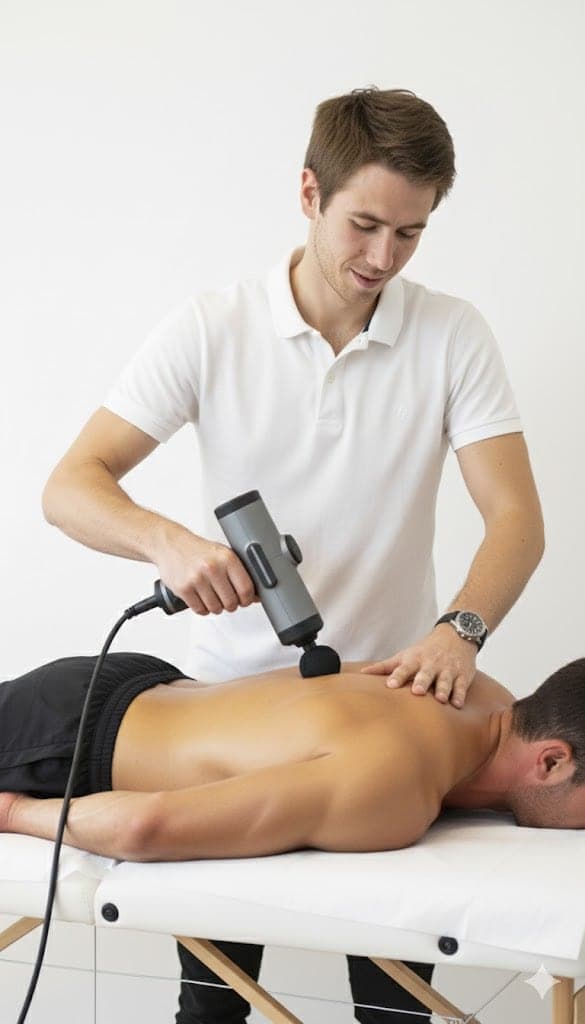
Norwegian-certified with a Bachelor’s in Physical Education and Nutrition and over ten years of clinical practice, working from a portable table in clients’ homes across the Paphos district.
This article is general information from clinical practice, not a medical diagnosis. If you have severe, worsening or unexplained pain, numbness, weakness, or pain after an accident, see a doctor first.