Relaxing home massage Pafos: The scientific approach to mental health through advanced bodywork
In short
Discover how advanced mechanical deep-tissue massage in Pafos transforms mental health through precision body mechanics, delivering lasting results beyond traditional relaxation methods.
Ten years ago, when I first graduated with my Bachelor’s degree in Physical Education and Nutrition from Norway, I believed I understood the human body completely. I was wrong. It wasn’t until I witnessed a client’s complete mental transformation after addressing her chronic shoulder tension that I realized the profound neurological connection between physical dysfunction and psychological well-being. That moment in a small villa in Pafos changed everything about how I approach relaxing home massage therapy.
Most people think massage is about relaxation – lying on a table while someone kneads their muscles with warm oils and soft music. This misconception has created an entire industry focused on temporary relief rather than lasting solutions. After a decade of specialized practice in Pafos, I’ve discovered that true mental health improvement through massage requires a fundamentally different approach: precision mechanical intervention that targets the root cause of muscular dysfunction, not just its symptoms.
When you’re dealing with the accumulated stress of modern life in Pafos – whether you’re a expatriate adjusting to Mediterranean living, a local professional managing workplace pressures, or an athlete pushing physical boundaries – your body develops specific compensation patterns. These patterns don’t just cause physical discomfort; they create neurological interference that directly impacts your mental clarity, emotional regulation, and overall psychological resilience.
The neurological foundation of relaxing home massage effectiveness
Let me share something that might surprise you: the effectiveness of relaxing home massage Pafos treatments isn’t primarily about the muscles themselves. It’s about the fascial system – the interconnected web of connective tissue that surrounds every muscle fiber, organ, and nerve in your body. When this system becomes restricted through chronic tension, poor posture, or repetitive stress, it creates what I call “neurological noise.”
I remember working with a software developer in Kato Pafos who came to me complaining of anxiety and insomnia. During our initial assessment, I discovered that his years of forward head posture had created fascial restrictions throughout his cervical spine and upper thoracic region. These restrictions weren’t just causing his neck pain – they were interfering with his parasympathetic nervous system, the body’s natural relaxation response.
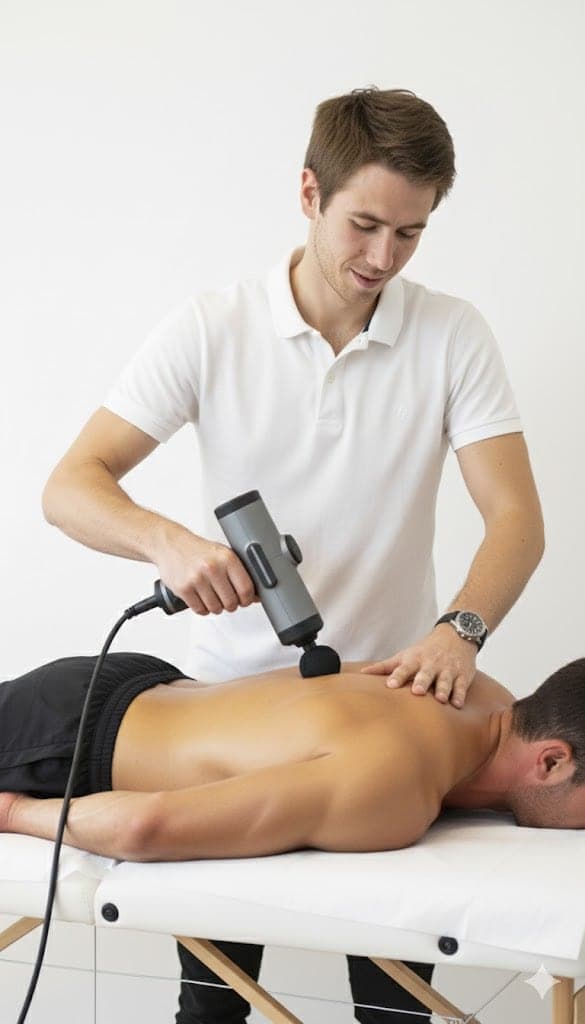
Traditional massage approaches this with broad, sweeping strokes that feel pleasant but lack the precision to address fascial restrictions at their source. My specialized mechanical approach uses controlled, deep pressure delivered through advanced tools that can penetrate 4-6 centimeters into tissue layers – depths impossible to achieve consistently with human hands alone.
The machine I employ isn’t just a tool; it’s a precision instrument that delivers three critical elements: consistent depth penetration, controlled pressure modulation, and sustained compression duration. This combination allows me to access restriction patterns that have been developing for years, sometimes decades, and release them in ways that create lasting structural changes.
Why precision matters in mental health outcomes
Here’s what happens when we address fascial restrictions with surgical precision: the nervous system receives clear, unambiguous signals that it’s safe to release chronic holding patterns. This isn’t just physical release – it’s neurological reprogramming. The client I mentioned earlier? After six targeted sessions focusing on his cervical and thoracic restrictions, not only did his neck pain resolve, but his anxiety levels dropped significantly, and he began sleeping through the night for the first time in three years.
This is the difference between symptomatic relief and systemic transformation. When I travel to your location in Pafos with my professional equipment, I’m not coming to give you a relaxing afternoon. I’m coming to identify and eliminate the specific mechanical dysfunctions that are compromising your mental well-being.
The physiological cascade of stress and its mechanical manifestations
Understanding how stress manifests in the body is crucial for appreciating why relaxing home massage Pafos requires such a specialized approach. Chronic stress doesn’t just make you feel tense – it creates measurable changes in muscle fiber length, fascial density, and joint mobility that can be precisely identified and corrected.
When your sympathetic nervous system remains chronically activated – whether from work stress, relationship challenges, or the general pressures of expatriate life in Cyprus – several physiological changes occur simultaneously. Cortisol levels remain elevated, inflammatory markers increase, and most importantly for our purposes, muscle spindle sensitivity becomes hyperactive.
Muscle spindles are specialized sensory receptors that detect changes in muscle length. When they become hyperactive due to chronic stress, they create a feedback loop where muscles remain in a state of low-level contraction even during rest periods. This is why people often wake up feeling tense despite sleeping for eight hours – their muscles never truly relax because the spindle system is stuck in protective mode.
I encountered this phenomenon dramatically with a British expatriate living in Coral Bay who had been experiencing what she described as “constant background anxiety” for over two years. During our assessment, I found that her entire posterior chain – from her calves through her hamstrings, glutes, and erector spinae – was locked in chronic low-level contraction. Her muscle spindles were so hypersensitive that even gentle stretching triggered protective spasm responses.
Breaking the stress-tension cycle through mechanical intervention
Traditional relaxation massage would have been counterproductive for this client. Light pressure would have activated her protective responses, while inconsistent pressure from manual techniques would have confused her nervous system. Instead, I used my specialized mechanical approach to deliver sustained, precisely calibrated pressure that gradually reset her muscle spindle sensitivity.
The process took four sessions over six weeks, but the results were remarkable. Not only did her chronic muscle tension resolve, but her anxiety levels decreased dramatically. She reported feeling mentally clearer, emotionally more stable, and physically more energetic than she had in years. This wasn’t coincidence – it was the predictable result of addressing the mechanical dysfunction underlying her psychological symptoms.
This is why I position my service as an investment in your long-term health, not an expense for temporary relief. When you understand the mechanical basis of stress-related mental health challenges, targeted intervention becomes not just beneficial but essential for lasting improvement.
Advanced assessment protocols for home-based treatment
When I arrive at your home in Pafos, I bring more than just equipment – I bring a systematic assessment protocol that identifies the specific mechanical dysfunctions contributing to your mental health challenges. This isn’t guesswork or intuition; it’s precise biomechanical analysis based on established principles of human movement science.
The assessment begins with postural analysis using specific landmark measurements and angular assessments. I’m looking for deviations from optimal alignment that indicate chronic adaptation patterns. Forward head posture, elevated shoulders, anterior pelvic tilt, and rotational asymmetries all provide crucial information about how stress has reshaped your body over time.
Next, I perform what I call “provocation testing” – specific movements and positions that reveal hidden restrictions and compensation patterns. Many clients are surprised to discover restrictions they weren’t consciously aware of. A corporate executive in Yeroskipou recently told me he had no idea his left shoulder blade was essentially “frozen” in elevation until I demonstrated the dramatic difference in his range of motion compared to his right side.
The most revealing part of my assessment is palpatory examination of fascial density and restriction patterns. Using calibrated pressure techniques, I can identify areas where the connective tissue has become adhered, thickened, or restricted. These areas often correlate directly with emotional holding patterns and stress accumulation sites.
Mapping stress patterns through tissue quality assessment
What many people don’t realize is that emotional stress creates physical signatures in the tissues. Areas of chronic tension develop different texture, density, and responsiveness compared to healthy tissue. After ten years of practice, I can often predict a client’s stress history simply by examining their tissue quality patterns.
For example, people who carry work-related stress typically develop specific restriction patterns in their upper trapezius, levator scapulae, and suboccipital muscles. Those dealing with relationship stress often show restrictions in their jaw muscles, neck flexors, and breathing-related musculature. Financial stress tends to manifest as chronic tension in the core stabilizers and hip flexor complex.
This tissue mapping allows me to design treatment protocols that address not just the physical restrictions but the underlying stress patterns that created them. It’s a holistic approach that recognizes the inseparable connection between mind and body while using precise mechanical interventions to create lasting change.
The mechanical advantage of specialized equipment in home settings
The equipment I bring to your home represents a significant advancement over traditional manual massage techniques. This isn’t a marketing claim – it’s a mechanical reality based on physics and human anatomy. Human hands, no matter how skilled, have inherent limitations in terms of sustained pressure, consistent depth penetration, and precise force application.
My specialized machine delivers pressure through a focused contact point that can penetrate 4-6 centimeters into tissue layers while maintaining consistent force throughout the treatment duration. This depth access allows me to reach fascial restrictions that exist in deeper tissue layers – areas that manual techniques simply cannot access effectively.
The consistency factor is equally important. During a 60-90 minute session, human hands inevitably fatigue, leading to variations in pressure, rhythm, and effectiveness. My mechanical approach eliminates these variables, ensuring that every minute of treatment delivers optimal therapeutic benefit.
I learned the importance of this consistency working with a professional tennis player who trained at the Pafos tennis facilities. He had been receiving regular manual massage from skilled therapists but wasn’t achieving the deep tissue release necessary for his performance demands. When I introduced mechanical techniques to his treatment protocol, we achieved fascial releases in single sessions that had been impossible to reach through manual work alone.
Precision pressure modulation for optimal nervous system response
The key to effective relaxing home massage Pafos treatment lies in pressure modulation – the ability to precisely adjust treatment intensity based on real-time tissue response. My equipment allows for micro-adjustments in pressure that match the specific needs of different tissue layers and restriction patterns.
This precision is crucial because different fascial layers respond optimally to different pressure ranges. Superficial fascial restrictions might resolve with 15-20 pounds of focused pressure, while deep fascial adhesions might require 40-50 pounds of sustained pressure to achieve release. Manual techniques cannot deliver this range of pressure consistently, which is why many massage recipients experience temporary relief but no lasting improvement.
The nervous system responds to this precision with what I call “recognition release” – a neurological acknowledgment that the restriction is being addressed at the appropriate depth and intensity. Clients often describe this as a “good hurt” or “satisfying pressure” that feels distinctly different from the discomfort of excessive or inadequate pressure.
Customized treatment protocols for mental health optimization
Every client who receives relaxing home massage Pafos treatment from me gets a completely customized protocol based on their specific stress patterns, lifestyle demands, and mental health goals. This isn’t a one-size-fits-all approach – it’s precision intervention designed to address your unique biomechanical and psychological needs.
The protocol development begins with our initial assessment, but it evolves throughout our working relationship as your body responds and adapts to treatment. I track tissue quality improvements, range of motion increases, and postural changes to ensure we’re achieving measurable progress toward your mental health objectives.
For clients dealing with anxiety-related tension, I typically focus on releasing restrictions in the breathing-related musculature – the diaphragm, intercostal muscles, and accessory breathing muscles. When these areas are restricted, breathing becomes shallow and inefficient, which perpetuates anxiety responses. By restoring optimal breathing mechanics through fascial release, we often see immediate improvements in anxiety levels.
Clients experiencing depression-related symptoms often benefit from protocols that address postural collapse patterns. Chronic low mood frequently manifests as forward head posture, rounded shoulders, and compressed chest cavity – all of which can be corrected through targeted fascial release and postural re-education.
Integration of movement education with manual therapy
What sets my approach apart is the integration of movement education with hands-on treatment. I don’t just release restrictions – I teach you how to maintain the improvements we achieve and prevent future dysfunction patterns from developing.
During our sessions, I’ll demonstrate specific exercises and movement patterns that support the fascial releases we’re achieving. These aren’t generic stretches – they’re precisely designed interventions that reinforce the neurological changes we’re creating through manual therapy.
A successful business owner in Pafos recently told me that learning these maintenance techniques was “like getting an owner’s manual for my body.” She now understands how to recognize early signs of restriction development and has the tools to address them before they become significant problems.
The convenience and effectiveness of home-based treatment
Providing relaxing home massage Pafos in your personal environment offers several therapeutic advantages that many people don’t initially consider. Your home represents your safest, most relaxed psychological space – the optimal environment for nervous system reset and deep fascial release.
When you’re in your own space, your parasympathetic nervous system is naturally more accessible. You don’t have the stress of travel, parking, unfamiliar environments, or schedule pressures that come with clinic-based appointments. This psychological comfort translates directly into more effective treatment outcomes because your body is primed for the relaxation response we’re trying to achieve.
I arrive at your location with everything needed for a professional treatment session: specialized massage table, premium equipment, and all necessary supplies. You don’t need to prepare anything except comfortable clothing and an open mind to experiencing a different approach to massage therapy.
The home environment also allows for more comprehensive treatment sessions. Without the time pressures of clinic scheduling, we can spend additional time on assessment, education, and post-treatment integration. Many clients appreciate being able to rest in their own bed after treatment rather than having to navigate Pafos traffic while their nervous system is in a deeply relaxed state.
Privacy and psychological safety in personal spaces
For many people, particularly those dealing with stress-related mental health challenges, privacy is crucial for optimal treatment outcomes. In your home environment, you can fully relax knowing that you’re in complete control of your surroundings and privacy.
This psychological safety allows for deeper fascial release because your nervous system isn’t maintaining any protective vigilance. I’ve found that clients consistently achieve better results in their home environment compared to clinic settings, particularly during their initial sessions when trust is still building.
The ability to customize lighting, temperature, and ambient conditions to your preferences further optimizes the treatment environment. Some clients prefer complete silence, others benefit from gentle music, and some find that natural environmental sounds enhance their relaxation response. In your home, we can create the perfect conditions for your individual needs.
Measuring progress and maintaining results
One of the key advantages of my scientific approach to relaxing home massage Pafos is the ability to measure and track progress objectively. I use specific assessment tools to document improvements in range of motion, postural alignment, tissue quality, and functional movement patterns.
This measurement approach serves several purposes: it validates the effectiveness of our treatment protocols, identifies areas that need additional attention, and provides clear evidence of your investment’s return. Many clients are amazed to see objective documentation of improvements they can feel but couldn’t previously quantify.
I typically photograph postural alignment from multiple angles during initial assessment and at regular intervals throughout treatment. The visual documentation of postural improvements often correlates directly with reported improvements in mood, energy levels, and mental clarity.
Range of motion measurements using standard goniometric techniques provide another objective marker of progress. As fascial restrictions release and joint mobility improves, clients invariably report feeling more mentally flexible and emotionally resilient as well.
Long-term maintenance strategies for sustained benefits
The goal of my treatment approach is not dependence but independence – helping you achieve lasting improvements that don’t require constant maintenance. However, given the ongoing stresses of modern life, some degree of periodic maintenance is realistic and beneficial.
I work with each client to develop a personalized maintenance schedule based on their lifestyle demands, stress levels, and physical requirements. Active individuals might benefit from monthly sessions to prevent restriction accumulation, while desk workers might need more frequent attention to counteract postural stresses.
The maintenance protocols I provide include specific self-treatment techniques using simple tools that can be used at home between sessions. These techniques aren’t replacements for professional treatment but rather ways to extend and support the improvements we achieve during our sessions together.
Case studies in mental health transformation through bodywork
Over my decade of practice in Pafos, I’ve documented numerous cases where targeted fascial release produced dramatic improvements in mental health symptoms. These aren’t miraculous healings – they’re predictable outcomes when mechanical dysfunction underlying psychological symptoms is properly addressed.
One of my most memorable cases involved a German expatriate who had been experiencing panic attacks for over a year. Medical evaluations found nothing wrong, and traditional therapy was providing limited relief. During our assessment, I discovered severe restrictions in her diaphragm and intercostal muscles that were limiting her breathing capacity to approximately 60% of normal.
The restricted breathing pattern was maintaining her in a chronic state of physiological anxiety – her body was literally unable to access the deep, slow breathing patterns necessary for parasympathetic activation. Over four sessions, we systematically released these restrictions and restored her full breathing capacity. Her panic attacks ceased completely, and she reported feeling mentally clear and emotionally stable for the first time in years.
Another significant case involved a local business owner experiencing severe decision fatigue and cognitive fog. His demanding schedule had created chronic tension throughout his neck and skull, restricting blood flow to his brain and creating persistent low-level headaches. After addressing the mechanical restrictions in his suboccipital muscles and cervical fascia, his mental clarity improved dramatically, and his decision-making capacity returned to normal levels.
Athletic performance and mental resilience connections
I’ve worked with several professional and amateur athletes in the Pafos area, and the connection between physical dysfunction and mental performance is consistently striking. Athletes often understand the mind-body connection intuitively, but they’re frequently surprised by how mechanical restrictions can limit mental resilience and focus.
A professional cyclist training in the Akamas Peninsula came to me complaining of performance anxiety that was affecting his competitive results. During assessment, I found significant restrictions in his hip flexor complex and thoracolumbar fascia that were creating compensatory tension throughout his entire kinetic chain. These restrictions weren’t just limiting his physical performance – they were creating a constant low-level stress signal that was undermining his mental confidence.
After six sessions targeting these specific restrictions, not only did his physical performance improve measurably, but his competitive anxiety resolved completely. He went on to achieve several personal best performances and credited the mental clarity gained through our work as the determining factor in his success.
The investment perspective on professional bodywork
When clients ask about the cost of my relaxing home massage Pafos services, I reframe the conversation around investment rather than expense. Professional bodywork that addresses root causes rather than symptoms represents one of the most cost-effective investments you can make in your long-term health and quality of life.
Consider the accumulated costs of living with chronic tension and stress-related mental health challenges: reduced work productivity, poor sleep quality, increased healthcare utilization, relationship strain, and diminished life satisfaction. These costs – both financial and personal – far exceed the investment in professional treatment that addresses underlying causes.
My approach is designed to minimize the total number of sessions required to achieve lasting results. Rather than providing temporary relief that requires constant maintenance, I focus on creating lasting structural changes that continue benefiting you long after our active treatment period ends.
The clients who see the greatest return on their investment are those who commit to a complete treatment protocol rather than seeking quick fixes. Fascial restrictions that have developed over years require systematic, sustained intervention to resolve durably. Sporadic treatment sessions, while temporarily beneficial, don’t create the cumulative effect necessary for lasting change.
Comparing professional mechanical therapy to alternatives
When you compare the effectiveness and cost-efficiency of professional mechanical bodywork to alternative approaches, the value proposition becomes clear. Traditional massage therapy, while pleasant, typically provides temporary relief without addressing underlying dysfunction patterns. Physical therapy often focuses on strengthening exercises without adequately addressing fascial restrictions that limit movement quality.
Pharmaceutical approaches to stress and anxiety management may provide symptom relief but don’t address mechanical dysfunction contributing to these problems. Moreover, medications often come with side effects and dependency concerns that professional bodywork completely avoids.
Mental health counseling, while valuable for addressing psychological factors, cannot directly resolve the physical restrictions that may be perpetuating mental health challenges. An integrated approach that addresses both psychological and mechanical factors typically produces superior outcomes compared to either approach alone.
Understanding the limits and realistic expectations
Professional integrity requires acknowledging what relaxing home massage Pafos can and cannot accomplish. While mechanical dysfunction often underlies or contributes to mental health challenges, bodywork is not a replacement for appropriate medical or psychological care when indicated.
My approach works best with clients whose mental health challenges have a significant mechanical component – chronic tension, restricted breathing patterns, postural dysfunction, or pain-related stress. For clients dealing with severe depression, anxiety disorders requiring medication management, or complex trauma, bodywork should complement rather than replace appropriate professional care.
The timeline for significant improvement varies considerably based on individual factors: the duration and severity of restrictions, lifestyle demands, compliance with home care recommendations, and overall health status. Some clients notice immediate improvements in sleep quality and mental clarity, while others require several sessions before experiencing significant changes.
Realistic expectations are crucial for optimal outcomes. My goal is not to provide magical healing but rather to identify and address specific mechanical dysfunctions that may be contributing to your mental health challenges. This is systematic, scientific work that produces predictable results when applied appropriately.
When to seek additional support
I maintain professional relationships with physicians, mental health counselors, and other healthcare providers in the Pafos area to ensure clients receive comprehensive care when indicated. If assessment reveals conditions requiring medical evaluation, or if mental health symptoms don’t improve appropriately with mechanical intervention, I provide appropriate referrals.
The integration of professional bodywork with other healthcare approaches often produces synergistic effects. Clients receiving counseling for stress management often find that resolving physical restrictions enhances their psychological work. Those taking medications for anxiety or depression frequently discover that mechanical improvements allow for reduced medication needs under medical supervision.
My role is to address the mechanical factors contributing to your mental health challenges while working collaboratively with other professionals to optimize your overall well-being. This team approach ensures you receive comprehensive care tailored to your individual needs.
Frequently asked questions about relaxing home massage Pafos
How does mechanical massage differ from traditional relaxation massage?
Traditional relaxation massage focuses on providing temporary stress relief through pleasant touch and general muscle manipulation. My mechanical approach uses precision equipment to target specific fascial restrictions that contribute to chronic tension and mental health challenges. Rather than providing temporary relaxation, mechanical massage creates lasting structural changes that improve both physical function and mental well-being. The treatment may feel more intense initially, but it produces lasting results that traditional massage cannot achieve.
Is the treatment painful, and what should I expect during sessions?
The treatment sensation is distinctly different from traditional massage – clients typically describe it as “good hurt” or “therapeutic pressure” rather than pain. The mechanical approach allows for precise pressure modulation, so we can adjust intensity to your tolerance while maintaining therapeutic effectiveness. Most clients find the sensation satisfying because they can feel restrictions releasing in real-time. I constantly communicate with clients during treatment to ensure optimal pressure levels, and the equipment allows for immediate adjustments based on your feedback.
How many sessions are typically required to see significant improvements?
The number of sessions depends on several factors: the duration and severity of restrictions, your lifestyle demands, and your specific mental health goals. Most clients notice some improvements after the first session, particularly in sleep quality and mental clarity. Significant structural changes typically require 4-6 sessions over 6-8 weeks for optimal results. Clients with severe, long-standing restrictions may benefit from additional sessions. I provide realistic timelines during our initial assessment based on your specific condition and goals.
What makes your approach more effective than other massage therapists?
My effectiveness comes from three key factors: specialized education in body mechanics and nutrition, advanced mechanical equipment that delivers consistent precision impossible with manual techniques alone, and a scientific approach focused on lasting results rather than temporary relief. I identify and address the root causes of dysfunction rather than just treating symptoms. Additionally, my systematic assessment protocols and objective progress measurements ensure that every session builds toward your specific goals rather than providing generic treatment.
Do you work with serious athletes and high-performance individuals?
Absolutely. My mechanical approach is particularly effective for athletes because it can address the deep fascial restrictions that limit performance and increase injury risk. I’ve worked with professional cyclists, tennis players, and other competitive athletes who require precision intervention to maintain peak performance. The consistent pressure delivery and deep tissue access provided by mechanical techniques make it ideal for athletes who need reliable results without the variability of manual therapy. Performance improvements in mental focus and physical capability typically occur simultaneously.
Can your treatment help with chronic pain that affects mental health?
Chronic pain and mental health challenges are intimately connected – persistent pain creates stress responses that affect mood, sleep, and cognitive function, while stress and tension can perpetuate pain cycles. My approach addresses both aspects by identifying and releasing the fascial restrictions that often underlie chronic pain conditions. When we resolve the mechanical dysfunction creating pain signals, clients typically experience simultaneous improvements in pain levels and mental well-being. This is particularly effective for neck pain, back pain, and headache conditions that have stress-related components.
What should I prepare for a home treatment session?
Preparation is minimal – I bring all necessary professional equipment including a specialized massage table and mechanical therapy tools. You’ll need comfortable clothing that allows access to treatment areas and adequate space for setting up equipment (typically a bedroom or living room works well). Most importantly, plan to rest after treatment as your nervous system will be in a deeply relaxed state. Many clients prefer to schedule sessions when they can remain home afterward to fully integrate the treatment effects.
How do you maintain results between sessions?
I provide each client with customized maintenance protocols including specific exercises, self-treatment techniques, and lifestyle modifications that support the improvements we achieve. These aren’t generic recommendations but targeted interventions designed for your specific restriction patterns and lifestyle demands. Clients also receive education about recognizing early signs of restriction development so they can address issues before they become significant problems. The goal is to extend the benefits of professional treatment and reduce the need for frequent sessions.
Taking the next step toward mechanical wellness
If you’ve read this far, you’re likely someone who recognizes that surface-level solutions won’t resolve deep-rooted problems. The decision to invest in professional mechanical bodywork represents a commitment to addressing the underlying causes of your stress, tension, and mental health challenges rather than simply managing symptoms.
My relaxing home massage Pafos service exists for individuals who want measurable, lasting improvements in their physical function and mental well-being. This isn’t spa treatment or luxury service – it’s precision healthcare that happens to be delivered in the comfort of your home environment.
The clients who achieve the best results are those who understand that lasting change requires systematic intervention over time. If you’re ready to invest in a scientific approach to resolving the mechanical factors affecting your mental health, I’m here to guide you through that process with the expertise, equipment, and commitment necessary to achieve your goals.
Professional bodywork represents one of the most direct paths to improving both physical function and mental resilience. When mechanical restrictions are resolved through precision intervention, clients consistently report improvements that extend far beyond the physical symptoms that brought them to treatment initially.
Your body has an remarkable capacity for healing and optimization when provided with appropriate intervention. My role is to provide the expertise, equipment, and systematic approach necessary to unlock that potential and help you achieve the lasting improvements you’re seeking in both physical comfort and mental well-being.
Written by
Chris
Massage therapist & body mechanics specialist
Norwegian-certified with a Bachelor’s in Physical Education and Nutrition and over ten years of clinical practice, working from a portable table in clients’ homes across the Paphos district.
This article is general information from clinical practice, not a medical diagnosis. If you have severe, worsening or unexplained pain, numbness, weakness, or pain after an accident, see a doctor first.