
Relaxing Home Massage in Chlorakas: Advanced Mechanical Deep-Tissue Treatment for Lasting Relief
In short
Discover how a professional relaxing home massage in Chlorakas combines advanced mechanical precision with expert body mechanics knowledge to relieves chronic tension, stress, and pain at the source.
Most people searching for a relaxing home massage in Chlorakas are actually looking for something much more significant than temporary relief. They’re seeking a solution to chronic tension patterns that conventional massage has failed to address. After a decade of working with clients throughout Cyprus, I’ve learned this crucial distinction: relaxation without resolution is merely expensive distraction.
What separates an effective therapeutic intervention from a pleasant but ultimately superficial experience is the depth at which we address myofascial restriction patterns and the precision with which we release adhesions that have accumulated over months or years of compensatory movement patterns.
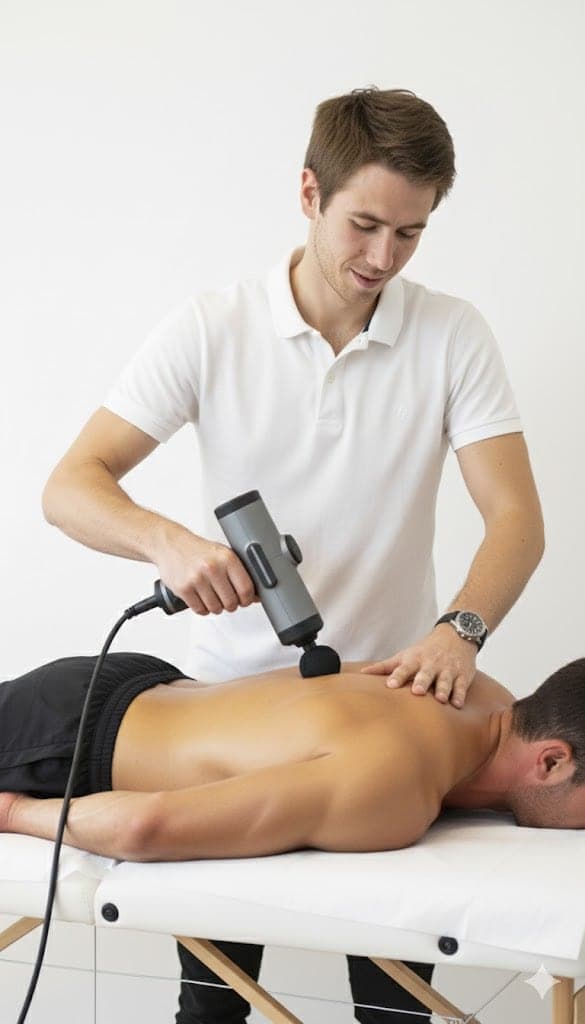
I travel to your location in Chlorakas with a professional treatment bench and specialized mechanical equipment that allows me to work at depths and with consistency that human hands simply cannot match. This isn’t traditional massage therapy—this is advanced mechanical bodywork designed to treat causative factors, not merely symptomatic presentation.
Why Traditional Relaxing Massage Fails to Deliver Lasting Results
Three years into my practice, I encountered a client who had received weekly massages for eighteen months. She described them as “lovely” and “very relaxing,” yet her chronic shoulder tension returned within forty-eight hours of every session. When I assessed her tissue quality, I discovered dense fascial adhesions at depths her previous therapists had never reached.
This scenario repeats itself constantly throughout Chlorakas and the broader Paphos region. Clients invest significant money into regular massage sessions that feel good momentarily but fail to produce structural change. The reason is straightforward: most massage modalities lack the mechanical advantage necessary to access restricted tissue layers where chronic tension patterns originate.
Traditional manual massage faces three fundamental limitations that prevent lasting results:
- Insufficient depth penetration due to the anatomical constraints of human hand strength and endurance
- Inconsistent pressure application as the therapist fatigues during longer sessions
- Inadequate precision when targeting specific fascial planes and adhesion sites
- Focus on symptom relief rather than addressing biomechanical dysfunction patterns
My approach eliminates these limitations through specialized mechanical equipment that delivers what I call the three pillars of effective bodywork: precision, power, and consistency.
The Science Behind Effective Stress Reduction Through Mechanical Deep-Tissue Work
Understanding how chronic stress manifests in the body requires knowledge of fascia—the connective tissue network that surrounds every muscle, organ, and structure in your body. When we experience psychological stress, our nervous system triggers a protective response that increases muscle tone throughout specific kinetic chains.
Over time, this elevated tone becomes pathological. The fascia responds by laying down additional collagen fibers in a disorganized pattern, creating what we call fascial adhesions. These adhesions restrict normal tissue glide, compress neural structures, and perpetuate the very tension patterns that created them.
True relaxation—the kind that persists beyond the treatment session—requires mechanical disruption of these adhesion patterns combined with nervous system downregulation. My specialized equipment achieves both simultaneously.
How Mechanical Advantage Changes Treatment Outcomes
The machine I use isn’t simply a vibration tool or percussion device. It’s a precision instrument that allows me to apply sustained, controlled pressure at specific vectors through multiple tissue layers. I can work at depths of 6-8 centimeters in larger muscle groups—far deeper than manual techniques permit—while maintaining perfect consistency throughout a 90-minute session.
This depth matters enormously. Surface-level work might temporarily increase circulation and provide pleasant sensations, but it doesn’t address the structural restrictions that maintain chronic tension patterns. When I work on a client with longstanding trapezius hypertonicity, I’m not just pressing on tight muscles—I’m systematically releasing fascial restrictions between the trapezius and underlying rhomboids, freeing adhesions along the medial scapular border, and restoring normal tissue glide through the entire shoulder girdle complex.
Clients frequently report that the first session with my mechanical approach releases tension they’ve carried for years. One gentleman in Chlorakas, a competitive cyclist, described the sensation as “feeling like someone finally found the knots that ten other therapists missed completely.”
The Comprehensive Approach to Stress Relief in Your Chlorakas Home
When I arrive at your home in Chlorakas, I bring everything needed for a clinical-grade treatment session: professional-quality massage bench, specialized mechanical equipment, medical-grade lubricants, and a systematic assessment protocol informed by my degree in Physical Education and Nutrition from Norway.
The convenience of receiving treatment at home serves a therapeutic purpose beyond mere comfort. Environmental familiarity keeps cortisol levels lower throughout the session, enhancing parasympathetic nervous system activation. You’re not dealing with traffic stress, parking concerns, or unfamiliar clinical environments. You simply transition from your treatment session directly into your own space, allowing the nervous system reset to continue uninterrupted.
What Happens During a Professional Home Session
My sessions follow a structured progression designed to maximize both immediate relaxation and long-term structural improvement:
- Postural and Movement Assessment: I evaluate how you stand, sit, and move to identify compensatory patterns that contribute to chronic tension accumulation.
- Tissue Quality Evaluation: Systematic palpation reveals restriction patterns, adhesion sites, and areas of altered tissue texture requiring focused intervention.
- Systematic Mechanical Release: Using the specialized equipment, I work through muscle groups and fascial planes in a specific sequence designed to address both local restrictions and regional biomechanical dysfunction.
- Integration and Homework: Every session concludes with specific movement recommendations and self-care protocols tailored to your presentation.
This isn’t a one-size-fits-all approach. An athlete preparing for competition receives entirely different treatment intensity and focus compared to someone managing chronic pain from desk work. The mechanical equipment allows me to adjust depth and intensity with precision impossible through manual techniques.
Understanding the Difference: Relaxation vs. Resolution
Here’s something most massage therapists won’t tell you: if you need regular sessions to maintain the same level of function, your treatment isn’t working. You’re managing symptoms rather than solving problems.
I had a client in Chlorakas who had been receiving monthly “relaxation massages” for three years. She assumed this was simply maintenance—that chronic neck tension was something she needed to manage indefinitely. During our first session, I explained that her forward head posture was creating sustained tension in her suboccipital muscles and upper trapezius, which manual massage was temporarily softening but never actually resolving.
After addressing the fascial restrictions in her anterior neck musculature (which were pulling her head forward), releasing adhesions along her thoracic spine, and providing specific postural correction exercises, her chronic neck tension resolved durably. She no longer requires monthly maintenance because we addressed the cause rather than repeatedly treating the effect.
This represents the fundamental difference between my approach and conventional massage therapy. Relaxation is an immediate byproduct of my work, but resolution is the goal.
Why Mechanical Precision Matters for Lasting Results
Manual massage therapists have off days. They fatigue during sessions. Their pressure application varies based on hand position, therapist size, and dozens of other variables. These inconsistencies mean that even when they accidentally find and release a significant restriction, they often can’t replicate that success consistently.
My mechanical approach eliminates this variability completely. Every session delivers identical precision and power. When I identify a restriction pattern that responds particularly well to specific treatment parameters, I can reproduce those exact conditions in subsequent sessions. This consistency accelerates progress dramatically.
| Treatment Characteristic | Traditional Manual Massage | Advanced Mechanical Deep-Tissue |
|---|---|---|
| Maximum Working Depth | 2-3 centimeters in large muscle groups | 6-8 centimeters with sustained precision |
| Pressure Consistency | Decreases as therapist fatigues | Perfectly consistent throughout entire session |
| Results Timeline | Temporary relief, recurring symptoms | Progressive improvement, lasting resolution |
| Treatment Focus | Symptom management, relaxation | Cause treatment, structural optimization |
| Session Variability | High—depends on therapist condition | None—mechanical precision every session |
How Chronic Stress Patterns Develop and Why They Require Specialized Intervention
Most people in Chlorakas dealing with chronic tension haven’t sustained acute injuries. Instead, they’ve accumulated micro-traumas through years of repetitive movement patterns, sustained postures, and stress-induced muscle guarding. This accumulation process creates what I call “tissue archaeology”—layers of compensatory adaptation built upon previous compensations.
Consider a typical desk worker who spends eight hours daily in anterior pelvic tilt with protracted shoulders and forward head posture. Initially, their body adapts remarkably well to these demands. Postural muscles increase baseline tone to support the compromised position. Fascia remodels to accommodate the altered loading patterns. The nervous system accepts this new position as “normal.”
But this adaptation comes at tremendous metabolic cost. Muscles maintained in chronic contraction develop trigger points—hypoxic nodules of continuously contracted sarcomeres. Fascia laid down to support dysfunctional patterns restricts normal movement. The nervous system becomes hypersensitive, interpreting normal mechanical input as threat.
After months or years, this person experiences their first episode of acute pain. They seek massage, which provides temporary relief by increasing local circulation and temporarily reducing muscle tone. But the underlying structural dysfunction—the forward head posture, the fascial restrictions, the movement pattern dysfunction—remains completely unaddressed.
They return to massage monthly, sometimes weekly, without ever resolving the fundamental problem. This is the cycle I interrupt with mechanical deep-tissue work combined with movement education.
The Neurological Component of Lasting Relaxation
Effective bodywork must address nervous system regulation, not just mechanical tissue restriction. The autonomic nervous system—specifically the balance between sympathetic (stress response) and parasympathetic (rest and digest) activity—determines how much baseline tension your muscles maintain.
Chronic stress keeps the sympathetic nervous system in constant elevation. Even during sleep, muscle tone remains elevated, preventing true recovery. My mechanical approach triggers profound parasympathetic activation through several mechanisms:
- Sustained deep pressure activates mechanoreceptors that signal safety to the central nervous system
- Release of chronic muscle guarding removes constant threat signals from muscle spindles
- Improved tissue perfusion reduces metabolic stress markers that maintain sympathetic tone
- Restoration of normal movement patterns eliminates continuous proprioceptive warning signals
Clients frequently describe entering deeply meditative states during sessions—not from surface-level relaxation techniques, but from the nervous system recognizing that structural threats have been genuinely addressed.
The Investment Perspective: Cost Analysis of Effective vs. Conventional Treatment
I’ve had potential clients in Chlorakas initially hesitate at my session rates, particularly when comparing them to budget massage options available in the region. This reaction reflects a fundamental misunderstanding of what we’re purchasing.
Conventional massage is an ongoing expense. You feel better temporarily, then return to baseline, then pay again for the same temporary improvement. Over years, you invest thousands of euros without ever achieving resolution. You’re purchasing a service that, by its very nature, requires endless repetition.
My mechanical deep-tissue work represents an investment in lasting structural improvement. We’re not managing symptoms indefinitely—we’re systematically resolving the biomechanical and fascial restrictions that create those symptoms. Most clients require between six and twelve sessions to achieve complete resolution of longstanding issues, after which they transition to occasional optimization sessions rather than mandatory maintenance.
Let me illustrate with real numbers from a client case:
Conventional approach: €60 per monthly massage × 36 months = €2,160 spent with ongoing tension requiring continued treatment.
Resolution approach: €120 per session × 8 sessions = €960 spent with lasting resolution and no ongoing maintenance requirement.
The resolution approach costs less than half as much while delivering infinitely superior results. This is why I describe my service as an investment rather than an expense—you’re purchasing freedom from chronic tension, not temporary management of it.
Who Benefits Most from Advanced Mechanical Deep-Tissue Work in Chlorakas
While anyone experiencing chronic tension or stress-related muscle dysfunction benefits from this approach, certain populations see particularly dramatic results:
Athletes and Active Individuals
Competitive athletes in Chlorakas consistently tell me they’ve never experienced bodywork this effective. The mechanical advantage allows me to work at intensities that would injure a manual therapist’s hands while remaining completely safe for the client. I can address dense scar tissue in previously injured areas, release fascial restrictions limiting performance, and optimize movement patterns for competitive advantage.
One triathlete I work with regularly describes the difference this way: “Every other massage I’ve received felt like preparation for training. Your sessions actually improve my performance—I’m faster, more mobile, and recover better after hard workouts.”
Chronic Pain Sufferers
People who’ve lived with persistent pain for years often feel hopeless about improvement. They’ve tried physical therapy, chiropractic care, multiple massage therapists, and seen minimal lasting benefit. When mechanical deep-tissue work finally releases the structural restrictions maintaining their pain patterns, the relief is often emotional as well as physical.
I worked with a woman in Chlorakas who had experienced daily tension headaches for seven years. Multiple healthcare providers had offered various explanations and treatments without success. During assessment, I identified severe fascial restriction in her suboccipital triangle combined with trigger points throughout her upper trapezius and levator scapulae.
After four sessions addressing these restrictions mechanically—work that would have been impossible manually due to the depth and density of adhesions—her headaches resolved completely. She recently passed her two-year anniversary without a single tension headache. This represents genuine resolution, not management.
Desk Workers and Professionals
The postural demands of modern work create predictable patterns of dysfunction. Forward head posture, rounded shoulders, anterior pelvic tilt, and shortened hip flexors develop so gradually that most people don’t recognize the structural changes until pain forces attention.
For professionals in Chlorakas working long hours at computers, my approach offers systematic reversal of these accumulated adaptations. We release anterior neck restrictions, restore normal scapular position, address thoracic spine rigidity, and re-establish proper hip mechanics. The result isn’t just pain relief—it’s restored function and prevention of future deterioration.
The Treatment Process: What to Expect from Your First Session
When I arrive at your home in Chlorakas for our initial session, expect a significantly different experience than conventional massage therapy. We’re not beginning with immediate hands-on work—we’re starting with assessment that informs everything that follows.
I’ll observe how you stand, noting weight distribution, spinal curves, shoulder position, and head carriage. I’ll watch you walk, sit, and perform basic movements. These observations reveal compensatory patterns that manual palpation alone would miss.
Then comes systematic tissue evaluation. I’m not just feeling for “tight spots”—I’m identifying fascial planes with restricted glide, adhesions between muscle layers, trigger points with characteristic referral patterns, and areas of altered tissue texture indicating chronic inflammation or previous injury.
Only after this comprehensive assessment do we begin mechanical treatment, and even then, the approach follows specific principles designed to maximize both immediate comfort and long-term results.
The Systematic Release Protocol
Effective bodywork follows anatomical and biomechanical logic, not just client preference for which areas receive attention. While I certainly address whatever concerns brought you to seek treatment, I do so within a framework that ensures we’re treating causes rather than chasing symptoms.
For example, many clients request focus on their upper trapezius because that’s where they feel tension most acutely. But that trapezius hypertonicity often results from anterior neck restrictions pulling the head forward, forcing the trapezius to work constantly to prevent further forward translation. If I only address the trapezius without releasing the anterior restrictions, I’m providing temporary symptom relief while the underlying cause continues operating.
My mechanical equipment allows me to work through these complex restriction patterns systematically. I can sustain precise pressure at specific depths for extended periods—something impossible manually—ensuring complete adhesion release rather than partial improvement.
Clients often report sensations during treatment that they’ve never experienced with manual massage: a feeling of restrictions “melting,” layers of tension releasing sequentially, or profound relaxation that seems to originate deep within their body rather than just at the surface.
Frequently Asked Questions About Advanced Mechanical Massage in Chlorakas
How is mechanical deep-tissue massage different from regular massage?
Traditional massage relies entirely on the therapist’s hands, which limits working depth, creates variability between sessions, and can’t maintain consistent pressure throughout longer treatment periods. My mechanical approach uses specialized equipment that works 3-4 times deeper than manual techniques, delivers perfectly consistent pressure regardless of session length, and allows precision targeting of specific fascial planes and adhesion sites. The difference in results is dramatic—most clients experience more tissue release in one mechanical session than they achieved through months of traditional massage.
Is mechanical massage painful?
Effective deep-tissue work exists in what I call the “therapeutic intensity zone”—deep enough to produce structural change but never causing protective muscle guarding or breath-holding. I adjust intensity precisely throughout the session based on tissue response and your feedback. Many clients describe the sensation as “hurts so good”—intense but satisfying, with immediate relief following release of chronic restrictions. Athletes typically request maximum intensity for dense scar tissue work, while others prefer moderate pressure that still achieves excellent results. The mechanical precision allows perfect calibration to your individual tolerance and therapeutic needs.
How many sessions will I need?
Most clients require 6-12 sessions for complete resolution of longstanding chronic tension patterns, depending on severity and duration of dysfunction. Acute issues often respond within 2-4 sessions. Unlike conventional massage where you’re committing to indefinite maintenance, my goal is always lasting resolution. Once we’ve addressed underlying structural restrictions and established healthy movement patterns, most clients transition to occasional optimization sessions every 2-3 months rather than weekly or monthly maintenance. I provide clear progress markers so you always know where you stand in the treatment timeline.
What should I do after a session to maximize results?
Post-session care significantly impacts treatment outcomes. I recommend remaining well-hydrated for 48 hours following treatment, as the mechanical work increases metabolic demand as tissues repair. Avoid intense exercise for 24 hours, allowing your nervous system to integrate the structural changes without additional stress. I provide specific movement homework tailored to your presentation—usually simple exercises performed daily that reinforce the tissue releases and movement pattern corrections achieved during treatment. Clients who consistently perform their homework progress substantially faster than those who rely solely on passive treatment.
Can mechanical massage help with stress-related tension?
Absolutely—in fact, stress-related tension responds particularly well because it typically manifests as fascial restriction and muscle guarding rather than structural damage. The deep, sustained pressure of mechanical work triggers profound parasympathetic nervous system activation, effectively resetting your stress response. Many clients report improved sleep quality, reduced anxiety, and greater stress resilience following just a few sessions. By releasing the physical holding patterns that maintain elevated sympathetic tone, we’re addressing stress at both physical and neurological levels simultaneously.
Why do you provide treatment at the client’s home rather than at a clinic?
Home treatment serves several therapeutic purposes beyond convenience. First, environmental familiarity keeps cortisol levels lower, enhancing parasympathetic activation during treatment. Second, you can immediately rest after our session without travel stress interrupting the nervous system reset. Third, I can observe your actual living and working environment, which provides valuable insight into postural habits and ergonomic factors contributing to tension patterns. Finally, home treatment eliminates all the friction—traffic, parking, scheduling around clinic hours—that prevents people from committing to the complete treatment protocol necessary for lasting results.
What makes your approach superior to other massage therapists in the Chlorakas area?
Most massage therapists provide relaxation-focused treatment designed for temporary stress relief. There’s nothing inherently wrong with that service, but it’s fundamentally different from what I offer. My background includes a university degree in Physical Education and Nutrition, a decade of specialized experience in advanced bodywork, and exclusive use of mechanical equipment that achieves depths and consistency impossible manually. I treat the biomechanical causes of chronic tension rather than repeatedly addressing symptoms. Clients come to me after exhausting other options because conventional approaches haven’t produced lasting change. My results speak clearly: people achieve lasting resolution of issues they’ve struggled with for years.
Do you work with specific conditions like frozen shoulder, sciatica, or chronic headaches?
Yes, these conditions often respond exceptionally well to mechanical deep-tissue work because they typically involve fascial restriction patterns that manual therapy can’t adequately address. Frozen shoulder requires release of the joint capsule and surrounding musculature at depths manual work rarely reaches. Sciatica often results from piriformis syndrome or lumbar fascial restrictions compressing neural structures—both readily treatable with precise mechanical intervention. Tension headaches usually stem from suboccipital and upper trapezius restrictions that respond dramatically to sustained deep release. However, I always recommend concurrent medical evaluation for these conditions to rule out serious underlying pathology requiring different intervention.
Making the Decision: Investment in Long-Term Health vs. Ongoing Symptom Management
If you’ve reached this point in the article, you’re likely someone who has already tried conventional approaches without achieving the lasting results you need. Perhaps you’ve received regular massages that feel wonderful during the session but leave you back at baseline within days. Maybe you’ve worked with multiple therapists, always hopeful that the next one will finally resolve your chronic tension, only to experience the same temporary improvements followed by inevitable return of symptoms.
I understand this frustration intimately because I encounter it daily with new clients throughout Chlorakas. The massage therapy industry has conditioned people to accept ongoing management rather than expect genuine resolution. But this conditioning serves the industry’s financial interests, not your health outcomes.
My approach challenges this paradigm completely. When you work with me, we’re pursuing lasting resolution of the biomechanical and fascial restrictions causing your symptoms. This requires different methodology than conventional massage—deeper work, mechanical precision, systematic protocols, and education about movement patterns that contribute to dysfunction.
It also requires different thinking about investment. You’re not paying for temporary feel-good sessions that leave underlying problems untouched. You’re investing in specialized expertise and advanced equipment that together deliver results conventional approaches simply cannot match.
The Partnership Model of Care
Lasting resolution requires active participation, not just passive treatment. While my mechanical work releases restrictions and resets dysfunctional patterns, you must reinforce these changes through modified movement habits and specific exercises I prescribe.
This partnership model means I’m selective about clients I accept. I only work with people genuinely committed to achieving lasting change, not those seeking occasional relaxation sessions. If your goal is pleasant but superficial treatment, numerous therapists in Chlorakas offer exactly that service. But if you’re tired of temporary management and ready to invest in lasting resolution, my approach delivers results that justify the commitment.
Taking the Next Step Toward Lasting Relief
Chronic tension and stress-related muscle dysfunction aren’t inevitable conditions you must simply endure. They’re structural problems with structural solutions—but only when addressed with sufficient depth, precision, and systematic methodology to produce genuine change.
After ten years specializing in advanced mechanical bodywork, I’ve refined an approach that consistently delivers outcomes conventional massage cannot match. Clients throughout Chlorakas who previously resigned themselves to ongoing pain management now enjoy complete freedom from restrictions they carried for years.
The question isn’t whether mechanical deep-tissue work could help you—based on the conditions described in this article, it almost certainly can. The real question is whether you’re ready to make the investment in lasting resolution rather than continuing temporary management.
If you are, the process is straightforward: I travel to your home in Chlorakas with everything needed for clinical-grade treatment. We begin with comprehensive assessment, develop a customized protocol based on your specific presentation, and systematically work toward complete resolution of your chronic tension patterns.
Most clients wish they’d found this approach years earlier, before wasting time and money on methods that were never designed to produce lasting change. Don’t let another month pass managing symptoms that could be durably resolved. Your body has tremendous capacity for restoration when given appropriate intervention—my specialized mechanical approach simply provides what conventional methods cannot.
The difference between temporary relaxation and lasting resolution is the difference between ongoing expense and genuine investment. Choose the latter, and experience what your body can feel like when chronic restrictions are finally, completely released.
Written by
Chris
Massage therapist & body mechanics specialist
Norwegian-certified with a Bachelor’s in Physical Education and Nutrition and over ten years of clinical practice, working from a portable table in clients’ homes across the Paphos district.
This article is general information from clinical practice, not a medical diagnosis. If you have severe, worsening or unexplained pain, numbness, weakness, or pain after an accident, see a doctor first.