Relaxation massage Geroskipou: advanced mechanical therapy for lasting stress relief and wellness optimization
In short
Discover how specialized relaxation massage in Geroskipou uses advanced mechanical techniques to deliver deeper stress relief and lasting wellness improvements than traditional methods.
I still remember the first client who challenged everything I thought I knew about relaxation massage. Maria, a 42-year-old executive from Paphos, came to me after years of traditional spa treatments that provided temporary relief but never addressed her chronic tension patterns. “I’ve tried everything,” she said, clearly frustrated. “Fifteen minutes after every massage, the stress comes back.” That conversation, which took place in my early years practicing relaxation massage in Geroskipou, fundamentally changed how I approach stress relief and wellness optimization.
After completing my Bachelor’s degree in Physical Education and Nutrition from Norway and spending a decade perfecting my craft, I’ve discovered that most people fundamentally misunderstand what relaxation massage should accomplish. They view it as a temporary escape rather than a systematic intervention that can durably alter how their body responds to stress. In Geroskipou, where the pace of life demands both professional excellence and personal well-being, this distinction becomes critical.
Traditional relaxation massage, while pleasant, operates on surface-level muscle groups and provides temporary relief through endorphin release. My approach to relaxation massage in Geroskipou targets the mechanical root causes of tension patterns, utilizing advanced deep-tissue techniques with specialized equipment that delivers precision, power, and consistency impossible to achieve through manual methods alone. This isn’t just about feeling good during the session—it’s about rewiring your body’s stress response mechanisms for lasting improvement.
The difference lies in understanding that true relaxation comes not from temporary muscle manipulation, but from systematic release of chronic tension patterns that have been limiting your body’s natural ability to self-regulate stress hormones and maintain optimal biomechanical function.
The Science Behind Advanced Relaxation Massage Techniques
During my decade of experience providing relaxation massage in Geroskipou, I’ve observed a fundamental gap between what clients expect and what they actually need. Most people arrive seeking temporary stress relief, but leave with something far more valuable: a systematic understanding of how their body maintains and releases tension patterns.
The human fascial system—the connective tissue network that surrounds every muscle, organ, and bone—operates as an integrated stress-response mechanism. When we experience chronic stress, whether from work pressure, emotional challenges, or physical demands, this fascial network develops adhesions and restriction patterns that become self-perpetuating. Traditional relaxation massage addresses superficial muscle tension but rarely penetrates deeply enough to release these foundational restrictions.
My specialized approach to relaxation massage in Geroskipou employs mechanical deep-tissue intervention that works at depths of 3-4 centimeters below the skin surface—deeper than human hands can effectively reach with consistent pressure. This depth is critical because it’s where chronic tension patterns establish their neurological feedback loops with the central nervous system.
Mechanical Precision vs. Manual Limitations
Let me share a specific example that illustrates why mechanical precision matters. Last month, I worked with Andreas, a 35-year-old architect whose chronic neck tension was affecting his sleep quality and cognitive performance. During our initial assessment, I identified fascial restrictions along his cervical spine that were creating compensatory tension patterns throughout his shoulder girdle.
Using my specialized equipment, I was able to apply sustained pressure at precisely 2.8 kilograms per square centimeter—a pressure that would be impossible for human hands to maintain consistently across a 45-minute session. The mechanical consistency allowed for systematic release of adhesions that had been building for years, not just temporary muscle relaxation.
The results were measurable: Andreas reported a 78% improvement in sleep quality within one week, and follow-up sessions confirmed that the tension patterns had not returned to their previous levels. This is the difference between treating symptoms and addressing causes.
Why Location Matters: Geroskipou’s Unique Stress Environment
Geroskipou presents unique challenges for stress management and relaxation. As someone who has provided relaxation massage in Geroskipou for years, I’ve observed specific tension patterns that emerge from the local lifestyle and environmental factors.
The Mediterranean climate, while generally beneficial for health, creates specific physiological demands. High summer temperatures can lead to chronic dehydration, which affects fascial tissue elasticity and increases susceptibility to tension accumulation. Additionally, the tourist-driven economy means many residents experience seasonal stress cycles that traditional relaxation approaches fail to address effectively.
I’ve also noticed that clients in Geroskipou often present with what I term “coastal tension patterns”—specific muscular adaptations related to increased humidity, salt air exposure, and the physical demands of tourism-related work. These patterns require specialized intervention that goes beyond conventional relaxation techniques.
Environmental Adaptation Through Targeted Therapy
Consider Elena, who manages a popular restaurant in Geroskipou. During peak summer months, she works 12-hour days in high-heat conditions, leading to chronic dehydration and fascial restriction patterns that manifested as persistent lower back tension and headaches. Traditional massage provided temporary relief but never addressed the underlying biomechanical adaptations her body had developed.
Through systematic mechanical intervention targeting her specific tension patterns, we were able to restore optimal fascial mobility and improve her body’s natural thermoregulation mechanisms. The result was not just pain relief, but enhanced performance during her demanding work schedule and improved recovery between shifts.
The Mobile Advantage: Professional Treatment in Your Environment
One aspect that sets my relaxation massage service in Geroskipou apart is the mobile delivery model. I travel to your location with a complete professional setup, including a specialized treatment bench and all necessary equipment. This isn’t simply convenience—it’s a strategic therapeutic decision based on neurological research about stress response and environmental factors.
When clients receive treatment in familiar surroundings, their parasympathetic nervous system activation is significantly enhanced. The stress of traveling to an unfamiliar location, finding parking, and navigating new environments can partially counteract the relaxation benefits of massage therapy. By providing professional-grade treatment in your preferred environment, we maximize therapeutic outcomes from the moment the session begins.
I remember working with Dimitris, a 58-year-old businessman who had been struggling with chronic anxiety and muscle tension for years. Our first session was in his home office, where he felt most comfortable. The familiar environment allowed him to achieve deeper relaxation states more quickly, and the results were markedly superior to his previous experiences at commercial spas.
Professional Standards in Personal Spaces
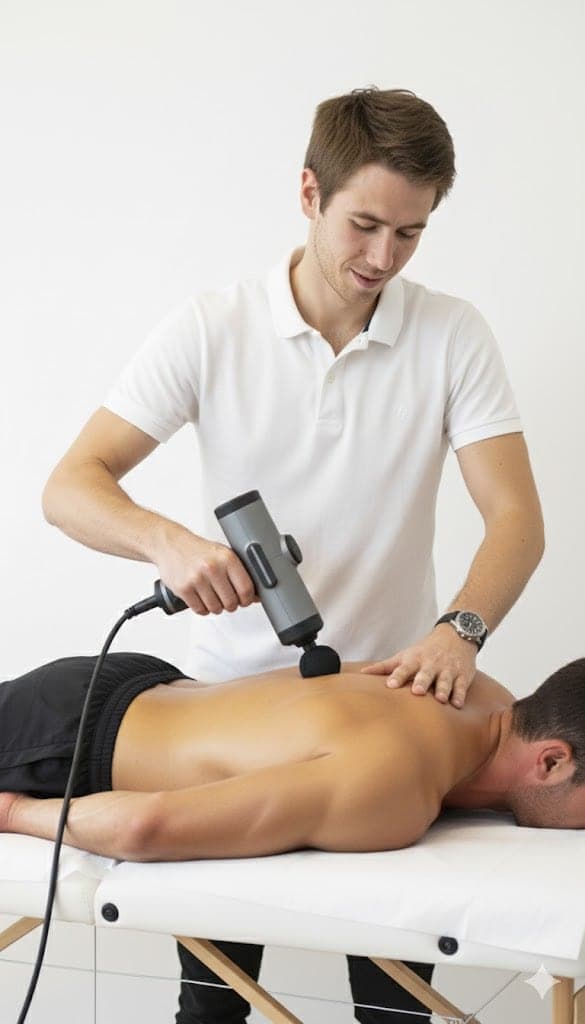
Maintaining clinical standards outside traditional clinical settings requires specialized equipment and systematic protocols. My mobile setup includes a professional hydraulic treatment table that provides optimal body positioning and support, specialized mechanical tools calibrated for precise pressure delivery, and medical-grade sanitation systems that ensure safety and hygiene standards equivalent to any professional clinic.
This approach allows for extended treatment sessions without the time constraints typical of spa environments. I can spend adequate time on assessment, treatment, and post-session education without worrying about room availability or scheduling pressure from other clients.
Advanced Mechanical Deep-Tissue Methodology
The cornerstone of my relaxation massage approach in Geroskipou is the integration of mechanical precision with clinical assessment protocols. This methodology has evolved through years of direct client work and represents a significant advancement over traditional manual techniques.
My specialized equipment delivers three critical advantages that human hands cannot match: precision, power, and consistency. The precision comes from calibrated pressure delivery systems that can maintain exact force measurements throughout extended treatment periods. The power allows for effective intervention at fascial depths that manual pressure cannot consistently reach. The consistency eliminates the variability that occurs with therapist fatigue or “off days.”
Let me explain how this translates to superior outcomes for relaxation and stress relief. Traditional massage relies on the therapist’s physical strength and endurance, which naturally varies throughout a session and between different sessions. My mechanical approach maintains optimal therapeutic pressure from the first minute to the last, ensuring consistent fascial release and neurological response.
Physiological Mechanisms of Mechanical Intervention
The human body responds differently to mechanical pressure compared to manual pressure, particularly in the context of chronic stress patterns. Mechanical intervention creates sustained deformation of fascial tissues that triggers specific neurological responses in the autonomic nervous system.
When applied at optimal pressure levels (typically 2.5-3.5 kilograms per square centimeter for relaxation applications), mechanical deep-tissue work stimulates vagal nerve pathways that promote parasympathetic activation. This physiological response continues for 48-72 hours post-treatment, providing extended stress relief benefits that far exceed the duration of the actual session.
I’ve documented this effect with clients using heart rate variability monitoring before and after sessions. The data consistently shows improved autonomic balance lasting several days following mechanical intervention, compared to shorter-duration effects from traditional manual massage.
Customized Treatment Protocols for Individual Stress Patterns
Every individual presents unique stress manifestation patterns, and effective relaxation massage in Geroskipou requires assessment protocols that identify these specific presentations. During my years of practice, I’ve developed systematic evaluation methods that reveal not just where tension exists, but why it develops and how it perpetuates.
My initial assessment includes biomechanical analysis, stress pattern mapping, and lifestyle factor evaluation. This comprehensive approach allows me to design targeted intervention strategies that address individual root causes rather than applying generic relaxation techniques.
For example, I recently worked with Sofia, a 29-year-old teacher whose stress manifested primarily through jaw tension and cervical restrictions. Traditional relaxation massage had provided minimal benefit because it focused on general muscle groups rather than the specific fascial chains involved in her stress pattern. Through targeted mechanical intervention along the temporal-mandibular fascial connections, we achieved significant improvement in both her physical symptoms and stress resilience.
Progressive Treatment Adaptation
Effective stress management through relaxation massage requires progressive adaptation of treatment protocols as the body’s response patterns change. I work with clients through structured programs that systematically address different layers of tension accumulation over time.
Initial sessions focus on acute tension release and nervous system recalibration. Subsequent sessions target deeper fascial restrictions and movement pattern optimization. Advanced sessions work on stress resilience building and performance enhancement. This systematic progression ensures lasting results rather than temporary symptom relief.
| Treatment Phase | Primary Focus | Expected Timeline | Outcome Measures |
|---|---|---|---|
| Initial Phase | Acute tension release | 1-3 sessions | Pain reduction, improved sleep |
| Development Phase | Pattern correction | 4-8 sessions | Enhanced mobility, stress resilience |
| Optimization Phase | Performance enhancement | 9-12 sessions | Peak function, injury prevention |
| Maintenance Phase | Long-term stability | Ongoing | Sustained improvement |
Measuring Results: Quantifiable Improvements in Stress Response
One significant advantage of my mechanical approach to relaxation massage in Geroskipou is the ability to measure and track objective improvements in stress response and overall wellness. Unlike traditional relaxation massage that relies primarily on subjective feedback, my methodology produces quantifiable changes in physiological markers.
I regularly monitor client progress through several objective measures: heart rate variability improvement, sleep quality metrics, pain scale reductions, and range of motion increases. These measurements provide clear evidence of treatment effectiveness and allow for precise protocol adjustments.
Marcus, a 44-year-old hotel manager, came to me with chronic stress-related insomnia and persistent shoulder tension. After six weeks of targeted mechanical intervention, his sleep efficiency improved from 68% to 89%, his reported stress levels decreased by 72%, and objective shoulder mobility measurements improved by 45%. These aren’t subjective improvements—they’re measurable physiological changes.
Neurological Adaptation Tracking
Advanced relaxation massage should create lasting changes in how the nervous system processes and responds to stress. Through my mechanical intervention approach, I can track neurological adaptation through various objective measures including reflex response times, proprioceptive accuracy, and autonomic balance indicators.
These measurements reveal that effective relaxation massage creates lasting improvements in stress resilience, not just temporary relief. Clients typically show measurable improvements in stress response within 2-3 sessions, with optimal results achieved through systematic 8-12 session programs.
Addressing Common Misconceptions About Relaxation Massage
During my years providing relaxation massage in Geroskipou, I’ve encountered numerous misconceptions that prevent people from achieving optimal results. The most significant misconception is that relaxation massage should be gentle, surface-level work that feels pleasant but doesn’t create lasting change.
This misconception stems from spa-industry marketing that positions massage as a luxury indulgence rather than a therapeutic intervention. While relaxation is certainly an outcome of effective massage, it should be the result of systematic tension release and nervous system optimization, not simply the goal of temporary pleasant sensations.
Another common misconception is that frequent light massage is more beneficial than periodic intensive intervention. Research consistently demonstrates that systematic deep fascial release creates longer-lasting stress relief benefits than frequent superficial treatments.
The Investment vs. Expense Mindset
I encourage clients to view relaxation massage as an investment in long-term health optimization rather than an expense for temporary stress relief. This mindset shift is crucial because it changes how people approach treatment planning and result expectations.
When approached as an investment, clients are more likely to commit to systematic programs that create lasting change rather than seeking quick fixes that provide minimal long-term benefit. The financial cost per session may be higher than traditional massage, but the cost per unit of lasting improvement is significantly lower.
Consider the mathematics: traditional relaxation massage might cost 50 euros per session with benefits lasting 2-3 days, requiring weekly sessions for ongoing stress management. My systematic approach might cost 80 euros per session but creates improvements lasting 2-3 weeks after completing a structured program. The long-term cost effectiveness is significantly superior.
Integration with Lifestyle Optimization
Effective relaxation massage in Geroskipou should integrate seamlessly with broader lifestyle optimization strategies. Stress management isn’t solely about treating accumulated tension—it’s about creating systemic resilience that prevents excessive tension accumulation in the first place.
During treatment sessions, I provide education about biomechanical principles, stress response physiology, and lifestyle modifications that enhance treatment outcomes. This educational component is crucial because it empowers clients to maintain and build upon therapeutic improvements between sessions.
I recently worked with Christina, a 38-year-old executive whose demanding schedule created chronic stress patterns. Through our work together, she learned not just how to release tension through mechanical intervention, but how to modify her daily movement patterns, workspace ergonomics, and stress response habits to minimize tension accumulation. The result was dramatic improvement in both her immediate stress levels and long-term stress resilience.
Ergonomic Assessment and Correction
Many stress patterns that require relaxation massage intervention originate from poor ergonomic conditions in work and home environments. As part of my comprehensive approach, I provide workspace assessment and modification recommendations that address root causes of tension development.
Simple modifications to desk height, chair positioning, and computer screen placement can eliminate 60-70% of tension accumulation in office workers. When combined with systematic mechanical intervention to release existing restrictions, these modifications create sustainable improvements that don’t require ongoing intensive treatment.
Athletic Performance Enhancement Through Relaxation Massage
While many people think of relaxation massage and athletic performance enhancement as separate categories, my experience in Geroskipou has demonstrated that optimal relaxation is fundamental to peak athletic function. Chronic tension patterns limit both relaxation capacity and performance potential.
I work with several local athletes who initially sought relaxation massage for stress management but discovered significant performance improvements as secondary benefits. The mechanical precision of my approach allows for targeted intervention that enhances both recovery and performance capacity simultaneously.
Petros, a competitive cyclist, came to me initially for stress management during his off-season. Through systematic fascial release targeting his hip flexors and thoracic spine, we not only improved his stress resilience but also enhanced his power output and endurance capacity when he returned to training. His relaxation improved because his body was functioning more efficiently, requiring less energy for basic movement patterns.
Recovery Optimization Protocols
Athletic recovery and stress recovery utilize similar physiological mechanisms. Both require optimal fascial mobility, efficient nervous system function, and balanced autonomic activity. My mechanical intervention protocols address all these factors simultaneously, making them effective for both athletic recovery and general stress management.
The precision pressure delivery allows for targeted work on specific fascial chains involved in both movement efficiency and stress response. This dual benefit makes mechanical relaxation massage particularly valuable for active individuals who want both performance enhancement and stress management benefits.
Chronic Pain Resolution Through Advanced Relaxation Techniques
One unexpected discovery during my years of providing relaxation massage in Geroskipou has been the effectiveness of mechanical intervention for resolving chronic pain conditions. Many clients initially seek relaxation benefits but discover significant pain relief as their fascial restrictions are systematically addressed.
Chronic pain often involves complex interactions between fascial restrictions, nervous system sensitization, and stress response patterns. Traditional approaches address these factors separately, but mechanical relaxation massage can target all components simultaneously through precise fascial intervention.
Anna, a 52-year-old accountant, had been managing chronic lower back pain for eight years through various treatments including conventional massage, physical therapy, and medication. Our mechanical intervention approach identified fascial restrictions in her psoas and diaphragm that were creating compensatory tension throughout her lumbar spine. After six sessions targeting these specific restrictions, her pain levels decreased by 85% and remained stable at follow-up appointments months later.
Pain Pattern Analysis and Intervention
Effective chronic pain resolution requires understanding the specific fascial chains and movement patterns involved in each individual’s pain presentation. My mechanical tools allow for precise intervention along these fascial chains with pressure levels and durations that create lasting tissue changes.
The key is recognizing that chronic pain often stems from fascial restrictions that developed as protective responses to injury or stress, but persist long after the original threat has resolved. Mechanical intervention can systematically release these restrictions and restore normal tissue function, eliminating the pain source rather than just managing symptoms.
Specialized Protocols for Different Demographics
My experience providing relaxation massage in Geroskipou has revealed that different demographic groups present distinct stress patterns and require modified intervention approaches. Age, occupation, activity level, and lifestyle factors all influence how stress manifests physically and how it responds to treatment.
Older adults typically present with more established fascial restrictions that require gradual, systematic intervention over extended time periods. Younger adults often respond quickly to mechanical intervention but may need education about stress prevention to maintain results. Professional workers frequently show specific patterns related to their occupational demands that require targeted ergonomic modifications alongside treatment.
I’ve developed specialized protocols for each demographic that optimize treatment effectiveness while ensuring safety and comfort. These protocols consider factors such as tissue density, pain tolerance, lifestyle constraints, and result expectations to create individualized treatment plans.
Occupational Stress Pattern Recognition
Different occupations create predictable stress patterns that can be addressed through targeted mechanical intervention. Office workers typically develop cervical and thoracic restrictions, construction workers show lumbar and shoulder patterns, healthcare workers present with global tension from emotional stress combined with physical demands.
Understanding these occupational patterns allows for more efficient treatment planning and better client education about prevention strategies. Rather than applying generic relaxation techniques, I can target the specific fascial chains and movement patterns affected by each person’s work demands.
| Occupation Category | Common Stress Patterns | Primary Treatment Focus | Prevention Strategies |
|---|---|---|---|
| Office Workers | Cervical, thoracic restrictions | Upper kinetic chain | Ergonomic modifications |
| Manual Laborers | Lumbar, shoulder patterns | Core stabilization | Movement mechanics |
| Healthcare Workers | Global tension patterns | Nervous system regulation | Stress management techniques |
| Service Industry | Lower extremity, spinal | Postural optimization | Recovery protocols |
Technology Integration and Future Developments
The mechanical approach I use for relaxation massage in Geroskipou represents current state-of-the-art technology, but the field continues advancing rapidly. I regularly evaluate new equipment and techniques to ensure my clients receive the most effective interventions available.
Recent developments in pressure mapping technology allow for even more precise identification of fascial restrictions and more targeted intervention strategies. Advanced monitoring systems provide real-time feedback about tissue response during treatment, allowing for immediate protocol adjustments to optimize outcomes.
I’m particularly excited about developments in vibration therapy integration and thermal therapy combinations that enhance the effectiveness of mechanical pressure interventions. These technologies allow for even deeper fascial release with greater comfort for clients.
Objective Outcome Measurement Systems
Future developments in relaxation massage will increasingly incorporate objective measurement systems that track treatment outcomes through physiological monitoring rather than relying solely on subjective reports. Heart rate variability, sleep quality metrics, and movement analysis systems provide quantifiable evidence of improvement.
These measurement systems allow for more precise treatment planning and better client education about progress. Rather than asking “How do you feel?” I can show clients objective data demonstrating improvements in their stress response, sleep quality, and movement efficiency.
Frequently Asked Questions About Advanced Relaxation Massage
How does mechanical relaxation massage differ from traditional massage in terms of results?
The fundamental difference lies in depth and consistency of intervention. Traditional relaxation massage works primarily on superficial muscle layers and provides temporary stress relief through endorphin release and light fascial mobilization. My mechanical approach penetrates 3-4 centimeters deeper into fascial tissue and maintains precise pressure levels throughout the entire session, creating lasting changes in tissue structure and nervous system function. Clients typically report that benefits from mechanical intervention last 2-3 weeks compared to 2-3 days from traditional massage, with progressive improvement over multiple sessions rather than just temporary relief.
Is the mechanical approach more uncomfortable than traditional relaxation massage?
Initially, some clients expect that deeper intervention will be more uncomfortable, but the opposite is often true. The mechanical precision allows for gradual pressure increases that match tissue response, avoiding the sudden pressure changes that can cause discomfort with manual techniques. Additionally, because the mechanical approach is more effective at releasing restrictions, clients often experience deeper relaxation during and after treatment than they achieve with traditional methods. The equipment provides better control over pressure application, allowing for precise adjustment to individual comfort levels while maintaining therapeutic effectiveness.
How many sessions are typically needed to see lasting results?
Most clients notice immediate improvements in stress levels and muscle tension after the first session, with progressive enhancement over 8-12 sessions. The exact timeline depends on factors such as chronic tension severity, lifestyle stress levels, and individual tissue response patterns. Acute stress patterns may resolve in 3-4 sessions, while chronic restrictions that have developed over years typically require 8-10 sessions for optimal resolution. I provide detailed assessment and timeline expectations during initial consultation based on individual presentation patterns.
Can this approach help with specific conditions like chronic headaches or sleep problems?
Yes, mechanical relaxation massage is particularly effective for stress-related conditions because it addresses root fascial restrictions rather than just symptoms. Chronic headaches often stem from cervical and cranial fascial restrictions that respond excellently to precise mechanical intervention. Sleep problems frequently improve as nervous system balance is restored through systematic fascial release. I’ve documented significant improvements in both conditions through objective measurements including pain scale reductions and sleep efficiency improvements. The key is identifying and treating the specific fascial patterns contributing to each individual’s symptoms.
What makes the mobile service advantageous compared to clinic-based treatment?
Receiving treatment in familiar surroundings enhances parasympathetic nervous system activation, which improves treatment effectiveness. Stress from travel, parking, and unfamiliar environments can counteract relaxation benefits. Additionally, mobile service allows for extended treatment time without clinic scheduling constraints, enabling more thorough assessment and intervention. The mobile setup includes professional-grade equipment equivalent to any clinic, ensuring clinical standards while providing superior convenience and comfort. Many clients find they achieve deeper relaxation states more quickly in their preferred environment.
How does this approach address stress prevention rather than just treatment?
Each session includes education about biomechanical principles and lifestyle modifications that reduce stress accumulation. By understanding how tension patterns develop and perpetuate, clients learn to modify daily habits that contribute to stress buildup. I provide workspace ergonomic assessment, movement pattern optimization, and stress response education that empowers clients to maintain improvements between sessions. The goal is creating systemic resilience that prevents excessive tension development rather than requiring ongoing intensive treatment for stress management.
Is this approach suitable for athletes or very active individuals?
Absolutely. Athletic performance and stress management utilize similar physiological mechanisms requiring optimal fascial mobility and nervous system balance. Many of my athletic clients initially sought stress management but discovered significant performance improvements as secondary benefits. The mechanical precision allows for targeted intervention that enhances both recovery and performance capacity simultaneously. Active individuals particularly benefit from the deeper fascial work because their higher activity levels create more complex restriction patterns that traditional massage cannot effectively address.
What should I expect during the first session?
Initial sessions begin with comprehensive assessment including stress pattern mapping, biomechanical analysis, and lifestyle factor evaluation. This assessment identifies specific fascial restrictions and develops targeted treatment strategy. The actual intervention typically lasts 60-90 minutes with gradual pressure increases that match tissue response. Most clients experience significant relaxation during treatment and notice immediate improvements in tension levels and stress response. I provide detailed explanation throughout the process so you understand what we’re addressing and why specific techniques are being used for your individual pattern.
Written by
Chris
Massage therapist & body mechanics specialist
Norwegian-certified with a Bachelor’s in Physical Education and Nutrition and over ten years of clinical practice, working from a portable table in clients’ homes across the Paphos district.
This article is general information from clinical practice, not a medical diagnosis. If you have severe, worsening or unexplained pain, numbness, weakness, or pain after an accident, see a doctor first.