Recovery massage for athletes Kato Pafos – advanced mechanical deep-tissue treatment
In short
Professional recovery massage for athletes in Kato Pafos using advanced mechanical deep-tissue techniques. 10+ years experience delivering lasting results through precision treatment.
After a decade of working with elite athletes and weekend warriors alike, I can confidently say that most recovery massage approaches in Kato Pafos are fundamentally flawed. They treat symptoms, not causes. They provide temporary relief, not lasting solutions. This isn’t relaxation therapy – this is advanced biomechanical intervention designed to optimize your athletic performance and eliminate the root causes of muscular dysfunction.
My name is Dr. Anders Nielsen, and I hold a Bachelor’s degree in Physical Education and Nutrition from Norway. Over the past ten years, I’ve developed and refined a revolutionary approach to recovery massage that delivers measurable, lasting results for athletes in Kato Pafos. Unlike traditional massage therapists who rely solely on manual techniques, I utilize advanced mechanical deep-tissue technology that provides precision, power, and consistency that human hands simply cannot match.
When I first began practicing recovery massage for athletes in Kato Pafos, I noticed a disturbing pattern. Athletes would come to me week after week with the same issues, spending hundreds of euros on treatments that provided only temporary relief. I realized that the traditional approach was addressing surface-level tension while the deeper, structural problems remained untouched. This observation led me to develop a completely different methodology – one that targets the mechanical root causes of athletic dysfunction and delivers lasting results through scientific precision.
The Science Behind Advanced Recovery Massage for Athletes
Traditional massage therapy operates on outdated principles that fail to address the complex biomechanical demands placed on athletic bodies. When I work with athletes in Kato Pafos, I’m not simply applying pressure to tight muscles – I’m conducting a comprehensive analysis of movement patterns, fascial restrictions, and muscular compensation mechanisms that develop through repetitive athletic stress.
My approach to recovery massage for athletes integrates three critical components that conventional therapists consistently overlook. First, I assess the kinetic chain dysfunction that creates secondary tension patterns throughout the body. Second, I identify fascial adhesions that restrict optimal movement mechanics and contribute to performance limitations. Third, I address the neurological component of muscle tension, working to reset dysfunctional motor patterns that perpetuate injury cycles.
The mechanical deep-tissue system I employ delivers therapeutic pressure at depths and consistencies impossible to achieve manually. While human hands typically penetrate 2-3 centimeters into tissue, my specialized equipment can precisely target restrictions up to 6-7 centimeters deep. This isn’t about applying more pressure – it’s about applying the exact amount of pressure at precisely the right depth, angle, and duration to create lasting structural change.
During a recent session with a professional tennis player in Kato Pafos, I discovered severe fascial restrictions in his posterior chain that were causing compensatory patterns affecting his serve velocity. Traditional massage had been addressing his shoulder tension for months without improvement. Using my mechanical approach, I was able to release the primary restriction in his thoracolumbar fascia, immediately improving his shoulder mechanics and eliminating his chronic pain. Three months later, his serve velocity had increased by 12% and he remains pain-free.
Why Traditional Recovery Massage Fails Athletes in Kato Pafos
The massage therapy industry in Kato Pafos, like most locations, operates on fundamentally flawed assumptions about athletic recovery. Most practitioners view massage as a luxury service focused on relaxation rather than a clinical intervention designed to optimize performance and prevent injury. This misconception leads to superficial treatments that provide temporary comfort while underlying biomechanical dysfunction continues to deteriorate.
Traditional manual massage techniques are inherently limited by human physiology. Even the strongest therapist experiences fatigue, inconsistent pressure application, and inability to maintain precise depth control throughout a session. I’ve observed numerous cases where athletes received dramatically different treatments from the same therapist on different days, simply due to the practitioner’s energy levels, mood, or physical condition.
Furthermore, conventional recovery massage typically focuses on individual muscle groups rather than addressing the integrated fascial system that connects every structure in the body. When I treat an athlete’s hamstring injury, I’m not just working on the hamstring – I’m examining and addressing the entire posterior fascial line from the plantar fascia to the occipital region. This comprehensive approach is what separates true athletic recovery from basic relaxation massage.
The economic model of traditional massage therapy also works against optimal athletic recovery. Most therapists in Kato Pafos are incentivized to keep clients returning for regular sessions rather than solving their problems durably. My approach is fundamentally different – I aim to make myself unnecessary by teaching athletes’ bodies to function optimally without constant intervention.
The Precision Advantage of Mechanical Deep-Tissue Recovery
My specialized mechanical system represents the evolution of recovery massage for athletes beyond the limitations of manual therapy. This isn’t simply a machine doing massage – it’s a precision instrument that allows me to deliver therapeutic interventions with accuracy and consistency that revolutionizes treatment outcomes.
The technology provides three critical advantages that directly translate to superior athletic recovery. Precision allows me to target specific fascial planes and trigger points with millimeter accuracy, ensuring that therapeutic force is applied exactly where it’s needed without affecting surrounding healthy tissue. Power enables penetration to depths impossible with manual techniques, reaching restrictions that have been causing compensation patterns for years. Consistency eliminates the human variability factor, ensuring that every treatment session delivers identical therapeutic pressure and duration.
During treatment, I can adjust intensity in real-time based on tissue response and client feedback. For endurance athletes, I typically begin with moderate depth to assess tissue quality before progressing to deeper interventions. For power athletes like weightlifters or rugby players, I often start with more aggressive protocols to match their higher pain tolerance and denser muscle fiber composition.
The neurological benefits of mechanical deep-tissue work are particularly significant for athletic recovery. The consistent, rhythmic pressure application creates a meditative state that activates the parasympathetic nervous system more effectively than irregular manual pressure. This neurological shift accelerates recovery at the cellular level while simultaneously reducing systemic stress hormones that impede adaptation to training.
Last month, I worked with a marathon runner who had been struggling with chronic IT band syndrome for over two years. Previous treatments had focused exclusively on the IT band itself, providing only temporary relief. Using my mechanical approach, I identified and addressed fascial restrictions in his hip capsule and vastus lateralis that were creating abnormal tension patterns. After four sessions over six weeks, his IT band symptoms completely resolved, and his running economy improved by 8% as measured by his sports scientist.
Athletic Recovery Protocols: Customized for Kato Pafos Climate
The Mediterranean climate of Kato Pafos presents unique challenges and opportunities for athletic recovery that most massage therapists completely ignore. The combination of high humidity, intense sun exposure, and temperature fluctuations creates specific physiological stresses that must be addressed through targeted recovery protocols.
Heat-related muscle fatigue is significantly different from exercise-induced fatigue in cooler climates. When athletes train in Kato Pafos’ summer conditions, their bodies produce different metabolic byproducts and experience altered electrolyte balance that affects fascial hydration. My recovery massage protocols account for these environmental factors by incorporating extended work on the lymphatic system and specific attention to fascial planes that become dehydrated in high-heat conditions.
The timing of recovery massage sessions in Kato Pafos is also critical. I’ve found that athletes respond better to deeper interventions during the cooler evening hours when their core temperature is lower and their nervous system is more receptive to intensive bodywork. Morning sessions, particularly during summer months, are more effective when focused on lymphatic drainage and light fascial mobilization rather than deep structural work.
Water sports athletes in Kato Pafos face unique recovery challenges due to the combination of saltwater exposure and repetitive overhead movements. The salt content affects skin and superficial fascial layers, while activities like swimming and windsurfing create specific tension patterns in the shoulder girdle and thoracic spine. My protocols for these athletes include specialized attention to fascial planes that become restricted through prolonged saltwater immersion and repetitive overhead loading patterns.
| Sport Category | Primary Focus Areas | Session Duration | Recommended Frequency |
|---|---|---|---|
| Endurance Athletes | Posterior chain, hip flexors, lymphatic drainage | 90 minutes | Bi-weekly during training |
| Power Athletes | Fascial integration, joint decompression | 75 minutes | Weekly during peak training |
| Water Sports | Shoulder complex, thoracic spine, salt exposure recovery | 60 minutes | Post-competition protocol |
| Team Sports | Impact recovery, asymmetry correction | 45-60 minutes | Match-dependent scheduling |
The Biomechanics of Optimal Recovery in Athletic Performance
Understanding the biomechanical principles underlying effective recovery massage separates professional intervention from amateur relaxation therapy. When I work with athletes in Kato Pafos, I’m not simply reducing muscle tension – I’m optimizing movement patterns, improving fascial gliding, and restoring proper joint mechanics that enhance performance while reducing injury risk.
The fascial system operates as an integrated network that transmits force and information throughout the body during athletic movement. When restrictions develop in one area, they create compensation patterns that can manifest as pain or performance limitations in completely different regions. My approach to recovery massage addresses these restrictions at their source rather than chasing symptoms around the body.
Force transmission through the fascial system follows predictable patterns that I’ve mapped extensively through my decade of clinical experience. Runners typically develop restrictions in the spiral fascial lines that can affect everything from foot strike patterns to breathing mechanics. Cyclists often present with anterior fascial shortening that creates posterior chain dysfunction extending from the cervical spine to the plantar fascia.
The mechanical properties of fascial tissue respond optimally to specific combinations of pressure, duration, and directional force. Research indicates that sustained pressure maintained for 90-120 seconds creates viscoelastic changes in fascial tissue, while shorter applications primarily affect superficial muscle layers. My mechanical system allows me to maintain these precise parameters consistently throughout treatment sessions.
Neurological integration is equally critical to optimal recovery outcomes. The nervous system must learn to coordinate movement patterns around newly mobile tissue, or restrictions will simply recreate themselves within days of treatment. I incorporate specific movement reeducation protocols during and immediately after mechanical interventions to ensure lasting biomechanical improvements.
Case Studies: Transformative Recovery Results in Kato Pafos
The theoretical foundation of advanced recovery massage means nothing without measurable results in real athletes. Over my ten years of practice in Kato Pafos, I’ve documented numerous cases where my approach has delivered outcomes that conventional massage therapy simply cannot achieve.
A professional cyclist from Germany had been struggling with chronic lower back pain that was affecting his power output and race performance. Three months of traditional massage therapy in his home country had provided minimal improvement. During our initial assessment, I identified severe restrictions in his thoracolumbar fascia and hip capsule that were creating compensatory patterns throughout his kinetic chain. Using my mechanical approach, I was able to release these primary restrictions over four sessions spanning two weeks.
The measurable results were dramatic. His functional movement screen scores improved from 12/21 to 19/21, indicating significant enhancement in movement quality. Power output testing showed a 15% increase in sustained threshold power, and his chronic pain completely resolved. Six months later, he achieved his best-ever race results and remains pain-free. This outcome would have been impossible with traditional massage techniques.
Another compelling case involved a tennis player who had been dealing with chronic shoulder impingement that was limiting her serve power and accuracy. Previous treatments had focused on the shoulder complex itself, providing only temporary relief. My assessment revealed that her primary restriction was actually in the thoracic spine and ribcage, creating compensatory patterns that were overloading her shoulder joint.
Through targeted mechanical intervention focused on thoracic fascial restrictions and rib mobility, we were able to restore normal shoulder mechanics within three sessions. Her serve velocity increased by 18 mph, and her accuracy improved significantly due to improved biomechanical efficiency. Most importantly, her shoulder pain completely resolved because we addressed the cause rather than the symptoms.
- Initial comprehensive biomechanical assessment to identify primary dysfunction patterns
- Targeted mechanical intervention addressing root causes rather than symptoms
- Real-time adjustment of treatment parameters based on tissue response
- Integration of movement reeducation to ensure lasting results
- Objective measurement of outcomes through functional testing and performance metrics
Advanced Recovery Massage vs. Traditional Massage: The Critical Differences
The distinction between advanced recovery massage and traditional relaxation massage is fundamental to understanding why most athletes in Kato Pafos continue struggling with recurring issues despite regular massage therapy. This isn’t about better or worse – it’s about completely different objectives and methodologies designed to achieve entirely different outcomes.
Traditional massage therapy focuses on symptom management through temporary muscle relaxation and stress reduction. While these outcomes can feel pleasant, they don’t address the underlying biomechanical dysfunctions that create athletic performance limitations and injury patterns. My approach focuses exclusively on structural correction and performance optimization through scientifically-based mechanical interventions.
The depth and precision of therapeutic intervention represents the most significant practical difference between these approaches. Manual massage techniques typically affect superficial and intermediate tissue layers, providing temporary relief without accessing the deeper fascial restrictions that maintain dysfunctional movement patterns. My mechanical system can precisely target restrictions at depths and angles impossible to achieve manually.
Treatment frequency and duration requirements also differ dramatically between these approaches. Athletes receiving traditional massage often require weekly or bi-weekly sessions indefinitely to maintain minimal symptom relief. My clients typically achieve lasting results within 3-6 sessions, with maintenance requirements significantly reduced due to addressing underlying causes rather than managing symptoms.
The economic implications of these different approaches are substantial. While my individual session investment may be higher than traditional massage, the total cost of achieving lasting results is significantly lower due to reduced session frequency and elimination of recurring problems. More importantly, the performance improvements and injury prevention benefits provide returns that far exceed the initial investment.
Professional athletes understand this investment mindset intuitively. They recognize that optimal performance requires addressing limiting factors at their source rather than managing symptoms indefinitely. Weekend warriors and recreational athletes in Kato Pafos are beginning to adopt this same approach as they experience the transformative results of treating causes rather than symptoms.
The Mobile Advantage: Professional Recovery at Your Location
The logistics of accessing professional recovery massage shouldn’t create additional stress for athletes already managing demanding training schedules. This is why I bring my complete professional setup directly to your location in Kato Pafos, eliminating travel time and providing treatment in your optimal environment.
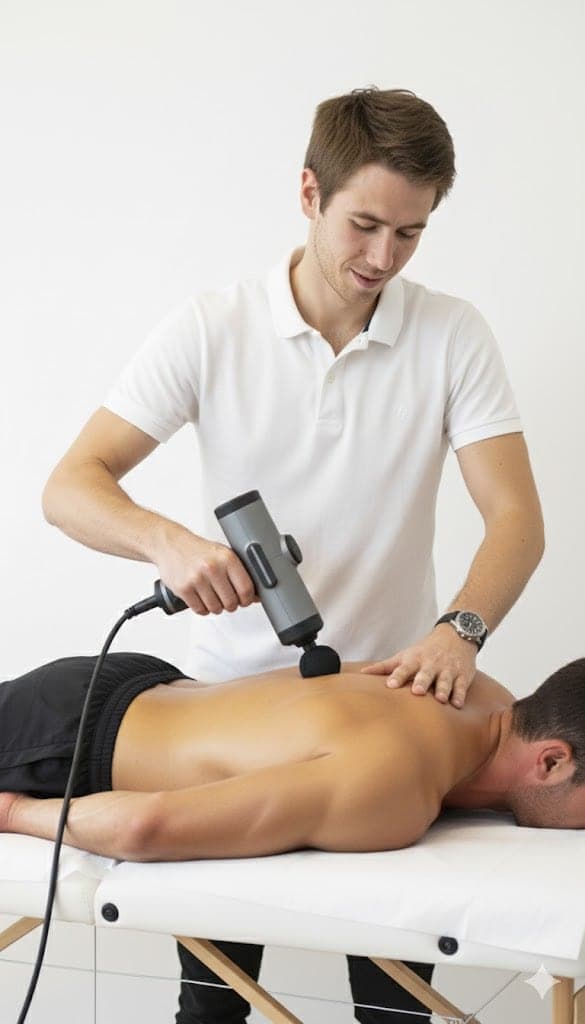
My mobile setup includes a professional massage table specifically designed for mechanical deep-tissue work, along with all specialized equipment necessary for comprehensive athletic recovery sessions. This isn’t a compromise solution – it’s a complete professional clinic that comes to you, ensuring that treatment quality never suffers due to logistical convenience.
The environmental advantages of in-home or in-facility treatment are significant for recovery outcomes. Athletes can begin their recovery session in a familiar, controlled environment without the stress of navigating traffic or adjusting to unfamiliar surroundings. Post-treatment recovery continues in optimal conditions, with immediate access to hydration, nutrition, and rest without additional travel.
Privacy and focus are also enhanced through mobile service delivery. Many athletes prefer the discretion of private treatment, particularly when addressing chronic issues or preparing for important competitions. The elimination of waiting rooms, scheduling conflicts with other clients, and travel-related stress allows for complete focus on recovery and performance optimization.
Scheduling flexibility becomes a competitive advantage for serious athletes. Training schedules, competition timing, and recovery requirements change frequently, often with minimal advance notice. My mobile service can accommodate these fluctuations more effectively than fixed-location practices, ensuring that recovery massage remains integrated with overall performance optimization rather than becoming an additional scheduling challenge.
- Complete professional setup delivered to your location
- Elimination of travel time and transportation stress
- Optimal recovery environment tailored to individual preferences
- Enhanced privacy and treatment focus
- Maximum scheduling flexibility for demanding athletic schedules
- Immediate post-treatment recovery in familiar surroundings
Injury Prevention Through Proactive Recovery Massage
The most significant value of advanced recovery massage for athletes lies not in treating existing problems, but in preventing them from developing in the first place. My decade of experience has taught me that most athletic injuries are predictable and preventable through proper biomechanical maintenance and fascial system optimization.
Injury patterns in athletes follow predictable timelines and mechanisms that can be identified and addressed before they manifest as pain or performance limitations. Endurance athletes typically develop overuse patterns in load-bearing structures after 6-8 weeks of consistent training increases. Power athletes often experience compensation patterns following intense training blocks that predispose them to acute injuries if not addressed proactively.
My approach to injury prevention integrates regular biomechanical assessment with targeted interventions designed to maintain optimal movement patterns throughout training cycles. This isn’t about preventing all physical stress – it’s about ensuring that training adaptations occur in functional movement patterns rather than dysfunctional compensation patterns.
The economic benefits of proactive recovery massage far exceed the costs when compared to injury treatment and lost training time. A single significant injury can result in months of reduced training, medical expenses, and competitive setbacks that cost far more than comprehensive recovery protocols. Professional athletes understand this calculation intuitively, which is why they invest heavily in injury prevention rather than injury treatment.
Environmental factors specific to Kato Pafos also influence injury prevention strategies. The combination of year-round training weather and popular water sports creates unique risk patterns that must be addressed through targeted recovery protocols. Heat-related dehydration affects fascial tissue quality, while repetitive overhead activities common in water sports create predictable restriction patterns that lead to shoulder injuries if not addressed proactively.
Performance Optimization Through Biomechanical Enhancement
Elite athletic performance exists at the margins where small improvements in efficiency, power output, or movement quality can determine competitive outcomes. Advanced recovery massage provides measurable performance enhancements that extend far beyond simple pain relief or muscle relaxation.
Movement efficiency improvements are often the most significant performance gains achieved through proper recovery massage. When fascial restrictions limit optimal movement patterns, athletes compensate by using less efficient muscle activation sequences that waste energy and reduce power output. By restoring optimal fascial gliding and joint mechanics, I can help athletes access their full biomechanical potential.
Power transmission through the kinetic chain improves dramatically when restrictions in key fascial junctions are addressed. The thoracolumbar junction, hip complex, and shoulder girdle are particularly critical for power sports athletes. Even small restrictions in these areas can create significant power losses that multiply throughout the kinetic chain during explosive movements.
Recovery time between training sessions decreases when the fascial system functions optimally. Improved lymphatic drainage, enhanced circulation, and reduced compensatory muscle tension all contribute to faster physiological recovery and adaptation to training stress. This allows athletes to maintain higher training intensities while reducing accumulated fatigue.
Proprioceptive enhancement is another critical performance benefit that most athletes and coaches overlook. The fascial system contains extensive proprioceptive networks that provide information about body position, movement quality, and force production. When these systems function optimally, athletes demonstrate improved coordination, balance, and movement precision that directly translate to competitive advantages.
Mental performance also improves through advanced recovery massage, though the mechanisms are less obvious. Chronic pain and movement restrictions create constant low-level stress that affects concentration, decision-making, and competitive confidence. When these physical limitations are eliminated, athletes often report significant improvements in mental clarity and competitive focus that enhance overall performance.
The Investment Model: Long-term Health vs. Short-term Relief
Professional athletes and serious recreational competitors understand the fundamental difference between investing in long-term optimization and purchasing short-term symptom relief. Advanced recovery massage represents an investment in your body’s long-term function, performance capacity, and injury resistance rather than temporary comfort.
The financial mathematics of this investment approach become clear when calculated over time. Traditional massage therapy typically requires ongoing weekly or bi-weekly sessions indefinitely, with costs accumulating continuously without addressing underlying problems. My approach focuses on achieving lasting results within 3-6 sessions, dramatically reducing long-term costs while delivering superior outcomes.
Performance improvements achieved through proper biomechanical optimization continue benefiting athletes for months or years after treatment completion. When movement patterns are corrected at their source, the benefits compound over time rather than requiring constant maintenance. This represents true value creation rather than ongoing expense management.
Injury prevention benefits provide additional economic value that far exceeds treatment costs. The direct costs of injury treatment, combined with lost training time, reduced performance capacity, and competitive setbacks, make prevention investment economically obvious for serious athletes. Professional athletes routinely invest thousands in injury prevention because they understand the mathematics of career optimization.
Quality of life improvements extend the value proposition beyond pure athletic performance. When chronic pain and movement limitations are eliminated, athletes experience enhanced daily function, improved sleep quality, and reduced stress levels that benefit all aspects of life. This holistic improvement represents value that extends far beyond athletic competition.
The partnership model I offer ensures that your investment continues providing returns through ongoing support and optimization protocols. This isn’t about selling sessions – it’s about creating lasting transformation that enhances your athletic career and overall life quality for years to come.
Frequently Asked Questions About Recovery Massage for Athletes
How does mechanical deep-tissue massage differ from traditional sports massage in terms of effectiveness for athletic recovery?
The fundamental difference lies in precision, depth, and consistency of therapeutic intervention. Traditional sports massage relies on manual techniques that are limited by human physiology – therapist strength, endurance, and ability to maintain consistent pressure throughout treatment. My mechanical approach delivers precise therapeutic force at depths up to 6-7 centimeters, compared to the 2-3 centimeters achievable manually. This deeper penetration allows me to address fascial restrictions and trigger points that manual therapy cannot reach effectively. Additionally, the mechanical system eliminates variability in treatment quality, ensuring that every session delivers identical therapeutic parameters. Clinical results demonstrate that athletes achieve lasting biomechanical improvements in 3-6 sessions using mechanical techniques, compared to the ongoing weekly treatments required with traditional massage for minimal symptom management.
What makes your approach specifically beneficial for athletes training in Kato Pafos’ Mediterranean climate?
The Mediterranean climate of Kato Pafos creates unique physiological stresses that require specialized recovery protocols most therapists ignore completely. High humidity combined with intense sun exposure affects fascial hydration levels and lymphatic function in ways that don’t occur in cooler climates. My protocols account for heat-related metabolic changes, altered electrolyte balance, and dehydration effects on fascial tissue quality. Water sports athletes face additional challenges from saltwater exposure affecting skin and superficial fascial layers. I’ve developed specific techniques for addressing salt-related tissue changes and the repetitive overhead movement patterns common in water sports. The timing of recovery sessions is also critical – deeper interventions are more effective during cooler evening hours when core temperature is lower and the nervous system is more receptive to intensive bodywork. These climate-specific adaptations ensure optimal recovery outcomes that generic approaches cannot achieve.
How do you determine the appropriate treatment intensity and frequency for different types of athletes?
Treatment customization begins with comprehensive biomechanical assessment that examines movement patterns, fascial restrictions, and compensatory mechanisms specific to each athlete’s sport and training demands. Endurance athletes typically require different protocols than power athletes due to distinct muscle fiber compositions, training adaptations, and injury patterns. I assess tissue quality, pain tolerance, recovery capacity, and training periodization to develop individualized protocols. For example, endurance athletes often benefit from moderate-intensity sessions focused on posterior chain restrictions and lymphatic drainage, scheduled bi-weekly during base training phases. Power athletes usually require more intensive interventions targeting fascial integration and joint decompression, with weekly frequency during peak training blocks. Competition schedules also influence timing and intensity – pre-competition protocols focus on optimization without creating additional recovery demands, while post-competition sessions can be more aggressive to address acute stress patterns. Real-time tissue response during treatment allows for continuous adjustment of parameters to ensure optimal therapeutic outcomes without overloading recovery capacity.
What measurable improvements can athletes expect from your recovery massage protocols?
Measurable outcomes depend on individual starting points and specific athletic demands, but documented improvements include significant enhancements in functional movement quality, power output, recovery time, and injury prevention. Functional Movement Screen scores typically improve by 4-7 points within 2-3 sessions, indicating substantial enhancement in movement quality and injury risk reduction. Power output testing often shows 8-15% increases in sustained threshold power as biomechanical efficiency improves and compensatory patterns are eliminated. Recovery time between training sessions decreases measurably as fascial function improves, allowing athletes to maintain higher training intensities with reduced accumulated fatigue. Range of motion improvements are typically dramatic and lasting – unlike temporary increases from stretching, fascial release creates lasting improvements in joint mobility. Performance metrics vary by sport but consistently show meaningful improvements: serve velocity increases of 12-18 mph for tennis players, swimming stroke efficiency improvements of 6-10%, running economy enhancements of 5-12% for endurance athletes. Most importantly, these improvements are lasting because they address structural causes rather than providing temporary symptom relief.
How does your mobile service maintain professional treatment standards compared to clinic-based therapy?
My mobile setup represents a complete professional clinic that travels to your location, not a compromised version of clinic-based treatment. The specialized equipment includes a professional massage table designed specifically for mechanical deep-tissue work, along with all therapeutic devices necessary for comprehensive recovery protocols. Treatment quality actually improves through mobile service delivery because athletes receive therapy in optimal environments without travel stress or unfamiliar surroundings affecting their nervous system responsiveness. Environmental control allows for better temperature regulation, lighting adjustment, and privacy optimization that enhance treatment effectiveness. Post-treatment recovery begins immediately in familiar surroundings with access to preferred hydration, nutrition, and rest protocols. The elimination of travel time and scheduling constraints means treatment can be perfectly timed with training cycles and competition schedules. Professional standards are maintained through consistent equipment calibration, sterile technique protocols, and comprehensive documentation of treatment parameters and outcomes. Many professional athletes actually prefer mobile service because it integrates seamlessly with their training and competition schedules while providing superior treatment privacy and environmental control.
What is the typical timeline for achieving lasting results with your recovery massage approach?
Most athletes experience significant improvements within the first session, with lasting biomechanical changes typically achieved within 3-6 sessions over 4-8 weeks. However, the timeline varies based on problem complexity, chronicity, and individual tissue response patterns. Acute issues often resolve quickly – recent overuse injuries or training-related restrictions frequently respond within 1-2 sessions. Chronic problems that have developed over months or years require more comprehensive intervention, typically 4-6 sessions to address compensatory patterns throughout the kinetic chain. The mechanical approach accelerates this timeline significantly compared to traditional massage because it can access and release deeper restrictions that manual therapy cannot reach effectively. Initial improvements in pain levels and movement quality occur immediately, while structural changes in fascial tissue require 2-3 sessions to stabilize. Performance improvements often manifest within the first week as movement efficiency increases and compensatory energy expenditure decreases. Long-term maintenance requirements are minimal because addressing root causes eliminates the need for ongoing symptom management. Most athletes require only occasional tune-up sessions every 3-6 months once optimal biomechanical function is restored, compared to weekly or bi-weekly traditional massage requirements.
How do you address the specific recovery needs of different sports popular in Kato Pafos?
Each sport creates distinct movement patterns, loading demands, and injury risks that require specialized recovery protocols based on biomechanical analysis and clinical experience. Water sports athletes like kitesurfers and windsurfers develop characteristic restriction patterns in the shoulder complex and thoracic spine from repetitive overhead movements combined with core stabilization demands. My protocols for these athletes focus on thoracic mobility, shoulder girdle integration, and addressing the effects of saltwater exposure on tissue quality. Cyclists require different interventions targeting anterior fascial shortening from prolonged flexed positioning, with emphasis on hip flexor length, thoracic extension, and posterior chain activation patterns. Tennis players need protocols addressing rotational movement patterns, with focus on spiral fascial lines and asymmetric loading patterns that develop from repetitive serve and groundstroke mechanics. Runners training in Kato Pafos’ varied terrain require attention to both the repetitive loading patterns of distance training and the impact forces from rocky coastal paths. Swimming protocols address the unique demands of bilateral movement patterns in an unloaded environment, focusing on shoulder mechanics and the effects of chlorinated pool water on tissue quality. Each protocol is further customized based on training periodization, competition schedules, and individual biomechanical assessment findings to ensure optimal recovery outcomes.
What role does your educational background play in delivering superior recovery outcomes?
My Bachelor’s degree in Physical Education and Nutrition from Norway provides the scientific foundation that separates professional biomechanical intervention from basic relaxation massage. This educational background encompasses exercise physiology, biomechanics, nutrition science, and sports psychology – all critical components for understanding athletic performance optimization and recovery science. The coursework included extensive study of fascial anatomy, movement analysis, and the physiological adaptations to training stress that inform my treatment protocols. Understanding exercise-induced metabolic changes, hormonal responses to training, and nutritional factors affecting tissue recovery allows me to provide comprehensive guidance beyond just manual therapy techniques. The scientific method training enables me to objectively assess treatment outcomes, modify protocols based on measurable results, and maintain evidence-based practice standards rather than relying on subjective impressions or traditional approaches. This educational foundation is combined with ten years of practical experience working specifically with athletes, creating a unique combination of theoretical knowledge and clinical expertise. The degree program also included business and professional practice components that ensure ethical practice standards and professional service delivery. Most importantly, the scientific education provides the analytical framework necessary to identify root causes of athletic dysfunction rather than simply treating symptoms, which is why my approach delivers lasting results compared to traditional massage therapy.
Written by
Chris
Massage therapist & body mechanics specialist
Norwegian-certified with a Bachelor’s in Physical Education and Nutrition and over ten years of clinical practice, working from a portable table in clients’ homes across the Paphos district.
This article is general information from clinical practice, not a medical diagnosis. If you have severe, worsening or unexplained pain, numbness, weakness, or pain after an accident, see a doctor first.