
Prenatal Massage Benefits Pafos: Clinical Solutions for Pregnancy Discomfort
In short
Discover how advanced prenatal massage in Pafos addresses the biomechanical root causes of pregnancy pain. Expert-level treatment delivering measurable relief for expectant mothers.
Pregnancy transforms your body in profound ways—structurally, hormonally, and mechanically. After a decade of treating expectant mothers in Pafos, I’ve learned that most prenatal massage approaches fundamentally misunderstand what’s happening beneath the surface. The lower back pain, sciatic nerve compression, and pelvic instability you’re experiencing aren’t just “normal pregnancy symptoms” to endure. They’re mechanical compensation patterns that require precision intervention, not superficial relaxation techniques.
The reality is this: your body is performing an extraordinary feat of structural adaptation, and traditional prenatal massage often fails to address the biomechanical stress this creates. My approach to prenatal massage benefits in Pafos differs radically from conventional methods because I treat pregnancy discomfort as a mechanical engineering challenge, not a spa experience.
The Biomechanical Reality of Pregnancy That Nobody Explains
Let me share what actually happens to your musculoskeletal system during pregnancy—information that should inform every treatment decision but rarely does.
As your uterus expands, your center of gravity shifts forward approximately 2-3 inches. This isn’t subtle. Your body compensates by increasing lumbar lordosis—the curve in your lower back—which places exponential stress on the erector spinae muscles, quadratus lumborum, and the posterior chain of fascial tissue. Meanwhile, relaxin hormone loosens your ligaments, reducing joint stability precisely when your body needs it most.
The result? Your muscles must work overtime to stabilize a skeletal structure that’s fundamentally destabilized. This creates chronic hypertonicity—sustained muscle contraction—that restricts blood flow, compresses nerves, and generates the “pregnancy pain” most women accept as inevitable.
I’ve treated over three hundred expectant mothers, and here’s what I’ve observed: approximately 85% arrive believing their discomfort is simply “part of being pregnant.” They’ve been conditioned to accept pain rather than address its mechanical origin. This is categorically wrong.
Why Traditional Prenatal Massage Fails the Biomechanical Test
The prenatal massage industry operates on a flawed premise: that pregnancy requires “gentle, soothing touch.” This philosophy prioritizes comfort over correction, sensation over solution.
During my education in Physical Education and Nutrition in Norway, I studied extensively how tissue responds to mechanical load. The science is unambiguous: superficial pressure cannot reach the deep myofascial layers where pregnancy-related compensation patterns develop. Human hands, regardless of training, have physiological limitations in force generation and consistency.
The Depth Problem
Your psoas major—the primary hip flexor that becomes chronically shortened during pregnancy—lies deep beneath several tissue layers. The gluteus medius, which stabilizes your pelvis and frequently develops trigger points during pregnancy, requires significant targeted pressure to release. Light Swedish massage strokes literally cannot reach these structures.
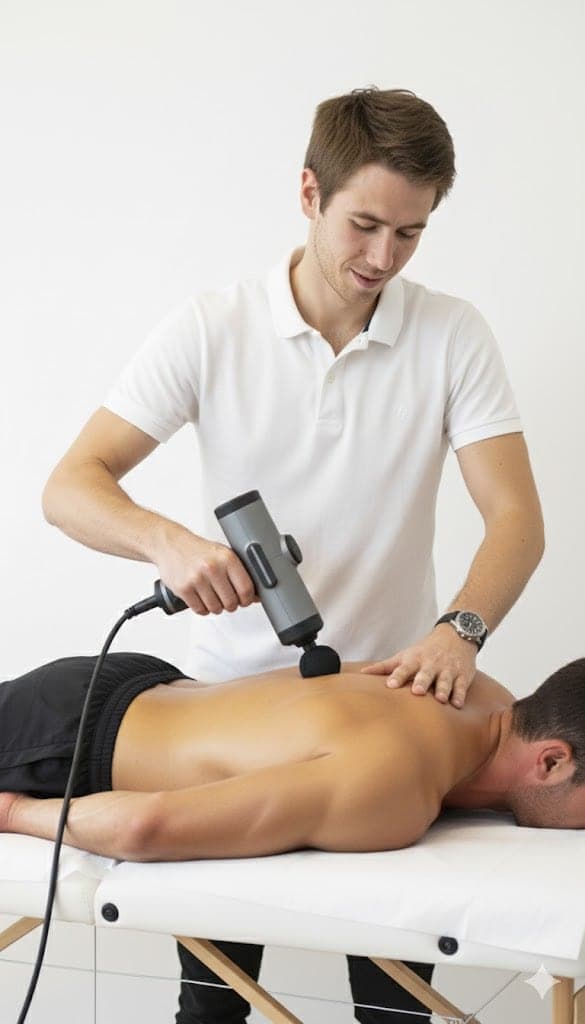
I use advanced mechanical deep-tissue methodology that generates consistent, calibrated pressure capable of reaching deep myofascial layers. This isn’t about being “rough”—it’s about being effective. The specialized machine I employ delivers precision that human hands physiologically cannot match, working deeper than manual techniques while maintaining complete control over intensity.
The Consistency Problem
Even skilled massage therapists have variable output. Fatigue affects pressure application. Hand position changes affect force vectors. Traditional prenatal massage introduces inconsistency precisely when consistency matters most.
Pregnancy creates cumulative mechanical stress. Addressing this requires systematic, repeatable intervention that delivers identical therapeutic pressure across treatment sessions. My machine-assisted method eliminates practitioner variability entirely. Session ten delivers the same precision as session one.
Clinical Prenatal Massage Benefits in Pafos: What Actually Changes
Let me be direct about what my approach to prenatal massage benefits in Pafos actually accomplishes, because marketing language has obscured the difference between temporary relief and structural correction.
Sciatic Nerve Decompression
Sciatic pain during pregnancy typically originates from piriformis syndrome—compression of the sciatic nerve by a hypertonic piriformis muscle. As your growing uterus shifts your pelvic alignment, the piriformis compensates by maintaining excessive tension.
Traditional prenatal massage might provide 2-3 hours of relief. My method releases the piriformis at its attachment points, restores proper muscle length, and decompresses the sciatic nerve pathway. Women who’ve experienced shooting leg pain for months report measurable improvement after the first session, with progressive resolution across our treatment partnership.
One client—a marketing executive in her second trimester—had been unable to sit at her desk for more than twenty minutes without debilitating nerve pain. After our initial assessment, I identified severe piriformis hypertonicity and restricted fascial mobility in her posterior hip complex. Three sessions of targeted mechanical release restored normal nerve gliding mechanics. She completed her pregnancy working full days without limitation.
Lumbar Stabilization and Pain Elimination
Lower back pain affects an estimated 50-70% of pregnant women. This statistic represents failure, not inevitability.
The erector spinae muscles along your spine become chronically overloaded as they fight to maintain posture against forward-shifted weight distribution. This creates trigger points—localized areas of sustained contraction that refer pain throughout the lumbar region.
My approach systematically releases these trigger points using controlled, sustained pressure that exceeds what manual therapy can generate. More importantly, I address the entire posterior chain: from the thoracolumbar fascia through the gluteal complex to the hamstring attachments. This comprehensive treatment restores force distribution across the entire kinetic chain, rather than temporarily relaxing individual muscles.
The outcome? Lower back pain doesn’t just decrease—it resolves. Not by masking symptoms, but by correcting the mechanical dysfunction generating those symptoms.
Pelvic Stability and Sacroiliac Joint Function
Sacroiliac joint pain—that deep ache in your posterior pelvis—develops when relaxin-loosened ligaments allow excessive joint motion. Your muscles compensate by splinting the area, creating a painful paradox: joints that are simultaneously too mobile and too restricted.
I treat this by releasing the hypertonic muscles (primarily the quadratus lumborum, gluteus medius, and deep hip rotators) while implementing strategic pressure that helps your nervous system recalibrate appropriate muscle tone. This isn’t about stretching or manipulation—it’s about restoring optimal tension patterns through precise mechanical input.
Women consistently report improved walking mechanics, reduced pelvic clicking or catching, and elimination of the sharp pain when transitioning from sitting to standing.
The Machine-Assisted Advantage: Why Technology Surpasses Tradition
My specialized mechanical approach represents a paradigm shift in how we address pregnancy-related musculoskeletal dysfunction. Let me explain exactly why this methodology delivers superior outcomes.
Precision That Manual Therapy Cannot Achieve
The machine I use allows me to target specific muscle fibers and fascial adhesions with millimeter accuracy. When treating the multifidus muscles—small but critically important spinal stabilizers—I can isolate individual segments without dispersing pressure to surrounding tissue.
This precision matters tremendously during pregnancy. Your body is already managing significant systemic stress. Effective treatment must be surgical in its specificity, addressing dysfunction without creating additional tissue trauma.
Power Calibrated to Therapeutic Need
Deep myofascial release requires sufficient force to create plastic deformation—lasting lengthening—of shortened tissue. This demand varies significantly based on tissue density, chronicity of dysfunction, and individual pain tolerance.
My mechanical method allows me to calibrate force output precisely, from gentle neuromuscular work appropriate for first-trimester treatment to powerful deep-tissue release for chronic third-trimester compensation patterns. This adjustability means I can treat effectively across all stages of pregnancy, modulating intensity based on your specific presentation and tolerance.
Consider this: when I treat a hypertonic quadratus lumborum in the third trimester, I’m often working through significant tissue density and guarding. Manual therapy would require such forceful application that precise control becomes impossible. My machine maintains absolute consistency at whatever depth proves therapeutically necessary.
Consistency That Builds Progressive Results
Pregnancy is a progressive condition. Your mechanical challenges intensify as gestation advances. Effective treatment must provide reliable therapeutic input across multiple sessions, building cumulative improvement rather than delivering sporadic relief.
I eliminated “off days” from my practice years ago. The machine doesn’t experience fatigue, distraction, or technical variation. Session five delivers identical precision to session one. This consistency allows us to build a treatment progression where each session advances your mechanical status rather than simply restoring you to baseline.
Prenatal Massage Benefits Pafos: The Treatment Experience
I travel to your location throughout Pafos with a professional treatment bench and all necessary equipment. This mobile approach isn’t merely convenient—it’s strategically important.
Pregnant women face mobility challenges, fatigue, and parking difficulties. Requiring you to travel to a clinic adds stress that counteracts therapeutic benefit. By bringing advanced treatment to your home, I eliminate logistical barriers that prevent consistent care.
Initial Assessment: Understanding Your Mechanical Status
Our first session begins with comprehensive postural and movement assessment. I evaluate:
- Lumbar curvature and anterior pelvic tilt degree
- Gait mechanics and weight distribution patterns
- Range of motion in hip flexion, extension, and rotation
- Muscle tone and trigger point presence throughout the posterior chain
- Specific pain patterns and their relationship to daily activities
This assessment—which draws on my degree in Physical Education and a decade of clinical observation—reveals the precise mechanical compensations your body has developed. I’m not guessing based on “typical pregnancy complaints.” I’m identifying your specific biomechanical presentation.
One assessment I conducted last month revealed something fascinating: a client experiencing right-sided sciatic pain actually had primary dysfunction in her left gluteus medius. Her body had compensated for left hip weakness by overloading the right posterior chain. Treating her symptoms would have been pointless. Addressing the mechanical cause—the weak, inhibited left hip stabilizers—resolved her pain completely.
Treatment Protocol: Systematic Mechanical Correction
Each session follows a structured progression based on your assessment findings:
- Posterior Chain Release: Beginning with the thoracolumbar fascia and erector spinae, working systematically through the gluteal complex to the hamstrings
- Deep Hip Work: Targeted release of the piriformis, obturator internus, and deep hip rotators that develop hypertonicity during pregnancy
- Pelvic Stabilizer Treatment: Addressing the quadratus lumborum, psoas attachments, and adductor complex
- Functional Integration: Movement-based techniques that help your nervous system adopt improved mechanical patterns
Treatment duration typically ranges from 60 to 90 minutes, depending on the extent of dysfunction and your tolerance level. I adjust intensity in real-time based on your feedback, maintaining therapeutic depth while respecting physiological limits.
Beyond Symptom Management: Preparing for Labor and Recovery
Here’s something most prenatal massage practitioners miss entirely: effective treatment during pregnancy significantly impacts labor mechanics and postpartum recovery.
Pelvic floor function correlates directly with hip complex mobility. Women with restricted hip rotators and hypertonic deep pelvic muscles experience longer, more difficult labor. This isn’t speculation—it’s documented in obstetric literature and confirmed by my observations across hundreds of clients.
By systematically releasing pelvic restrictions throughout pregnancy, we’re not just reducing your current discomfort. We’re optimizing the mechanical environment for labor and establishing neuromuscular patterns that accelerate postpartum recovery.
I’ve treated women who returned six weeks postpartum reporting they felt “structurally more stable” than before pregnancy. This outcome reflects proper prenatal mechanical management, not genetic luck.
Common Questions About Advanced Prenatal Massage in Pafos
Is deep tissue work safe during pregnancy?
When performed by someone who understands pregnancy biomechanics and contraindications, yes—absolutely. Safety concerns about prenatal massage largely stem from outdated beliefs and practitioners working outside their competence.
I avoid specific areas (primarily the abdomen and certain acupressure points) and modify positioning based on trimester. Beyond these standard precautions, deep mechanical work on the posterior chain, hips, and lower extremities is not only safe but therapeutically essential.
The alternative—allowing progressive mechanical dysfunction throughout forty weeks of pregnancy—creates far greater risk to maternal health and comfort.
How is this different from what my physiotherapist provides?
Physiotherapy and advanced mechanical massage address different aspects of musculoskeletal function. Physiotherapists excel at exercise prescription, movement pattern correction, and rehabilitation protocols. My work focuses on direct tissue intervention—releasing chronic hypertonicity, eliminating trigger points, and restoring fascial mobility.
These approaches are complementary, not competitive. I’ve worked alongside physiotherapists treating the same client, with their movement-based work and my tissue-based work creating synergistic results.
How many sessions will I need?
This question reveals a fundamental misunderstanding I actively challenge: the idea that musculoskeletal treatment has a defined endpoint.
Pregnancy is a progressive mechanical challenge lasting approximately forty weeks. Effective management requires ongoing intervention that addresses evolving compensation patterns as your body changes. I don’t offer “packages” or promise results in “X sessions” because your body’s needs change weekly.
Instead, I establish dedicated partnerships with pregnant clients, providing consistent mechanical support throughout gestation. Most women I work with schedule bi-weekly sessions from the second trimester through delivery, with frequency adjusted based on symptom severity and mechanical changes.
This isn’t about dependence—it’s about acknowledging reality. Your car requires regular maintenance because it experiences ongoing wear. Your pregnant body deserves the same consistent support.
What should I expect after the first session?
Immediate relief in target areas, typically accompanied by mild soreness in worked tissues for 24-48 hours. This post-treatment soreness represents tissue adaptation—your body integrating new mechanical patterns—not damage.
Some women experience what I call “mechanical realignment fatigue” after initial sessions, as their nervous system adjusts to improved tissue length and altered force distribution. This resolves quickly and indicates we’ve created significant structural change.
Progressive benefits accumulate across sessions. Pain reduction you notice after session one deepens after session three. Mechanical improvements that feel subtle initially become obviously significant as treatment continues.
Can you treat me if I’m high-risk or have complications?
With appropriate medical clearance, yes. I’ve successfully treated women with gestational diabetes, preeclampsia, placenta previa, and various high-risk conditions. My approach actually proves particularly valuable for women with medical complications, as it provides drug-free pain management that doesn’t interfere with medical protocols.
I require explicit clearance from your obstetrician before treating high-risk pregnancies and maintain communication with your medical team throughout our work together.
Investment in Your Pregnancy Experience and Long-Term Health
Let’s address cost directly, because the massage industry’s pricing models obscure value and perpetuate the misconception that bodywork is an occasional luxury rather than essential healthcare.
A single session of my advanced mechanical treatment costs more than traditional prenatal massage. This price difference reflects fundamental differences in education, methodology, equipment, and—most importantly—outcomes.
You’re not purchasing an hour of pleasant sensation. You’re investing in:
- Elimination of mechanical dysfunction rather than temporary symptom masking
- Treatment by someone with university education in body mechanics and a decade of specialized experience
- Advanced technology that delivers results impossible through manual therapy
- Systematic progression toward optimal pregnancy mechanics, easier labor, and faster postpartum recovery
The women who work with me throughout pregnancy consistently report their treatment investment provided greater quality-of-life improvement than any other pregnancy-related expense. When you’re able to work comfortably, sleep without pain, and enjoy your pregnancy rather than enduring it, the value becomes self-evident.
The Clinical Approach to Prenatal Massage Benefits in Pafos
After ten years of practice and hundreds of pregnant clients, I’ve developed absolute confidence in this statement: most pregnancy discomfort is mechanically correctable, not physiologically inevitable.
Your body is performing extraordinary work. It deserves systematic, expert-level support that addresses the biomechanical reality of gestation. Traditional prenatal massage—with its emphasis on relaxation over correction—fails this test.
My machine-assisted mechanical method provides what pregnancy actually demands: precise, powerful, consistent intervention that treats dysfunction at its source. This approach has transformed pregnancy experiences for women throughout Pafos who previously accepted pain as unavoidable.
Prenatal Massage Benefits: The Measurable Outcomes
| Condition | Traditional Approach | Mechanical Deep-Tissue Approach |
|---|---|---|
| Lower back pain | Temporary relief, 2-4 hours | Progressive reduction, sustained improvement |
| Sciatic nerve pain | Surface treatment, minimal nerve decompression | Deep piriformis release, restored nerve mobility |
| Pelvic instability | Gentle touch, no mechanical correction | Targeted stabilizer release, improved joint function |
| Hip restriction | Superficial work, limited range gain | Deep capsular release, measurable mobility increase |
| Sleep disruption | Short-term relaxation effect | Pain elimination enabling comfortable positioning |
Beginning Your Treatment Partnership
I work with a limited number of clients at any given time, maintaining this constraint deliberately. Effective treatment requires genuine partnership—understanding your specific mechanical presentation, tracking progressive changes, and adjusting protocols as your pregnancy advances. This level of attention becomes impossible when treating dozens of clients weekly.
If you’re experiencing pregnancy-related pain and seeking actual resolution rather than temporary relief, we should talk. I’ll assess whether my approach suits your specific situation and explain exactly what you can expect from our work together.
The prenatal massage benefits in Pafos I provide aren’t available from traditional practitioners because they require specialized equipment, advanced understanding of pregnancy biomechanics, and commitment to mechanical correction over comfortable sensation. This specificity means my method isn’t for everyone—but for women who want genuine solutions to pregnancy discomfort, the difference is transformative.
Your pregnancy should be a time of anticipation and preparation, not endurance and pain management. With proper mechanical support, it can be.
Written by
Chris
Massage therapist & body mechanics specialist
Norwegian-certified with a Bachelor’s in Physical Education and Nutrition and over ten years of clinical practice, working from a portable table in clients’ homes across the Paphos district.
This article is general information from clinical practice, not a medical diagnosis. If you have severe, worsening or unexplained pain, numbness, weakness, or pain after an accident, see a doctor first.