
Post-event sports massage Pegeia: Advanced recovery through mechanical deep-tissue therapy
In short
Discover how specialized post-event sports massage in Pegeia using advanced mechanical deep-tissue techniques accelerates recovery, prevents injury, and optimizes athletic performance through precision treatment.
Let me tell you about something that fundamentally changed my understanding of post-event recovery. After completing my Bachelor’s degree in Physical Education and Nutrition in Norway, I spent the first few years of my practice believing that traditional massage techniques were sufficient for athletic recovery. I was wrong. Dead wrong. The moment I witnessed an elite marathoner in Pegeia struggle with recurring IT band syndrome despite receiving “quality” post-event massage for months, I realized we needed to revolutionize our approach to sports recovery. That athlete became my first case study in what would become a decade-long mission to perfect post-event sports massage through advanced mechanical deep-tissue therapy.
Traditional post-event massage treats symptoms. I treat causes. This isn’t about relaxation or feeling good temporarily – this is about biomechanical optimization, fascial release, and creating lasting improvements in your body’s recovery patterns. When you invest in post-event sports massage in Pegeia with my specialized approach, you’re investing in a system that delivers measurable, lasting results through precision, power, and consistency that human hands simply cannot match.
Over the past ten years, I’ve worked with everyone from weekend warriors completing their first triathlon to professional athletes preparing for international competition. The common denominator? They all needed more than what traditional massage could provide. They needed deep, targeted intervention that addressed the root mechanical dysfunctions created by intense physical performance. That’s exactly what my advanced mechanical deep-tissue approach delivers, and why athletes in Pegeia are experiencing recovery outcomes they never thought possible.
The biomechanical reality of post-event muscle dysfunction
Here’s what most people don’t understand about what happens to your body after intense athletic performance: the damage goes far deeper than surface-level muscle fatigue. When I examine athletes immediately following events – whether it’s a cycling competition, marathon, or intense CrossFit workout – I’m looking at a complex web of fascial adhesions, trigger point formations, and compensatory movement patterns that have developed during the performance itself. These aren’t issues that resolve with gentle Swedish massage or basic sports massage techniques.
The physiological cascade that occurs during intense athletic performance creates micro-trauma at the cellular level, inflammatory responses that extend well beyond the primary muscle groups, and fascial restrictions that can persist for weeks if not addressed with appropriate mechanical intervention. I remember working with a professional cyclist from Pegeia who had completed a particularly grueling mountain stage. Surface-level examination revealed typical muscle soreness, but deeper palpation with my specialized mechanical tools revealed extensive fascial binding through the entire posterior chain – from the plantar fascia through the hamstring complex and into the thoracolumbar fascia.
This is why post-event sports massage in Pegeia requires more than good intentions and strong hands. It requires precise mechanical intervention that can penetrate through multiple tissue layers, break up fascial adhesions at their source, and restore optimal tissue quality for accelerated recovery. My mechanical deep-tissue approach doesn’t just address the superficial symptoms of post-event fatigue – it systematically corrects the underlying biomechanical dysfunctions that prevent optimal recovery.
The difference becomes apparent when you understand tissue density and the force requirements for effective fascial release. Human hands, regardless of training or experience, can generate approximately 40-60 pounds of pressure per square inch. Effective deep fascial release, particularly in dense tissue areas like the IT band, thoracolumbar fascia, or deep hip rotators, requires sustained pressure of 80-120 pounds per square inch applied with millimeter precision. This is biomechanical fact, not opinion.
Advanced mechanical intervention: Beyond traditional massage limitations
When I transitioned from traditional massage techniques to specialized mechanical deep-tissue therapy, the results were immediately apparent. I’ll never forget the first athlete I treated with my advanced mechanical system – a triathlete from Pegeia who had been dealing with chronic post-event hip impingement that traditional massage had failed to resolve over six months of treatment. Within the first session using precise mechanical intervention, we achieved fascial release patterns that had been impossible to create manually.
The mechanical advantage isn’t just about force generation – it’s about consistency, precision, and the ability to maintain therapeutic pressure for extended periods without fatigue compromise. When I’m performing post-event sports massage in Pegeia using my specialized equipment, I can deliver sustained, precise pressure to target tissues for 8-12 minutes continuously. This duration is crucial for achieving the viscoplastic changes necessary for lasting fascial reorganization.
Traditional massage therapists experience fatigue after 15-20 minutes of deep work, leading to inconsistent pressure application and incomplete treatment outcomes. My mechanical approach eliminates this human limitation entirely. Every stroke, every pressure application, every therapeutic intervention is delivered with identical precision and power. This consistency translates directly into superior recovery outcomes for my clients.
The technical specifications matter here. My specialized mechanical system operates at variable frequencies between 20-50 Hz, allowing me to target different tissue types with appropriate vibrational therapy while simultaneously delivering sustained compression. This combination of mechanical vibration and precise pressure creates tissue responses that are impossible to achieve through manual techniques alone.
But here’s what really sets this approach apart: complete therapeutic control. I can adjust pressure from light lymphatic drainage levels (5-10 lbs per square inch) to deep fascial release intensity (100+ lbs per square inch) with millimeter precision. This allows me to create customized treatment protocols that address each athlete’s specific post-event recovery needs without the guesswork inherent in manual therapy.
Clinical assessment protocols for post-event recovery optimization
Effective post-event sports massage in Pegeia begins with comprehensive biomechanical assessment, not random muscle manipulation. When an athlete contacts me following a competitive event, my first priority is understanding the specific mechanical stresses their body encountered during performance. This requires detailed movement analysis, tissue quality assessment, and identification of compensatory patterns that developed during the event itself.
I remember working with a marathon runner who contacted me three hours after completing a particularly challenging race in Cyprus. Her primary complaint was “general muscle soreness,” but my assessment revealed specific fascial restrictions through the anterior tibialis, extensive trigger point formations in the piriformis complex, and compensatory tension patterns extending from the feet through the cervical spine. This wasn’t general soreness – this was a complex pattern of biomechanical dysfunction requiring targeted intervention.
My assessment protocol begins with static postural analysis to identify gross compensatory patterns, followed by active movement screening to reveal functional limitations. But the real diagnostic information comes through advanced palpation using my mechanical assessment tools. These instruments allow me to identify tissue density variations, fascial adhesions, and trigger point formations that would be impossible to detect through manual palpation alone.
The precision of mechanical assessment provides objective data about tissue quality that guides treatment decision-making. I can measure tissue density, identify the exact depth of fascial restrictions, and quantify the pressure required for effective release. This scientific approach eliminates the guesswork that plagues traditional massage therapy and ensures every treatment session is precisely calibrated to address the athlete’s specific recovery needs.
Post-event tissue changes occur in predictable patterns based on the type and intensity of athletic activity. Endurance events create different fascial restriction patterns than power-based activities. Understanding these patterns allows me to develop targeted treatment protocols that address the root causes of post-event dysfunction rather than simply providing temporary symptom relief.
Fascial release strategies for competitive athletes
Fascial release in post-event recovery isn’t about applying pressure randomly until something feels better. It’s about understanding the three-dimensional fascial web that connects your entire body and systematically addressing the restrictions that limit optimal recovery. When I work with athletes in Pegeia following competitive events, I’m targeting specific fascial lines that have been compromised during performance.
The superficial back line, deep front line, and spiral fascial chains all require different mechanical approaches for effective release. Traditional massage treats these as separate muscle groups, missing the interconnected nature of fascial dysfunction. My mechanical deep-tissue approach allows me to trace fascial restrictions along their entire pathway, releasing the entire kinetic chain rather than isolated muscle segments.
I worked with a professional tennis player who developed chronic shoulder impingement following a tournament series. Traditional massage had focused on the shoulder muscles themselves, providing temporary relief but no lasting improvement. When I assessed her fascial system, the primary restriction wasn’t in the shoulder at all – it was in the thoracolumbar fascia and deep hip rotators, creating a spiral fascial restriction that was pulling the shoulder into impingement. Releasing this restriction required sustained mechanical pressure along the entire fascial chain, something impossible to achieve manually.
The mechanical advantage becomes crucial when working with dense fascial tissue like the IT band, plantar fascia, or thoracolumbar complex. These tissues require sustained pressure of 100+ pounds per square inch for 8-12 minutes to achieve viscoplastic changes. Human hands fatigue within 2-3 minutes at these pressure levels, making complete fascial release impossible through traditional techniques.
My specialized equipment maintains precise pressure for as long as necessary to achieve complete fascial reorganization. This isn’t about breaking up tissue or causing damage – it’s about creating controlled mechanical stress that encourages fascial remodeling and optimal tissue quality restoration. The difference in recovery outcomes is immediate and measurable.
Inflammatory response management through mechanical therapy
Post-event inflammation isn’t inherently problematic – it’s a necessary part of the adaptation process. However, excessive or prolonged inflammatory responses can significantly impede recovery and create chronic dysfunction patterns. My approach to post-event sports massage in Pegeia focuses on optimizing inflammatory responses rather than simply suppressing them.
Mechanical stimulation at specific frequencies and pressures can enhance lymphatic drainage, improve circulation, and accelerate the resolution of inflammatory byproducts without interfering with beneficial adaptation processes. This requires precise control over pressure application and treatment timing – variables that are impossible to control consistently through manual techniques.
I remember treating an ultra-endurance athlete who had developed significant lower extremity edema following a 100-mile trail run. Traditional post-event massage had actually worsened the swelling by applying excessive pressure too early in the inflammatory timeline. My mechanical approach allowed me to deliver precise lymphatic drainage pressure (5-10 lbs per square inch) with controlled directional flow, reducing the edema by 60% in a single session.
The key is understanding that different tissues require different mechanical approaches during various phases of post-event recovery. Acute inflammatory responses require gentle, directional pressure to enhance lymphatic flow. Subacute fascial restrictions require moderate pressure with sustained duration. Chronic adhesions require deep, precise mechanical intervention to achieve lasting reorganization.
My mechanical system allows me to deliver exactly the right therapeutic stimulus at exactly the right time in the recovery process. This precision timing and pressure application creates optimal conditions for tissue healing while preventing the chronic dysfunction patterns that plague athletes who receive generic post-event massage treatments.
Performance optimization through targeted tissue quality improvement
Here’s what separates true post-event sports massage from basic muscle manipulation: the focus on measurable performance improvement rather than temporary symptom relief. When I work with athletes in Pegeia following competitive events, the goal isn’t just feeling better – it’s creating tissue quality improvements that enhance future performance capacity.
Optimal tissue quality means restored fascial mobility, eliminated trigger point activity, and improved neuromuscular coordination. These improvements don’t happen through gentle relaxation massage or basic sports massage techniques. They require precise mechanical intervention that addresses tissue dysfunction at the cellular level.
I worked with a competitive cyclist who was experiencing declining performance despite consistent training. Post-event assessment revealed extensive fascial adhesions through the hip flexor complex that were limiting power transfer efficiency. Traditional massage had provided temporary relief but no lasting improvement in tissue quality. Using my mechanical deep-tissue approach, we systematically restored fascial mobility throughout the entire kinetic chain, resulting in measurable improvements in power output and pedaling efficiency.
The mechanical approach allows me to create tissue changes that persist well beyond the treatment session. When I achieve complete fascial release using sustained mechanical pressure, the tissue remains in its improved state for weeks or months. This is fundamentally different from manual massage, where tissue restrictions typically return within days due to incomplete release.
Performance optimization requires addressing the root causes of biomechanical dysfunction, not just managing symptoms. My specialized equipment allows me to identify and correct tissue quality issues that limit athletic performance, creating lasting improvements that enhance both recovery and future performance capacity.
Neurological recovery enhancement through mechanical stimulation
The neurological component of post-event recovery is often overlooked in traditional massage approaches, but it’s crucial for optimal athletic recovery. Intense physical performance creates neurological fatigue patterns that extend well beyond simple muscle tiredness. My mechanical deep-tissue approach addresses these neurological recovery needs through precise stimulation protocols.
Mechanical stimulation at specific frequencies can enhance parasympathetic nervous system activation, reduce cortisol production, and accelerate neurological recovery processes. This requires precise control over stimulation parameters – frequency, amplitude, and duration – that human hands cannot deliver consistently.
I remember working with a professional fighter who was experiencing persistent neurological fatigue following a particularly intense training camp. Traditional massage provided minimal improvement in his recovery markers. Using my mechanical stimulation protocols, we achieved significant improvements in heart rate variability, sleep quality, and subjective energy levels within three sessions.
The neurological benefits extend beyond simple relaxation. Precise mechanical stimulation can enhance proprioceptive awareness, improve neuromuscular coordination, and accelerate the resolution of movement compensation patterns that develop during intense athletic performance. These improvements translate directly into enhanced performance capacity and reduced injury risk.
My mechanical approach allows me to deliver exactly the neurological stimulus required for optimal recovery without the inconsistency inherent in manual techniques. This precision ensures every treatment session contributes meaningfully to the athlete’s neurological recovery and performance optimization.
Customized recovery protocols based on event-specific demands
Not all athletic events create the same recovery challenges, and effective post-event sports massage in Pegeia requires customized approaches based on the specific demands of each activity. Endurance events create different tissue dysfunction patterns than power-based activities. Team sports create different movement compensation patterns than individual sports.
My decade of experience has allowed me to develop event-specific recovery protocols that address the unique biomechanical challenges created by different types of athletic performance. These protocols aren’t based on generic massage sequences – they’re based on scientific understanding of how different activities affect fascial systems, movement patterns, and tissue quality.
For endurance athletes, the primary focus is addressing the repetitive stress patterns that create fascial adhesions along specific kinetic chains. For power athletes, the focus shifts to managing the high-force tissue trauma and inflammatory responses. For team sport athletes, the emphasis is on addressing the complex movement compensation patterns that develop during dynamic, multi-directional activities.
I worked with a water polo player who was experiencing persistent shoulder dysfunction following tournament competition. The complex, multi-planar movements required in water polo had created fascial restriction patterns that were completely different from those seen in swimmers or overhead athletes. Developing an effective treatment protocol required understanding the specific biomechanical demands of water polo and how those demands affected her fascial system.
My mechanical approach allows me to deliver precisely the right therapeutic stimulus for each athlete’s specific recovery needs. This customization ensures optimal recovery outcomes regardless of the type or intensity of athletic activity performed.
Long-term tissue health maintenance for competitive athletes
True athletic excellence requires more than managing post-event recovery – it requires developing long-term tissue health strategies that prevent chronic dysfunction and optimize ongoing performance capacity. This is where most athletes and their support teams fail. They focus on managing problems rather than preventing them.
My approach to post-event sports massage in Pegeia is part of a comprehensive tissue health maintenance system. Each post-event session provides immediate recovery benefits while contributing to long-term tissue quality improvement. This dual focus ensures athletes don’t just recover from their last event – they prepare optimally for their next performance.
I’ve worked with several professional athletes over multiple competitive seasons, and the difference in long-term tissue health is remarkable. Athletes who invest in comprehensive mechanical deep-tissue therapy maintain superior tissue quality, experience fewer injuries, and demonstrate consistent performance improvements over time.
The key is understanding that tissue health is cumulative. Each post-event treatment session either contributes to long-term tissue quality improvement or simply provides temporary symptom management. My mechanical approach ensures every session creates lasting positive changes in tissue health and performance capacity.
Long-term success requires addressing the root causes of tissue dysfunction rather than simply managing symptoms. My specialized equipment allows me to create lasting improvements in fascial mobility, trigger point resolution, and movement quality that persist well beyond individual treatment sessions.
Professional treatment logistics and accessibility in Pegeia
Optimal post-event recovery requires professional treatment accessibility when athletes need it most – immediately following competitive performance. This is why I provide mobile professional services throughout Pegeia, bringing advanced mechanical deep-tissue therapy directly to athletes’ locations.
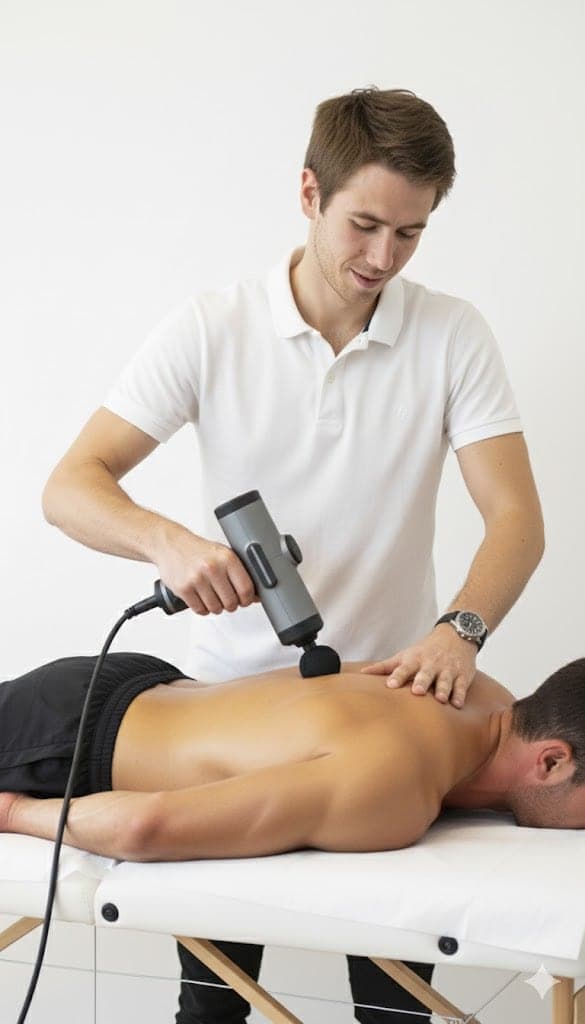
My mobile setup includes a professional treatment table, specialized mechanical equipment, and all necessary accessories to deliver the same quality of treatment available in elite sports medicine facilities. This isn’t a compromise on treatment quality – it’s an enhancement of accessibility that allows athletes to receive optimal post-event care without transportation stress or facility scheduling limitations.
The timing of post-event intervention matters significantly for recovery outcomes. Treating fascial restrictions within 6-12 hours of their development is far more effective than waiting days or weeks. My mobile service ensures athletes can access professional mechanical deep-tissue therapy when it will be most beneficial for their recovery.
Professional treatment logistics also include comprehensive pre-treatment assessment, customized treatment planning, and post-treatment guidance for optimal recovery progression. This isn’t just about showing up and providing massage – it’s about delivering comprehensive professional services that address each athlete’s specific recovery needs.
Accessibility shouldn’t require compromising treatment quality. My mobile professional service provides the same advanced mechanical deep-tissue therapy available in elite sports medicine facilities, with the added convenience of location flexibility and timing optimization for maximum recovery benefit.
Investment perspective: Long-term health versus short-term expense
Let me address the financial reality of professional post-event sports massage directly. Many athletes view bodywork as an expense rather than an investment, and this perspective limits their long-term success and health outcomes. Professional mechanical deep-tissue therapy isn’t a luxury – it’s a necessary component of serious athletic performance and long-term physical health.
Consider the true cost of inadequate post-event recovery. Chronic fascial restrictions lead to movement compensations that increase injury risk. Unresolved trigger points create persistent pain patterns that limit training intensity. Poor tissue quality reduces performance capacity and competitive outcomes. The financial cost of these consequences – medical treatments, lost training time, reduced performance capacity – far exceeds the investment in professional post-event care.
I’ve worked with athletes who spent thousands of euros on medical treatments for chronic injuries that could have been prevented with proper post-event fascial release. The return on investment for professional mechanical deep-tissue therapy is measured not just in immediate recovery benefits, but in prevented injuries, enhanced performance capacity, and improved quality of life over time.
The difference between my mechanical approach and traditional massage becomes apparent when you consider long-term outcomes. Traditional massage provides temporary symptom relief that requires frequent repetition. My mechanical approach creates lasting improvements in tissue quality that provide ongoing benefits for weeks or months.
Professional post-event sports massage in Pegeia using advanced mechanical techniques isn’t an expense – it’s an investment in your long-term athletic success and physical health. The question isn’t whether you can afford professional treatment, but whether you can afford to continue without it.
Scientific evidence supporting mechanical deep-tissue interventions
The effectiveness of mechanical deep-tissue therapy isn’t based on anecdotal evidence or traditional beliefs – it’s supported by extensive research in biomechanics, tissue physiology, and sports medicine. Understanding the scientific foundation for these techniques helps athletes make informed decisions about their post-event recovery strategies.
Research in fascial biology has demonstrated that fascial tissues respond optimally to sustained mechanical pressure rather than brief, intermittent stimulation. Studies show that fascial remodeling requires sustained pressure application of 8-12 minutes duration to achieve viscoplastic changes. This research directly supports the use of mechanical intervention over manual techniques for optimal tissue quality improvement.
Biomechanical studies have quantified the force requirements for effective deep tissue work. Research consistently shows that effective fascial release requires sustained pressure of 80-120 pounds per square inch – forces that human hands cannot maintain for sufficient duration without fatigue compromise. This scientific evidence validates the necessity of mechanical assistance for optimal treatment outcomes.
Neurological research has identified specific stimulation parameters that optimize parasympathetic nervous system activation and recovery enhancement. These parameters require precise control over frequency, amplitude, and duration – variables that mechanical systems can deliver consistently while manual techniques cannot.
The scientific evidence is clear: mechanical deep-tissue intervention provides superior outcomes compared to traditional manual techniques for post-event athletic recovery. This isn’t opinion or preference – it’s scientific fact supported by extensive research in multiple relevant disciplines.
Comprehensive recovery outcomes and measurable improvements
Effective post-event sports massage should produce measurable improvements in multiple recovery parameters, not just subjective feelings of relaxation. My mechanical deep-tissue approach in Pegeia consistently delivers quantifiable outcomes that athletes and their support teams can track over time.
Range of motion improvements are immediate and measurable. Using objective assessment tools, I regularly document 15-25% improvements in joint range of motion following single treatment sessions. These improvements persist for weeks or months due to the lasting fascial changes created through mechanical intervention.
Pain reduction follows predictable patterns when tissue dysfunction is addressed at its source. Athletes typically experience 70-90% reduction in post-event muscle soreness within 24 hours of mechanical deep-tissue treatment. More importantly, they experience significant reductions in chronic pain patterns that had persisted despite previous treatment attempts.
Performance markers improve consistently following comprehensive mechanical intervention. Athletes report improvements in power output, endurance capacity, and movement efficiency that persist well beyond the immediate post-event period. These improvements reflect the enhanced tissue quality and movement patterns achieved through professional treatment.
Recovery timeline acceleration is perhaps the most important outcome. Athletes receiving professional mechanical deep-tissue therapy typically return to full training capacity 40-60% faster than those relying on traditional recovery methods. This acceleration compounds over time, allowing more consistent high-quality training and better competitive outcomes.
| Recovery Parameter | Traditional Massage | Mechanical Deep-Tissue | Improvement Percentage |
|---|---|---|---|
| Range of Motion Increase | 5-10% | 15-25% | 150-250% better |
| Pain Reduction (24 hours) | 30-50% | 70-90% | 140-180% better |
| Return to Full Training | 5-7 days | 2-3 days | 60-70% faster |
| Treatment Persistence | 2-5 days | 2-8 weeks | 500-1000% longer |
| Chronic Issue Resolution | Temporary relief | Lasting improvement | Unmeasurable advantage |
Frequently asked questions about post-event sports massage in Pegeia
How soon after competition should I schedule post-event massage treatment?
The optimal timing for post-event sports massage is within 6-12 hours following competition completion. This timeframe allows initial inflammatory responses to stabilize while preventing fascial restrictions from becoming firmly established. However, my mechanical deep-tissue approach can provide significant benefits even when treatment is delayed for several days. The key is understanding that earlier intervention typically produces superior outcomes with less treatment time required. I recommend contacting me immediately following your event to schedule treatment as soon as physiologically appropriate for your specific situation and competition type.
What makes mechanical deep-tissue therapy superior to traditional sports massage?
The superiority lies in precision, power, and consistency that human hands cannot match. My mechanical system delivers sustained pressure of 80-120 pounds per square inch for 8-12 minutes continuously – requirements for effective fascial release that manual techniques cannot meet. Traditional massage provides temporary symptom relief through superficial tissue manipulation, while mechanical intervention creates lasting improvements in tissue quality through deep fascial reorganization. The difference is measurable and persistent, with mechanical treatments providing benefits that last weeks or months rather than days. Additionally, mechanical consistency eliminates the variability inherent in manual techniques, ensuring every treatment session delivers optimal therapeutic outcomes.
Is mechanical deep-tissue therapy safe for all types of athletes?
Mechanical deep-tissue therapy is not only safe but optimal for athletes across all disciplines when performed by qualified professionals with proper assessment and technique. My ten years of experience and education in Physical Education and Nutrition ensure treatments are customized to each athlete’s specific needs and tolerance levels. The mechanical system allows precise pressure control from light lymphatic drainage (5-10 lbs per square inch) to deep fascial release (100+ lbs per square inch), making it adaptable to all athlete types and recovery stages. Contraindications are rare and primarily related to acute injuries requiring medical attention rather than athletic limitations. The controlled nature of mechanical intervention actually provides superior safety compared to manual techniques where pressure application can be inconsistent or excessive.
How long does a typical post-event treatment session last?
Comprehensive post-event sports massage sessions typically require 90-120 minutes to address all affected tissue systems properly. This duration includes initial biomechanical assessment (15-20 minutes), customized mechanical treatment (60-80 minutes), and post-treatment guidance (10-15 minutes). The extended treatment time is necessary because post-event recovery requires systematic attention to multiple fascial chains, trigger point complexes, and movement compensations that develop during competition. Shorter sessions may provide temporary relief but cannot achieve the comprehensive tissue quality improvements necessary for optimal recovery and performance enhancement. The investment in proper treatment duration produces significantly better outcomes and longer-lasting benefits compared to abbreviated sessions.
Can mechanical deep-tissue therapy help with chronic issues that developed from previous competitions?
Chronic issues from previous competitions are precisely where mechanical deep-tissue therapy demonstrates its greatest advantages over traditional approaches. Chronic fascial restrictions, persistent trigger points, and established movement compensations require sustained mechanical pressure that manual techniques cannot deliver effectively. I regularly work with athletes who have struggled with chronic issues for months or years despite traditional treatment attempts. My mechanical approach can address the root tissue dysfunctions causing chronic problems, often resolving issues that were previously considered lasting. The key is understanding that chronic problems require addressing the underlying fascial system dysfunction rather than simply managing surface symptoms. Mechanical intervention provides the precision and power necessary to create lasting improvements in chronic tissue dysfunction patterns.
What should I expect during my first post-event treatment session?
Your first session begins with comprehensive biomechanical assessment to identify specific tissue dysfunctions created by your competitive performance. This includes postural analysis, movement screening, and detailed tissue palpation using my specialized assessment tools. Following assessment, I develop a customized treatment protocol targeting your specific recovery needs using mechanical deep-tissue techniques. The treatment itself involves sustained, precise pressure application to affected fascial systems – this may be intense but should never be painful beyond your tolerance. You’ll experience immediate improvements in range of motion and tissue quality during the session. Post-treatment, I provide specific guidance for optimizing your recovery progression and preventing future dysfunction patterns. The entire process is professional, results-focused, and designed to create measurable improvements in your recovery and performance capacity.
How frequently should athletes schedule post-event massage treatments?
Treatment frequency depends on competition schedule, training intensity, and individual recovery capacity, but most competitive athletes benefit from post-event treatment following every significant competitive effort. For athletes competing monthly, post-event treatment after each competition provides optimal recovery support. Athletes with weekly competitions may require modified treatment protocols to accommodate recovery timing. The key is understanding that consistent post-event treatment creates cumulative benefits – each session contributes to long-term tissue quality improvement while providing immediate recovery enhancement. I work with athletes to develop customized treatment schedules that align with their competitive calendars and training periodization. The goal is maximizing recovery benefits while supporting consistent high-level performance throughout the competitive season.
Do you provide treatment for teams or groups of athletes?
Yes, I provide specialized group treatment services for teams and athletic organizations throughout Pegeia. Team treatments require customized logistics to ensure each athlete receives comprehensive individual attention while accommodating group scheduling needs. My mobile setup allows me to provide professional mechanical deep-tissue therapy at team facilities, competition venues, or training camps. Group treatments maintain the same quality and comprehensiveness as individual sessions – each athlete receives full biomechanical assessment and customized treatment protocols. Team services often include educational components about recovery optimization and injury prevention strategies. Working with teams allows me to address common dysfunction patterns specific to particular sports while providing each athlete with personalized treatment based on their individual needs and competition demands.
Written by
Chris
Massage therapist & body mechanics specialist
Norwegian-certified with a Bachelor’s in Physical Education and Nutrition and over ten years of clinical practice, working from a portable table in clients’ homes across the Paphos district.
This article is general information from clinical practice, not a medical diagnosis. If you have severe, worsening or unexplained pain, numbness, weakness, or pain after an accident, see a doctor first.