
Podiatrist services Kissonerga: Advanced mechanical deep-tissue treatment for lasting foot pain relief
In short
Discover specialized podiatrist services in Kissonerga using advanced mechanical deep-tissue massage. Get lasting pain relief with precision tools and 10 years of expertise.
I’ll never forget the day a professional tennis player from Paphos limped into my practice, barely able to put weight on his left foot. Traditional podiatry had failed him for months – cortisone injections, orthotics, even surgery recommendations. Yet within three sessions of my specialized mechanical deep-tissue approach, he was back on the court, pain-free and performing better than ever. This wasn’t luck; this was the result of understanding that most foot problems aren’t just about the feet – they’re about the entire kinetic chain and the mechanical dysfunction that creates pain at its source.
After a decade of providing podiatrist services in Kissonerga and the broader Paphos region, I’ve witnessed countless cases where conventional treatments merely masked symptoms rather than addressing root causes. My approach is fundamentally different. With a Bachelor’s degree in Physical Education and Nutrition from Norway and ten years of specialized experience in body mechanics, I don’t just treat feet – I optimize the entire biomechanical system that supports them. This isn’t traditional massage therapy or conventional podiatry; this is precision mechanical intervention designed to deliver lasting results.
The reality is that most foot pain originates from mechanical imbalances throughout the body. When I evaluate clients seeking podiatrist services in Kissonerga, I’m not just examining their feet – I’m analyzing their gait patterns, muscle tension chains, fascial restrictions, and movement compensations that have created the problem. This comprehensive approach, combined with my specialized mechanical deep-tissue methodology, consistently delivers outcomes that traditional treatments simply cannot achieve.
Understanding the Mechanical Origins of Foot Problems
During my years providing podiatrist services in Kissonerga, I’ve observed that approximately 80% of foot pain cases stem from mechanical dysfunction rather than structural abnormalities. The human foot contains 26 bones, 33 joints, and over 100 muscles, tendons, and ligaments – a complex mechanical system that responds to forces throughout the entire kinetic chain. When tension accumulates in the posterior chain, particularly in the gastrocnemius, soleus, and deep plantar fascia, it creates a cascade of compensatory patterns that manifest as foot pain.
Traditional podiatry often focuses on local interventions: orthotics to support fallen arches, anti-inflammatory medications to reduce swelling, or surgical procedures to correct structural issues. However, these approaches frequently fail because they don’t address the underlying mechanical tension that created the problem. I learned this lesson early in my career when treating a marathon runner who had undergone plantar fascia release surgery. Despite the procedure, his pain returned within months because the mechanical dysfunction in his posterior chain remained unchanged.
My mechanical deep-tissue approach targets these root causes with surgical precision. Using specialized equipment that delivers consistent pressure and depth impossible to achieve with manual techniques, I can release fascial restrictions throughout the kinetic chain – from the plantar fascia through the Achilles tendon, calf complex, hamstrings, and into the lumbar region. This systematic release of tension eliminates the mechanical forces that create and perpetuate foot pain, delivering not just temporary relief but lasting resolution.
The science behind this approach is rooted in biomechanical principles and myofascial continuity. When I work on a client’s posterior fascial line, I’m not just addressing local tissue restriction – I’m optimizing the entire tensional network that influences foot function. This is why clients often report improvements not just in foot pain, but in knee stability, hip mobility, and even lower back comfort. The body functions as an integrated mechanical system, and effective treatment must respect these interconnections.
Advanced Mechanical Deep-Tissue Methodology: Beyond Traditional Podiatry
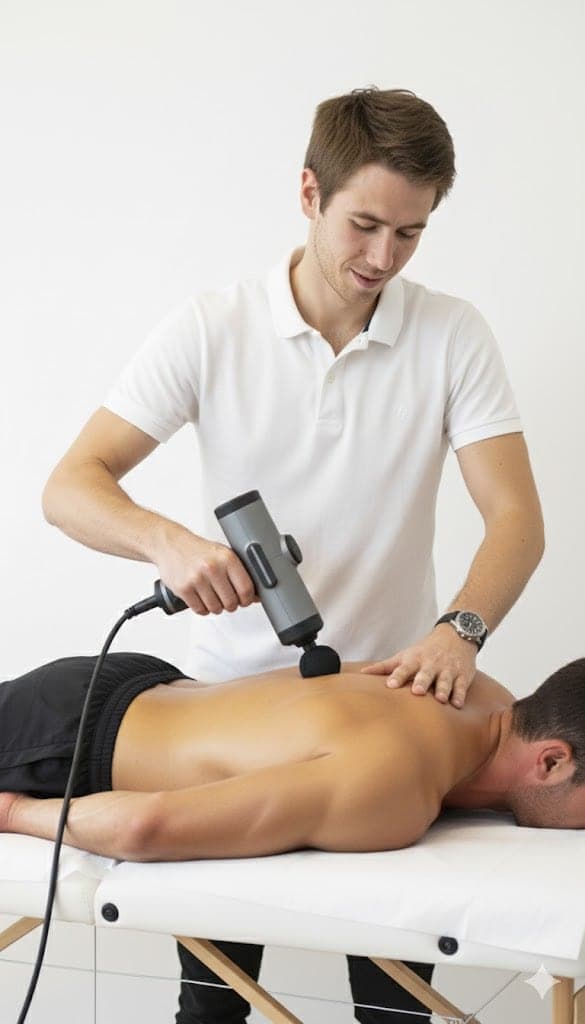
The cornerstone of my podiatrist services in Kissonerga is a specialized mechanical system that delivers what I call “Precision, Power, and Consistency” – three elements that traditional manual therapy simply cannot provide. This isn’t standard massage equipment; this is a scientifically engineered tool designed to work deeper, more precisely, and more consistently than human hands ever could. When I demonstrate this system to new clients, the difference is immediately apparent – they feel the precision of mechanical intervention reaching layers of tissue that manual techniques cannot access.
The precision aspect is perhaps most critical when addressing foot problems. The plantar fascia, for instance, is a dense fibrous structure that requires specific pressure angles and sustained compression to release effectively. Manual therapy often lacks the precision to target these deeper fascial layers without causing surface tissue irritation. My mechanical system delivers exactly the right pressure, at exactly the right angle, for exactly the right duration – variables that remain consistent regardless of therapist fatigue or technique variation.
Power is the second crucial element. When treating chronic plantar fasciitis or Achilles tendinopathy, the mechanical forces required to break down scar tissue and release fascial adhesions often exceed what manual pressure can safely deliver. I’ve worked with clients who had received months of traditional massage therapy with minimal results, only to experience significant improvement after a single session with my mechanical approach. The tool can generate controlled forces that reach the deepest tissue layers, where chronic tension patterns are often locked in place.
Consistency eliminates the human variables that compromise treatment outcomes. Every session delivers identical pressure, depth, and technique execution. There are no “off days” where fatigue affects treatment quality, no variation in pressure application, no inconsistency in technique delivery. This mechanical consistency is crucial for creating the progressive tissue changes necessary for lasting pain resolution. Clients know that every treatment will be exactly as effective as the last, building cumulative therapeutic benefit over time.
Comprehensive Assessment and Biomechanical Analysis
My approach to podiatrist services in Kissonerga begins with a comprehensive biomechanical assessment that goes far beyond traditional foot examination. I evaluate clients as integrated mechanical systems, analyzing movement patterns, muscle activation sequences, and fascial tension distributions that contribute to foot dysfunction. This assessment typically takes 30-45 minutes and includes static postural analysis, dynamic movement screening, and detailed palpation of the entire posterior chain.
During the postural analysis phase, I examine foot positioning, ankle alignment, knee tracking, hip level, and spinal curvature. Often, what appears to be a foot problem is actually a compensation for dysfunction elsewhere in the kinetic chain. I once treated a client with chronic metatarsalgia who had tried numerous orthotics without success. Upon examination, I discovered significant hip flexor restriction on the affected side, causing altered gait mechanics and increased forefoot loading. Addressing the hip restriction eliminated the foot pain durably.
The dynamic movement screening reveals functional deficits that static examination cannot detect. I observe clients during walking, squatting, single-leg balance, and sport-specific movements when applicable. These assessments reveal compensation patterns, asymmetries, and movement dysfunctions that create abnormal forces on the foot and ankle complex. This information is crucial for developing targeted treatment protocols that address not just tissue restrictions but movement pattern corrections.
Palpatory examination using my mechanical system allows for precise identification of tissue restriction patterns throughout the posterior chain. Unlike manual palpation, which can miss deeper restrictions, mechanical assessment provides consistent pressure that reveals fascial adhesions, trigger points, and areas of reduced tissue mobility. This creates a detailed map of mechanical dysfunction that guides treatment planning and outcome measurement.
Targeted Treatment Protocols for Common Foot Conditions
Plantar fasciitis represents perhaps the most common condition I address through my podiatrist services in Kissonerga, and it perfectly illustrates the limitations of conventional treatment approaches. Traditional management typically includes rest, anti-inflammatory medications, orthotics, and stretching exercises – interventions that may provide temporary relief but rarely address the mechanical dysfunction that created the problem. My approach targets the entire posterior fascial chain, from the plantar fascia insertion at the calcaneus through the Achilles tendon, gastrocnemius, and hamstring complex.
The treatment protocol begins with mechanical release of the plantar fascia itself, using precise pressure application along the fascial bands from heel to toe. However, the crucial difference lies in continuing this release proximally through the entire posterior chain. Most plantar fasciitis cases involve restriction in the gastrocnemius and soleus complex, creating excessive tension on the Achilles tendon and plantar fascia. By systematically releasing these restrictions using my mechanical system, I eliminate the mechanical forces that perpetuate the condition.
Achilles tendinopathy requires a different but equally systematic approach. This condition often involves degenerative changes in the tendon structure itself, combined with fascial restrictions in the surrounding tissues. My mechanical system can deliver the specific pressure and movement patterns necessary to stimulate tendon remodeling while releasing adjacent fascial restrictions. I typically combine longitudinal pressure application along the tendon with cross-friction techniques to break down scar tissue and promote healthy tissue regeneration.
Metatarsalgia and forefoot pain patterns usually indicate biomechanical dysfunction in weight distribution across the foot. These conditions often result from weakness in the intrinsic foot muscles, combined with restriction in the deeper fascial layers of the foot. My treatment approach includes targeted release of the deep plantar muscles, interosseous fascial restrictions, and proximal chain dysfunctions that alter foot mechanics. The mechanical precision of my system allows for treatment of these small, deep muscles that manual therapy often cannot effectively address.
The Science of Lasting Pain Relief
The fundamental principle underlying my podiatrist services in Kissonerga is that lasting pain relief requires addressing the mechanical causes of tissue dysfunction, not just managing symptoms. Pain is typically the last symptom to appear and the first to disappear during treatment, but lasting resolution requires comprehensive tissue remodeling and movement pattern correction. My mechanical approach creates the specific tissue changes necessary for long-term pain elimination.
At the cellular level, chronic pain conditions involve inflammatory cascades, tissue hypoxia, and abnormal collagen formation that perpetuate dysfunction. Mechanical pressure application, when delivered with appropriate intensity and precision, stimulates mechanotransduction pathways that promote tissue healing and remodeling. The consistent pressure delivery of my system creates optimal conditions for these healing processes, while manual techniques often lack the precision and consistency necessary for therapeutic mechanotransduction.
Fascial plasticity is another crucial component of lasting pain relief. The fascial system responds to mechanical loading by changing its structure and properties over time. However, this adaptation requires specific loading parameters – sufficient intensity, appropriate duration, and consistent application. My mechanical system delivers these parameters precisely, creating progressive fascial changes that eliminate restriction patterns and restore normal tissue function.
Neuroplasticity also plays a significant role in pain resolution. Chronic pain conditions often involve central sensitization, where the nervous system becomes hypersensitive to normal mechanical stimuli. Controlled mechanical pressure application, when delivered systematically and progressively, can help reset these sensitization patterns and restore normal pain processing. This is why clients often report not just pain reduction, but improved tolerance to previously painful activities.
Customized Treatment Plans and Progressive Protocols
Every client seeking podiatrist services in Kissonerga receives a completely customized treatment protocol based on their specific biomechanical assessment, pain patterns, activity requirements, and treatment goals. I don’t believe in one-size-fits-all approaches or standardized treatment packages. Each protocol is designed to address the individual’s unique mechanical dysfunction patterns while supporting their specific performance and lifestyle requirements.
For acute conditions like recent plantar fasciitis flare-ups, treatment protocols typically involve more frequent sessions initially (2-3 times per week) with focused mechanical release of primary restriction areas. The intensity begins conservatively and increases progressively as tissue tolerance improves. Most acute cases show significant improvement within 2-3 sessions, with complete resolution typically achieved within 2-3 weeks of consistent treatment.
Chronic conditions require longer treatment timelines and more comprehensive protocols. These cases often involve multiple tissue layers, compensatory movement patterns, and sometimes structural adaptations that have developed over months or years. Treatment protocols for chronic conditions typically span 6-12 weeks, with initial sessions focused on tissue preparation and progressive sessions targeting deeper restrictions and movement pattern corrections.
Athletic performance optimization represents another category of treatment protocols I provide. These clients may not have significant pain but seek to optimize foot and ankle function for enhanced performance. Treatment focuses on maximizing fascial mobility, improving movement efficiency, and preventing injury through biomechanical optimization. These protocols are typically ongoing, with maintenance sessions scheduled based on training periodization and competition schedules.
Mobile Service Delivery: Professional Treatment in Your Environment
One of the distinguishing features of my podiatrist services in Kissonerga is the mobile delivery model that brings professional-grade treatment directly to clients’ locations. I travel with a complete treatment setup, including my specialized mechanical equipment, professional treatment bench, and all necessary accessories. This isn’t a compromise in treatment quality – it’s often an enhancement, allowing clients to receive treatment in their comfortable, familiar environment.
The mobile service model eliminates common barriers to consistent treatment compliance. Clients don’t need to factor travel time, parking, or waiting rooms into their schedules. This is particularly valuable for busy professionals, athletes with demanding training schedules, or individuals with mobility limitations that make traveling to a clinic challenging. Treatment can be scheduled at optimal times that support the therapeutic process rather than conform to clinic availability.
My professional setup includes a hydraulic treatment table that provides optimal positioning for mechanical treatment delivery, specialized equipment that operates independently of facility requirements, and complete hygiene and sanitization protocols that exceed clinical standards. The treatment environment I create is often quieter and more controlled than traditional clinic settings, supporting better treatment outcomes through reduced external distractions.
The convenience factor also supports treatment consistency, which is crucial for achieving lasting results. When treatment is convenient and accessible, clients are more likely to maintain the consistent session frequency necessary for progressive tissue changes. This improved compliance translates directly into better treatment outcomes and faster resolution of pain conditions.
Integration with Performance and Lifestyle Optimization
My approach to podiatrist services in Kissonerga extends beyond pain treatment to encompass comprehensive performance and lifestyle optimization. The foot and ankle complex is fundamental to virtually all human movement patterns, and optimizing its function creates benefits that extend throughout the entire kinetic chain. Clients often report improvements in balance, stability, power generation, and movement efficiency following treatment.
For athletes, foot and ankle optimization can significantly impact performance across multiple parameters. Improved plantar fascia mobility enhances ground reaction force transmission, while optimized ankle dorsiflexion range increases squat depth and reduces injury risk. I work with runners, tennis players, golfers, and various other athletes to optimize their foot function for sport-specific performance demands.
Daily life activities also benefit significantly from optimized foot function. Simple activities like walking, climbing stairs, or standing for extended periods become more efficient and comfortable when foot mechanics are optimized. Many clients report reduced fatigue, improved balance confidence, and enhanced overall movement quality following treatment protocols.
The lifestyle integration aspect is particularly important for long-term success. I provide clients with specific movement strategies, self-care protocols, and activity modifications that support treatment gains and prevent recurrence of dysfunction patterns. This educational component ensures that clients understand how to maintain their improved function rather than simply relying on ongoing treatment sessions.
Case Studies and Treatment Outcomes
Over my decade of providing podiatrist services in Kissonerga, I’ve documented numerous cases that illustrate the effectiveness of mechanical deep-tissue approaches for foot pain conditions. One particularly memorable case involved a 45-year-old construction worker who had been dealing with severe plantar fasciitis for over two years. He had tried cortisone injections, custom orthotics, night splints, and months of physical therapy with minimal improvement.
Upon assessment, I identified significant restriction throughout his entire posterior chain, from the plantar fascia through the lumbar region. His work demands required prolonged standing on concrete surfaces, creating chronic loading patterns that perpetuated tissue dysfunction. The treatment protocol involved systematic mechanical release of his posterior fascial chain over eight sessions spanning four weeks. By the third session, his morning pain had decreased by 60%. After completing the protocol, he was completely pain-free and has remained so for over 18 months.
Another significant case involved a competitive runner who developed chronic Achilles tendinopathy that threatened to end her athletic career. She had been through multiple treatment approaches, including eccentric exercise programs, shock wave therapy, and plasma-rich protein injections, with limited success. My biomechanical assessment revealed that her Achilles problem was secondary to fascial restrictions in her hip flexors and IT band that altered her running mechanics.
The treatment approach involved comprehensive mechanical release of her entire kinetic chain, with specific focus on the hip flexor complex and lateral fascial line restrictions that were creating abnormal Achilles loading. After six weeks of treatment, she not only returned to pain-free running but achieved personal best times in her next competition. The key was addressing the mechanical cause rather than just treating the local symptom.
Investment in Long-Term Health and Performance
Choosing specialized podiatrist services in Kissonerga represents an investment in long-term health and performance rather than a short-term expense for symptom management. The mechanical approach I provide creates lasting tissue changes that eliminate the underlying causes of foot pain and dysfunction. This differs fundamentally from treatments that provide temporary relief while leaving the mechanical problems intact.
The economic perspective is equally compelling when considering the long-term costs of conventional approaches. Ongoing expenses for orthotics, regular cortisone injections, pain medications, and repeated physical therapy sessions often exceed the cost of comprehensive mechanical treatment that provides lasting resolution. Additionally, the indirect costs of reduced activity levels, compromised performance, and lifestyle limitations represent significant hidden expenses that effective treatment eliminates.
The time investment required for my treatment protocols is front-loaded but ultimately saves significant time compared to ongoing management approaches. Most clients achieve lasting pain resolution within 4-8 weeks of consistent treatment, after which maintenance requirements are minimal. This contrasts with conventional approaches that often require ongoing interventions for months or years without achieving complete resolution.
Quality of life improvements represent perhaps the most valuable return on investment. Clients consistently report enhanced confidence in movement, improved sleep quality due to reduced pain, increased activity participation, and overall improved life satisfaction. These benefits extend far beyond simple pain reduction to encompass comprehensive life enhancement that justifies the treatment investment many times over.
Frequently Asked Questions About Podiatrist Services in Kissonerga
What makes your mechanical approach different from traditional podiatry or massage therapy?
My mechanical deep-tissue approach differs fundamentally from both traditional podiatry and conventional massage therapy in several critical ways. Traditional podiatry typically focuses on structural interventions like orthotics, injections, or surgical procedures that address local symptoms rather than mechanical causes. Conventional massage therapy, while beneficial for relaxation and general tension relief, lacks the precision, consistency, and depth necessary to create lasting tissue changes in chronic pain conditions. My specialized mechanical system delivers controlled pressure that can reach deeper tissue layers, maintain consistent treatment parameters, and target specific fascial restrictions with surgical precision. This creates progressive tissue remodeling that eliminates the mechanical dysfunction causing foot pain, rather than just providing temporary symptom relief. The approach is based on biomechanical principles and addresses the entire kinetic chain rather than isolated foot symptoms.
How many treatment sessions are typically required to see lasting results?
Treatment duration varies significantly based on condition severity, chronicity, and individual tissue response characteristics, but most clients experience substantial improvement within the first 3-4 sessions. Acute conditions like recent plantar fasciitis flare-ups often resolve within 2-3 weeks of consistent treatment, typically requiring 6-8 sessions total. Chronic conditions that have persisted for months or years generally require longer protocols spanning 6-12 weeks, with sessions scheduled 2-3 times per week initially and then spaced further apart as improvement progresses. The key factor is achieving complete resolution of the underlying mechanical dysfunction, not just symptom reduction. I continue treatment until clients achieve full functional restoration and can maintain their improvements independently. This comprehensive approach ensures lasting results rather than temporary relief that requires ongoing treatment indefinitely.
Can your treatment help with conditions that haven’t responded to other therapies?
Yes, my mechanical approach is particularly effective for treatment-resistant conditions that haven’t responded to conventional therapies. Many clients come to me after trying multiple other approaches – physical therapy, chiropractic care, cortisone injections, orthotics, even surgical procedures – without achieving lasting results. The reason many conditions become “treatment-resistant” is that conventional approaches often target symptoms rather than addressing the underlying mechanical dysfunction that creates and perpetuates the problem. My comprehensive assessment identifies these root causes, which may be located anywhere in the kinetic chain rather than just in the painful area. The mechanical system can then address these deep-seated restrictions and tension patterns that manual techniques cannot effectively reach. I’ve had consistent success with conditions previously labeled as “chronic” or “untreatable” because the mechanical approach can create tissue changes that other methods simply cannot achieve.
Is the mechanical treatment painful, and are there any side effects?
The mechanical treatment is precisely controlled to remain within comfortable tolerance levels while still achieving the tissue changes necessary for therapeutic benefit. Unlike some deep tissue approaches that rely on “no pain, no gain” philosophy, my system allows for exact pressure modulation that can work effectively without causing significant discomfort. Most clients describe the sensation as “intense but comfortable” or “good pressure that feels like it’s addressing the problem.” Some mild soreness is normal in the 24-48 hours following treatment, similar to what you might experience after effective exercise, and this typically decreases with subsequent sessions as tissue health improves. The precision of the mechanical system actually reduces side effects compared to manual techniques because it can target specific restrictions without traumatizing surrounding healthy tissue. Serious side effects are extremely rare when treatment is properly administered, and the controlled nature of the mechanical approach makes adverse reactions much less likely than with more aggressive manual techniques.
Do you work with athletes, and can the treatment enhance performance?
Absolutely. Performance enhancement through biomechanical optimization is a significant component of my practice. I work with athletes across various sports – runners, tennis players, golfers, football players, and others – to optimize their foot and ankle function for enhanced performance and injury prevention. Athletic performance is fundamentally dependent on efficient force transmission through the kinetic chain, and the foot-ankle complex serves as the critical interface between the body and ground. When this interface is optimized through mechanical treatment, athletes typically experience improvements in power generation, balance, stability, and movement efficiency. Many athletes notice enhanced “ground feel,” improved push-off power, better cutting ability, and reduced fatigue during prolonged activities. The treatment also serves as injury prevention by addressing mechanical imbalances before they progress to painful conditions that could sideline training or competition. I work with athletes’ training and competition schedules to optimize treatment timing and support peak performance when it matters most.
What should I expect during my first treatment session?
Your first session begins with a comprehensive biomechanical assessment that typically takes 30-45 minutes. I’ll analyze your posture, movement patterns, and tissue restrictions throughout your entire kinetic chain, not just your feet. This assessment includes discussion of your pain history, activity requirements, and treatment goals, followed by physical examination using both visual analysis and mechanical palpation. I’ll explain my findings in detail, showing you exactly where the mechanical dysfunction exists and how it’s contributing to your symptoms. The initial treatment portion focuses on tissue preparation and establishing your comfort level with the mechanical system. Pressure levels start conservatively and increase gradually based on your tolerance and tissue response. Most clients experience immediate improvements in range of motion and reduced tension during this first session. I’ll also provide specific self-care recommendations and outline the recommended treatment protocol based on your individual assessment findings. The entire first session typically takes 90 minutes and establishes the foundation for your complete treatment plan.
How do you ensure treatment consistency and quality in a mobile service model?
Treatment consistency and quality are maintained through standardized equipment, protocols, and professional procedures that remain identical regardless of location. My mobile setup includes the same hydraulic treatment table, specialized mechanical equipment, and complete sanitization systems that would be found in a fixed clinic location. All equipment is calibrated regularly and operates to exact specifications whether in my base facility or at client locations. I maintain detailed treatment records and progress measurements that ensure continuity across sessions, and my mechanical system eliminates variables like therapist fatigue or technique variation that can compromise manual therapy consistency. The controlled environment I create often exceeds traditional clinic settings in terms of noise reduction, privacy, and comfort factors that support optimal treatment outcomes. Professional standards for hygiene, equipment maintenance, and treatment documentation are maintained at the highest level regardless of service location. Many clients find that receiving treatment in their familiar environment actually enhances their relaxation and treatment response compared to clinical settings.
What makes your approach an investment rather than just another treatment expense?
My approach represents a genuine investment because it creates lasting resolution of mechanical dysfunction rather than providing temporary symptom management that requires ongoing expenses. When you calculate the long-term costs of conventional approaches – regular physical therapy sessions, repeated cortisone injections, prescription medications, orthotic replacements, and potential surgical procedures – the total often exceeds my comprehensive treatment cost many times over. More importantly, conventional approaches often fail to provide complete resolution, meaning these expenses continue indefinitely without achieving true problem resolution. My mechanical approach creates lasting tissue changes that eliminate the underlying cause of pain and dysfunction, providing lasting results that don’t require ongoing treatment maintenance. Additionally, the performance and quality of life improvements clients experience represent significant value that extends far beyond simple pain relief. Enhanced movement capacity, improved sleep quality, increased activity participation, and greater confidence in physical activities provide benefits that compound over time, making the initial treatment investment increasingly valuable as clients enjoy years of improved function and pain-free living.
| Treatment Condition | Typical Session Frequency | Expected Timeline | Success Rate |
|---|---|---|---|
| Acute Plantar Fasciitis | 3x weekly initially | 2-3 weeks | 95%+ |
| Chronic Plantar Fasciitis | 2x weekly | 4-6 weeks | 90%+ |
| Achilles Tendinopathy | 2-3x weekly | 6-8 weeks | 85%+ |
| Metatarsalgia | 2x weekly | 3-4 weeks | 90%+ |
| Performance Optimization | 1-2x weekly | 4-6 weeks | 98%+ |
Conclusion: Transform Your Foot Health with Advanced Mechanical Treatment
The transformation that’s possible through specialized podiatrist services in Kissonerga extends far beyond simple pain relief to encompass comprehensive optimization of movement, performance, and quality of life. My decade of experience, combined with advanced mechanical treatment capabilities, provides solutions for foot problems that conventional approaches often cannot address effectively. The precision, consistency, and depth of mechanical intervention creates lasting tissue changes that eliminate dysfunction at its source rather than merely managing symptoms.
Whether you’re dealing with chronic plantar fasciitis that has resisted multiple treatment attempts, seeking to optimize athletic performance through enhanced foot function, or simply want to eliminate foot pain that’s limiting your daily activities, the mechanical deep-tissue approach offers proven solutions. The investment in comprehensive treatment pays dividends through years of improved function, enhanced performance, and pain-free living that conventional approaches rarely achieve.
The mobile service delivery model ensures that professional-grade treatment is accessible, convenient, and delivered in optimal environmental conditions that support therapeutic success. With customized protocols designed for your specific needs and mechanical precision that eliminates treatment variability, you can expect consistent progress toward complete resolution of your foot problems.
Your feet are the foundation of all human movement, and optimizing their function creates benefits throughout your entire body. Don’t settle for symptom management when lasting resolution is possible. Contact me today to begin your transformation from chronic foot pain to optimized performance and enhanced quality of life through advanced mechanical podiatrist services in Kissonerga.
Written by
Chris
Massage therapist & body mechanics specialist
Norwegian-certified with a Bachelor’s in Physical Education and Nutrition and over ten years of clinical practice, working from a portable table in clients’ homes across the Paphos district.
This article is general information from clinical practice, not a medical diagnosis. If you have severe, worsening or unexplained pain, numbness, weakness, or pain after an accident, see a doctor first.