
Personalized Pain Treatment Plans Coral Bay: Advanced Mechanical Deep-Tissue Solutions
In short
Discover how personalized pain treatment plans in Coral Bay deliver lasting relief through precision mechanical deep-tissue therapy—addressing the root cause, not just symptoms.
I’ve spent the last decade studying one fundamental truth: chronic pain isn’t a mystery waiting to be solved—it’s a mechanical problem demanding a mechanical solution. My work in Coral Bay centers on personalized pain treatment plans that target the actual source of discomfort, not the superficial symptoms that traditional approaches merely mask.
When a client first contacts me about chronic shoulder pain, lower back tension, or repetitive strain injuries, they’ve typically already tried everything: chiropractors, standard massage therapy, pain medications, stretching routines. They describe the same frustrating cycle—temporary relief followed by the inevitable return of pain. This pattern isn’t failure on their part. It’s the predictable outcome of treatments that address symptoms rather than underlying mechanical dysfunction.
Why Traditional Pain Management Fails in Coral Bay
The conventional pain treatment model operates on a fundamental misconception. Most therapists treat pain as if it exists in isolation—a knot here, tension there—without understanding the interconnected mechanical systems that create and perpetuate discomfort. I’ve examined hundreds of cases where clients received treatment for shoulder pain when the actual problem originated in their thoracic spine or compensatory patterns developed years earlier.
My background in Physical Education and Nutrition from Norway gave me the scientific foundation to understand body mechanics at a systemic level. But it was a decade of hands-on clinical work that taught me the most important lesson: you cannot solve mechanical problems with superficial interventions.
Consider a client I worked with last month—a software developer suffering from chronic neck and upper back pain. He’d spent thousands on monthly massage sessions that provided two, maybe three days of relief before the tension returned. The problem wasn’t that his previous therapists lacked skill. The problem was their method couldn’t reach the deep fascial restrictions and muscular adhesions creating his pain pattern.
The Depth Problem
Human hands, regardless of the therapist’s strength or technique, have physiological limitations. Even the most experienced practitioners fatigue. Pressure becomes inconsistent. Critical depth cannot be maintained long enough to release chronic adhesions in deep tissue layers. This isn’t opinion—it’s biomechanics.
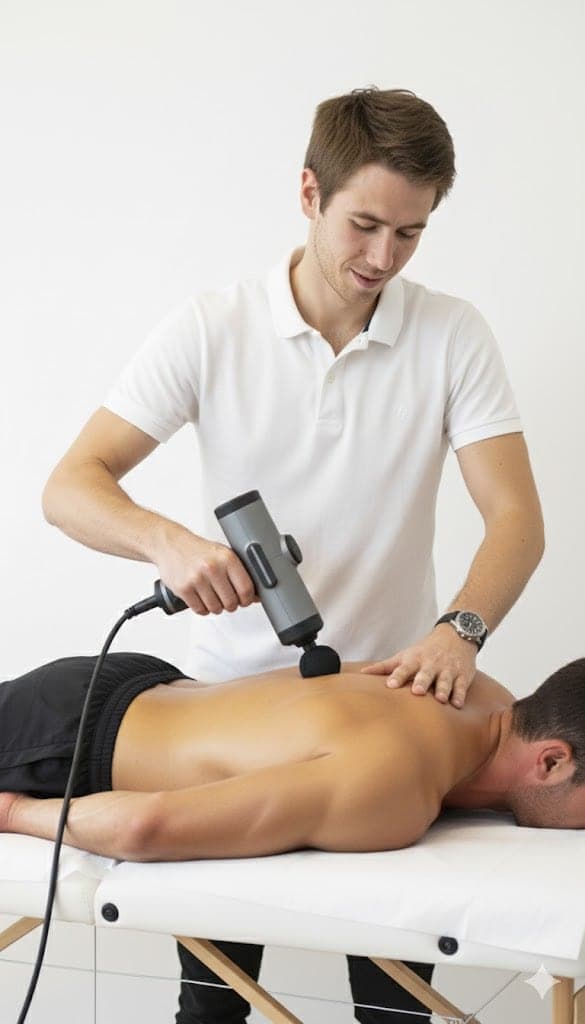
My specialized mechanical approach solves this limitation completely. The precision tool I use delivers consistent, controlled pressure that penetrates significantly deeper than manual techniques. We’re not talking about aggressive, damaging force. We’re talking about calibrated mechanical advantage that allows me to reach the myofascial layers where chronic pain actually lives.
Personalized Pain Treatment Plans: The Coral Bay Standard
Every body tells a different story. The construction worker with lower back pain from years of heavy lifting requires a fundamentally different treatment strategy than the athlete dealing with performance-limiting hip restrictions. This is why personalized pain treatment plans in Coral Bay aren’t a marketing phrase—they’re a clinical necessity.
When I develop a customized treatment protocol, I’m conducting a comprehensive biomechanical assessment. I examine:
- Primary pain locations and radiation patterns
- Postural compensations and movement restrictions
- Occupational or athletic demands on the body
- Historical injury patterns and accumulated trauma
- Tissue quality, density, and responsiveness
This assessment informs every aspect of your treatment plan—the specific areas we target, the depth and intensity of pressure applied, the frequency of sessions, and the progression strategy as your body responds and adapts.
The Machine Advantage
I travel to your location in Coral Bay with professional equipment specifically because convenience shouldn’t compromise results. The mechanical deep-tissue tool I use isn’t a luxury—it’s the difference between temporary symptom relief and lasting mechanical correction.
Precision: The machine allows me to isolate specific muscle fibers, fascial planes, and adhesion points with accuracy impossible through manual palpation alone. When I’m treating a chronic trigger point in the infraspinatus or releasing restrictions along the iliotibial band, I need pinpoint accuracy, not approximation.
Power: Chronic pain develops over months or years as tissue compensates, adheres, and forms protective patterns. Reversing this process requires sustained pressure at depths human hands simply cannot maintain. My clients include competitive athletes and individuals with severe chronic conditions—their tissue demands therapeutic intensity that manual methods cannot deliver consistently.
Consistency: I don’t have “off days” with this method. Every session delivers identical precision and power. Your treatment outcome doesn’t depend on whether I’m fatigued from previous clients or how my hands feel that day. The machine eliminates human variability from the equation entirely.
Treating the Cause, Not the Symptom
The fundamental difference between my personalized pain treatment plans and conventional approaches comes down to diagnostic philosophy. Most pain management focuses on where it hurts. I focus on why it hurts.
A client came to me six months ago with debilitating plantar fasciitis. She’d tried orthotics, cortisone injections, and regular foot massage. The pain would diminish temporarily, then return with the same intensity. When I assessed her biomechanics, the problem became immediately clear: chronic tension in her posterior chain—hamstrings, gastrocnemius, and Achilles complex—was creating excessive strain on the plantar fascia with every step.
We didn’t treat her foot. We systematically released the mechanical restrictions in her lower leg and posterior hip that were forcing her plantar fascia to compensate beyond its capacity. Three sessions later, the pain that had plagued her for eighteen months was gone. Not managed. Gone.
This is the difference between symptom suppression and mechanical correction.
The Investment Framework
I position my service as an investment because that’s precisely what it is. When you calculate the cumulative cost of ongoing pain management—monthly massage sessions, chiropractic adjustments, pain medications, reduced work productivity, limited recreational activities—the financial burden of treating symptoms becomes staggering.
My personalized pain treatment plans in Coral Bay aim for a completely different outcome: lasting resolution of the mechanical dysfunction causing your pain. This isn’t a lifetime subscription model. It’s a dedicated partnership focused on solving the problem, optimizing your body’s mechanics, and returning you to full function.
Advanced Mechanical Deep-Tissue Methodology
Let me be explicit about what happens during a treatment session because understanding the method builds confidence in the outcome.
Session One: Comprehensive Assessment
I begin every new client relationship with detailed biomechanical evaluation. I’m observing your standing posture, gait patterns, movement quality, and range of motion. I’m palpating tissue quality, identifying areas of restriction, adhesion, and compensatory tension. This assessment typically reveals pain sources the client wasn’t aware of—the thoracic restrictions contributing to their shoulder pain, the hip imbalances creating their knee issues.
Based on this evaluation, I develop your initial treatment protocol. This plan specifies:
| Treatment Component | Purpose | Clinical Objective |
|---|---|---|
| Primary target areas | Address root mechanical dysfunction | Restore optimal tissue mobility |
| Secondary compensatory patterns | Prevent pain migration | Rebalance kinetic chain |
| Pressure intensity protocol | Match tissue tolerance and density | Maximize depth without damage |
| Treatment frequency | Optimize tissue remodeling response | Build progressive improvement |
| Performance benchmarks | Track objective progress | Ensure measurable outcomes |
Progressive Treatment Protocol
Chronic pain didn’t develop overnight, and lasting resolution requires systematic progression. My treatment plans typically involve an intensive initial phase where we aggressively address the primary mechanical restrictions, followed by optimization sessions that refine movement patterns and prevent recurrence.
During each session, I adjust pressure intensity based on real-time tissue response. The mechanical tool allows me to modulate from therapeutic levels appropriate for general tension to significantly deeper pressure for athletes or individuals with dense, chronic adhesions. This adjustability means your treatment evolves with your progress—we’re not applying the same generic approach session after session.
Real Results: Performance and Quality of Life Enhancement
The ultimate measure of any pain treatment plan isn’t how you feel during the session—it’s how you function in your daily life afterward. My clients in Coral Bay include office professionals seeking relief from desk-related pain, competitive athletes optimizing performance, and individuals with decades-long chronic conditions who’d resigned themselves to lasting discomfort.
One client, a competitive cyclist, came to me with chronic IT band syndrome that was limiting his training volume and race performance. We’d worked together for five sessions when he contacted me after a particularly demanding century ride. His message: “First time in three years I’ve completed a hundred miles without knee pain. This changes everything.”
That’s the outcome I’m pursuing with every personalized pain treatment plan—not incremental improvement, not temporary relief, but fundamental transformation in how your body functions.
The Athletic Performance Advantage
Athletes understand that pain isn’t just discomfort—it’s a performance limiter. Chronic restrictions reduce power output, limit range of motion, and create compensatory patterns that increase injury risk. My mechanical deep-tissue approach addresses these limitations at the source.
I’ve worked with runners improving their stride efficiency after releasing chronic hip flexor restrictions, swimmers increasing shoulder rotation after addressing thoracic spine adhesions, and strength athletes breaking through plateaus once we corrected mechanical imbalances limiting their movement patterns.
The precision of mechanical treatment means I can target very specific structures—individual muscle bellies, fascial planes, tendon attachments—that create performance limitations. This level of specificity simply isn’t possible with broader manual techniques.
The Coral Bay Mobile Treatment Experience
I travel to your location because effective pain treatment requires an environment where you can fully relax and allow deep tissue work without the stress of commuting post-session. I bring everything needed: professional treatment bench, specialized mechanical equipment, and a decade of clinical expertise.
This mobile approach also allows me to observe your actual living and working environment. I can assess the ergonomic factors contributing to your pain—your desk setup, sleeping position, habitual movement patterns—and provide specific recommendations for modification. Pain treatment isn’t just what happens during our session; it’s optimizing every factor affecting your biomechanics.
What to Expect During Treatment
Mechanical deep-tissue work is intense. I won’t misrepresent this. When we’re releasing chronic adhesions and fascial restrictions, you’ll feel it. But there’s a critical distinction between therapeutic discomfort and harmful pain. I’m constantly monitoring your tissue response, adjusting pressure to stay within therapeutic range, and communicating throughout the session.
Most clients describe the sensation as “hurts so good”—intense but relieving, uncomfortable but clearly productive. Within 24-48 hours, as inflammation subsides and tissue remodels, the relief becomes more apparent. By the second and third sessions, clients typically report significant improvements in pain levels and functional capacity.
Why Personalized Plans Outperform Standard Protocols
The spa industry has conditioned people to expect standardized treatments: sixty-minute Swedish massage, ninety-minute deep tissue, hot stone therapy. These cookie-cutter approaches fundamentally misunderstand how pain develops and how bodies heal.
Your chronic lower back pain has a completely different mechanical origin than someone else’s lower back pain. Your tissue density, pain tolerance, compensation patterns, daily activities, and healing response are unique. Applying a standardized treatment protocol to these individual variations is like prescribing the same medication at the same dosage to every patient regardless of their condition.
My personalized pain treatment plans in Coral Bay account for these critical variables:
- Individual pain etiology: We identify your specific mechanical dysfunction, not generic “back pain” or “shoulder tension”
- Tissue characteristics: Treatment intensity and technique adapt to your unique tissue density and responsiveness
- Lifestyle demands: Your treatment plan considers occupational stress, athletic requirements, and daily activities
- Recovery capacity: Session frequency optimizes your body’s remodeling response without overtraining tissue
- Progress benchmarks: We establish objective measurements to track improvement and adjust treatment accordingly
The Dedicated Partnership Model
I don’t offer one-off sessions. This isn’t because I’m trying to lock clients into recurring revenue—it’s because solving chronic pain requires commitment from both parties. Single sessions might provide temporary relief, but they cannot address the accumulated mechanical dysfunction underlying chronic conditions.
When you engage my services, we’re forming a partnership dedicated to resolving your pain completely. I bring my expertise, methodology, and specialized equipment. You bring commitment to the treatment protocol, honest feedback about your response, and willingness to implement the mechanical corrections we identify.
This partnership approach has allowed me to achieve outcomes that clients describe as “life-changing”—not because I’m performing miracles, but because we’re systematically addressing the actual problem rather than perpetually managing symptoms.
Common Pain Conditions Successfully Treated
While every case receives individualized treatment, certain pain patterns respond particularly well to mechanical deep-tissue therapy. Based on my decade of clinical experience in Coral Bay and beyond, these conditions consistently show dramatic improvement:
Chronic Lower Back Pain
Lower back pain typically originates from a combination of weak core stabilizers, tight hip flexors, and compensatory tension in the erector spinae and quadratus lumborum. Standard massage addresses surface tension without reaching the deep spinal stabilizers where dysfunction lives. My mechanical approach penetrates to these deeper layers, releasing restrictions and restoring proper muscle recruitment patterns.
Neck and Shoulder Tension
Desk workers and athletes alike develop chronic tension in the upper trapezius, levator scapulae, and cervical paraspinals. This pain pattern often includes referral into the head (tension headaches) and down the arm (pseudo-radicular symptoms). Effective treatment requires releasing deep restrictions in the scalenes, suboccipitals, and rotator cuff—areas where manual pressure cannot maintain therapeutic depth consistently.
IT Band Syndrome and Hip Pain
Runners and cyclists frequently develop iliotibial band syndrome that conventional treatment approaches with foam rolling and stretching. These superficial interventions rarely succeed because IT band pain typically stems from muscular imbalances and fascial restrictions in the tensor fasciae latae, gluteal complex, and hip external rotators. Mechanical deep-tissue work addresses these deeper structures effectively.
Plantar Fasciitis and Foot Pain
As I mentioned earlier, plantar fasciitis rarely originates in the foot itself. Successful treatment requires releasing the entire posterior chain—calves, hamstrings, and hip extensors—that creates excessive strain on the plantar fascia. The precision and depth of mechanical treatment allows systematic progression through these connected tissue layers.
Frequently Asked Questions About Personalized Pain Treatment Plans
How is mechanical deep-tissue therapy different from regular massage?
Traditional massage primarily addresses superficial muscle layers and provides temporary relaxation. My mechanical deep-tissue approach targets the specific fascial restrictions, adhesions, and chronic tension patterns that create pain. The specialized tool delivers consistent, precise pressure at depths impossible through manual techniques, allowing us to treat the actual cause of your pain rather than just the symptoms.
How many sessions will I need to see results?
Most clients notice significant improvement within three to five sessions, though this varies based on condition severity and chronicity. Acute issues often resolve quickly, while chronic conditions that developed over years may require more intensive initial treatment. During your assessment, I provide a realistic timeline based on your specific mechanical dysfunction and tissue condition.
Is the treatment painful?
The treatment is intense but not harmful. When we’re releasing deep adhesions and chronic restrictions, you’ll experience significant pressure. However, I maintain constant communication and adjust intensity to stay within therapeutic range. The discomfort is productive—clients consistently report that the temporary intensity is worth the lasting relief.
Do you only treat athletes, or can anyone benefit?
I work with everyone from competitive athletes optimizing performance to office professionals managing desk-related pain to seniors seeking improved mobility and quality of life. The beauty of personalized treatment plans is that they adapt to your specific needs, tissue characteristics, and goals. Whether you’re training for competition or simply want to play with your grandchildren without pain, my approach addresses your unique mechanical dysfunction.
Why do you travel to clients instead of maintaining a clinic?
Two reasons: First, deep-tissue work leaves you in a relaxed state where driving isn’t ideal. Coming to your location eliminates post-treatment stress. Second, observing your actual environment allows me to identify ergonomic and lifestyle factors contributing to your pain—information I wouldn’t access in a clinic setting. The mobile model provides superior treatment outcomes and convenience.
What makes your method superior to chiropractic care or physical therapy?
I’m not suggesting my approach replaces all other modalities—I’m stating it addresses mechanical tissue dysfunction more effectively than manual techniques. Chiropractic focuses on joint alignment; physical therapy emphasizes exercise rehabilitation. My mechanical deep-tissue method treats the soft tissue restrictions that create pain and limit function. Many clients combine my services with other modalities, but they consistently report that the tissue work provides breakthrough results they couldn’t achieve elsewhere.
How long do results last?
When we successfully address the mechanical cause of your pain and you implement the postural and movement corrections I recommend, results are lasting. I’m not managing your pain indefinitely—I’m solving the problem. Some clients return quarterly for optimization and maintenance, but the goal is always lasting resolution, not dependency on ongoing treatment.
What should I do to prepare for a session?
Arrive hydrated and avoid heavy meals immediately before treatment. Wear comfortable clothing that allows access to treatment areas. Most importantly, come prepared to communicate honestly about your pain experience, tissue sensitivity, and response to pressure. Your feedback allows me to optimize treatment intensity and effectiveness.
Investment in Long-Term Health and Performance
When I describe my services as an investment rather than an expense, I’m asking you to shift perspective on pain management entirely. Calculate what you’ve spent on temporary solutions—the weekly massage sessions, monthly chiropractic adjustments, pain medications, reduced work productivity, cancelled recreational activities, and compromised quality of life.
Now consider a different model: intensive, personalized treatment that addresses the actual mechanical cause of your pain, delivered by a specialist with a decade of clinical experience and advanced methodology that achieves results manual techniques cannot match.
The clients who experience the most dramatic outcomes are those who commit fully to the process. They understand that chronic pain developed over months or years and resolving it requires dedication. They’re willing to invest in comprehensive treatment because they recognize that lasting relief is infinitely more valuable than temporary symptom management.
The Coral Bay Advantage
Living in Coral Bay means access to exceptional outdoor recreation, active lifestyle opportunities, and a community that values health and performance. Chronic pain shouldn’t limit your ability to enjoy these advantages. Whether you’re dealing with work-related discomfort, athletic performance limitations, or long-standing conditions that conventional treatment hasn’t resolved, personalized pain treatment plans offer a different path forward.
I bring university-level education in body mechanics, ten years of clinical refinement, and specialized equipment that delivers precision, power, and consistency to your location. We develop a customized treatment protocol based on your unique mechanical dysfunction, tissue characteristics, and functional goals. We work together until the problem is solved—not managed, but resolved.
This is the standard of care I offer every client in Coral Bay: comprehensive assessment, advanced methodology, personalized treatment progression, and unwavering commitment to lasting results. Your pain has a mechanical cause. Let’s correct it.
Written by
Chris
Massage therapist & body mechanics specialist
Norwegian-certified with a Bachelor’s in Physical Education and Nutrition and over ten years of clinical practice, working from a portable table in clients’ homes across the Paphos district.
This article is general information from clinical practice, not a medical diagnosis. If you have severe, worsening or unexplained pain, numbness, weakness, or pain after an accident, see a doctor first.