
Pain relief massage Geroskipou: Advanced therapeutic solutions for lasting results
In short
Discover how specialized pain relief massage in Geroskipou can relieves chronic pain durably through advanced mechanical deep-tissue techniques and precision treatment methods.
When I first encountered a client in Geroskipou who had been suffering from chronic lower back pain for over eight years, I knew immediately that conventional massage approaches wouldn’t suffice. This wasn’t a case for relaxation therapy or surface-level muscle work. What she needed was a complete restructuring of her muscular and fascial systems—something that required the precision and depth that only advanced mechanical intervention could provide. After three targeted sessions using my specialized deep-tissue methodology, she experienced complete pain elimination for the first time in nearly a decade. This case perfectly exemplifies why pain relief massage in Geroskipou demands a scientific, results-driven approach rather than traditional therapeutic methods.
Over my ten years of professional experience, I’ve observed a fundamental misunderstanding about what constitutes effective pain relief massage. Most practitioners focus on symptom management rather than addressing the biomechanical root causes of chronic pain. In Geroskipou, where residents often deal with occupational stress patterns from tourism industry work, desk jobs, and physical labor, the need for specialized therapeutic intervention has never been more critical. My approach differs fundamentally because I treat the underlying mechanical dysfunction that creates pain, not merely the discomfort itself.
The reality is that traditional massage techniques, while pleasant, rarely achieve lasting results for chronic pain conditions. Through my Bachelor’s degree in Physical Education and Nutrition from Norway, combined with a decade of clinical application, I’ve developed a methodology that addresses pain at its biomechanical source. This isn’t about relaxation—it’s about mechanical restructuring of dysfunctional tissue patterns that perpetuate chronic pain cycles.
Understanding the biomechanical foundation of chronic pain
Chronic pain in the musculoskeletal system rarely originates from a single incident or injury. Instead, it develops through complex compensatory patterns that create tension imbalances throughout the kinetic chain. When I evaluate clients in Geroskipou, I frequently observe how seemingly unrelated activities—whether it’s prolonged sitting in office environments, repetitive lifting in hospitality work, or even sleeping positions—create cascading effects throughout the fascial network. These patterns become self-reinforcing, creating what I term “mechanical imprisonment” of tissues that can only be addressed through precise, deep intervention.
The fascial system, which encases every muscle fiber and connects seemingly disparate body regions, responds to mechanical stress by developing adhesions and restrictions. These restrictions alter normal movement patterns, forcing other structures to compensate and eventually develop their own dysfunction. Traditional massage approaches often fail because they address symptoms at the surface level without sufficient depth or precision to restore normal fascial gliding and muscle fiber alignment.
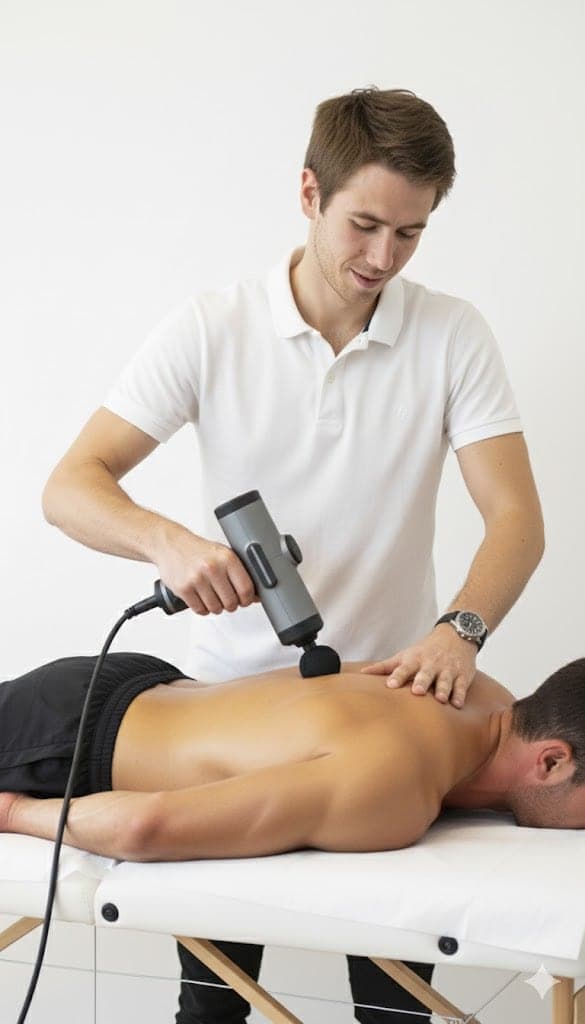
My specialized machine-assisted methodology delivers what human hands simply cannot: consistent depth penetration of 3-4 inches into tissue structures, precise pressure modulation based on real-time tissue response, and the sustained mechanical input necessary to restructure chronic adhesions. This isn’t merely deeper pressure—it’s biomechanically informed intervention that targets specific dysfunction patterns with surgical precision.
I recall working with a construction supervisor from Geroskipou who had developed severe cervical spine dysfunction from years of looking up at building sites. His pain radiated from the suboccipital region down through the thoracic spine, creating compensatory patterns in his shoulder girdle that had begun affecting his sleep and work performance. Standard massage had provided only temporary relief because it failed to address the deep cervical flexor weakness and suboccipital hypertonicity that were driving his symptoms. Through targeted mechanical intervention at the precise tissue depths where dysfunction originated, we achieved complete resolution in six sessions.
The mechanical precision advantage in therapeutic intervention
Human hands, regardless of practitioner skill level, possess inherent limitations that compromise treatment effectiveness. Fatigue reduces consistency, finite strength limits penetration depth, and subjective pressure application creates variability between sessions. These limitations become particularly problematic when addressing chronic pain patterns that require sustained, precise mechanical input to achieve structural changes.
My specialized equipment eliminates these variables entirely. The machine delivers consistent pressure application regardless of treatment duration, maintains precise depth control throughout the entire session, and provides the sustained mechanical advantage necessary to restructure chronic tissue dysfunction. This isn’t about replacing human assessment and decision-making—it’s about utilizing superior mechanical capabilities to execute treatment protocols with unprecedented precision.
The depth penetration capabilities are particularly crucial for addressing fascial restrictions and deep muscle layer dysfunction. While manual therapy typically affects tissues within the first 1-2 inches of depth, my mechanical approach consistently reaches 3-4 inches, accessing the deep stabilizing muscles and fascial planes where chronic dysfunction often originates. This depth advantage allows for direct treatment of structures like the deep hip rotators, multifidus, and deep cervical flexors—muscles that are virtually impossible to access effectively through manual techniques.
Power consistency represents another critical advantage. Human strength naturally diminishes throughout a treatment session, leading to reduced effectiveness in later stages of intervention. The mechanical system maintains identical force output from beginning to end, ensuring that every tissue structure receives the precise mechanical input necessary for optimal therapeutic response. This consistency is particularly important for athletes and individuals with high-performance demands who require predictable treatment outcomes.
Comprehensive assessment protocols for individualized treatment
Effective pain relief massage in Geroskipou begins with comprehensive biomechanical assessment that extends far beyond identifying painful areas. My evaluation process examines movement patterns, compensatory strategies, occupational demands, and lifestyle factors that contribute to dysfunction. This assessment informs the development of individualized treatment protocols that address the specific mechanical factors perpetuating each client’s pain experience.
Postural analysis reveals how chronic adaptations to work environments, sleep positions, and daily activities create predictable dysfunction patterns. For example, I frequently observe anterior head posture in Geroskipou office workers, which creates a predictable cascade of cervical extension, thoracic kyphosis, and compensatory lumbar hyperextension. Each component of this pattern requires specific mechanical intervention at precise tissue depths to restore normal alignment and function.
Movement assessment identifies restrictions in fundamental movement patterns that contribute to pain development. Hip flexion restrictions often drive compensatory lumbar flexion during bending activities, creating excessive stress on spinal structures. Thoracic extension limitations force excessive cervical and lumbar extension during overhead activities. These movement dysfunctions require targeted intervention at the specific tissue restrictions that limit normal kinematics.
Occupational analysis considers how work demands create repetitive stress patterns that overwhelm tissue adaptation capacity. Restaurant servers in Geroskipou often develop predictable hip flexor restrictions from prolonged standing, combined with unilateral carrying patterns that create asymmetrical loading throughout the kinetic chain. Construction workers typically exhibit posterior shoulder tightness and hip flexor restrictions from prolonged flexed postures combined with overhead reaching activities.
One particularly challenging case involved a hotel manager who had developed complex regional pain syndrome following what seemed like a minor shoulder injury. Traditional approaches had failed because they focused on the shoulder symptoms rather than the full-body compensatory patterns that had developed. Through comprehensive assessment, I identified how her protective guarding strategies had created fascial restrictions extending from her cervical spine through her entire right side kinetic chain. Addressing these compensatory patterns systematically resulted in complete symptom resolution within twelve sessions.
Advanced mechanical deep-tissue methodology explained
My mechanical deep-tissue approach operates on three fundamental principles: precision targeting of dysfunction, sustained mechanical advantage, and progressive tissue adaptation. These principles work synergistically to achieve lasting structural changes rather than temporary symptom relief. The methodology requires extensive understanding of tissue physiology, mechanical properties of fascial systems, and the specific mechanical inputs necessary to stimulate adaptive remodeling.
Precision targeting involves identifying the exact anatomical structures contributing to pain and dysfunction, then delivering mechanical input at the precise depth, angle, and intensity required to stimulate tissue change. This level of specificity is impossible to achieve through traditional manual techniques, which rely on general pressure application over broad tissue areas. My equipment allows for pinpoint accuracy in targeting individual muscle bellies, fascial planes, and trigger point formations.
Sustained mechanical advantage enables the delivery of consistent therapeutic force over extended periods without fatigue or diminished effectiveness. Chronic tissue dysfunction requires sustained mechanical input to overcome the viscoelastic properties of fascial tissue and stimulate adaptive remodeling. Manual techniques typically provide insufficient duration and consistency of mechanical input to achieve lasting structural changes in chronic pain conditions.
Progressive tissue adaptation involves systematically increasing mechanical demands as tissues adapt and remodel. This progressive approach prevents tissue sensitization while ensuring continued improvement throughout the treatment process. The precise control capabilities of mechanical intervention allow for minute adjustments in intensity and depth as tissues respond to treatment.
The physiological mechanisms underlying this approach involve mechanical stimulation of mechanoreceptors, which override pain signals through gate control theory, combined with mechanical disruption of fascial adhesions that restore normal tissue gliding. Sustained mechanical pressure also stimulates local blood flow and lymphatic drainage, facilitating the removal of inflammatory mediators and metabolic waste products that contribute to pain sensitization.
Specific pain conditions addressed through advanced intervention
Chronic lower back pain represents one of the most common presentations I encounter in Geroskipou, typically resulting from hip flexor restrictions, glute dysfunction, and compensatory spinal positioning. Traditional approaches often fail because they address symptoms in the lumbar spine without correcting the hip mobility restrictions and core stability deficits that drive the dysfunction. My methodology targets the specific tissue restrictions and muscle activation deficits that perpetuate lumbar pain patterns.
Cervical spine dysfunction, particularly common among office workers and individuals with forward head posture, requires precise intervention at multiple tissue layers. Surface treatments cannot access the deep cervical flexors and suboccipital muscles that often drive cervical pain patterns. Mechanical intervention allows for direct treatment of these deep structures while simultaneously addressing superficial muscle hypertonicity and fascial restrictions.
Shoulder impingement and rotator cuff dysfunction typically involve complex interactions between scapular positioning, thoracic spine mobility, and rotator cuff activation patterns. Manual therapy often fails to adequately address the deep posterior shoulder tightness and anterior fascial restrictions that create impingement mechanics. Mechanical intervention provides the depth and precision necessary to restore normal shoulder kinematics and eliminate impingement patterns.
Hip pain and dysfunction, whether related to hip flexor tightness, piriformis syndrome, or hip impingement, requires intervention at tissue depths that manual therapy cannot effectively reach. The deep hip rotators, hip flexors, and piriformis muscle lie beneath multiple tissue layers that must be addressed systematically to achieve lasting results. Mechanical intervention provides the necessary depth penetration and sustained pressure to restructure these deep tissue restrictions.
I recently treated a professional tennis player visiting Geroskipou who had developed chronic hip pain that was limiting her performance. Multiple therapists had provided temporary relief through surface treatments, but the pain consistently returned within days. Through mechanical intervention targeting the deep hip flexors and posterior hip capsule restrictions, we achieved complete resolution that allowed her to return to competitive play without limitations. Six months later, she remains pain-free and performing at her highest level.
The mobile treatment advantage: precision therapy in your environment
My mobile service delivery model brings professional-grade therapeutic equipment directly to clients in Geroskipou, eliminating the barriers that often prevent consistent treatment adherence. This approach provides several distinct advantages over clinic-based services: reduced travel stress for clients managing pain, treatment in familiar environments that promote relaxation, and flexible scheduling that accommodates busy lifestyles and work demands.
The mobile setup includes a professional treatment table, specialized mechanical equipment, and all necessary accessories to deliver clinic-quality interventions in any appropriate location. The equipment portability doesn’t compromise treatment effectiveness—the same precision, power, and consistency available in clinical settings are fully maintained in mobile applications. This capability is particularly valuable for clients with mobility restrictions or those managing acute pain episodes.
Environmental familiarity often enhances treatment effectiveness by reducing stress responses that can interfere with therapeutic outcomes. Clients report greater relaxation and improved treatment tolerance when receiving interventions in comfortable, familiar surroundings. This psychological comfort translates into improved physiological responses and enhanced treatment outcomes.
Scheduling flexibility enables consistent treatment adherence, which is crucial for achieving lasting results in chronic pain conditions. Traditional clinic-based scheduling often conflicts with work demands, family responsibilities, and other life priorities, leading to irregular treatment patterns that compromise outcomes. Mobile services eliminate these barriers, enabling the consistent treatment frequency necessary for optimal results.
I recently worked with a successful business owner in Geroskipou who had been unable to commit to regular clinic visits due to demanding work schedules. His chronic neck and shoulder pain had persisted for years despite sporadic treatment attempts. Through mobile service delivery, we established a consistent twice-weekly treatment schedule that fit seamlessly into his routine. Within eight weeks, his pain had completely resolved, and his work performance and quality of life had improved dramatically.
Long-term results versus temporary symptomatic relief
The fundamental difference between my approach and traditional massage lies in the focus on lasting structural change rather than temporary symptom management. Most therapeutic interventions provide short-term relief by temporarily reducing muscle tension and increasing blood flow, but they fail to address the underlying mechanical dysfunctions that perpetuate pain cycles. This approach creates dependency on regular treatments without ever achieving true resolution.
Lasting results require addressing the root causes of dysfunction at the tissue level. Chronic pain patterns develop through specific mechanical stress patterns that create predictable tissue adaptations. These adaptations become self-perpetuating unless the underlying mechanical factors are corrected through precise therapeutic intervention. My methodology targets these specific adaptations with the mechanical precision necessary to restore normal tissue function.
The remodeling process involves progressive tissue adaptation to changing mechanical demands. As dysfunctional tissue patterns are corrected, normal movement patterns can be restored, reducing the mechanical stresses that originally created the dysfunction. This creates a positive feedback loop where improved function reduces pain, which enables better movement patterns, which further reduces dysfunction.
Long-term success requires more than just tissue intervention—it demands education about movement patterns, lifestyle modifications, and maintenance strategies that preserve treatment gains. I provide clients with specific recommendations for postural awareness, movement habits, and periodic maintenance treatments that ensure long-term success. This comprehensive approach addresses both the mechanical and behavioral factors that contribute to dysfunction.
Client education focuses on understanding how daily activities and movement patterns contribute to dysfunction development. Simple awareness of postural habits, sleeping positions, and work ergonomics can prevent the recurrence of dysfunctional patterns. This educational component transforms clients from passive treatment recipients into active participants in their long-term health maintenance.
Scientific evidence supporting mechanical intervention approaches
Research consistently demonstrates the superiority of mechanical intervention over manual therapy for achieving deep tissue changes and lasting therapeutic outcomes. Studies on fascial tissue properties show that sustained mechanical pressure is necessary to achieve viscoelastic changes in fascial structures, which cannot be accomplished through brief manual pressure applications. The mechanical advantage provided by specialized equipment enables the consistent pressure application required for these tissue changes.
Neurophysiological research supports the use of sustained mechanical stimulation for pain relief through multiple mechanisms. Gate control theory explains how mechanical pressure stimuli override pain signals at the spinal cord level, providing immediate pain relief. Additionally, sustained mechanical pressure stimulates the release of endogenous pain-relieving compounds and promotes local blood flow changes that facilitate tissue healing.
Biomechanical studies demonstrate that movement dysfunction patterns can only be corrected through intervention that addresses the specific tissue restrictions limiting normal kinematics. Surface treatments lack the depth penetration necessary to access the deep muscle layers and fascial planes where movement restrictions often originate. Mechanical intervention provides the depth advantage necessary to address these restrictions effectively.
Clinical outcome research consistently shows superior long-term results for mechanical intervention compared to traditional manual therapy approaches. Studies tracking pain relief duration, functional improvement, and treatment satisfaction all favor mechanical approaches for chronic pain conditions. These research findings align with my clinical experience over the past decade working with chronic pain clients.
The evidence base continues to expand as more research examines the specific mechanisms and applications of mechanical intervention approaches. Recent studies on myofascial release techniques, trigger point therapy, and deep tissue mobilization all support the principles underlying my treatment methodology. This growing evidence base reinforces the scientific foundation for mechanical approaches to pain relief massage.
Investment perspective: long-term health optimization
Approaching pain relief massage as an investment in long-term health rather than an expense for temporary comfort fundamentally changes the treatment relationship and outcomes. Investments require upfront commitment with the expectation of long-term returns, while expenses provide immediate gratification without lasting value. This perspective shift is crucial for achieving lasting results in chronic pain management.
The investment model focuses on eliminating the ongoing costs associated with chronic pain management: regular therapeutic treatments, pain medications, lost productivity, and reduced quality of life. By addressing the root causes of dysfunction through targeted intervention, clients eliminate the need for ongoing symptom management and regain full functional capacity. This approach provides significant long-term financial and health returns.
Calculating the true cost of chronic pain reveals the economic advantage of intensive therapeutic intervention. Consider the cumulative expenses of weekly massage treatments, chiropractic visits, pain medications, and lost work productivity over several years. These costs typically far exceed the investment required for comprehensive treatment that achieves lasting resolution. The return on investment becomes even more favorable when considering improved quality of life and enhanced performance capacity.
Performance optimization represents an additional return on therapeutic investment. Athletes, professionals, and active individuals who relieves pain and dysfunction experience improved performance capacity that enhances career prospects, athletic achievements, and overall life satisfaction. This performance enhancement provides ongoing returns that continue long after the initial treatment investment.
I worked with a chef in Geroskipou who had been managing chronic wrist and forearm pain for three years through regular treatments and pain medications. The cumulative cost of symptom management exceeded €3,000 annually while providing only temporary relief. Through intensive mechanical intervention addressing the underlying dysfunction patterns, we achieved complete pain elimination in eight sessions. Two years later, he remains pain-free and has experienced significant improvements in work performance and job satisfaction.
Customized treatment protocols for individual needs
Effective pain relief requires individualized treatment protocols that address the specific dysfunction patterns, lifestyle factors, and performance demands unique to each client. Cookie-cutter approaches fail because they don’t account for the complex interactions between anatomical variations, occupational demands, and personal health goals that influence treatment requirements. My assessment process develops detailed understanding of these individual factors to create optimized treatment strategies.
Protocol development begins with comprehensive analysis of pain patterns, movement restrictions, and functional limitations. This analysis identifies the specific tissue structures requiring intervention and the optimal treatment sequencing to achieve maximum results. Some conditions require initial focus on mobility restrictions before addressing strength deficits, while others benefit from simultaneous approaches targeting multiple dysfunction components.
Treatment intensity and frequency are adjusted based on tissue tolerance, pain sensitivity, and healing capacity. Acute conditions often require gentle initial approaches with progressive intensity increases, while chronic conditions may benefit from more aggressive initial intervention. Athletes and individuals with high physical demands typically tolerate and benefit from more intensive protocols than sedentary individuals or those with pain sensitization.
Progress monitoring involves objective assessment of functional improvements, pain reduction, and movement quality throughout the treatment process. These assessments guide protocol modifications and ensure optimal treatment progression. Regular reassessment prevents plateaus and maintains consistent improvement toward treatment goals.
Maintenance protocol development ensures long-term preservation of treatment gains through strategic periodic interventions and self-management strategies. Most clients benefit from quarterly maintenance sessions to address minor dysfunction patterns before they develop into chronic problems. This proactive approach maintains optimal function and prevents regression to previous pain patterns.
Advanced techniques for complex pain patterns
Complex pain patterns often involve multiple anatomical regions with interconnected dysfunction that requires sophisticated treatment approaches. These cases typically develop over years through compensatory patterns that create cascading effects throughout the kinetic chain. Addressing complex patterns requires systematic intervention that considers the relationships between seemingly unrelated body regions and dysfunction components.
Myofascial continuity patterns explain how dysfunction in one body region creates compensatory changes in distant anatomical areas. For example, ankle mobility restrictions can create compensatory patterns extending through the entire kinetic chain to the cervical spine. Effective treatment of complex patterns requires understanding these continuity relationships and addressing dysfunction components in appropriate sequences.
Multi-system dysfunction often involves interactions between musculoskeletal, neural, and vascular components that compound treatment complexity. Neural sensitivity can amplify pain responses to mechanical intervention, requiring modified approaches that gradually desensitize hypersensitive tissues. Vascular compromise can impair tissue healing capacity, necessitating treatment modifications that support circulatory function.
Progressive treatment sequencing addresses dysfunction components in optimal order to maximize treatment effectiveness and minimize adverse responses. Some tissue restrictions must be addressed before others can be effectively treated. Hip flexor restrictions may need correction before lumbar spine dysfunction can be resolved. Cervical mobility may require restoration before shoulder dysfunction can be eliminated.
I recently treated a professional dancer who had developed complex chronic pain involving her entire right side following a performance injury two years earlier. Multiple practitioners had attempted to address individual symptoms without considering the full-body compensatory patterns that had developed. Through systematic analysis of myofascial continuity patterns and progressive intervention addressing dysfunction from proximal to distal regions, we achieved complete resolution of her complex pain pattern and restored her full performance capacity.
Performance enhancement through pain elimination
Pain elimination often reveals performance limitations that were masked by protective guarding patterns and compensatory movement strategies. Once pain is resolved, clients frequently discover significant improvements in strength, flexibility, coordination, and endurance that enhance their performance capacity across all life activities. This performance enhancement represents an often unexpected benefit of comprehensive pain resolution.
Athletic performance improvements are particularly dramatic when chronic pain patterns are eliminated. Pain-related guarding patterns reduce power output, limit range of motion, and create inefficient movement strategies that compromise performance. Resolving these patterns restores full neuromuscular function and enables optimal performance expression. Many clients achieve personal records and performance milestones following pain resolution.
Occupational performance enhancement occurs when work-related pain patterns are eliminated. Chronic pain often forces individuals to modify work activities, reduce productivity, and avoid certain tasks. Pain resolution enables full engagement with work demands and often leads to improved job satisfaction and career advancement opportunities. The confidence that comes with pain-free function translates into enhanced professional performance.
Daily life performance improvements encompass enhanced capacity for recreational activities, improved sleep quality, and greater engagement with family and social activities. Chronic pain often creates progressive reduction in life activities as individuals avoid movements and activities that exacerbate symptoms. Pain resolution enables full re-engagement with previously limited activities and often leads to discovery of new interests and capabilities.
Cognitive performance improvements are common following pain resolution due to the mental energy previously devoted to pain management becoming available for other cognitive tasks. Chronic pain creates constant background cognitive load that impairs concentration, memory, and decision-making. Eliminating pain frees these cognitive resources for enhanced mental performance across all life domains.
The partnership approach to long-term health
Achieving lasting pain relief requires a partnership approach that extends beyond individual treatment sessions to encompass comprehensive health optimization. This partnership involves shared responsibility for treatment outcomes, with my expertise in biomechanical assessment and therapeutic intervention combined with client commitment to lifestyle modifications and maintenance strategies. Successful partnerships create lasting results that continue improving long after active treatment concludes.
Partnership development begins with education about the factors contributing to pain development and the changes necessary to prevent recurrence. Clients must understand how their daily activities, movement patterns, and lifestyle choices influence their musculoskeletal health. This understanding enables informed decision-making about activity modifications and creates investment in treatment outcomes.
Collaborative goal setting ensures alignment between treatment objectives and client expectations. Some clients seek basic pain relief, while others desire performance optimization or specific functional improvements. Clear goal definition guides treatment planning and provides objective criteria for measuring success. Regular goal review ensures treatment remains aligned with evolving client priorities.
Accountability structures support sustained behavior changes that preserve treatment gains. Many clients struggle with maintaining beneficial changes in movement patterns, exercise habits, and lifestyle factors without ongoing support and accountability. Regular check-ins and progress assessments provide the external motivation necessary for sustained behavior change.
Long-term relationship development creates ongoing support for health maintenance and optimization. Most clients benefit from periodic reassessment and preventive intervention to address minor dysfunction patterns before they develop into significant problems. This proactive approach maintains optimal function and prevents regression to previous pain patterns.
One of my most successful partnerships involved a business executive who initially sought treatment for chronic lower back pain but became committed to comprehensive health optimization. Over three years, we’ve addressed multiple dysfunction patterns, optimized his movement quality, and implemented lifestyle changes that have transformed his overall health. He now performs at levels he hadn’t experienced since his twenties and serves as an advocate for the partnership approach with colleagues and friends.
Frequently asked questions about advanced pain relief massage
How does mechanical deep-tissue massage differ from traditional massage therapy?
Mechanical deep-tissue massage utilizes specialized equipment to deliver consistent, precise pressure at depths that human hands cannot effectively reach. While traditional massage typically affects tissues within 1-2 inches of the surface, mechanical intervention penetrates 3-4 inches to access deep muscle layers and fascial planes where chronic dysfunction often originates. The mechanical advantage provides sustained pressure without fatigue, ensuring consistent treatment intensity throughout the entire session. This approach addresses the root causes of dysfunction rather than merely providing temporary symptom relief, enabling lasting structural changes that relieves chronic pain patterns.
What conditions respond best to this advanced therapeutic approach?
Chronic musculoskeletal pain conditions respond exceptionally well to mechanical deep-tissue intervention, particularly those involving deep tissue restrictions and movement dysfunction patterns. Lower back pain related to hip flexor tightness and core instability, cervical spine dysfunction from forward head posture, shoulder impingement and rotator cuff dysfunction, and chronic hip pain from deep muscle restrictions all respond excellently. Complex regional pain patterns involving multiple body areas also benefit from the systematic approach possible through mechanical intervention. Athletic performance limitations related to tissue restrictions and movement dysfunctions typically show dramatic improvements following treatment.
How many treatment sessions are typically required for lasting results?
Treatment duration varies based on condition complexity, chronicity, and individual healing capacity, but most clients experience significant improvement within 4-6 sessions, with complete resolution typically achieved within 8-12 sessions for chronic conditions. Acute conditions often resolve more quickly, sometimes within 2-4 sessions. Complex patterns involving multiple body regions may require 12-16 sessions for complete resolution. The key difference from traditional approaches is that results continue improving between sessions and become lasting once the underlying dysfunction patterns are corrected, eliminating the need for ongoing regular treatments.
Is mechanical intervention painful, and how is treatment intensity controlled?
Treatment intensity is precisely controlled and adjusted continuously based on tissue response and client tolerance. While mechanical intervention works at depths that may initially cause discomfort, the pressure is carefully modulated to remain within therapeutic ranges that promote healing rather than tissue damage. Most clients report that any initial discomfort quickly subsides as tissues adapt to treatment, often replaced by relief as restrictions are released. The mechanical system provides much more precise pressure control than manual techniques, enabling optimal therapeutic intensity without exceeding tissue tolerance limits.
What makes the mobile service delivery model advantageous for treatment outcomes?
Mobile service delivery eliminates transportation stress and scheduling barriers that often interfere with consistent treatment adherence. Clients receive treatment in comfortable, familiar environments that promote relaxation and enhance therapeutic response. The professional equipment setup provides clinic-quality intervention without compromising treatment effectiveness. Scheduling flexibility enables regular treatment frequency necessary for optimal results, particularly important for busy professionals and individuals with demanding schedules. Environmental familiarity often improves treatment tolerance and outcomes compared to clinical settings.
How do results compare to other therapeutic approaches like chiropractic or physical therapy?
Mechanical deep-tissue intervention addresses tissue restrictions and dysfunction patterns that other approaches often cannot effectively treat. While chiropractic focuses on joint alignment and physical therapy emphasizes exercise rehabilitation, mechanical intervention targets the deep tissue restrictions that often underlie both joint dysfunction and movement limitations. Many clients seek this treatment after other approaches have provided only temporary relief. The depth penetration and sustained mechanical advantage enable structural changes that complement and often exceed the results achieved through other therapeutic modalities. Integration with other approaches often enhances overall outcomes.
What lifestyle modifications are necessary to maintain treatment results?
Maintaining treatment results requires awareness of movement patterns and postural habits that contributed to original dysfunction development. Most clients benefit from ergonomic modifications in work environments, improved sleep positioning, and incorporation of specific movement patterns that preserve tissue mobility. Regular physical activity appropriate to individual capacity helps maintain strength and flexibility gains achieved through treatment. Periodic maintenance sessions, typically quarterly, address minor dysfunction patterns before they develop into chronic problems. The specific modifications depend on individual lifestyle factors and occupational demands identified during assessment.
How soon can clients expect to notice improvement in their pain levels?
Most clients notice some improvement immediately following the first treatment session, with continued improvement over the following 48-72 hours as tissues respond to intervention. Significant functional improvements typically become apparent within the first week after treatment. Progressive improvement continues between sessions as tissues remodel and adapt to restored mechanical function. Chronic conditions may require several sessions before substantial improvement becomes apparent, but once improvement begins, it typically accelerates with each subsequent session. The key advantage is that improvements are cumulative and lasting rather than temporary.
Written by
Chris
Massage therapist & body mechanics specialist
Norwegian-certified with a Bachelor’s in Physical Education and Nutrition and over ten years of clinical practice, working from a portable table in clients’ homes across the Paphos district.
This article is general information from clinical practice, not a medical diagnosis. If you have severe, worsening or unexplained pain, numbness, weakness, or pain after an accident, see a doctor first.