Pain management specialists Pafos: Advanced deep tissue therapy for chronic back pain relief
In short
Discover how specialized pain management in Pafos uses advanced mechanical deep-tissue techniques to targets the cause of chronic back pain durably, not just mask symptoms.
Ten years ago, I watched my first client in Pafos walk out of our session completely pain-free after suffering from chronic lower back pain for over three years. She had tried everything – traditional physiotherapy, medication, even surgery consultations. What made the difference wasn’t another conventional treatment, but a complete paradigm shift in how we approach pain management. That moment fundamentally changed how I view the relationship between mechanical precision and human anatomy.
As a pain management specialist in Pafos with a Bachelor’s degree in Physical Education and Nutrition from Norway and a decade of hands-on experience, I’ve witnessed the devastating impact of chronic back pain on people’s lives. More importantly, I’ve developed and refined a methodology that doesn’t just manage pain – it eliminates it at its mechanical source. This isn’t traditional massage therapy or generic pain management. This is advanced biomechanical intervention using precision technology that works deeper and more consistently than human hands ever could.
The fundamental problem with most pain management approaches in Pafos is that they treat symptoms, not causes. They provide temporary relief through medication, basic massage, or superficial treatments that never address the underlying mechanical dysfunction causing your chronic back pain. My approach as a pain management specialist is different – it’s about lasting results through precise, scientific intervention that targets the root cause of your pain.
Understanding Chronic Back Pain: Beyond Surface-Level Solutions
After working with hundreds of clients in Pafos over the past decade, I can tell you that chronic back pain is rarely about a single incident or injury. It’s about accumulated mechanical dysfunction, muscular imbalances, and deep-seated tension patterns that have developed over months or years. Traditional pain management approaches fail because they don’t understand this fundamental truth about how the human body actually works.
During my education in Physical Education and Nutrition, I studied extensively how mechanical forces interact with human anatomy. What I discovered was that most chronic back pain stems from layers of muscular tension that exist far deeper than conventional massage or basic physiotherapy can reach. These tension patterns create compensation mechanisms that perpetuate pain cycles, making temporary relief the best most people can hope for with traditional approaches.
I remember one particular client – a construction manager here in Pafos who had been dealing with chronic lower back pain for five years. He’d tried every pain management specialist in the area, spent thousands on treatments, and was considering leaving his career. The problem wasn’t that previous treatments were poorly executed; the problem was they were addressing the wrong layer of the issue. His pain originated from deep fascial restrictions and muscular adhesions that no amount of surface-level work could resolve.
This is where my specialized approach to pain management differs fundamentally from what’s typically available in Pafos. I don’t work on your back pain – I work through it, layer by layer, using advanced mechanical intervention that reaches the actual source of your discomfort. This isn’t about relaxation or temporary relief; this is about lasting biomechanical correction.
The Science Behind Advanced Mechanical Deep-Tissue Intervention
My methodology as a pain management specialist combines academic understanding of biomechanics with advanced technological precision. The specialized machine I use delivers what I call the three pillars of effective pain management: Precision, Power, and Consistency. These aren’t marketing terms – they’re mechanical realities that determine whether treatment succeeds or fails.
Precision means targeting specific layers of tissue at exact depths and angles that human hands simply cannot reach or maintain. When I’m working on chronic back pain, I’m not applying generalized pressure across broad areas. I’m identifying specific adhesions, trigger points, and fascial restrictions, then applying precisely calibrated mechanical force to release them durably. The machine allows me to work at depths of 2-4 inches into tissue, far beyond what manual techniques can achieve.
Power refers to the ability to generate consistent, therapeutic force without fatigue or variation in intensity. Human hands tire, lose precision, and deliver inconsistent pressure. My specialized equipment maintains exact force parameters throughout entire sessions, ensuring that every minute of treatment is maximally effective. This is particularly crucial for chronic back pain, where incomplete release of tension patterns results in rapid return of symptoms.
Consistency eliminates the variable of “therapist having an off day” that plagues traditional massage therapy. Every session I provide delivers identical precision and power, ensuring progressive improvement rather than the hit-or-miss results most pain management approaches in Pafos deliver. This consistency is what allows me to create lasting changes in muscular tension patterns rather than temporary relief.
Why Traditional Pain Management Fails: A Mechanical Analysis
I need to be direct about why most pain management approaches available in Pafos fail to provide lasting results for chronic back pain. It’s not because the practitioners aren’t skilled or well-intentioned. It’s because they’re working with fundamentally limited tools and methodologies that cannot address the mechanical realities of chronic pain.
Traditional massage therapy, regardless of how skilled the practitioner, is limited by human biomechanics. Therapist hands can only generate limited force, work at shallow depths, and maintain precision for short periods before fatigue sets in. For chronic back pain that has developed over months or years, this simply isn’t sufficient intervention. It’s like trying to demolish a brick wall with a hammer when you need precision machinery.
Pharmaceutical approaches to pain management treat symptoms while often creating dependency and side effects without addressing underlying mechanical dysfunction. I’ve seen countless clients in Pafos who’ve been managing their back pain with medication for years, never realizing that the root cause could be durably eliminated through proper mechanical intervention.
Basic physiotherapy, while valuable for rehabilitation, typically focuses on movement patterns and strengthening rather than the deep tissue release necessary to relieves chronic tension patterns. Most physiotherapists in Pafos don’t have access to the specialized equipment necessary for deep mechanical intervention, limiting them to surface-level treatments that provide temporary improvement at best.
The reality is that chronic back pain requires intervention at depths and with precision that conventional approaches simply cannot deliver. This is why I invested in advanced mechanical equipment and spent years developing protocols that work at the level where chronic pain actually exists – deep within fascial layers and muscular structures that have never been properly addressed.
Advanced Mechanical Deep-Tissue Methodology: How It Works
My approach as a pain management specialist in Pafos is built on a fundamental understanding that chronic back pain exists in specific, identifiable mechanical patterns that can be durably altered through precise intervention. This isn’t theoretical – it’s practical biomechanics applied with advanced technology.
The specialized machine I use operates on principles of controlled mechanical advantage, allowing me to generate therapeutic force at precise depths and angles while maintaining complete control over intensity and direction. This technology works deeper than human hands – often 3-4 times deeper – reaching fascial layers and muscular structures that have never been properly addressed by traditional massage or physiotherapy.
During assessment, I identify specific tension patterns, adhesions, and mechanical restrictions that are creating your chronic back pain. These aren’t generalized areas of discomfort – they’re specific anatomical structures that have developed dysfunction over time. The machine allows me to target each of these areas with exact force and duration necessary to create lasting change.
I can adjust intensity from light therapeutic pressure for sensitive clients to powerfully deep intervention for athletes or those with extensive muscular development. This complete control means that treatment is always precisely calibrated to your individual anatomy and pain patterns, not applied as a one-size-fits-all approach like traditional massage therapy.
The consistency of mechanical intervention means that every session builds upon previous work rather than starting over each time. This progressive approach is what allows lasting resolution of chronic back pain rather than the temporary relief that characterizes most pain management approaches available in Pafos.
Case Studies: Lasting Results in Chronic Back Pain Management
Let me share specific examples of how advanced mechanical deep-tissue intervention has resolved chronic back pain cases that traditional approaches in Pafos couldn’t address. These aren’t exceptional results – they’re typical outcomes when proper mechanical principles are applied with precision technology.
Maria, a hotel manager in Pafos, had been dealing with chronic lower back pain for eight years following a car accident. She had tried every pain management specialist in the area, spent over €5,000 on various treatments, and was considering early retirement at age 42. Traditional massage provided 2-3 days of relief at best. Physiotherapy helped with some movement patterns but never addressed the deep tension causing her pain. After our initial assessment, I identified specific fascial adhesions and muscular restrictions that required intervention at depths no previous treatment had reached.
Using the specialized machine, I was able to work systematically through layers of dysfunction that had accumulated over eight years. The precision and power of mechanical intervention allowed me to release tension patterns that had been perpetuating her pain cycle. After twelve sessions over eight weeks, Maria was completely pain-free for the first time since her accident. More importantly, she remains pain-free eighteen months later because we addressed the mechanical cause, not just symptoms.
Andreas, a professional athlete training in Pafos, developed chronic back pain from years of competitive weightlifting. His pain was affecting his performance and threatening his career. Traditional sports massage provided temporary relief but never lasted more than a few days. The problem was that conventional techniques couldn’t work at the depths necessary to address the muscular density and tension patterns typical in elite athletes.
My specialized equipment could generate the power necessary to work through his extensive muscular development while maintaining the precision required to avoid injury or excessive soreness. By targeting specific trigger points and adhesions at depths traditional massage couldn’t reach, we eliminated his chronic pain in six sessions. His performance improved significantly once the mechanical restrictions were resolved, and he’s remained pain-free for over two years.
The Mobile Advantage: Professional Treatment in Your Environment
One significant advantage of my pain management service in Pafos is that I travel to your location with all necessary equipment. This isn’t just about convenience – it’s about creating optimal conditions for treatment success. Many people with chronic back pain find travel and unfamiliar environments stressful, which can increase muscular tension and reduce treatment effectiveness.
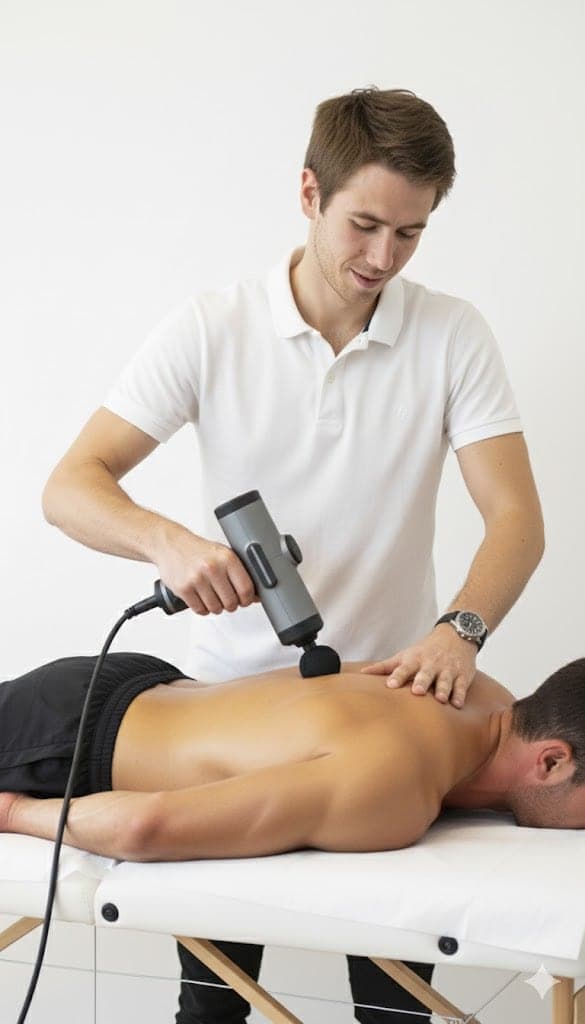
I bring a professional treatment bench and all specialized equipment to your home, office, or hotel. This means you can receive the same level of advanced mechanical intervention that would be available in a clinical setting, but in an environment where you’re completely comfortable and relaxed. This environmental factor significantly enhances treatment outcomes.
The mobile approach also allows for more comprehensive assessment of how your daily environment might be contributing to your chronic back pain. I can evaluate your workspace, sleeping setup, and daily movement patterns, then provide specific recommendations for optimizing these factors to support long-term pain management success.
After treatment, you don’t need to drive anywhere or deal with post-treatment soreness while navigating traffic in Pafos. You can rest immediately, allowing your body to begin the healing and adaptation process in optimal conditions. This approach to pain management considers every factor that influences treatment outcomes, not just the mechanical intervention itself.
Investment in Lasting Pain Relief: Understanding True Value
I need to address the economic reality of chronic back pain management directly. Most people in Pafos approach pain management as an expense – something to minimize or avoid. This perspective virtually guarantees continued suffering and escalating costs over time. Effective pain management should be viewed as an investment in lasting relief and improved quality of life.
Consider the actual cost of living with chronic back pain: ongoing medication expenses, lost productivity at work, reduced quality of life, and the progressive worsening that occurs without proper intervention. I’ve had clients who calculated they were spending €200-300 monthly on various treatments, medications, and work accommodations, yet never achieving lasting improvement.
My advanced mechanical deep-tissue approach typically resolves chronic back pain durably in 6-12 sessions, depending on the complexity and duration of the condition. While individual sessions represent a significant investment, the total cost is typically less than what most people spend on ineffective treatments over 6-12 months. More importantly, the results are lasting rather than requiring ongoing maintenance.
This is why I structure my pain management services in Pafos as customized treatment plans rather than individual sessions. Chronic back pain requires systematic intervention over time to address all contributing factors and ensure lasting resolution. Approaching treatment as isolated sessions typically results in incomplete improvement and return of symptoms.
The value proposition is straightforward: invest in proper mechanical intervention that addresses root causes, or continue spending money indefinitely on approaches that only manage symptoms. From both economic and quality-of-life perspectives, advanced mechanical deep-tissue intervention represents superior value for anyone serious about lasting pain relief.
Customized Treatment Protocols: Addressing Individual Pain Patterns
Every case of chronic back pain I encounter in Pafos is unique, requiring individualized assessment and customized intervention protocols. This isn’t a matter of applying the same technique with minor variations – it’s about understanding the specific mechanical dysfunction creating each person’s pain and developing targeted solutions.
During initial assessment, I evaluate postural patterns, movement quality, muscular balance, and daily activities to understand how your chronic back pain developed and what’s perpetuating it. This comprehensive analysis allows me to identify the specific layers of tissue that require intervention and the precise mechanical approaches necessary to resolve dysfunction.
For office workers in Pafos, chronic back pain often results from sustained postural stress and specific muscular imbalances related to prolonged sitting. The mechanical intervention focuses on releasing hip flexor restrictions, thoracic spine mobility, and deep stabilizing muscles that have become dysfunctional from repetitive stress patterns.
Athletes and physically active individuals typically present with chronic back pain from overuse, compensation patterns, or inadequate recovery between training sessions. Their treatment requires higher intensity intervention and specific attention to performance optimization rather than just pain elimination.
Individuals with chronic back pain from previous injuries need careful assessment of compensation patterns that developed during healing. Often, the original injury site is no longer the source of pain – it’s the compensatory tension patterns that developed months or years ago. My specialized equipment allows me to address these complex mechanical relationships with precision that traditional approaches cannot achieve.
Beyond Pain Relief: Optimizing Performance and Daily Function
My approach as a pain management specialist in Pafos extends beyond simply eliminating chronic back pain. Once mechanical dysfunction is resolved, most clients experience significant improvements in overall physical performance, energy levels, and daily function that they hadn’t expected.
When chronic tension patterns are released from deep muscular structures, the body’s natural movement efficiency is restored. Clients consistently report that daily activities feel easier, they have more energy throughout the day, and physical performance improves across all activities. This occurs because they’re no longer expending energy to work around mechanical restrictions and compensation patterns.
Sleep quality typically improves dramatically once chronic back pain is resolved. Many of my clients in Pafos hadn’t realized how much their sleep was being disrupted by unconscious tension patterns and positional discomfort. Deep mechanical intervention releases these restrictions, allowing truly restorative sleep for the first time in months or years.
Professional and athletic performance often improves beyond pre-pain levels once advanced mechanical deep-tissue intervention has optimized muscular function. This isn’t just about removing limitations – it’s about enhancing natural biomechanical efficiency that may have been compromised for years before pain became noticeable.
The psychological impact of lasting pain relief cannot be overstated. Living with chronic back pain affects confidence, mood, and life planning in ways that extend far beyond physical discomfort. Clients consistently report feeling more optimistic, confident, and willing to engage in activities they had been avoiding due to pain concerns.
Maintenance and Long-Term Success: Preventing Recurrence
One question I frequently receive from potential clients in Pafos is whether chronic back pain will return after successful treatment. The answer depends on understanding the difference between treating causes versus symptoms, and implementing appropriate maintenance strategies to preserve improvements.
When chronic back pain is resolved through proper mechanical intervention that addresses root causes, recurrence is rare. However, the same lifestyle factors, postural habits, or activity patterns that contributed to original dysfunction can potentially create new problems over time if not properly managed.
Part of my pain management approach includes education about maintaining optimal biomechanics in daily activities. This isn’t about complex exercise programs or major lifestyle changes – it’s about understanding how to preserve the mechanical improvements we’ve achieved through small adjustments in daily habits and movement patterns.
I typically recommend occasional maintenance sessions (every 3-6 months) to address any minor tension accumulation before it develops into dysfunction. These sessions are brief and focused, maintaining the mechanical optimization we’ve achieved rather than treating pain that has already developed. Prevention is always more effective and economical than treatment.
For clients with particularly demanding physical activities or occupational stress, I may recommend more frequent maintenance intervention. The key is that these are true maintenance sessions working on healthy tissue to prevent problems, not treatment sessions addressing existing pain and dysfunction.
Comparing Approaches: Why Mechanical Precision Succeeds
Having worked in pain management in Pafos for ten years, I’ve observed why some approaches succeed while others provide only temporary relief. The determining factor is whether treatment addresses mechanical reality or relies on less precise methods that cannot create lasting change.
Manual massage therapy, regardless of practitioner skill, is limited by human biomechanics. Hands fatigue, pressure varies throughout sessions, and depth of intervention is restricted by therapist strength and endurance. For chronic back pain that has developed deep mechanical dysfunction, manual techniques simply cannot generate sufficient precision and power to create lasting change.
Relaxation-based approaches may reduce stress and provide temporary comfort, but they don’t address the mechanical structures causing chronic back pain. While stress reduction has health benefits, it doesn’t resolve fascial adhesions, trigger points, or muscular imbalances that are creating ongoing pain.
Generic exercise programs or stretching routines often fail because they don’t address the specific mechanical restrictions present in each individual case. Movement exercises can be valuable for maintaining improvements after mechanical dysfunction is resolved, but they cannot substitute for direct intervention on restricted tissue.
My specialized machine-assisted approach succeeds because it works at the mechanical level where chronic back pain actually exists. By generating precise, consistent, deep intervention that targets specific anatomical structures, it creates lasting changes in tissue quality and function that relieves pain at its source.
Frequently Asked Questions About Advanced Pain Management
How does machine-assisted deep tissue work differ from traditional massage?
The fundamental difference is precision and depth of intervention. Traditional massage, regardless of skill level, is limited by human biomechanics – hands can only generate limited force, work at shallow depths, and maintain consistency for short periods before fatigue affects quality. My specialized machine operates at depths of 2-4 inches into tissue, maintains exact pressure parameters throughout entire sessions, and can target specific anatomical structures with precision that human hands cannot achieve. This allows lasting resolution of chronic tension patterns rather than temporary relief.
Is the treatment painful, and how do you control intensity?
The specialized equipment provides complete control over intensity, from light therapeutic pressure to powerfully deep intervention suitable for athletes. Treatment intensity is calibrated precisely to your individual tolerance and therapeutic needs. While working on chronic dysfunction may involve some discomfort (similar to deep stretching), the machine’s precision means we can work at the exact intensity that provides maximum therapeutic benefit without unnecessary discomfort. Most clients report that the sensation is pressure rather than pain, with immediate relief following intervention.
How many sessions are typically required for chronic back pain?
The number of sessions depends on the duration and complexity of your chronic back pain, but most cases require 6-12 sessions for lasting resolution. Simple cases with recent onset may improve dramatically in 3-4 sessions, while complex cases involving years of dysfunction may require 12-15 sessions to address all contributing factors. Unlike traditional approaches that provide temporary relief requiring ongoing treatment, my goal is lasting resolution that doesn’t require continued intervention.
Can this approach help with other types of chronic pain besides back pain?
Advanced mechanical deep-tissue intervention is effective for any chronic pain condition involving muscular tension, fascial restrictions, or trigger points. This includes neck pain, shoulder dysfunction, hip problems, and chronic tension headaches. The key is that the condition must involve mechanical dysfunction that can be addressed through precise tissue intervention. During assessment, I can determine whether your specific condition is suitable for this approach.
What makes your mobile service different from clinic-based treatment?
Bringing professional equipment to your location eliminates stress and environmental factors that can interfere with treatment outcomes. Many people with chronic pain find travel and unfamiliar settings increase their tension, reducing treatment effectiveness. Mobile service also allows me to assess your daily environment – workspace, sleeping setup, daily movement patterns – and provide specific recommendations for optimizing these factors to support long-term success. You receive identical quality intervention in optimal conditions for your comfort and recovery.
Is this treatment suitable for athletes and highly active individuals?
The precision control of mechanical intervention makes it ideal for athletes who require high-intensity treatment without risk of injury or excessive recovery time. I can generate the power necessary to work through dense muscular tissue while maintaining exact control to avoid overstressing structures. Many athletes find that resolving chronic tension patterns not only relieves pain but actually improves performance beyond pre-injury levels by optimizing natural biomechanical efficiency.
How do I know if my chronic back pain is suitable for this approach?
Most chronic back pain conditions involving muscular tension, postural dysfunction, or movement restrictions respond well to advanced mechanical intervention. If your pain has developed over months or years, varies with position or activity, and hasn’t been durably resolved by traditional approaches, you’re likely an ideal candidate. During initial consultation, I can assess your specific condition and determine whether this approach is suitable for your individual case.
What should I expect during and after treatment sessions?
Sessions involve systematic work through specific layers of dysfunction using the specialized machine to target identified areas of restriction. You’ll experience deep pressure that reaches areas never addressed by traditional massage, with immediate changes in tissue quality and range of motion. Post-treatment, most clients experience significant relief immediately, with continued improvement over 24-48 hours as tissue adapts to changes. Some mild soreness is normal as your body adjusts to improved mechanical function, but this typically resolves within a day.
| Treatment Approach | Depth of Intervention | Precision Level | Consistency | Typical Results |
|---|---|---|---|---|
| Traditional Massage | Surface to 1 inch | Variable by therapist fatigue | Inconsistent | Temporary relief (1-3 days) |
| Standard Physiotherapy | Exercise-based, minimal tissue work | Movement-focused | Protocol-dependent | Functional improvement |
| Advanced Mechanical Deep-Tissue | 2-4 inches deep | Machine-controlled precision | Identical every session | Lasting resolution (6-12 sessions) |
| Medication Management | Systemic (entire body) | No targeting | Dose-dependent | Symptom masking only |
Taking Action: Your Path to Lasting Pain Relief
After a decade of providing advanced pain management services in Pafos, I can state with confidence that chronic back pain is not something you need to accept as a lasting part of your life. The mechanical dysfunction creating your pain can be precisely identified and durably resolved using proper intervention techniques and equipment.
The choice you face is straightforward: continue managing symptoms with approaches that provide temporary relief while your condition potentially worsens over time, or invest in advanced mechanical intervention that addresses root causes and provides lasting resolution. From both quality-of-life and economic perspectives, the decision should be clear.
My approach as a pain management specialist combines university-level education in Physical Education and Nutrition with ten years of practical experience and advanced technology that works deeper and more precisely than conventional approaches available in Pafos. This isn’t experimental treatment – it’s the application of established biomechanical principles using precision equipment to create lasting changes in tissue function.
The investment in proper pain management represents value that extends far beyond pain elimination. Clients consistently report improvements in sleep quality, daily energy, physical performance, and overall life satisfaction that they hadn’t experienced in years. These improvements are lasting when mechanical dysfunction is properly addressed rather than temporarily managed.
If you’re serious about lasting resolution of your chronic back pain, I encourage you to consider advanced mechanical deep-tissue intervention. The consultation and assessment process will determine whether your specific condition is suitable for this approach and what results you can realistically expect. Don’t continue spending time and money on approaches that haven’t worked when proven mechanical solutions are available.
Written by
Chris
Massage therapist & body mechanics specialist
Norwegian-certified with a Bachelor’s in Physical Education and Nutrition and over ten years of clinical practice, working from a portable table in clients’ homes across the Paphos district.
This article is general information from clinical practice, not a medical diagnosis. If you have severe, worsening or unexplained pain, numbness, weakness, or pain after an accident, see a doctor first.