Pafos Sports Injury Massage: Advanced Mechanical Treatment for Athletic Recovery
In short
Discover how specialized sports injury massage in Pafos using mechanical deep-tissue techniques accelerates recovery, treats root causes of pain, and delivers measurable performance improvements for athletes and active individuals.
When I first arrived in Pafos a decade ago with my degree in Physical Education and Nutrition from Norway, I quickly realized that most athletes here were approaching sports injuries with the same outdated mindset I’d seen fail repeatedly: rest, pain medication, and surface-level treatments that merely masked symptoms. After ten years of treating hundreds of athletes—from weekend warriors to competitive professionals—I’ve proven that this approach fundamentally misunderstands how the body responds to athletic trauma and adaptation.
Sports injury massage in Pafos doesn’t need to be another temporary fix that leaves you cycling through the same problems every season. What separates effective treatment from ineffective symptomatic relief is understanding the mechanical origin of athletic injuries and possessing the tools to address dysfunction at the fascial and muscular level where it actually exists.
I don’t offer relaxation therapy. I provide biomechanical intervention.
Understanding the Mechanical Reality of Sports Injuries
Most athletes in Pafos come to me after they’ve already tried conventional approaches. They’ve rested for weeks. They’ve taken anti-inflammatories. They’ve had someone rub their shoulders for an hour while listening to spa music. And they’re still injured—or worse, they’ve returned to training only to re-injure themselves within days or weeks.
This pattern isn’t coincidental. It’s predictable.
Athletic injuries are fundamentally mechanical problems. When you sprint, jump, throw, or lift, you’re creating specific force vectors through your musculoskeletal system. Your tissues adapt to these forces through a process called mechanical loading. When the loading exceeds your tissue’s adaptive capacity—either through acute trauma or cumulative microtrauma—you develop what we clinically recognize as a sports injury.
Here’s what most people misunderstand: the pain you feel is rarely located at the actual source of the problem. Your knee pain during running might originate from hip flexor restriction. Your shoulder impingement during swimming could stem from thoracic spine immobility. Your chronic hamstring strain might be maintained by adhesions in your plantar fascia.
Why Traditional Massage Fails Athletic Populations
I’ve worked alongside conventional massage therapists, and I respect their craft within its appropriate context. But when we’re discussing sports injury treatment and athletic performance optimization, traditional hands-only massage presents three fundamental limitations:
Insufficient depth: Human hands, regardless of the therapist’s strength or technique, cannot consistently access the deep fascial layers where athletic dysfunction typically resides. The myofascial restrictions that limit your range of motion and create compensatory movement patterns exist in tissue planes that superficial pressure simply cannot reach effectively.
Variable quality: Every therapist has good days and difficult days. Fatigue affects pressure consistency. Technique varies between sessions. This inconsistency means you’re never certain what quality of treatment you’re receiving, making it impossible to establish the progressive protocols that athletic recovery requires.
Symptomatic focus: Most massage approaches target where you hurt, not why you hurt. This feels temporarily satisfying but leaves the mechanical dysfunction untouched, guaranteeing that your symptoms will return when you resume training loads.
The Mechanical Deep-Tissue Approach to Sports Injury Massage
My method differs fundamentally because it’s built on mechanical principles, not massage tradition. I use specialized equipment that delivers what I call the three pillars of effective sports injury treatment: Precision, Power, and Consistency.
This isn’t massage therapy adapted for athletes. It’s biomechanical intervention designed specifically for the demands of athletic tissue.
Precision: Targeting the Actual Source
The specialized machine I’ve refined over ten years allows me to work with millimeter-level accuracy. When I identify a fascial restriction in your posterior chain that’s altering your gait mechanics and creating your knee pain, I can target that specific tissue layer with controlled force vectors that hands simply cannot replicate.
This precision matters enormously in athletic contexts. Your body compensates around restrictions in predictable patterns. Miss the primary restriction by even a few centimeters, and you’re treating a compensation rather than the cause. The mechanical advantage of the equipment I use eliminates this margin of error.
Power: Accessing Deep Tissue Layers
I’ll be direct: the depth required to release chronic athletic adhesions is uncomfortable. It has to be. We’re accessing tissue layers that have been locked in dysfunctional patterns for months or years, and we’re mechanically disrupting those patterns to restore normal sliding function between fascial planes.
The equipment I use delivers consistent, controlled pressure that reaches depths hands cannot safely or effectively access. This isn’t about applying maximum force—that would be counterproductive and potentially harmful. It’s about applying the precise amount of mechanical load required to trigger tissue remodeling at the specific depth where your restriction exists.
I adjust intensity for each client, from lighter work for acute injuries to powerfully deep treatment for chronic restrictions in well-conditioned athletes. The control is absolute.
Consistency: Eliminating Treatment Variables
Here’s an advantage that athletes particularly appreciate: every session delivers identical quality. The machine doesn’t fatigue. It doesn’t have off days. It doesn’t vary its technique based on how many clients it saw yesterday.
This consistency allows us to establish progressive treatment protocols with predictable outcomes. I can tell you with confidence that if we address your hamstring dysfunction over four sessions with specific parameters, you will see measurable improvements in range of motion and force production. That predictability is impossible with variable manual techniques.
Sports Injuries I Treat in Pafos: A Clinical Approach
Let me walk you through the most common athletic presentations I see in Pafos and explain how mechanical deep-tissue work addresses each one at the causative level.
| Injury Type | Common Symptoms | Mechanical Cause | Treatment Approach |
|---|---|---|---|
| Runner’s Knee (Patellofemoral Pain) | Anterior knee pain during running, stairs, or prolonged sitting | ITB restriction and hip flexor shortening creating lateral tracking dysfunction | Release ITB adhesions, address hip flexor length, restore normal patellar mechanics |
| Shoulder Impingement | Pain during overhead movement, especially in swimmers and tennis players | Subscapularis restriction and thoracic extension limitation | Deep subscapularis release, thoracic mobilization, restore scapulohumeral rhythm |
| Hamstring Strain | Posterior thigh pain, recurring injury with sprinting or kicking | Fascial adhesions preventing proper eccentric lengthening | Layer-by-layer fascial release, address compensatory patterns in hip and calf |
| Achilles Tendinopathy | Pain and stiffness in Achilles during and after running | Calf complex restriction and altered ankle mechanics | Gastrocnemius and soleus deep work, restore ankle dorsiflexion range |
| Lower Back Pain (Athletic) | Pain with rotation, extension, or heavy lifting | Psoas restriction, QL overactivation, hip mobility limitations | Deep psoas release, address hip capsule restrictions, restore neutral spine mechanics |
| Tennis/Golfer’s Elbow | Lateral or medial elbow pain with gripping | Forearm fascial restriction and cervical dysfunction creating referred symptoms | Forearm compartment release, cervical spine work, address kinetic chain dysfunction |
Case Example: The Cyclist with “Mysterious” Hip Pain
Last spring, I worked with a competitive cyclist who’d been dealing with left hip pain for eight months. He’d tried rest, he’d adjusted his bike fit three times, he’d done countless hip stretches. Nothing changed.
When I assessed him, the problem was immediately apparent from a mechanical perspective: massive restriction in his right thoracolumbar junction was creating compensatory movement in his left hip during the cycling motion. His left hip wasn’t injured—it was simply being overloaded because his right-side spinal mechanics were compromised.
We didn’t touch his left hip for the first two sessions. We worked exclusively on releasing the thoracolumbar restriction and restoring normal rotation mechanics through his trunk. By session three, his hip pain had decreased by 70%. By session five, it was completely resolved, and his power output had increased measurably.
This is what I mean by treating causes, not symptoms.
How Mechanical Sports Injury Massage Accelerates Recovery
Athletes don’t have unlimited time to rehabilitate. Whether you’re training for competition or simply want to return to your weekend football match, recovery speed matters. Mechanical deep-tissue work accelerates healing through several distinct physiological mechanisms.
Fascial Hydration and Slide Restoration
Your fascia—the connective tissue matrix that surrounds every muscle, organ, and structure in your body—should slide freely along adjacent layers. When you sustain an athletic injury or develop chronic tension patterns, fascial layers become adhered through cross-linking and dehydration.
The mechanical pressure I apply doesn’t just “release tension.” It literally rehydrates fascial tissue and restores the sliding function between layers. This happens through a process called mechanotransduction, where mechanical force triggers cellular responses that increase hyaluronic acid production and restore the gel-like properties that allow fascial movement.
When fascial layers can slide properly again, your muscles can contract and lengthen through their full functional range. This immediately improves movement efficiency and reduces the mechanical stress that was maintaining your injury.
Neurological Reprogramming
Chronic injuries create what we call “threat responses” in your nervous system. Your body literally learns to guard injured areas by increasing muscle tone and restricting movement. This protective mechanism served a purpose initially, but it becomes the problem once the acute injury has healed.
Deep mechanical work at the appropriate intensity triggers a neurological reset. We’re essentially demonstrating to your nervous system that the tissue can tolerate load again, which decreases the protective muscle guarding and allows normal movement patterns to resume.
I see this constantly: athletes who’ve been limited by “tightness” for months experience immediate range of motion improvements after a single targeted session. The tissue wasn’t structurally short—it was neurologically restricted.
Improved Tissue Perfusion
Restricted fascia compresses blood vessels and impairs both arterial flow to tissues and venous drainage from them. This creates a metabolic environment where healing is compromised. Waste products accumulate, oxygen delivery decreases, and the tissue remains in a state of low-grade inflammation.
By mechanically restoring normal fascial function, we simultaneously restore normal vascular function. Blood flow improves, tissue oxygenation increases, metabolic waste removal becomes efficient, and the healing process accelerates naturally.
This isn’t temporary increased circulation from rubbing—it’s lasting restoration of normal vascular mechanics through structural tissue change.
The Treatment Process: What to Expect
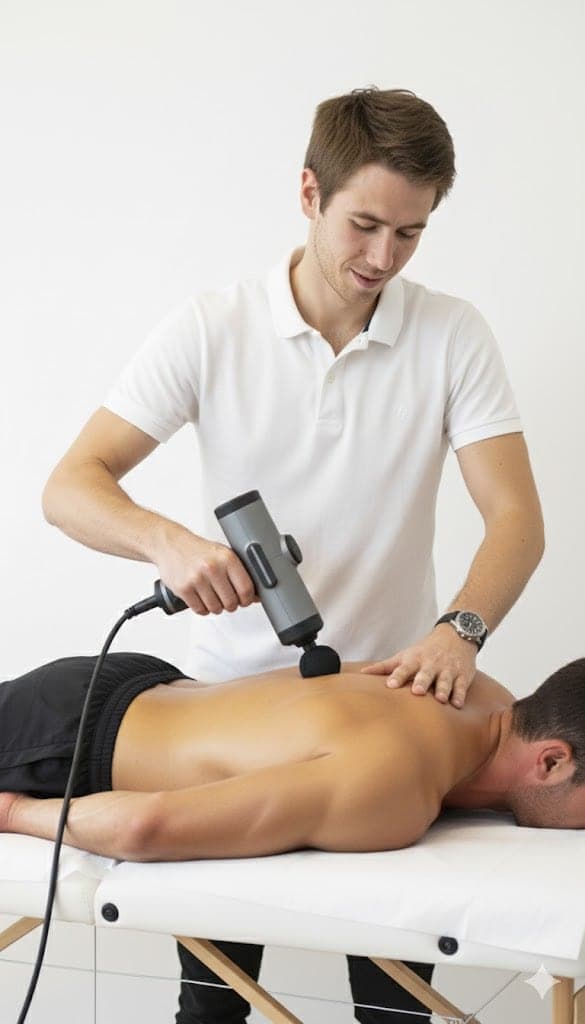
I travel to your location in Pafos with a professional treatment bench and all necessary equipment. This isn’t a compromise in quality—it’s superior logistics that respects your time and allows treatment in your optimal environment.
Initial Assessment and Treatment Planning
Before we begin any hands-on work, I conduct a thorough biomechanical assessment. I need to understand your movement patterns, your injury history, your training demands, and your performance goals. This typically takes 20-30 minutes and involves:
- Movement analysis to identify compensatory patterns
- Palpation assessment to locate restrictions and adhesions
- Range of motion testing to establish baseline measurements
- Discussion of your athletic demands and recovery timeline
This assessment guides everything we do. I’m not following a generic protocol—I’m designing a specific intervention for your specific mechanical dysfunction.
Treatment Sessions: Depth, Discomfort, and Results
I need to be honest about the treatment experience: effective mechanical deep-tissue work for sports injuries is not relaxing. It’s therapeutic, it’s productive, and it delivers results—but it requires working at intensities that can be uncomfortable.
This discomfort is fundamentally different from pain, and I’ll teach you to distinguish between them. Therapeutic discomfort feels like intense pressure and “good hurt”—the sensation that your body recognizes as beneficial. Pain feels sharp, burning, or intolerable, and it triggers protective guarding that prevents effective treatment.
We constantly communicate during sessions. I adjust depth and intensity based on your feedback, always working at the maximum therapeutic threshold while staying below the counterproductive pain level. This is where the mechanical advantage of my equipment becomes crucial: I can maintain consistent pressure at precisely the right intensity, sustaining it for the duration required to achieve tissue change.
Sessions typically last 60-90 minutes, depending on the area being treated and the complexity of your presentation.
Progressive Treatment Protocols
Sports injury recovery isn’t a single-session miracle. It’s a progressive process that requires multiple interventions as we systematically address layers of dysfunction and allow your body to adapt to restored mechanics.
I typically design protocols of 4-6 sessions over 3-4 weeks for acute athletic injuries, with sessions spaced to allow tissue adaptation between treatments. Chronic conditions often require 8-12 sessions as we address compensation patterns that have developed over months or years.
Between sessions, you’ll receive specific movement homework. This isn’t generic stretching—it’s targeted mobility work designed to reinforce the mechanical changes we’ve created and prevent your body from reverting to dysfunctional patterns.
Beyond Injury Treatment: Performance Optimization
While I specialize in treating sports injuries in Pafos, many of my long-term clients are actually uninjured athletes seeking performance enhancement. This makes perfect sense from a mechanical perspective.
Your athletic performance is limited by your movement efficiency. Movement efficiency is limited by fascial restriction, joint mobility, and neuromuscular coordination. Even if these limitations aren’t causing pain, they’re creating mechanical inefficiency that reduces your power output, endurance, and skill execution.
I’ve worked with runners who improved their marathon times by 8-12 minutes after we addressed chronic hip restrictions that were increasing their energy cost of running. I’ve treated tennis players whose serve speed increased measurably once we restored normal shoulder mechanics. I’ve helped cyclists increase their sustainable power output by optimizing their kinetic chain function.
These improvements don’t come from training harder. They come from moving better.
Injury Prevention Through Mechanical Optimization
The most intelligent approach to sports injuries is never developing them in the first place. Regular mechanical maintenance—addressing restrictions before they create compensations, restoring full range of motion before it limits your technique, maintaining optimal tissue quality throughout your training cycles—prevents the overwhelming majority of overuse injuries.
This is why I work with several Pafos-based athletes on ongoing maintenance protocols. We meet monthly or bi-monthly, assess their movement quality, address any developing restrictions, and ensure their bodies can tolerate their training loads without accumulating dysfunctional adaptations.
This isn’t an expense. It’s an investment that pays dividends in consistent training, improved performance, and career longevity.
Why Location Matters Less Than You Think
Pafos offers excellent athletic facilities and a strong community of active individuals. But when it comes to sports injury treatment, your location within Pafos is irrelevant because I travel to you.
I bring everything required for professional treatment: the specialized equipment, the treatment bench, the assessment tools. Whether you’re in Kato Paphos, Coral Bay, or anywhere in the broader Pafos region, you receive identical quality treatment in the convenience of your home, office, or training facility.
This mobile approach serves a practical purpose: athletes heal better in familiar environments. You’re more relaxed, more comfortable, and better able to focus on the treatment process itself rather than logistics and travel stress.
Frequently Asked Questions About Sports Injury Massage in Pafos
How is your approach different from physiotherapy?
Physiotherapy and my mechanical deep-tissue work are complementary but distinct approaches. Physiotherapy typically focuses on rehabilitation exercises, joint mobilization, and modalities like ultrasound or electrical stimulation. These approaches are valuable for certain conditions and injury phases.
My work specifically targets the soft tissue restrictions and fascial dysfunction that physiotherapy often doesn’t adequately address. Many of my clients come to me after physiotherapy has plateaued—they’ve regained some function through exercise but still have movement limitations or residual pain that’s preventing full athletic return.
Ideally, you’d combine both approaches: physiotherapy to restore movement patterns and strength, my work to restore the tissue mechanics that allow those patterns to function optimally.
How soon after an injury can I receive treatment?
This depends entirely on the injury type and phase. For acute injuries with active inflammation—the first 48-72 hours after a significant trauma—my approach is typically inappropriate. You need rest, ice, compression, and medical evaluation to ensure no serious structural damage exists.
Once you’re past the acute inflammatory phase, mechanical work becomes highly beneficial. I can address the tissue trauma, prevent adhesion formation, and accelerate the healing process. For many injuries, I prefer to begin treatment within the first week once acute symptoms have settled.
For chronic injuries—those you’ve been dealing with for weeks, months, or years—we can begin immediately. These presentations aren’t dealing with active trauma; they’re dealing with dysfunctional healing and compensatory patterns that require mechanical intervention.
Will I be able to train during treatment?
In most cases, yes, with modifications. Complete rest is rarely optimal for athletic injuries unless there’s structural damage requiring it. Movement promotes healing by maintaining tissue perfusion, preventing adhesions, and preserving neuromuscular coordination.
What we modify is intensity and volume. I’ll provide specific guidelines based on your injury and treatment response. Typically, you can maintain aerobic conditioning at reduced intensity, perform pain-free movement in non-affected areas, and gradually progress loading as your mechanics improve.
The key is intelligent training modification, not cessation. We’re working toward full function, and that requires progressive loading throughout the recovery process.
How many sessions will I need?
I understand athletes want definitive timelines. Unfortunately, honest answers require qualifications. Session requirements depend on:
- Injury chronicity (acute vs. long-standing)
- Number of compensatory patterns that have developed
- Your body’s adaptation rate
- Your compliance with movement homework between sessions
- Your training demands during recovery
That said, I can provide general frameworks. Acute sports injuries typically require 4-6 sessions over 3-4 weeks. Chronic conditions often need 8-12 sessions over 6-8 weeks. Complex cases with multiple compensation patterns may require 12-16 sessions over 10-12 weeks.
I reassess after every 2-3 sessions and provide updated projections based on your response. I’m invested in your results, not in maximizing session numbers.
Is the treatment painful?
I’ve addressed this earlier, but it’s worth emphasizing: effective mechanical deep-tissue work for sports injuries involves significant intensity. You will experience strong pressure and therapeutic discomfort, particularly when we’re addressing chronic restrictions or working at deeper fascial layers.
However, this isn’t pain in the injurious sense. You remain in complete control. We communicate constantly during treatment, and I adjust intensity based on your feedback. The goal is working at your maximum therapeutic threshold—the intensity that triggers tissue change without creating protective guarding.
Many athletes describe the sensation as “intense but satisfying.” You can feel that we’re addressing the actual problem, even though it’s not comfortable in the moment. The relief that follows effective treatment—increased movement, reduced pain, improved function—makes the process worthwhile.
Do you accept insurance?
I operate as an independent specialist, and my services are typically not covered by standard insurance plans in Cyprus. However, some international insurance policies with comprehensive coverage for alternative therapies may provide reimbursement.
I provide detailed receipts that include all information required for insurance submission. You would need to verify coverage with your specific provider.
My perspective on this is straightforward: if insurance coverage determines whether you address a chronic injury or movement dysfunction, then cost is genuinely a limiting factor, and we should discuss payment plans or modified protocols. However, most athletes I work with view this as an investment in their athletic longevity and quality of life, not an optional expense.
Can you guarantee results?
I can guarantee that my method is the most effective approach I’ve encountered in ten years of treating athletes, backed by both biomechanical principles and consistent clinical outcomes. I can guarantee that I’ll apply every aspect of my education and experience toward solving your specific presentation.
What I cannot guarantee is how your individual body will respond or how compliant you’ll be with the process. Tissue healing involves biological variability. Some people respond rapidly to mechanical intervention; others require more sessions to achieve similar changes.
What I do promise is this: if we’re not seeing measurable progress within the expected timeframe, I’ll tell you honestly and help you explore other options. I’m not interested in providing ongoing treatment that isn’t producing results.
What should I do after a treatment session?
Post-treatment protocols are specific to what we addressed in your session, but general guidelines include:
Immediate post-treatment (first 6 hours): Drink substantial water to support the metabolic processes we’ve triggered. Avoid intense training. Gentle movement is beneficial; complete rest is not. You may experience soreness similar to post-workout muscle soreness—this is normal and indicates tissue adaptation.
Next 24-48 hours: Continue hydration. Perform the specific movement homework I’ve assigned. Listen to your body—some increase in mobility and decrease in symptoms should be noticeable. If you experience sharp pain or significant symptom increase, contact me immediately.
Between sessions: Your homework movements are not optional—they’re essential for maintaining the mechanical changes we’ve created and preventing reversion to dysfunctional patterns. Training modifications I’ve recommended should be followed precisely.
Why should I choose your approach over traditional sports massage in Pafos?
Traditional sports massage has value for general recovery, relaxation, and mild tension reduction. If that’s your goal, there are excellent massage therapists in Pafos who provide those services well.
Choose my approach if:
- You have a specific athletic injury that’s limiting your training or performance
- You’ve tried conventional treatments without lasting results
- You understand that effective treatment requires intensity and commitment
- You’re interested in addressing root causes rather than temporary symptom relief
- You value measurable outcomes over pleasant experiences
- You’re willing to invest in a progressive treatment protocol rather than seeking single-session fixes
I’m not competing with relaxation massage. I’m providing biomechanical intervention for athletes who need actual solutions to movement dysfunction and injury.
The Investment in Athletic Longevity
I’ll conclude with the perspective that guides my entire approach: your body is the instrument through which you experience athletic performance, recreational activity, and ultimately, life quality. Every restriction you leave unaddressed, every compensation you allow to persist, every injury you “manage” rather than resolve—these accumulate into limitations that will define your capabilities in the coming years and decades.
Sports injury massage in Pafos, done properly, isn’t about feeling good for an afternoon. It’s about restoring and optimizing the mechanical function that determines what you can do tomorrow, next month, and ten years from now.
I’ve worked with athletes in their twenties who moved like they were fifty because of accumulated dysfunction. I’ve worked with individuals in their sixties who move better than most thirty-year-olds because they’ve maintained their tissue quality and movement capacity throughout their lives.
The difference isn’t genetics or luck. It’s consistent, intelligent attention to mechanical function.
When you address a hamstring injury properly—treating the fascial restrictions and movement dysfunctions that caused it, not just the local pain—you don’t just heal that injury. You prevent the hip dysfunction, lower back pain, and knee problems that were developing as compensations. You restore efficient movement that reduces energy cost and improves performance. You establish patterns that will serve you for years.
This is why I describe my service as a partnership rather than a transaction. We’re not addressing isolated problems. We’re optimizing a system. That requires ongoing communication, progressive protocols, and shared commitment to the process.
Taking the First Step
If you’re an athlete in Pafos dealing with an injury that’s limiting your training, or if you’re simply ready to move and perform at a level your current mechanics don’t allow, the process begins with a conversation.
I need to understand your presentation, your goals, and your expectations. You need to understand my approach, the commitment required, and the realistic outcomes we can achieve together. This initial discussion allows both of us to determine whether my method is appropriate for your specific situation.
Not every athlete is suited for this approach. If you’re seeking relaxation, if you’re unwilling to work at therapeutic intensity levels, if you’re looking for passive treatment without active participation—we’re not a good match.
But if you’re serious about resolving an athletic injury, optimizing your movement mechanics, and investing in long-term function rather than short-term symptom relief, then my decade of experience and mechanical deep-tissue expertise can likely provide the results you’ve been seeking.
Sports injury massage in Pafos doesn’t have to be another unsuccessful attempt at addressing your limitations. When approached with the right tools, the right knowledge, and the right intensity, it becomes the intervention that finally allows you to move and perform the way your training deserves.
Your body has remarkable capacity to adapt, heal, and optimize. Sometimes it just needs the right mechanical input to unlock that potential.
Written by
Chris
Massage therapist & body mechanics specialist
Norwegian-certified with a Bachelor’s in Physical Education and Nutrition and over ten years of clinical practice, working from a portable table in clients’ homes across the Paphos district.
This article is general information from clinical practice, not a medical diagnosis. If you have severe, worsening or unexplained pain, numbness, weakness, or pain after an accident, see a doctor first.