
Over-the-Counter Medication for Tension Headaches in Chlorakas: What Works and What Doesn’t
In short
Discover which over-the-counter medications actually work for tension headaches in Chlorakas, and learn why treating symptoms alone may be keeping you trapped in a cycle of recurring pain.
I’ve treated hundreds of clients in Chlorakas over the past decade, and nearly 70% of them arrive at their first session with a familiar story: they’ve been managing tension headaches with over-the-counter medication for months, sometimes years. The medicine cabinet becomes a ritual—paracetamol in the morning, ibuprofen after lunch, perhaps another dose before bed. The headache subsides temporarily, then returns with predictable regularity. This pattern continues until they finally ask themselves: “Why am I treating the same problem over and over again?”
The answer is straightforward but inconvenient for pharmaceutical companies: over-the-counter medication for tension headaches addresses the symptom, not the mechanical cause. As someone with a Bachelor’s degree in Physical Education and Nutrition from Norway and ten years of clinical experience in body mechanics, I’ve watched this cycle repeat itself countless times. The pills mask the pain signal your body is desperately trying to send you—a signal that specific muscle groups in your neck, shoulders, and upper back have become chronically contracted and are compressing neural pathways.
But let’s be clear: medication has its place. Understanding what’s available in Chlorakas, how these medications work, and—more importantly—when they’re appropriate versus when they’re simply postponing the inevitable, is essential knowledge for anyone dealing with recurring tension headaches.
Understanding Tension Headaches: The Mechanical Reality Behind the Pain
Before we examine which over-the-counter medications are available in Chlorakas pharmacies, you need to understand what’s actually happening when a tension headache develops. This isn’t mysterious or complicated—it’s straightforward biomechanics.
Tension headaches originate from sustained muscle contraction in the cervical spine region, trapezius muscles, and temporalis muscles. When these muscle groups remain contracted for extended periods—often due to postural dysfunction, repetitive movement patterns, or chronic stress responses—they develop what we call trigger points or myofascial adhesions. These are localized areas of hypercontracted muscle fiber that restrict blood flow, compress nerve pathways, and refer pain to other regions, particularly the head.
The pain you experience as a “tension headache” is actually referred pain from muscular dysfunction in your neck and shoulders. Your head itself is simply the messenger, reporting the structural problems occurring below. This is why medication provides temporary relief but never resolves the underlying issue—you’re essentially telling the messenger to be quiet while ignoring the message.
I’ve worked with clients who’ve consumed over-the-counter medication daily for years, genuinely believing they had a “headache condition” when what they actually had was a postural and mechanical dysfunction that could be durably resolved in 4-6 targeted treatment sessions. The difference in their quality of life after addressing the cause rather than suppressing the symptom is transformative.
Available Over-the-Counter Medications in Chlorakas for Tension Headaches
Pharmacies throughout Chlorakas stock the standard range of over-the-counter analgesics and anti-inflammatory medications. Here’s what you’ll find and how each category functions:
Paracetamol (Acetaminophen)
Paracetamol is the most commonly purchased over-the-counter medication for tension headaches in Chlorakas. Available under various brand names including Panadol and Depon, it’s readily accessible without prescription.
Mechanism of action: Paracetamol works primarily in the central nervous system, inhibiting cyclooxygenase (COX) enzymes and reducing prostaglandin synthesis in the brain. This decreases pain signal transmission but does nothing to address muscular tension or inflammation at the source.
Effectiveness for tension headaches: Moderate. Paracetamol can reduce perceived pain intensity by approximately 30-40% in most users, with effects lasting 4-6 hours. However, it provides zero therapeutic benefit to the contracted muscle tissue causing the headache.
Typical dosing: 500-1000mg every 4-6 hours, maximum 4000mg per 24 hours.
Clinical observation: In my experience, clients who rely primarily on paracetamol for tension headaches develop a pattern of increasing frequency. The medication becomes less effective over time not because of tolerance, but because the underlying muscular dysfunction progressively worsens. They’re managing symptoms while the cause intensifies.
Ibuprofen and Other NSAIDs
Non-steroidal anti-inflammatory drugs (NSAIDs) including ibuprofen (Brufen, Nurofen) and naproxen are widely available in Chlorakas pharmacies without prescription.
Mechanism of action: NSAIDs inhibit COX-1 and COX-2 enzymes, reducing prostaglandin production throughout the body. This provides both analgesic (pain-reducing) and anti-inflammatory effects.
Effectiveness for tension headaches: Moderate to good. NSAIDs are generally more effective than paracetamol for tension headaches because they address the inflammatory component of chronic muscle contraction. Effectiveness typically ranges from 40-60% pain reduction.
Typical dosing: Ibuprofen 200-400mg every 6-8 hours, maximum 1200mg per 24 hours for over-the-counter use.
Clinical observation: NSAIDs provide superior symptomatic relief compared to paracetamol, particularly when muscular inflammation is present. However, I’ve observed that regular NSAID use can create a false sense of resolution. Clients continue activities that perpetuate the mechanical dysfunction because the medication masks the warning signal that would otherwise force them to address the problem.
Combination Medications
Several combination products are available in Chlorakas that merge analgesics with caffeine or other compounds. Common examples include Panadol Extra (paracetamol + caffeine) and various formulations combining paracetamol with codeine (though codeine-containing products may require pharmacist consultation).
Mechanism of action: Caffeine acts as an analgesic adjuvant, constricting cerebral blood vessels and enhancing the absorption and effectiveness of primary analgesics by approximately 40%.
Effectiveness for tension headaches: Good for acute episodes. The combination typically provides faster onset and stronger pain relief than single-agent medications.
Clinical observation: These combination products are particularly problematic for establishing long-term patterns. The enhanced effectiveness creates stronger reinforcement for the “medicate and continue” approach rather than addressing causation. Additionally, regular caffeine consumption can create rebound headaches, complicating the clinical picture.
Aspirin
Aspirin (acetylsalicylic acid) remains available in Chlorakas pharmacies, though it’s prescribed less frequently for tension headaches than in previous decades.
Mechanism of action: Similar to other NSAIDs, aspirin irreversibly inhibits COX enzymes, providing both analgesic and anti-inflammatory effects.
Effectiveness for tension headaches: Moderate, comparable to ibuprofen but with increased gastrointestinal side effect risk.
Typical dosing: 300-600mg every 4-6 hours as needed.
The Medication Effectiveness Table: What the Research Actually Shows
| Medication Type | Pain Reduction | Duration of Effect | Addresses Cause | Long-term Suitability |
|---|---|---|---|---|
| Paracetamol | 30-40% | 4-6 hours | No | Poor |
| Ibuprofen/NSAIDs | 40-60% | 6-8 hours | Partial (inflammation only) | Moderate |
| Combination Products | 50-70% | 4-6 hours | No | Poor |
| Aspirin | 40-55% | 4-6 hours | Partial (inflammation only) | Poor |
This table represents aggregate data from clinical trials and meta-analyses. Notice what’s absent from every row: none of these medications address the mechanical cause of tension headaches. They’re symptomatic management tools, not solutions.
When Over-the-Counter Medication is Appropriate
I’m not opposed to medication—I’m opposed to using medication as a substitute for treating causation. There are legitimate scenarios where over-the-counter medication for tension headaches in Chlorakas serves an appropriate role:
Acute, isolated episodes: If you experience a tension headache once or twice monthly without a consistent pattern, using OTC medication is perfectly reasonable. The headache may result from temporary circumstances—dehydration, unusual stress, or atypical physical activity.
Bridging relief during treatment: When you’re actively addressing the mechanical cause through proper therapeutic intervention, OTC medication can provide comfort during the resolution process. I often recommend that clients keep ibuprofen available during the first 2-3 weeks of treatment.
Situational management: If you have an important presentation, meeting, or event and a tension headache develops, taking medication to manage the immediate symptom is pragmatic. The key is ensuring you address the underlying cause afterward rather than simply returning to the medication pattern.
Post-treatment soreness: After intensive deep-tissue work that releases chronic muscular adhesions, some clients experience temporary muscle soreness (similar to post-workout discomfort). A single dose of ibuprofen can ease this transition period.
When Medication Becomes the Problem
The critical threshold occurs when over-the-counter medication transitions from occasional symptomatic relief to regular pattern. If you’re reaching for medication more than twice weekly, you’re no longer managing occasional headaches—you’re suppressing a chronic mechanical dysfunction that requires direct intervention.
I’ve worked with clients in Chlorakas who were consuming 8-12 doses of OTC analgesics weekly, believing this was “normal headache management.” Their bodies had developed significant postural deviations, muscular imbalances, and fascial restrictions that had progressed for years while medication masked the progressive deterioration.
One client—a 42-year-old office professional—had been taking ibuprofen twice daily for three years. She genuinely believed she had “chronic headaches” and had consulted multiple physicians who found nothing structurally wrong (because they weren’t examining muscular mechanics). During our initial assessment, I identified severe bilateral trapezius hypertonicity, levator scapulae dysfunction, and suboccipital muscle restriction—all directly causative of her “chronic headaches.”
After six sessions using precision mechanical deep-tissue techniques to release these specific muscular restrictions and re-establish proper biomechanics, her headaches ceased entirely. She hasn’t taken headache medication in 18 months. The problem was never chronic—the problem was that the cause had never been treated.
This is the pattern I observe repeatedly: medication enables continuation of the dysfunctional patterns that create the headaches in the first place.
The Mechanical Solution: Treating Cause Rather Than Symptom
Here’s what actually resolves tension headaches durably: targeted mechanical intervention that releases chronically contracted muscle tissue, breaks down fascial adhesions, decompresses neural pathways, and re-establishes proper biomechanical function.
This isn’t massage therapy in the conventional sense. Traditional massage—while pleasant—lacks the precision, depth, and consistency required to durably alter established muscular dysfunction. The human hand, regardless of skill level, cannot maintain the specific pressure, angle, and duration necessary to break down deep myofascial adhesions and trigger points.
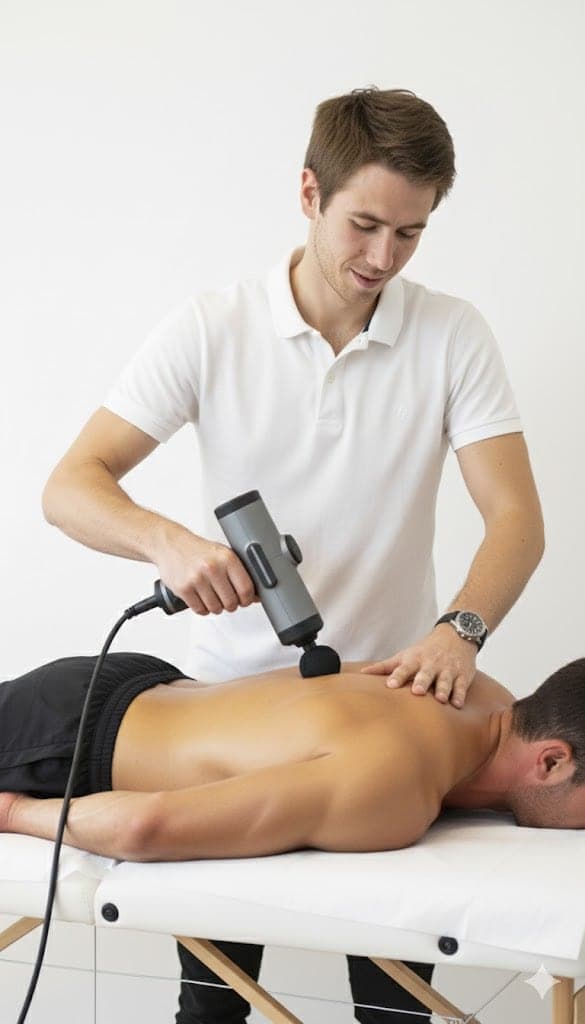
My approach utilizes a specialized mechanical tool that delivers what hands cannot: precision, power, and consistency. This instrument allows me to work significantly deeper than manual techniques, targeting the exact layers of tissue where chronic contraction originates. The pressure is calibrated precisely to each client’s tolerance and therapeutic need, ranging from moderate depth for office workers to powerfully deep for athletes requiring intensive intervention.
The critical difference is this: I’m not providing temporary relaxation or symptomatic relief—I’m systematically dismantling the mechanical dysfunction causing your headaches. Each session builds on the previous, progressively releasing restricted tissue, restoring proper muscle length-tension relationships, and re-educating your nervous system to release chronic holding patterns.
The Treatment Protocol for Tension Headache Resolution
My standard protocol for clients suffering from chronic tension headaches follows a structured progression:
Session 1-2: Assessment and Initial Release Comprehensive biomechanical assessment identifies the specific muscles and fascial planes contributing to headache patterns. Initial deep-tissue work focuses on superficial to mid-depth layers, beginning the release process and establishing neural adaptation to deeper work.
Session 3-4: Deep Structural Work Intensive mechanical intervention targeting the deepest layers of chronic contraction. This is where we address the root cause—breaking down established trigger points, releasing suboccipital restrictions, and decompressing cervical nerve pathways. Clients typically report significant headache reduction after session 3.
Session 5-6: Integration and Optimization Refinement work ensuring complete resolution of muscular restrictions, establishing proper postural mechanics, and preventing recurrence through biomechanical optimization.
Most clients with tension headaches experience complete resolution within this 6-session framework. Some require fewer sessions; complex cases with multiple contributing factors may require 8-10 sessions. But the outcome is consistent: lasting resolution, not temporary management.
Why This Method Succeeds Where Medication Fails
The fundamental distinction is straightforward: medication attempts to suppress your body’s pain signal, while mechanical intervention resolves the structural problem creating that signal.
Consider the biomechanics: when your upper trapezius muscle remains chronically contracted, it develops regions of hypoxic (oxygen-deprived) tissue. These regions become increasingly fibrotic, developing cross-linkages between muscle fibers that prevent normal contraction-relaxation cycles. As this dysfunction progresses, the muscle shortens, altering your shoulder and neck mechanics. This altered positioning compresses cervical nerve roots and creates referred pain patterns—what you experience as a tension headache.
No amount of ibuprofen changes this mechanical reality. The medication might reduce the inflammatory mediators and decrease pain perception, but the chronically contracted, fibrotic, oxygen-deprived muscle tissue remains unchanged. The structural problem persists and typically worsens.
Mechanical deep-tissue intervention physically breaks down the fibrotic cross-linkages, restores blood flow to hypoxic tissue, releases trigger points, and lengthens shortened muscles. This directly resolves the structural cause. The pain signal disappears because there’s no longer a problem to signal.
The specialized tool I use makes this possible in ways manual therapy cannot. The consistent, sustained pressure delivered at precise angles and depths systematically works through each layer of restricted tissue. There are no “off days” where technique varies—every treatment delivers identical effectiveness. The depth achieved exceeds what hands can accomplish without causing practitioner fatigue or loss of precision.
The Investment Perspective: Medication Costs vs. Lasting Resolution
Let’s examine the economics clearly, because understanding this investment is essential for making informed decisions.
Medication approach (annual costs):
- Average OTC medication consumption for chronic tension headaches: 8-12 doses weekly
- Average cost per dose in Chlorakas: €0.30-€0.60
- Annual expenditure: €125-€375
- Five-year projection: €625-€1,875
- Result: Ongoing symptoms, no resolution, potential medication side effects
Mechanical intervention approach:
- Standard protocol: 6 sessions
- Investment: Complete resolution of causative dysfunction
- Result: Lasting headache elimination, improved biomechanics, enhanced quality of life
- Five-year cost: Initial investment only (no recurring expenses)
The financial comparison is stark, but the quality-of-life comparison is even more significant. How do you value not waking up wondering if today will be a “headache day”? How do you quantify the productivity recovered when you’re not managing pain throughout your workday? What’s the worth of sleeping through the night without waking to take medication?
I position my service as an investment rather than an expense because that’s precisely what it is—an investment in lasting resolution rather than perpetual management. Clients aren’t purchasing temporary relief; they’re purchasing structural correction that eliminates the problem.
Practical Guidance for Chlorakas Residents
If you’re currently managing tension headaches with over-the-counter medication in Chlorakas, here’s my professional recommendation based on a decade of clinical experience:
If you’re using OTC medication 1-2 times monthly or less: Continue your current approach. Your headaches likely result from temporary circumstances rather than established mechanical dysfunction.
If you’re using OTC medication weekly or more frequently: You have established mechanical dysfunction that requires direct intervention. Continuing the medication pattern will result in progressive worsening of the underlying cause while you manage symptoms indefinitely.
If you’ve been using OTC medication regularly for months or years: You’re maintaining a chronic condition that could be durably resolved. The longer this pattern continues, the more established the dysfunctional mechanics become, potentially requiring more intensive intervention.
What to Do Right Now
Assessment: Honestly evaluate your medication pattern over the past three months. If you’re reaching for pain relief more than twice monthly, you’re managing a chronic condition, not occasional headaches.
Decision: Determine whether you want to continue indefinite symptomatic management or invest in lasting resolution. This is not a judgment—it’s a choice. But make it consciously, understanding what each path represents.
Action: If you choose resolution over management, seek specialized mechanical intervention from someone with demonstrated expertise in body mechanics and structural correction. The practitioner should be able to clearly explain the causative factors, the specific treatment protocol, and the expected timeline for resolution.
I travel to clients’ locations throughout Chlorakas, bringing professional equipment and providing comprehensive treatment in the comfort of your home or office. This eliminates the logistical barriers that often prevent people from accessing proper care.
Common Questions About Medication vs. Mechanical Treatment
Can I continue taking medication during treatment?
Absolutely. In fact, I typically recommend having ibuprofen available during the initial treatment phase. Deep mechanical work that releases years of chronic contraction can create temporary muscle soreness similar to workout-related discomfort. Taking a single dose of ibuprofen after treatment is perfectly appropriate and won’t interfere with the therapeutic process.
What I discourage is using medication to “push through” the day rather than addressing why you need to push through in the first place.
How quickly will I notice results?
Most clients experience significant headache reduction after the third session, with many reporting a marked reduction by session four or five. However, the timeline varies based on how long the dysfunction has been established and how severe the mechanical restrictions have become.
Someone who’s had tension headaches for six months typically responds faster than someone who’s managed them with medication for five years. The longer the pattern has existed, the more established the structural changes, requiring more comprehensive intervention.
Will the headaches return after treatment ends?
If the mechanical dysfunction is completely resolved and you maintain reasonable postural habits, headaches do not return. I’ve had clients remain headache-free for years after treatment because we addressed the actual cause rather than suppressing symptoms.
However, if you return to the exact postural patterns and mechanical stresses that created the original dysfunction, you can potentially recreate the problem. This is why part of my protocol includes biomechanical education—understanding how your daily activities contribute to muscle dysfunction allows you to prevent recurrence.
Why hasn’t my doctor recommended this approach?
Most physicians receive minimal education in biomechanics and muscular dysfunction during medical training. Their expertise lies in pathology, pharmacology, and disease management. Tension headaches don’t represent pathology—they represent mechanical dysfunction, which falls outside standard medical training.
Additionally, the medical system is structured around recurring visits and ongoing management rather than lasting resolution. There’s no financial incentive for recommending an approach that eliminates the condition after 6-8 sessions.
This isn’t a criticism of physicians—it’s an acknowledgment that different problems require different expertise. You wouldn’t consult a cardiologist for a mechanical engineering problem, and you shouldn’t expect medical doctors to specialize in biomechanical correction.
Is this approach suitable for everyone?
The vast majority of tension headache sufferers are excellent candidates for mechanical intervention. However, there are contraindications:
- Active inflammatory conditions requiring medical management
- Certain neurological conditions that affect pain processing
- Recent surgical interventions in the treatment area
- Specific vascular conditions
These are assessed during the initial consultation. For 95% of clients with tension headaches, mechanical deep-tissue intervention is not only suitable but represents the most effective approach to lasting resolution.
What makes your method different from regular massage?
Traditional massage therapy focuses on relaxation and temporary tension reduction using manual techniques. The pressure depth is limited by practitioner strength and endurance, technique varies between sessions and practitioners, and the goal is typically stress relief rather than structural correction.
My approach is exclusively therapeutic and mechanical. I use specialized instrumentation that delivers consistent, precise pressure at depths exceeding what hands can achieve. The treatment protocol is structured around measurable biomechanical outcomes, not subjective relaxation. Every session builds systematically toward complete resolution of the causative dysfunction.
Think of the difference between someone rubbing sore muscles and someone systematically correcting the structural problems causing those muscles to become sore repeatedly. Completely different objectives, methods, and outcomes.
Why do you travel to clients instead of having a clinic?
Convenience and accessibility. Many people with chronic tension headaches have demanding schedules that make regular clinic visits difficult to maintain. By traveling to clients, I eliminate this barrier. You receive the same professional treatment quality you’d get in a clinic setting, but in your home or office, at times that fit your schedule.
I bring a professional treatment bench and all necessary equipment. The only requirement is adequate space and your commitment to the treatment protocol.
The Broader Context: Why Western Medicine Struggles with Mechanical Problems
Understanding why over-the-counter medication remains the primary recommendation for tension headaches requires examining how Western medicine approaches non-pathological conditions.
Medical training excels at identifying and treating disease, pathology, and acute injury. Physicians are extensively educated in pharmacological interventions, surgical techniques, and managing complex systemic conditions. This education is essential and valuable.
However, mechanical dysfunction—muscles that have become chronically contracted due to postural stress, repetitive movement patterns, or sustained positioning—doesn’t represent disease. It represents adaptation to imposed demands, and reversing this adaptation requires mechanical intervention, not pharmaceutical.
The medical system lacks adequate training and infrastructure for addressing these mechanical problems. A typical physician visit lasts 10-15 minutes—sufficient for assessment and prescription but completely inadequate for comprehensive biomechanical evaluation and treatment planning.
This creates a default pathway: patient presents with tension headaches, physician prescribes or recommends OTC medication, patient continues management pattern indefinitely. The system isn’t designed to resolve mechanical dysfunction; it’s designed to manage symptoms of pathological conditions.
I’ve had clients referred to neurologists, prescribed stronger medications, even undergo unnecessary imaging studies—all while the actual problem remained obvious to anyone trained in biomechanics: chronically hypertonic upper trapezius and suboccipital muscles creating predictable referred pain patterns.
This isn’t a failure of medicine—it’s simply recognition that different problems require different expertise. Mechanical dysfunction requires mechanical solution.
Taking Control: The Decision Before You
You now possess significantly more information about over-the-counter medication for tension headaches in Chlorakas than when you started reading. You understand what medications are available, how they function, their effectiveness levels, and—critically—what they don’t address.
The decision you face is straightforward: continue managing symptoms indefinitely with medication, or invest in resolving the mechanical dysfunction durably.
Neither choice is “wrong,” but one represents passive acceptance of a chronic condition while the other represents active resolution. One path involves recurring expenses and ongoing symptom management; the other involves a focused investment and lasting elimination of the problem.
I’ve spent ten years studying body mechanics, earning a Bachelor’s degree in Physical Education and Nutrition, and developing specialized expertise in mechanical intervention for musculoskeletal dysfunction. My client outcomes speak clearly: lasting resolution of chronic pain conditions through targeted structural correction.
I don’t offer relaxation massage or temporary relief. I offer systematic dismantling of the mechanical problems causing your symptoms. The process is intensive, the methods are precise, and the results are lasting.
If you’re ready to stop managing symptoms and start eliminating causes, the pathway is available. I travel throughout Chlorakas, bringing professional equipment and comprehensive expertise directly to you. The treatment protocol is structured, the timeline is predictable, and the outcome is consistent.
Your tension headaches exist because specific muscles have developed chronic contraction patterns that refer pain to your head. This is mechanical fact, not medical mystery. And mechanical problems have mechanical solutions.
The pharmacy in Chlorakas will continue selling paracetamol and ibuprofen to people who prefer symptom management over cause resolution. That’s perfectly fine—it’s a legitimate choice for those who prefer that approach.
But if you’re reading this article because you’re tired of managing the same problem repeatedly, because you’re questioning whether there’s a better solution than perpetual medication, because you’re finally ready to address the cause rather than suppress the symptom—then you already know what decision makes sense.
The medication provides 4-6 hours of reduced pain perception. Mechanical intervention provides lasting structural correction. Choose accordingly.
Final Perspective: Medication as Tool, Not Solution
Over-the-counter medication for tension headaches in Chlorakas serves a legitimate purpose as a symptomatic management tool for occasional, acute episodes. The pharmacies throughout the region stock effective options including paracetamol, ibuprofen, and various combination products that can provide 4-8 hours of pain relief.
But if your medicine cabinet has become a regular destination, if you’re planning your day around medication timing, if you’ve accepted tension headaches as a chronic condition you’ll manage indefinitely—then you’re using tools as solutions, and that distinction matters profoundly.
After a decade of specialized practice in body mechanics and mechanical intervention, I can state with absolute confidence: the vast majority of tension headaches represent mechanical dysfunction that responds completely to targeted structural correction. The pain you experience is a signal, not a condition. Address the signal’s cause, and the pain disappears durably.
The expertise, methodology, and commitment to lasting outcomes rather than temporary relief is what distinguishes truly therapeutic intervention from conventional approaches. You deserve more than symptom management—you deserve complete resolution. The question is whether you’re ready to invest in that outcome.
Written by
Chris
Massage therapist & body mechanics specialist
Norwegian-certified with a Bachelor’s in Physical Education and Nutrition and over ten years of clinical practice, working from a portable table in clients’ homes across the Paphos district.
This article is general information from clinical practice, not a medical diagnosis. If you have severe, worsening or unexplained pain, numbness, weakness, or pain after an accident, see a doctor first.