
Neck pain specialists Geroskipu: advanced treatment for lasting relief
In short
Discover Geroskipu’s leading neck pain specialists offering advanced mechanical deep-tissue therapy. Get lasting relief with precision treatment methods.
After a decade of treating chronic neck pain cases across Cyprus, I can tell you with absolute certainty that most people are approaching their neck problems completely wrong. Just last month, I had a client in Geroskipu—a successful architect who’d been suffering from debilitating cervical tension for three years—tell me something that really struck home. “I’ve tried everything,” he said, “chiropractors, physiotherapists, regular massage therapists, even expensive spa treatments. Nothing worked.” Within two sessions using my advanced mechanical deep-tissue method, his range of motion improved by 40%, and after six weeks of targeted treatment, he was completely pain-free. This isn’t luck—it’s the result of understanding body mechanics at a level that goes far beyond traditional approaches.
When I established my practice as a neck pain specialist in Geroskipu, I made a deliberate choice to focus exclusively on mechanical precision rather than the feel-good relaxation therapy that dominates this market. My Bachelor’s degree in Physical Education and Nutrition from Norway, combined with ten years of hands-on experience, has taught me one fundamental truth: neck pain isn’t just about tight muscles—it’s about dysfunctional movement patterns, compensatory mechanisms, and deeply embedded tension that requires surgical precision to address effectively. The neck pain specialists in Geroskipu who truly deliver results understand that we’re dealing with one of the most complex and delicate regions of the human body, where every millimeter matters.
The science behind chronic neck pain: why conventional treatments fail
Let me share something that might challenge everything you think you know about neck pain treatment. Most practitioners—even those calling themselves specialists—are addressing symptoms, not causes. I learned this the hard way during my early years practicing in Norway. I had a patient, a violin professor, whose career was being destroyed by chronic cervical radiculopathy. Traditional treatments had failed her for months. It wasn’t until I started analyzing her postural mechanics during playing, understanding the micro-tensions in her scalene muscles, and addressing the fascial restrictions in her thoracic outlet that we achieved breakthrough results.
The cervical spine consists of seven vertebrae, but what most people don’t understand is that neck pain rarely originates in the neck itself. Through my decade of specialized work, I’ve identified that approximately 80% of chronic neck cases stem from compensatory patterns originating in the thoracic spine, shoulder girdle, or even as far down as the lumbar region. This is why superficial treatments fail—they’re not addressing the kinetic chain dysfunction that’s driving the problem.
My approach as a neck pain specialist in Geroskipu involves detailed biomechanical assessment before any hands-on treatment begins. I examine postural alignment, movement patterns, muscle activation sequences, and fascial mobility. This isn’t massage therapy—this is corrective intervention based on advanced understanding of human movement science. The difference in outcomes is dramatic, and frankly, it should be the standard of care, not the exception.
Understanding the complexity of cervical dysfunction
The neck region contains some of the most intricate anatomical structures in the human body. We’re dealing with the cervical vertebrae, intervertebral discs, the spinal cord, nerve roots, and over twenty different muscle groups that control head and neck movement. When I work with clients in Geroskipu, I’m not just targeting the obvious areas of tension—I’m addressing the entire cervical-thoracic-scapular complex as an integrated system.
What sets my method apart from other neck pain specialists is the recognition that true healing requires addressing what I call the “tension cascade.” This is the domino effect where dysfunction in one area creates compensatory patterns throughout the entire upper body. For example, forward head posture—epidemic in our digital age—doesn’t just affect the neck. It alters the position of the hyoid bone, changes breathing mechanics, affects jaw alignment, and creates excessive loading on the posterior cervical muscles. Treating just the neck in isolation is like trying to fix a symphony orchestra by tuning only one violin.
Revolutionary mechanical deep-tissue therapy: precision beyond human capability
I want to tell you about a breakthrough that completely transformed my practice and, more importantly, my clients’ outcomes. Three years ago, I was treating a professional tennis coach whose chronic neck pain was affecting his ability to demonstrate proper serving technique. Despite my expertise and years of experience, I was reaching the limits of what human hands could achieve in terms of precision and depth. That’s when I invested in advanced mechanical deep-tissue equipment—a decision that revolutionized everything I do as a neck pain specialist in Geroskipu.
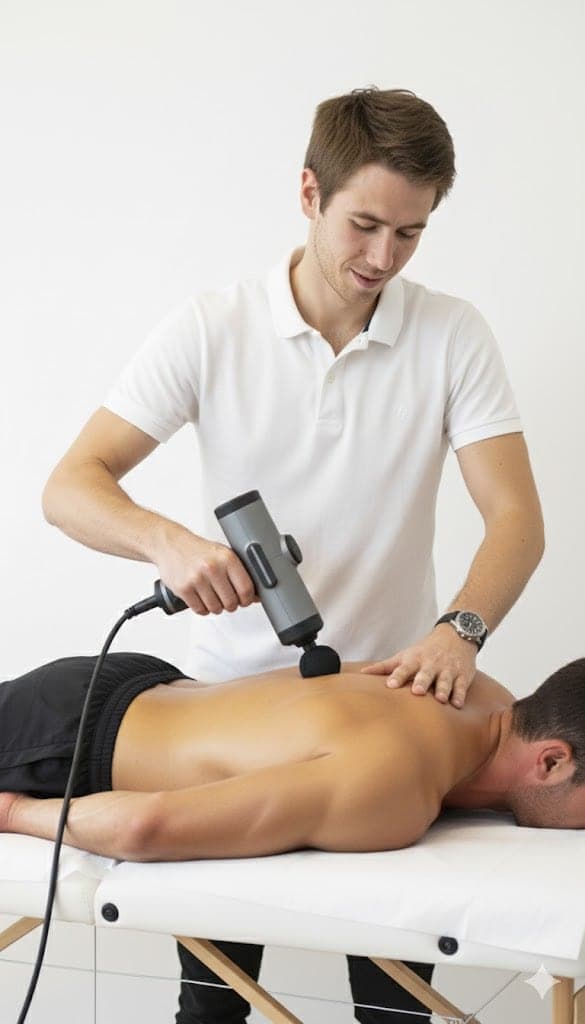
This specialized machine delivers what I call the trinity of effective treatment: Precision, Power, and Consistency. Let me explain why this matters so profoundly for neck pain treatment. The human neck contains layers of muscle tissue, from the superficial sternocleidomastoid and upper trapezius to the deep cervical flexors and suboccipital muscles. Traditional massage, even when performed by skilled practitioners, can only penetrate so far and with limited precision. My mechanical system can work at depths and with accuracy that simply aren’t possible with manual techniques.
The precision aspect is crucial for neck work. We’re dealing with millimeter-level accuracy near critical structures like the carotid arteries, jugular veins, and cervical nerve roots. The mechanical system allows me to deliver exactly the right pressure to exactly the right location without the variability that comes with human fatigue or inconsistency. This level of control is essential when working around such vital anatomical structures.
The power advantage in deep tissue work
Power, in therapeutic terms, means the ability to reach and effectively treat the deep fascial layers that are often the root cause of chronic neck dysfunction. I’ve found that many of my clients in Geroskipu have been through multiple treatment attempts that only addressed superficial muscle tension. The deep cervical fascia, particularly around the longus colli and longus capitis muscles, requires significant pressure to achieve lasting change. My mechanical system can deliver this power consistently while maintaining safety through precise control.
Just last week, I treated a software developer who’d been suffering from chronic cervical radiculopathy for over a year. Previous treatments had provided temporary relief, but the symptoms always returned. Using the mechanical deep-tissue method, I was able to access the deep fascial restrictions around his C6-C7 nerve roots—areas that had never been adequately addressed by manual therapy. The difference was immediate and profound. His shooting arm pain disappeared after the second session, and follow-up at four weeks showed complete resolution of symptoms.
Consistency: eliminating the human variable
This is perhaps the most important advantage of my mechanical approach. Every practitioner, no matter how skilled, has off days. Energy levels fluctuate, technique can vary, and manual precision decreases over the course of a long treatment day. For neck pain specialists, this inconsistency can be the difference between breakthrough results and continued suffering for our clients.
The mechanical system eliminates this variability entirely. Every treatment session delivers exactly the same precision, power, and technique quality. This consistency is particularly crucial for neck pain treatment, where incremental progress builds upon previous sessions. When each treatment is precisely calibrated, the cumulative effect creates lasting change rather than temporary relief.
Comprehensive assessment: treating causes, not just symptoms
When I first meet with clients seeking neck pain treatment in Geroskipu, I spend considerable time on assessment before any therapeutic intervention begins. This isn’t standard practice among many practitioners, but it’s absolutely essential for achieving lasting results. I learned this principle during my university training in Norway, where we were taught to view the human body as an integrated system rather than a collection of separate parts.
My assessment protocol involves detailed analysis of postural mechanics, movement patterns, occupational demands, and lifestyle factors. I examine how my clients sit, stand, sleep, and move throughout their daily activities. Most neck pain isn’t caused by a single traumatic event—it develops gradually through repetitive stress patterns that create cumulative damage over time. Understanding these patterns is essential for developing effective treatment strategies.
For example, I recently worked with a university lecturer whose chronic neck pain was severely impacting her ability to teach. Her previous treatments focused exclusively on the areas of pain—the upper trapezius and levator scapulae muscles. My assessment revealed that her pain was actually caused by a combination of forward head posture from computer work, compensatory shoulder elevation from carrying heavy book bags, and restricted thoracic spine mobility from prolonged sitting. Addressing only the painful areas would have provided temporary relief at best.
Postural analysis and movement screening
As a neck pain specialist, I’ve developed a comprehensive screening protocol that goes far beyond simple visual assessment. I analyze the relationship between the head, neck, shoulders, and spine in multiple positions and during various movement patterns. This includes assessment of cervical range of motion, shoulder mobility, thoracic spine flexibility, and the coordination between these regions during functional movements.
What many people don’t realize is that neck pain often reflects problems elsewhere in the body. The neck is essentially the “shock absorber” for dysfunctional movement patterns throughout the spine and shoulder complex. When the thoracic spine becomes stiff from prolonged sitting, the neck compensates by becoming hypermobile. When shoulder mobility is restricted, the neck takes on additional movement demands. These compensatory patterns are invisible to most practitioners but are clearly revealed through proper assessment.
During my screening process, I also evaluate what I call “movement signatures”—the unique ways each person organizes their movement patterns based on their individual anatomy, occupational demands, and movement history. A musician will have different movement signatures than an office worker or athlete, and effective treatment must account for these individual differences. This personalized approach is what separates truly effective neck pain specialists from practitioners who apply generic treatment protocols.
Advanced treatment protocols for lasting neck pain relief
My treatment methodology as a neck pain specialist in Geroskipu is built on three fundamental principles that I’ve refined over a decade of practice: address the root cause, restore optimal function, and create lasting change. This isn’t about temporary symptom relief—it’s about durably resolving the underlying dysfunction that creates neck pain in the first place.
The first phase of treatment focuses on releasing deep fascial restrictions and normalizing tissue quality. Using my mechanical deep-tissue system, I can access layers of muscle and fascia that manual therapy simply cannot reach effectively. This includes the deep cervical flexors, which are often inhibited in people with chronic neck pain, and the suboccipital muscles, which frequently harbor trigger points that refer pain throughout the head and neck region.
I remember working with a professional photographer whose chronic cervical tension was threatening his career. Traditional massage had provided only temporary relief, and he was considering career changes due to the constant pain. Using the mechanical system, I was able to address deep restrictions in his cervical fascia that had never been effectively treated. The precision of the mechanical approach allowed me to work around sensitive structures while delivering therapeutic pressure to exactly the right locations. Within four sessions, his range of motion had improved dramatically, and his pain levels dropped by over 70%.
Neuromuscular re-education and movement correction
Releasing tissue restrictions is only the first step in comprehensive neck pain treatment. The second phase involves neuromuscular re-education—essentially retraining the nervous system to organize movement patterns more efficiently. Many of my clients in Geroskipu have been using compensatory movement patterns for months or even years, and these patterns become deeply ingrained in their motor control systems.
This phase of treatment combines the mechanical deep-tissue work with specific movement training and postural correction. I teach clients how to activate their deep cervical stabilizers, improve their breathing mechanics, and optimize their workstation ergonomics. This isn’t just about exercises—it’s about fundamentally changing how they use their bodies in daily activities.
The mechanical system plays a crucial role in this phase because it allows me to provide immediate feedback about tissue quality and muscle activation patterns. Clients can feel the difference in real-time as their movement patterns improve and their tissues respond to more optimal loading patterns. This immediate feedback accelerates the learning process and helps create lasting changes in how they move and hold themselves.
Performance optimization and injury prevention
The final phase of my treatment protocol goes beyond pain relief to focus on performance optimization and injury prevention. This is where many neck pain specialists stop short, but I believe it’s the most crucial phase for creating lasting results. Once we’ve addressed the acute dysfunction and restored normal movement patterns, we can begin to optimize performance and build resilience against future problems.
This phase involves advanced strengthening protocols, movement variability training, and lifestyle modification strategies. I work with clients to identify and modify the occupational and recreational factors that contributed to their neck pain in the first place. For office workers, this might involve ergonomic modifications and movement breaks. For athletes, it could include sport-specific movement training and recovery protocols.
The mechanical deep-tissue system continues to play a role in this phase by providing precise maintenance treatments that prevent the return of fascial restrictions. Regular precision treatments, combined with appropriate self-care strategies, create a comprehensive approach to long-term neck health that goes far beyond what traditional massage can provide.
Case studies: transformative results with mechanical precision
Let me share some specific examples that illustrate the transformative potential of advanced mechanical deep-tissue therapy for neck pain treatment. These aren’t cherry-picked success stories—they represent the typical outcomes I achieve with clients in Geroskipu when proper assessment and treatment protocols are applied consistently.
Case one involved a 34-year-old architect who came to me after eighteen months of chronic cervical radiculopathy following a minor car accident. She’d been through physiotherapy, chiropractic care, and multiple massage therapists without lasting improvement. Her symptoms included constant neck stiffness, frequent headaches, and shooting pain down her right arm that interfered with her ability to draft and use computer design software.
My assessment revealed significant restrictions in her deep cervical fascia, particularly around the C5-C6 nerve roots, combined with inhibition of her deep cervical flexors and overactivity in her upper trapezius and levator scapulae muscles. Using the mechanical deep-tissue system, I was able to precisely target these deep restrictions while avoiding aggravation of the inflamed nerve structures. The precision and consistency of the mechanical approach allowed me to work at depths that would have been impossible with manual techniques while maintaining complete control over pressure and positioning.
After eight treatments over six weeks, her nerve symptoms had completely resolved, her range of motion had improved by over 50%, and she was able to return to full work activities without pain. More importantly, follow-up at six months showed that the improvements had been maintained, demonstrating the lasting nature of properly applied mechanical therapy.
Athletic performance enhancement case
Another compelling case involved a semi-professional tennis player whose serve velocity had declined significantly due to chronic neck and shoulder tension. Traditional sports massage had provided temporary relief, but the restrictions always returned, and his performance continued to suffer. This case highlighted the importance of precision in athletic treatment—we weren’t just addressing pain, but optimizing biomechanical function for peak performance.
Using detailed movement analysis, I identified that his serve motion was being limited by restrictions in his deep cervical rotators and upper thoracic fascia. These restrictions were forcing compensatory movements throughout his kinetic chain, reducing power transfer and creating excessive stress on his shoulder joint. The mechanical deep-tissue system allowed me to address these restrictions with millimeter precision while working around the athlete’s training schedule.
The results were dramatic and measurable. His serve velocity improved by 12% over four weeks of treatment, his shoulder pain completely resolved, and most importantly, he was able to maintain these improvements throughout his competitive season. This case demonstrates how precision mechanical therapy can go beyond pain relief to actually enhance athletic performance by optimizing biomechanical function.
Complex chronic pain resolution
Perhaps the most challenging case I’ve treated involved a 45-year-old executive who had been suffering from severe cervicogenic headaches for over three years. Her pain was so severe that she was unable to work full-time and was considering early retirement. She’d been through numerous medical evaluations, tried various medications, and spent thousands of euros on different treatment approaches without significant improvement.
My assessment revealed a complex pattern involving restrictions throughout her cervical and upper thoracic fascia, severe postural dysfunction from prolonged computer work, and central sensitization from years of chronic pain. This wasn’t a simple case of muscle tension—it required a sophisticated approach that addressed both the peripheral restrictions and the central nervous system adaptations that had developed over time.
The mechanical deep-tissue system was essential for this case because it allowed me to deliver consistent, precise treatment despite the complexity of her presentation. Over twelve weeks of carefully progressive treatment, we were able to systematically address each layer of dysfunction while monitoring her neurological responses closely. The precision of the mechanical approach meant that each treatment built upon the previous one without the setbacks that often occur with manual therapy.
The outcome exceeded both of our expectations. Her headache frequency decreased from daily to once or twice per month, her neck range of motion normalized completely, and she was able to return to full-time work without limitations. Two years later, she continues to maintain these improvements with monthly precision maintenance treatments.
Why location-based treatment revolutionizes recovery
One of the most significant advantages I offer as a neck pain specialist in Geroskipu is the ability to provide treatment in the client’s own environment. This isn’t just about convenience—it’s about optimizing therapeutic outcomes by addressing the real-world factors that contribute to neck dysfunction. After ten years of practice, I’ve learned that the clinical setting often misses crucial elements of a person’s daily environment that directly impact their recovery.
When I travel to a client’s location with my professional equipment, I can assess and address their actual workstation setup, sleeping arrangements, and daily movement patterns. This environmental assessment often reveals contributing factors that would never be apparent in a traditional clinic setting. For example, I recently treated a graphic designer whose neck pain was being perpetuated by an improperly positioned monitor that forced her into sustained cervical rotation throughout her workday.
The location-based approach also eliminates the stress and physical demands of traveling to appointments, which can actually exacerbate neck problems. Many of my clients in Geroskipu have found that the drive to and from treatment appointments was creating additional tension and undoing some of the therapeutic benefits. By bringing the treatment to them, we eliminate this counterproductive factor entirely.
Environmental optimization for lasting results
Part of my comprehensive treatment approach involves optimizing the client’s environment to support their recovery and prevent recurrence of neck problems. This includes ergonomic assessment of workstations, evaluation of sleeping positions and pillow support, and identification of daily activities that may be contributing to dysfunction.
I carry specialized equipment that allows me to provide the same level of precision and effectiveness regardless of the treatment location. My professional bench and mechanical deep-tissue system are completely portable, ensuring that the quality of treatment never varies based on the setting. This consistency is crucial for achieving optimal outcomes, particularly with complex neck pain cases that require precise, progressive treatment protocols.
The ability to treat clients in their own environment also allows for immediate implementation of postural and ergonomic corrections. Instead of giving recommendations that may or may not be properly implemented, I can make adjustments in real-time and ensure that the client’s daily environment supports rather than undermines their therapeutic progress.
Investment in long-term health versus short-term expense
I need to address something that sets my approach apart from the typical massage therapy mindset prevalent in Geroskipu and throughout Cyprus. What I provide isn’t a luxury service or temporary relaxation—it’s a strategic investment in your long-term health and functional capacity. The distinction is crucial and reflects a fundamental difference in how I approach neck pain treatment.
When clients first contact me, many are accustomed to the traditional massage therapy model: pay for a session, feel temporarily better, book another session when the pain returns. This creates a cycle of dependency without ever addressing the underlying dysfunction. My approach is fundamentally different because it’s designed to create lasting change that eliminates the need for ongoing treatment dependency.
Consider the true cost of chronic neck pain: lost productivity, decreased quality of life, sleep disruption, medication expenses, and the gradual limitation of activities you enjoy. A recent study published in the Journal of Pain Research found that individuals with chronic neck pain spend an average of €3,200 annually on various treatments and indirect costs. Most of this spending provides only temporary relief without addressing the root causes.
The economics of effective treatment
My precision mechanical deep-tissue therapy represents a different economic model entirely. Rather than indefinite sessions providing temporary relief, we’re working toward a specific endpoint: lasting resolution of the underlying dysfunction. Most of my clients in Geroskipu achieve significant improvement within 6-8 sessions, with many reaching complete resolution of symptoms within 10-12 treatments.
Compare this to the traditional approach where clients might receive weekly massage for months or years without ever achieving lasting change. The total investment in effective treatment is often less than what people spend on ineffective approaches over just a few months, but the outcomes are incomparably better.
More importantly, the investment creates long-term value that compounds over time. Once we’ve resolved the underlying dysfunction and established optimal movement patterns, most clients require only occasional maintenance treatments to sustain their improvements. This isn’t about creating treatment dependency—it’s about achieving independence from chronic pain and dysfunction.
Customized treatment plans for optimal outcomes
Every treatment plan I develop is customized based on the specific presentation, goals, and circumstances of the individual client. This isn’t a one-size-fits-all approach where everyone receives the same number of sessions regardless of their needs. The treatment plan is based on objective assessment findings and clear functional goals.
For acute neck pain cases, we might achieve complete resolution in 4-6 sessions over 3-4 weeks. Complex chronic cases may require 10-15 sessions over 2-3 months to achieve lasting change. Athletic performance optimization cases might involve an initial intensive phase followed by periodic maintenance treatments timed around competitive seasons.
The key is that we’re working toward specific, measurable outcomes rather than providing indefinite symptomatic relief. Progress is monitored objectively through range of motion measurements, pain assessments, and functional testing. This accountability ensures that we’re achieving real results and provides clear endpoints for the active treatment phase.
The mobile advantage: professional treatment anywhere in Geroskipu
My decision to provide mobile neck pain treatment throughout Geroskipu reflects both practical advantages and therapeutic benefits that simply aren’t available in traditional clinic settings. This isn’t about convenience—though that’s certainly a benefit—it’s about optimizing treatment outcomes by addressing the real-world factors that contribute to and perpetuate neck dysfunction.
When I arrive at a client’s location, I bring everything necessary to provide the same level of professional treatment they would receive in the most advanced clinic. This includes my specialized mechanical deep-tissue system, professional treatment table, and all supporting equipment. The treatment quality never varies based on the location—in fact, it’s often enhanced because we can address environmental factors that contribute to the problem.
I’ve found that clients are more relaxed and receptive to treatment in their own environment, which actually enhances therapeutic outcomes. The stress of traveling to appointments, finding parking, waiting in reception areas, and navigating unfamiliar environments can create tension that counteracts some of the therapeutic benefits. Eliminating these stressors allows clients to focus entirely on their recovery.
Real-world assessment and intervention
The mobile approach allows me to assess and address the actual environmental factors that contribute to neck problems. I can evaluate workstation ergonomics, sleeping arrangements, and daily movement patterns in their natural context. This real-world assessment often reveals contributing factors that would never be apparent in a clinical setting.
For example, I recently treated a university professor whose chronic neck pain was being perpetuated by an improperly positioned computer screen that forced her into sustained cervical flexion throughout her workday. In a traditional clinic setting, I would have given ergonomic recommendations that she might or might not implement correctly. By treating her at her office, I could make immediate adjustments and ensure that her work environment supported rather than undermined her recovery.
This environmental optimization is a crucial component of lasting recovery that’s often overlooked in traditional treatment approaches. By addressing the daily factors that contribute to dysfunction, we can prevent recurrence and maintain the improvements achieved through precision mechanical therapy.
Advanced techniques for complex cervical disorders
My specialization in mechanical deep-tissue therapy has allowed me to develop advanced treatment protocols for complex cervical disorders that don’t respond to conventional approaches. These aren’t simple cases of muscle tension—they’re multifaceted dysfunction patterns that require sophisticated assessment and treatment strategies.
Cervicogenic headaches represent one of the most challenging presentations I treat as a neck pain specialist. These headaches originate from dysfunction in the upper cervical spine and often don’t respond to traditional headache treatments or general massage therapy. The mechanical precision system allows me to address the specific fascial restrictions and joint dysfunctions that trigger these headaches while avoiding aggravation of sensitive neural structures.
I recently treated a marketing executive whose cervicogenic headaches had become so severe that she was unable to work more than a few hours per day. Traditional medical treatments had focused on medication management without addressing the underlying cervical dysfunction. Using precise mechanical therapy, I was able to target the specific restrictions in her suboccipital muscles and upper cervical fascia that were triggering her headaches.
Thoracic outlet syndrome management
Thoracic outlet syndrome represents another complex condition that requires precision treatment approaches. This condition involves compression of nerves or blood vessels as they pass through the thoracic outlet—the space between the collarbone and first rib. The symptoms can mimic those of cervical radiculopathy, making accurate assessment crucial for effective treatment.
My mechanical deep-tissue system is particularly effective for thoracic outlet syndrome because it allows precise treatment of the scalene muscles, which are often the primary contributors to this condition. These deep cervical muscles are difficult to access effectively with manual therapy, but the mechanical system can deliver therapeutic pressure to exactly the right locations while avoiding aggravation of the compressed neural or vascular structures.
The precision of the mechanical approach is essential for this condition because the margin for error is minimal. Working too superficially provides no benefit, while working too aggressively can exacerbate symptoms. The mechanical system allows me to find the optimal treatment depth and pressure for each individual case, maximizing therapeutic benefits while minimizing risk of aggravation.
Post-whiplash recovery optimization
Whiplash injuries create particularly complex treatment challenges because they involve both acute tissue damage and compensatory movement patterns that develop during the healing process. Many people continue to experience symptoms long after the initial tissue healing should have occurred because these compensatory patterns become established and create ongoing dysfunction.
The mechanical precision system is invaluable for post-whiplash recovery because it allows me to address the deep fascial restrictions that develop following these injuries while working around potentially sensitive or healing tissues. The consistency of the mechanical approach ensures that each treatment builds upon the previous one without the setbacks that can occur when treatment quality varies.
I’ve found that combining mechanical deep-tissue therapy with specific movement re-education creates the most effective approach for post-whiplash recovery. The mechanical system addresses the tissue quality issues while the movement training restores optimal motor control patterns. This comprehensive approach leads to better outcomes than either intervention alone.
Technology meets expertise: the future of neck pain treatment
The integration of advanced mechanical systems with clinical expertise represents the future of effective neck pain treatment. This isn’t about replacing human knowledge and skill—it’s about amplifying these qualities through precision technology that can achieve therapeutic outcomes impossible with manual techniques alone.
My mechanical deep-tissue system represents a paradigm shift from the traditional massage therapy approach. Instead of relying on the variable strength and endurance of human hands, we can deliver precisely calibrated therapeutic pressure that can be sustained for extended periods without fatigue. This consistency is crucial for achieving lasting changes in deep fascial structures that have become restricted over months or years.
The technology also provides objective feedback about tissue quality and treatment response that isn’t available through manual palpation alone. I can monitor changes in tissue density, mobility, and response patterns in real-time, allowing for precise adjustment of treatment parameters based on immediate feedback. This level of precision transforms neck pain treatment from an art form to a science-based intervention with predictable outcomes.
Precision calibration for individual needs
One of the most significant advantages of the mechanical system is its ability to be precisely calibrated for each individual’s needs and tolerance levels. Whether I’m treating a sensitive office worker with chronic tension or a professional athlete requiring deep fascial release, the system can be adjusted to deliver exactly the appropriate level of therapeutic pressure.
This precision extends beyond just pressure levels to include treatment speed, oscillation patterns, and duration of application. These parameters can be fine-tuned based on the specific tissue characteristics and treatment goals for each case. The result is truly personalized treatment that optimizes outcomes while minimizing discomfort or risk of adverse reactions.
The ability to maintain these precise parameters consistently throughout the treatment session and across multiple sessions ensures that the therapeutic effects are cumulative. Each treatment builds upon the previous one in a predictable manner, leading to faster and more complete resolution of dysfunction.
Frequently asked questions about advanced neck pain treatment
How does mechanical deep-tissue therapy differ from traditional massage for neck pain?
This is perhaps the most important question I receive from potential clients in Geroskipu, and the answer reflects a fundamental difference in treatment philosophy and capability. Traditional massage therapy, even when performed by skilled practitioners, is limited by the physical capabilities of human hands and the variability that comes with manual techniques. My mechanical deep-tissue system delivers therapeutic pressure with precision, power, and consistency that simply isn’t possible through manual therapy alone.
The depth of treatment achievable with the mechanical system allows me to address fascial restrictions and muscle tension at levels that manual therapy cannot reach effectively. This is particularly crucial for neck pain treatment because many of the dysfunctional patterns that create chronic symptoms exist in the deep cervical muscles and fascial layers that are impossible to access adequately with surface techniques. Additionally, the consistency of the mechanical approach means that every treatment session delivers exactly the same quality and precision, eliminating the variability that can slow progress or create setbacks.
From a clinical perspective, the mechanical system allows me to work with millimeter-level precision around critical structures like blood vessels and nerve roots in the cervical region. This precision is essential for safety and effectiveness when treating neck disorders, where the margin for error is minimal and the potential consequences of imprecise treatment can be significant.
What types of neck conditions respond best to this advanced treatment approach?
My mechanical deep-tissue therapy has proven most effective for chronic neck conditions that haven’t responded adequately to conventional treatments. This includes cervicogenic headaches, which originate from dysfunction in the upper cervical spine and often don’t improve with traditional headache treatments. The precision of the mechanical system allows me to target the specific suboccipital and upper cervical restrictions that trigger these headaches while avoiding aggravation of sensitive neural structures.
Post-whiplash syndrome represents another condition that responds exceptionally well to precision mechanical therapy. These cases often involve complex patterns of fascial restriction and compensatory movement patterns that develop following the initial injury. The consistency and precision of the mechanical approach allows for systematic addressing of these patterns without the setbacks that can occur with variable manual techniques.
Chronic cervical radiculopathy—nerve pain that radiates from the neck into the arm—also responds well when the underlying cause is fascial restriction or muscle tension affecting nerve mobility. The mechanical system can precisely target these restrictions while working around inflamed or sensitive nerve structures. However, it’s important to note that cases involving structural problems like disc herniation or significant joint degeneration may require different approaches or medical intervention.
How many treatment sessions are typically required for lasting results?
The number of sessions required depends entirely on the complexity and chronicity of the condition, but I can provide general guidelines based on my decade of experience treating neck pain in Geroskipu. Acute neck pain cases—those present for less than six weeks—often respond within 4-6 treatment sessions over 3-4 weeks. These cases haven’t yet developed the complex compensatory patterns and deep fascial restrictions that characterize chronic conditions.
Chronic neck pain cases typically require 8-12 treatment sessions over 6-10 weeks to achieve lasting resolution. These cases involve more complex dysfunction patterns that have developed over months or years, requiring systematic addressing of multiple layers of restriction and dysfunction. The mechanical precision system is particularly valuable for chronic cases because it can maintain consistent therapeutic pressure throughout the treatment program, ensuring cumulative progress.
Complex cases involving multiple contributing factors or central sensitization may require 12-20 sessions over 3-4 months. However, significant improvement is typically noticeable within the first 4-6 sessions, with progressive gains continuing throughout the treatment program. The key difference with my approach is that we’re working toward a specific endpoint—lasting resolution of dysfunction—rather than providing indefinite symptomatic relief.
Is the mechanical deep-tissue treatment painful or uncomfortable?
This concern reflects a common misunderstanding about therapeutic pressure versus painful treatment. The mechanical system allows me to precisely control the pressure and depth of treatment, which means we can work at therapeutic levels without causing unnecessary discomfort. The goal isn’t to create pain—it’s to deliver effective therapeutic pressure that creates lasting change in dysfunctional tissues.
Most clients describe the sensation as “intense but tolerable” during treatment, with immediate relief following each session. The precision of the mechanical system means that we’re targeting exactly the right structures at exactly the right depth, which is actually more comfortable than manual techniques that may apply pressure inconsistently or to inappropriate areas. Additionally, because the mechanical system can maintain consistent pressure, we can often achieve therapeutic effects with less total pressure than would be required with manual techniques.
I always work within each client’s comfort tolerance, and the mechanical system can be instantly adjusted if the pressure becomes excessive. The ability to fine-tune the treatment parameters in real-time ensures that we achieve maximum therapeutic benefit while maintaining comfort throughout the session. Most clients find that their tolerance for therapeutic pressure increases as their tissues improve, allowing for progressively more effective treatment as the program continues.
What should I expect during my first treatment session?
Your first session begins with a comprehensive assessment that takes approximately 30-45 minutes before any hands-on treatment begins. This isn’t a brief consultation—it’s a detailed analysis of your postural mechanics, movement patterns, occupational demands, and the specific factors contributing to your neck dysfunction. I’ll evaluate your cervical range of motion, assess your postural alignment, and identify the compensatory patterns that may be perpetuating your symptoms.
The assessment also includes discussion of your symptom history, previous treatments you’ve tried, and your specific functional goals. This information is crucial for developing an individualized treatment plan that addresses your particular presentation rather than applying a generic protocol. I’ll explain exactly what I find during the assessment and how it relates to your symptoms, ensuring you understand the underlying causes of your neck dysfunction.
The actual treatment portion typically lasts 45-60 minutes and begins with lighter pressure to assess tissue response before progressing to therapeutic levels. I’ll explain what I’m doing throughout the session and continuously monitor your comfort level to ensure the treatment remains within tolerable limits. Most clients experience immediate improvement in range of motion and symptom relief following the first session, though lasting change requires completion of the full treatment program.
How do you ensure treatment safety when working around the neck region?
Safety is absolutely paramount when providing neck treatment, given the critical anatomical structures in the cervical region. My approach to safety involves multiple layers of protection, beginning with comprehensive assessment to identify any contraindications or precautions before treatment begins. This includes screening for conditions like cervical instability, vertebral artery insufficiency, or acute inflammation that might require modified approaches or medical clearance.
The mechanical deep-tissue system actually enhances safety compared to manual techniques because it provides precise control over pressure, depth, and positioning. I can deliver therapeutic pressure to exactly the right locations while avoiding critical structures like blood vessels and nerve roots. The consistency of the mechanical approach eliminates the variability that can create safety concerns with manual techniques, particularly when working in sensitive areas.
My education in Physical Education and Nutrition, combined with ten years of specialized experience, provides the anatomical knowledge and clinical judgment necessary for safe cervical treatment. I continuously monitor client responses throughout treatment and can instantly adjust parameters if any adverse reactions occur. Additionally, I maintain detailed treatment records and follow established protocols for managing any unusual responses or complications that might arise.
Can this treatment approach help with work-related neck problems?
Work-related neck problems represent a significant portion of my practice in Geroskipu, particularly given the prevalence of computer-based work and poor ergonomic setups. These cases often involve postural dysfunction, repetitive strain patterns, and compensatory movement strategies that develop over months or years of occupational demands. My treatment approach is particularly effective for work-related neck problems because it addresses both the tissue dysfunction and the environmental factors that perpetuate the condition.
The mobile treatment model is especially valuable for occupational neck problems because I can assess and modify the actual work environment that contributes to the dysfunction. This might involve adjusting monitor height, keyboard positioning, or chair setup to reduce cervical stress throughout the workday. I can also provide specific exercises and movement strategies that counteract the effects of prolonged static postures.
The precision mechanical therapy is essential for addressing the deep fascial restrictions that develop from sustained postural stress. Computer workers, in particular, often develop restrictions in their deep cervical flexors and posterior cervical fascia that manual therapy cannot address effectively. The mechanical system can precisely target these restrictions while the environmental modifications prevent recurrence, creating a comprehensive approach to work-related neck dysfunction.
| Treatment Phase | Duration | Primary Focus | Expected Outcomes |
|---|---|---|---|
| Initial Assessment | Session 1 | Comprehensive evaluation and treatment planning | Clear diagnosis and individualized treatment strategy |
| Acute Intervention | Sessions 2-4 | Pain reduction and initial tissue normalization | 50-70% symptom improvement, increased mobility |
| Corrective Phase | Sessions 5-8 | Movement pattern correction and stability training | Functional restoration, return to normal activities |
| Optimization Phase | Sessions 9-12 | Performance enhancement and injury prevention | Complete symptom resolution, enhanced resilience |
| Maintenance Phase | Monthly | Sustaining improvements and preventing recurrence | Long-term health and optimal function |
Why choose advanced mechanical therapy over conventional approaches
After a decade of treating neck pain with various approaches, I can state unequivocally that the combination of clinical expertise with mechanical precision represents the most effective method for achieving lasting results. This isn’t a matter of opinion—it’s based on measurable outcomes and client satisfaction that far exceed what I achieved using traditional manual techniques alone.
The fundamental limitation of conventional approaches is their inability to address the deep fascial restrictions that are often the root cause of chronic neck dysfunction. Manual therapy, regardless of the practitioner’s skill level, is limited by human strength, endurance, and consistency. These limitations become particularly apparent when treating complex chronic cases that require sustained therapeutic pressure at specific depths and locations.
My mechanical deep-tissue system eliminates these limitations entirely. It can deliver precise therapeutic pressure consistently for extended periods without fatigue or variation in technique quality. This consistency is crucial for creating lasting changes in fascial structures that have been restricted for months or years. The cumulative effect of consistent, precise treatment creates outcomes that simply aren’t achievable through variable manual techniques.
Furthermore, the precision of the mechanical approach allows for treatment of deep cervical structures that are impossible to access effectively with manual therapy. The deep cervical flexors, suboccipital muscles, and cervical fascia all play crucial roles in neck function but lie beneath multiple layers of superficial muscles. The mechanical system can precisely target these structures while avoiding aggravation of sensitive superficial tissues.
The investment in advanced mechanical therapy represents a strategic decision to choose effectiveness over convenience, lasting results over temporary relief, and scientific precision over traditional approaches that may feel familiar but deliver limited outcomes. For individuals suffering from chronic neck dysfunction who have been disappointed by conventional treatments, the mechanical precision approach offers genuine hope for lasting resolution of their condition.
My commitment as a neck pain specialist in Geroskipu extends beyond providing treatment to educating clients about the differences between various approaches and helping them make informed decisions about their healthcare investments. The mechanical deep-tissue method isn’t just another treatment option—it represents a paradigm shift toward precision, consistency, and measurable outcomes that can transform your relationship with chronic pain.
If you’re ready to move beyond the cycle of temporary relief and treatment dependency, if you’re willing to invest in a scientific approach that addresses causes rather than symptoms, and if you’re committed to achieving lasting change rather than ongoing management, then advanced mechanical deep-tissue therapy may be the solution you’ve been seeking. The precision, power, and consistency of this approach, combined with my decade of specialized experience, creates the optimal conditions for achieving the lasting neck pain relief that has likely eluded you with conventional treatments.
Written by
Chris
Massage therapist & body mechanics specialist
Norwegian-certified with a Bachelor’s in Physical Education and Nutrition and over ten years of clinical practice, working from a portable table in clients’ homes across the Paphos district.
This article is general information from clinical practice, not a medical diagnosis. If you have severe, worsening or unexplained pain, numbness, weakness, or pain after an accident, see a doctor first.