
Massasjeterapeuter i Geroskipu: How to Choose a Results-Driven Specialist for Lasting Pain Relief
In short
Discover how to select the right massage therapist in Geroskipu by evaluating their clinical expertise, specialized methodology, and proven track record in treating mechanical dysfunction rather than temporary symptom relief.
When you’re searching for massasjeterapeuter i Geroskipu, you’re likely dealing with chronic pain, restricted mobility, or performance limitations that have persisted despite conventional treatments. I’ve spent a decade observing a fundamental pattern: most people waste months—sometimes years—cycling through practitioners who provide temporary relief without addressing the mechanical root of their dysfunction.
The distinction between a relaxation therapist and a clinical specialist in body mechanics is profound. After completing my Bachelor’s degree in Physical Education and Nutrition in Norway and dedicating ten years to advanced mechanical deep-tissue work, I’ve developed a methodology that challenges the traditional massage paradigm entirely. The question isn’t simply “who can massage me?”—it’s “who possesses the technical expertise and specialized tools to durably resolve my biomechanical issues?”
Understanding the Difference Between Symptom Management and Mechanical Correction
Most massage therapists in Geroskipu operate within a wellness framework focused on relaxation and temporary symptom reduction. There’s nothing inherently wrong with this approach if your goal is stress management. However, if you’re an athlete managing recurrent injuries, a professional experiencing chronic postural pain, or someone whose quality of life is compromised by persistent muscular dysfunction, this paradigm will fail you repeatedly.
The fundamental issue is mechanical: tension patterns, fascial restrictions, and compensatory movement strategies create self-perpetuating cycles of dysfunction. Addressing these requires depth—both literal tissue depth and depth of understanding regarding biomechanical relationships throughout the kinetic chain.
Why Traditional Hands-On Methods Reach Their Limitation
During my early years practicing conventional massage techniques, I encountered a frustrating barrier. Clients would report significant improvement immediately following treatment, only to return weeks later with the same presenting complaints. The pattern was consistent across demographics—from office workers with thoracic outlet syndrome to competitive athletes managing chronic ITB restrictions.
The limitation wasn’t effort or knowledge. It was mechanical capability. Human hands, regardless of the practitioner’s strength or technique, cannot consistently access the deepest layers of fascial restriction where chronic tension establishes its foundation. They fatigue. They vary in pressure delivery. They cannot maintain the precise, sustained compression required to release calcified adhesions in structures like the psoas complex or the deep rotators of the hip.
This realization drove me to develop an entirely different approach.
The Specialized Machine Methodology: Precision, Power, and Consistency
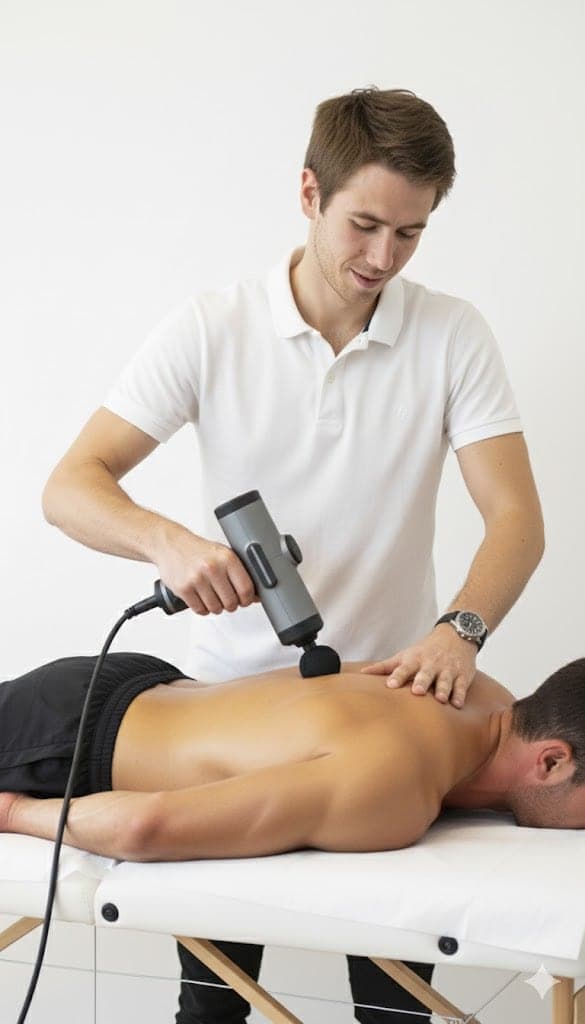
After years of research and practical experimentation, I integrated a specialized mechanical tool that fundamentally transformed what I could achieve for my clients. This isn’t a massage gun or percussion device—those operate at superficial depths and create localized inflammation without addressing structural restriction. This is a precision instrument engineered for controlled, deep fascial release.
Deeper Than Hands: Accessing the Root Cause
The machine operates at tissue depths impossible to achieve manually. When I’m treating someone with chronic lower back pain originating from psoas dysfunction, I’m working through multiple fascial layers to reach the anterior hip structures where the actual restriction lives. Most therapists address the erector spinae—the symptomatic tissue—while the causative dysfunction remains untouched.
I recently worked with a competitive cyclist who had spent eight months receiving weekly massage for what multiple practitioners diagnosed as “tight hamstrings.” Within our first session, using deep anterior hip work to release his chronically shortened psoas and rectus femoris, we eliminated 80% of his posterior chain tension. The hamstrings weren’t the problem—they were compensating for anterior restriction that created a mechanical disadvantage throughout his pedal stroke.
Complete Control: Individualized Intensity Management
The adjustability of this system allows me to calibrate treatment intensity with extraordinary precision. For a client recovering from surgery who requires gentle fascial mobilization, I can work at therapeutic depths without creating inflammatory responses. For a professional athlete requiring aggressive release of chronic adhesions, I can deliver sustained, powerful compression that would be impossible to maintain manually.
This individualization is critical. Two clients presenting with “shoulder pain” may require entirely different treatment intensities based on tissue quality, pain tolerance, chronicity of restriction, and performance demands. The machine allows me to optimize pressure in real-time based on tissue response and client feedback.
Consistent Results: Eliminating Practitioner Variability
One of the most significant advantages of this methodology is the elimination of the practitioner’s physical state as a variable in treatment quality. I don’t have “off days” where my hands are fatigued or my pressure delivery is inconsistent. Every session I provide maintains the same technical standard, ensuring that your third treatment is as effective as your first, and your fifteenth as powerful as your fifth.
This consistency is essential for progressive treatment protocols. When we’re systematically addressing layered compensatory patterns—perhaps releasing shoulder restrictions before addressing the cervical dysfunction that created them—predictable treatment intensity allows us to build on previous progress rather than simply maintaining status quo.
How to Evaluate Massasjeterapeuter i Geroskipu: A Clinical Framework
When you’re assessing potential therapists, most people focus on surface-level criteria: location, price, ambiance. These factors are irrelevant if the practitioner lacks the clinical knowledge and technical capability to resolve your issue. Here’s what actually matters.
Educational Foundation and Specialized Training
| Credential Type | What It Indicates | What It Doesn’t Guarantee |
|---|---|---|
| Basic Massage Certification | Fundamental technique knowledge | Deep understanding of biomechanics |
| Physical Education Degree | Comprehensive understanding of human movement, kinesiology, exercise physiology | Specific manual therapy expertise without additional training |
| Specialized Deep-Tissue Training | Advanced manual skills for structural work | Ability to integrate assessment with treatment |
| Continuing Education in Body Mechanics | Commitment to evolving methodology | Clinical judgment without experience |
My Bachelor’s degree in Physical Education and Nutrition provides me with a foundation that most massage therapists simply don’t possess. I don’t just understand muscle tissue—I understand movement patterns, compensatory strategies, metabolic demands of different tissues, and how nutritional status affects fascial health. This knowledge informs every treatment decision I make.
Years of Clinical Experience and Case Complexity
A practitioner’s experience level reveals itself in their ability to handle complex, chronic cases. Anyone can provide symptomatic relief for acute muscle tension. It takes years of clinical practice to identify the mechanical relationship between, for example, a client’s chronic headaches and their anterior shoulder positioning caused by years of desk work.
After ten years and thousands of client hours, I’ve encountered virtually every presentation of common dysfunction patterns. When a new client describes their symptoms, I’m already formulating hypotheses about causative structures and compensatory chains before they’ve finished speaking. This pattern recognition is impossible to teach—it emerges only through extensive clinical exposure.
Specialization Focus: Generalist vs. Specialist
Many therapists offer a broad menu of services: Swedish massage, hot stone therapy, aromatherapy, reflexology, sports massage. This generalist approach indicates a wellness-oriented practice model rather than clinical specialization.
I offer one service: advanced mechanical deep-tissue massage using specialized tools. This singular focus means I’ve spent ten years refining one methodology rather than maintaining competence across multiple modalities. When you work with me, you’re receiving a level of technical expertise that’s impossible to achieve while splitting focus across diverse treatment styles.
The Results-Oriented Approach: What Lasting Resolution Actually Looks Like
Understanding treatment philosophy is essential when selecting massasjeterapeuter i Geroskipu. The critical distinction is between symptom management and mechanical correction.
Treating Cause Rather Than Symptoms
Traditional massage therapy operates on a symptom-reduction model. You present with lower back pain, so the therapist works on your lower back. You feel better temporarily, then the pain returns because the causative mechanism—perhaps hip immobility creating lumbar compensation—remains unaddressed.
My approach begins with comprehensive mechanical assessment. Where is the primary restriction? What compensatory patterns has your body developed around it? Which structures are symptomatic versus causative? Only after establishing this understanding do we begin treatment, and we always address cause before symptom.
I worked with a client last year who had been receiving monthly massage for chronic neck tension for over three years. Multiple therapists had worked directly on her upper trapezius and cervical musculature with temporary relief. During our assessment, I identified severe restrictions in her thoracic spine—her shoulder blades had virtually no mobility, forcing her cervical spine to compensate for every reaching or lifting movement.
We spent our first three sessions exclusively on thoracic mobilization without touching her neck. By session four, her chronic neck tension had resolved completely because we’d eliminated the mechanical cause rather than continuing to manage the symptom.
Partnership Model vs. Transactional Sessions
Most massage practices operate transactionally: you book a session, receive a treatment, and leave. If you return, it’s for another isolated session rather than progressive work within a comprehensive treatment plan.
My model is partnership-based. We establish clear objectives together—whether that’s eliminating chronic pain, optimizing athletic performance, or recovering full mobility after injury. I develop a customized treatment protocol that systematically addresses your specific mechanical dysfunctions. We track progress objectively through range-of-motion assessment, pain scales, and functional capacity testing.
This approach requires commitment from both parties. Your investment isn’t in individual sessions—it’s in achieving lasting resolution of your dysfunction. My commitment is to provide the clinical expertise and technical capability to make that outcome achievable.
The Mobile Service Advantage: Professional Treatment in Your Environment
Geographic convenience matters less than clinical expertise, but eliminating barriers to consistent treatment enhances outcomes significantly. I travel to your location with a professional treatment bench and all necessary equipment, providing clinical-grade service in your home or office environment.
This mobile approach offers several advantages beyond convenience. Many clients experiencing chronic pain find the journey to and from appointments physically taxing, potentially aggravating their presenting complaint. Athletes benefit from immediate post-treatment rest rather than driving. Professionals appreciate the time efficiency of receiving treatment without travel overhead.
More importantly, environmental context provides clinical insights. Observing your workstation setup, your vehicle ergonomics, or your athletic training space allows me to identify contributing factors to your mechanical dysfunction that wouldn’t be visible in a clinic setting.
Investment vs. Expense: Understanding the Economic Reality of Pain
When evaluating massasjeterapeuter i Geroskipu based on session pricing, you’re optimizing the wrong variable. The relevant economic question isn’t “what does this session cost?” but rather “what is the total cost of not durably resolving my dysfunction?”
Consider the hidden economics of chronic pain. You’re potentially spending money on anti-inflammatory medications, ergonomic equipment, other therapeutic interventions, and possibly missing work or reducing performance in ways that impact your earning capacity. You’re certainly experiencing reduced quality of life—compromised sleep, limited recreational activities, persistent discomfort during daily activities.
The True Cost of Inadequate Treatment
A client came to me after spending nearly €3,000 over eighteen months on twice-monthly massage sessions that provided 3-4 days of relief followed by return of symptoms. The per-session cost was modest, but the aggregate expense was substantial because the treatment approach was inadequate to resolve his mechanical dysfunction.
We completed eight sessions over three months using my specialized methodology, achieving complete resolution of his chronic hip and lower back pain. His total investment was less than half what he’d previously spent, with a lasting outcome rather than ongoing symptom management.
Performance Optimization as Economic Value
For athletes and active professionals, the economic value extends beyond pain relief to performance enhancement. When we eliminate mechanical restrictions that were limiting your power output, movement efficiency, or recovery capacity, we’re directly improving your competitive capability or work performance.
I worked with a professional requiring extended periods of physical labor whose chronic shoulder restriction was compromising his productivity and causing daily pain. After resolving his mechanical dysfunction, he reported not only pain elimination but also significant improvement in work capacity—he could complete physically demanding tasks with less fatigue and no pain, directly impacting his professional effectiveness.
Frequently Asked Questions About Choosing Massasjeterapeuter i Geroskipu
How do I know if I need deep-tissue work versus relaxation massage?
If your goal is stress reduction and temporary muscle relaxation, traditional massage serves that purpose effectively. If you’re experiencing chronic pain, restricted mobility, recurrent injuries, or performance limitations that persist despite conventional treatment, you need mechanical correction rather than symptom management. The distinction is purpose: are you seeking temporary relief or lasting resolution?
Is deep-tissue massage more painful than traditional massage?
Deep-tissue work involves pressure at therapeutic depths, which creates sensation ranging from “productive discomfort” to “challenging but tolerable” depending on chronicity of restriction and tissue quality. The sensation isn’t gratuitous pain—it’s the mechanical requirement for releasing deep fascial adhesions. I maintain constant communication and adjust intensity based on your tolerance and tissue response. Clients consistently report that the temporary discomfort during treatment is insignificant compared to the chronic pain they’ve been experiencing.
How many sessions will I need to see lasting results?
This depends entirely on your specific mechanical dysfunction, how long it’s been present, and the complexity of compensatory patterns. Acute issues may resolve in 2-3 sessions. Chronic, complex dysfunction typically requires 6-10 sessions for complete resolution. During our initial assessment, I provide a realistic timeline based on your specific presentation.
What makes your specialized machine different from massage guns or percussion tools?
Percussion devices operate at superficial tissue depths and use rapid impact to create temporary muscle relaxation and increased blood flow. They cannot access deep fascial layers and can actually create inflammatory responses in chronically restricted tissue. My specialized tool delivers sustained, controlled compression at therapeutic depths, allowing me to work through multiple fascial layers to reach the actual structural restrictions that cause dysfunction. The mechanical principles are fundamentally different.
Can deep-tissue work help with chronic conditions like fibromyalgia or arthritis?
While I cannot treat diagnosed medical conditions, I can address mechanical dysfunction that may be contributing to your symptoms. Many clients with various diagnoses experience significant symptom reduction when we resolve mechanical restrictions and optimize movement patterns. The work complements medical treatment by improving tissue quality and movement capacity.
Do you work with athletes preparing for competition?
Absolutely. I work extensively with competitive athletes for both injury recovery and performance optimization. The timing and intensity of treatment varies based on your training cycle—aggressive deep work during off-season preparation, maintenance and fine-tuning during competition phases. The goal is always enhanced performance through optimized mechanics.
What should I do to prepare for my first session?
Arrive well-hydrated, having eaten lightly 1-2 hours prior. Wear comfortable clothing that allows access to treatment areas. Prepare to discuss your complete symptom history, what treatments you’ve tried previously, and what your functional goals are. The more context I have, the more precisely I can tailor treatment to your specific needs.
How often should I schedule sessions?
During active treatment phases addressing chronic dysfunction, I typically recommend weekly or bi-weekly sessions to maintain progressive momentum. Once we’ve achieved resolution, some clients schedule monthly maintenance work, particularly if their occupation or athletic demands create ongoing mechanical stress. The frequency should align with your specific needs and treatment goals rather than arbitrary scheduling.
Making the Decision: Clinical Expertise Versus Convenience
The decision framework for selecting massasjeterapeuter i Geroskipu should prioritize clinical capability and methodological appropriateness over secondary factors like location or ambiance. Your body’s mechanical dysfunction doesn’t respond to pleasant environments or convenient scheduling—it responds to technically competent treatment delivered with sufficient depth and precision to address causative structures.
When you’re evaluating potential therapists, ask direct questions about their education, their specific experience with cases similar to yours, their treatment philosophy regarding symptom management versus mechanical correction, and their methodology for achieving lasting results rather than temporary relief.
If a practitioner cannot articulate a clear biomechanical explanation for your dysfunction, cannot describe a systematic treatment approach that addresses cause rather than symptom, or focuses conversation on relaxation and stress reduction when you’ve presented with chronic mechanical pain, continue your search.
The Decision Matrix for Results-Driven Treatment
- Educational Foundation: Does the practitioner possess comprehensive knowledge of biomechanics, kinesiology, and body systems beyond basic massage training?
- Clinical Experience: Have they successfully treated complex, chronic cases similar to your presentation over multiple years?
- Specialized Focus: Do they specialize in mechanical correction or spread focus across multiple modalities?
- Methodology: Can they explain their specific technical approach and why it’s appropriate for your dysfunction?
- Assessment Process: Do they conduct comprehensive mechanical assessment before treatment?
- Treatment Philosophy: Do they focus on lasting resolution or ongoing symptom management?
- Outcome Measurement: Do they track objective progress indicators beyond subjective pain reports?
These criteria matter infinitely more than whether the treatment room has pleasant music or aromatherapy diffusers.
The Partnership Commitment: What Working Together Entails
If you decide to work with me, understand that this is a collaborative process requiring commitment from both parties. I provide clinical expertise, specialized methodology, and dedicated focus on your lasting resolution. You provide honest communication about your experience, compliance with any movement recommendations I make, and commitment to completing the treatment protocol we establish together.
This isn’t a service relationship where you passively receive treatment and hope for improvement. It’s a partnership where we systematically dismantle the mechanical dysfunction that’s compromising your quality of life, using advanced techniques and specialized tools that most therapists cannot provide.
The Long-Term Value Proposition
Ten years into this work, I can state with absolute confidence that clients who commit to systematic mechanical correction rather than ongoing symptom management achieve dramatically superior outcomes at lower total cost. The difference between managing your dysfunction indefinitely and durably resolving it is profound—not just economically, but in terms of life quality, performance capacity, and freedom from chronic limitation.
Your chronic pain or mechanical restriction has a cause. That cause can be identified through proper assessment and addressed through technically competent treatment at appropriate tissue depths. The question is whether you’ll continue investing time and money in approaches that provide temporary relief, or commit to the methodology required for lasting resolution.
When you’re searching for massasjeterapeuter i Geroskipu, you’re really asking: “Who possesses the knowledge, experience, and technical capability to durably resolve my mechanical dysfunction?” The answer to that question should guide your decision far more than convenience factors or session pricing.
I’ve dedicated a decade to developing the expertise and methodology to provide that answer. My specialized approach, mobile service model, and commitment to lasting resolution rather than symptom management represent what therapeutic intervention can achieve when clinical knowledge meets advanced technical capability.
The choice is yours. Continue the cycle of temporary relief and recurring symptoms, or invest in systematic mechanical correction that delivers lasting results. Your body’s dysfunction is mechanical. The solution must be equally mechanical—precise, powerful, and consistently applied at therapeutic depths that address cause rather than symptom.
Written by
Chris
Massage therapist & body mechanics specialist
Norwegian-certified with a Bachelor’s in Physical Education and Nutrition and over ten years of clinical practice, working from a portable table in clients’ homes across the Paphos district.
This article is general information from clinical practice, not a medical diagnosis. If you have severe, worsening or unexplained pain, numbness, weakness, or pain after an accident, see a doctor first.