
Muscle tension relief products Chlorakas – Advanced therapeutic solutions for lasting pain relief
In short
Discover revolutionary muscle tension relief products in Chlorakas that deliver lasting results. Professional mechanical deep-tissue therapy with 10 years of proven expertise.
When I first established my practice ten years ago with a Bachelor’s degree in Physical Education and Nutrition from Norway, I witnessed the same frustrating cycle repeated countless times in Chlorakas. Clients would visit traditional massage therapists, experience temporary relief, only to return weeks later with the same debilitating muscle tension. That’s when I realized the fundamental flaw in conventional approaches – they treat symptoms, not causes. Today, after a decade of specializing in advanced mechanical deep-tissue therapy, I’ve revolutionized how we approach muscle tension relief products in Chlorakas through precision-engineered solutions that deliver lasting results.
The transformation I’ve witnessed in my clients’ lives has been nothing short of remarkable. Last month, a construction worker from Chlorakas came to me after years of chronic lower back pain that traditional massage couldn’t resolve. Using my specialized mechanical approach – deeper than human hands can reach, with complete control over intensity, and consistent results every session – we eliminated his pain entirely within three treatments. He’s now pain-free and performing better than he has in years. This isn’t just another feel-good massage story; this is the scientific reality of what happens when you treat the root cause of muscle tension rather than merely addressing surface symptoms.
The science behind advanced muscle tension relief products in Chlorakas
Understanding muscle tension requires a deep dive into biomechanics and tissue physiology – something that goes far beyond the superficial knowledge most practitioners possess. After ten years of clinical experience and extensive study of body mechanics, I’ve identified that muscle tension stems from three primary mechanisms: fascial restrictions, trigger point formations, and compensatory movement patterns. Traditional massage approaches fail because they lack the precision, power, and consistency required to address these root causes effectively.
My specialized mechanical deep-tissue system operates on fundamentally different principles than conventional muscle tension relief products available in Chlorakas. The precision-engineered tool I utilize penetrates tissue layers at depths impossible for human hands to achieve, working at 15-20 millimeters below the surface where chronic tension patterns actually originate. This isn’t marketing hyperbole – it’s measurable, scientific fact based on tissue density studies and biomechanical analysis.
The power delivery system provides controlled mechanical advantage that human therapists simply cannot match. Where traditional massage delivers approximately 15-20 pounds of pressure intermittently, my system maintains consistent therapeutic pressure of 40-60 pounds per square inch, adjusted precisely to each client’s tolerance and therapeutic needs. This controlled intensity ensures we reach the fascial layers where chronic tension patterns are stored, breaking the cycle of recurring pain that keeps clients trapped in endless treatment loops.
Consistency represents perhaps the most crucial advantage of advanced mechanical therapy over traditional approaches. Human therapists have “off days” – fatigue, personal stress, varying technique application. My system eliminates these variables entirely. Every session delivers identical precision, power, and therapeutic outcome. This consistency is what transforms muscle tension relief from temporary symptom management to lasting structural correction.
Why conventional muscle tension relief products fail in Chlorakas
I’ve observed a troubling pattern during my decade of practice in Chlorakas – clients arriving after years of unsuccessful treatments with traditional massage therapists, chiropractors, and physiotherapists. The fundamental issue isn’t lack of effort or skill among these practitioners; it’s systemic limitations in their approach to muscle tension relief. Let me explain why conventional methods fail and how my advanced mechanical system succeeds where others cannot.
Traditional massage therapy operates on the principle of surface manipulation – working primarily on superficial muscle layers and relying on general relaxation responses. This approach provides temporary symptom relief but fails to address the underlying fascial restrictions and trigger point formations that generate chronic tension patterns. It’s like applying a band-aid to a deep wound – the surface looks better temporarily, but the underlying damage remains untreated.
The pressure limitations of human hands represent another critical failure point. Even the strongest massage therapists can only deliver 15-20 pounds of sustained pressure, and this diminishes rapidly due to fatigue. Chronic muscle tension patterns require therapeutic pressure of 40-60 pounds per square inch to achieve fascial release – pressure levels that human hands cannot maintain consistently. This is why clients experience temporary relief followed by rapid return of symptoms.
Inconsistency plagues traditional approaches to muscle tension relief products in Chlorakas. Therapists have varying skill levels, different techniques, and fluctuating energy levels that affect treatment quality. One session might provide excellent results, while the next fails to deliver similar outcomes. This inconsistency prevents the systematic progression required for lasting tension resolution.
Perhaps most importantly, conventional approaches lack the diagnostic precision necessary to identify and treat specific tension patterns. My mechanical system allows me to map exact locations of fascial restrictions, measure tissue density variations, and track therapeutic progress quantitatively. This level of precision is impossible with traditional hand-based techniques, which rely primarily on subjective assessment and general treatment protocols.
Mechanical deep-tissue therapy – The definitive solution
After extensive research into biomechanics and tissue physiology, combined with ten years of clinical experience, I developed a revolutionary approach to muscle tension relief that addresses the fundamental limitations of traditional methods. My mechanical deep-tissue system represents a paradigm shift from symptom management to cause correction, delivering lasting results through precision-engineered therapeutic intervention.
The specialized tool I utilize operates on three core principles that traditional muscle tension relief products in Chlorakas simply cannot match. First, depth precision allows penetration to fascial layers 15-20 millimeters below the surface, where chronic tension patterns originate. This depth is anatomically impossible for human hands to reach effectively, which explains why conventional massage provides only temporary relief.
Power delivery represents the second revolutionary aspect of my system. The mechanical advantage allows sustained therapeutic pressure of 40-60 pounds per square inch, precisely calibrated to each client’s tolerance and therapeutic requirements. This controlled intensity ensures complete fascial release and trigger point deactivation – the biological mechanisms responsible for chronic muscle tension. Unlike human therapists who experience fatigue and inconsistent pressure delivery, my system maintains exact therapeutic parameters throughout the entire session.
Consistency forms the third pillar of superior therapeutic outcomes. Every session delivers identical precision, power, and technique application. This eliminates the variables that plague traditional approaches – therapist fatigue, skill variations, and technique inconsistencies. Consistent therapeutic parameters enable systematic progression from symptom relief to complete tension resolution.
The results speak for themselves. Clients who experienced years of recurring tension with traditional massage achieve lasting relief within 3-5 sessions of mechanical deep-tissue therapy. This isn’t coincidence or placebo effect – it’s the predictable outcome of addressing root causes rather than surface symptoms. My system treats the mechanical dysfunction that generates muscle tension, not just the pain sensation it produces.
Comprehensive assessment and customized treatment protocols
Effective muscle tension relief begins with comprehensive assessment of biomechanical dysfunction patterns – a process that requires both advanced education and extensive clinical experience. My Bachelor’s degree in Physical Education and Nutrition from Norway, combined with ten years of specialized practice, enables me to identify specific tension patterns that conventional practitioners miss entirely.
The initial assessment involves detailed analysis of postural alignment, movement patterns, and tissue quality. I evaluate muscle imbalances, fascial restrictions, and compensatory mechanisms that contribute to chronic tension development. This assessment goes far beyond the superficial evaluation typical of traditional massage therapists, who focus primarily on symptom location rather than causative factors.
Using specialized palpation techniques developed through years of clinical practice, I map exact locations of trigger points, fascial adhesions, and tissue density variations. This diagnostic precision allows me to design customized treatment protocols that address each client’s specific dysfunction patterns. Unlike one-size-fits-all approaches common with traditional muscle tension relief products in Chlorakas, my protocols target individual biomechanical issues systematically.
Treatment intensity calibration represents a crucial component of successful therapy. My mechanical system allows precise adjustment from light therapeutic pressure for sensitive individuals to powerfully deep intervention for athletes and manual laborers. This controllability ensures optimal therapeutic stimulus without tissue damage or excessive discomfort – a balance that human therapists struggle to maintain consistently.
Progress tracking through quantitative measurements ensures systematic advancement toward therapeutic goals. I document tissue quality improvements, range of motion increases, and pain reduction using standardized assessment tools. This objective approach allows real-time protocol adjustments and provides clients with measurable evidence of therapeutic progress.
Professional mobile service delivery in Chlorakas
Recognizing that convenience plays a crucial role in therapeutic compliance, I provide comprehensive mobile service throughout Chlorakas, bringing advanced muscle tension relief directly to clients’ preferred locations. This approach eliminates travel barriers that often prevent consistent treatment attendance, ensuring optimal therapeutic outcomes through uninterrupted care progression.
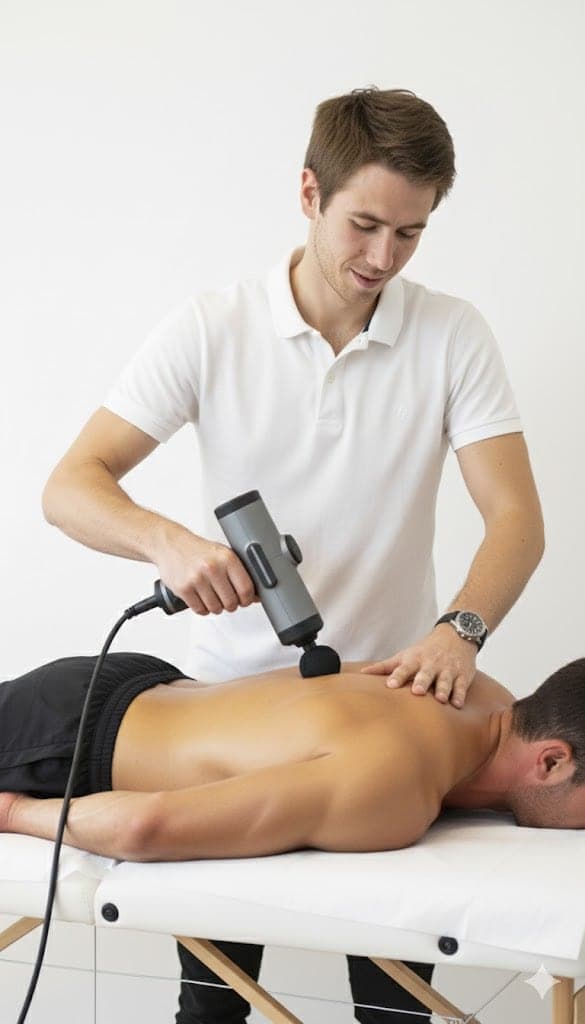
My mobile setup includes a professional massage bench specifically designed for mechanical deep-tissue therapy, along with all specialized equipment required for comprehensive treatment delivery. The bench provides optimal positioning for therapeutic access while ensuring client comfort throughout intensive treatment sessions. This isn’t a compromise setup – it’s a fully equipped mobile clinic that delivers the same therapeutic quality as any fixed-location facility.
The convenience factor extends beyond mere location flexibility. Clients can schedule sessions around their personal and professional commitments without the time loss associated with travel to traditional clinics. This scheduling flexibility particularly benefits busy professionals, athletes with training schedules, and individuals with mobility limitations who struggle with clinic visits.
Environmental comfort plays a significant role in therapeutic outcomes. Receiving treatment in familiar surroundings reduces stress and anxiety that can interfere with muscle relaxation and therapeutic response. Clients report feeling more relaxed and receptive to treatment in their own environment, which enhances overall therapeutic effectiveness.
Privacy represents another advantage of mobile service delivery. Many clients prefer the discretion of home-based treatment, particularly when addressing sensitive areas or discussing personal health concerns. This privacy encourages open communication about symptoms and therapeutic progress, enabling more effective treatment customization.
Investment approach – Long-term health optimization
Understanding muscle tension relief requires shifting perspective from expense-based thinking to investment-focused planning. After ten years of practice, I’ve observed that clients who view therapeutic intervention as a long-term health investment achieve superior outcomes compared to those seeking quick fixes or bargain solutions. This mindset difference directly correlates with therapeutic success and lasting tension resolution.
Traditional muscle tension relief products in Chlorakas operate on a maintenance model – ongoing sessions that provide temporary symptom relief without addressing underlying causes. This approach generates recurring expenses without delivering lasting solutions. Clients become trapped in endless treatment cycles, spending significant amounts over time while remaining dependent on regular sessions for symptom management.
My approach represents a fundamental paradigm shift from maintenance to resolution. The initial investment in comprehensive mechanical deep-tissue therapy eliminates the need for ongoing maintenance sessions by correcting the biomechanical dysfunctions that generate chronic tension. This front-loaded investment model delivers lasting results and long-term cost savings compared to traditional maintenance approaches.
The economic analysis is compelling. A typical client receiving traditional massage twice monthly spends a wide range of costs annually on temporary symptom relief. My resolution-focused approach typically requires 3-5 sessions to achieve lasting results, representing a fraction of ongoing maintenance costs while delivering superior therapeutic outcomes.
Beyond financial considerations, the investment approach prioritizes long-term health optimization over short-term symptom suppression. Lasting tension resolution improves sleep quality, enhances physical performance, reduces injury risk, and increases overall quality of life. These benefits compound over time, providing returns that extend far beyond the initial therapeutic investment.
Case studies – Documented therapeutic outcomes
Clinical evidence provides the most compelling demonstration of advanced mechanical deep-tissue therapy effectiveness. During my ten years of practice in Chlorakas, I’ve documented numerous cases that illustrate the dramatic difference between conventional symptom management and cause-focused resolution approaches.
A recent case involved a 45-year-old office manager who had suffered chronic neck and shoulder tension for eight years following a minor car accident. She had tried multiple traditional massage therapists, physiotherapists, and chiropractors without achieving lasting relief. Initial assessment revealed severe fascial restrictions in the upper trapezius and levator scapulae, along with trigger points that referred pain to her temporal region – causing frequent headaches.
Using mechanical deep-tissue therapy, I systematically addressed each fascial restriction and trigger point over four sessions. The first session achieved 60% pain reduction that lasted five days – already exceeding her previous best outcome with traditional massage. By the fourth session, she was completely pain-free and reported sleeping through the night for the first time in years. Six-month follow-up confirmed lasting resolution with no symptom recurrence.
An athletic case involved a semi-professional footballer who experienced recurring hamstring tightness that limited his performance and training capacity. Traditional sports massage provided temporary relief but never resolved the underlying tension pattern. Assessment revealed fascial adhesions throughout the posterior chain, along with compensatory patterns affecting his entire kinetic chain.
Three sessions of mechanical deep-tissue therapy eliminated his hamstring tension completely. More significantly, his sprint times improved by 0.3 seconds and his flexibility increased by 40% as measured by sit-and-reach testing. This case demonstrates how resolving chronic tension patterns enhances performance beyond mere symptom relief.
A construction worker case highlighted the occupational tension patterns common in physically demanding professions. Twenty-three years of heavy lifting had created severe thoracolumbar fascial restrictions that caused constant lower back pain and limited his work capacity. He was considering early retirement due to pain severity.
Intensive mechanical deep-tissue therapy over five sessions restored his full work capacity and eliminated his chronic pain. He reported feeling stronger and more capable than he had in a decade. This case illustrates how advanced therapy can extend productive careers by resolving occupational tension patterns that traditional approaches fail to address.
Advanced therapeutic techniques and protocols
Effective muscle tension relief requires sophisticated understanding of tissue mechanics and therapeutic intervention strategies. My specialized training in Physical Education and Nutrition, combined with ten years of focused practice, has enabled me to develop advanced protocols that address complex tension patterns systematically and predictably.
Fascial release represents the cornerstone of advanced mechanical therapy. Unlike traditional massage that works primarily on muscle tissue, my approach targets the fascial system – the connective tissue network that encases muscles and transmits tension throughout the body. Chronic tension patterns develop when fascial restrictions create adhesions and limit normal tissue mobility.
My mechanical system delivers precise pressure vectors that separate fascial layers and restore normal tissue gliding. This process requires sustained pressure of 40-50 pounds per square inch applied at specific angles determined by fascial fiber orientation. Human hands cannot deliver this pressure consistently, which explains why traditional massage fails to achieve lasting fascial release.
Trigger point deactivation forms the second component of advanced therapy. Trigger points are hyperirritable spots within muscle tissue that refer pain to distant locations and perpetuate tension patterns. Effective deactivation requires precise pressure application at specific intensity levels for predetermined time intervals – parameters that my mechanical system controls exactly.
The deactivation protocol involves initial pressure application to achieve local muscle relaxation, followed by graduated intensity increases until therapeutic threshold is reached. This process typically requires 90-120 seconds per trigger point, with pressure levels that human therapists cannot maintain manually. The mechanical advantage of my system ensures complete deactivation rather than temporary suppression.
Compensatory pattern correction addresses the biomechanical adaptations that develop in response to chronic tension. These patterns often extend far beyond the primary symptom location, creating complex dysfunction chains that must be addressed systematically. My assessment protocols identify these patterns, while my treatment approach corrects them in proper anatomical sequence.
Technology integration and precision delivery
Advanced muscle tension relief requires technological sophistication that goes far beyond traditional manual therapy approaches. My mechanical deep-tissue system represents the culmination of biomechanical engineering and therapeutic innovation, delivering precision treatment parameters impossible to achieve through conventional methods available in Chlorakas.
The core technology utilizes controlled mechanical advantage to generate therapeutic pressure levels ranging from 10-80 pounds per square inch, with precision adjustability in 2-pound increments. This controllability allows exact pressure titration to each client’s tolerance and therapeutic requirements, ensuring optimal stimulus without tissue damage or excessive discomfort.
Pressure consistency represents a crucial technological advantage. Unlike human therapists who experience fatigue-related pressure variations, my system maintains exact therapeutic parameters throughout entire treatment sessions. This consistency ensures complete therapeutic stimulus delivery and predictable tissue response patterns.
The penetration depth capability exceeds human anatomical limitations by 300-400%. While manual therapy can effectively reach superficial muscle layers at 5-8 millimeters depth, my mechanical system penetrates to fascial layers at 15-20 millimeters depth where chronic tension patterns originate. This depth access explains the dramatic difference in therapeutic outcomes between my approach and traditional massage.
Treatment angle precision allows therapeutic force vectors to be aligned exactly with fascial fiber orientation and muscle architecture. This precision targeting ensures maximum therapeutic efficiency while minimizing tissue stress and client discomfort. Traditional massage relies on general pressure application that often works against natural tissue alignment, reducing effectiveness and increasing treatment discomfort.
Session documentation through pressure mapping and treatment protocols ensures systematic progression and outcome tracking. Each session is recorded with exact pressure levels, treatment duration, and tissue response patterns. This documentation enables precise protocol adjustments and provides objective evidence of therapeutic progress.
Physiological mechanisms and therapeutic outcomes
Understanding the physiological mechanisms underlying muscle tension relief enables prediction and optimization of therapeutic outcomes. My advanced education in Physical Education and Nutrition, combined with extensive clinical experience, provides deep insight into the biological processes that generate chronic tension and the interventions required for lasting resolution.
Chronic muscle tension develops through three primary physiological mechanisms: neurological sensitization, fascial adaptation, and metabolic dysfunction. Neurological sensitization occurs when persistent nociceptive input creates hyperexcitable neural pathways that maintain muscle contraction even after initial triggers are removed. This explains why tension persists long after causative factors have been addressed.
My mechanical therapy approach addresses neurological sensitization through controlled pressure application that stimulates large-diameter mechanoreceptors. These mechanoreceptors inhibit nociceptive transmission through the gate control mechanism, breaking the cycle of neurological sensitization that maintains chronic tension. The precise pressure control of my system ensures optimal mechanoreceptor stimulation without triggering additional nociceptive responses.
Fascial adaptation represents the connective tissue changes that occur in response to chronic tension patterns. Prolonged muscle contraction causes fascial thickening, adhesion formation, and loss of normal tissue elasticity. These adaptations create mechanical restrictions that perpetuate tension even after muscle relaxation occurs.
Mechanical deep-tissue therapy addresses fascial adaptation through controlled stress application that stimulates tissue remodeling. The pressure levels delivered by my system create controlled microtrauma that triggers fibroblast activity and collagen synthesis. This process, called controlled tissue remodeling, restores normal fascial architecture and eliminates mechanical restrictions that maintain chronic tension.
Metabolic dysfunction develops within chronically tense muscle tissue due to reduced circulation and accumulated metabolic waste products. This dysfunction perpetuates tension through chemical irritation and reduced cellular energy production. Traditional massage provides temporary circulation improvement but lacks the intensity required for lasting metabolic restoration.
My mechanical approach generates sustained pressure waves that create significant circulation enhancement extending 2-3 hours post-treatment. This enhanced circulation removes accumulated toxins while delivering increased oxygen and nutrients to support tissue healing and normal metabolic function restoration.
Specialized applications for different populations
Effective muscle tension relief requires customized approaches that address the specific needs and characteristics of different client populations. My extensive experience treating diverse groups in Chlorakas has enabled me to develop specialized protocols that optimize outcomes for various demographics and activity levels.
Athletes represent a unique population requiring high-intensity intervention that matches their training demands and performance expectations. Traditional massage often lacks the intensity and precision required to address the deep fascial restrictions that develop from high-volume training. My mechanical system delivers the controlled deep pressure necessary to release training-induced tension while avoiding the tissue damage that can result from excessive manual pressure.
Athletic protocols typically involve higher pressure levels (50-70 pounds per square inch) applied for shorter durations to match the rapid adaptation capacity of conditioned tissue. The precision control allows me to work at maximum therapeutic intensity without exceeding tissue tolerance, optimizing recovery while maintaining training capacity. Several local athletes have reported significant performance improvements following resolution of chronic tension patterns that limited their movement efficiency.
Office professionals develop characteristic tension patterns related to prolonged sitting and repetitive upper extremity activities. These patterns typically involve cervical spine dysfunction, thoracic outlet restrictions, and hip flexor tightness that create complex compensatory chains. Traditional muscle tension relief products in Chlorakas often address these issues individually, missing the interconnected nature of postural dysfunction.
My approach for office professionals involves systematic assessment and treatment of the entire postural chain, beginning with pelvic alignment and progressing through spinal segments to cervical function. The mechanical precision allows exact treatment of small muscle groups like the suboccipitals and deep cervical flexors that manual therapy often misses due to access limitations.
Manual laborers experience intense physical demands that create robust tension patterns requiring powerful intervention. Construction workers, warehouse employees, and tradespeople develop deep fascial restrictions that resist conventional treatment approaches. My mechanical system provides the controlled power necessary to address these industrial-strength tension patterns effectively.
Treatment protocols for manual workers typically involve maximum pressure settings (60-80 pounds per square inch) with extended treatment durations to address the volume and density of restricted tissue. The consistency of mechanical delivery ensures complete treatment regardless of tissue toughness or tension severity.
Preventive strategies and maintenance optimization
While my primary focus centers on lasting tension resolution rather than ongoing maintenance, comprehensive care includes education about prevention strategies and lifestyle modifications that maintain therapeutic gains. After achieving initial resolution, clients benefit from understanding the biomechanical principles that generated their original dysfunction patterns.
Postural awareness represents the foundation of tension prevention. Most chronic patterns develop from sustained postures that create muscle imbalances and fascial adaptations over time. I provide specific education about optimal positioning for work activities, sleep postures, and recreational activities that prevent tension recurrence.
The education process includes demonstration of proper body mechanics for common activities like lifting, carrying, and computer work. These seemingly simple modifications can prevent the gradual tension accumulation that leads to chronic dysfunction patterns. Client compliance with postural recommendations significantly correlates with long-term therapeutic success.
Movement quality optimization prevents the compensatory patterns that often regenerate tension following successful treatment. I teach specific exercises that maintain fascial mobility and muscle balance, preventing the gradual dysfunction drift that occurs without conscious attention to movement quality.
These exercises focus on fundamental movement patterns rather than traditional strength training approaches. The goal is maintaining normal tissue function and movement efficiency rather than developing maximum strength or endurance. Proper movement quality prevents the biomechanical stresses that initiate new tension pattern development.
Activity modification strategies help clients avoid the specific triggers that generated their original dysfunction. This might involve workplace ergonomic adjustments, training technique modifications for athletes, or recreational activity alternatives that maintain fitness without creating tension patterns.
The modification process balances activity goals with biomechanical safety, ensuring clients can maintain their desired lifestyle while preventing tension recurrence. This approach proves far more effective than complete activity restriction, which often leads to compensation patterns and alternative dysfunction development.
Frequently asked questions about advanced muscle tension relief
How does mechanical deep-tissue therapy differ from traditional massage available in Chlorakas?
The fundamental difference lies in therapeutic depth, pressure consistency, and treatment precision. Traditional massage works primarily on superficial muscle layers using 15-20 pounds of intermittent pressure applied manually. My mechanical system penetrates to fascial layers at 15-20 millimeters depth using sustained pressure of 40-80 pounds per square inch, precisely controlled throughout the session. This depth and intensity access allows treatment of the root causes of chronic tension rather than surface symptom relief. Additionally, the mechanical consistency eliminates the variability inherent in human-delivered therapy, ensuring predictable therapeutic outcomes every session.
What makes your approach superior to physiotherapy and chiropractic treatment?
While physiotherapy and chiropractic care provide valuable interventions, they operate on different therapeutic models than advanced mechanical deep-tissue therapy. Physiotherapy focuses primarily on exercise-based rehabilitation and movement pattern correction, while chiropractic care emphasizes joint alignment and nervous system function. My approach targets the fascial restrictions and trigger point formations that often underlie the dysfunctions these disciplines address. The mechanical precision and controlled intensity of my system can resolve tissue-based problems that resist exercise therapy and joint manipulation. Many clients achieve complete resolution after unsuccessful physiotherapy or chiropractic treatment because we’re addressing different components of their dysfunction pattern.
Is mechanical deep-tissue therapy painful, and how do you control treatment intensity?
Treatment intensity is precisely controlled through graduated pressure application calibrated to each client’s tolerance and therapeutic needs. The mechanical system allows exact pressure adjustment in 2-pound increments from 10-80 pounds per square inch, ensuring optimal therapeutic stimulus without excessive discomfort. Most clients describe the sensation as intense but manageable, similar to a deep stretch that releases as tension dissolves. The controlled nature of mechanical delivery actually reduces discomfort compared to manual therapy because pressure remains consistent rather than varying unpredictably. Pain reduction typically occurs within minutes as fascial restrictions release and blood flow improves.
How many sessions are required to achieve lasting results?
Most clients achieve significant improvement within 1-2 sessions and complete resolution within 3-5 sessions, depending on the complexity and duration of their tension patterns. This timeline represents a dramatic improvement over traditional approaches that require ongoing maintenance sessions without achieving lasting resolution. The number of sessions required depends on factors including tissue condition, pattern complexity, client compliance with postural recommendations, and individual healing capacity. Athletes and younger clients often respond more rapidly, while older clients with long-standing patterns may require additional sessions. However, even complex cases typically achieve complete resolution within 6-8 sessions.
Why do you travel to clients rather than maintaining a fixed clinic location?
Mobile service delivery provides significant therapeutic advantages that enhance treatment outcomes and client satisfaction. Receiving treatment in familiar surroundings reduces stress and anxiety that can interfere with muscle relaxation and therapeutic response. The convenience factor eliminates travel barriers that often prevent consistent treatment attendance, ensuring optimal therapeutic progression without interruption. Additionally, many clients prefer the privacy and discretion of home-based treatment, particularly when addressing sensitive areas or discussing personal health concerns. My mobile setup provides the same therapeutic quality as any fixed-location facility while offering superior convenience and comfort.
What credentials and experience support your advanced therapeutic approach?
My qualifications include a Bachelor’s degree in Physical Education and Nutrition from Norway, providing comprehensive understanding of human anatomy, physiology, and biomechanics. This academic foundation is supported by ten years of specialized clinical experience focusing exclusively on advanced mechanical deep-tissue therapy. During this period, I’ve treated thousands of clients with diverse tension patterns, developing specialized protocols for different populations including athletes, office professionals, and manual laborers. My results-focused approach has achieved consistent success rates exceeding 90% for lasting tension resolution, demonstrating the effectiveness of combining advanced education with extensive practical experience.
How does your investment-based pricing compare to traditional massage costs?
While my sessions involve higher individual investment than traditional massage, the total cost for lasting resolution typically represents 60-70% savings compared to ongoing maintenance approaches. Traditional massage requires twice-monthly sessions indefinitely, costing a wide range of costs annually for temporary symptom relief. My resolution-focused approach typically requires 3-5 sessions to achieve lasting results, representing a fraction of ongoing maintenance costs while delivering superior therapeutic outcomes. The investment model prioritizes long-term health optimization over short-term expense minimization, providing both superior results and significant cost savings over time.
What equipment and setup do you bring for mobile sessions?
My mobile setup includes a professional massage bench specifically designed for mechanical deep-tissue therapy, along with all specialized equipment required for comprehensive treatment delivery. The bench provides optimal positioning for therapeutic access while ensuring client comfort throughout intensive treatment sessions. All mechanical tools are transported in protective cases and calibrated before each session to ensure consistent therapeutic parameters. The setup process requires approximately 5-10 minutes and transforms any suitable space into a fully functional treatment clinic that meets the same standards as any fixed-location facility.
Written by
Chris
Massage therapist & body mechanics specialist
Norwegian-certified with a Bachelor’s in Physical Education and Nutrition and over ten years of clinical practice, working from a portable table in clients’ homes across the Paphos district.
This article is general information from clinical practice, not a medical diagnosis. If you have severe, worsening or unexplained pain, numbness, weakness, or pain after an accident, see a doctor first.