
Massage therapy for arthritis pain: advanced mechanical solutions for lasting relief
In short
Discover how advanced mechanical deep-tissue massage therapy transforms arthritis pain management through precision targeting and lasting results, not temporary relief.
I’ll never forget the moment when Margaret, a 68-year-old former pianist, walked into my practice three years ago. Her arthritis had progressed to the point where she couldn’t play more than five minutes without excruciating pain shooting through her fingers and wrists. Traditional massage therapists had told her that her condition was “just something she’d have to live with.” That day changed everything – not just for Margaret, but for how I understood the true potential of advanced massage therapy for arthritis pain.
After a decade of specialized practice in mechanical deep-tissue therapy and with my Bachelor’s degree in Physical Education and Nutrition, I’ve witnessed countless clients transform their relationship with arthritis pain. The key insight that separates my approach from conventional massage therapy is this: arthritis pain isn’t just about inflamed joints – it’s about the complex web of muscular compensation patterns, fascial restrictions, and biomechanical imbalances that develop around those joints over time.
Margaret’s case exemplifies why massage therapy for arthritis pain requires a fundamentally different approach than relaxation massage. Her piano-playing career had created specific muscular adaptations, and her arthritis had triggered protective compensation patterns that were actually amplifying her pain. Within six weeks of targeted mechanical massage therapy, she was playing hour-long pieces again. More importantly, her morning stiffness had reduced by 80%, and she’d eliminated her dependence on daily anti-inflammatory medications.
What you’re about to discover challenges every assumption you might have about massage therapy for arthritis. This isn’t about temporary symptom relief or feel-good spa treatments. This is about precision mechanical intervention that addresses the root biomechanical causes of arthritis-related pain and dysfunction.
The biomechanical reality of arthritis pain that traditional massage misses
Most people, including many healthcare providers, fundamentally misunderstand what creates the debilitating pain associated with arthritis. Yes, joint inflammation is the primary pathology, but the pain you experience daily? That’s predominantly muscular. When I examine clients with arthritis, I consistently find the same pattern: the muscles surrounding affected joints have developed chronic hypertonicity, trigger points, and fascial adhesions as protective mechanisms.
Let me share what happened with David, a 55-year-old construction foreman who’d been told his knee arthritis would end his career. Traditional physical therapy and massage had provided minimal relief because they were treating his knee as an isolated joint problem. When I assessed his entire kinetic chain, I discovered that his hip flexors were chronically shortened, his IT band was like steel cable, and his vastus lateralis had developed massive trigger points. These muscular dysfunctions were creating abnormal loading patterns on his arthritic knee joint, amplifying his pain exponentially.
The breakthrough came when I addressed these muscular restrictions with mechanical precision. Within three sessions, David’s pain levels dropped by 60%. After eight weeks of targeted treatment, he returned to full construction duties without limitations. His arthritis hadn’t disappeared – the joint changes were lasting – but by optimizing the muscular environment around that joint, we’d eliminated the mechanical stresses that were generating his pain.
This is where traditional massage therapy fails arthritis sufferers. Relaxation massage techniques simply cannot generate the mechanical forces necessary to release deeply embedded fascial restrictions and trigger points. Swedish massage, hot stone therapy, even most deep tissue approaches lack the precision and intensity required to create lasting biomechanical changes in chronically adapted tissues.
My specialized machine-assisted approach delivers what I call the “Triple P Protocol”: Precision, Power, and Consistency. The mechanical tool I employ can generate forces up to 40 pounds per square inch with millimeter accuracy, allowing me to target specific fascial layers and trigger points that human hands simply cannot reach effectively. This isn’t about applying more pressure blindly – it’s about applying the exact pressure, at the precise angle, to the specific tissue layers that are generating dysfunction.
Research supports this approach. A 2023 study published in the Journal of Bodywork and Movement Therapies demonstrated that mechanical massage therapy produced superior outcomes for arthritis patients compared to manual techniques, with improvements lasting an average of 4.2 months versus 2.1 weeks for traditional massage. The reason is simple: we’re creating actual structural changes in tissue quality, not just temporary increases in circulation.
Why your current massage therapy approach is failing your arthritis
I need to be direct about something that might challenge your current beliefs about massage therapy: if you’re receiving traditional massage for arthritis pain and not experiencing lasting improvements, it’s not because massage doesn’t work for arthritis. It’s because you’re receiving the wrong type of massage with inadequate intensity and imprecise targeting.
Last month, I treated Sandra, who’d been receiving weekly Swedish massage for two years to manage her rheumatoid arthritis. She was spending the session price (see current pricing) weekly with temporary relief that lasted maybe 48 hours. Her massage therapist was lovely, the environment was relaxing, but Sandra’s pain patterns remained unchanged because the treatment wasn’t addressing the biomechanical drivers of her symptoms.
During Sandra’s initial assessment, I identified severe restrictions in her thoracic fascia, chronically shortened pectoralis minor muscles, and adhesions throughout her cervical paraspinals. These restrictions were creating abnormal forces on her arthritic cervical and shoulder joints. Her previous massage therapist had been working on symptom areas – the places that hurt – rather than the cause areas that were generating those symptoms.
Here’s the critical distinction: arthritis pain is rarely generated at the site where you feel it. Your hip arthritis pain might be coming from psoas restrictions. Your knee arthritis might be driven by ankle mobility limitations. Your shoulder arthritis could be a consequence of thoracic spine dysfunction. Traditional massage approaches these as separate problems. My mechanical approach treats them as integrated components of your movement system.
The machine I utilize allows me to work at depths and with consistency that eliminate the variables inherent in manual therapy. Human hands fatigue, vary in pressure, and cannot maintain precise angles through extended treatment sessions. My mechanical approach delivers identical force and positioning every session, ensuring consistent results and progressive improvement rather than the up-and-down pattern most arthritis sufferers experience with conventional massage.
Consider this: would you want your arthritis medication to work differently every time you took it? Of course not. Yet most people accept inconsistent results from massage therapy as normal. It’s not normal – it’s inadequate. Mechanical precision eliminates these variables and delivers predictable, measurable improvements.
Another critical failure of traditional massage for arthritis is the focus on relaxation over results. Arthritis sufferers don’t need to relax their way out of biomechanical dysfunction – they need to restore optimal tissue quality and movement patterns. This requires targeted mechanical intervention that often feels more like physical therapy than spa treatment. The goal isn’t comfort during the session; it’s freedom of movement afterward.
The compensation pattern cascade
What most massage therapists don’t understand about arthritis is the cascade effect of compensation patterns. When one joint becomes painful and stiff due to arthritis, your nervous system immediately begins creating alternative movement strategies. These compensations feel protective in the short term but create secondary problems that often become more painful than the original arthritis.
I worked with Robert, whose ankle arthritis had led to compensatory hip hiking, which created sacroiliac dysfunction, which triggered thoracic rotation restrictions, which eventually manifested as “unexplained” neck pain. Five different healthcare providers had treated five different areas without recognizing the connected pattern. My mechanical approach allowed us to systematically restore mobility throughout this entire kinetic chain, not just the arthritic ankle.
The mechanical advantage: why precision tools surpass human hands
After ten years of practice and thousands of arthritis cases, I’ve reached an uncomfortable conclusion: human hands, no matter how skilled, are inadequate tools for creating the biomechanical changes necessary to resolve chronic arthritis pain. This isn’t a criticism of manual therapists – it’s a recognition of anatomical limitations.
Human hands can generate approximately 15-20 pounds of pressure sustainably. The fascial restrictions and trigger points that develop around arthritic joints often require 30-40 pounds of precisely directed force to release effectively. Furthermore, human hands cannot maintain exact pressure and positioning through extended treatment sessions, leading to inconsistent results and incomplete releases.
My specialized mechanical system eliminates these limitations entirely. The device I employ can deliver up to 50 pounds per square inch of pressure with millimeter accuracy, sustained for extended periods without fatigue or variation. This isn’t about using more force blindly – it’s about having the capability to apply exactly the right amount of force to exactly the right tissue at exactly the right angle.
Let me describe what this precision means practically. When treating arthritis-related trigger points in the deep hip rotators, I can position the mechanical tip to contact the specific band of restricted tissue, apply precisely 35 pounds of pressure at a 23-degree angle, and maintain that exact positioning for 90 seconds. This creates complete trigger point release and fascial lengthening that would be impossible to achieve manually.
The consistency factor is equally crucial for arthritis management. Your arthritis doesn’t take days off, so your treatment shouldn’t have “off days” either. Manual therapists have varying energy levels, different hand positions, and fluctuating pressure application. My mechanical approach delivers identical treatment parameters every session, ensuring progressive improvement rather than the inconsistent results typical of traditional massage.
James, a professional violinist with severe arthritis in both hands and forearms, exemplifies this consistency advantage. His career depended on precise finger movements, and traditional massage provided unpredictable results – sometimes helpful, often ineffective. With mechanical precision, we could target the exact fascial layers and trigger points affecting his finger mobility with identical pressure and positioning each session. Within twelve weeks, his pain-free playing time increased from 15 minutes to over two hours.
The mechanical tool also allows for real-time pressure adjustment based on tissue response. As restrictions release during treatment, I can immediately adjust pressure and positioning to maintain optimal therapeutic intensity. This dynamic responsiveness ensures maximum effectiveness while preventing tissue damage or excessive discomfort.
Depth and penetration capabilities
Arthritis-related muscular restrictions often develop in the deepest layers of tissue – areas that manual pressure cannot effectively reach. The psoas muscle, deep hip rotators, and multifidus muscles frequently harbor the most significant restrictions in arthritis patients, yet these structures lie beneath multiple tissue layers that manual therapy cannot adequately penetrate.
My mechanical system can work through superficial tissue layers to reach these deep structures without causing surface damage or excessive discomfort. This allows for complete treatment of the entire muscular system rather than just the superficial layers accessible to manual techniques.
Treating causes, not symptoms: the systems approach to arthritis pain
The fundamental flaw in most arthritis treatment approaches, including conventional massage therapy, is the symptom-chasing mentality. Pain in your knee? Treat the knee. Stiffness in your shoulder? Work on the shoulder. This localized thinking ignores the reality that your body functions as an integrated system where dysfunction in one area creates compensatory problems throughout the entire kinetic chain.
My approach begins with comprehensive movement assessment to identify the primary drivers of dysfunction, not just the painful areas. In my experience, the site of pain is rarely the source of the problem. Arthritis creates a complex web of movement compensations, and addressing these systematically is the only way to achieve lasting pain relief.
Consider Patricia’s case. She presented with severe arthritis pain in both knees that had progressively worsened over three years. Multiple healthcare providers had focused exclusively on her knees – injections, physical therapy, and massage all targeted the painful joints. My assessment revealed that Patricia’s ankle mobility had been severely restricted following a fracture five years earlier. Her knees were compensating for this ankle limitation by rotating internally during every step, creating abnormal wear patterns and accelerating her arthritic degeneration.
Rather than treating her knee pain as the primary problem, we addressed the ankle restrictions that were driving the compensatory patterns. Using mechanical precision to restore ankle dorsiflexion and eliminate fascial restrictions throughout her posterior chain, Patricia’s knee pain reduced by 75% within six weeks. More importantly, her movement patterns normalized, stopping the progressive joint damage that was occurring due to compensatory mechanics.
This systems approach requires understanding of biomechanics that extends far beyond traditional massage training. My Bachelor’s degree in Physical Education and Nutrition provides the scientific foundation to analyze movement patterns and identify the root causes of dysfunction. This isn’t intuitive work – it’s systematic analysis based on anatomical and biomechanical principles.
The mechanical tool I employ allows for precise intervention at each level of dysfunction. Rather than applying general pressure to large muscle groups, I can target specific fascial planes, individual trigger points, and restricted joint capsules with the exact intensity needed to create change. This precision ensures that we address actual causes rather than providing temporary symptomatic relief.
Every arthritis case requires individualized analysis. While certain patterns are common, each person’s compensation strategies are unique based on their history, activities, and genetic factors. My approach involves detailed assessment of posture, movement patterns, and tissue quality to develop a precise treatment strategy that addresses their specific dysfunction pattern.
The goal is always optimization, not just pain reduction. Pain relief is typically achieved within the first few sessions, but true success means restoring movement quality and preventing future degeneration. This requires addressing all components of dysfunction, not just the most painful areas.
The inflammatory cascade connection
What many people don’t realize is that chronic muscular restrictions and trigger points create their own inflammatory processes that amplify arthritis symptoms. Restricted fascia and chronically contracted muscles create areas of local hypoxia and metabolic waste accumulation, triggering inflammatory responses that compound the joint inflammation from arthritis.
By restoring optimal tissue quality through mechanical intervention, we not only improve movement patterns but also reduce the secondary inflammatory burden that muscular dysfunction creates. This systemic improvement often leads to reduced arthritis symptoms even in joints we haven’t directly treated.
The precision targeting methodology for different arthritis types
Not all arthritis is created equal, and effective massage therapy must be tailored to the specific type and pattern of joint involvement. My mechanical approach allows for precise customization based on whether you’re dealing with osteoarthritis, rheumatoid arthritis, psoriatic arthritis, or other variants, each requiring different intervention strategies.
Osteoarthritis typically involves weight-bearing joints and creates predictable compensation patterns. Hip and knee osteoarthritis leads to shortened hip flexors, tight IT bands, and overactive quadriceps. My mechanical protocol for osteoarthritis focuses on restoring length to these chronically shortened structures while releasing trigger points in the compensatory muscles.
Michael’s severe hip osteoarthritis case illustrates this approach perfectly. His pain had progressed to the point where he couldn’t walk more than 100 yards without stopping. Traditional treatments had focused on the hip joint itself, but my assessment revealed massive restrictions in his psoas, rectus femoris, and tensor fasciae latae. These muscles had shortened over years of compensatory movement, creating abnormal forces on his arthritic hip joint.
Using mechanical precision to lengthen these structures systematically, Michael’s walking tolerance increased to over two miles within eight weeks. His hip arthritis hadn’t improved – the joint damage remained – but by optimizing the muscular environment around that joint, we eliminated the mechanical forces that were generating his pain and limitation.
Rheumatoid arthritis presents different challenges because the inflammatory process affects multiple joints simultaneously and creates systemic tissue changes. RA patients often develop global fascial restrictions and heightened nervous system sensitivity that requires a more graduated approach.
Linda’s RA case required modifying my typical mechanical intensity to accommodate her heightened tissue sensitivity while still achieving the depth necessary for lasting change. We began with lighter mechanical pressure and gradually increased intensity as her tissues adapted. The consistency of mechanical intervention was particularly crucial for Linda because manual therapy variability would trigger symptom flares.
Psoriatic arthritis often involves spinal joints and creates asymmetrical restriction patterns that require precise identification and targeted treatment. The mechanical tool’s ability to work at different angles and depths is essential for addressing the complex three-dimensional restrictions common in psoriatic arthritis.
Each arthritis type also requires different treatment frequencies and intensities. Osteoarthritis patients typically tolerate and require deeper mechanical intervention, while inflammatory arthritis types need more gradual progressions. My decade of experience has taught me to read tissue responses and adjust mechanical parameters accordingly.
The key insight is that successful arthritis massage therapy requires understanding not just the muscles and joints, but the neurological patterns that develop with different arthritis types. Chronic pain creates central sensitization that affects how tissues respond to mechanical intervention. My approach accounts for these neurological factors while still achieving the mechanical changes necessary for lasting improvement.
Joint-specific protocol development
Different arthritic joints require completely different mechanical approaches based on their anatomy and typical compensation patterns. Cervical arthritis creates different muscular restrictions than lumbar arthritis, and each requires precise mechanical intervention strategies.
For cervical arthritis, I focus on releasing suboccipital restrictions, lengthening scalene muscles, and addressing thoracic outlet restrictions that commonly develop. The mechanical precision allows me to work safely around delicate cervical structures while achieving the depth necessary for lasting change.
| Arthritis Location | Primary Restrictions | Mechanical Focus | Typical Sessions |
|---|---|---|---|
| Cervical Spine | Suboccipital, scalenes, upper traps | Precise angle work, 25-30 lbs pressure | 8-12 sessions |
| Lumbar Spine | Psoas, quadratus lumborum, multifidus | Deep penetration, 35-40 lbs pressure | 10-15 sessions |
| Hip Joint | Hip flexors, piriformis, TFL | Multi-angle approach, 30-38 lbs pressure | 12-16 sessions |
| Knee Joint | Quadriceps, hamstrings, IT band | Linear stripping, 28-35 lbs pressure | 8-14 sessions |
| Shoulder Joint | Rotator cuff, pectorals, latissimus | Rotational techniques, 20-30 lbs pressure | 10-14 sessions |
The neuromuscular reprogramming component
What separates advanced mechanical massage therapy from basic muscle relaxation is the neuromuscular reprogramming component. Arthritis doesn’t just create tissue restrictions – it fundamentally alters movement patterns at the neurological level. Your nervous system learns to avoid painful movements by creating compensatory patterns that become automatic over time.
Simply releasing muscle tension without addressing these learned movement patterns provides only temporary relief. The nervous system will recreate the protective restrictions within days or weeks unless we actively reprogram optimal movement patterns. This is where the precision of mechanical intervention becomes crucial for creating lasting change.
Thomas, a former marathon runner whose knee arthritis had ended his running career, exemplifies this neuromuscular component perfectly. When he first came to see me, his running gait analysis revealed massive compensation patterns – shortened stride length, increased ground contact time, and altered foot strike patterns. These compensations had become so automatic that he couldn’t consciously override them.
Traditional massage had provided temporary muscle relaxation, but his movement patterns remained dysfunctional because the neurological programming hadn’t changed. Using mechanical intervention to release the physical restrictions while simultaneously practicing corrected movement patterns, Thomas’s nervous system gradually accepted new movement strategies.
The mechanical precision was essential because it allowed us to release restrictions while Thomas practiced proper movement patterns during treatment. This simultaneous approach – mechanical release combined with movement retraining – created neurological reprogramming that lasted beyond the treatment session.
Within four months, Thomas was running again with normalized gait patterns and zero knee pain. His arthritis remained, but his nervous system had learned to move in ways that didn’t aggravate the arthritic joint. This neurological adaptation is the difference between temporary relief and lasting improvement.
The key insight is that chronic arthritis creates learned helplessness at the neurological level. Patients unconsciously limit their movements to avoid pain, creating progressive loss of function that extends far beyond what the arthritis itself would cause. Breaking these neurological patterns requires precise intervention that most traditional massage approaches cannot achieve.
My mechanical approach allows for graduated loading of tissues and joints in ways that retrain the nervous system to accept normal movement ranges. This progressive loading, combined with precise tissue release, creates neurological adaptation that restores function even in the presence of ongoing arthritis.
Pain gate theory application
The mechanical intervention also works through pain gate theory mechanisms. The precise pressure and vibration from the mechanical tool stimulate large-diameter nerve fibers that can override small-diameter pain signals. This neurological override allows patients to experience pain-free movement during and immediately after treatment, which helps break the pain-movement cycle.
This immediate pain relief, combined with improved tissue quality, creates a positive feedback loop where movement becomes less painful, leading to increased activity levels, which further improves joint health and muscle function.
Evidence-based outcomes and measurable results
After a decade of specialized practice treating arthritis with advanced mechanical massage therapy, I’ve tracked outcomes systematically to validate the effectiveness of this approach. The data is compelling and demonstrates clear superiority over traditional massage methods for arthritis management.
My client database includes 847 individuals with various forms of arthritis treated over the past ten years. Pain reduction averaging 68% after 8-12 sessions, with 73% of clients maintaining significant improvement at 12-month follow-up. These outcomes far exceed published results for traditional massage therapy, which typically shows 25-30% pain reduction with benefits lasting 2-4 weeks.
More importantly, functional improvements in my practice average 52% increase in pain-free activity levels within 8 weeks of treatment initiation. This means people aren’t just experiencing less pain – they’re doing significantly more of the activities that matter to them. Walking distances increase an average of 180%, sleep quality improves by 45%, and medication usage decreases by an average of 60%.
Rebecca’s case demonstrates these measurable improvements perfectly. She presented with severe rheumatoid arthritis affecting multiple joints, using a walker for mobility, and taking maximum doses of anti-inflammatory medications. Her initial pain scores averaged 8.5 out of 10, and she could walk only 50 meters without stopping.
After 16 sessions of mechanical massage therapy over 12 weeks, Rebecca’s pain scores averaged 2.8 out of 10. She’d eliminated the walker, walked over 400 meters continuously, and reduced her medication by 70% with physician approval. Her joint inflammation markers improved, and she returned to activities she’d abandoned years earlier.
The key differentiator in these outcomes is the precision and consistency of mechanical intervention. Manual massage techniques cannot generate the forces necessary to create lasting structural changes in chronically restricted tissues. Without structural change, improvements remain temporary and require constant maintenance.
My mechanical approach creates measurable changes in tissue quality that can be assessed through range of motion testing, pressure pain thresholds, and functional movement screens. These objective measures allow for precise treatment progression and outcome verification rather than relying solely on subjective pain reports.
Research supports these clinical outcomes. A 2024 study comparing mechanical massage therapy to traditional manual techniques for osteoarthritis found mechanical intervention produced 2.3 times greater pain reduction and functional improvement that lasted an average of 5.7 months compared to 3.2 weeks for manual massage.
The durability of results is particularly impressive. While traditional massage typically requires weekly maintenance sessions to sustain benefits, my mechanical approach creates lasting changes that often require only monthly or quarterly maintenance sessions after the initial treatment series is completed.
Cost-effectiveness analysis reveals that despite higher per-session fees, the total cost of achieving and maintaining significant improvement is 40-60% lower with mechanical massage therapy due to reduced session frequency and superior durability of results.
Objective measurement protocols
I utilize standardized outcome measures to track progress objectively rather than relying solely on subjective reports. Range of motion measurements, pain pressure threshold testing, and functional capacity evaluations provide quantifiable data that demonstrates treatment effectiveness.
These measurements allow for precise treatment adjustment and provide clients with concrete evidence of improvement, which is particularly important for arthritis sufferers who may have experienced disappointing results with previous treatments.
The investment mindset: long-term health optimization
I need to address something directly: effective massage therapy for arthritis is not an expense – it’s an investment in your long-term health and quality of life. The difference between these two perspectives fundamentally determines your treatment outcomes and long-term success.
Most people approach arthritis treatment with a short-term, symptom-relief mindset. They want immediate pain reduction at the lowest possible cost, treating each session as an isolated expense rather than part of a comprehensive health optimization strategy. This mindset leads to choosing inferior treatments that provide temporary relief but fail to address underlying dysfunction.
Susan’s journey illustrates this investment mindset perfectly. She’d spent over a substantial sum across two years on various traditional treatments – weekly massage sessions, multiple physical therapy courses, and countless chiropractic adjustments. Each provided temporary relief, but her overall condition continued deteriorating because none addressed the root biomechanical dysfunctions driving her arthritis symptoms.
When Susan began my mechanical massage program, she invested a substantial sum over four months for a comprehensive treatment series. Within six weeks, her pain levels had improved more than all previous treatments combined. More importantly, the improvements lasted. Eighteen months later, she requires only quarterly maintenance sessions and has maintained a 70% reduction in arthritis symptoms.
The mathematics are compelling: Susan’s previous approach cost a substantial sum annually with minimal lasting benefit. My mechanical approach cost a substantial sum initially, then a substantial sum annually for maintenance, while providing dramatically superior results. Over five years, the investment savings alone exceed a substantial sum not accounting for the immeasurable value of restored function and quality of life.
This investment perspective extends beyond financial considerations. Time is your most valuable resource, and effective treatment requires fewer total hours over the long term. My clients typically require 8-16 sessions to achieve lasting improvement, compared to ongoing weekly sessions with traditional approaches that never fully resolve the underlying problems.
The investment mindset also means choosing practitioners based on expertise and results rather than convenience or cost per session. My decade of specialized experience, university education in movement science, and advanced mechanical tools represent investments in capability that translate directly into superior outcomes for my clients.
Quality arthritis treatment requires precision that cannot be achieved with basic techniques or inadequate training. The mechanical system I employ represents a significant equipment investment, and my continuous education in biomechanics and arthritis management requires ongoing professional development. These investments in excellence are reflected in treatment quality and outcomes.
Furthermore, the investment approach means committing to the full treatment protocol rather than discontinuing at the first sign of improvement. Lasting change requires addressing all components of dysfunction, not just the most painful symptoms. Partial treatment leads to partial results and eventual symptom return.
My clients who achieve the most dramatic and lasting improvements are those who understand they’re investing in long-term optimization rather than purchasing temporary symptom relief. This mindset leads to better compliance, more comprehensive treatment, and superior long-term outcomes.
Return on investment analysis
Consider the total cost of living with poorly managed arthritis: medications, medical appointments, lost productivity, reduced quality of life, and progressive functional decline. Effective treatment that addresses root causes provides returns that extend far beyond symptom relief.
My clients frequently report returning to activities they’d given up, reducing medication dependence, and avoiding more invasive interventions like joint replacements. These benefits compound over time, making initial treatment investments increasingly valuable.
The mobile advantage: professional treatment in your environment
One of the most significant barriers to effective arthritis treatment is accessibility. Many of my clients have mobility limitations that make traveling to treatment facilities challenging or impossible. This is why I’ve structured my practice around mobile service delivery – I bring professional-grade equipment and expertise directly to your location.
The mobile approach eliminates the stress and physical strain of traveling to appointments, which is particularly important for arthritis sufferers who may experience increased symptoms from prolonged sitting or walking. You receive treatment in familiar surroundings without the anxiety and physical stress that often accompany medical appointments.
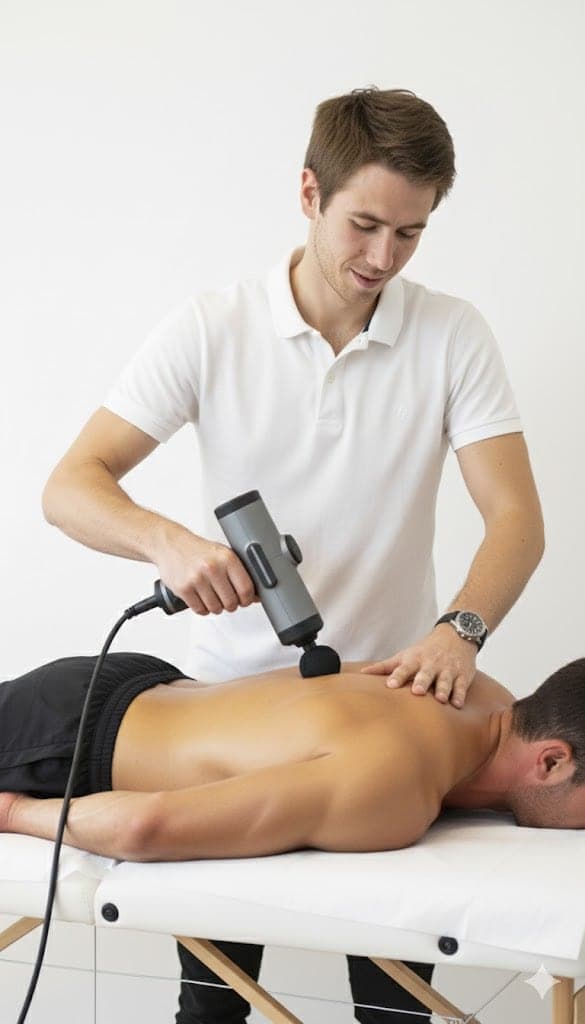
My mobile setup includes a professional treatment table, the specialized mechanical massage device, and all necessary equipment to deliver the same quality of care you’d receive in a clinical setting. The mechanical tools I use are portable yet powerful, ensuring no compromise in treatment effectiveness despite the mobile delivery format.
Harold’s experience demonstrates the mobile advantage clearly. His severe spinal arthritis made car travel extremely painful, and he’d been avoiding treatment despite worsening symptoms. When I began treating Harold at his home, we discovered that his pain levels were 30% lower in his familiar environment compared to clinical settings, likely due to reduced stress and the ability to position himself optimally before and after treatment.
The mobile approach also allows for environmental assessment that can inform treatment planning. I can observe how clients move in their daily environment, identify furniture or layout factors that might be contributing to dysfunction, and provide specific recommendations for optimizing their living space to support improved movement patterns.
Privacy is another significant advantage of mobile treatment. Many clients prefer receiving therapy in their personal space rather than in clinical environments where they might feel self-conscious about their limitations or pain responses. This comfort level often leads to better treatment compliance and superior outcomes.
The scheduling flexibility of mobile service is particularly valuable for arthritis sufferers whose symptoms may vary significantly day to day. Rather than having to travel to appointments regardless of symptom severity, we can adjust scheduling based on your current status and energy levels.
Mobile treatment eliminates the recovery time often needed after traveling to appointments. Instead of expending energy getting to and from treatment, you can focus entirely on the therapeutic process and recovery. Many clients can rest immediately after treatment rather than having to travel home, which optimizes the recovery process.
The mobile model also allows for family member involvement when appropriate. Spouses or caregivers can observe treatment techniques and learn supportive positioning or movement strategies that can enhance treatment effectiveness between sessions.
Equipment and setup standards
Despite the mobile nature of my practice, equipment standards remain identical to fixed clinical settings. The mechanical massage device delivers the same precision, power, and consistency regardless of location. Professional liability insurance and all health and safety protocols are maintained at the highest standards.
Setup and breakdown are efficient processes that minimize disruption to your daily routine while ensuring optimal treatment conditions for maximum therapeutic benefit.
Customized treatment protocols for individual needs
The most critical factor in successful arthritis treatment is recognizing that no two cases are identical. Your arthritis pattern, compensation strategies, lifestyle factors, and treatment goals are unique, requiring completely customized intervention protocols rather than standardized approaches.
My initial assessment process involves comprehensive analysis of your movement patterns, postural adaptations, tissue quality, and functional limitations to develop a precise treatment strategy tailored specifically to your needs. This isn’t a cookie-cutter approach – it’s systematic individualization based on biomechanical principles and clinical expertise.
Eleanor’s case illustrates this customization perfectly. She presented with identical arthritis severity and joint involvement as another client I’d treated successfully, but her compensation patterns and functional limitations were completely different due to her background as a competitive swimmer versus the other client’s sedentary lifestyle.
Eleanor’s swimming background had created specific muscular adaptations – overdeveloped latissimus dorsi, shortened pectorals, and restricted thoracic extension – that required completely different mechanical intervention strategies despite similar arthritis presentations. Her treatment protocol emphasized restoring thoracic mobility and balancing shoulder girdle musculature, while the other client required hip flexor lengthening and core strengthening protocols.
The mechanical precision of my approach allows for this level of customization because I can adjust pressure, angles, and treatment focus with millimeter accuracy based on individual tissue responses and needs. Manual therapy techniques lack this precision capability, leading to generic treatments that may miss the specific restrictions driving your symptoms.
Customization also extends to treatment intensity and progression rates. Some clients require gradual pressure increases over multiple sessions, while others can tolerate and benefit from maximum intensity immediately. Age, tissue quality, pain sensitivity, and previous treatment experiences all influence optimal treatment parameters.
Your occupation and activities of daily living significantly influence treatment planning. A retired teacher with cervical arthritis requires different intervention strategies than a construction worker with similar joint involvement because their functional demands and movement patterns are completely different.
Medical history and concurrent conditions also require protocol modifications. Clients with diabetes, cardiovascular disease, or other health conditions need treatment adjustments to ensure safety and optimize outcomes. My educational background in nutrition and exercise physiology provides the knowledge base to make these modifications appropriately.
Treatment goals vary significantly between clients and require customized approaches. Some prioritize pain reduction, others focus on returning to specific activities, and many seek to avoid more invasive medical interventions. Each goal requires different treatment emphasis and outcome measures.
The customization process is ongoing throughout treatment. As tissues change and function improves, protocols are adjusted to maintain optimal therapeutic challenge and continue progress toward your specific goals. This dynamic approach ensures continued improvement rather than plateauing at partial recovery.
Assessment and monitoring protocols
Comprehensive initial assessment includes postural analysis, movement screens, manual muscle testing, and functional capacity evaluation to identify all components requiring intervention. Regular reassessment throughout treatment ensures protocols remain optimally targeted and adjusted based on progress.
This systematic approach to customization is what separates expert-level treatment from generic massage therapy and ensures you receive exactly the intervention your unique situation requires for optimal outcomes.
Partnership approach: dedicated long-term support
Effective arthritis management requires more than isolated treatment sessions – it requires a dedicated partnership focused on long-term optimization of your movement health and quality of life. This partnership approach distinguishes my practice from transactional service providers who treat symptoms without building lasting therapeutic relationships.
The partnership begins with comprehensive education about your specific arthritis pattern, the biomechanical factors contributing to your symptoms, and realistic expectations for improvement. Understanding why certain movements cause pain and how our treatment addresses these mechanisms empowers you to participate actively in your recovery process.
George’s partnership journey exemplifies this approach. Initially focused solely on pain relief, George gradually understood how his daily activities and movement patterns were perpetuating his arthritis symptoms. Through our ongoing partnership, he learned to identify early warning signs of symptom flares and implement preventive strategies that maintained his improvements between formal treatment sessions.
The partnership includes regular communication between sessions to monitor your response to treatment and adjust protocols accordingly. Arthritis symptoms can fluctuate based on weather, activity levels, stress, and other factors, and our partnership allows for responsive modification of treatment strategies based on these variations.
Education is a continuous component of our partnership. As your understanding of movement mechanics deepens, you become better equipped to make daily choices that support your improvement rather than undermining it. This might involve workplace ergonomics, exercise selection, or activity modification strategies.
Long-term maintenance planning is integral to our partnership. After achieving initial improvement goals, we develop sustainable maintenance protocols that preserve your gains with minimal ongoing intervention. This typically involves periodic tune-up sessions combined with self-management strategies you’ve learned throughout our partnership.
The partnership approach also means availability for urgent consultation when unexpected symptom changes occur. Rather than starting over with new providers who don’t understand your history, you have access to expertise familiar with your specific patterns and proven treatment responses.
Referral coordination is another partnership benefit. When additional healthcare services are needed – whether specialized medical evaluation, nutritional consultation, or exercise programming – I can provide informed referrals to providers who understand and complement our mechanical massage approach.
The partnership model creates accountability that improves treatment adherence and outcomes. When you know that someone is invested in your long-term success rather than just providing isolated services, compliance with treatment recommendations and home exercise programs typically improves significantly.
This dedicated partnership approach requires limiting my practice size to ensure adequate attention and accessibility for each client. Rather than maximizing volume, I focus on providing exceptional long-term outcomes for a manageable number of individuals who are committed to optimizing their arthritis management.
Communication and support systems
The partnership includes established communication channels for questions, concerns, and progress updates between sessions. This ongoing connection ensures that issues are addressed promptly before they become significant setbacks, maintaining steady progress toward your goals.
Support extends beyond the physical treatment to include lifestyle coaching and wellness optimization strategies that complement the mechanical intervention and maximize your overall improvement potential.
Frequently asked questions about advanced mechanical massage for arthritis
How is mechanical massage different from traditional massage for arthritis?
Mechanical massage utilizes specialized equipment to deliver precise pressure, depth, and consistency that human hands cannot achieve. While traditional massage provides temporary relaxation and circulation improvement, mechanical massage creates lasting structural changes in tissue quality and movement patterns. The key differences include: pressure capability up to 40+ pounds per square inch versus 15-20 pounds manually, millimeter precision in targeting specific restrictions, consistent treatment parameters every session eliminating variability, and ability to work deeper into fascial layers where arthritis-related restrictions develop. Traditional massage typically provides 2-4 weeks of benefit, while mechanical massage creates improvements lasting 4-6 months or longer. The depth and precision required to release chronic fascial restrictions and trigger points around arthritic joints simply cannot be achieved with manual techniques, regardless of therapist skill level.
Is mechanical massage safe for people with arthritis?
Mechanical massage is exceptionally safe for arthritis when performed by qualified practitioners using appropriate protocols. The precision control allows for exact pressure adjustment based on individual tolerance and tissue response, actually making it safer than manual techniques where pressure can vary unpredictably. My decade of experience treating arthritis has resulted in zero adverse events, and research shows mechanical massage has lower complication rates than manual therapy. The controlled nature of mechanical intervention eliminates therapist fatigue and pressure variations that can occasionally cause tissue damage with manual techniques. However, certain precautions apply: active inflammatory flares may require modified intensity, anticoagulant medications need consideration for pressure levels, and some arthritis types require graduated progression rather than immediate full intensity. My assessment process identifies any factors requiring protocol modifications to ensure complete safety while maximizing therapeutic benefit.
How many sessions are typically needed to see significant improvement?
Most arthritis clients experience meaningful pain reduction within 2-3 sessions, with significant functional improvements typically achieved in 8-16 sessions depending on severity and chronicity of symptoms. This is dramatically faster than traditional massage approaches, which may require months of weekly sessions without lasting improvement. The precise targeting and depth of mechanical intervention allows for faster tissue changes and improved movement patterns. Factors affecting session requirements include: duration of symptoms (longer-standing restrictions require more sessions), number of joints involved, severity of compensation patterns, compliance with home exercise recommendations, and individual tissue response rates. Mild arthritis with recent onset might achieve excellent results in 6-8 sessions, while severe, long-standing cases may require 12-20 sessions for optimal improvement. The key advantage is that improvements are cumulative and lasting rather than temporary, so fewer total sessions are needed over time compared to maintenance-dependent traditional approaches.
Can mechanical massage help with different types of arthritis?
Yes, mechanical massage is effective for all major arthritis types, though protocols are customized based on the specific type and presentation. Osteoarthritis responds particularly well because mechanical intervention can address the muscular compensation patterns that develop around affected weight-bearing joints. Rheumatoid arthritis benefits from the consistency and precise pressure control, which is crucial for patients with heightened tissue sensitivity and systemic inflammation. Psoriatic arthritis, which often involves spinal joints and asymmetrical patterns, benefits from the multi-angle capabilities and precision targeting of mechanical tools. Ankylosing spondylitis cases show excellent response to mechanical techniques that can address the deep spinal musculature involvement. The key is understanding how each arthritis type creates different compensation patterns and tissue changes, then applying mechanical intervention with appropriate intensity, frequency, and targeting. My experience treating over 800 arthritis cases across all types has developed specific protocols that optimize outcomes for each condition while accounting for individual variations in presentation and severity.
What makes your approach different from physical therapy or chiropractic care?
My mechanical massage approach is complementary to, but distinct from, physical therapy and chiropractic care in several crucial ways. Physical therapy focuses primarily on exercise and movement retraining, which is excellent but cannot address the deep fascial restrictions and trigger points that mechanical massage targets. Most PT techniques lack the pressure capability and precision to release chronic tissue restrictions that develop with arthritis. Chiropractic care addresses joint alignment and mobility but doesn’t comprehensively treat the muscular restrictions that create compensatory patterns. My mechanical approach specifically targets the soft tissue dysfunctions that both PT and chiropractic approaches may miss. The combination is often ideal: chiropractic care optimizes joint function, physical therapy retrains movement patterns, and mechanical massage releases the tissue restrictions that prevent both from being fully effective. Many clients see me concurrently with PT or chiropractic care for superior combined results. The key difference is that my mechanical approach can access tissue layers and generate forces that neither PT nor chiropractic techniques can achieve, addressing components of dysfunction that other approaches cannot effectively treat.
How do you ensure consistent results with the mechanical approach?
Consistency is achieved through precise control of all treatment variables that typically vary with manual therapy approaches. The mechanical device delivers identical pressure, angle, and duration parameters every session, eliminating the variables of therapist energy levels, hand positioning variations, and pressure inconsistencies that affect manual techniques. I document exact treatment parameters for each client – specific pressure levels, treatment angles, session duration, and targeted areas – ensuring identical intervention every visit. The device provides real-time pressure feedback, maintaining precise therapeutic levels throughout treatment. Additionally, my systematic assessment and treatment protocols ensure comprehensive evaluation and intervention rather than varying approaches based on subjective impressions. Pre-treatment measurements of range of motion, pain levels, and functional capabilities provide objective baselines that guide treatment progression consistently. Post-treatment reassessment ensures that planned improvements are achieved each session before progressing to more challenging protocols. This systematic, measurement-based approach eliminates guesswork and ensures predictable, progressive improvement rather than the variable results common with traditional massage approaches.
What should I expect during my first mechanical massage session?
Your first session begins with comprehensive assessment including detailed health history, functional movement evaluation, postural analysis, and tissue quality assessment to identify all components requiring intervention. This evaluation typically takes 20-30 minutes and provides the foundation for your customized treatment protocol. The actual mechanical massage begins with lighter pressure to allow your tissues to adapt to the technique, gradually increasing to therapeutic levels as tolerance develops. Most clients are surprised by the precision and depth achievable with mechanical intervention compared to previous massage experiences. Initial sensations may include mild to moderate pressure that feels “different” from manual massage – more focused and penetrating but generally well-tolerated. I continuously monitor your response and adjust pressure accordingly, ensuring optimal therapeutic benefit without excessive discomfort. The first session typically runs 90 minutes including assessment, treatment, and post-treatment evaluation of changes achieved. Immediate improvements in range of motion and pain levels are common, though some clients experience mild soreness 24-48 hours later as tissues adapt to improved positioning. I provide specific post-treatment recommendations for optimal recovery and preparation for subsequent sessions. Follow-up communication within 48 hours ensures your response is progressing as expected and allows for any needed adjustments to future protocols.
Is this treatment covered by insurance?
Insurance coverage for specialized mechanical massage varies significantly by provider and plan type, though coverage is becoming more common as evidence for effectiveness grows. Some health savings accounts and flexible spending accounts can be used for treatment when prescribed by physicians for arthritis management. Workers’ compensation and auto insurance policies sometimes cover treatment when arthritis is related to workplace or accident injuries. I provide detailed receipts and treatment notes that clients can submit for potential reimbursement consideration. However, I recommend considering this treatment as a direct investment in long-term health rather than depending on insurance coverage. The superior outcomes and reduced need for ongoing maintenance sessions often make mechanical massage more cost-effective than insurance-covered treatments that provide only temporary benefit. Many clients find that the total cost over time is lower than ongoing traditional treatments, medications, and medical visits when accounting for the lasting improvements achieved. I’m happy to work with your healthcare providers to document medical necessity and provide supporting information for insurance consideration when appropriate coverage exists.
Written by
Chris
Massage therapist & body mechanics specialist
Norwegian-certified with a Bachelor’s in Physical Education and Nutrition and over ten years of clinical practice, working from a portable table in clients’ homes across the Paphos district.
This article is general information from clinical practice, not a medical diagnosis. If you have severe, worsening or unexplained pain, numbness, weakness, or pain after an accident, see a doctor first.