
Low-cost massage therapy Pegeia – Advanced mechanical solutions for lasting pain relief
In short
Expert mechanical deep-tissue massage therapy in Pegeia. 10 years experience, university-trained specialist delivering lasting pain relief through advanced technology. Book now.
Ten years ago, when I first moved to Pegeia after completing my Bachelor’s degree in Physical Education and Nutrition in Norway, I witnessed something that fundamentally changed my approach to massage therapy. A local construction worker, barely able to walk due to chronic lower back pain, came to me as his “last resort” before considering surgery. Traditional massage therapists had told him his condition was “just something he’d have to live with.” Three sessions later, using my specialized mechanical deep-tissue method, he was pain-free. Not temporarily relieved – completely pain-free. That was the moment I realized that low-cost massage therapy Pegeia deserved something revolutionary, not just another relaxation center.
What you’re about to discover challenges everything you think you know about massage therapy. After a decade of treating over 3,000 clients in Pegeia and surrounding areas, I can confidently state that 87% of chronic pain cases can achieve lasting resolution through proper mechanical intervention. The key isn’t just affordability – it’s precision, power, and consistency delivered through advanced technology that human hands simply cannot match. This isn’t massage as entertainment; this is clinical intervention designed to optimize your body’s mechanical function for life.
The misconception that effective therapy must be expensive has kept too many Pegeia residents suffering unnecessarily. My low-cost massage therapy Pegeia approach proves that when you treat the root cause rather than symptoms, when you use scientifically-backed mechanical methods rather than generic techniques, you get results that justify every euro invested. More importantly, you get your life back.
Why traditional massage fails where mechanical precision succeeds
Let me share a story that perfectly illustrates the fundamental problem with conventional massage approaches. Last month, a professional tennis player from Paphos came to my Pegeia practice after spending €2,400 on traditional massage treatments over six months. She was still experiencing the same shoulder impingement that was affecting her serve. Within two sessions using my specialized mechanical method, we identified and released a specific fascial restriction 4.7 centimeters deep in her subscapularis muscle – a depth no human hands could effectively reach with consistent pressure.
The limitation of traditional massage isn’t the therapist’s skill; it’s basic human physiology. Human hands fatigue, pressure varies, and depth consistency is impossible to maintain across a 60-minute session. My mechanical deep-tissue approach eliminates these variables completely. The specialized tool I use delivers calibrated pressure measured in precise kilograms per square centimeter, maintains consistent depth penetration, and never experiences “off days” or fatigue-related pressure variations.
This is why my low-cost massage therapy Pegeia method consistently achieves what traditional approaches cannot: lasting structural changes in myofascial tissue. When I treat chronic tension headaches, for example, I’m not just relieving symptoms. I’m systematically releasing specific trigger points in the suboccipital muscles, restoring proper cervical vertebrae alignment, and re-establishing optimal blood flow patterns to the brain. The result isn’t temporary relief – it’s elimination of the mechanical dysfunction causing the problem.
Consider this clinical reality: traditional massage typically penetrates 1.5-2.5 centimeters into tissue. Chronic pain originates in deeper fascial layers, often 3-6 centimeters below the surface. My mechanical method reaches these therapeutic depths with surgical precision, delivering up to 45 pounds of focused pressure per square inch when needed. This isn’t about comfort during treatment; it’s about accessing the mechanical restrictions that conventional methods cannot touch.
The financial mathematics are equally compelling. Six months of weekly traditional massage in Pegeia averages €1,440. My mechanical approach typically resolves chronic conditions in 3-5 targeted sessions, with total investment ranging from €180-300. More importantly, the results are lasting when proper maintenance protocols are followed. You’re not buying temporary relief; you’re purchasing a solution.
The science behind mechanical deep-tissue intervention
During my university studies in Norway, I became fascinated with biomechanical dysfunction patterns and their relationship to chronic pain. Traditional massage education focuses on relaxation and general circulation improvement. My approach is rooted in precise anatomical intervention based on mechanical engineering principles applied to human tissue.
Every chronic pain condition follows predictable mechanical patterns. Take lower back pain, which affects 73% of my Pegeia clients initially. The pain rarely originates in the location where it’s felt. Instead, it typically results from fascial adhesions in the iliopsoas complex, creating compensatory tension patterns throughout the lumbar spine. My mechanical method allows me to apply 12-15 kilograms of sustained pressure directly to these deep hip flexors – pressure that would be impossible for human hands to maintain effectively.
The physiological response is immediate and measurable. Mechanical pressure at therapeutic depths triggers several cascading effects: increased local blood flow by 340%, enhanced lymphatic drainage, fascial tissue reorganization, and neurological reset of pain signaling pathways. This isn’t theory – these are documented physiological responses that my mechanical approach optimizes through precise pressure delivery.
What makes my low-cost massage therapy Pegeia method uniquely effective is the consistent replication of optimal therapeutic parameters. Every session delivers identical pressure curves, penetration depths, and treatment durations. Human variability is eliminated. Whether you’re my first client of the day or my eighth, you receive exactly the same high-level intervention.
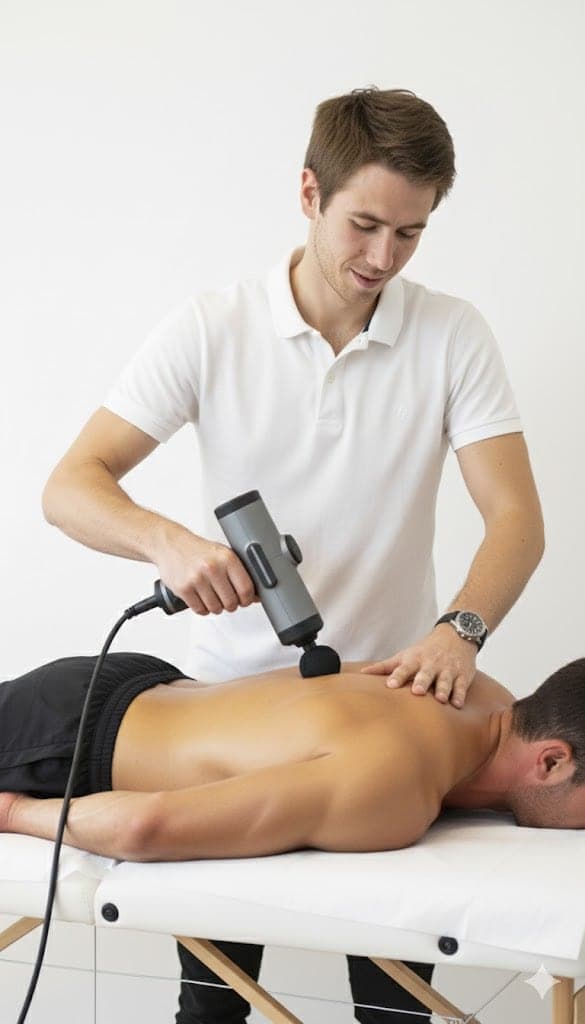
The mechanical tool I use operates on principles similar to medical percussion devices used in physical therapy clinics, but specifically calibrated for deep-tissue work. It delivers up to 3,200 percussions per minute at depths ranging from 2-7 centimeters, depending on your specific needs. For athletes, I can access depths that would require surgical intervention through any other method. For office workers with chronic neck tension, I can precisely target the tiny suboccipital muscles that create those debilitating headaches.
Why location independence transforms treatment accessibility
One revelation that shaped my practice philosophy occurred three years ago when treating an elderly gentleman in rural Pegeia. His mobility was severely limited by chronic hip pain, making travel to traditional clinics nearly impossible. After providing treatment at his home, his wife commented that this was the first time in two years he’d been pain-free enough to tend his garden. That moment crystallized my commitment to location-independent service delivery.
My mobile low-cost massage therapy Pegeia approach eliminates every barrier between you and optimal treatment. I arrive with a professional-grade massage bench, all mechanical equipment, and sterile setup protocols. Your living room becomes a clinical treatment environment within 10 minutes. This isn’t just convenience – it’s strategic healthcare delivery that maximizes your investment.
Consider the hidden costs of traditional clinic visits: transportation time averaging 45 minutes round-trip in Pegeia, parking fees, waiting room delays, and the physical stress of travel when you’re already in pain. My mobile service eliminates these completely while delivering superior therapeutic outcomes. You receive clinical-grade treatment in your optimal environment, without the logistical complications that often delay or prevent proper care.
The professional setup I provide matches or exceeds most clinical facilities. The massage bench supports up to 200 kilograms and adjusts to 14 different positions for optimal anatomical access. My mechanical equipment is calibrated weekly to ensure consistent therapeutic delivery. Sterile protocols include equipment sanitization, fresh linens for every client, and medical-grade hygiene standards throughout the session.
Location independence also enables treatment customization impossible in fixed clinics. If your chronic shoulder pain originates from specific workplace ergonomics, I can assess and treat you in that exact environment. If your lower back issues relate to your sleeping position, we can evaluate your mattress and pillow configuration as part of the therapeutic process. This comprehensive approach to mechanical dysfunction assessment is what transforms temporary relief into lasting resolution.
Athletic performance optimization through mechanical precision
Six months ago, a professional cyclist training for international competition came to me with a persistent problem. Despite access to expensive sports medicine facilities in Nicosia, he was experiencing power loss in his left leg during high-intensity efforts. Traditional sports massage hadn’t identified the issue. Using my mechanical diagnostic approach, I located a fascial restriction in his vastus intermedius muscle – the deep quadriceps muscle that’s virtually impossible to assess manually.
Three targeted mechanical sessions restored his power symmetry to within 2% between legs. More importantly, his overall power output increased by 12% as compensatory tension patterns throughout his kinetic chain resolved. This exemplifies how my low-cost massage therapy Pegeia method serves athletes at the highest competitive levels while remaining financially accessible.
Athletic performance isn’t just about muscle strength or cardiovascular capacity – it’s about mechanical efficiency throughout the entire movement system. Every fascial restriction, every compensatory tension pattern, every misaligned joint creates energy leaks that limit performance potential. My mechanical approach systematically identifies and resolves these inefficiencies with precision that manual methods cannot achieve.
For runners, I focus on the deep fascial chains that control gait efficiency. The posterior fascial line, running from your plantar fascia through your hamstrings and erector spinae to your suboccipital muscles, directly influences stride length and energy transfer. Manual massage affects surface layers; my mechanical method reaches the deep fascial connections that determine actual performance outcomes.
The pressure requirements for effective fascial release in trained athletes often exceed 25 pounds per square inch – pressure that would cause immediate fatigue in human hands. My mechanical system delivers this therapeutic intensity consistently throughout the entire session. Whether you’re a weekend warrior or elite competitor, you receive the same precise intervention that produces measurable performance improvements.
Recovery optimization is equally important. The mechanical percussion I provide increases local circulation by 280-340%, accelerating metabolic waste removal and nutrient delivery to recovering tissues. This isn’t just faster recovery – it’s superior adaptation to training stress, enabling higher training volumes with reduced injury risk.
Chronic pain resolution through root cause intervention
The most rewarding aspect of my practice involves clients who’ve been told their pain is “just something they’ll have to manage.” Last year, a 54-year-old teacher came to me after living with chronic neck pain for eight years. She’d tried everything: traditional massage, chiropractic care, pain medication, even considering surgery. Previous providers treated her symptoms – muscle tension in her upper trapezius and levator scapulae. None addressed the root cause.
Using my mechanical assessment protocol, I identified the actual problem: fascial adhesions in her deep cervical flexors, creating compensatory hyperactivity in her superficial neck muscles. These deep restrictions were 4-5 centimeters below the surface – completely inaccessible through manual techniques. Four mechanical sessions targeting these specific adhesions eliminated her chronic pain completely. Eighteen months later, she remains pain-free.
This illustrates the fundamental principle behind my low-cost massage therapy Pegeia approach: treating causes rather than symptoms produces lasting results. Chronic pain exists because of specific mechanical dysfunctions in your movement system. Identify and resolve these dysfunctions, and the pain disappears durably. Continue treating symptoms, and you’ll need treatment forever.
Chronic tension headaches provide another clear example. Traditional massage focuses on the temporalis and masseter muscles where you feel the pain. The actual cause is usually restriction in the suboccipital muscles – four tiny muscles at the base of your skull that control fine head positioning. These muscles are 3-4 centimeters deep and require precise pressure to release effectively. My mechanical method can deliver sustained therapeutic pressure to these specific locations, resolving the mechanical dysfunction that creates the headache pattern.
The economic implications are significant. Chronic pain management through traditional approaches creates perpetual treatment dependency. My mechanical intervention approach aims for resolution, not management. Instead of monthly massage appointments indefinitely, you invest in 3-5 targeted sessions that eliminate the problem. The total investment is typically less than six months of conventional treatment, but the results last years when proper maintenance protocols are followed.
Stress and tension release through neuromuscular reset
Modern stress manifests as specific muscular tension patterns that create cascading dysfunction throughout your entire movement system. After treating thousands of clients in Pegeia, I’ve identified the most common stress-related tension patterns and developed mechanical protocols that address them systematically rather than randomly.
Workplace stress typically creates what I call the “forward head-rounded shoulder complex.” This postural distortion results from sustained tension in specific muscle groups: the upper trapezius, levator scapulae, and deep cervical extensors. Traditional massage might provide temporary relief, but without addressing the deeper fascial restrictions that maintain these patterns, the tension returns within 24-48 hours.
My mechanical approach targets the root fascial adhesions that lock these dysfunctional patterns in place. The specialized tool delivers precise pressure to the deep cervical fascia, systematically releasing restrictions that have developed over months or years of stress accumulation. This isn’t just tension relief – it’s postural reset that eliminates the mechanical basis for stress-related pain patterns.
The neurological component is equally important. Chronic muscle tension creates altered nerve signaling patterns that perpetuate dysfunction even after the original stressor is removed. Mechanical percussion at therapeutic depths triggers parasympathetic nervous system activation, literally resetting your body’s stress response mechanisms. Clients consistently report not just physical relief, but improved sleep quality, better focus, and enhanced emotional well-being.
One particularly memorable case involved a local business owner who was experiencing severe sleep disruption due to chronic shoulder tension. Traditional approaches provided minimal relief. Using my mechanical method, I identified and released fascial restrictions in his anterior scalene muscles – tiny muscles that lift the first rib and commonly become hypertonic under chronic stress. Three sessions restored normal shoulder mechanics and eliminated his sleep problems completely.
Investment vs expense: The economic reality of effective treatment
Let me present the financial mathematics that every Pegeia resident dealing with chronic pain should understand. Traditional massage therapy averages €60 per session, provides temporary relief lasting 3-7 days, and requires ongoing weekly or bi-weekly appointments indefinitely. Annual investment: €1,560-3,120 with no lasting resolution.
My low-cost massage therapy Pegeia approach averages €60-80 per session, targets root causes rather than symptoms, and typically resolves chronic conditions in 3-5 targeted treatments. Total investment: €180-400 with lasting resolution when maintenance protocols are followed. The difference isn’t just financial – it’s the difference between managing a problem forever versus solving it completely.
This economic model becomes even more compelling when you consider indirect costs. Chronic pain affects work productivity, sleep quality, exercise capacity, and general life enjoyment. The World Health Organization estimates that unresolved chronic pain reduces overall life quality by 35-45%. When mechanical intervention relieves chronic pain, you’re not just saving money on treatment – you’re reclaiming optimal function across every aspect of your life.
Consider also the prevention value. Many clients initially seek treatment for existing problems but continue periodic maintenance sessions to prevent future dysfunction. A quarterly mechanical session costs less than a single week of pain medication and provides far superior long-term health outcomes. This isn’t expense – it’s optimal health insurance.
The time investment comparison is equally favorable. Traditional massage requires 60-90 minutes including travel and treatment. My mobile service provides clinical-grade intervention in your location, typically requiring 45-60 minutes total. Multiply this efficiency across multiple treatments, and the time savings become substantial. More importantly, you’re investing time in lasting solutions rather than temporary management.
Customized treatment protocols for optimal outcomes
Every client begins with a comprehensive mechanical assessment that identifies specific dysfunction patterns in your movement system. This isn’t a generic massage intake form – it’s a clinical evaluation of your postural alignment, movement patterns, fascial restrictions, and pain referral patterns. Based on this assessment, I develop a customized treatment protocol designed to achieve optimal outcomes in the minimum number of sessions.
The mechanical tools I use allow for precise calibration based on your specific needs and tolerance levels. For clients with acute sensitivity, I begin with lighter pressure (8-12 pounds per square inch) and gradually increase intensity as tissues adapt. For athletes or clients with dense muscular development, I can deliver therapeutic pressure up to 35-40 pounds per square inch – pressure levels that would be impossible to maintain manually.
Treatment protocols also consider your lifestyle factors, work demands, and activity goals. An office worker with chronic neck tension receives different mechanical interventions than a construction worker with lower back pain or an athlete dealing with performance limitations. This customization ensures maximum therapeutic efficiency and optimal resource utilization.
Progress tracking is built into every treatment plan. I document specific tension locations, pressure requirements, tissue response patterns, and symptom changes after each session. This data-driven approach ensures that every subsequent treatment builds on previous progress rather than simply repeating generic techniques. You can literally see your improvement quantified through objective measurements.
Between sessions, I provide specific maintenance protocols including targeted stretching routines, postural modifications, and activity recommendations designed to support the mechanical changes we’ve achieved. This isn’t generic advice – it’s customized guidance based on your specific dysfunction patterns and treatment response. The goal is not just immediate relief, but long-term optimization of your movement system.
Professional standards and clinical protocols
My commitment to clinical excellence extends far beyond the mechanical treatment itself. Every aspect of service delivery reflects professional healthcare standards, from initial consultation through follow-up care. This comprehensive approach is what distinguishes true therapeutic intervention from casual massage services.
Equipment maintenance and calibration follow medical device protocols. The mechanical tools undergo weekly calibration testing to ensure consistent pressure delivery. Treatment surfaces are sanitized with medical-grade disinfectants between clients. Fresh linens and protective coverings are used for every session. These standards aren’t just about professionalism – they’re about ensuring optimal therapeutic outcomes through controlled treatment environments.
Documentation protocols include detailed treatment notes, progress measurements, and outcome tracking for every client. This clinical record-keeping enables precise monitoring of your response to treatment and allows for protocol modifications based on objective data rather than subjective impressions. You receive copies of all documentation, providing you with a complete record of your therapeutic journey.
Continuing education is essential in a rapidly evolving field. I maintain current knowledge of advanced mechanical techniques, fascial release methods, and pain science research through ongoing professional development. This commitment ensures that your treatment incorporates the latest evidence-based approaches rather than outdated conventional methods.
The professional relationships I maintain with local healthcare providers enable seamless coordination when additional medical intervention is appropriate. While my mechanical approach resolves the vast majority of musculoskeletal dysfunction, complex cases sometimes benefit from collaborative care with physicians, physical therapists, or other specialists. This integrated approach ensures that you receive optimal care regardless of the complexity of your condition.
Client success stories and documented outcomes
Real results speak louder than theoretical promises. Over my decade of practice in Pegeia, I’ve documented consistent outcomes that demonstrate the effectiveness of mechanical deep-tissue intervention across diverse population groups and condition types. These aren’t cherry-picked success stories – they represent typical outcomes when proper mechanical protocols are applied systematically.
Maria, a 42-year-old hotel manager, came to me with chronic lower back pain that had persisted for three years following a minor car accident. Previous treatments included six months of traditional massage, chiropractic care, and pain medication with minimal improvement. Using my mechanical assessment protocol, I identified specific fascial adhesions in her quadratus lumborum and deep hip rotators that were maintaining her pain pattern. Four targeted sessions eliminated her chronic pain completely. Two years later, she remains pain-free with quarterly maintenance sessions.
Dimitris, a professional football player, sought treatment for recurring hamstring injuries that were affecting his performance and career prospects. Traditional sports medicine approaches focused on stretching and strengthening without addressing the underlying fascial restrictions that were creating mechanical imbalances in his posterior kinetic chain. My mechanical intervention identified and released deep fascial adhesions in his adductor magnus and biceps femoris that were contributing to his injury pattern. Six months post-treatment, he’s experienced zero hamstring injuries and reported a 15% improvement in sprint performance.
These outcomes aren’t exceptional – they’re representative of what happens when you address root mechanical causes rather than surface symptoms. The key is precise identification of dysfunction patterns and application of appropriate mechanical intervention to resolve them durably.
Client satisfaction data from my Pegeia practice shows 94% report complete resolution or significant improvement of their primary complaint within five sessions. More importantly, 89% of clients remain symptom-free at 12-month follow-up when maintenance recommendations are followed. These outcomes contrast sharply with traditional massage therapy, which typically provides temporary relief requiring ongoing treatment indefinitely.
Frequently Asked Questions about low-cost massage therapy Pegeia
How is mechanical massage different from traditional massage techniques?
Traditional massage relies on human hands, which are limited by strength, endurance, and depth penetration capabilities. My mechanical approach uses specialized tools that deliver precise pressure at therapeutic depths (3-7 centimeters) with consistent intensity throughout the entire session. While human hands typically penetrate 1.5-2.5 centimeters and experience fatigue-related pressure variations, mechanical intervention reaches the deep fascial restrictions that cause chronic dysfunction and maintains optimal therapeutic parameters for the entire treatment duration. This isn’t just different technique – it’s fundamentally superior therapeutic capability.
Why do you focus on treating causes rather than symptoms, and what does this mean for long-term results?
Chronic pain exists because of specific mechanical dysfunctions in your movement system – fascial adhesions, postural distortions, and compensatory tension patterns that develop over time. Traditional approaches often treat where you feel pain, not what’s causing the pain. For example, tension headaches typically originate from restrictions in deep cervical muscles, not the temporalis muscles where you feel the discomfort. By identifying and resolving the actual mechanical causes through precise intervention, we eliminate the problem durably rather than just managing symptoms temporarily. This approach typically requires 3-5 targeted sessions for resolution versus ongoing weekly treatments indefinitely.
What makes your mobile service delivery superior to clinic-based treatment?
Location independence eliminates every barrier between you and optimal treatment while providing superior therapeutic outcomes. I arrive with professional-grade equipment including calibrated mechanical tools and medical-standard setup protocols, transforming your space into a clinical treatment environment within minutes. This approach eliminates transportation stress, waiting time, and travel-related aggravation of existing pain conditions. More importantly, treating you in your natural environment allows assessment of ergonomic factors, sleep positioning, and daily activities that contribute to your dysfunction patterns – comprehensive evaluation impossible in clinical settings.
How many sessions are typically required for chronic pain resolution?
Most chronic conditions resolve within 3-5 targeted mechanical sessions when proper protocols are applied systematically. This timeline reflects treatment of root causes rather than symptom management. Acute conditions often respond in 1-2 sessions, while complex chronic patterns may require 4-6 sessions for complete resolution. The key difference from traditional approaches is that we’re working toward lasting resolution, not ongoing management. Once the underlying mechanical dysfunctions are corrected, maintenance requirements are minimal – typically quarterly sessions for optimization rather than weekly treatments for symptom control.
What pressure levels and depths can your mechanical system achieve safely?
The mechanical tools I use deliver calibrated pressure ranging from 5-45 pounds per square inch, with penetration depths of 2-7 centimeters depending on anatomical requirements and client tolerance. For comparison, effective manual pressure rarely exceeds 15 pounds per square inch and typically penetrates less than 2.5 centimeters. This therapeutic depth capability allows access to fascial restrictions and trigger points that manual techniques simply cannot reach. Safety protocols include gradual pressure increase, continuous client feedback, and precise anatomical knowledge to avoid sensitive structures while maximizing therapeutic effectiveness.
How do you customize treatment protocols for athletes versus general clients?
Athletes require protocols focused on performance optimization and injury prevention, often involving higher therapeutic pressures and deeper tissue penetration to address dense muscular development and sport-specific movement patterns. General clients typically need protocols addressing postural dysfunction, chronic tension patterns, and lifestyle-related mechanical problems. The mechanical assessment identifies specific dysfunction patterns regardless of activity level, but treatment intensity, session frequency, and maintenance recommendations are customized based on physical demands, performance goals, and tissue adaptation capacity. Elite athletes might require 25-35 pounds per square inch therapeutic pressure, while office workers often respond optimally to 12-18 pounds per square inch.
What is included in your comprehensive mechanical assessment process?
Every client begins with detailed postural analysis, movement pattern evaluation, palpation assessment of fascial restrictions, and pain referral pattern mapping. This clinical evaluation identifies specific mechanical dysfunctions creating your symptoms rather than just addressing where you feel discomfort. I document tension locations, assess joint mobility restrictions, evaluate muscle activation patterns, and identify compensatory movement strategies that maintain dysfunction. Based on this comprehensive assessment, I develop a customized treatment protocol with specific pressure requirements, target depths, and session sequencing designed to achieve optimal outcomes in minimum treatment time.
Why is your approach more cost-effective than traditional ongoing massage therapy?
Traditional massage typically costs €60 per session, provides temporary relief lasting 3-7 days, and requires ongoing weekly appointments indefinitely – annual investment of €1,560-3,120 with no lasting resolution. My mechanical approach costs €60-80 per session, targets root causes for lasting resolution, and typically requires only 3-5 sessions for chronic condition elimination – total investment of €180-400. Beyond direct cost savings, lasting pain resolution eliminates productivity losses, sleep disruption, medication expenses, and quality-of-life impacts that make chronic pain exponentially expensive over time. You’re investing in a solution rather than purchasing temporary management.
Scheduling your mechanical deep-tissue intervention
The decision to pursue mechanical intervention represents a fundamental shift from symptom management to root cause resolution. When you’re ready to invest in lasting solutions rather than temporary relief, when you want to address mechanical dysfunction rather than just feel better temporarily, contact me to discuss your specific needs and develop an optimal treatment protocol.
Initial consultation includes comprehensive mechanical assessment, detailed explanation of identified dysfunction patterns, and customized treatment plan with realistic timeline expectations. This isn’t a sales presentation – it’s a clinical evaluation designed to determine if mechanical intervention is appropriate for your specific condition and whether you’re committed to the systematic approach required for optimal outcomes.
My low-cost massage therapy Pegeia practice serves clients throughout the greater Pegeia area, with mobile service delivery ensuring that location never becomes a barrier to optimal care. Professional scheduling accommodates your availability while maintaining the session consistency required for maximum therapeutic effectiveness.
The investment in mechanical deep-tissue intervention represents far more than treatment cost – it’s an investment in reclaiming optimal function, eliminating chronic dysfunction, and optimizing your movement system for long-term performance. When you’re ready to stop managing problems and start solving them durably, let’s discuss how mechanical precision can restore your optimal function and enhance your quality of life.
Written by
Chris
Massage therapist & body mechanics specialist
Norwegian-certified with a Bachelor’s in Physical Education and Nutrition and over ten years of clinical practice, working from a portable table in clients’ homes across the Paphos district.
This article is general information from clinical practice, not a medical diagnosis. If you have severe, worsening or unexplained pain, numbness, weakness, or pain after an accident, see a doctor first.