Aromatherapy Massage Pegeia: Advanced Pain Relief Through Mechanical Precision and Therapeutic Oils
In short
Discover how aromatherapy massage in Pegeia combines advanced mechanical deep-tissue techniques with essential oils for superior pain relief and lasting results—backed by a decade of clinical experience.
When I first integrated aromatherapy into my mechanical deep-tissue practice in Pegeia, I wasn’t chasing trends. After a decade of treating chronic pain patterns and witnessing how essential oils could amplify tissue response at the cellular level, I recognized an opportunity most therapists miss: the synergy between precision mechanical intervention and bio-active aromatics isn’t just additive—it’s exponential.
Traditional aromatherapy massage in Pegeia typically involves gentle Swedish techniques with pleasantly scented oils. That’s relaxation therapy. What I provide is fundamentally different: a clinical, results-driven methodology where pharmaceutical-grade essential oils enhance the penetration and efficacy of advanced mechanical deep-tissue work. The outcome? Accelerated pain relief, improved tissue regeneration, and measurably enhanced recovery times.
Why Conventional Aromatherapy Massage Falls Short for Chronic Pain
Let me be direct about something the wellness industry rarely acknowledges: most aromatherapy massage treatments in Pegeia address symptoms, not causes. A therapist applies lavender oil, kneads your shoulders for sixty minutes, and you feel temporarily relaxed. Three days later, the tension returns because the underlying mechanical dysfunction—the adhesions, the compensatory patterns, the restricted fascial planes—remains untouched.
I’ve worked with clients who spent thousands on “therapeutic” aromatherapy sessions without lasting improvement. The problem isn’t the oils themselves; essential oils possess documented anti-inflammatory, analgesic, and muscle-relaxant properties. The problem is delivery depth and mechanical precision.
The Tissue Penetration Challenge
Human hands, regardless of skill level, cannot consistently access the deep myofascial layers where chronic pain originates. When a therapist applies pressure, several limiting factors emerge:
- Inconsistent force distribution across treatment sessions
- Therapist fatigue compromising precision after 20-30 minutes
- Inability to maintain sustained, controlled pressure at therapeutic depths
- Limited angular access to complex muscle architecture
The essential oils applied during conventional massage primarily affect superficial tissue layers. Without mechanical intervention capable of reaching trigger points, adhesions, and dysfunctional motor patterns at their source, you’re essentially perfuming the problem rather than solving it.
My Methodology: Mechanical Precision Meets Therapeutic Aromatics
After completing my Bachelor’s degree in Physical Education and Nutrition in Norway and accumulating ten years of clinical practice, I developed a protocol that addresses both the mechanical and biochemical components of pain simultaneously. This isn’t speculation—it’s based on observable, repeatable outcomes with clients ranging from desk workers with postural dysfunction to competitive athletes managing chronic injuries.
The Machine-Enhanced Aromatherapy Advantage
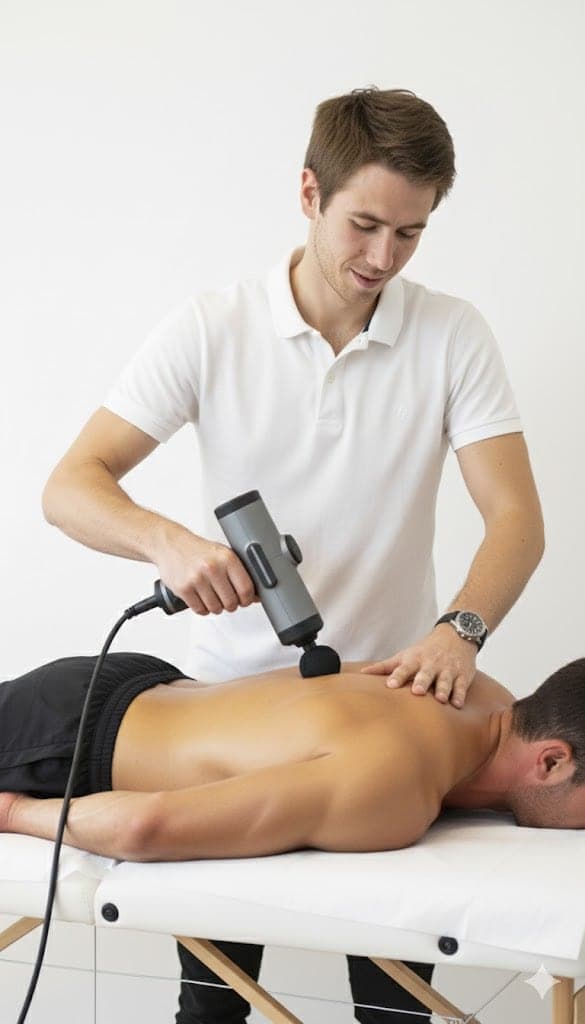
I use a specialized mechanical deep-tissue device that delivers three critical advantages traditional hands cannot match: precision, power, and consistency. When combined with strategically selected essential oils, this creates a treatment environment where:
Deeper penetration occurs: The mechanical tool accesses fascial restrictions and adhesions 3-4 tissue layers below what manual therapy can reach. Essential oils applied before and during treatment penetrate these deeper structures due to increased localized blood flow and temporary tissue permeability.
Bio-active compounds reach target tissue: Oils like eucalyptus (anti-inflammatory), peppermint (analgesic), and marjoram (antispasmodic) aren’t just absorbed superficially—they’re mechanically driven into the dysfunctional tissue through controlled pressure and repetitive micro-trauma that stimulates localized circulation.
Consistent therapeutic intensity: Unlike human hands that tire or vary in pressure, the machine maintains exact specifications throughout the 90-minute session. This means essential oil exposure time and mechanical intervention remain therapeutically optimal from start to finish.
How I Select and Apply Essential Oils Clinically
I don’t use pre-blended “relaxation” mixtures. Each aromatherapy massage in Pegeia that I conduct involves a customized oil selection based on your specific pain pattern, tissue condition, and treatment objectives.
For acute inflammatory conditions, I typically formulate blends emphasizing German chamomile and helichrysum—both demonstrate documented anti-inflammatory action comparable to low-dose NSAIDs in clinical studies. For chronic muscular tension with restricted range of motion, black pepper and ginger oils increase localized thermogenesis, preparing tissue for deeper mechanical intervention.
The application protocol matters as much as oil selection. I apply the initial layer to prepared skin, allowing 3-5 minutes for transdermal absorption before beginning mechanical work. As I progress through myofascial release sequences, I reapply oils to specific zones where I’ve identified resistance, adhesions, or protective muscle guarding.
The Science Behind Aromatherapy-Enhanced Mechanical Deep-Tissue Work
Understanding why this methodology produces superior results requires examining what actually happens at the tissue level during treatment.
| Tissue Response | Mechanical Action Alone | With Therapeutic Aromatics |
|---|---|---|
| Inflammatory Mediator Reduction | Moderate through increased circulation | Significant through both mechanical and biochemical pathways |
| Pain Receptor Desensitization | Temporary through endorphin release | Extended through essential oil analgesic properties |
| Fascial Hydration | Improved through mechanical separation | Enhanced through increased localized blood flow and cellular permeability |
| Muscle Relaxation Depth | Limited by protective reflex responses | Greater due to antispasmodic aromatics reducing involuntary guarding |
Addressing the Neurological Component
One aspect most massage therapists in Pegeia overlook is pain’s neurological dimension. Chronic pain isn’t just about damaged tissue—it involves sensitized neural pathways that perpetuate discomfort even after structural healing occurs.
Certain essential oils demonstrate measurable effects on neurotransmitter activity. Lavender and bergamot influence GABA receptors, producing anxiolytic effects that reduce central nervous system arousal. When combined with precise mechanical intervention that addresses the structural cause, you’re simultaneously treating both the physical dysfunction and the neurological sensitization maintaining the pain cycle.
I’ve treated clients who had undergone months of physical therapy without resolution. Within three sessions using my mechanical aromatherapy protocol, they reported 60-70% pain reduction. The difference wasn’t magical—it was comprehensive: we addressed tissue mechanics, inflammatory processes, and neural sensitization concurrently.
Real Client Outcomes: Performance Enhancement and Pain Elimination
Let me share specific cases that illustrate what this methodology achieves when properly implemented.
Case Study: Chronic Lower Back Dysfunction
A 42-year-old executive contacted me after two years of intermittent lower back pain that conventional physiotherapy hadn’t resolved. MRI showed minor disc bulging at L4-L5, but structural intervention wasn’t indicated. The pain was mechanical—compensatory patterns from years of seated work had created severe iliopsoas tightness and quadratus lumborum dysfunction.
During our initial assessment, I identified the primary issue: his hip flexors were maintaining constant tension, pulling his lumbar spine into anterior rotation and overloading the posterior chain. Standard massage addresses these muscles superficially. I needed to reach the deep iliopsoas attachments—impossible with hands alone.
For his aromatherapy massage treatment in Pegeia, I formulated a blend emphasizing wintergreen (natural methyl salicylate for deep tissue analgesia) and Roman chamomile (powerful antispasmodic). Using my mechanical device, I spent 40 minutes releasing the psoas complex at depths that would be untenable with manual pressure. The essential oils reduced his protective muscle guarding, allowing me to work therapeutically deep without triggering defensive responses.
After four weekly sessions, his pain was eliminated. Six months later, it hasn’t returned because we addressed the cause—the mechanical dysfunction—not just the symptom.
Athletic Performance Optimization
I work with several competitive cyclists in the Pegeia area who initially sought treatment for overuse injuries. What they discovered was that regular mechanical aromatherapy sessions didn’t just treat injuries—they prevented them and enhanced performance.
For athletes, I use stimulating aromatics like eucalyptus and rosemary, which increase circulation and mental clarity. The mechanical work focuses on maintaining optimal tissue quality: breaking down microadhesions before they become problematic, ensuring fascial planes glide freely, and maintaining full range of motion in key joints.
One cyclist I’ve worked with for eighteen months reports his power output metrics have improved 8% since beginning regular sessions—not from training changes, but from optimized biomechanics. When your muscles fire in proper sequence without compensatory patterns, efficiency increases measurably.
Why Location Matters: Aromatherapy Massage in Pegeia Specifically
Pegeia’s climate and lifestyle patterns create specific therapeutic opportunities and challenges. The combination of year-round outdoor activity, tourist-related service work, and a significant expatriate population means I treat diverse pain presentations requiring adaptable protocols.
The Mediterranean climate allows for extended outdoor use of certain essential oils that would oxidize rapidly in humid environments. Citrus oils, which provide excellent mood enhancement and mild analgesic properties, remain therapeutically stable here. I incorporate them frequently for clients dealing with both physical tension and the psychological stress that amplifies pain perception.
Many residents and long-term visitors in Pegeia maintain active lifestyles—hiking, swimming, cycling—which means repetitive-use injuries are common. The mechanical precision I provide addresses these conditions more effectively than relaxation-focused treatments available at most spas and wellness centers in the area.
The Travel-To-You Advantage
I travel to your location in Pegeia with professional equipment—a specialized treatment bench and everything required for a clinical-grade session. This isn’t just convenient; it’s therapeutically superior. Treatment in your environment eliminates post-session stress (driving, navigating traffic) that can immediately retrigger tension patterns we’ve just released.
Additionally, I can observe your living and working spaces. That desk setup causing your shoulder dysfunction? I’ll spot it and provide specific ergonomic corrections. The sleeping position aggravating your hip pain? We’ll address it immediately with practical solutions, not generic advice.
What to Expect During Your First Aromatherapy Massage Session
I approach every new client with the same clinical rigor I’d apply to a performance athlete—because your pain deserves the same level of expertise regardless of whether you’re training for competition or simply want to play with your grandchildren without discomfort.
The Initial Assessment Process
Before applying any oil or beginning mechanical work, I conduct a comprehensive movement assessment. I’m observing:
- Gait patterns and weight distribution
- Postural deviations and compensatory patterns
- Range of motion limitations in key joints
- Pain provocation through specific movements
- Tissue quality through palpation
This assessment typically requires 20-25 minutes. Many clients initially think it’s excessive—they want me to “just fix the pain.” But lasting results require understanding the entire kinetic chain. That shoulder pain often originates from thoracic spine restrictions. The knee discomfort frequently stems from hip dysfunction. Treating symptoms without understanding causation produces temporary relief at best.
Customized Aromatherapy Formulation
Based on your assessment findings and treatment objectives, I formulate your essential oil blend. This isn’t arbitrary—specific oils address specific tissue conditions and pain mechanisms.
For inflammatory conditions, I emphasize oils with documented COX-2 inhibitor properties. For neuropathic pain presentations, I select aromatics that influence nerve conduction and receptor sensitivity. For purely mechanical restrictions without significant inflammation, I might use minimal aromatherapy, focusing instead on mechanical intervention with light carrier oils for tool glide.
The Treatment Session Structure
A typical session runs 90 minutes and follows a systematic progression:
Preparation phase (15 minutes): Initial oil application, superficial warming techniques, and assessment confirmation.
Primary intervention (50 minutes): Deep mechanical work targeting identified dysfunctions. I adjust pressure continuously based on tissue response—not your pain tolerance, but actual tissue release indicators.
Integration phase (20 minutes): Lighter mechanical work and stretching protocols that teach your nervous system the new movement patterns we’ve established.
Education and planning (5 minutes): Specific instructions for the 48-72 hours following treatment, including movements to avoid, exercises to reinforce changes, and expectations for tissue response.
Investment Structure and Treatment Planning
Let me address cost directly, because I position my service as an investment in lasting pain resolution, not an expense for temporary relief.
A single aromatherapy massage in Pegeia at a resort spa costs €60-90 and provides pleasant relaxation for 2-3 days. You’ll need one monthly to maintain that feeling—an annual cost of €720-1,080 for perpetual symptom management without resolution.
My approach is different. Most clients require 4-6 sessions to achieve lasting resolution of chronic pain patterns. Some need ongoing maintenance (monthly or quarterly) to optimize performance, but they’re not dependent on continuous treatment to remain pain-free.
Partnership Approach, Not Transactional Sessions
I don’t offer one-off treatments. Lasting pain resolution requires commitment to a therapeutic process, not a single session. When you engage my services, we’re entering a partnership with clear objectives:
- Comprehensive assessment identifying all contributing factors to your pain presentation
- Customized treatment protocol addressing root causes through mechanical and aromatherapeutic intervention
- Progressive sessions building on previous gains rather than repeatedly addressing the same symptoms
- Education and empowerment so you understand your body mechanics and can prevent recurrence
- Measurable outcomes with clear indicators of progress toward our defined objectives
This requires mutual commitment. I bring my decade of expertise, specialized equipment, and clinical precision. You bring consistency, honest feedback, and willingness to implement the corrective strategies we identify.
Common Misconceptions About Aromatherapy Massage I Need to Address
The aromatherapy massage industry in Pegeia—and globally—perpetuates several myths that prevent people from accessing genuinely effective treatment.
Misconception 1: “All massage is basically the same”
This is categorically false and prevents people from seeking appropriate treatment. Swedish massage, sports massage, Thai massage, and mechanical deep-tissue work with therapeutic aromatics address completely different tissue layers using fundamentally different techniques.
If you have chronic pain from postural dysfunction or repetitive stress, relaxation massage will feel pleasant but won’t resolve anything. You need intervention that reaches the dysfunctional tissue and mechanically changes its structure and function.
Misconception 2: “Harder pressure is always better”
I use significantly deeper pressure than conventional massage, but depth isn’t the goal—precision is. Indiscriminate deep pressure can trigger protective muscle guarding that makes dysfunction worse. The mechanical device I use allows me to apply intense, focused pressure to specific tissue structures while surrounding areas remain relaxed.
The essential oils facilitate this precision by reducing the nervous system’s protective responses, allowing therapeutic-depth work without triggering counterproductive tension.
Misconception 3: “Essential oils are just for smell”
The aromatics I use are pharmaceutical-grade with documented biological activity. They’re not “just for relaxation”—they’re active therapeutic agents with measurable effects on inflammation, pain signaling, and tissue recovery.
Studies demonstrate that topically applied essential oils achieve measurable blood serum concentrations within 5-20 minutes. They’re working systemically, not just locally, which is why properly formulated aromatherapy enhances outcomes beyond what mechanical intervention alone achieves.
Misconception 4: “Pain is normal as you age”
This defeatist perspective keeps people in unnecessary suffering. Age-related tissue changes are real, but pain from mechanical dysfunction is correctable at any age. I’ve successfully treated clients in their 70s who had accepted decades of back pain as “inevitable.”
Aging affects tissue healing speed and requires protocol adjustments, but the fundamental principle remains: address the mechanical cause, and pain resolves regardless of age.
Specific Conditions Where Aromatherapy-Enhanced Mechanical Work Excels
Based on a decade of clinical practice, certain pain presentations respond exceptionally well to this methodology:
Chronic Lower Back Pain
Whether from postural dysfunction, previous injury, or disc-related issues (non-surgical), the combination of deep psoas and quadratus lumborum work with anti-inflammatory aromatics produces reliable results. Most clients achieve 70%+ pain reduction within four sessions.
Shoulder Dysfunction and Frozen Shoulder
Shoulder pain typically involves complex fascial restrictions between multiple tissue layers. The mechanical precision required exceeds what hands can safely deliver. Using the specialized device with warming aromatics like black pepper and ginger, I can progressively restore range of motion that clients were told required surgical intervention.
Tension Headaches and Cervicogenic Issues
Headaches originating from neck and upper back dysfunction respond remarkably well to suboccipital release and upper trapezius work. The aromatics reduce the intense sensitivity these areas typically present, allowing deeper therapeutic work without excessive discomfort.
Plantar Fasciitis and Lower Leg Pain
This condition demonstrates clearly why mechanical precision matters. The plantar fascia is dense connective tissue requiring focused, sustained pressure that exhausts therapists’ hands within minutes. My mechanical approach maintains therapeutic intensity throughout the treatment, and anti-inflammatory oils expedite tissue recovery between sessions.
Athletic Overuse Injuries
Tendinopathy, IT band syndrome, piriformis syndrome—these repetitive stress injuries require breaking the inflammation-dysfunction cycle. Mechanical work addresses the structural component while aromatics accelerate the anti-inflammatory response your body needs to complete healing.
Frequently Asked Questions About Aromatherapy Massage in Pegeia
How is your aromatherapy massage different from what hotels and spas offer in Pegeia?
The fundamental difference is clinical intent and methodology. Spa aromatherapy focuses on relaxation and temporary stress relief using pleasant scents and gentle techniques. My approach uses pharmaceutical-grade essential oils as therapeutic agents combined with mechanical deep-tissue intervention that addresses pain causes, not symptoms. One provides an enjoyable experience; the other produces measurable, lasting physiological changes.
Is the mechanical device painful?
Discomfort and pain are different sensations. You’ll feel significant pressure during treatment—that’s necessary to reach dysfunctional tissue. However, the essential oils and my continuous adjustment of intensity based on tissue response prevent the sharp, defensive pain that triggers protective muscle guarding. Most clients describe the sensation as “intense but productive.” Within 24 hours, you’ll feel improvement that validates the temporary discomfort.
How many sessions will I need for my chronic pain?
This varies based on pain duration, complexity, and your body’s response capacity. Generally, acute issues (present less than three months) resolve in 2-4 sessions. Chronic patterns (present over a year) typically require 4-6 sessions for significant resolution. During our initial assessment, I’ll provide a realistic timeline based on your specific presentation—not generic promises.
Can aromatherapy massage help if I’ve already tried physical therapy without success?
Yes, frequently. Physical therapy typically emphasizes exercise-based rehabilitation, which is valuable for building strength and stability. However, if underlying mechanical restrictions and tissue adhesions haven’t been addressed, exercise often reinforces dysfunctional patterns rather than correcting them. My mechanical intervention removes these restrictions, after which exercise becomes genuinely therapeutic rather than frustrating.
Are there conditions where you cannot help or would refer elsewhere?
Absolutely. I’m a specialist in mechanical dysfunction and pain patterns responsive to soft tissue intervention. I do not treat acute injuries requiring medical assessment, systemic inflammatory conditions like rheumatoid arthritis, or pain presentations with red flags suggesting serious pathology. If your assessment reveals issues outside my scope, I’ll refer you to appropriate medical professionals—your optimal outcome matters more than my ego.
Do the essential oils cause allergic reactions or skin sensitivity?
I use therapeutic-grade oils properly diluted in carrier oils, which minimizes sensitivity risk. During your initial consultation, I’ll ask about allergies and sensitivities. For clients with reactive skin, I can modify oil selection or concentration. In a decade of practice, I’ve had fewer than five clients who couldn’t tolerate any aromatics—and for those individuals, I simply use neutral carrier oils while maintaining the mechanical treatment effectiveness.
Why do you only work with committed clients, not one-off sessions?
Because lasting pain resolution is a process, not an event. A single session can provide temporary relief, but unless we address the full pattern of mechanical dysfunction and compensatory changes your body has developed, pain returns. I’m interested in solving your problem durably, which requires your commitment to the complete therapeutic process. One-off sessions produce one-off results—and that’s not what I’m offering.
Can I book you for regular maintenance even without pain?
Certainly. Several of my long-term clients book quarterly sessions not to treat pain but to optimize performance and prevent dysfunction from developing. If you’re athletic, physically demanding work, or simply want to maintain optimal body mechanics as you age, regular maintenance sessions are an excellent investment. We adjust the protocol from corrective to preventive, focusing on tissue quality and biomechanical efficiency rather than pain elimination.
Taking the Next Step Toward Lasting Pain Relief
If you’ve read this far, you’re likely dealing with chronic pain that conventional treatments haven’t resolved, or you’re an athlete seeking performance optimization beyond what standard massage provides. You’re also probably skeptical—justifiably so, given how many treatments you’ve tried that produced temporary results at best.
I don’t make empty promises. What I offer is this: a clinical, systematic approach to understanding and correcting the mechanical dysfunctions causing your pain, enhanced by therapeutic aromatics that accelerate tissue recovery and reduce inflammatory responses. This methodology is backed by my decade of experience, advanced education, and hundreds of clients who’ve achieved outcomes they’d been told were impossible.
The question isn’t whether this approach works—the evidence from my client outcomes answers that definitively. The question is whether you’re ready to commit to a genuine solution rather than perpetual symptom management.
What Investment in Your Health Actually Means
Every month you spend in pain has costs: reduced productivity, diminished quality of life, relationship stress, sleep disruption, and the compounding effects of compensatory movement patterns that create new problems. The financial cost of my services is insignificant compared to these ongoing losses.
Moreover, consider the opportunity cost. If resolving your pain means you can return to activities you’ve abandoned—hiking, sports, playing with children—what’s that worth? If eliminating your headaches means you’re productive throughout your workday rather than fighting through brain fog, how does that translate to professional value?
I position my service as an investment because that’s precisely what it is: you’re investing in lasting resolution rather than purchasing temporary relief. The return on that investment, measured in quality of life and eliminated ongoing costs, is substantial.
Why Now Rather Than Later
Mechanical dysfunction is progressive. The compensatory patterns your body develops to avoid pain create new stress concentrations that become tomorrow’s pain presentations. The longer you wait, the more complex your dysfunction becomes and the more extensive the corrective process required.
I’ve treated clients who waited years, thinking their pain would spontaneously resolve or that they’d adapt. It doesn’t resolve—it evolves into more complex, multi-site dysfunction. The four sessions they would have needed three years ago became eight sessions because we had to address layers of compensatory patterns.
If you’re ready to stop managing symptoms and start solving the actual problem, contact me to schedule your initial assessment. We’ll determine exactly what’s causing your pain, develop a clear treatment plan, and establish realistic expectations for timeline and outcomes. No false promises, no generic protocols—just expert assessment and specialized intervention designed specifically for your mechanical dysfunction.
You’ve spent enough time and money on treatments that didn’t work. It’s time for a genuinely different approach backed by clinical expertise and proven methodology. Your lasting pain relief begins with one decision: to stop accepting your current condition and start demanding actual solutions.
Written by
Chris
Massage therapist & body mechanics specialist
Norwegian-certified with a Bachelor’s in Physical Education and Nutrition and over ten years of clinical practice, working from a portable table in clients’ homes across the Paphos district.
This article is general information from clinical practice, not a medical diagnosis. If you have severe, worsening or unexplained pain, numbness, weakness, or pain after an accident, see a doctor first.