
Local Support Groups for Headache Sufferers in Coral Bay: A Clinical Perspective on Tension Headache Relief
In short
Discover how local support groups for headache sufferers in Coral Bay complement advanced mechanical treatment approaches. Expert insights on lasting tension headache relief through biomechanical intervention.
I’ve spent the last decade treating chronic tension headaches through advanced mechanical deep-tissue intervention, and I’ve observed a troubling pattern: most sufferers in Coral Bay cycle through temporary relief strategies without ever addressing the biomechanical root cause. During my years working with clients across coastal communities, I’ve witnessed how local support groups for headache sufferers in Coral Bay provide valuable emotional resources, yet they often lack the clinical framework necessary for lasting resolution. This article examines the role these groups play and, more importantly, how integrating biomechanical treatment creates outcomes that support groups alone cannot deliver.
The tension headache epidemic in Coral Bay isn’t unique to this community, but the localized support infrastructure here presents both opportunities and limitations. While community connection offers psychological benefits, the mechanical dysfunction causing most tension headaches requires intervention that targets fascial restriction, myofascial trigger points, and compensatory holding patterns in the cervical and cranial musculature. Support groups provide empathy; clinical treatment provides resolution.
Understanding Tension Headaches: The Biomechanical Reality Behind the Pain
Before we explore local support groups for headache sufferers in Coral Bay, we need to establish what actually causes tension headaches at the physiological level. In my decade of clinical practice, I’ve treated hundreds of chronic headache cases, and the underlying mechanism is remarkably consistent: sustained muscular contraction in the suboccipital triangle, temporal fascia, and upper trapezius creates referred pain patterns that manifest as headache symptoms.
The suboccipital muscles—rectus capitis posterior major and minor, obliquus capitis superior and inferior—become hypertonic due to postural compensation, repetitive strain, or trauma. This creates a cascade of dysfunction. The temporalis muscle, which spans the temporal fossa and inserts on the coronoid process of the mandible, develops trigger points that refer pain across the temple and behind the eyes. The sternocleidomastoid, when restricted, creates pain patterns that sufferers describe as “pressure” or “tightness” around the head.
The Fascial Component Most Practitioners Miss
What distinguishes my approach from conventional massage therapy is the understanding that muscle tissue exists within a continuous fascial network. The epicranial aponeurosis—the broad, fibrous sheet connecting the frontalis and occipitalis muscles—becomes restricted and loses its normal glide. This restriction doesn’t respond to superficial techniques or relaxation-focused modalities. It requires precise, sustained mechanical pressure delivered at specific vectors to release adhesions and restore tissue mobility.
Traditional support groups in Coral Bay discuss symptom management: medication schedules, trigger avoidance, stress reduction. These strategies address secondary factors while the primary dysfunction—the mechanical restriction in soft tissue—continues generating symptoms. I’ve had clients tell me they’ve participated in support groups for years, learning coping strategies, when what they needed was a single course of proper mechanical intervention targeting the anatomical structures causing their pain.
The Current Landscape of Local Support Groups for Headache Sufferers in Coral Bay
Coral Bay hosts several support groups for chronic headache sufferers, ranging from informal community gatherings to structured programs affiliated with healthcare providers. These groups typically meet monthly at community centers, medical facilities, or virtually, providing forums for shared experience and emotional support.
| Support Group Type | Primary Focus | Clinical Integration | Limitation for Tension Headaches |
|---|---|---|---|
| General Headache Support | All headache types, emotional support | Minimal to none | Doesn’t differentiate mechanical causes |
| Migraine-Specific Groups | Neurological migraine management | Medical referral networks | Wrong framework for tension-type headaches |
| Chronic Pain Support | Broader pain management strategies | Multidisciplinary approach | Generalized, not headache-specific |
| Online Community Forums | 24/7 peer connection | None | No professional guidance or treatment |
The value these groups provide centers on validation and shared experience. When you’ve suffered chronic tension headaches for months or years, connecting with others who understand the impact on work, relationships, and quality of life reduces isolation. Group members exchange information about practitioners, discuss medication side effects, and offer encouragement during difficult periods.
Where Support Groups Fall Short: The Clinical Gap
However, after working with numerous Coral Bay residents who’ve participated in these groups, I’ve identified a critical deficiency: they rarely connect members with practitioners who can actually resolve the biomechanical dysfunction causing tension headaches. The groups focus on management rather than resolution, acceptance rather than elimination.
I remember a client—a 42-year-old woman who’d attended a local support group in Coral Bay for three years. She knew every medication protocol, every stress reduction technique, every dietary trigger to avoid. But when I palpated her suboccipital muscles, I found tissue restriction so severe that normal cervical rotation was compromised by approximately 30 degrees. No amount of group support would release that mechanical dysfunction. It required six sessions of advanced mechanical deep-tissue work using my specialized equipment to restore normal tissue quality and eliminate her daily headaches.
This pattern repeats consistently. Support groups provide psychological resources while the physical dysfunction—the actual generator of symptoms—remains untreated.
The Biomechanical Approach to Tension Headache Resolution
My method diverges fundamentally from the approaches typically discussed in local support groups for headache sufferers in Coral Bay. I don’t manage tension headaches; I eliminate them by addressing the mechanical cause. This requires understanding tissue pathology, biomechanical compensation patterns, and the precise application of sustained mechanical pressure to restore normal tissue function.
The Technology Advantage: Precision, Power, and Consistency
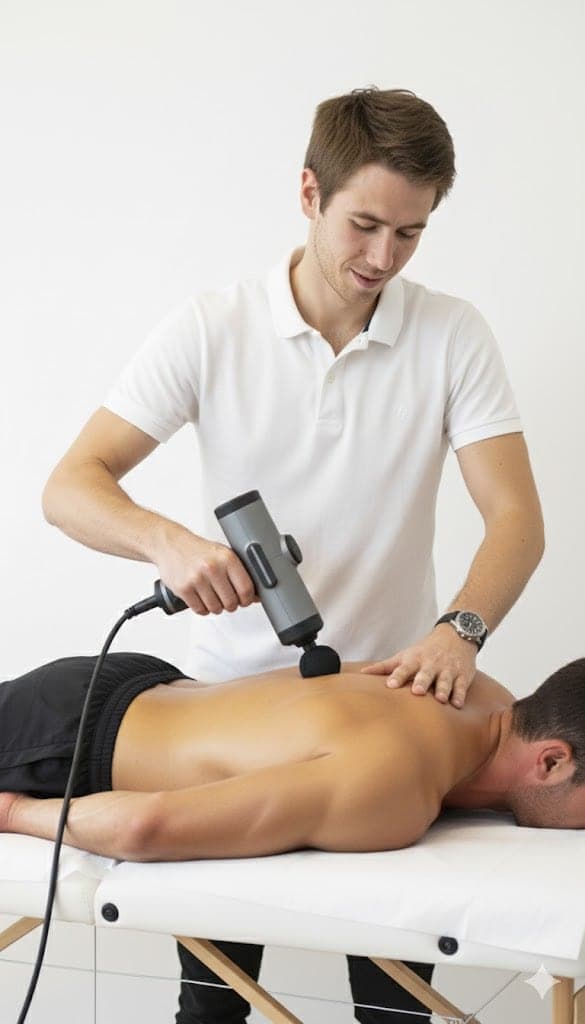
The specialized machine I use delivers outcomes that manual techniques cannot achieve. Human hands fatigue, vary in pressure application, and cannot maintain the sustained, precisely vectored force required to release deep fascial restrictions. My equipment eliminates these variables.
Depth and Precision: The tool reaches structures that manual therapy simply cannot access effectively. When treating suboccipital restrictions, I can apply 15-20 kilograms of force through a contact surface of less than one square centimeter, sustained for 60-90 seconds. This creates the mechanical stimulus necessary to release chronic adhesions. Try that with your thumbs—you’ll fatigue within seconds, and the pressure application will be inconsistent.
Controlled Intensity: Every client presents with different tissue density, pain tolerance, and restriction severity. The machine allows me to calibrate intensity precisely, from relatively gentle approaches for recent onset cases to powerfully deep interventions for chronic, dense fascial restrictions common in athletes or manual laborers. This isn’t about “relaxing” muscles—it’s about mechanically restoring tissue mobility through controlled force application.
Consistent Results: I don’t have “off days” where my hands are tired or my pressure application varies. Every session delivers the same precise mechanical input, which means treatment outcomes remain consistent. When you’re investing in lasting headache resolution rather than temporary symptom relief, this consistency is non-negotiable.
Treating Causes, Not Symptoms: The Clinical Distinction
Support groups often discuss symptom triggers: stress, weather changes, sleep disruption, dietary factors. These are secondary influences on an underlying mechanical dysfunction. Remove the primary cause—the fascial restriction and myofascial trigger points—and these secondary factors lose their power to generate headache symptoms.
I had a client in Coral Bay, a 38-year-old office worker, who could predict her tension headaches with remarkable accuracy: they appeared every Sunday evening before the work week. Her support group had helped her identify “anticipatory stress” as her trigger. But when I assessed her, I found severe restriction in her right upper trapezius and levator scapulae, plus bilateral suboccipital hypertonicity—all consequences of her forward head posture during computer work.
We didn’t need to manage her stress or accept Sunday evening headaches as inevitable. We needed to restore normal tissue quality in the structures generating her symptoms. After four sessions targeting those specific restrictions, her “stress-induced” headaches disappeared—not because her life became less stressful, but because the mechanical dysfunction that allowed stress to manifest as headache symptoms had been eliminated.
Integrating Support Group Benefits with Clinical Treatment
Local support groups for headache sufferers in Coral Bay offer resources that complement, rather than replace, proper clinical intervention. The optimal approach integrates the psychological benefits of community support with the lasting resolution that advanced mechanical treatment provides.
The Psychological Impact of Chronic Pain
I don’t minimize the psychological toll of chronic tension headaches. Years of daily or weekly pain alter your relationship with your body, your confidence in daily activities, and your mental health. Support groups address this dimension effectively, providing:
- Validation from others who understand the invisible nature of chronic headache pain
- Strategies for communicating with employers and family members about limitations
- Emotional processing of frustration when previous treatments have failed
- Hope through witnessing others’ success with various approaches
- Accountability for maintaining treatment protocols and lifestyle modifications
These benefits remain valuable even when proper clinical treatment is addressing the biomechanical cause. The journey from chronic pain to lasting relief isn’t merely physical—it involves psychological adjustment as you reclaim activities and confidence you’d resigned to losing.
What Support Groups Should Do Differently
If I were structuring a support group for tension headache sufferers in Coral Bay, I’d integrate clinical education about biomechanical causes. Members would learn to identify:
- Postural Dysfunction Patterns: Forward head posture, rounded shoulders, and anterior pelvic tilt create compensatory tension in cervical and cranial musculature. Recognizing these patterns allows earlier intervention.
- The Difference Between Tension and Migraine Headaches: Many support groups conflate these distinct conditions. Tension headaches arise from muscular dysfunction; migraines involve vascular and neurological mechanisms. The treatment approaches differ fundamentally.
- Red Flags Requiring Medical Evaluation: While most headaches stem from mechanical dysfunction, certain presentations indicate serious pathology requiring immediate medical attention: sudden severe onset, headache with fever and stiff neck, headache following head trauma, progressive worsening despite treatment.
- Effective Treatment Modalities: Most importantly, groups should educate members about treatment approaches that actually resolve mechanical dysfunction, not just those that provide temporary symptom relief.
The Investment Framework: Long-Term Health Economics
One topic rarely discussed in local support groups for headache sufferers in Coral Bay is the economic reality of chronic pain management versus lasting resolution. I position my service as an investment, not an expense, and the mathematics support this framing decisively.
Consider the typical tension headache sufferer’s annual costs:
| Category | Typical Annual Cost | Notes |
|---|---|---|
| Over-the-counter medication | a wide range of costs | Daily or multiple times weekly use |
| Prescription medications | a wide range of costs | Preventive and abortive treatments |
| Doctor visits and copays | a range of session prices (see current pricing) | Regular management appointments |
| Traditional massage therapy | a wide range of costs | Monthly sessions providing temporary relief |
| Lost productivity | a wide range of costs | Reduced work efficiency during headache episodes |
| Total Annual Cost | a wide range of costs | Ongoing, year after year |
Now contrast this with my approach: a dedicated partnership over 6-12 sessions that addresses the biomechanical cause and eliminates the need for ongoing symptom management. The return on investment becomes clear when you calculate not just one year, but the cumulative cost over five or ten years of management versus resolution.
The Dedicated Partnership Model
I don’t offer one-off sessions that provide temporary relief, then leave you to schedule another appointment when symptoms return. That’s the management model that keeps you dependent on ongoing treatment. Instead, I work through a customized plan designed to durably resolve your specific dysfunction.
This begins with comprehensive assessment: postural analysis, palpation of relevant musculature, range of motion testing, and identification of compensatory patterns. I then design a treatment protocol targeting the specific restrictions generating your symptoms. Each session builds on the previous one, progressively restoring normal tissue quality and movement patterns.
For most tension headache cases, clients notice significant improvement within 2-3 sessions and complete resolution within 6-8 sessions. Some complex cases involving multiple compensation patterns or significant tissue density may require up to 12 sessions. But the endpoint remains the same: lasting relief from tension headaches, not ongoing dependency on treatment.
Case Studies: Coral Bay Residents Who Resolved Chronic Tension Headaches
Let me share some specific examples from my practice that illustrate how proper mechanical intervention succeeds where support group participation alone cannot.
The Athlete: Performance Optimization Beyond Pain Relief
A 29-year-old triathlete from Coral Bay had suffered tension headaches for four years, coinciding with increased training volume. Her support group had helped her accept headaches as “part of the price” for competitive athletics. She managed symptoms with ibuprofen and reduced training intensity during particularly bad episodes.
When I assessed her, I found severe restriction in her sternocleidomastoid bilaterally—a direct consequence of her aggressive forward head position during cycling—plus trigger points in her temporalis muscles and suboccipital hypertonicity from swimming with excessive cervical extension. Her body had compensated around these restrictions, creating a movement pattern that limited both her athletic performance and generated daily headaches.
Over seven sessions, I systematically released each restriction using sustained mechanical pressure at precisely calculated vectors. The specialized equipment allowed me to maintain 18 kilograms of pressure through specific contact points for 90-second intervals—something impossible to achieve manually with consistent results. By session five, her headaches had ceased completely. By session seven, her swimming technique had improved measurably because she’d regained normal cervical mobility.
She still participates in her support group, but now she shares the message that resolution is possible, not just management.
The Office Professional: Reversing Postural Dysfunction
A 45-year-old accountant had attended a local support group for headache sufferers in Coral Bay for two years. The group provided valuable emotional support during her worst episodes, but her headaches persisted at a frequency of 4-5 days per week. She’d tried traditional massage, which provided 24-48 hours of relief before symptoms returned.
Her postural assessment revealed what I see in 80% of desk workers: significant forward head posture (anterior translation of approximately 3 inches), rounded shoulders, and resulting hypertonicity in the posterior cervical muscles working constantly to prevent her head from falling further forward. Her suboccipital muscles felt like steel cables under palpation—chronically contracted, trigger point-laden, and generating continuous referred pain into her occipital and temporal regions.
The treatment protocol required addressing not just the symptomatic muscles but the entire kinetic chain contributing to her postural dysfunction. Using my specialized equipment, I released fascial restrictions in her pectoralis minor (contributing to rounded shoulders), levator scapulae (chronically overworked in her compensatory pattern), upper trapezius (attempting to stabilize her forward head position), and finally the suboccipital group (generating the actual headache symptoms).
This case required nine sessions because of the multiple layers of compensation and the density of chronic tissue restriction. But after those nine sessions, her headaches disappeared completely. More importantly, I educated her on postural modifications and gave her specific strategies to prevent recurrence. Eighteen months later, she remains headache-free—not because she continues treatment, but because we addressed and resolved the cause.
The Mobile Advantage: Professional Treatment in Your Environment
One practical barrier that prevents many Coral Bay residents from accessing optimal treatment is logistics. Driving to appointments while suffering a tension headache is unpleasant; finding parking, waiting in reception areas, and returning home afterward adds stress that can exacerbate symptoms.
I travel to your location with everything required for professional treatment: a specialized therapeutic bench designed for optimal positioning, the advanced mechanical equipment that delivers consistent results, and all necessary accessories. You receive the same clinical-grade intervention you’d experience in a dedicated facility, but in the comfort and convenience of your own space.
This mobile model eliminates common barriers to consistent treatment. Clients don’t cancel sessions because they’re having a bad headache day—those are precisely the sessions where treatment provides the most significant benefit. The environment remains controlled and familiar, which reduces the stress response that can interfere with tissue release.
Frequently Asked Questions About Tension Headache Treatment and Support Groups
How do I know if my headaches are tension-type or migraines?
Tension headaches typically present as bilateral pressure or tightness, often described as a “band” around the head. Pain intensity ranges from mild to moderate (rarely severe enough to prevent activity entirely), and physical activity doesn’t usually worsen symptoms. Migraines present as unilateral throbbing pain with moderate to severe intensity, often accompanied by nausea, photophobia, or phonophobia, and physical activity worsens symptoms. If you’re uncertain, medical evaluation can confirm the diagnosis, but in my clinical experience, most chronic daily headaches arise from muscular and fascial dysfunction.
Can support groups actually help reduce headache frequency?
Support groups provide psychological benefits that can indirectly influence headache frequency by reducing stress, improving coping mechanisms, and increasing treatment compliance. However, they don’t address the biomechanical dysfunction generating tension headaches. Think of support groups as valuable complementary resources, not primary treatment modalities. The reduction in stress might decrease symptom intensity or frequency by 10-20%, but eliminating the mechanical cause can reduce symptoms by 90-100%.
Why hasn’t traditional massage resolved my tension headaches?
Traditional massage typically focuses on relaxation and general muscle tension reduction. While this provides temporary symptom relief, it doesn’t generate sufficient mechanical force to release chronic fascial adhesions and deeply embedded trigger points. The pressure application is inconsistent, limited by practitioner fatigue, and often too superficial to affect the structures causing tension headaches. My specialized equipment delivers sustained, precisely vectored force that manual techniques cannot match, creating lasting tissue changes rather than temporary relaxation.
How long do results last after your treatment?
When we’ve properly addressed the biomechanical cause—released fascial restrictions, eliminated trigger points, restored normal tissue mobility—results are lasting unless new dysfunction develops. This isn’t temporary symptom suppression; it’s resolution of the underlying problem. I provide education on postural habits and movement patterns to prevent recurrence, but most clients remain headache-free long-term without ongoing treatment. Compare this to management approaches requiring monthly or weekly intervention indefinitely.
What should I look for when choosing a support group in Coral Bay?
Seek groups that integrate clinical education with emotional support. The best support groups connect members with evidence-based treatment providers, educate about the distinction between headache types, and focus on empowerment rather than resignation to chronic pain. Avoid groups that promote acceptance of symptoms as inevitable without encouraging active pursuit of resolution. Also consider whether the group atmosphere is constructive—some chronic pain support groups unfortunately reinforce victim mentality rather than promoting agency and recovery.
Is your treatment painful?
The sensation during treatment ranges from “uncomfortable but tolerable” to “intensely therapeutic”—my clients use both descriptions. We’re applying significant mechanical force to restricted tissue, which creates sensation. However, this differs fundamentally from harmful pain. I maintain constant communication throughout treatment, adjusting intensity based on your feedback and tissue response. The specialized equipment allows precise calibration from relatively gentle to powerfully deep. Most importantly, any discomfort during treatment is brief and purposeful, leading to lasting relief rather than the chronic, debilitating pain of ongoing tension headaches.
How many sessions will I need?
This depends on chronicity, tissue density, and the extent of compensatory patterns. Most tension headache cases resolve within 6-8 sessions. Recent onset cases with localized restriction may require fewer; chronic cases with multiple layers of compensation may require up to 12 sessions. I assess your specific situation during the initial evaluation and provide a customized treatment plan with clear expectations. Unlike management approaches requiring indefinite ongoing treatment, my goal is lasting resolution within a defined treatment course.
Do you work with other healthcare providers?
Absolutely. While my method resolves the vast majority of tension headaches by addressing mechanical dysfunction, I recognize that comprehensive healthcare sometimes requires collaboration. If assessment reveals red flags suggesting serious pathology, I refer immediately for medical evaluation. I’ve worked alongside physicians, physical therapists, and chiropractors when clients benefit from multidisciplinary care. The distinction is that my role focuses specifically on the biomechanical resolution that these other practitioners often cannot provide with sufficient depth and precision.
The Clinical Truth About Tension Headache Resolution
After a decade of specialized practice and hundreds of resolved cases, I can state unequivocally: most chronic tension headaches are entirely resolvable through proper mechanical intervention. Local support groups for headache sufferers in Coral Bay provide valuable resources for the psychological dimensions of chronic pain, but they cannot substitute for treatment that addresses the biomechanical cause.
The support group model operates from a framework of management and acceptance. My approach operates from a framework of resolution and optimization. Both have their place, but if you’ve suffered tension headaches for months or years, participating in support groups while the physical dysfunction continues generating symptoms is like joining a discussion group about your car’s mechanical problems without ever taking it to a qualified mechanic.
Making the Decision: Investment Versus Expense
You face a choice that will determine whether you manage symptoms for years or eliminate them durably. The management path—continued medication, regular appointments, traditional massage providing temporary relief, support group participation—represents an ongoing expense that accumulates to tens of thousands of dollars over time while your quality of life remains compromised.
The resolution path—a dedicated treatment partnership addressing the mechanical cause through advanced techniques and specialized equipment—represents an investment that eliminates the need for ongoing symptom management. The financial mathematics favor resolution decisively, but more importantly, the quality of life difference is immeasurable.
Consider what lasting headache elimination means: returning to full productivity at work, engaging completely with family without the shadow of impending pain, pursuing athletic or recreational activities without restriction, sleeping without disruption, living without the background anxiety that accompanies chronic pain.
The Coral Bay Context: Accessing Clinical Excellence
Coral Bay residents have access to supportive community resources, but optimal clinical intervention for tension headaches requires specialized expertise and equipment that most practitioners don’t possess. My mobile service brings university-level education, a decade of focused clinical experience, and technology specifically designed for deep mechanical tissue work directly to your location.
This isn’t traditional massage therapy providing temporary relaxation. This is biomechanical intervention targeting the precise anatomical structures generating your symptoms, delivered with power and consistency that manual techniques cannot achieve, guided by education in exercise science and nutrition from Norwegian university training, and refined through ten years of exclusive specialization in mechanical deep-tissue work.
Taking Action: Moving from Support to Solution
If you’ve been managing tension headaches through local support groups for headache sufferers in Coral Bay—or through any other management-focused approach—I encourage you to reconsider your framework. Support has value, but resolution has permanence.
The question isn’t whether your tension headaches can be eliminated—in most cases, they absolutely can be through proper mechanical intervention. The question is whether you’re ready to invest in lasting resolution rather than continuing to expense ongoing management.
My specialized approach has resolved chronic tension headaches for countless clients who’d been told their symptoms were something they’d need to “live with” or “manage.” They’d participated in support groups, tried various medications, received traditional massage, and accepted a diminished quality of life. Then they experienced what happens when you actually address the biomechanical dysfunction at its source with sufficient precision, power, and consistency to create lasting tissue change.
Your tension headaches arise from identifiable, treatable mechanical dysfunction in your cervical and cranial musculature. The specialized equipment I use accesses these structures more effectively than any manual technique. The customized treatment protocol I design targets your specific restrictions systematically. The results are measurable, reproducible, and lasting.
Local support groups offer community and understanding. Clinical excellence offers resolution. You deserve both.
Written by
Chris
Massage therapist & body mechanics specialist
Norwegian-certified with a Bachelor’s in Physical Education and Nutrition and over ten years of clinical practice, working from a portable table in clients’ homes across the Paphos district.
This article is general information from clinical practice, not a medical diagnosis. If you have severe, worsening or unexplained pain, numbness, weakness, or pain after an accident, see a doctor first.