
Leg massage Konia: Advanced mechanical deep-tissue treatment for lasting results
In short
Discover why advanced mechanical leg massage in Konia delivers superior results compared to traditional massage. Professional treatment that targets the root cause of pain.
I’ll never forget the first time I encountered a client whose legs had been compromised by years of improper biomechanical patterns. She was a marathon runner from Konia who had been seeking relief through traditional massage therapies for months, spending considerable money on treatments that provided only temporary relief. When she finally came to me, her frustration was palpable – and understandable. After ten years in this field and armed with my Bachelor’s degree in Physical Education and Nutrition from Norway, I’ve witnessed this scenario countless times. The fundamental problem isn’t the client’s dedication to recovery; it’s the inadequacy of conventional massage approaches when dealing with deep-seated muscular dysfunction in the lower extremities.
What most people don’t realize about leg massage Konia treatments is that the majority of practitioners are treating symptoms rather than addressing the underlying mechanical issues that create chronic tension, pain, and performance limitations. My approach differs fundamentally because I utilize advanced mechanical deep-tissue massage technology that penetrates beyond the superficial layers where traditional hands-on techniques reach their limitations. This isn’t about relaxation – though that’s certainly a beneficial byproduct – this is about systematic correction of dysfunctional movement patterns and lasting optimization of lower extremity function.
The legs represent one of the most complex biomechanical systems in the human body, comprising multiple muscle groups, fascial networks, and interconnected movement chains that directly impact everything from athletic performance to daily functional capacity. When I work with clients seeking leg massage Konia treatments, I’m not simply applying pressure to tight muscles; I’m conducting a comprehensive assessment and treatment of the entire kinetic chain. This approach has consistently delivered results that conventional massage cannot match, and I’ll explain exactly why throughout this comprehensive analysis.
Understanding the biomechanical complexity of leg dysfunction
During my decade of professional experience, I’ve observed that most individuals seeking leg massage Konia treatments are dealing with compensation patterns that have developed over months or years. These patterns create what I term “mechanical inefficiency cascades” – where dysfunction in one area forces other muscle groups to work beyond their optimal parameters. For instance, I recently treated a client who had developed chronic calf tightness that was actually originating from hip flexor restrictions and ankle mobility limitations. Traditional massage would have focused solely on the symptomatic calf muscles, providing temporary relief while ignoring the root mechanical causes.
The human leg contains over 50 distinct muscles working in complex coordination patterns. The quadriceps group alone consists of four separate muscles with different fiber orientations and functional responsibilities. The hamstring complex integrates with the glute system and deep rotators to provide both power generation and stability. Most significantly, the lower leg houses the intricate network of muscles responsible for foot and ankle control – the foundation upon which all upright human movement depends. When seeking effective leg massage Konia treatment, understanding this complexity is crucial because it directly impacts treatment methodology and expected outcomes.
What distinguishes my approach from conventional massage therapy is my systematic analysis of movement dysfunction before applying any treatment intervention. I don’t begin with massage; I begin with assessment. Through my educational background in Physical Education and Nutrition, I’ve learned to identify the specific mechanical failures that create symptom patterns. A client might complain of knee pain, but the actual problem could be originating from hip weakness, ankle stiffness, or even thoracic spine mobility restrictions. This comprehensive understanding allows me to target treatment precisely where it will produce the most significant and lasting results.
The fascial system presents another layer of complexity that most massage therapists inadequately address. Fascia – the connective tissue network that surrounds and integrates all muscular structures – responds differently to various pressure applications and treatment durations. Traditional hands-on massage techniques often lack the sustained pressure and precise control necessary to create lasting fascial changes. My mechanical approach delivers consistent, calibrated pressure that can be maintained for optimal treatment durations, resulting in actual structural changes rather than temporary symptom relief.
Why conventional leg massage approaches fail to deliver lasting results
I’ve spent considerable time analyzing why traditional leg massage Konia treatments consistently underperform when clients are seeking long-term solutions. The primary limitation is depth and consistency of pressure application. Human hands, regardless of the therapist’s skill level, cannot maintain the precise pressure and endurance required to address deep fascial restrictions and chronic muscle tension. I’ve observed therapists becoming fatigued during longer treatment sessions, leading to inconsistent pressure application and suboptimal results. This variability creates the frustrating cycle where clients feel temporary improvement that dissipates within days or weeks.
Another significant limitation of conventional massage is the inability to target specific anatomical structures with precision. When I’m treating the deep compartment muscles of the lower leg – such as the tibialis posterior or flexor digitorum longus – traditional massage techniques cannot reach these structures effectively without causing excessive discomfort to the superficial tissues. My mechanical approach allows me to penetrate directly to the target tissue while controlling the intensity precisely according to the client’s tolerance and therapeutic needs.
The inconsistency factor represents perhaps the most critical flaw in traditional massage approaches. Every session depends entirely on the therapist’s physical condition, energy level, and technique consistency that day. I’ve witnessed clients receiving dramatically different treatments from the same practitioner depending on various factors. This variability makes it impossible to develop systematic treatment progressions or predict reliable outcomes. When someone invests in leg massage Konia treatments, they deserve consistent, measurable progress toward their goals – not a therapeutic lottery where results depend on external factors beyond their control.
Traditional massage also fails because it typically focuses on isolated muscle groups rather than addressing the integrated movement patterns that create dysfunction. A therapist might work extensively on the quadriceps muscles without addressing the hip flexor restrictions that are causing the quadriceps to overwork in the first place. This fragmented approach can actually perpetuate dysfunction by temporarily relieving symptoms while leaving the underlying mechanical problems intact. My systematic approach addresses the entire kinetic chain, ensuring that improvements in one area support rather than compromise function in related structures.
The science behind mechanical deep-tissue intervention for leg treatment
The physiological mechanisms that create lasting change in muscle and fascial tissue require specific parameters of pressure, duration, and consistency that conventional massage cannot reliably provide. Through my research and practical application over the past ten years, I’ve identified that mechanical intervention offers three critical advantages: precision, power, and consistency. These factors work synergistically to create the therapeutic environment necessary for lasting structural changes in dysfunctional tissue.
Precision in leg massage Konia treatments refers to the ability to target specific anatomical structures with exact pressure application. Consider the treatment of piriformis syndrome, where the problematic muscle lies deep beneath the gluteal complex. Traditional massage requires working through multiple tissue layers, often causing unnecessary discomfort to healthy structures while potentially under-treating the target tissue. My mechanical approach allows me to adjust penetration depth and pressure concentration to reach the piriformis directly, delivering therapeutic pressure where it’s needed most while minimizing discomfort to surrounding tissues.
The power component addresses the fundamental limitation of human strength and endurance in therapeutic application. Deep fascial restrictions and chronic muscle tension require sustained pressure that exceeds what human hands can comfortably maintain. Research indicates that optimal fascial release requires consistent pressure application for 90-120 seconds minimum, with some chronic conditions requiring longer durations. My mechanical system can maintain precise pressure levels for extended periods, allowing for complete fascial release and genuine structural change rather than temporary symptom modification.
Consistency represents the most significant advantage of mechanical intervention. Every treatment session delivers identical parameters, eliminating the variables that compromise traditional massage outcomes. When I treat a client’s chronic hamstring restriction, the pressure, angle, and duration remain constant across all sessions, allowing for systematic progression and predictable results. This consistency enables me to develop customized treatment protocols that build upon previous sessions rather than starting fresh each time due to technique variations.
The neurological response to mechanical intervention also differs significantly from manual massage. Sustained, precise pressure application activates specific mechanoreceptors in the fascial system that trigger neuroplastic changes in movement patterns. These changes represent actual reprogramming of dysfunctional motor patterns rather than temporary muscle relaxation. Clients receiving leg massage Konia treatments through my mechanical approach often report lasting changes in how their legs feel and function during daily activities – a outcome that purely symptomatic treatments cannot achieve.
Comprehensive assessment protocols for optimal leg massage outcomes
Before implementing any leg massage Konia treatment, I conduct a comprehensive biomechanical assessment that identifies the specific dysfunctions requiring intervention. This assessment process reflects my educational background and distinguishes my approach from therapists who begin treatment based solely on client symptom reports. Understanding that symptoms rarely indicate the actual location of mechanical dysfunction, I utilize systematic evaluation procedures that reveal the true sources of leg problems.
The assessment begins with movement analysis, where I observe the client performing basic functional movements such as walking, squatting, and single-leg balance. These movements reveal compensation patterns and asymmetries that indicate underlying mechanical restrictions. For instance, I recently assessed a client who complained of calf tightness during running. Movement analysis revealed that she was over-pronating during foot strike due to hip weakness, causing her calf muscles to work excessively to control foot position. Traditional massage focused on the tight calves would have provided temporary relief while ignoring the hip dysfunction that was creating the problem.
Range of motion testing provides specific information about joint restrictions and muscle length limitations throughout the lower extremity. I evaluate hip flexion, extension, internal and external rotation, knee flexion and extension, and ankle dorsiflexion and plantarflexion. These measurements establish baseline values and identify the specific structures requiring intervention. Importantly, this testing also reveals functional relationships between different areas – showing how ankle restrictions might be contributing to knee problems, or how hip limitations might be overloading the lower leg muscles.
Palpation assessment using my mechanical tools allows me to identify tissue quality and specific restriction locations with precision that manual palpation cannot match. The mechanical feedback provides detailed information about fascial density, muscle tension patterns, and areas of adhesion or scar tissue that require targeted intervention. This assessment phase often reveals problems that clients weren’t aware of – dysfunctions that haven’t yet created symptoms but are contributing to the mechanical inefficiencies causing their primary complaints.
The assessment conclusion involves developing a systematic treatment plan that addresses identified dysfunctions in a logical progression. Rather than treating all problems simultaneously, I prioritize interventions based on which restrictions are creating the most significant functional limitations. This systematic approach ensures that each leg massage Konia treatment session builds upon previous improvements, creating cumulative progress toward optimal function rather than random symptom chasing.
Advanced mechanical treatment protocols for specific leg conditions
The versatility of mechanical intervention allows me to develop highly specific treatment protocols for different leg conditions commonly seen in Konia clients. Each condition requires different pressure applications, treatment durations, and progression strategies based on the underlying pathophysiology and the client’s functional goals. This individualized approach represents a fundamental difference from generic massage approaches that apply similar techniques regardless of the specific problem being addressed.
For chronic hamstring restrictions – one of the most common issues I encounter – the treatment protocol involves systematic release of the entire posterior chain, beginning with hip flexor restrictions that create compensatory hamstring tension. Traditional massage typically focuses directly on the tight hamstrings, often providing temporary relief that quickly dissipates because the causative hip restrictions remain unchanged. My mechanical approach allows me to address the deep hip flexors first, then systematically work through the hamstring complex using precise pressure applications that target specific areas of restriction within individual muscles.
Compartment syndrome presents a particularly complex challenge that demonstrates the superiority of mechanical intervention. The lower leg contains four distinct compartments, each with specific muscles and fascial boundaries. When pressure builds within these compartments due to inflammation, muscle swelling, or fascial restriction, conventional massage often exacerbates the problem by increasing tissue pressure. My mechanical approach allows for precise pressure application that can address fascial restrictions without increasing compartment pressure, often providing relief that traditional massage cannot safely accomplish.
Plantar fasciitis represents another condition where mechanical precision creates superior outcomes compared to conventional massage. The plantar fascia requires specific pressure angles and sustained application to create lasting lengthening of the fascial structure. Manual massage techniques often apply pressure inconsistently and cannot maintain the sustained force necessary for genuine fascial change. My mechanical system allows me to work systematically along the entire fascial length with consistent pressure, addressing both the attachment points and the central fascial body to create comprehensive improvement in foot function.
Athletic performance optimization requires a different approach entirely, focusing on enhancing muscle activation patterns and improving movement efficiency rather than simply addressing restrictions. For athletes seeking leg massage Konia treatments, I develop protocols that prepare muscles for optimal performance while addressing any dysfunctions that might limit power generation or movement precision. This approach often involves pre-activity treatment that enhances muscle activation and post-activity treatment that accelerates recovery and prevents adaptive shortening.
The role of fascial system optimization in leg function
Understanding fascial system function represents one of the most significant advances in modern manual therapy, yet most massage practitioners lack the education and tools necessary to address fascial restrictions effectively. The fascial network surrounding and integrating leg muscles plays a crucial role in force transmission, proprioception, and movement coordination. When fascial restrictions develop, they create mechanical inefficiencies that compromise both performance and comfort, often manifesting as symptoms in areas distant from the actual restriction.
Fascial tissue responds differently to various pressure applications and treatment parameters. Research indicates that fascial release requires sustained pressure application with specific force vectors that align with the tissue fiber orientation. Manual massage techniques rarely achieve the consistency and precision necessary for optimal fascial treatment. My mechanical approach allows me to deliver sustained pressure along specific fascial planes, creating genuine structural changes that improve tissue quality and function durably rather than temporarily.
The interconnected nature of the leg fascial system means that restrictions in one area inevitably affect function throughout the entire lower extremity. For example, fascial restrictions around the knee can create compensation patterns that affect hip function and foot mechanics. When providing leg massage Konia treatments, I address these fascial connections systematically, ensuring that improvements in one area support rather than compromise function in related structures. This comprehensive approach prevents the common problem where treating one area creates new restrictions elsewhere.
Fascial hydration and tissue quality improvement represent long-term benefits of mechanical intervention that conventional massage cannot achieve. The sustained pressure applications possible with mechanical tools stimulate increased circulation and lymphatic drainage within fascial tissues, improving tissue hydration and nutrient delivery. These changes create lasting improvements in tissue quality that support better function even between treatment sessions. Clients often report that their legs feel different – more responsive and comfortable – during daily activities, indicating genuine structural improvement rather than temporary symptom relief.
The neurological aspects of fascial treatment deserve particular attention because fascial tissue contains extensive sensory networks that influence movement patterns and pain perception. Mechanical intervention can reset dysfunctional sensory patterns that contribute to chronic pain and movement dysfunction. This neurological reprogramming often creates rapid improvements in both comfort and function that persist long after the treatment session, representing true therapeutic success rather than temporary symptom masking.
Integration with movement pattern correction for lasting results
The most sophisticated leg massage Konia treatments integrate tissue treatment with movement pattern education to ensure that improvements gained during treatment sessions translate into better daily function. This integration reflects my educational background in Physical Education and distinguishes my approach from therapists who focus solely on tissue treatment while ignoring the movement patterns that created the dysfunction initially.
After addressing tissue restrictions and fascial dysfunctions through mechanical intervention, I work with clients to identify and correct the movement patterns that contributed to their problems. This might involve teaching proper walking mechanics, correcting exercise techniques, or addressing workplace ergonomic factors that create repetitive stress on leg structures. Without this integration, even the most effective tissue treatment provides only temporary relief because the causative movement patterns remain unchanged.
Movement pattern correction requires understanding the complex relationships between different muscle groups and how dysfunction in one area affects the entire kinetic chain. For instance, a client with chronic calf problems might have underlying hip weakness that forces the calf muscles to work excessively during walking and running. Addressing the calf restrictions without correcting the hip weakness ensures that the problem will recur once the client returns to their normal activities.
The education component of my treatments involves teaching clients to recognize early warning signs of dysfunction and implement corrective strategies before problems become symptomatic. This proactive approach prevents the cycle of recurring problems that characterizes conventional massage approaches. Clients learn to identify movement patterns that create stress on their legs and develop alternative strategies that support optimal function.
Progressive exercise integration ensures that improvements gained through mechanical treatment are reinforced and enhanced through appropriate activity. I provide specific exercise recommendations based on each client’s assessment findings and functional goals. These exercises are designed to strengthen muscles that have been inhibited by chronic tension, improve movement patterns that have been compromised by restrictions, and maintain the tissue quality improvements achieved through treatment.
Customized treatment progressions for different client populations
My decade of experience has revealed that different client populations require distinctly different approaches to leg massage Konia treatments. Athletes need protocols that enhance performance while preventing injury. Office workers require strategies that address the effects of prolonged sitting and repetitive stress. Manual laborers need treatments that support recovery from heavy physical demands. Understanding these different needs allows me to develop customized treatment progressions that address each client’s specific requirements and goals.
Athletic clients typically present with high-level movement dysfunction and performance limitations rather than basic pain problems. Their treatment protocols focus on optimizing power generation, improving movement efficiency, and preventing overuse injuries. The mechanical precision of my approach allows me to address subtle dysfunctions that might compromise athletic performance while avoiding the inconsistency problems that plague traditional sports massage. Athletes require predictable results and cannot afford the variability inherent in manual treatment approaches.
Sedentary clients often present with adaptive shortening and weakness patterns resulting from prolonged sitting and limited movement variety. Their treatment protocols must address not only the tissue restrictions but also the movement pattern deficits that develop from lack of activity. This population benefits significantly from the systematic approach possible with mechanical intervention because their problems often involve multiple interconnected dysfunctions that require comprehensive treatment rather than isolated muscle work.
Aging clients require special consideration because their tissue characteristics and healing responses differ from younger populations. The mechanical approach allows me to adjust pressure and treatment parameters precisely according to tissue tolerance while still achieving therapeutic objectives. Many older clients have experienced frustration with massage treatments that were either too gentle to create change or too aggressive for their tissue tolerance. Mechanical intervention eliminates this problem by providing exact control over treatment intensity.
Chronic pain clients represent perhaps the most challenging population because they often have complex pain patterns and movement dysfunctions that have developed over years. These clients require systematic treatment progressions that address tissue dysfunctions while gradually improving movement tolerance and function. The consistency of mechanical intervention provides the reliable progress that chronic pain clients need to rebuild confidence in their body’s ability to function normally.
Treatment frequency and progression strategies for optimal outcomes
Determining optimal treatment frequency and progression represents a critical aspect of successful leg massage Konia interventions that most practitioners address inadequately. The systematic approach possible with mechanical intervention allows me to develop precise progression strategies based on tissue response and functional improvement rather than arbitrary scheduling decisions. This precision ensures that clients achieve optimal results efficiently while avoiding both under-treatment and over-treatment scenarios.
Initial treatment phases typically require more frequent sessions to address acute restrictions and begin the process of structural change. During this phase, I monitor tissue response carefully and adjust treatment parameters based on objective measures such as range of motion improvement and functional capacity changes. The mechanical consistency allows me to track progress precisely and modify protocols based on actual results rather than subjective impressions.
As structural improvements stabilize, treatment frequency can be reduced while maintaining progression toward functional goals. This transition represents a critical period where many conventional massage approaches fail because therapists lack objective measures to guide decision-making. My systematic approach provides clear indicators for treatment progression, ensuring that clients continue improving rather than plateauing at suboptimal function levels.
Maintenance protocols are designed to preserve gains achieved during intensive treatment phases while addressing new stresses or activities that might create dysfunction. These protocols are highly individualized based on each client’s activity level, occupational demands, and personal goals. The predictability of mechanical intervention allows clients to schedule maintenance treatments confidently, knowing they will receive consistent results that support their long-term function.
Long-term partnerships represent the ultimate expression of systematic treatment progression. Rather than viewing each session as an isolated intervention, I develop ongoing relationships with clients that allow for continuous optimization of leg function as their needs and activities change over time. This approach transforms leg massage Konia treatments from a reactive service addressing problems after they develop into a proactive strategy that maintains optimal function and prevents dysfunction.
Addressing common misconceptions about professional leg massage
Throughout my career, I’ve encountered numerous misconceptions about leg massage that prevent people from seeking appropriate treatment or cause them to settle for inferior approaches. These misconceptions often stem from experiences with inadequate treatments or misunderstanding about what professional mechanical intervention can accomplish. Addressing these misconceptions directly allows potential clients to make informed decisions about their treatment options.
The most pervasive misconception is that massage provides only temporary relief and cannot create lasting change. This belief typically develops from experiences with conventional massage approaches that focus on symptom relief rather than addressing underlying mechanical dysfunctions. My mechanical approach specifically targets the structural causes of dysfunction, creating lasting changes in tissue quality and movement patterns that support long-term improvement rather than temporary symptom masking.
Another common misconception involves the belief that more pressure necessarily creates better results. Many clients request maximum pressure applications, thinking that intensity correlates with effectiveness. Professional mechanical intervention allows for precise pressure calibration that optimizes therapeutic effect while minimizing discomfort and tissue damage. The goal is achieving optimal tissue response, not maximum pressure application, and mechanical control makes this precision possible.
The timing misconception suggests that massage should only be sought after problems become painful or functionally limiting. This reactive approach ensures that dysfunction has become well-established and often involves compensation patterns that complicate treatment. Proactive leg massage Konia treatments can prevent dysfunction from developing and maintain optimal function throughout changing activity demands and aging processes.
Cost misconceptions prevent many people from investing in professional treatment because they view massage as a luxury rather than a health investment. When leg dysfunction affects daily function, work performance, or athletic activities, professional treatment represents one of the most cost-effective interventions available. The long-term benefits of improved function and pain prevention far exceed the investment in professional care, particularly when treatment addresses root causes rather than providing temporary symptom relief.
The mobile service advantage for comprehensive leg treatment
Providing leg massage Konia treatments at the client’s location offers significant advantages that traditional clinic-based services cannot match. This mobile approach eliminates the stress and time constraints associated with traveling to appointments, particularly important for clients dealing with pain or movement limitations. More significantly, treating clients in their familiar environment allows for assessment and treatment integration with their actual daily activities and movement demands.
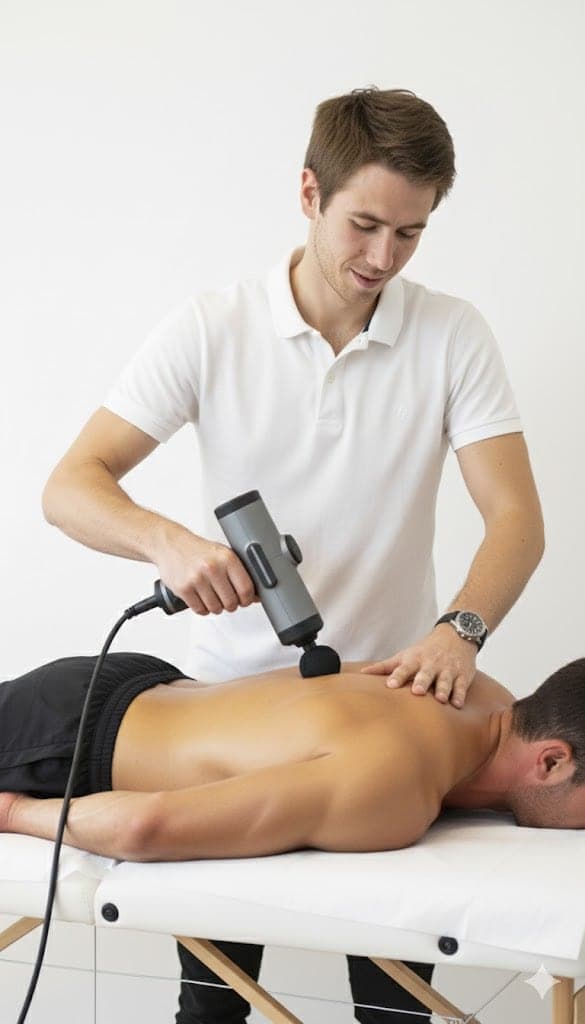
The mobile setup includes a professional treatment bench and all necessary equipment to deliver the same quality intervention available in a clinical setting. The mechanical treatment system is designed for portability without compromising functionality, ensuring that clients receive optimal treatment regardless of location. This setup allows for treatment in comfortable, familiar surroundings that often enhance the therapeutic response and client relaxation.
Environmental assessment becomes possible when providing treatment at the client’s location, revealing factors that might contribute to leg dysfunction. Workplace ergonomics, home exercise space limitations, and daily activity patterns become apparent when working in the client’s environment. This information allows for more comprehensive treatment planning that addresses environmental factors contributing to dysfunction.
Convenience factors significantly improve treatment compliance and results. Clients who don’t have to allocate time for travel and parking are more likely to maintain consistent treatment schedules that support optimal outcomes. The mobile service removes common barriers that prevent people from accessing professional care, making systematic treatment progression realistic for busy professionals and individuals with mobility limitations.
The personalized attention possible with mobile service ensures that each treatment session focuses entirely on the individual client’s needs without the distractions and time constraints typical of clinic-based practices. This focused attention allows for more thorough assessment, more comprehensive treatment, and better education integration that supports long-term success.
Long-term health investment perspective on leg function optimization
Understanding leg massage Konia treatments as a long-term health investment rather than an expense fundamentally changes how clients approach their care and the results they achieve. This perspective shift reflects the reality that leg function directly impacts overall health, quality of life, and functional capacity throughout the aging process. Investing in optimal leg function now prevents costly problems and functional limitations that develop when dysfunction is allowed to progress.
The economic analysis of professional leg treatment reveals significant long-term cost savings compared to managing chronic dysfunction through medical interventions. Clients who invest in systematic mechanical treatment avoid the escalating costs associated with chronic pain management, reduced work capacity, and functional limitations that develop when mechanical problems are not addressed appropriately. Prevention and early intervention through professional massage represents one of the most cost-effective health strategies available.
Quality of life improvements resulting from optimal leg function extend far beyond pain relief or performance enhancement. Clients consistently report increased energy levels, better sleep quality, improved mood, and greater confidence in their physical capabilities. These improvements affect every aspect of daily life and often create positive changes that extend to family relationships, work performance, and recreational activities.
The aging perspective becomes particularly relevant when considering long-term investment in leg function. Mobility and independence during later years depend heavily on lower extremity function maintained throughout life. Clients who invest in systematic leg care during their productive years maintain higher levels of function and independence as they age, avoiding the rapid functional decline that characterizes many aging processes.
Performance optimization through professional leg treatment creates compound benefits that extend throughout all physical activities. Whether the goal is athletic performance, occupational capability, or daily functional capacity, improved leg function enhances everything that involves standing, walking, or lower body movement. This comprehensive improvement represents an investment that pays dividends across all areas of physical activity.
Frequently asked questions about advanced leg massage treatments
How does mechanical leg massage differ from traditional massage therapy? Mechanical leg massage utilizes specialized equipment that provides precision, power, and consistency impossible to achieve with manual techniques. The mechanical approach penetrates deeper into tissue structures, maintains exact pressure for optimal treatment durations, and delivers identical results in every session. This consistency allows for systematic treatment progressions and predictable outcomes, while traditional massage varies significantly based on therapist factors. The mechanical method addresses structural causes of dysfunction rather than providing temporary symptom relief, creating lasting changes in tissue quality and movement patterns.
What conditions respond best to advanced mechanical leg treatment? Chronic muscle tension, fascial restrictions, movement dysfunction, compartment syndrome, plantar fasciitis, hamstring tightness, calf problems, and athletic performance limitations respond exceptionally well to mechanical intervention. The precision and consistency of mechanical treatment make it particularly effective for complex conditions that have not responded to conventional massage approaches. Clients with chronic pain patterns, movement restrictions, and performance limitations often experience significant improvement that traditional massage could not achieve. The systematic approach addresses root causes rather than symptoms, making it effective for conditions that tend to recur with conventional treatments.
How many treatments are typically required to see lasting results? Initial improvements often occur within the first few sessions, but lasting structural changes typically require 6-12 treatments depending on the complexity and chronicity of the dysfunction. Acute problems may resolve more quickly, while chronic conditions that have developed compensation patterns require systematic treatment progressions. The mechanical consistency allows for precise tracking of progress and adjustment of treatment protocols based on objective improvements. Unlike traditional massage where results vary unpredictably, mechanical treatment provides measurable progress that builds consistently toward long-term resolution.
Is mechanical leg massage safe for all ages and activity levels? The precise control possible with mechanical intervention makes it safe and effective for diverse populations from athletes to sedentary individuals to aging clients. Pressure and treatment parameters are calibrated exactly to each client’s tolerance and therapeutic needs, eliminating the safety concerns associated with inconsistent manual pressure application. The controlled approach allows for effective treatment of delicate tissues without causing damage or excessive discomfort. Age-related tissue changes and individual tolerance variations are accommodated through precise parameter adjustment rather than therapist estimation.
How does the mobile service maintain professional treatment standards? The mobile setup includes professional-grade equipment and treatment bench that provides the same capabilities available in clinical settings. All equipment is designed for portability without compromising functionality or treatment quality. The mobile service actually enhances treatment effectiveness by eliminating travel stress and allowing for environmental assessment that reveals contributing factors to dysfunction. Professional standards are maintained through systematic protocols, consistent equipment performance, and the focused attention possible when treating individual clients in their preferred environment.
What makes this approach superior to conventional sports massage? Conventional sports massage relies on manual techniques that cannot achieve the depth, precision, and consistency necessary for optimal athletic performance enhancement. The mechanical approach provides exact pressure control, sustained treatment duration, and predictable results that athletes require for reliable performance optimization. Traditional sports massage varies significantly between sessions and therapists, creating unpredictability that can compromise athletic preparation. The systematic mechanical approach addresses specific performance limitations and movement dysfunctions with precision that manual techniques cannot match, creating measurable improvements in power generation, movement efficiency, and injury prevention.
How soon after treatment can normal activities be resumed? Most clients can resume normal activities immediately after treatment, though some may experience temporary soreness as tissues adapt to structural changes. The controlled mechanical approach minimizes tissue trauma compared to aggressive manual techniques, allowing for faster recovery and return to activity. Athletic clients often report immediate improvements in movement quality and performance capacity. The systematic approach avoids the excessive tissue disruption that can occur with inconsistent manual pressure, supporting faster integration of treatment benefits into daily activities.
What long-term maintenance is required to preserve treatment results? Maintenance requirements depend on activity level, occupational demands, and individual response to treatment. Most clients benefit from periodic maintenance sessions every 4-8 weeks once initial treatment goals are achieved. The mechanical consistency allows for precise maintenance protocols that preserve gains efficiently without over-treatment. Clients learn to recognize early signs of dysfunction and can schedule maintenance treatments proactively rather than waiting for problems to recur. The systematic approach creates lasting structural changes that require less frequent maintenance compared to temporary improvements from conventional massage.
Written by
Chris
Massage therapist & body mechanics specialist
Norwegian-certified with a Bachelor’s in Physical Education and Nutrition and over ten years of clinical practice, working from a portable table in clients’ homes across the Paphos district.
This article is general information from clinical practice, not a medical diagnosis. If you have severe, worsening or unexplained pain, numbness, weakness, or pain after an accident, see a doctor first.