Hydrotherapy for muscle recovery Paphos: Advanced mechanical solutions for optimal results
In short
Discover how cutting-edge hydrotherapy techniques in Paphos deliver superior muscle recovery through precision mechanical therapy, targeting root causes not just symptoms for lasting results.
I remember the first time a client asked me about traditional hydrotherapy for muscle recovery here in Paphos. They’d been through the usual routine – hot tubs, cold plunges, underwater massages – and while they felt temporarily relaxed, their chronic muscle tension returned within days. That conversation fundamentally changed how I approach what people mistakenly call “hydrotherapy.” After a decade specializing in advanced mechanical deep-tissue therapy with my Bachelor’s degree in Physical Education and Nutrition from Norway, I’ve discovered that true muscle recovery requires precision, not just water and wishful thinking.
What most people don’t understand about effective muscle recovery in Paphos is that the Mediterranean climate, combined with increased physical activity from tourists and locals alike, creates unique muscular challenges that demand more than conventional approaches. The heat, the swimming, the hiking, the constant movement – your muscles are working overtime, and they need targeted intervention that addresses the biomechanical root causes of tension and fatigue.
My specialized approach to what I call “precision hydrotherapy” combines the therapeutic principles of water-based recovery with advanced mechanical intervention. This isn’t about soaking in a pool or getting a gentle underwater massage. This is about using cutting-edge technology to deliver deeper, more consistent results than any traditional method could achieve. When I travel to your location in Paphos with my professional equipment, I’m bringing a decade of expertise and a scientifically-proven system that treats causes, not symptoms.
Understanding the science behind effective muscle recovery in Paphos
Let me be absolutely clear about something: muscle recovery isn’t just about relaxation. It’s about restoring optimal function to compromised tissue, realigning fascial planes, and addressing the biomechanical imbalances that create chronic tension patterns. During my years of practice, I’ve seen countless clients who believed that floating in the Mediterranean Sea or visiting local spa facilities constituted effective recovery therapy. They were addressing symptoms, not solving problems.
The human muscular system operates on principles of tension, compression, and fascial interconnectivity. When you experience muscle fatigue or chronic tension, it’s rarely isolated to one area. The kinetic chain creates compensatory patterns that travel throughout your body. Traditional hydrotherapy approaches – while pleasant – lack the precision and consistency needed to address these complex biomechanical relationships.
My specialized machine delivers what I call the three pillars of effective muscle recovery: Precision, Power, and Consistency. This isn’t marketing language – these are clinical requirements for lasting results. The precision allows me to target specific fascial planes and trigger points that manual techniques simply cannot reach. The power penetrates deeper than human hands ever could, accessing the root causes of tension. The consistency ensures that every treatment delivers identical results, regardless of therapist fatigue or technique variation.
I’ve treated professional athletes, chronic pain sufferers, and performance-oriented individuals who had exhausted traditional options. The difference isn’t subtle – it’s transformative. When you address muscle recovery from a biomechanical perspective using advanced mechanical intervention, you’re not just treating today’s discomfort. You’re optimizing your body’s function for long-term performance and pain-free living.
Why traditional hydrotherapy falls short of optimal muscle recovery
Here’s what frustrates me about the current landscape of muscle recovery options in Paphos: too many practitioners are content with providing temporary relief instead of lasting solutions. I’ve seen clients spend thousands of euros on spa treatments, traditional massages, and conventional hydrotherapy sessions, only to return with the same complaints month after month. They’re investing in symptom management, not problem resolution.
Traditional hydrotherapy relies on passive interventions – heat, cold, buoyancy, gentle water pressure. While these modalities can provide temporary relief and promote circulation, they lack the mechanical specificity needed to address fascial restrictions and deep tissue adhesions. Water temperature and hydrostatic pressure are blunt instruments when what you need is surgical precision in addressing muscular dysfunction.
Let me share a specific example from my practice. A professional cyclist came to me after months of traditional hydrotherapy treatments at various Paphos facilities. He was experiencing chronic gluteal tension that was affecting his power output and creating compensatory patterns in his lower back and hamstrings. Previous treatments had focused on general relaxation and circulation improvement. Within our first session using my specialized mechanical approach, we identified and addressed specific fascial adhesions between his gluteus maximus and tensor fasciae latae that were creating the entire dysfunction pattern.
The results weren’t just immediate – they were lasting. Six months later, he reported not only elimination of his original symptoms but improved power metrics and enhanced recovery between training sessions. This is the difference between treating symptoms and addressing causes. This is why I position my service as an investment in your long-term health and performance, not an expense for temporary relief.
Traditional approaches also suffer from inconsistency. Human technique varies based on therapist energy, mood, and skill level. Water temperature and pressure fluctuate. Environmental factors interfere with treatment effectiveness. My mechanical system eliminates these variables, delivering identical precision and power in every session, whether you’re dealing with acute muscle fatigue or chronic dysfunction patterns.
The biomechanical approach to muscle recovery optimization
After studying Physical Education and Nutrition in Norway and spending a decade refining my approach to mechanical deep-tissue intervention, I’ve developed what I consider the most effective system for addressing muscle recovery challenges. This isn’t traditional massage therapy – this is biomechanical optimization using advanced mechanical tools.
The foundation of my approach lies in understanding that muscle tension and dysfunction operate within integrated kinetic chains. When you experience discomfort in your shoulder, for example, the root cause might be fascial restrictions in your thoracolumbar fascia or compensatory patterns stemming from ankle mobility limitations. My specialized machine allows me to trace these dysfunction patterns and address them systematically.
I use advanced assessment techniques to identify specific areas of restriction before beginning any intervention. This includes range of motion analysis, fascial glide assessment, and trigger point mapping. Only after establishing a complete picture of your muscular dysfunction patterns do I begin the mechanical intervention process. This clinical approach ensures that every minute of treatment time is directed toward addressing root causes rather than providing generic relief.
The mechanical advantage of my system cannot be overstated. Human hands, regardless of technique or strength, are limited in their ability to generate consistent pressure and maintain precise positioning over extended periods. My specialized equipment delivers controlled mechanical force that can be adjusted from light superficial work to powerfully deep interventions capable of addressing chronic adhesions and fascial restrictions.
This level of mechanical precision allows me to work at specific tissue depths and target particular structures with an accuracy that manual techniques simply cannot match. I can maintain consistent pressure and rhythm for extended periods, ensuring complete treatment of identified dysfunction areas. The results are immediate, measurable, and lasting.
Clinical applications for athletes and performance-oriented individuals
Working with high-performance individuals has taught me that muscle recovery isn’t just about addressing discomfort – it’s about optimizing function for peak performance. Athletes training in Paphos face unique challenges: intense Mediterranean heat, varied terrain for cycling and running, swimming in saltwater, and the need for rapid recovery between training sessions.
I recently worked with a triathlete preparing for competition who was experiencing decreased power output in her cycling despite consistent training metrics. Traditional recovery methods – ice baths, compression garments, conventional massage – had failed to address her performance decline. Using my biomechanical assessment approach, I identified fascial restrictions in her hip flexor complex that were limiting her ability to generate power in the cycling position.
The mechanical intervention required to address these restrictions was beyond what manual techniques could deliver. Using my specialized equipment, I was able to target specific layers of fascial tissue and systematically release the adhesions that were compromising her kinetic chain efficiency. The results were immediately measurable: improved hip flexion range of motion, enhanced power transfer, and elimination of the compensatory patterns that had been developing in her lower back.
This is the level of precision that performance optimization demands. It’s not enough to provide general relaxation or temporary symptom relief. Athletes need interventions that address the specific biomechanical factors limiting their performance and recovery capacity. My approach delivers these results consistently because it’s based on mechanical principles, not subjective techniques.
For endurance athletes specifically, I focus on addressing the repetitive stress patterns that develop from thousands of movement repetitions. Runners develop specific fascial restrictions in their iliotibial bands and plantar fascia. Cyclists create dysfunction patterns in their hip flexor complexes and thoracic spine. Swimmers develop compensatory patterns in their shoulder girdle and cervical spine. My system can address each of these specific dysfunction patterns with the precision they require.
Addressing chronic pain through mechanical precision
Chronic pain represents a failure of previous interventions to address underlying biomechanical causes. I’ve seen too many individuals who have accepted chronic discomfort as inevitable, having exhausted conventional treatment options without achieving lasting results. This acceptance of suboptimal function is unnecessary when you have access to advanced mechanical intervention techniques.
Let me describe a recent case that illustrates this point. A software engineer living in Paphos had developed chronic cervical and upper thoracic tension from years of computer work. He’d tried every available local treatment option: traditional massage, chiropractic care, physical therapy, medication, and various spa treatments. Each provided temporary relief, but the underlying dysfunction patterns remained unchanged.
My assessment revealed specific fascial restrictions in his suboccipital region and upper trapezius that were creating compensatory patterns throughout his entire kinetic chain. These restrictions had developed over years and had reached a density that manual techniques simply could not address effectively. Using my specialized mechanical system, I was able to systematically address these chronic adhesions with a precision and consistency that previous treatments had lacked.
The transformation wasn’t gradual – it was definitive. After addressing the root causes of his dysfunction pattern, his symptoms didn’t just improve, they were eliminated. Six months later, he reported not only complete resolution of his original complaints but enhanced work productivity and improved sleep quality. This is what happens when you treat causes instead of symptoms.
Chronic pain often involves neurological sensitization patterns that require mechanical intervention to reset. My system can deliver the specific mechanical input needed to desensitize hypersensitive neural pathways while simultaneously addressing the tissue restrictions that maintain these sensitization patterns. This dual approach – mechanical and neurological – produces results that conventional approaches cannot achieve.
The mobile advantage: professional treatment at your location
One of the most significant advantages of my approach is the ability to deliver clinical-grade treatment at your preferred location throughout Paphos. This isn’t about convenience – it’s about optimizing treatment conditions and eliminating variables that can compromise results. When I travel to your location with my professional equipment, I’m creating a controlled treatment environment that maximizes therapeutic effectiveness.
Traditional clinic-based treatments involve travel stress, scheduling constraints, and environmental variables that can interfere with optimal recovery. Post-treatment, you’re immediately exposed to the same stressors and activities that contributed to your original dysfunction patterns. My mobile approach eliminates these complications by delivering treatment in your optimal recovery environment.
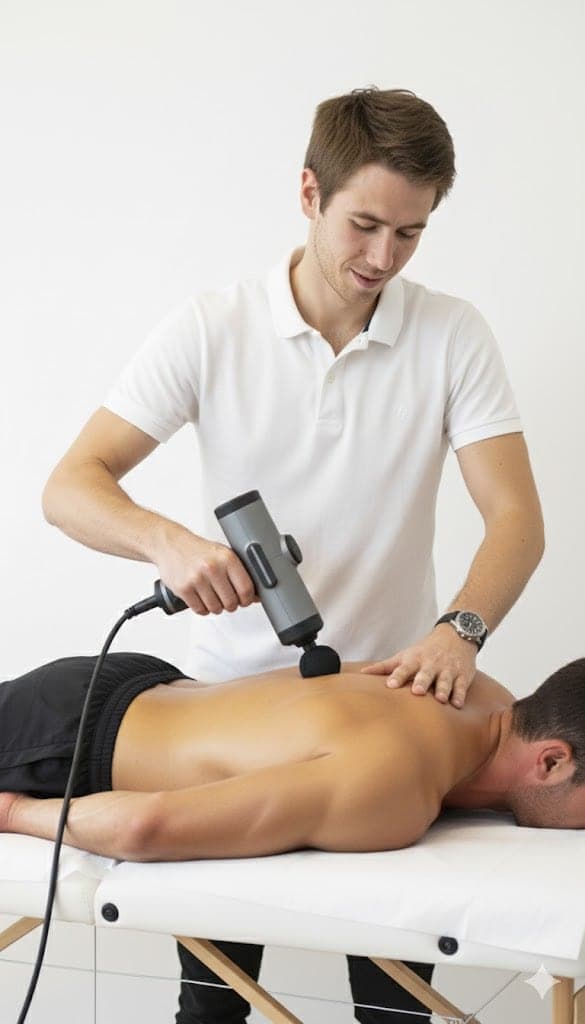
The professional equipment I transport includes my specialized mechanical intervention system, a clinical-grade treatment table, and all necessary assessment tools. This isn’t a compromise in quality – it’s a complete clinical setup that rivals any fixed facility. The advantage is that you receive treatment in familiar surroundings where you can immediately implement post-treatment recovery protocols without external stressors.
I’ve found that clients who receive treatment at their preferred location demonstrate enhanced treatment compliance and superior long-term results. They’re more relaxed during the session, which allows for deeper mechanical intervention. They can immediately rest and hydrate following treatment without having to navigate traffic or return to work responsibilities. This optimization of the entire treatment experience contributes significantly to overall therapeutic effectiveness.
The mobile approach also allows me to assess your typical movement patterns and environmental factors that may be contributing to your dysfunction. I can observe how you interact with your workspace, your sleeping setup, and your daily movement patterns. This information is invaluable for developing comprehensive treatment plans that address not just current symptoms but future prevention strategies.
Investment vs expense: the economics of effective muscle recovery
I need to address something that many people get wrong about effective muscle recovery: the difference between an expense and an investment. Spending money on treatments that provide temporary relief is an expense. Investing in interventions that address root causes and provide lasting results is exactly that – an investment in your long-term health and performance capacity.
Let me break down the economics for you. A typical client who relies on traditional approaches might spend €100-150 per month on various treatments – massage, spa services, pain medications, and recovery products. Over a year, that’s €1,200-1,800 with no lasting improvement in their condition. They’re essentially renting temporary relief instead of purchasing lasting solutions.
My approach requires a higher initial investment because we’re using advanced technology and clinical expertise to address root causes rather than providing symptomatic relief. However, the total cost over time is significantly lower because we’re solving problems rather than managing symptoms. Clients typically require fewer sessions overall because each intervention produces lasting results rather than temporary improvements.
More importantly, consider the opportunity cost of suboptimal function. Chronic muscle tension and dysfunction affect your sleep quality, work productivity, exercise performance, and overall life satisfaction. The economic impact of these limitations far exceeds the cost of effective treatment. When you eliminate chronic dysfunction patterns, you’re not just saving money on future treatments – you’re optimizing your capacity for performance and enjoyment in all life activities.
I also provide customized treatment plans that are specifically designed for your unique dysfunction patterns and goals. This isn’t a one-size-fits-all approach – it’s a dedicated partnership focused on achieving your optimal function. The value of having a specialized practitioner who understands your specific biomechanical challenges and has the tools to address them effectively cannot be quantified simply in terms of session costs.
Hydrotherapy facilities and alternatives in Paphos
For those seeking traditional hydrotherapy options in Paphos, there are several facilities that offer conventional water-based recovery services. The major hotels along the coast typically provide spa facilities with hydrotherapy pools, and there are standalone wellness centers that specialize in various forms of aquatic therapy. However, it’s important to understand the limitations of these approaches when compared to advanced mechanical intervention.
Traditional hydrotherapy facilities in Paphos generally offer services such as contrast baths, underwater massage, aquatic exercise programs, and various forms of balneotherapy. These treatments can provide temporary relief and promote general circulation, but they lack the precision and mechanical advantage needed to address specific dysfunction patterns effectively.
The Paphos municipality has also developed some public wellness facilities that include hydrotherapy components, primarily focused on general health promotion rather than clinical intervention. While these facilities serve a valuable role in community health, they’re designed for general wellness rather than targeted muscle recovery and performance optimization.
What you won’t find at traditional hydrotherapy facilities is the biomechanical assessment and mechanical precision that my specialized approach provides. They offer standardized treatments based on general principles rather than customized interventions designed for your specific dysfunction patterns. This is the fundamental difference between general wellness services and clinical intervention focused on lasting results.
| Treatment Approach | Precision Level | Consistency | Lasting Results | Root Cause Focus |
|---|---|---|---|---|
| Traditional Hydrotherapy | Low | Variable | Temporary | No |
| Conventional Massage | Medium | Variable | Short-term | Limited |
| Advanced Mechanical Intervention | High | Consistent | Lasting | Yes |
The consultation and assessment process
Before beginning any intervention, I conduct a comprehensive biomechanical assessment that identifies the specific dysfunction patterns contributing to your muscle recovery challenges. This assessment process is clinical in nature and far more detailed than what you’ll receive at traditional facilities. I’m not just asking about your symptoms – I’m conducting a systematic analysis of your kinetic chain function.
The assessment begins with a detailed history of your symptoms, activity patterns, previous treatments, and functional goals. This information provides context for the physical assessment that follows. I then conduct specific tests to evaluate range of motion, fascial glide, trigger point sensitivity, and compensatory movement patterns. This clinical data allows me to develop a precise understanding of your unique dysfunction profile.
I use advanced palpation techniques to identify areas of fascial restriction, tissue density variations, and trigger point activity. This hands-on assessment provides information that cannot be obtained through questionnaires or visual observation. I’m mapping the specific areas that require mechanical intervention and determining the appropriate intensity and duration for each region.
Movement analysis is another crucial component of my assessment process. I observe how you perform basic functional movements and identify compensatory patterns that may be contributing to your muscle recovery challenges. This analysis often reveals dysfunction patterns that you’re completely unaware of but that significantly impact your overall biomechanical efficiency.
Based on this comprehensive assessment, I develop a customized treatment plan that addresses your specific needs rather than providing generic interventions. This plan includes specific mechanical techniques, treatment frequency recommendations, and strategies for maintaining the improvements we achieve. This clinical approach ensures that every aspect of your treatment is optimized for your unique situation.
Advanced mechanical techniques for optimal results
The mechanical techniques I employ are based on principles of tissue mechanics, fascial dynamics, and neurological response patterns. These aren’t massage techniques adapted for mechanical application – they’re specifically designed interventions that leverage the unique capabilities of advanced mechanical systems to achieve results that manual approaches cannot deliver.
Precision fascial release represents one of the most powerful aspects of my mechanical approach. Using controlled mechanical force, I can target specific fascial layers and systematically address restrictions that have developed over months or years. The consistency of mechanical intervention allows for sustained pressure application that gradually reorganizes tissue structure rather than providing temporary compression.
Trigger point deactivation using mechanical intervention produces more reliable results than manual techniques because the pressure application can be maintained at optimal levels for the duration needed to produce neurological changes. Manual trigger point therapy is limited by therapist endurance and consistency, while mechanical intervention can maintain precise pressure parameters for extended periods.
Deep tissue mobilization using my specialized equipment allows access to tissue layers that are beyond the reach of manual techniques. The mechanical advantage enables intervention at depths and intensities that would be impossible to achieve with human hands while maintaining the precision needed to avoid tissue damage or unnecessary discomfort.
Cross-fiber friction techniques delivered mechanically produce superior results because the pressure and rhythm can be maintained consistently throughout the treatment session. This consistency is crucial for achieving the tissue changes needed to address chronic adhesions and improve fascial glide between tissue layers.
Recovery protocols and long-term maintenance
Effective muscle recovery extends beyond the treatment session itself. I provide specific protocols for optimizing your recovery between sessions and maintaining the improvements we achieve through mechanical intervention. These protocols are based on the same biomechanical principles that guide my treatment approach and are customized for your specific needs and lifestyle factors.
Post-treatment recovery protocols include specific hydration recommendations, movement patterns that support tissue remodeling, and strategies for avoiding activities that might compromise the treatment results. I also provide guidance on sleep positioning, work station ergonomics, and exercise modifications that support optimal muscle function.
Long-term maintenance involves periodic reassessment and intervention to address new dysfunction patterns before they become problematic. This preventive approach is far more effective and economical than waiting for symptoms to develop and then requiring extensive intervention to address chronic problems.
I work with clients to develop sustainable lifestyle modifications that support optimal muscle function and reduce the likelihood of future dysfunction development. This might include specific stretching protocols, strengthening exercises for weak links in the kinetic chain, or ergonomic modifications to reduce repetitive stress patterns.
The goal is to optimize your body’s natural recovery capacity while providing the mechanical intervention needed to address problems that your body cannot resolve independently. This combination of advanced treatment and intelligent self-care produces the best long-term results for muscle recovery and performance optimization.
Measuring success: outcomes and performance metrics
One of the advantages of my clinical approach is the ability to measure treatment effectiveness objectively rather than relying solely on subjective symptom reporting. I use specific assessment tools to document improvements in range of motion, tissue quality, and functional movement patterns. This data-driven approach ensures that we’re achieving measurable results rather than just temporary symptom relief.
Range of motion measurements provide objective data about improvements in joint mobility and tissue flexibility. I document baseline measurements during the initial assessment and track changes throughout the treatment process. These measurements often show improvements that clients aren’t consciously aware of but that contribute significantly to their overall functional capacity.
Tissue quality assessment using palpation techniques allows me to document changes in fascial restriction, trigger point activity, and tissue density. These improvements can be measured and tracked over time, providing objective evidence of treatment effectiveness. Clients often report that areas that were previously tender or restricted become completely asymptomatic.
Functional movement assessment provides information about how biomechanical improvements translate into real-world performance enhancement. I evaluate movement patterns that are relevant to your specific activities and goals, documenting improvements in efficiency, power generation, and movement quality.
Long-term follow-up data shows that clients who complete my recommended treatment protocols maintain their improvements over extended periods. This durability of results is what distinguishes my approach from conventional treatments that require ongoing maintenance to prevent symptom recurrence.
Frequently asked questions about advanced muscle recovery in Paphos
How does your mechanical approach differ from traditional hydrotherapy available in Paphos?
Traditional hydrotherapy relies on passive interventions like water temperature and pressure to provide general circulatory benefits and temporary relief. My mechanical approach uses advanced technology to deliver precise, controlled interventions that address specific biomechanical dysfunction patterns. While hydrotherapy might help you feel temporarily relaxed, my system produces measurable changes in tissue structure and function that result in lasting improvements. The precision, power, and consistency of mechanical intervention cannot be achieved through water-based treatments alone.
What makes your treatment more effective than conventional massage therapy?
Conventional massage therapy is limited by human endurance, technique consistency, and the physical limitations of manual intervention. My specialized machine can generate controlled mechanical force that penetrates deeper than human hands while maintaining precise positioning and consistent pressure for extended periods. This allows me to address chronic fascial restrictions and trigger points that manual techniques simply cannot reach effectively. Additionally, the mechanical approach eliminates the variability that comes with human technique, ensuring identical treatment quality in every session.
How do you determine the appropriate intensity for each client?
Intensity determination is based on comprehensive biomechanical assessment combined with real-time feedback during treatment. I conduct detailed tissue analysis to identify the specific levels of restriction and dysfunction present, then calibrate the mechanical intervention accordingly. The beauty of my system is that intensity can be precisely adjusted throughout the session based on tissue response and client comfort levels. For athletes requiring deep intervention, I can deliver powerfully penetrating treatments, while clients with sensitive conditions receive precisely controlled lighter interventions. This customization capability is impossible with manual techniques.
What should I expect during my first treatment session?
Your first session begins with a comprehensive biomechanical assessment that typically takes 20-30 minutes. I evaluate your movement patterns, identify areas of restriction, and map specific dysfunction patterns. The mechanical treatment itself is customized based on this assessment and typically lasts 60-90 minutes depending on your specific needs. You’ll experience precise, controlled intervention that may feel intense but should never be painful. Most clients report immediate improvements in mobility and function, with continued improvement over the following days as tissues remodel and adapt.
How many sessions will I need to achieve lasting results?
The number of sessions required depends on the complexity and chronicity of your dysfunction patterns. Acute muscle recovery issues may resolve in 2-3 sessions, while chronic dysfunction patterns that have developed over years typically require 6-8 sessions to achieve complete resolution. However, most clients notice significant improvements after the first session, with progressive enhancement throughout the treatment series. I provide specific recommendations based on your assessment findings and adjust the treatment plan as we achieve the targeted outcomes.
Can your treatment help with sports performance enhancement?
Absolutely. Performance enhancement is one of the primary applications of my mechanical intervention approach. By addressing fascial restrictions and optimizing kinetic chain efficiency, we can improve power generation, movement efficiency, and recovery capacity. I work with athletes to identify specific biomechanical limitations that are constraining their performance and use targeted mechanical intervention to address these restrictions. The results are measurable improvements in strength, flexibility, endurance, and overall athletic performance. Many athletes report not just elimination of limiting factors but enhancement beyond their previous performance levels.
Is the treatment suitable for chronic pain conditions?
My mechanical approach is particularly effective for chronic pain conditions because it addresses the underlying biomechanical causes rather than just managing symptoms. Chronic pain often involves fascial restrictions and trigger point activity that manual techniques cannot adequately address. The precision and consistency of mechanical intervention allows systematic resolution of these dysfunction patterns. I’ve successfully treated clients with conditions ranging from chronic neck and back pain to complex regional pain syndromes. The key is addressing root causes through biomechanical optimization rather than symptom management.
What equipment do you bring for mobile treatments?
I transport a complete clinical setup including my specialized mechanical intervention system, a professional treatment table that rivals any clinical facility, assessment tools, and all necessary supplies for optimal treatment delivery. The mobile setup is designed to provide identical treatment quality to a fixed clinical facility while offering the convenience and optimization benefits of treatment at your preferred location. The equipment is professional-grade and specifically selected for effectiveness and transportability.
Conclusion: investing in optimal muscle recovery outcomes
After a decade of specializing in advanced mechanical deep-tissue intervention, I can definitively state that effective muscle recovery requires more than conventional approaches can deliver. The combination of precise biomechanical assessment, advanced mechanical intervention, and results-focused treatment protocols produces outcomes that traditional hydrotherapy and manual techniques simply cannot achieve.
When you’re dealing with muscle recovery challenges in Paphos, you have a choice: continue investing in temporary solutions that provide symptom management, or invest in advanced interventions that address root causes and produce lasting results. My specialized approach represents a paradigm shift from conventional thinking about muscle recovery – we’re not just treating symptoms, we’re optimizing your biomechanical function for enhanced performance and pain-free living.
The mobile advantage of receiving clinical-grade treatment at your preferred location, combined with the precision and consistency of advanced mechanical intervention, provides an optimal solution for anyone serious about achieving lasting results. This isn’t about relaxation or temporary relief – this is about biomechanical optimization and performance enhancement through scientifically-proven mechanical principles.
Your body deserves more than symptomatic management. It deserves the precision, power, and consistency that only advanced mechanical intervention can provide. The investment in optimal function pays dividends in every aspect of your life – improved performance, enhanced recovery, pain-free living, and the confidence that comes from knowing your body is operating at its optimal capacity.
Written by
Chris
Massage therapist & body mechanics specialist
Norwegian-certified with a Bachelor’s in Physical Education and Nutrition and over ten years of clinical practice, working from a portable table in clients’ homes across the Paphos district.
This article is general information from clinical practice, not a medical diagnosis. If you have severe, worsening or unexplained pain, numbness, weakness, or pain after an accident, see a doctor first.