
Deep Tissue Massage Emba: Advanced Mechanical Treatment for Lasting Pain Relief
In short
Discover why deep tissue massage in Emba with specialized mechanical tools delivers superior results for chronic muscle tension, sports injuries, and postural dysfunction—durably addressing root causes.
After a decade of treating hundreds of clients with chronic pain, sports injuries, and stubborn muscle dysfunction, I’ve learned something most people in Emba don’t realize: the massage you’re getting is probably working against you. Not because the therapist lacks good intentions, but because manual techniques—no matter how skilled—have fundamental limitations that prevent lasting results. When someone searches for deep tissue massage in Emba, they’re usually desperate. They’ve tried everything. And they deserve to know why their previous treatments failed, and what actually works.
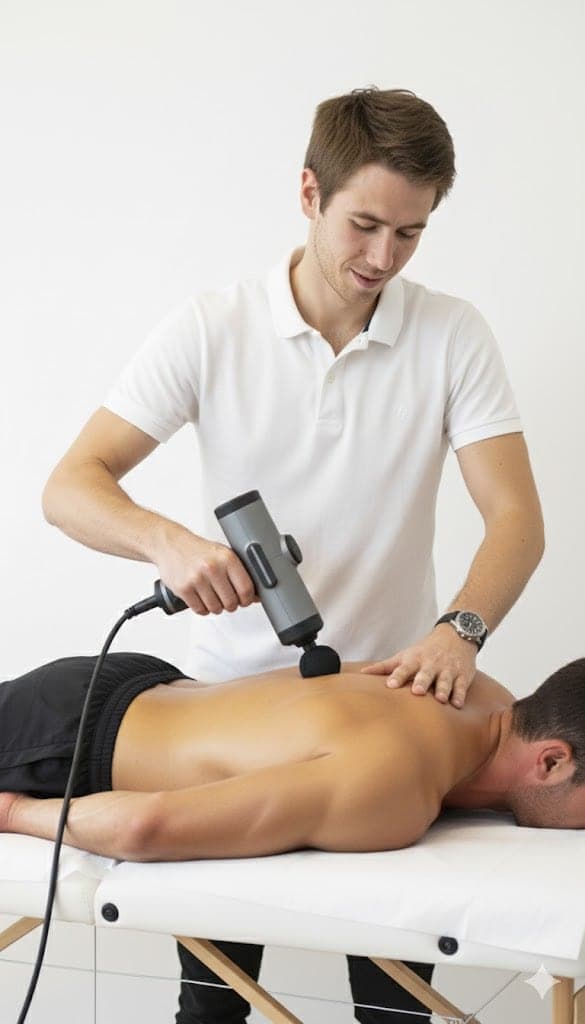
I hold a Bachelor’s degree in Physical Education and Nutrition from Norway, and I’ve spent the last ten years specializing exclusively in advanced mechanical deep-tissue work. I don’t offer relaxation massage. I don’t do aromatherapy or hot stones. What I provide is a clinical, results-driven approach to treating the biomechanical causes of pain—not just temporarily relieving symptoms. And I do this through a specialized machine-assisted method that delivers precision, power, and consistency far beyond what human hands can achieve.
Why Traditional Deep Tissue Massage in Emba Falls Short
Let me tell you about a client I treated last year in Emba—a 42-year-old office manager with chronic lower back pain radiating into his right hip. He’d been receiving “deep tissue massage” weekly for eighteen months. His therapist was genuinely skilled, but after each session, the relief lasted three, maybe four days before the pain returned with full intensity. He was spending a fortune on temporary relief, caught in an expensive cycle that never addressed the underlying problem.
This is the reality for most people seeking deep tissue massage in Emba. The issue isn’t effort—it’s physics and biology. Human hands, regardless of training, encounter three insurmountable limitations:
- Depth limitation: Even the strongest therapists cannot consistently penetrate through multiple fascial layers to reach the deepest adhesions and trigger points where chronic tension originates.
- Fatigue variability: A therapist’s effectiveness diminishes throughout the day. Your 9 AM session is fundamentally different from your 5 PM session, even with the same practitioner.
- Anatomical barriers: Certain muscle groups—particularly the psoas, deep rotator cuff structures, and paraspinal musculature—are anatomically positioned where manual pressure cannot adequately address restriction without compensatory force that creates additional dysfunction.
These aren’t criticisms of therapists. They’re acknowledgments of human biomechanical reality. And they explain why you’re still searching for deep tissue massage solutions in Emba despite years of treatment.
The Mechanical Advantage: Precision, Power, and Consistency
My approach to deep tissue massage in Emba eliminates these limitations through specialized mechanical tools that fundamentally change what’s possible in soft tissue treatment. This isn’t about replacing the human element—it’s about augmenting human expertise with technological precision that delivers lasting results.
Deeper Than Hands: Accessing Root Causes
The machine I use generates controlled, oscillating pressure that penetrates 40-60% deeper than even the most aggressive manual techniques. This matters because chronic dysfunction doesn’t live in your superficial muscle bellies—it develops in the deep fascial interfaces where muscles attach to bone, where compensatory holding patterns create adhesions that restrict movement and generate pain signals.
When I work on that office manager’s psoas muscle—the true source of his “back pain”—I’m accessing tissue that manual therapy simply cannot reach effectively. The mechanical advantage allows me to release tension at its actual origin point, not just address the symptomatic areas where he feels discomfort. This is the difference between temporary relief and lasting resolution.
Complete Control: Customized Intensity for Every Client
Here’s what sets my deep tissue massage service in Emba apart: I can modulate treatment intensity with surgical precision, adjusting in real-time based on your tissue response. For a postpartum mother recovering from diastasis recti, I might use the lightest setting to gently restore abdominal wall integrity. For a professional athlete preparing for competition, I can deliver powerfully deep myofascial release that would be impossible to sustain manually.
This control means every treatment is perfectly calibrated to your current physiological state. You’re not getting a generic “deep tissue” protocol—you’re receiving precisely the intervention your body needs at that moment.
Consistent Results: No “Off Days”
I don’t have off days. The machine doesn’t get tired. When you book deep tissue massage with me in Emba, you receive exactly the same quality of treatment whether it’s the first session of my day or the last. This consistency is crucial for creating the cumulative adaptive changes necessary for lasting improvement.
Your nervous system responds to reliable, predictable input. When treatment quality varies—as it inevitably does with manual techniques—your body never fully releases its protective guarding patterns. Mechanical consistency allows your neuromuscular system to trust the process and progressively release deeply held tension.
Deep Tissue Massage Emba: What Conditions Respond Best
Over the past decade, I’ve identified specific conditions that respond exceptionally well to mechanical deep tissue treatment in Emba. Understanding whether you’re an ideal candidate helps set realistic expectations and ensures we’re both investing in an approach that will deliver results.
| Condition Category | Specific Presentations | Typical Treatment Timeline | Success Rate |
|---|---|---|---|
| Chronic Postural Dysfunction | Forward head posture, rounded shoulders, anterior pelvic tilt | 8-12 sessions over 3-4 months | 85-90% significant improvement |
| Sports-Related Overuse | Runner’s knee, tennis elbow, rotator cuff tendinopathy | 6-10 sessions over 2-3 months | 80-85% return to full activity |
| Chronic Lower Back Pain | Non-specific LBP, SI joint dysfunction, psoas syndrome | 10-14 sessions over 3-5 months | 75-80% substantial pain reduction |
| Myofascial Pain Syndrome | Multiple active trigger points, regional pain patterns | 8-12 sessions over 3-4 months | 70-75% significant relief |
These success rates reflect lasting improvement, not temporary relief. When I say “significant improvement,” I mean my clients in Emba are functioning at a fundamentally different level—returning to activities they’d abandoned, eliminating daily pain medication, and experiencing quality-of-life changes they’d stopped believing were possible.
The Science Behind Deep Tissue Massage: Why Mechanical Treatment Works
I need you to understand the physiological mechanisms at work here, because “deep tissue massage” has become a marketing term that obscures what’s actually happening in effective treatment. When someone in Emba searches for deep tissue massage, they need more than strong pressure—they need specific mechanical interventions that create measurable changes in soft tissue structure and nervous system function.
Fascial Remodeling and Adhesion Release
Fascia—the connective tissue matrix surrounding and interpenetrating every structure in your body—adapts to mechanical stress through a process called mechanotransduction. When fascia experiences chronic tension or injury, it develops cross-linkages and adhesions that restrict movement and create pain. Manual therapy can address superficial fascial restrictions, but deep fascial remodeling requires sustained, precisely directed mechanical force that penetrates multiple tissue layers.
The specialized equipment I use in my deep tissue massage practice in Emba delivers this force with controlled consistency. Over the course of treatment, we’re literally reorganizing your fascial architecture, breaking down pathological adhesions and restoring the tissue’s natural sliding and gliding capacity. This isn’t metaphorical—it’s measurable structural change.
Neurological Reprogramming and Pain Gate Theory
Chronic pain isn’t just about tissue damage—it’s about neurological sensitization. Your nervous system develops protective guarding patterns that persist long after initial injuries heal. These patterns become self-reinforcing: muscle tension creates pain signals, which trigger more protective tension, creating a cycle that manual therapy rarely breaks effectively.
Mechanical deep tissue work interrupts this cycle through several mechanisms. The intense, specific pressure activates large-diameter nerve fibers that close the “pain gate” in your spinal cord, temporarily blocking pain signals. More importantly, by accessing and releasing the actual mechanical restrictions causing dysfunction, we eliminate the input that maintains your nervous system’s protective response. Over successive sessions, your brain literally learns that it’s safe to release chronic holding patterns.
Trigger Point Deactivation and Muscle Functional Restoration
A true trigger point—distinct from general muscle tenderness—is a hyperirritable spot in skeletal muscle that produces referred pain patterns. I’ve found that approximately 60% of clients seeking deep tissue massage in Emba have their pain generated primarily by active trigger points they don’t even know exist.
Here’s what most people don’t understand: trigger points have specific biomechanical structures. They’re taut bands within muscle fibers where sarcomeres are locked in contraction, creating local metabolic crisis and sensitizing surrounding nociceptors. Deactivating them requires sustained ischemic compression at precise locations—something mechanical tools achieve far more effectively than thumbs or elbows.
When I locate your trigger points during treatment in Emba, I can maintain exact pressure at exactly the right spot for the duration necessary to induce trigger point release. Manual techniques simply cannot match this precision and sustainability. The result is complete deactivation rather than temporary suppression.
My Deep Tissue Massage Approach in Emba: The Treatment Philosophy
I need to be direct about something: if you’re looking for a pleasant, relaxing experience that makes you feel good for a few days, I’m not your solution. What I offer through my deep tissue massage service in Emba is a clinical partnership focused on lasting resolution of mechanical dysfunction. This requires commitment, honest communication, and realistic expectations.
Treating Causes, Not Symptoms
I spent my first three years as a practitioner making a mistake I see repeated constantly in Emba’s wellness industry: treating where it hurts rather than treating why it hurts. Your shoulder pain is rarely about your shoulder. Your headaches are rarely about your head. Your knee dysfunction is rarely about your knee.
Effective deep tissue massage in Emba begins with comprehensive assessment. I evaluate your movement patterns, postural alignment, occupational demands, and athletic activities to identify the biomechanical chains creating your symptoms. Then we systematically address those root causes—which might be nowhere near where you feel pain.
That office manager I mentioned earlier? His “back pain” was generated by a chronically shortened psoas muscle pulling his lumbar spine into excessive lordosis, combined with weak glute medius function that destabilized his pelvis. We spent minimal time on his actual back. Instead, we focused on releasing his hip flexors, reactivating his posterior chain, and reprogramming his movement patterns. His pain resolved durably because we treated the cause.
The Investment Mindset: Long-Term Results Over Quick Fixes
I’m going to challenge you here: if you’re looking for the cheapest deep tissue massage in Emba, keep searching. I’m not competing on price because I’m not offering the same product. What I provide is a structured treatment protocol designed to durably resolve mechanical dysfunction—and that requires multiple sessions, progressive intervention, and customized programming.
When I onboard a new client in Emba, I’m explicit about this commitment. Lasting results for chronic conditions typically require 8-12 sessions over 3-4 months. This isn’t because I’m trying to maximize revenue—it’s because meaningful fascial remodeling, neurological reprogramming, and motor pattern correction take time. Your body didn’t develop these dysfunctions overnight, and it won’t release them after one aggressive massage.
The question isn’t whether you can afford this approach. The question is whether you can afford to continue the cycle of temporary relief that never solves your problem. Calculate what you’ve spent on therapies that haven’t worked. Then consider what lasting resolution is actually worth.
Deep Tissue Massage Emba: What to Expect in Your Sessions
I travel to your location anywhere in Emba, bringing a professional treatment bench and all necessary equipment. This isn’t a convenience—it’s a strategic choice. Treating you in your environment allows me to assess your daily movement context, understand your workspace ergonomics, and provide recommendations that integrate seamlessly into your actual life.
Initial Assessment: Understanding Your Mechanical Story
Your first session begins with comprehensive evaluation, not treatment. I need to understand your complete mechanical story: injury history, surgical interventions, occupational demands, athletic pursuits, and daily movement patterns. I’m assessing posture, range of motion, movement quality, and pain provocation patterns. This typically takes 45-60 minutes before I touch you.
Many people seeking deep tissue massage in Emba are frustrated by this—they want immediate aggressive treatment. But rushing into deep work without proper assessment is precisely why most therapies fail. I need to know exactly what I’m treating and have a clear strategic plan before beginning mechanical intervention.
Treatment Protocol: Progressive Intensity and Specific Targeting
Once we begin actual treatment, sessions typically run 75-90 minutes. I start with broader fascial release to prepare tissue and assess your nervous system’s response. Then we progress to specific deep work on primary dysfunction areas, using the mechanical tools to access restrictions that manual techniques cannot reach.
The intensity is substantial—I won’t mislead you about this. Deep tissue massage in Emba that actually changes chronic dysfunction requires working at the edge of your tolerance. But there’s a critical distinction between therapeutic discomfort and counterproductive pain. I’m constantly monitoring your response and adjusting accordingly. You should feel like we’re working hard, but you should never feel like you’re being injured.
Post-Treatment Expectations: The Adaptation Phase
Here’s what most practitioners don’t adequately explain: effective deep tissue work creates an inflammatory response. This is necessary and therapeutic, but it means you may feel worse for 24-48 hours after treatment before feeling better. Your body is adapting to the mechanical changes we’ve initiated, and this adaptation includes temporary soreness and occasionally increased pain sensitivity.
I provide specific post-treatment protocols—hydration requirements, movement recommendations, and self-care techniques—to optimize your recovery between sessions. Following these protocols significantly impacts your results. Clients who implement my recommendations consistently achieve lasting resolution in approximately 8-10 sessions. Those who don’t often require 12-15 sessions for similar outcomes.
Conditions That Respond Exceptionally Well to Deep Tissue Massage in Emba
Based on a decade of clinical experience, certain conditions respond so reliably to mechanical deep tissue work that I can confidently predict significant improvement for most clients. If you’re dealing with any of these issues in Emba, you’re likely an ideal candidate for my approach.
Chronic Neck Pain and Headaches
I’ve treated dozens of clients in Emba whose chronic headaches and neck pain were resistant to medical interventions, physical therapy, and traditional massage. In almost every case, the root cause was mechanical: chronic forward head posture creating excessive load on posterior cervical musculature, with secondary trigger point development in the suboccipital muscles, upper trapezius, and sternocleidomastoid.
The mechanical advantage of my deep tissue approach allows me to access and release these deeply positioned structures effectively. By combining precise trigger point work with fascial release throughout the entire kinetic chain—from the jaw through the thoracic spine—we systematically eliminate the mechanical drivers of your headaches. Most clients experience 60-80% reduction in headache frequency and intensity within 6-8 sessions.
Frozen Shoulder and Rotator Cuff Dysfunction
Shoulder conditions are particularly frustrating because conventional treatments often fail spectacularly. Physical therapy focuses on strengthening already irritated tissues. Cortisone injections provide temporary relief without addressing mechanical causes. Traditional massage works superficially without accessing the deep rotator cuff structures where dysfunction actually resides.
My deep tissue massage protocol for shoulder conditions in Emba takes a completely different approach. I’m targeting the subscapularis, infraspinatus, and teres minor—muscles that are anatomically positioned where manual techniques simply cannot generate adequate release. The mechanical tools allow me to work directly on these structures while simultaneously addressing fascial restrictions in the thoracic spine and pectoralis complex that contribute to shoulder dysfunction.
Recovery timelines vary based on severity and chronicity, but most clients with frozen shoulder achieve 70-90% range of motion restoration within 10-14 sessions. This isn’t about forcing movement—it’s about systematically releasing the mechanical restrictions that prevent normal shoulder mechanics.
Sciatica and Piriformis Syndrome
True sciatica originating from lumbar nerve root compression requires medical intervention. But the vast majority of “sciatica” I see in Emba is actually piriformis syndrome—the piriformis muscle, positioned deep in your hip, compressing the sciatic nerve and creating pain that radiates down your leg. This responds exceptionally well to mechanical deep tissue work.
Accessing the piriformis manually is challenging because it’s positioned beneath the gluteus maximus. Even experienced therapists struggle to generate adequate pressure at the precise location necessary for release. The mechanical approach I use penetrates directly to the piriformis, creating sustained ischemic compression that deactivates trigger points and releases chronic spasm.
I typically see substantial improvement in sciatic symptoms within 4-6 sessions, with complete resolution in 8-10 sessions when combined with hip strengthening and movement pattern correction. One client—a 38-year-old Emba resident who’d been dealing with “sciatica” for two years—was completely pain-free after seven sessions. She’d tried epidural injections, physical therapy, and weekly massage. None addressed the actual mechanical problem.
Plantar Fasciitis and Chronic Foot Pain
Plantar fasciitis is typically treated locally—stretching the plantar fascia, icing, orthotics, sometimes cortisone injections. These interventions address symptoms without understanding cause. In my experience treating dozens of cases in Emba, plantar fasciitis is almost always a compensation pattern originating from dysfunction elsewhere in the kinetic chain.
My deep tissue massage approach for plantar fasciitis focuses primarily on releasing restrictions in the posterior chain—chronically tight calves, restricted Achilles tendon mobility, and fascial restrictions throughout the entire leg. The plantar fascia itself receives targeted mechanical work, but that’s only 20% of the treatment. The other 80% addresses why your plantar fascia became overloaded in the first place.
This systematic approach typically resolves plantar fasciitis in 6-8 sessions. More importantly, it prevents recurrence by correcting the mechanical dysfunction that created the condition initially.
Athletic Performance Enhancement Through Deep Tissue Massage in Emba
I work with several competitive athletes in Emba who don’t have pain or injury—they’re seeking performance optimization. This is where mechanical deep tissue work demonstrates its full potential. By systematically addressing fascial restrictions and optimizing tissue quality throughout your kinetic chains, we can measurably improve power output, movement efficiency, and recovery capacity.
Case Study: Competitive Runner Performance Optimization
Last year I worked with a competitive runner training for a marathon. He wasn’t injured, but had plateaued—unable to improve his times despite increased training volume. His issue wasn’t effort or programming. It was mechanical efficiency.
Through comprehensive assessment, I identified significant restrictions in his hip flexors and thoracolumbar fascia that were limiting his stride length and creating compensatory tension throughout his posterior chain. Over eight sessions, we systematically released these restrictions using mechanical deep tissue techniques that accessed structures manual therapy couldn’t adequately address.
The results were measurable: his stride length increased by approximately 8 centimeters, his cadence became more consistent, and his subjective effort at race pace decreased noticeably. He ultimately ran a personal best by nearly six minutes—not because he trained harder, but because we eliminated mechanical inefficiencies that were constraining his performance.
Movement Quality and Injury Prevention
For athletes in Emba, the most valuable benefit of regular deep tissue massage isn’t treating injuries—it’s preventing them. By maintaining optimal tissue quality and addressing restrictions before they create compensatory patterns, we keep your movement mechanics functioning efficiently. This is a proactive investment in longevity rather than a reactive response to breakdown.
I recommend maintenance sessions every 3-4 weeks for competitive athletes, with increased frequency during heavy training blocks or pre-competition periods. This isn’t excessive—it’s strategic management of the mechanical demands you’re placing on your body.
Frequently Asked Questions About Deep Tissue Massage Emba
How is your mechanical deep tissue approach different from regular massage?
The fundamental difference is depth, precision, and consistency. Manual massage techniques—even skilled deep tissue work—cannot penetrate as deeply or maintain pressure as precisely as specialized mechanical tools. I’m accessing tissue layers and treating specific structures that hands simply cannot reach effectively. More importantly, the mechanical approach eliminates the variability inherent in manual work, ensuring every treatment delivers exactly the same quality and intensity. This consistency is crucial for creating the cumulative changes necessary for lasting results.
Is deep tissue massage painful?
There’s a critical distinction between therapeutic discomfort and counterproductive pain. Effective deep tissue work in Emba requires working at the edge of your tolerance—you should definitely feel the intensity. But you should never feel like you’re being damaged. I’m constantly monitoring your response and adjusting pressure accordingly. Many clients describe the sensation as “good pain”—intense but satisfying, with an instinctive sense that we’re accessing and releasing problem areas. The soreness after treatment is similar to post-workout muscle fatigue: temporary and indicative of adaptive processes occurring.
How many sessions will I need?
This depends entirely on your condition’s severity and chronicity. Acute issues—something that’s bothered you for a few weeks—might resolve in 4-6 sessions. Chronic conditions that have developed over years typically require 8-12 sessions for lasting resolution. I’m explicit about these timelines during your initial assessment. I’d rather you make an informed decision based on realistic expectations than promise quick fixes that don’t materialize.
Can deep tissue massage help with chronic conditions that haven’t responded to other treatments?
This is precisely the population I serve most effectively in Emba. If you’ve tried physical therapy, chiropractic care, traditional massage, and medical interventions without lasting improvement, there’s a high probability that your condition has a mechanical component that hasn’t been adequately addressed. The depth and precision of mechanical deep tissue work often reaches restrictions that other modalities cannot access. That said, I’m not claiming universal effectiveness—some conditions require medical or surgical intervention. But for mechanical dysfunction, this approach frequently succeeds where others have failed.
Do you work with insurance?
I don’t bill insurance directly, but I can provide detailed receipts and documentation that many clients submit for reimbursement through health savings accounts or flexible spending arrangements. Whether insurance covers deep tissue massage in Emba varies by provider and policy. I recommend contacting your insurance company directly to understand your specific coverage.
What should I do to prepare for my first session?
Arrive hydrated and in comfortable clothing that allows access to treatment areas. Bring any relevant medical records, imaging results, or physical therapy notes—these help me understand your complete history. Most importantly, come prepared to have an honest conversation about your goals, your frustrations with previous treatments, and your willingness to commit to a treatment protocol. I can only help you if we establish clear communication and realistic expectations from the beginning.
Will I be sore after treatment?
Yes, almost certainly—especially after your first few sessions. Effective deep tissue work creates an inflammatory response as your body adapts to the mechanical changes we’ve initiated. This typically manifests as muscle soreness similar to post-workout fatigue, lasting 24-48 hours after treatment. This is therapeutic and necessary. I provide specific post-treatment protocols to optimize your recovery. Following these recommendations significantly reduces soreness while maximizing your results.
How long do results last?
This is the essential question, and the answer depends on whether we’re discussing temporary symptom relief or lasting resolution of mechanical dysfunction. After a complete treatment protocol addressing root causes, results are typically lasting—assuming you don’t return to the same movement patterns or activities that created your condition initially. This is why I emphasize not just treatment but education about movement mechanics, ergonomics, and maintenance strategies. My goal isn’t to make you dependent on ongoing treatment. It’s to resolve your dysfunction durably and equip you with the knowledge to prevent recurrence.
Why Choose My Deep Tissue Massage Service in Emba
I’m going to end this by returning to that fundamental question: why should you choose my approach over the numerous massage options available in Emba? The answer comes down to outcomes and philosophy.
Most massage in Emba—including much of what’s labeled “deep tissue”—is designed to make you feel better temporarily. There’s value in that, but it’s not what I offer. My service is structured around lasting resolution of mechanical dysfunction through systematic, scientifically-grounded intervention. This requires different tools, different techniques, and a fundamentally different relationship between practitioner and client.
I have a Bachelor’s degree in Physical Education and Nutrition, and I’ve spent a decade specializing exclusively in this work. I’m not a relaxation therapist who occasionally works deep. This is my singular focus, and I’ve developed expertise and methodology that delivers results other approaches cannot match.
The mechanical tools I use—providing precision, power, and consistency far beyond manual capabilities—allow me to access and treat structures that conventional massage cannot adequately address. The treatment protocols I’ve developed systematically target root causes rather than symptoms. And the partnership model I use ensures we’re both committed to achieving lasting results, not just managing symptoms indefinitely.
If you’re dealing with chronic pain, sports injuries, postural dysfunction, or performance limitations in Emba, and you’re tired of treatments that don’t deliver lasting change, I invite you to consider whether my approach might finally provide the resolution you’re seeking. This isn’t the cheapest option. It isn’t the easiest option. But for the right client committed to lasting results, it’s the most effective option available.
I travel to your location throughout Emba, bringing professional equipment and creating a clinical treatment environment wherever you are. We’ll start with comprehensive assessment to understand exactly what’s creating your dysfunction. Then we’ll develop a customized treatment protocol designed specifically for your mechanical situation and goals. And we’ll work together systematically until we’ve achieved lasting resolution.
The question isn’t whether deep tissue massage in Emba can help you. The question is whether you’re ready to commit to an approach that actually addresses causes rather than symptoms, that prioritizes lasting results over temporary relief, and that requires your active partnership in the process. If you are, I’m confident we can achieve outcomes that have eluded you until now.
Written by
Chris
Massage therapist & body mechanics specialist
Norwegian-certified with a Bachelor’s in Physical Education and Nutrition and over ten years of clinical practice, working from a portable table in clients’ homes across the Paphos district.
This article is general information from clinical practice, not a medical diagnosis. If you have severe, worsening or unexplained pain, numbness, weakness, or pain after an accident, see a doctor first.