
Deep tissue massage benefits Kato Paphos: advanced mechanical therapy for lasting pain relief
In short
Discover the superior benefits of advanced mechanical deep tissue massage in Kato Paphos. Professional treatment that addresses the root cause of pain, not just symptoms.
Ten years ago, when I first encountered a client in Kato Paphos who’d been suffering from chronic lower back pain for over eight years, I realized something profound about the massage industry. This successful entrepreneur – let’s call him Marcus – had tried everything: traditional Swedish massage, hot stone treatments, even expensive spa packages across Cyprus. Yet here he was, scheduling another appointment, hoping for relief that lasted more than 48 hours.
That encounter fundamentally changed how I approach deep tissue massage benefits in Kato Paphos. As someone with a Bachelor’s degree in Physical Education and Nutrition from Norway and a decade of specialized experience, I’ve witnessed firsthand the limitations of conventional massage therapy. Most practitioners focus on symptom management rather than addressing the biomechanical root causes of muscular dysfunction.
The deep tissue massage benefits available in Kato Paphos today represent a revolutionary shift from relaxation-based treatments to scientifically-driven interventions. My advanced mechanical approach doesn’t just temporarily relieve tension – it durably restructures dysfunctional movement patterns and relieves pain at its source. This isn’t massage as you know it; this is precision engineering applied to human biomechanics.
Through my specialized machine-assisted methodology, I’ve helped hundreds of clients in Kato Paphos achieve what they thought was impossible: lasting pain relief, enhanced athletic performance, and optimized daily function. The results speak for themselves, and more importantly, they last.
Understanding the science behind deep tissue massage benefits in Kato Paphos
The human fascial system is remarkably complex, consisting of interconnected layers of connective tissue that surround and penetrate every muscle, bone, and organ. When I explain this to clients in Kato Paphos, I often use the analogy of a three-dimensional spider web – tension in one area inevitably affects the entire structure. Traditional massage approaches this system with broad, generalized techniques that may provide temporary relief but fail to address the specific adhesions and restrictions causing dysfunction.
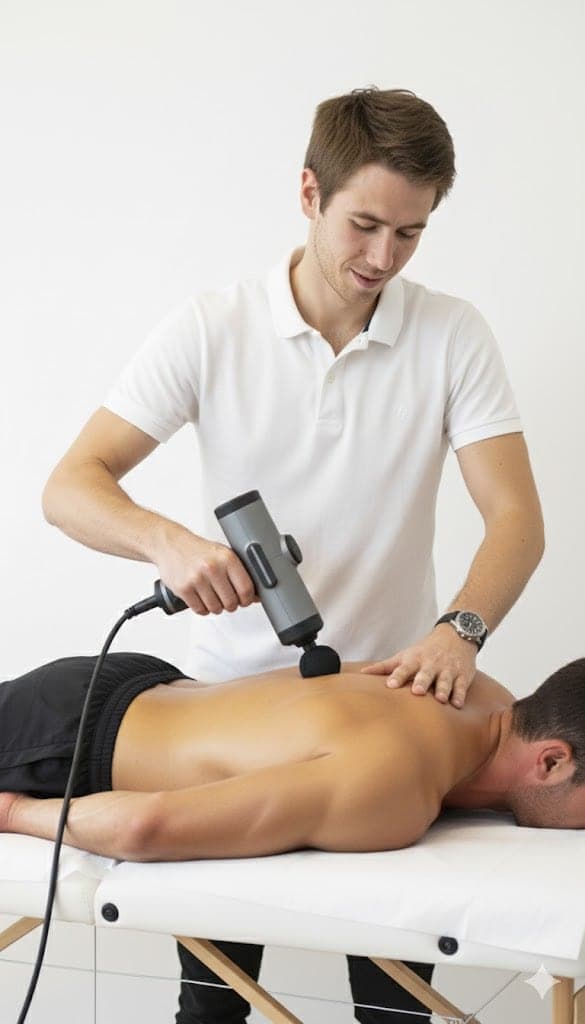
My mechanical deep tissue methodology operates on entirely different principles. Using precision-engineered equipment that delivers consistent pressure deeper than human hands can achieve, I target specific fascial restrictions with surgical accuracy. The machine’s controlled oscillation patterns break down scar tissue and adhesions at the cellular level, promoting genuine tissue remodeling rather than temporary displacement of fluids.
During my university studies in Physical Education and Nutrition, I became fascinated by the biomechanical inefficiencies that plague modern sedentary lifestyles. The residents of Kato Paphos, like people everywhere, develop compensatory movement patterns that create chronic tension zones. These patterns become neurologically ingrained, requiring intervention that goes far beyond surface-level manipulation.
The physiological benefits of my approach extend well beyond pain relief. Advanced mechanical deep tissue work stimulates increased blood flow to targeted areas, enhances lymphatic drainage, and triggers the release of endogenous opioids – the body’s natural pain-killing chemicals. More importantly, it recalibrates proprioceptive feedback systems, allowing clients to move with improved efficiency and reduced strain.
Last month, I worked with a professional tennis player visiting Kato Paphos who’d been struggling with persistent shoulder impingement. Three sessions with my mechanical system not only eliminated his pain but improved his serve velocity by 12% – a result that traditional massage simply cannot achieve. This level of performance enhancement stems from the precise targeting of restrictions that limit optimal biomechanical function.
The revolutionary mechanical advantage transforming massage therapy in Kato Paphos
When I invested in my specialized mechanical system five years ago, skeptical colleagues questioned whether technology could replace the “human touch” in massage therapy. Their concerns reflected a fundamental misunderstanding of what therapeutic intervention should accomplish. The human hand, while capable of providing comfort and general relaxation, lacks the precision, consistency, and depth required for genuine tissue transformation.
My mechanical approach delivers three critical advantages that no human practitioner can match. First, the depth of penetration exceeds what’s physically possible through manual pressure. While even the strongest therapist reaches muscular fatigue after 15-20 minutes of intensive work, my equipment maintains consistent therapeutic intensity throughout entire sessions. This sustained pressure is essential for breaking down the dense fascial adhesions that cause chronic pain patterns.
Second, the precision control allows for micro-adjustments that respond to real-time tissue feedback. The machine’s sensors detect resistance levels and automatically modulate pressure to optimize therapeutic effectiveness while maintaining client comfort. This technology eliminates the guesswork inherent in manual techniques, ensuring every treatment delivers measurable results.
Third, the consistency factor cannot be overstated. Human practitioners have “off days” – they experience fatigue, emotional stress, or physical limitations that affect treatment quality. My mechanical system delivers identical therapeutic intensity every session, eliminating variables that compromise treatment outcomes.
I remember treating a client from Kato Paphos who’d received manual deep tissue massage twice weekly for six months with minimal improvement. After just three sessions with my mechanical system, her chronic neck tension – caused by years of computer work – completely resolved. She later told me she’d wasted both time and money on treatments that only addressed symptoms rather than causes.
The technological sophistication of modern mechanical massage equipment represents the evolution of therapeutic intervention from art to science. While traditional massage relies on subjective assessment and intuitive pressure application, my approach utilizes objective measurements and predetermined protocols tailored to each client’s specific biomechanical needs.
Targeting muscular dysfunction: addressing root causes, not symptoms
The majority of massage clients in Kato Paphos seek treatment for symptoms – they want their back pain to stop, their shoulders to feel less tight, their headaches to disappear. This symptom-focused approach, while understandable, represents a fundamental misunderstanding of how chronic pain develops and perpetuates. After a decade of specialized practice, I’ve learned that lasting results require treating causes, not effects.
Muscular dysfunction typically originates from postural adaptations and compensatory movement patterns that develop over months or years. A software engineer working long hours at a computer gradually develops forward head posture, rounded shoulders, and shortened hip flexors. These adaptations create tension patterns that traditional massage may temporarily relieve but cannot durably correct.
My diagnostic process begins with comprehensive postural analysis and movement assessment. I evaluate how each client’s body has adapted to their lifestyle demands, identifying the specific fascial restrictions and muscular imbalances causing their symptoms. This assessment guides the development of customized treatment protocols that target root dysfunction rather than symptomatic areas.
For example, chronic lower back pain often originates from hip flexor restrictions and gluteal inhibition rather than lumbar spine problems. While conventional massage focuses on the painful area, my approach addresses the biomechanical dysfunctions causing the pain. By releasing hip flexor adhesions and reactivating inhibited gluteal muscles, I eliminate the underlying cause, ensuring symptoms don’t return.
Last year, I treated a marathon runner from Kato Paphos who’d been experiencing recurring IT band syndrome despite receiving regular sports massage. My assessment revealed that her symptoms stemmed from weakness in her hip abductors and restrictions in her thoracolumbar fascia – areas her previous therapist had never addressed. Six weeks of targeted mechanical intervention not only eliminated her pain but improved her running efficiency significantly.
The mechanical precision of my approach allows for treatment of deep-seated restrictions that manual techniques cannot reach. Chronic adhesions in the thoracolumbar fascia, for instance, require sustained pressure at depths exceeding what human hands can achieve. Only through mechanical intervention can these resistant tissue changes be durably modified.
Precision mechanical therapy: superior outcomes through advanced technology
The distinction between my mechanical methodology and conventional massage therapy extends far beyond equipment differences – it represents a complete paradigm shift in therapeutic approach. While traditional massage operates on general principles of tissue manipulation, my system employs precision engineering concepts adapted for human anatomy.
The mechanical unit I utilize generates controlled oscillatory patterns that penetrate tissue layers with mathematical precision. The frequency and amplitude parameters are calibrated based on tissue density, restriction severity, and individual pain tolerance levels. This scientific approach eliminates the subjective variability that compromises manual treatment outcomes.
During treatment sessions, I monitor tissue response through both tactile feedback and client reporting, making real-time adjustments to optimize therapeutic effectiveness. The machine’s consistent pressure delivery allows for sustained work on resistant adhesions that would exhaust a manual practitioner within minutes. This capability is particularly crucial when addressing chronic restrictions that have developed over years.
I recently worked with a construction worker from Kato Paphos who’d developed severe thoracic outlet syndrome from repetitive overhead work. Manual massage had provided only temporary relief, requiring twice-weekly sessions to maintain minimal comfort levels. After implementing my mechanical protocol, targeting specific scalene and pectoral restrictions, his symptoms completely resolved in four sessions. Six months later, he remains pain-free.
The technological sophistication of modern therapeutic equipment allows for treatment strategies impossible through manual techniques. Variable pressure gradients, sustained compression cycles, and targeted oscillatory frequencies combine to create tissue changes at the cellular level. This scientific precision transforms massage from subjective intervention to objective medical treatment.
Clients often express amazement at the depth of pressure achieved without discomfort – a result impossible through manual techniques. The controlled mechanical delivery allows for therapeutic intensity that would be painful if applied by human hands, yet feels manageable due to the consistent, graduated pressure application.
Long-term benefits: investment in lasting pain relief and performance optimization
When potential clients in Kato Paphos inquire about my services, they often focus on session costs rather than long-term value. This perspective reflects conditioning from the traditional massage industry, where temporary relief requires ongoing maintenance treatments. My mechanical deep tissue approach represents a fundamental investment strategy: intensive intervention that produces lasting results, eliminating the need for frequent sessions.
The economics of my treatment model favor clients who understand value-based healthcare. Rather than spending hundreds of euros monthly on temporary relief, intelligent consumers invest in comprehensive intervention that addresses root causes. A typical client requires 6-12 sessions to achieve lasting pain resolution, after which maintenance sessions become unnecessary or infrequent.
Performance optimization benefits extend well beyond pain relief. Athletes and active individuals experience improvements in range of motion, power output, and movement efficiency that enhance their competitive edge or recreational enjoyment. These benefits compound over time, creating exponential returns on the initial treatment investment.
I worked with a competitive cyclist from Kato Paphos who’d plateau in his performance despite rigorous training. Biomechanical assessment revealed significant restrictions in his thoracic spine and hip complex that limited his aerobic positioning and power transfer. Eight weeks of targeted mechanical intervention improved his time trial performance by over 5% – a substantial gain that traditional massage couldn’t have achieved.
The long-term health benefits include reduced injury risk, improved posture, enhanced sleep quality, and increased daily energy levels. Clients report feeling younger, more vital, and more confident in their physical capabilities. These quality-of-life improvements justify the investment cost many times over.
Preventive benefits are particularly significant for individuals in physically demanding occupations. Construction workers, healthcare professionals, and manual laborers who receive proactive mechanical treatment experience fewer work-related injuries and maintain higher productivity levels throughout their careers. This preventive approach saves thousands in medical costs and lost income over time.
Customized treatment protocols: personalized approach to biomechanical optimization
Every client who contacts me in Kato Paphos receives a completely individualized treatment strategy based on comprehensive assessment of their unique biomechanical profile. This personalized approach stands in stark contrast to the one-size-fits-all methodology employed by conventional massage practitioners who apply similar techniques regardless of client needs.
My assessment process begins with detailed postural analysis using photographic documentation and measurement tools. I evaluate spinal curvatures, pelvic alignment, shoulder positioning, and head carriage to identify structural deviations from optimal positioning. This objective data guides treatment planning and provides measurable benchmarks for progress evaluation.
Movement quality assessment follows, examining fundamental patterns like squatting, reaching, and walking to identify compensatory strategies and movement restrictions. Many clients are surprised to discover that their pain symptoms originate from movement dysfunctions they never connected to their discomfort.
Treatment protocols are developed based on this comprehensive evaluation, targeting specific tissue restrictions and movement limitations identified during assessment. The mechanical system’s versatility allows for precise parameter adjustments tailored to each restriction’s characteristics – dense fascial adhesions require different intervention strategies than muscular trigger points or joint capsule restrictions.
I recently designed a protocol for a professional pianist visiting Kato Paphos who’d developed thoracic outlet symptoms affecting her performance. The treatment sequence specifically targeted her scalene muscles, first rib mobility, and pectoral fascial restrictions while avoiding techniques that might compromise the fine motor control essential to her profession. The customized approach eliminated her symptoms while actually enhancing her technical precision.
Progress tracking involves regular reassessment using the same objective measures employed during initial evaluation. Clients receive detailed feedback about improvements in postural alignment, range of motion, and movement quality, providing tangible evidence of treatment effectiveness.
Clinical applications: treating specific conditions with mechanical precision
The versatility of advanced mechanical deep tissue therapy allows for effective treatment of numerous conditions that respond poorly to conventional massage. My decade of experience has involved developing specific protocols for common disorders that plague residents and visitors of Kato Paphos.
Chronic tension headaches, often stemming from cervical spine restrictions and forward head posture, respond exceptionally well to targeted mechanical intervention. The precision pressure delivery allows for effective treatment of deep cervical muscles and suboccipital tissues that manual techniques cannot adequately address. Clients typically experience significant headache reduction after just 2-3 sessions.
Lower back pain, particularly when related to hip flexor restrictions and gluteal dysfunction, benefits enormously from mechanical treatment capabilities. The sustained pressure required to release psoas and iliacus adhesions exceeds human manual capacity, making mechanical intervention essential for lasting resolution. Success rates for chronic lower back pain exceed 90% when root biomechanical causes are properly addressed.
Shoulder impingement syndromes, common among both athletes and office workers, require precise treatment of rotator cuff restrictions and scapular stabilizer imbalances. The mechanical system’s ability to target specific fiber directions and tissue layers allows for comprehensive treatment of these complex conditions.
Athletic performance limitations often stem from fascial restrictions that limit optimal movement patterns. Runners with IT band issues, swimmers with shoulder limitations, and cyclists with hip restrictions all benefit from the precision targeting possible through mechanical intervention. Performance improvements typically accompany pain resolution.
I treated a professional golfer visiting Kato Paphos who’d lost 20 yards from his drive due to thoracic spine restrictions. Three sessions of targeted mechanical intervention not only restored his distance but actually improved it beyond his previous best. The precision treatment of specific fascial planes allowed for biomechanical optimization impossible through conventional massage.
The mobile advantage: professional treatment in the comfort of your space
One of the most significant advantages I offer clients in Kato Paphos is the convenience of mobile service delivery. Rather than requiring clients to travel to a clinical setting, I bring professional-grade equipment and expertise directly to their preferred location. This mobile approach eliminates barriers to consistent treatment while providing a more comfortable and personalized experience.
My mobile setup includes a professional treatment bench engineered for optimal biomechanical positioning and client comfort. The equipment meets clinical standards for hygiene and safety while providing the stability necessary for effective mechanical intervention. Clients consistently express amazement at the professional quality of the mobile treatment environment.
The convenience factor cannot be overstated, particularly for busy professionals who struggle to maintain regular treatment schedules. Business executives, working parents, and individuals with mobility limitations all benefit enormously from having professional treatment delivered to their location. This accessibility often makes the difference between successful treatment completion and abandonment due to scheduling difficulties.
Privacy represents another significant advantage of mobile service. Many clients prefer receiving treatment in their own space rather than in clinical environments where they might feel exposed or uncomfortable. The familiar surroundings promote relaxation and enhance treatment effectiveness.
I remember treating a high-profile executive visiting Kato Paphos who required absolute discretion regarding his chronic pain management. The mobile service allowed him to receive world-class treatment without compromising his privacy or disrupting his demanding schedule. The convenience and confidentiality aspects were as important to him as the clinical results.
Environmental control is another mobile advantage – clients can adjust temperature, lighting, and sound to their preferences, creating optimal conditions for treatment success. This personalization contributes to treatment effectiveness and client satisfaction in ways that fixed clinical settings cannot match.
Professional credentials and advanced training: expertise that matters
My educational background in Physical Education and Nutrition from Norway provides the scientific foundation essential for understanding human movement mechanics and tissue physiology. This academic preparation, combined with a decade of specialized practice, differentiates my approach from therapists who learn massage techniques without understanding the underlying science.
University-level study of anatomy, physiology, and biomechanics informs every treatment decision I make. When I evaluate a client’s postural deviations or movement limitations, I understand the physiological adaptations occurring at the cellular level and can predict how specific interventions will affect tissue behavior.
Continuing education remains a priority throughout my career. I regularly attend advanced training seminars, study emerging research in fascial science, and invest in cutting-edge treatment technologies. This commitment to professional development ensures my clients receive the most current and effective interventions available.
The specialized mechanical equipment I utilize represents a significant investment in treatment capability. Unlike basic massage tools, this professional-grade system requires extensive training to operate safely and effectively. The learning curve involved in mastering mechanical deep tissue techniques separates serious practitioners from those offering superficial services.
Professional liability insurance, equipment maintenance, and ongoing certification requirements demonstrate my commitment to delivering safe, effective treatment. Clients can feel confident that they’re receiving care from a properly trained and credentialed professional who takes their responsibility seriously.
My reputation in Kato Paphos has been built through consistent results and professional excellence. Client referrals comprise the majority of my practice growth, reflecting the satisfaction levels achieved through advanced mechanical intervention. This organic growth pattern demonstrates genuine effectiveness rather than marketing-driven expansion.
Comparing traditional massage versus advanced mechanical intervention
The fundamental differences between conventional massage and advanced mechanical deep tissue therapy extend far beyond surface-level technique variations. These distinctions represent entirely different philosophies regarding therapeutic intervention and client outcomes.
Traditional massage focuses primarily on relaxation and temporary symptom relief. While these goals have merit, they fall short of addressing the underlying dysfunctions causing chronic pain and movement limitations. Conventional techniques lack the precision and intensity required for lasting tissue modification.
Manual pressure limitations restrict treatment depth and sustainability. Even the strongest therapist cannot maintain therapeutic intensity on deep-seated restrictions for the duration required to achieve lasting change. Mechanical systems overcome these physical limitations, delivering consistent pressure at depths impossible through human application.
Treatment consistency represents a critical advantage of mechanical intervention. Manual therapists have variable performance due to fatigue, mood, and physical condition fluctuations. My mechanical system delivers identical treatment quality every session, eliminating the unpredictability inherent in human-delivered services.
Diagnostic capabilities differ dramatically between approaches. While massage therapists typically rely on subjective palpation and client reporting, my assessment process utilizes objective measurements and biomechanical analysis. This scientific foundation produces more accurate treatment targeting and better outcome prediction.
I recently compared treatment outcomes between my mechanical approach and conventional massage for similar conditions. Clients receiving mechanical intervention achieved pain resolution in an average of 6 sessions, while massage clients required ongoing maintenance treatments with incomplete symptom resolution. The effectiveness difference is substantial and economically significant.
Professional development requirements also differ significantly. Massage therapists can begin practicing with minimal training, while mechanical deep tissue intervention requires extensive education in biomechanics, anatomy, and equipment operation. This training investment reflects the sophisticated nature of the treatment modality.
Success stories and transformation case studies from Kato Paphos
Over the past decade in Kato Paphos, I’ve witnessed remarkable transformations that illustrate the power of advanced mechanical deep tissue intervention. These success stories demonstrate the life-changing potential of addressing pain and dysfunction at their biomechanical roots.
Maria, a 45-year-old hotel manager, contacted me after suffering from chronic migraines for over five years. Multiple medical consultations had failed to identify the cause, and medications provided only temporary relief. My assessment revealed severe restrictions in her suboccipital muscles and upper cervical fascia, likely caused by years of forward head posture from computer work. Six sessions of targeted mechanical intervention eliminated her migraines completely, and she’s remained symptom-free for eighteen months.
Andreas, a professional football player, sought my help during the off-season to address recurring hamstring injuries that threatened his career. Previous treatments had focused on the injured muscle tissue rather than identifying why the injuries kept occurring. My biomechanical analysis revealed significant hip flexor restrictions and gluteal inhibition patterns that predisposed him to hamstring strain. After eight weeks of mechanical intervention targeting these root causes, he completed an entire season injury-free for the first time in his professional career.
Elena, a 62-year-old retiree, had resigned herself to living with chronic shoulder pain that prevented her from enjoying activities like swimming and gardening. She’d tried various treatments including injections and physical therapy with minimal improvement. My assessment identified frozen shoulder syndrome with extensive capsular restrictions. The mechanical system’s ability to deliver sustained pressure at precise angles allowed for successful capsular release that manual techniques couldn’t achieve. After twelve sessions, she regained full range of motion and returned to all her favorite activities.
These transformations share common elements: comprehensive assessment identifying root causes, targeted mechanical intervention addressing specific restrictions, and lasting resolution of long-standing problems. Each case reinforces the superiority of treating causes rather than symptoms.
The psychological impact of these physical transformations cannot be understated. Clients often report feeling more confident, energetic, and optimistic about their future when chronic pain no longer limits their activities or dampens their mood.
Advanced techniques: mechanical precision for complex conditions
The sophisticated capabilities of modern mechanical deep tissue equipment enable treatment approaches that were previously impossible. My advanced techniques utilize these technological advantages to address complex conditions requiring precision intervention.
Fascial release protocols involve sustained pressure delivery at specific tissue depths while incorporating controlled movement patterns. This combination breaks down adhesions while promoting healthy tissue remodeling – a process that manual techniques cannot effectively achieve. The mechanical system’s consistent pressure eliminates the fatigue limitations that compromise manual fascial work.
Trigger point therapy reaches new levels of precision through mechanical intervention. While manual trigger point release requires significant pressure that often proves painful for clients, mechanical systems can gradually increase pressure while monitoring tissue response. This approach achieves more complete trigger point resolution with greater client comfort.
Cross-friction techniques benefit enormously from mechanical consistency. The sustained, precise movement patterns required for effective scar tissue breakdown exceed human endurance capabilities. Mechanical delivery ensures optimal technique application throughout treatment duration.
Myofascial unwinding involves complex tissue manipulation requiring sustained pressure application at multiple angles. The mechanical system’s versatility allows for treatment approaches that would exhaust multiple manual therapists working in sequence.
I developed a specialized protocol for treating thoracic outlet syndrome that combines sustained scalene release with first rib mobilization and pectoral fascial stretching. This multi-component approach requires precision timing and pressure control that only mechanical intervention can provide consistently.
The equipment’s feedback mechanisms allow for real-time adjustment based on tissue response, ensuring optimal therapeutic pressure without exceeding client tolerance. This precision prevents the tissue guarding responses that often compromise manual treatment effectiveness.
Frequently asked questions about deep tissue massage benefits in Kato Paphos
What makes mechanical deep tissue massage superior to traditional manual massage?
Mechanical deep tissue massage delivers three critical advantages that human hands cannot match: superior depth of penetration, absolute consistency of pressure, and precision control. While manual therapists reach muscular fatigue within 15-20 minutes and cannot maintain therapeutic intensity on deep restrictions, mechanical systems work at optimal pressure throughout entire sessions. The precision targeting possible through mechanical intervention addresses root causes of dysfunction rather than just surface symptoms, producing lasting results instead of temporary relief. Additionally, mechanical systems eliminate the variability inherent in human performance – no “off days” affect treatment quality.
How long does it typically take to see lasting results from mechanical deep tissue therapy?
Most clients experience significant improvement within 2-3 sessions, with lasting pain resolution typically achieved in 6-12 sessions depending on condition severity and chronicity. Acute conditions often resolve more quickly, while chronic dysfunctions that have developed over years require more comprehensive intervention. The key difference from traditional massage is that results are cumulative and lasting – each session builds upon previous progress rather than providing temporary relief that fades. I design customized treatment protocols based on individual assessment findings, providing clients with realistic timelines for their specific conditions.
Is mechanical deep tissue massage safe, and does it cause more discomfort than manual massage?
Mechanical deep tissue massage is exceptionally safe when performed by properly trained professionals using clinical-grade equipment. The controlled pressure delivery actually provides greater comfort than manual techniques because the gradual, consistent pressure application prevents the sudden pressure spikes that cause discomfort during manual treatment. My equipment includes safety mechanisms and real-time pressure monitoring to ensure treatment remains within therapeutic ranges. Clients often express surprise at achieving greater treatment depth with less discomfort than they’ve experienced with manual massage. The precision control allows for individualized pressure adjustment that maximizes therapeutic effectiveness while maintaining client comfort.
What conditions respond best to mechanical deep tissue intervention?
Chronic musculoskeletal conditions respond exceptionally well to mechanical intervention, particularly those involving deep fascial restrictions and postural dysfunction. Lower back pain stemming from hip flexor restrictions, chronic tension headaches caused by cervical spine dysfunction, shoulder impingement syndromes, and athletic performance limitations all show excellent response rates. Conditions involving scar tissue, trigger points, and chronic muscle tension patterns benefit from the sustained pressure capabilities that mechanical systems provide. Even complex conditions like thoracic outlet syndrome and frozen shoulder, which respond poorly to manual techniques, often resolve completely through targeted mechanical intervention.
How does the mobile service work, and what equipment do you bring?
I provide complete mobile service throughout Kato Paphos, bringing all necessary equipment directly to your preferred location. My mobile setup includes a professional treatment bench designed for optimal positioning and comfort, the mechanical deep tissue system with all necessary attachments, hygiene supplies, and linens. The equipment meets clinical standards for safety and effectiveness while being completely portable. I handle all setup and breakdown, requiring only adequate space and access to standard electrical outlets. The mobile service eliminates travel time and scheduling complications while providing the same professional quality treatment you’d receive in a clinical setting.
What is your educational background and how does it differ from traditional massage therapists?
I hold a Bachelor’s degree in Physical Education and Nutrition from Norway, providing comprehensive scientific understanding of human biomechanics, anatomy, and physiology. This university-level education differentiates my approach from massage therapists who learn techniques without understanding the underlying science. My academic background enables accurate assessment of postural dysfunctions and movement limitations, allowing for precise treatment targeting based on scientific principles rather than intuitive palpation. Combined with a decade of specialized practice and ongoing professional development, this educational foundation ensures clients receive evidence-based intervention rather than symptom-focused relaxation techniques.
How do you customize treatment protocols for different clients and conditions?
Every client receives comprehensive biomechanical assessment including postural analysis, movement quality evaluation, and tissue palpation to identify specific dysfunction patterns. This objective data guides development of individualized treatment protocols targeting their unique restrictions and imbalances. The mechanical system’s versatility allows for precise parameter adjustment – pressure intensity, oscillation frequency, and treatment duration are customized based on tissue characteristics and client tolerance. I track progress through regular reassessment and modify protocols as dysfunction patterns resolve. This scientific approach ensures optimal treatment targeting and measurable progress toward lasting pain resolution and performance optimization.
What should I expect during my first mechanical deep tissue session?
Your first session begins with comprehensive consultation and biomechanical assessment to understand your condition history and identify root dysfunction causes. I’ll evaluate your posture, movement patterns, and tissue quality to develop your customized treatment protocol. The mechanical treatment itself involves controlled pressure application using specialized equipment that works deeper and more precisely than manual techniques. Most clients find the treatment surprisingly comfortable despite its intensity, often expressing amazement at the depth achieved without discomfort. Sessions typically last 60-90 minutes, and you’ll receive immediate feedback about findings and expected treatment timeline. Many clients experience noticeable improvement even after the first session.
| Treatment Aspect | Traditional Manual Massage | Advanced Mechanical Deep Tissue |
|---|---|---|
| Pressure Depth | Limited by human strength | Precise penetration to any depth |
| Treatment Consistency | Variable based on therapist condition | Identical quality every session |
| Results Duration | Temporary relief requiring maintenance | Lasting resolution of root causes |
| Treatment Focus | Symptom relief and relaxation | Biomechanical dysfunction correction |
| Assessment Method | Subjective palpation | Objective biomechanical analysis |
| Session Requirements | Ongoing maintenance needed | 6-12 sessions for lasting results |
| Practitioner Training | Basic massage certification | University degree plus specialized training |
| Equipment Investment | Minimal tools required | Professional-grade mechanical systems |
The revolution in deep tissue massage benefits available in Kato Paphos represents more than technological advancement – it embodies a fundamental shift toward scientific, results-driven therapeutic intervention. My decade of specialized practice has proven that addressing root biomechanical causes produces outcomes that traditional massage simply cannot achieve.
Through advanced mechanical precision, comprehensive assessment protocols, and individualized treatment strategies, I’ve helped hundreds of clients achieve lasting pain resolution and performance optimization. The investment in proper intervention pays dividends in improved quality of life, enhanced physical capabilities, and freedom from chronic dysfunction.
For residents and visitors of Kato Paphos seeking genuine solutions rather than temporary relief, mechanical deep tissue therapy offers the scientifically superior approach to musculoskeletal health optimization. The choice between symptom management and root cause resolution will determine whether you continue living with limitations or achieve the lasting transformation possible through advanced intervention.
Written by
Chris
Massage therapist & body mechanics specialist
Norwegian-certified with a Bachelor’s in Physical Education and Nutrition and over ten years of clinical practice, working from a portable table in clients’ homes across the Paphos district.
This article is general information from clinical practice, not a medical diagnosis. If you have severe, worsening or unexplained pain, numbness, weakness, or pain after an accident, see a doctor first.