
Coral Bay Sports Massage at Home: Advanced Deep-Tissue Treatment for Athletes and Active Individuals
In short
Professional sports massage at home in Coral Bay using advanced mechanical deep-tissue techniques. 10 years of experience delivering lasting pain relief and enhanced athletic performance through precision treatment.
The difference between feeling good temporarily and resolving mechanical dysfunction durably is the difference between a relaxation massage and the advanced deep-tissue sports massage I provide in Coral Bay. After a decade of working with athletes, chronic pain sufferers, and performance-driven individuals across Cyprus, I’ve learned something fundamental: your body doesn’t need another superficial treatment that masks symptoms for forty-eight hours. It needs precise mechanical intervention that addresses the root cause of restriction, adhesion, and compensatory movement patterns.
I travel directly to your location in Coral Bay with professional equipment designed specifically for this purpose. This isn’t a compromise on quality for the sake of convenience—it’s the delivery of clinical-grade treatment in the environment where you’re most comfortable and where your body can truly relax into the work we’re doing together.
Why Traditional Sports Massage Falls Short of Real Results
Most people book a sports massage expecting deep work. What they receive is pressure—sometimes significant pressure—applied through tired hands that can’t maintain consistency, can’t reach the fascial layers where chronic tension actually lives, and can’t deliver the sustained, targeted force required to release adhesions that have been forming for months or years.
I’ve seen hundreds of clients who’ve spent thousands on monthly massage sessions with minimal lasting improvement. The pattern is always the same: they feel better for two or three days, then the tightness returns, the compensation patterns re-establish themselves, and they’re back where they started. This isn’t because massage doesn’t work. It’s because the methodology being applied is insufficient for the mechanical problem being addressed.
My background in Physical Education and Nutrition from Norway taught me to view the human body as an integrated mechanical system. Every muscle, fascial plane, and connective tissue structure exists in relationship with every other structure. When you treat surface symptoms without addressing the underlying restriction, you’re not solving anything—you’re temporarily reducing the body’s alarm signal while the dysfunction continues to worsen underneath.
The Mechanical Deep-Tissue Approach: Precision, Power, and Consistency
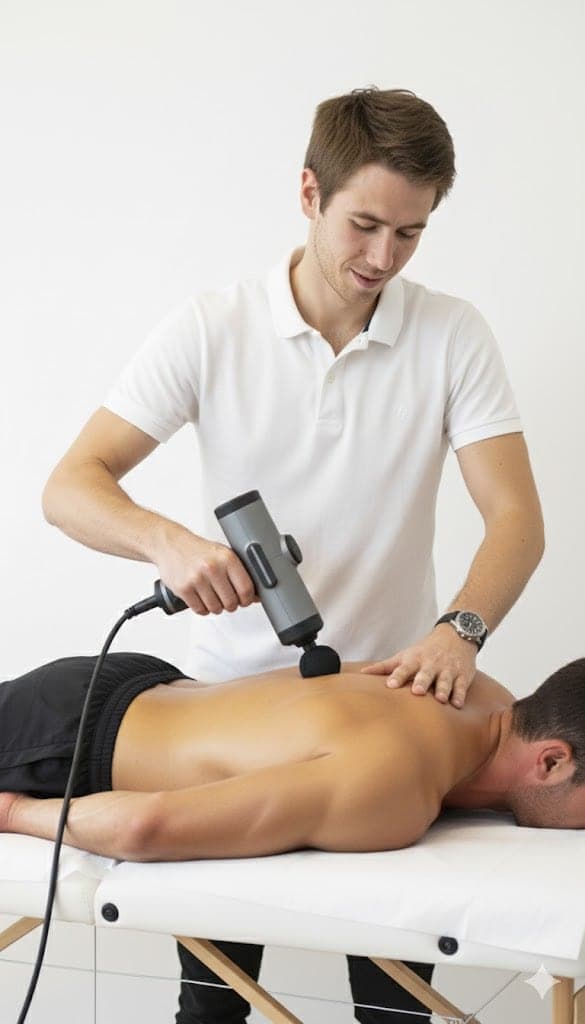
The specialized machine I use in every treatment session isn’t a luxury—it’s a clinical necessity for achieving real, lasting results. Human hands, no matter how skilled or strong, have fundamental limitations that compromise treatment efficacy. Hands fatigue. Pressure becomes inconsistent. The therapist’s own body mechanics limit the angles, depths, and sustained force they can apply without causing themselves injury.
This machine eliminates every one of those limitations while giving me complete control over three critical variables that determine treatment outcomes:
Depth of Penetration
The tool reaches fascial layers and myofascial adhesions that manual therapy simply cannot access. We’re not talking about pushing harder—we’re talking about sustained, focused mechanical force applied at precise angles to release restrictions where they actually exist. I’ve worked with competitive cyclists whose hip flexor dysfunction was rooted in adhesions four centimeters deep in the psoas. Manual therapy couldn’t touch it. The mechanical approach released it completely in three sessions.
Adjustable Intensity Customized to Your Tissue Response
Every client’s tissue responds differently. Some athletes can tolerate—and require—significantly deeper pressure to achieve fascial release. Others need a graduated approach where we slowly condition the tissue to accept deeper work over several sessions. The machine allows me to calibrate intensity with absolute precision, from therapeutic surface work to profoundly deep structural release. This isn’t subjective “medium pressure”—it’s exact, repeatable, and adjustable in real-time based on what your tissue is communicating.
Consistency Across Every Treatment
I don’t have off days. The machine doesn’t experience fatigue between the first and last client of the day. When you book a session with me, you’re guaranteed the same quality, depth, and precision every single time. This consistency is what allows us to build a progressive treatment plan where each session advances your progress rather than simply maintaining the status quo.
What Sports Massage at Home in Coral Bay Actually Treats
The clients I work with aren’t looking for relaxation—they’re looking for results. They’re dealing with specific mechanical dysfunctions that impact their training, their competition performance, or their ability to move through daily life without pain and compensation. Here’s what we actually address:
| Condition | Mechanical Cause | Treatment Approach |
|---|---|---|
| Chronic Lower Back Pain | Fascial restriction in thoracolumbar fascia, psoas adhesions, compensatory glute dysfunction | Deep release of primary restrictions, restoration of normal movement patterns, strengthening protocol |
| IT Band Syndrome | TFL overactivity, glute medius weakness, fascial adhesions along lateral thigh | Aggressive TFL and vastus lateralis release, hip mobility restoration, movement re-education |
| Shoulder Impingement | Anterior shoulder capsule restriction, pec minor adhesion, scapular dyskinesis | Capsular mobilization, pec and subscapularis release, rotator cuff activation |
| Plantar Fasciitis | Calf complex restriction, fascial adhesions plantar surface, compensatory patterns | Complete posterior chain release from calf through plantar fascia, arch support assessment |
| Hamstring Strains (Recurring) | Incomplete scar tissue remodeling, insufficient eccentric strength, compensatory movement | Scar tissue mobilization, progressive eccentric loading protocol, movement pattern correction |
These aren’t conditions that improve with gentle Swedish massage or trigger point therapy that addresses individual points while ignoring the fascial system connecting them. They require systematic mechanical intervention that releases the restriction, restores normal tissue quality, and then reinforces proper movement patterns so the dysfunction doesn’t return.
My Process: From Assessment to Lasting Resolution
When you contact me for sports massage at home in Coral Bay, we’re not scheduling a single session—we’re beginning a partnership focused on lasting resolution of your specific mechanical dysfunction. The process unfolds in three distinct phases:
Initial Assessment and Treatment Strategy
Before I touch your tissue, I need to understand the mechanical story your body is telling. I assess movement patterns, test range of motion, identify compensation strategies, and locate the primary restrictions causing your symptoms. Most clients are surprised to discover that the location of their pain is rarely the location of their problem. Your knee pain might be caused by hip restriction. Your shoulder dysfunction might be rooted in thoracic mobility limitations. Your headaches might originate from fascial restriction in your upper trapezius and suboccipitals.
This assessment determines our treatment priorities. I’m not here to work on whatever area “feels tight”—I’m here to address the mechanical dysfunctions that are limiting your performance and causing your symptoms.
Intensive Release Phase
The first two to four sessions are where the real work happens. This is when we’re applying sustained mechanical force to release fascial adhesions, break down scar tissue, restore tissue quality, and begin changing the movement patterns your body has compensated with for months or years. This phase is intensive because we’re not just reducing symptoms—we’re fundamentally changing tissue structure and mechanical function.
I’ve had clients describe this phase as “uncomfortable but immediately effective.” You’re not lying passively on a table receiving relaxation—you’re actively participating in a mechanical intervention that your tissue will respond to. Some areas will be tender. Some releases will be intense. But every technique I apply has a specific mechanical purpose, and every session produces measurable improvement in range of motion, movement quality, and symptom reduction.
Maintenance and Optimization
Once we’ve resolved the primary restrictions and restored normal movement capacity, we transition to strategic maintenance sessions that keep you performing at your peak. For athletes training intensively, this might mean bi-weekly sessions focused on preventing new adhesions and maintaining tissue quality. For active individuals managing chronic conditions, this might mean monthly sessions that ensure previous restrictions don’t re-establish themselves.
This isn’t lifelong dependency—this is intelligent management of your body’s mechanical needs based on the demands you’re placing on it.
Why Home Treatment in Coral Bay Delivers Superior Results
I’ve delivered this treatment in clinical settings, in gyms, and in clients’ homes across Coral Bay and throughout Cyprus. The home environment consistently produces better outcomes for three specific reasons:
First, your nervous system is more receptive to deep work when you’re in a familiar, comfortable environment. Fascial release requires your body to surrender its protective tension. That surrender happens more readily when you’re not in an unfamiliar clinic surrounded by strangers and sterile equipment. I arrive with everything needed—professional treatment bench, specialized tools, and ten years of experience—and we create a clinical-quality environment in your own space.
Second, home treatment eliminates the physical and mental stress of travel immediately after intensive bodywork. When we’ve just spent ninety minutes releasing deep fascial restrictions in your hip complex, the last thing your body needs is forty minutes sitting in a car driving home. You can transition directly to rest, hydration, and integration of the work we’ve done.
Third, I can observe and address your actual living environment. If you’re dealing with chronic shoulder dysfunction and I see that your workspace setup is perpetuating the mechanical stress we’re trying to resolve, I can provide specific modifications that support your treatment outcomes. If you’re an athlete recovering from injury and your home training setup is reinforcing compensatory patterns, we can address that immediately.
The Athletic Performance Connection: Recovery, Adaptation, and Peak Function
Athletes contact me for two reasons: they’re injured and trying to return to training, or they’re healthy and trying to optimize performance. Both scenarios require the same fundamental approach—systematic restoration of mechanical function and tissue quality.
I’ve worked with competitive triathletes who couldn’t understand why their run times had plateaued despite consistent training. The limitation wasn’t cardiovascular—it was mechanical. Fascial restriction in the posterior chain was limiting hip extension, forcing compensation through the lower back, and reducing power transfer efficiency. Three weeks of intensive treatment restored full hip mobility, eliminated the compensation, and their run times improved by several minutes without changing their training protocol.
I’ve treated CrossFit athletes dealing with recurring shoulder injuries that conventional physical therapy couldn’t resolve. The problem wasn’t weakness—it was anterior shoulder capsule restriction creating impingement during overhead movements. Once we released the capsular adhesion and restored normal shoulder mechanics, the impingement disappeared and they returned to full training capacity.
Performance optimization isn’t about working harder—it’s about ensuring your body can execute movement patterns efficiently without mechanical restrictions limiting force production, reducing range of motion, or creating compensatory stress on surrounding structures.
What Makes This Approach Different From Physical Therapy
Clients often ask me how this treatment differs from physical therapy. The distinction is straightforward: physical therapists primarily address movement patterns, strength deficits, and motor control. They’re teaching your body how to move correctly. That’s valuable work—but it’s only effective if your tissue quality and fascial mobility allow you to actually execute those movement patterns.
You can’t strengthen your way out of fascial adhesion. You can’t stretch away scar tissue. You can’t improve motor control when restriction in one area is forcing compensation through another. The mechanical deep-tissue work I provide creates the tissue quality foundation that allows physical therapy, strength training, and movement practice to actually produce results.
Many of my clients work with physical therapists simultaneously. The therapist provides movement education and progressive loading protocols. I provide the mechanical tissue work that makes those protocols possible. It’s not competitive—it’s complementary.
Investment, Not Expense: The Economic Reality of Long-Term Pain
I position this service as an investment because that’s precisely what it is. Consider the actual cost of unresolved mechanical dysfunction over twelve months:
- Fifteen to twenty conventional massage sessions that provide temporary relief without resolving the underlying problem
- Multiple physiotherapy appointments addressing symptoms rather than root mechanical causes
- Ongoing medication for pain management that masks symptoms while dysfunction progresses
- Lost training time for athletes, reduced performance, potential injury escalation
- Reduced quality of life, sleep disruption, and the accumulating physical stress of moving through compensatory patterns every day
The financial cost of that cycle over a year substantially exceeds the investment in systematic mechanical intervention that resolves the dysfunction durably. More importantly, the physical cost—the progressive worsening of tissue quality, the entrenchment of compensatory patterns, the potential for acute injury resulting from chronic compensation—compounds over time.
Clients who commit to the complete treatment protocol typically require between four and eight sessions to achieve lasting resolution of chronic conditions. Athletes maintaining peak performance typically schedule one session every two to four weeks depending on training intensity. The total investment over a year is a fraction of what most people spend on treatments that never actually solve their problem.
Frequently Asked Questions About Sports Massage at Home in Coral Bay
How deep is the treatment, and will it be painful?
The depth is precisely calibrated to your tissue’s current state and your treatment goals. Some areas will be uncomfortable—that’s unavoidable when we’re releasing fascial adhesions that have been forming for months or years. But discomfort during treatment is different from pain. I adjust intensity in real-time based on your tissue response, and clients consistently report that the temporary discomfort during the session is worth the immediate improvement in movement quality and symptom reduction afterward.
How long until I see results?
Most clients notice immediate improvement in range of motion and movement quality after the first session. Symptom reduction typically follows within twenty-four to forty-eight hours as inflammation from the mechanical work subsides and the nervous system integrates the new tissue state. Lasting resolution of chronic conditions usually requires four to eight sessions depending on severity and duration of the dysfunction.
Do you work with both athletes and non-athletes?
Yes. The mechanical principles are identical whether you’re a competitive athlete or someone dealing with chronic lower back pain from desk work. Your tissue responds to the same biomechanical forces regardless of your fitness level. I adjust the treatment intensity, the areas we prioritize, and the maintenance schedule based on your specific needs and activity demands.
What should I do after a treatment session?
Hydrate significantly—fascial release mobilizes metabolic waste that needs to be cleared through your lymphatic system. Avoid intensive training for twenty-four hours to allow tissue integration. Light movement is beneficial—walking, easy swimming, gentle mobility work. Your body has just undergone significant mechanical change; give it time to adapt before loading it intensively again.
How often should I schedule sessions?
During the intensive release phase, I typically recommend sessions every five to seven days. This frequency allows tissue to integrate the changes while maintaining momentum in releasing stubborn restrictions. Once we’ve resolved the primary dysfunction, maintenance frequency depends on your activity level—every two weeks for athletes in heavy training, monthly for active individuals, or as needed for those focused purely on pain management.
What areas of the body do you treat?
I address mechanical dysfunction anywhere it exists. The most common areas include the posterior chain (lower back, glutes, hamstrings), hip complex (psoas, hip flexors, IT band, glute medius), shoulder girdle (rotator cuff, pecs, upper traps, scapular stabilizers), and lower leg (calves, plantar fascia, peroneals). The treatment plan is always based on your specific mechanical assessment, not a predetermined routine.
Do you provide treatment for acute injuries?
Acute injuries in the inflammatory phase require rest, ice, compression, and elevation—not deep mechanical work. Once the acute inflammation has subsided (typically seventy-two hours to one week depending on severity), mechanical treatment becomes valuable for ensuring proper tissue healing, preventing excessive scar tissue formation, and restoring full function. I work with many athletes during injury rehabilitation, but always in coordination with medical clearance and appropriate healing timelines.
What equipment do you bring, and what do I need to provide?
I bring everything required: professional treatment bench, specialized mechanical tool, linens, and all necessary accessories. You need to provide only space—a quiet area with enough room for the bench (approximately two meters by one meter) and ideally climate-controlled comfort. I handle setup and breakdown; your only responsibility is showing up ready for the session.
The Reality of Mechanical Dysfunction: A Case Study
Several months ago, I began working with a competitive runner in Coral Bay who’d been dealing with chronic IT band syndrome for nearly two years. She’d tried foam rolling, stretching protocols, physical therapy, cortisone injections, and multiple massage therapists. Nothing provided more than temporary relief. She was considering stopping running entirely.
During the initial assessment, the mechanical story was immediately clear: her IT band tightness was secondary to primary restriction in the TFL and vastus lateralis, which was itself secondary to profound weakness and inhibition in her glute medius. Her body had been compensating for inadequate hip stability by overloading the lateral thigh structures. Treating the IT band was treating a symptom. We needed to restore proper hip mechanics.
We spent four intensive sessions over three weeks releasing the fascial restriction in the TFL and vastus lateralis, restoring tissue quality, and progressively loading the glute medius to reestablish its proper function. The discomfort during treatment was significant—we were releasing adhesions that had been forming for two years—but she reported after the second session that her lateral knee pain had reduced by seventy percent.
After the fourth session, the pain was gone. Completely. We transitioned to monthly maintenance sessions focused on preventing the compensatory patterns from re-establishing, and she returned to full training without limitation. Six months later, she’s pain-free, running her fastest times, and the IT band syndrome hasn’t returned.
That’s not miraculous—that’s mechanical. When you address the root cause rather than the symptom, when you apply sufficient force to actually change tissue structure, and when you restore proper movement patterns, dysfunction resolves durably.
Contact and Booking: Beginning Your Treatment Partnership
If you’re an athlete in Coral Bay looking to optimize performance, or someone dealing with chronic pain that hasn’t responded to conventional treatment, the next step is straightforward: we schedule an initial assessment and treatment session where I evaluate your specific mechanical dysfunction and we develop a customized plan for lasting resolution.
I don’t take clients who are looking for relaxation massage or who aren’t committed to the full treatment protocol. This approach requires intensity, consistency, and your active participation in the process. But if you’re serious about resolving your dysfunction durably rather than managing symptoms indefinitely, this is the most effective intervention available.
The machine, the methodology, and my decade of experience combine to deliver what traditional sports massage cannot: precise, powerful, consistent mechanical intervention that treats the cause rather than the symptom and produces lasting results rather than temporary relief.
Your body is a mechanical system. When mechanical dysfunction exists, it requires mechanical intervention. Everything else is just hoping the problem resolves itself—and after years of compensation, it won’t.
Written by
Chris
Massage therapist & body mechanics specialist
Norwegian-certified with a Bachelor’s in Physical Education and Nutrition and over ten years of clinical practice, working from a portable table in clients’ homes across the Paphos district.
This article is general information from clinical practice, not a medical diagnosis. If you have severe, worsening or unexplained pain, numbness, weakness, or pain after an accident, see a doctor first.