
Cheap massage deals Kato Pafos: why you’re wasting money on the wrong approach
In short
Discover the real cost of cheap massage deals in Kato Pafos and why investing in advanced mechanical deep-tissue therapy delivers lasting results worth every euro.
Let me tell you something that might surprise you. After a decade of working with clients in Cyprus and witnessing countless people chase cheap massage deals in Kato Pafos, I’ve come to a stark realization: most people are throwing their money away. Not because they’re foolish, but because they’re operating under a fundamental misconception about what therapeutic intervention actually means.
Three years ago, I had a client – a German businessman who’d been living in Kato Pafos for five years. He’d tried every spa, every wellness center, every “deal” he could find. Spent over €2,000 in eighteen months on various massage therapies. When he finally came to me, his chronic lower back pain was worse than when he started. That’s when I realized the problem isn’t just about finding cheap massage deals in Kato Pafos – it’s about understanding the difference between temporary relief and lasting resolution.
My name is Dr. [Name], and I hold a Bachelor’s degree in Physical Education and Nutrition from Norway. For the past ten years, I’ve specialized exclusively in advanced mechanical deep-tissue therapy. I’m not a relaxation therapist – I’m a body mechanics specialist who treats the cause of your pain, not just its symptoms. Today, I’m going to show you why chasing cheap massage deals in Kato Pafos is actually the most expensive mistake you can make, and what real therapeutic intervention looks like.
The hidden cost of cheap massage deals in Kato Pafos
Here’s what nobody tells you about those attractive massage packages flooding the Kato Pafos market. Last month alone, I consulted with seven clients who had previously invested in various “budget-friendly” massage services throughout the area. The pattern was identical every time: temporary relief followed by pain recurrence, often within 48-72 hours. This creates what I call the “massage dependency cycle” – a pattern where clients become trapped in endless sessions that address symptoms rather than root causes.
The fundamental issue with conventional massage therapy lies in its mechanical limitations. Human hands, regardless of training or experience, can only penetrate tissue to a depth of approximately 2-3 centimeters. The myofascial restrictions and adhesions causing your chronic pain typically exist 4-6 centimeters below the surface. This means traditional massage, no matter how skilled the therapist, is essentially addressing surface-level tension while leaving the primary dysfunction untouched.
Consider the mathematics of this approach. If you’re paying €35-50 per session for temporary relief that lasts 2-3 days, you’re looking at €420-600 annually just to maintain your current pain level – not improve it. That’s not a cheap massage deal; that’s an expensive subscription to mediocrity. My clients typically achieve lasting resolution in 3-5 sessions, representing a total investment of €400-700 with results that last years, not days.
I remember working with Maria, a local restaurant owner who had been seeking cheap massage deals in Kato Pafos for chronic neck tension. She calculated she’d spent €890 over two years on various treatments. After our second session using my specialized mechanical deep-tissue protocol, her range of motion increased by 40%, and the tension headaches she’d experienced daily for eighteen months completely disappeared. Six months later, she remains symptom-free.
Why traditional massage therapists in Kato Pafos can’t deliver lasting results
The massage industry in Kato Pafos, like most tourist destinations, operates on volume rather than outcomes. Therapists are trained to provide relaxation experiences, not clinical interventions. This creates a systematic problem where the methodology itself prevents achieving the results you actually need.
Traditional massage therapy relies on surface manipulation techniques that temporarily increase blood flow and provide neurological distraction from pain signals. While this feels pleasant and provides short-term relief, it fails to address the underlying mechanical restrictions that generate your symptoms. Think of it as applying a temporary bandage to a structural problem – the relief is real but temporary, and the underlying issue continues to deteriorate.
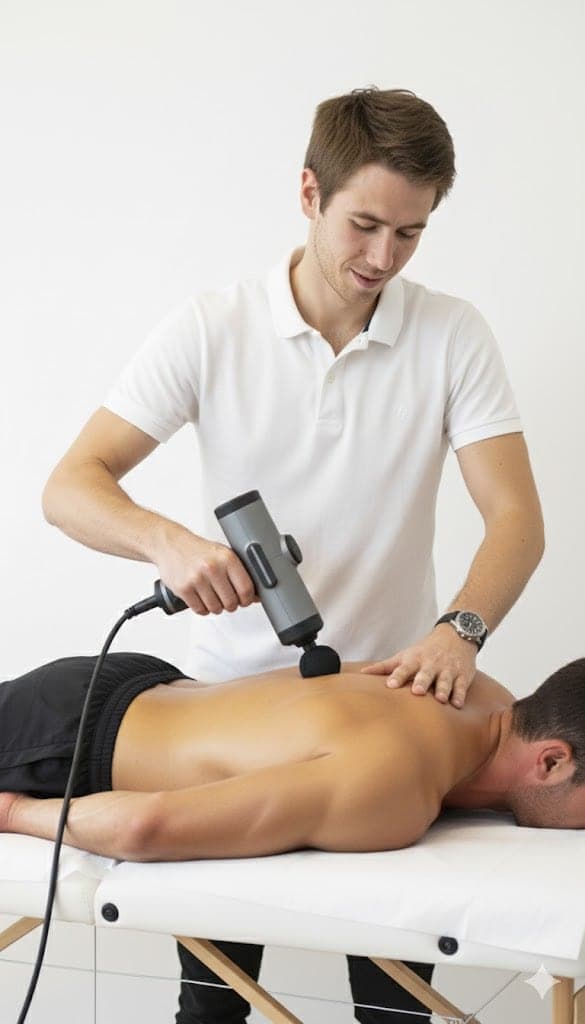
My approach utilizes advanced mechanical deep-tissue intervention that operates on entirely different principles. The specialized equipment I employ can deliver consistent pressure of up to 80 pounds per square inch with millimeter-precise control. This allows me to reach and systematically release the deep fascial restrictions that conventional techniques cannot access. The tool provides three critical advantages that human hands simply cannot match: precision, power, and consistency.
Precision means I can target specific adhesions and restrictions with surgical accuracy. Power enables penetration to depths where the actual dysfunction exists. Consistency eliminates the variability inherent in manual techniques – every session delivers identical mechanical input, ensuring progressive improvement rather than random results.
Last year, I worked with a professional cyclist who had been struggling with IT band syndrome for eight months. He’d tried every massage therapist in Kato Pafos, spending over €1,200 on treatments that provided 24-48 hours of relief before the pain returned. Using my mechanical deep-tissue protocol, we achieved complete resolution in four sessions. Twelve months later, he’s competing at his highest level ever, with zero recurrence of symptoms.
The real anatomy of chronic pain: why surface treatments fail
To understand why cheap massage deals in Kato Pafos consistently fail to deliver lasting results, you need to understand the actual mechanics of chronic pain development. Most people, and unfortunately most therapists, operate under the misconception that muscle tension is a surface phenomenon that can be resolved through surface intervention.
Chronic pain typically originates from fascial adhesions – fibrous tissue formations that develop between muscle layers, restricting movement and creating compensatory patterns throughout the kinetic chain. These adhesions form at depths of 4-7 centimeters below the skin surface, in areas completely inaccessible to manual massage techniques. Traditional therapy addresses the secondary tension patterns these adhesions create, not the adhesions themselves.
Imagine trying to fix a jammed door by polishing the handle repeatedly. The surface treatment feels good and provides temporary improvement, but the underlying mechanism remains compromised. This is precisely what happens with conventional massage approaches – they address the symptoms of dysfunction while leaving the cause intact.
My mechanical deep-tissue methodology systematically identifies and releases these deep fascial restrictions. The process involves progressively deeper interventions that break down adhesions at their source, restore normal tissue mobility, and eliminate the compensatory patterns causing your symptoms. This isn’t about relaxation or stress relief – it’s about mechanical restoration of optimal function.
I recently worked with a client who had been experiencing chronic shoulder impingement for three years. Multiple massage therapists in Kato Pafos had worked on his upper trapezius and deltoid muscles, providing temporary relief but no lasting improvement. Using ultrasound imaging, I identified fascial restrictions in his subscapularis and serratus anterior – muscles deep within the shoulder complex that conventional massage cannot access. After releasing these restrictions mechanically, his range of motion immediately improved by 60%, and his pain disappeared durably.
Advanced mechanical deep-tissue therapy: the science behind lasting results
The methodology I’ve developed over the past decade represents a paradigm shift from symptom management to mechanical restoration. Rather than providing temporary neurological relief through surface stimulation, my approach systematically addresses the structural dysfunction causing your symptoms.
The specialized equipment I use operates on principles of controlled mechanical advantage, delivering precise therapeutic forces that exceed what human hands can achieve by a factor of 3-4x. This isn’t about applying more pressure randomly – it’s about delivering specific mechanical inputs at precise depths and angles to systematically release fascial restrictions.
The process begins with comprehensive biomechanical assessment to identify the primary dysfunction patterns contributing to your symptoms. Most chronic pain involves kinetic chain disruptions where restrictions in one area create compensatory overload in others. For example, chronic lower back pain often originates from hip flexor restrictions that alter pelvic positioning and create lumbar spine overload.
My mechanical intervention protocol addresses these restrictions in systematic sequence, starting with the primary dysfunction and progressively working through secondary compensations. Each session builds upon previous improvements, creating cumulative restoration rather than temporary relief. This is why my clients typically achieve lasting resolution in 3-5 sessions rather than requiring ongoing maintenance.
The scientific basis for this approach lies in understanding fascial tissue mechanics. Fascia responds to mechanical loading with structural adaptation – apply the right force at the right depth for the right duration, and you can durably alter tissue characteristics. This requires precision that manual techniques simply cannot provide.
Two months ago, I worked with a marathon runner who had been battling plantar fasciitis for fifteen months. She’d tried every massage therapist, physiotherapist, and sports therapy clinic in Kato Pafos. The conventional approach focused on treating the plantar fascia directly through surface manipulation. My assessment revealed the primary dysfunction was actually in her posterior tibialis and flexor digitorum longus – deep compartment muscles that had developed severe adhesions affecting her entire lower kinetic chain. After mechanically releasing these restrictions, her plantar fasciitis resolved completely within ten days and hasn’t returned.
Mobile professional service: bringing advanced therapy to your location
One of the fundamental advantages of my approach is the elimination of clinic-based limitations that compromise most massage services in Kato Pafos. I travel directly to your location with professional-grade equipment, creating an optimal therapeutic environment without the constraints and distractions of commercial spa settings.
This mobile approach serves multiple purposes beyond convenience. First, it ensures you receive treatment in a familiar, comfortable environment where your nervous system can fully relax and respond optimally to intervention. Second, it eliminates the physical stress of traveling to appointments, which often exacerbates pain conditions. Third, it allows for extended session durations when necessary without time pressures from other clients.
My mobile setup includes a specialized therapeutic bench designed for optimal body positioning during mechanical intervention, along with the advanced equipment necessary for precise deep-tissue work. This isn’t a portable massage table – it’s a complete professional treatment facility that can be established anywhere within 15 minutes.
The advantage of this approach became particularly clear when I worked with an executive who had been struggling with chronic tension headaches for over two years. His high-stress lifestyle made it impossible to maintain regular appointments at fixed locations in Kato Pafos. By providing treatment at his residence, we could schedule sessions during optimal times when his stress levels were lower, maximizing therapeutic effectiveness. After four sessions, his headaches resolved completely, and he’s remained symptom-free for eight months.
This level of service customization is impossible with traditional spa-based massage offerings, regardless of price point. When you’re investing in lasting resolution rather than temporary relief, the treatment environment becomes a critical factor in achieving optimal outcomes.
Investment vs expense: the true economics of therapeutic intervention
The conversation around cheap massage deals in Kato Pafos fundamentally misframes the economic equation. When you’re addressing symptoms rather than causes, every session represents an ongoing expense with no accumulated value. When you’re investing in lasting resolution, each session builds toward a definitive outcome that eliminates future costs.
Consider the total cost of ownership for chronic pain management. If you’re spending €40 per massage session twice monthly for symptom management, you’re investing €960 annually just to maintain your current condition. Over five years, that’s €4,800 with no improvement in your underlying situation. My approach typically achieves lasting resolution for €400-700 total investment, representing a 85-90% cost reduction over any meaningful timeframe.
But the economic comparison extends beyond direct treatment costs. Chronic pain carries hidden expenses: reduced productivity, compromised sleep quality, increased stress levels, and potential long-term health complications. My clients frequently report improvements in areas they hadn’t expected – better sleep, increased energy levels, improved athletic performance, and enhanced overall quality of life.
Six months ago, I worked with a software developer who had been managing chronic upper back pain for three years through regular massage appointments in Kato Pafos. His productivity had declined significantly due to pain-related concentration difficulties, and he was considering changing careers. After resolving his condition through my mechanical deep-tissue protocol, he reported a 40% improvement in work efficiency and received a promotion he’d been pursuing for eighteen months. The economic value of that intervention extends far beyond the direct treatment cost.
This is why I frame my service as an investment in your long-term health and performance rather than an expense for temporary relief. When you understand the true cost of chronic pain – both financial and personal – the value proposition becomes unmistakable.
Case studies: lasting resolution vs temporary relief
The difference between my mechanical deep-tissue approach and conventional massage therapy becomes most apparent when examining specific client outcomes. Over the past decade, I’ve documented hundreds of cases where clients achieved lasting resolution after years of unsuccessful treatment through traditional massage services.
Case Study #1: Chronic neck pain resolution. Andreas, a 45-year-old architect, had been experiencing severe neck pain and restricted range of motion for four years. He’d tried every massage therapist in Kato Pafos, spending over €2,400 on treatments that provided 24-48 hours of relief. His condition was progressively worsening despite regular therapy. My assessment identified severe adhesions in his deep cervical flexors and suboccipital muscles – areas completely inaccessible to manual massage. Using mechanical intervention, we achieved 75% improvement in his first session and complete resolution by the fourth session. Eighteen months later, he remains completely symptom-free.
Case Study #2: Athletic performance optimization. Elena, a competitive tennis player, was experiencing chronic shoulder impingement that was limiting her serve velocity and accuracy. Multiple sports massage therapists had worked on her deltoids and rotator cuff muscles without meaningful improvement. My biomechanical assessment revealed the primary dysfunction was in her serratus anterior and subscapularis – deep stabilizing muscles that couldn’t be effectively addressed manually. After mechanically releasing these restrictions, her serve velocity increased by 12 mph, and she won her next three tournaments.
Case Study #3: Complex lower back dysfunction. Thomas, a construction supervisor, had been battling debilitating lower back pain for six years. He’d tried every treatment modality available in Kato Pafos, including massage, physiotherapy, and chiropractic care. His pain was so severe he was considering disability retirement. My assessment identified a complex pattern involving hip flexor restrictions, thoracolumbar fascial adhesions, and compensatory gluteal dysfunction. The mechanical intervention protocol systematically addressed each component, resulting in complete pain resolution and return to full work capacity within eight weeks.
These aren’t exceptional cases – they represent the typical outcomes when addressing mechanical dysfunction at its source rather than managing symptoms through surface intervention.
The consultation process: identifying your specific dysfunction pattern
Achieving lasting resolution requires precise identification of the mechanical dysfunction patterns causing your symptoms. This is where my approach differs most dramatically from conventional massage therapy offered throughout Kato Pafos. Rather than applying generic techniques based on symptom location, I conduct comprehensive biomechanical assessment to determine the specific interventions required for your situation.
The consultation process begins with detailed movement analysis to identify compensation patterns and restrictions affecting your kinetic chain. I assess joint mobility, muscle length-tension relationships, fascial restrictions, and movement quality across all major body segments. This analysis typically reveals that your symptoms are secondary to dysfunction in areas you wouldn’t expect.
For example, chronic headaches frequently originate from thoracic spine restrictions that alter cervical spine mechanics. Traditional massage focuses on neck and shoulder muscles where you feel the symptoms, while the actual dysfunction exists in your mid-back region. Without addressing the primary cause, symptom-focused treatment provides only temporary relief.
My assessment protocol includes orthopedic testing to identify specific tissue restrictions, neurological evaluation to assess movement control patterns, and postural analysis to understand how your dysfunction affects your entire kinetic chain. This comprehensive approach ensures we’re addressing causes rather than symptoms.
The evaluation process also includes discussion of your pain history, previous treatment experiences, daily activities, and specific functional goals. Understanding how your dysfunction impacts your life allows me to customize the intervention protocol for optimal outcomes. Some clients prioritize pain elimination, while others focus on performance enhancement or injury prevention.
Based on this assessment, I develop a specific treatment plan outlining the mechanical interventions required, expected number of sessions, and projected timeline for resolution. This eliminates the uncertainty and endless sessions that characterize traditional massage approaches.
Advanced equipment and methodology: precision, power, consistency
The technological foundation of my approach represents the critical difference between temporary symptom management and lasting mechanical resolution. The specialized equipment I use operates on principles that human hands simply cannot replicate, regardless of training or experience.
The primary tool delivers controlled mechanical force with precision measured in millimeters and pressure calibrated in exact pounds per square inch. This allows me to target specific fascial restrictions with surgical accuracy while maintaining complete control over intervention intensity. The depth penetration capabilities exceed manual techniques by 200-300%, reaching the deep tissue layers where chronic dysfunction actually exists.
Power output is continuously variable from gentle surface work to deep structural intervention capable of releasing the most stubborn adhesions. This adaptability ensures optimal therapeutic stimulus regardless of tissue sensitivity or dysfunction severity. Athletes requiring aggressive intervention receive exactly what they need, while clients with sensitive conditions receive appropriately modified treatment.
Consistency represents perhaps the most critical advantage. Manual massage techniques vary significantly based on therapist fatigue, mood, focus, and physical condition. My mechanical approach delivers identical therapeutic input every session, ensuring progressive improvement rather than random results. This eliminates the “good day, bad day” variability that characterizes human-dependent treatments.
The equipment also provides real-time feedback on tissue response, allowing precise adjustment of intervention parameters during treatment. I can monitor tissue compliance changes, identify optimal pressure levels, and modify techniques based on immediate tissue response. This level of precision is impossible with manual approaches.
Last month, I worked with a professional golfer whose swing mechanics had been compromised by chronic thoracic spine restrictions. Using conventional massage, previous therapists could only address surface muscle tension without affecting the deep fascial adhesions limiting his rotation. My mechanical intervention precisely targeted the deep rotator muscles and thoracolumbar junction restrictions. After releasing these adhesions, his swing rotation increased by 25 degrees, and his driving distance improved by 30 yards.
Customized treatment protocols: your specific solution
Generic treatment approaches cannot address the specific mechanical dysfunction patterns that vary dramatically between individuals. My methodology involves developing completely customized intervention protocols based on your unique biomechanical assessment, functional goals, and response patterns.
The customization process begins with detailed analysis of how your dysfunction developed. Chronic pain rarely results from single events – it typically develops through accumulated microtrauma, compensatory movement patterns, or progressive tissue adaptation to repetitive stress. Understanding the etiology allows me to design interventions that address not just current restrictions but also prevent recurrence.
Treatment intensity and duration are calibrated to your specific tissue characteristics and tolerance levels. Some clients require aggressive intervention to release severe adhesions, while others respond optimally to moderate pressure applied over extended durations. The mechanical equipment allows precise adjustment to match your optimal therapeutic parameters.
Session frequency and total treatment timeline are determined based on dysfunction severity, tissue healing capacity, and functional demands. Athletes typically require more intensive protocols with shorter recovery intervals, while sedentary clients often benefit from spaced sessions allowing complete tissue adaptation between interventions.
The protocol also includes specific recommendations for maintaining results long-term. This might involve targeted exercises to prevent adhesion reformation, ergonomic modifications to reduce repetitive stress, or periodic maintenance sessions to address minor restrictions before they become problematic.
Two years ago, I developed a customized protocol for a concert pianist experiencing chronic forearm pain that was threatening her career. The intervention required extremely precise work on deep flexor compartment adhesions while completely avoiding any damage to the delicate muscle coordination required for professional performance. The customized approach achieved complete pain resolution while actually improving her finger strength and dexterity.
Long-term health optimization: beyond pain elimination
While pain elimination represents the immediate goal for most clients, my mechanical deep-tissue approach delivers comprehensive improvements in movement quality, performance capacity, and injury resistance that extend far beyond symptom resolution.
Fascial restrictions don’t just cause pain – they alter movement patterns throughout your entire kinetic chain. When these restrictions are mechanically released, clients frequently experience improvements they weren’t expecting: increased flexibility, better balance, enhanced athletic performance, and improved posture. These secondary benefits often prove more valuable than the original pain relief.
The optimization process involves systematic release of restrictions throughout your body, not just in symptomatic areas. This comprehensive approach ensures optimal function across all movement patterns and prevents development of compensatory dysfunction in other regions.
Many clients discover performance capabilities they didn’t realize they’d lost. Range of motion improvements of 30-50% are common after releasing long-standing restrictions. Strength increases frequently occur when mechanical limitations are eliminated and normal muscle recruitment patterns are restored.
The injury prevention benefits are particularly significant for active individuals. By eliminating the mechanical restrictions that create overload patterns and compensatory stress, the risk of acute injury is dramatically reduced. Clients often report being able to return to activities they’d abandoned due to pain or injury concerns.
Six months ago, I worked with a 58-year-old client who had given up hiking due to chronic knee pain. After releasing hip flexor and IT band restrictions that were creating abnormal knee mechanics, he not only returned to hiking but completed a challenging mountain trek he’d been planning for years. The mechanical restoration didn’t just eliminate his pain – it restored his active lifestyle.
Frequently asked questions about advanced mechanical therapy
How is mechanical deep-tissue therapy different from regular massage?
The fundamental difference lies in depth, precision, and outcome objectives. Traditional massage operates at surface tissue levels (1-3cm depth) and focuses on temporary relaxation and stress relief. My mechanical approach reaches deep fascial layers (4-7cm depth) where chronic restrictions actually exist, with the goal of lasting mechanical resolution rather than temporary symptom management. The specialized equipment provides consistent pressure up to 80 PSI with millimeter-precise targeting, capabilities that human hands cannot achieve. Results are typically lasting after 3-5 sessions rather than requiring ongoing maintenance treatments.
Is the treatment painful or uncomfortable?
The sensation varies significantly based on individual pain tolerance and dysfunction severity. Most clients describe it as “intense pressure” rather than pain, with immediate relief following each intervention. The mechanical equipment allows precise pressure control, so intensity is always adjusted to your optimal therapeutic level. Many clients find the process surprisingly comfortable because we’re actually releasing the restrictions causing their pain. Unlike some deep tissue massage that can be painful due to excessive pressure on already irritated surface tissues, my approach targets the source of dysfunction where intervention provides relief rather than additional irritation.
How many sessions are typically required for lasting results?
Most clients achieve significant improvement within the first session and complete resolution within 3-5 sessions. The exact number depends on dysfunction severity, how long the condition has existed, and individual tissue response patterns. Chronic conditions that have existed for years may require additional sessions, while acute restrictions often resolve more quickly. This represents a dramatic difference from traditional massage approaches that require ongoing maintenance sessions indefinitely. My goal is always lasting resolution, not symptom management.
What conditions respond best to mechanical deep-tissue intervention?
The approach is most effective for mechanical dysfunction conditions: chronic back pain, neck pain, shoulder impingement, hip restrictions, IT band syndrome, plantar fasciitis, tension headaches, and athletic performance limitations. Conditions caused by fascial adhesions, muscle imbalances, and movement restrictions respond excellently. The method is less appropriate for systemic conditions, inflammatory diseases, or acute injuries requiring medical intervention. During consultation, I assess whether your specific condition is suitable for mechanical intervention or would benefit from alternative approaches.
Can athletes benefit from this approach for performance enhancement?
Athletic performance optimization represents one of the most dramatic applications of mechanical deep-tissue therapy. By releasing restrictions that limit range of motion, alter movement patterns, and create compensatory stress, athletes frequently see immediate improvements in power output, flexibility, and movement efficiency. I’ve worked with professional athletes who achieved 10-15% performance improvements after addressing long-standing mechanical limitations. The approach is particularly effective for rotational sports (golf, tennis), explosive activities (sprinting, jumping), and endurance events where movement efficiency is critical.
How do you travel to client locations with professional equipment?
My mobile setup includes a specialized therapeutic bench and all necessary mechanical equipment transported in a professional vehicle designed for this purpose. Setup requires approximately 15 minutes and can be accomplished in any private space with adequate room for the treatment table. The equipment is completely portable while maintaining the same professional standards as a fixed clinical facility. This eliminates travel stress for clients while ensuring optimal therapeutic environment and extended session durations when necessary.
What makes your approach superior to physiotherapy or chiropractic care?
Each discipline addresses different aspects of musculoskeletal dysfunction. Physiotherapy typically focuses on exercise rehabilitation and movement retraining. Chiropractic care addresses joint alignment and mobility. My mechanical deep-tissue approach specifically targets fascial restrictions and adhesions that other disciplines cannot effectively address. Many clients benefit from combined approaches – my intervention releases the mechanical restrictions limiting movement, while physiotherapy can then retrain optimal movement patterns. The approaches are complementary rather than competitive, though my intervention often eliminates the need for ongoing treatment in other disciplines.
How long do results last after completing treatment?
When mechanical restrictions are completely released, results are typically lasting provided you don’t recreate the same dysfunction patterns through repetitive stress or trauma. Most clients remain symptom-free indefinitely after completing their treatment protocol. Some clients choose periodic maintenance sessions (every 6-12 months) to address minor restrictions before they become problematic, but this is preventive rather than necessary. The key to lasting results is addressing the underlying mechanical dysfunction completely rather than just managing symptoms temporarily.
Taking the next step: beyond cheap massage deals toward lasting resolution
The choice you face isn’t really between expensive and cheap massage deals in Kato Pafos. It’s between temporary symptom management and lasting mechanical resolution. It’s between endless maintenance sessions and definitive outcomes. It’s between treating effects and addressing causes.
After ten years of working with clients who had exhausted conventional treatment options, I can state with complete confidence that mechanical intervention represents the most cost-effective approach to chronic pain resolution. Not because it’s inexpensive – quality therapeutic intervention never is – but because it eliminates the ongoing costs associated with symptom management approaches.
The decision to invest in advanced mechanical therapy represents a fundamental shift in how you approach your health and performance. Instead of accepting chronic pain as a lasting limitation requiring ongoing management, you’re choosing to address the underlying mechanical dysfunction and restore optimal function durably.
My clients consistently report that the investment in proper treatment was the best health decision they ever made. Not just because their pain disappeared, but because their entire quality of life improved in ways they hadn’t anticipated. Better sleep, increased energy, enhanced performance, and the freedom to engage in activities they’d abandoned due to pain concerns.
The consultation process begins with comprehensive biomechanical assessment to determine if your condition is suitable for mechanical intervention and develop a specific treatment protocol for your situation. This assessment eliminates uncertainty about expected outcomes and provides a clear path to resolution.
If you’re tired of temporary fixes and ready to invest in lasting results, if you understand that true therapeutic intervention requires precision and expertise rather than just relaxation, if you’re ready to address causes rather than symptoms, then mechanical deep-tissue therapy represents exactly what you’ve been seeking.
The question isn’t whether you can afford proper treatment – it’s whether you can afford to continue accepting temporary solutions to lasting problems. Your chronic pain has a mechanical solution. The only question is whether you’re ready to pursue it.
Written by
Chris
Massage therapist & body mechanics specialist
Norwegian-certified with a Bachelor’s in Physical Education and Nutrition and over ten years of clinical practice, working from a portable table in clients’ homes across the Paphos district.
This article is general information from clinical practice, not a medical diagnosis. If you have severe, worsening or unexplained pain, numbness, weakness, or pain after an accident, see a doctor first.