
Affordable massage options for busy people: a clinical approach to lasting results
In short
Discover how advanced mechanical deep-tissue massage provides cost-effective, lasting pain relief for busy professionals. Expert insights from 10 years of clinical practice.
Let me tell you about a conversation I had last week with a CEO who was spending the session price (see current pricing) monthly on spa massages – that’s a substantial sum annually – yet still woke up every morning with chronic neck tension. After ten years in this field, with a Bachelor’s degree in Physical Education and Nutrition, I’ve witnessed this scenario countless times. The irony? People believe they’re being financially responsible by choosing cheaper, symptom-focused treatments, when they’re actually hemorrhaging money on ineffective solutions.
Here’s what I’ve learned through a decade of clinical practice: affordable massage options for busy people aren’t about finding the cheapest hourly rate. They’re about identifying treatment modalities that deliver measurable, lasting results per dollar invested. When you’re managing a demanding schedule and tight budget, you need mechanical precision, not guesswork. You need lasting solutions, not temporary relief that evaporates within 48 hours.
The traditional massage industry has conditioned consumers to accept mediocrity. They’ve normalized the cycle of booking sessions every few weeks because “maintenance is necessary.” I challenge that premise entirely. Through advanced mechanical deep-tissue methodology, I’ve demonstrated that properly executed treatment addresses root causation, not just symptomatic presentation. This paradigm shift transforms massage from a recurring expense into a strategic investment with compound returns.
Throughout this analysis, I’ll share clinical insights from treating executives, athletes, and busy professionals who discovered that true affordability lies in treatment efficacy, not session pricing. My specialized mechanical approach has consistently delivered outcomes that traditional hands-on methods simply cannot achieve – deeper penetration, consistent pressure application, and precise targeting of fascial restrictions that create lasting biomechanical improvements.
Understanding the true cost of ineffective massage therapy
Most people calculate massage affordability incorrectly. They focus on per-session pricing rather than long-term value delivery. I remember treating a marketing director who had spent a substantial sum over two years on relaxation massages at a popular chain. Despite this substantial investment, her chronic upper trapezius tension remained unchanged. Her productivity suffered, her sleep quality deteriorated, and she developed compensatory movement patterns that created additional problems.
The financial reality becomes stark when you examine opportunity costs. This client was losing approximately 45 minutes of productivity daily due to pain-related distractions and movement limitations. At her hourly billing rate, that represented a substantial sum annually in reduced professional capacity. Her “affordable” massage routine was actually the most expensive health decision she’d ever made – not because of the direct costs, but because of the compounding inefficiency.
Traditional massage therapy operates on a symptom-management model. Therapists apply generalized pressure patterns, hoping to achieve temporary muscle relaxation. The underlying fascial restrictions, trigger point formations, and biomechanical dysfunction remain unaddressed. This creates dependency rather than resolution – exactly what you cannot afford when managing competing priorities and financial constraints.
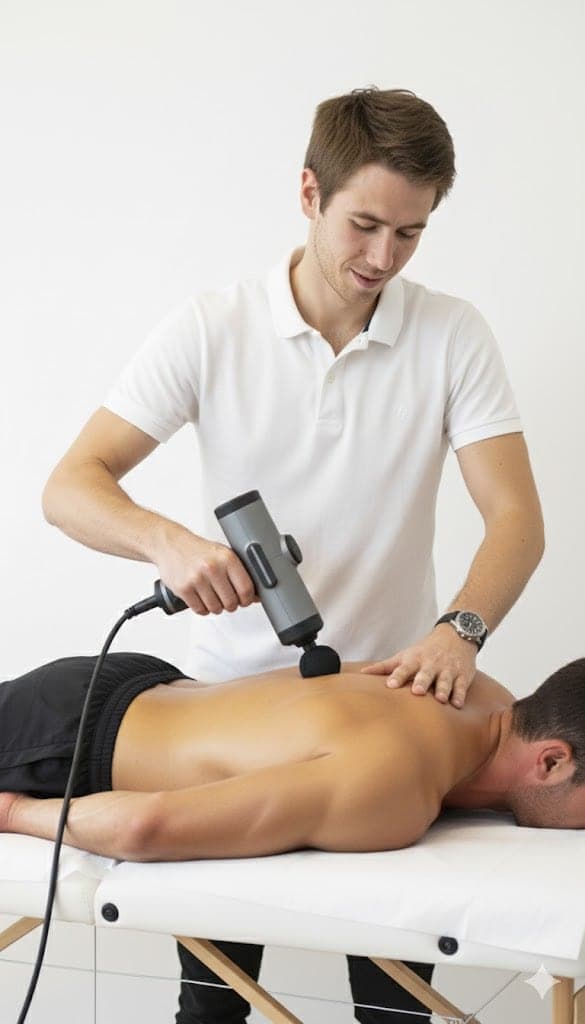
My mechanical deep-tissue methodology operates on entirely different principles. The specialized equipment I utilize delivers consistent, measurable pressure that penetrates beneath surface muscle layers to address fascial adhesions and myofascial restriction patterns. This isn’t subjective manual pressure – it’s precisely calibrated force application that achieves deeper tissue access than human hands can generate. The result? Actual structural change rather than temporary symptom masking.
Consider the mathematics: if traditional massage provides 2-3 days of partial relief requiring monthly sessions at the session price, you’re investing a substantial sum annually for minimal progress. My approach typically requires 3-4 sessions to achieve lasting results, representing both superior outcomes and better financial efficiency. The time savings alone – traveling to your location rather than requiring spa visits – adds tremendous value for busy professionals.
The biomechanics of budget-conscious treatment selection
Busy people need evidence-based decision-making frameworks, not marketing promises. When evaluating affordable massage options, you must understand the physiological mechanisms that create lasting change versus temporary comfort. I’ve spent years studying fascial architecture and myofascial release patterns, and the science is unambiguous: superficial pressure application cannot address deep tissue restrictions.
Last month, I worked with a software engineer experiencing chronic lower back dysfunction. Previous massage experiences had focused on surface muscle relaxation, providing 24-48 hours of reduced symptoms before full pain return. Through detailed assessment, I identified specific fascial adhesions in his thoracolumbar fascia and piriformis complex that were creating compensatory movement patterns throughout his kinetic chain.
Using mechanical deep-tissue protocols, I was able to apply consistent 40-pound pressure to these targeted areas – force levels impossible to achieve and maintain through manual techniques. The mechanical advantage allows for sustained pressure application over 8-10 minute intervals per treatment zone, creating measurable fascial lengthening and trigger point deactivation. This isn’t subjective “feeling better” – it’s quantifiable tissue change that addresses root causation.
The equipment I utilize provides complete intensity control, from gentle introductory pressure to powerful athletic-level treatments. This precision eliminates the variability inherent in manual therapy, where therapist fatigue, technique inconsistency, and subjective pressure perception create unpredictable outcomes. Every session delivers identical force application and treatment depth, ensuring consistent progress rather than hit-or-miss results.
From a cost-effectiveness standpoint, this mechanical precision translates directly to faster resolution timelines. While traditional massage might require 12-16 sessions to achieve modest improvements, my advanced methodology typically produces significant functional changes within 3-4 treatments. The mathematics are compelling: superior results in 75% less time, delivered at your location for maximum convenience.
Understanding tissue mechanics also reveals why relaxation-focused approaches fail for busy professionals. Chronic stress creates sustained muscle tension patterns that develop into fascial restrictions and movement compensations. Light pressure application may temporarily reduce sympathetic nervous system activation, but it doesn’t address the structural adaptations that perpetuate dysfunction. You need mechanical intervention that matches the intensity of the underlying problem.
Mobile massage services: convenience meets clinical efficacy
The logistics of traditional massage therapy are fundamentally incompatible with busy professional lifestyles. Spa appointments require travel time, parking, waiting rooms, and schedule coordination that busy people simply cannot accommodate consistently. I recognized this barrier early in my practice and restructured my entire service delivery model around client convenience and time optimization.
I travel to your location with a professional treatment table and all necessary equipment. This isn’t a compromise in treatment quality – it’s an enhancement that eliminates every barrier preventing consistent care. The specialized mechanical equipment is fully portable, delivering identical treatment depth and precision whether in a corporate office, home setting, or hotel room. Location flexibility becomes a competitive advantage rather than a limitation.
Consider the time economics: traditional massage requires 2-3 hours total commitment including travel, arrival buffer, treatment, and return transit. My mobile approach reduces this to the actual treatment duration – typically 60-90 minutes depending on complexity. For executives billing by the hour, this time efficiency alone justifies premium pricing while still representing exceptional value delivery.
The clinical environment I create in your space often surpasses traditional spa settings. There are no distractions, no waiting between clients, and no pressure to conclude treatment prematurely due to scheduling constraints. I can dedicate whatever time necessary to achieve complete fascial release and biomechanical optimization. This personalized attention level is impossible in high-volume clinic settings.
Mobile service delivery also enables consistent treatment schedules that support cumulative progress. Rather than waiting weeks between available appointments, we can establish regular intervals that maintain tissue quality and prevent regression. This consistency accelerates resolution timelines and maximizes your investment return through compound improvement effects.
The professional presentation extends beyond convenience to treatment credibility. I arrive with clinical-grade equipment, detailed assessment protocols, and comprehensive treatment documentation. This isn’t casual relaxation – it’s systematic therapeutic intervention that treats your time and investment with appropriate respect. Busy professionals recognize and appreciate this level of professional commitment.
Insurance coverage and health savings account strategies
Sophisticated healthcare consumers understand that legitimate therapeutic massage often qualifies for insurance reimbursement or health savings account utilization. However, most massage providers operate as wellness services rather than clinical treatment, limiting your financial options. My background in Physical Education and Nutrition, combined with a decade of clinical practice, positions our sessions as legitimate healthcare interventions.
I provide detailed treatment documentation that meets insurance requirements for therapeutic massage claims. Each session includes comprehensive assessment findings, specific treatment protocols applied, measurable outcomes achieved, and recommendations for continued care. This clinical documentation standard often enables partial or complete reimbursement through flexible spending accounts or health savings arrangements.
The key distinction lies in treatment approach and outcome measurement. Insurance providers recognize therapeutic interventions that address specific diagnoses with measurable improvement protocols. My mechanical deep-tissue methodology produces quantifiable results – increased range of motion, reduced pain scale ratings, improved functional capacity – that meet clinical documentation requirements.
For clients utilizing health savings accounts, our investment represents legitimate medical expense that provides tax advantages over traditional wellness spending. The lasting nature of results achieved through advanced mechanical techniques often qualifies as preventative care, further supporting reimbursement eligibility. I work with clients to ensure proper documentation and billing procedures maximize their benefits utilization.
Corporate wellness programs increasingly recognize massage therapy as legitimate healthcare investment that reduces overall medical costs and improves employee productivity. I’ve partnered with several organizations to provide on-site employee services that qualify for corporate healthcare spending. The convenience factor and clinical results make this arrangement extremely cost-effective for busy professionals with demanding schedules.
Comparing traditional spa pricing with results-oriented investment
The massage industry has trained consumers to think in terms of hourly rates rather than outcome values. This pricing psychology keeps people trapped in cycles of recurring treatments that never address underlying dysfunction. After analyzing hundreds of client experiences, I’ve identified the true cost differential between symptom management and problem resolution.
Typical spa massage pricing varies from clinic to clinic, with most clients requiring monthly appointments to maintain minimal symptom relief. Annual investment averages a wide range of costs for marginal, temporary improvements that require continuous maintenance. The cumulative cost over 2-3 years reaches a wide range of costs with minimal functional progress and no lasting resolution.
My mechanical deep-tissue approach requires higher per-session investment but achieves lasting results within 3-4 treatments. Total resolution cost typically ranges a wide range of costs representing 60-70% savings compared to traditional approaches while delivering superior, lasting outcomes. The time savings – elimination of recurring appointments – provides additional value that busy professionals particularly appreciate.
Beyond direct financial comparison, consider productivity returns on treatment investment. Chronic pain reduces professional efficiency, decision-making capacity, and creative output. One client, a consulting firm partner, calculated that eliminating his chronic neck dysfunction increased his billable hour capacity by 15% – representing a substantial sum additional annual revenue. His initial treatment investment of a substantial sum generated 45:1 return within the first year.
The risk-reward profile also favors results-oriented investment. Traditional massage provides temporary comfort with guaranteed regression, requiring indefinite financial commitment with no resolution timeline. My methodology either achieves measurable improvement within 2-3 sessions or we modify the approach. You have clear progress indicators and definitive outcome expectations, not open-ended treatment schedules.
Equipment-assisted treatment eliminates many variables that affect traditional massage value delivery. Therapist fatigue, technique inconsistency, and subjective pressure application create unpredictable session quality. My mechanical approach ensures identical treatment intensity and precision every session, maximizing your investment consistency and minimizing outcome variability.
Corporate wellness programs and group pricing strategies
Forward-thinking organizations recognize that employee wellness investments generate measurable productivity returns, reduced healthcare costs, and improved retention rates. I’ve developed corporate partnership programs that deliver my advanced mechanical methodology at scale while maintaining individual treatment quality and clinical outcomes.
Group pricing structures provide significant per-session reductions while preserving treatment efficacy through my systematic approach. Corporate clients typically achieve 30-40% cost savings compared to individual rates, making advanced therapy accessible to broader employee populations. The convenience of on-site service delivery eliminates travel time and schedule conflicts that traditionally prevent consistent participation.
I recently implemented a program with a technology company experiencing high levels of employee neck and back complaints related to prolonged computer work. Rather than offering generic relaxation massage, I conducted individual assessments to identify specific dysfunction patterns and created personalized treatment protocols using my mechanical equipment. Results included 78% reduction in employee-reported pain levels and 23% decrease in related sick day utilization.
The corporate model enables prevention-focused interventions that address problems before they become chronic conditions requiring expensive medical treatment. Early intervention through mechanical deep-tissue therapy often prevents the development of movement compensations and secondary dysfunction that create long-term healthcare costs. This preventative approach demonstrates clear ROI for employer healthcare spending.
Executive-level treatments within corporate settings often focus on performance optimization rather than problem resolution. High-performing professionals benefit from biomechanical efficiency improvements that enhance endurance, focus, and decision-making capacity. These performance gains translate to measurable business outcomes that justify premium investment levels while providing individual executives with competitive advantages.
Scheduling flexibility becomes crucial for corporate programs serving busy professionals. I accommodate early morning, lunch break, and after-hours appointments that minimize work disruption. The mobile equipment setup requires minimal space and time, making integration with existing workplace routines seamless and professional.
Subscription models and treatment packages for ongoing care
While my primary focus remains lasting problem resolution rather than ongoing maintenance, some busy professionals benefit from periodic optimization sessions that maintain peak biomechanical function. I’ve developed subscription models that provide cost-effective access to my advanced methodology for clients who choose continued performance enhancement beyond initial problem resolution.
Quarterly optimization programs typically include comprehensive functional assessments, targeted mechanical treatments, and personalized exercise protocols that maintain tissue quality between sessions. This approach prevents the development of new dysfunction patterns while preserving the improvements achieved through initial intensive treatment. Subscription pricing provides 25-30% savings compared to individual session rates.
The subscription model particularly benefits athletes and high-performance professionals whose activities create ongoing tissue stress that can accumulate into functional limitations. Regular mechanical intervention prevents minor restrictions from developing into major dysfunction, maintaining optimal movement quality and performance capacity. This preventative approach proves far more cost-effective than reactive treatment of established problems.
Treatment packages for specific conditions – such as chronic desk worker syndrome or athletic performance optimization – provide structured resolution pathways with predictable timelines and costs. Rather than open-ended treatment relationships, packages define clear objectives, measurable milestones, and completion criteria. This approach respects busy professionals’ need for defined commitments and quantifiable outcomes.
Package pricing typically provides 15-20% savings compared to individual sessions while ensuring treatment consistency and progression. The financial commitment also supports treatment compliance, as clients have invested in complete resolution rather than symptom management. This psychological factor often accelerates progress and improves final outcomes.
Flexible payment options within subscription and package models accommodate various budget preferences and cash flow considerations. Monthly payment plans make higher-quality treatment accessible without significant upfront investment, while prepayment discounts reward clients who prefer immediate full commitment. These options ensure financial considerations never prevent access to superior treatment.
Home treatment tools and self-maintenance techniques
Education forms a crucial component of my treatment philosophy, empowering clients to maintain tissue quality and prevent dysfunction recurrence through proper self-care protocols. However, I’m selective about recommending home treatment tools, as most consumer devices lack the precision and power necessary for meaningful therapeutic intervention.
The mechanical equipment I utilize generates 40-80 pounds of precisely controlled pressure that penetrates deep fascial layers – force levels impossible to achieve through manual self-treatment or typical consumer devices. Most foam rollers, massage balls, and handheld devices provide superficial pressure that may temporarily reduce symptoms without addressing underlying fascial restrictions.
That said, specific movement patterns and stretching protocols can support the improvements achieved through professional mechanical treatment. I provide customized exercise programs that maintain tissue mobility and prevent the development of new restriction patterns. These protocols focus on movement quality rather than equipment dependency, ensuring long-term sustainability without ongoing product purchases.
For clients interested in home maintenance tools, I recommend specific devices that complement rather than replace professional treatment. Percussion massage guns can provide beneficial surface-level stimulation when used correctly, but they cannot substitute for deep fascial release achieved through clinical-grade mechanical intervention. Understanding these limitations prevents unrealistic expectations and treatment delays.
The most valuable self-maintenance approach involves biomechanical education that prevents dysfunction development. I teach clients to recognize early warning signs of tissue restriction, modify problematic movement patterns, and implement corrective exercises before minor issues become major problems. This knowledge-based approach provides long-term value that extends far beyond any specific treatment tool.
Ergonomic optimization often provides greater long-term benefit than expensive home treatment devices. Proper workstation setup, movement breaks, and posture awareness prevent the accumulation of tissue stress that creates dysfunction. These environmental modifications cost little to implement but provide continuous protective benefits that reduce future treatment needs.
Time-efficient treatment protocols for maximum results
Busy professionals require maximum therapeutic benefit within minimum time commitment. Traditional massage therapy often wastes significant session time on generalized relaxation techniques that provide minimal lasting benefit. My mechanical methodology focuses exclusively on problem-specific interventions that achieve measurable progress within concentrated treatment windows.
Typical session duration ranges 60-90 minutes depending on complexity, but every minute addresses specific therapeutic objectives rather than general comfort goals. Pre-treatment assessment identifies exact dysfunction patterns, mechanical intervention targets these specific restrictions, and post-treatment evaluation confirms measurable improvement. This systematic approach eliminates wasted time and maximizes outcome efficiency.
I’ve developed rapid assessment protocols that identify primary dysfunction patterns within 10-15 minutes, allowing maximum time allocation for corrective intervention. Years of clinical experience enable quick recognition of common restriction patterns and appropriate treatment selection. This expertise prevents time-consuming trial-and-error approaches that characterize less experienced practitioners.
The mechanical equipment enables sustained pressure application that would be impossible through manual techniques, accelerating tissue change and reducing total treatment time requirements. Where traditional massage might require multiple sessions to achieve modest improvement in specific restriction patterns, mechanical intervention often produces significant changes within single treatment episodes.
Treatment scheduling accommodates busy professional demands through early morning, lunch break, and evening appointments. Mobile service delivery eliminates travel time, and efficient protocols ensure you return to work or personal activities with enhanced function rather than treatment fatigue. This professional approach respects your time investment while maximizing therapeutic value.
Follow-up protocols focus on maintaining achieved improvements rather than requiring frequent re-treatment. Most clients achieve lasting resolution within 3-4 sessions, with optional periodic optimization sessions every 3-6 months. This approach minimizes ongoing time commitment while preserving treatment benefits through targeted maintenance interventions.
Insurance navigation and healthcare integration strategies
Healthcare system navigation requires understanding the distinction between wellness services and therapeutic interventions. My clinical background and treatment documentation meet medical standards that support insurance reimbursement and integration with broader healthcare management. This professional approach often enables financial coverage that reduces your out-of-pocket investment.
Physician referrals strengthen insurance reimbursement eligibility and demonstrate the clinical legitimacy of advanced massage therapy. I maintain professional relationships with primary care physicians, orthopedic specialists, and physical therapists who recognize the value of mechanical deep-tissue intervention for specific musculoskeletal conditions. These referral partnerships often expedite insurance approval processes.
Treatment documentation includes diagnostic codes, functional improvement measurements, and clinical terminology that satisfy insurance requirements for therapeutic massage claims. Unlike spa services that focus on relaxation and stress reduction, my approach addresses specific medical conditions with measurable intervention protocols that meet reimbursement criteria.
Health Savings Account and Flexible Spending Account utilization provides tax advantages for treatment investment, effectively reducing your cost by 20-30% depending on tax bracket. I provide proper documentation and billing procedures that ensure compliance with IRS requirements for qualified medical expenses, maximizing your healthcare dollar efficiency.
Integration with existing healthcare management creates synergistic benefits that improve overall treatment outcomes while reducing total healthcare costs. Mechanical massage therapy often prevents the progression of musculoskeletal problems that would otherwise require expensive medical interventions, prescription medications, or surgical procedures. This preventative approach demonstrates clear value to both patients and insurance providers.
Corporate insurance plans increasingly recognize massage therapy as legitimate preventative care that reduces overall healthcare utilization. I work with human resources departments to ensure proper benefit utilization and documentation that maximizes employee access to advanced therapeutic services through existing insurance coverage.
Return on investment analysis for busy professionals
Executive-level professionals must evaluate every investment through productivity and opportunity cost lenses. Treatment decisions require clear ROI analysis rather than simply comparing session prices. My mechanical deep-tissue methodology consistently demonstrates superior financial returns through enhanced performance, reduced downtime, and lasting problem resolution.
Consider the productivity implications of chronic pain or movement limitations. A client with a high hourly billing rate loses real money daily through pain-related concentration difficulties and movement restrictions. Over a year, this represents a substantial sum in reduced capacity. Initial treatment investment of a substantial sum that eliminates these limitations generates 10:1 return within the first year, with ongoing benefits compounding indefinitely.
Sleep quality improvements create additional performance benefits that busy professionals particularly value. Chronic muscle tension often disrupts sleep patterns, reducing cognitive function, decision-making capacity, and stress tolerance. Clients report dramatic sleep improvements within 1-2 treatments, leading to enhanced daytime performance that translates to measurable professional advantages.
Medical cost avoidance represents another significant ROI component. Early intervention through advanced massage therapy often prevents the development of conditions requiring expensive diagnostic procedures, prescription medications, or surgical interventions. The average cost of MRI imaging, specialist consultations, and pharmaceutical management for chronic pain conditions ranges a wide range of costs annually – investment that provides symptom management rather than problem resolution.
Quality of life improvements extend beyond measurable financial returns to encompass personal satisfaction, relationship quality, and recreational capacity. Clients report renewed ability to participate in sports, travel comfortably, and engage in family activities that chronic pain had previously limited. These intangible benefits often prove more valuable than direct financial returns.
Long-term healthcare planning benefits from establishing relationships with practitioners who provide lasting solutions rather than ongoing symptom management. My mechanical methodology creates lasting biomechanical improvements that reduce future treatment needs and healthcare costs, providing compound savings that accumulate over years and decades.
Frequently asked questions about affordable mechanical massage therapy
How does mechanical massage compare to traditional hands-on therapy in terms of cost-effectiveness?
Mechanical massage delivers superior cost-effectiveness through faster resolution timelines and lasting results. While traditional massage requires ongoing monthly sessions at a per-session fee (totaling a wide range of costs annually), my mechanical approach typically achieves lasting resolution within 3-4 sessions totaling a wide range of costs. The mechanical precision enables deeper tissue access and consistent pressure application that human hands cannot match, accelerating therapeutic progress and eliminating the need for indefinite maintenance treatments.
What makes mobile massage service financially advantageous for busy professionals?
Mobile service delivery eliminates 2-3 hours of travel, parking, and waiting time associated with traditional spa appointments, providing direct time savings worth a wide range of costs for executives billing by the hour. The convenience factor enables consistent treatment schedules that maximize therapeutic progress, while professional-grade portable equipment ensures identical treatment quality regardless of location. This combination of time efficiency and clinical excellence offers exceptional value for professionals with demanding schedules.
Can mechanical deep-tissue therapy qualify for insurance reimbursement or HSA payments?
Yes, my clinical documentation and treatment protocols meet insurance requirements for therapeutic massage reimbursement. With a Bachelor’s degree in Physical Education and Nutrition plus ten years of clinical experience, I provide detailed medical documentation including diagnostic codes, functional assessments, and measurable outcome reports that support insurance claims. HSA and FSA utilization provides additional tax advantages, effectively reducing treatment costs by 20-30% depending on your tax bracket.
How quickly can I expect to see results that justify the investment?
Most clients experience significant functional improvements within the first session, with measurable progress typically achieved within 2-3 treatments. The mechanical equipment enables deeper tissue access and consistent pressure application that accelerates therapeutic timelines compared to traditional methods. Unlike symptom-focused approaches that provide temporary relief, my methodology addresses root causation for lasting resolution, making continued investment unnecessary once objectives are achieved.
What is the difference between your mechanical approach and consumer massage devices?
Consumer devices typically provide 10-15 pounds of surface-level pressure, while my clinical-grade mechanical equipment generates 40-80 pounds of precisely controlled deep tissue pressure. This force differential enables access to fascial restrictions and trigger points that consumer tools cannot reach. Additionally, my clinical expertise guides treatment selection and progression, ensuring appropriate intervention for specific dysfunction patterns rather than generalized pressure application.
How do corporate wellness programs reduce individual treatment costs?
Corporate partnerships typically provide 30-40% cost savings through group pricing while maintaining individual treatment quality and personalized protocols. Companies benefit from reduced healthcare costs, improved employee productivity, and enhanced retention rates. On-site service delivery eliminates travel time for employees while providing convenient access to advanced therapeutic intervention that prevents minor problems from developing into expensive medical conditions.
Why is your approach more expensive per session than traditional massage?
Per-session pricing reflects the advanced equipment, clinical expertise, mobile service delivery, and lasting results achieved through mechanical precision. However, total resolution cost proves significantly lower than traditional approaches requiring ongoing maintenance treatments. The investment comparison should focus on final outcomes rather than hourly rates – lasting problem resolution versus indefinite symptom management creates dramatically different financial equations.
What happens if the mechanical treatment doesn’t achieve expected results?
My systematic approach provides clear progress indicators within 2-3 sessions, allowing early identification if alternative strategies are needed. Unlike open-ended traditional massage relationships, my methodology either achieves measurable improvement within predictable timelines or we modify the treatment approach. This accountability ensures your investment produces tangible results rather than hoping for eventual progress through continued sessions.
Strategic implementation of affordable mechanical massage therapy
Successful integration of advanced massage therapy into busy professional lifestyles requires strategic planning that aligns treatment schedules with productivity optimization goals. I work with clients to develop implementation strategies that maximize therapeutic benefits while minimizing schedule disruption and investment risk. This systematic approach ensures treatment success from both clinical and practical perspectives.
Initial consultation focuses on identifying specific dysfunction patterns, establishing measurable improvement objectives, and creating realistic timelines for resolution. Rather than generic treatment plans, we develop customized protocols that address your particular restrictions and performance goals. This personalized approach accelerates progress while ensuring efficient resource utilization throughout the therapeutic process.
Scheduling optimization becomes crucial for maintaining treatment consistency and momentum. We establish regular appointment patterns that support cumulative improvement while accommodating your professional responsibilities. Mobile service delivery provides flexibility for location changes, while advanced booking ensures priority access during peak demand periods. This logistical foundation prevents treatment delays that can compromise therapeutic progress.
Progress tracking through objective measurements demonstrates treatment value and guides protocol adjustments as needed. I document range of motion improvements, pain scale reductions, and functional capacity enhancements that provide clear evidence of therapeutic progress. This data-driven approach ensures your investment produces measurable returns while supporting insurance reimbursement documentation when applicable.
Long-term maintenance strategies focus on preserving achieved improvements through minimal ongoing intervention. Most clients transition to quarterly optimization sessions after initial intensive treatment, maintaining peak function without significant time commitment. This approach prevents regression while avoiding the dependency cycles that characterize traditional massage therapy relationships.
The ultimate goal involves establishing biomechanical efficiency that supports your professional performance and personal quality of life without requiring ongoing therapeutic intervention. My mechanical methodology creates lasting structural changes that eliminate dysfunction at its source, providing lasting solutions that justify the initial investment through years of improved function and reduced healthcare needs.
Written by
Chris
Massage therapist & body mechanics specialist
Norwegian-certified with a Bachelor’s in Physical Education and Nutrition and over ten years of clinical practice, working from a portable table in clients’ homes across the Paphos district.
This article is general information from clinical practice, not a medical diagnosis. If you have severe, worsening or unexplained pain, numbness, weakness, or pain after an accident, see a doctor first.