Advanced massasjeterapi i Kato Pafos: The science-based solution for lasting pain relief
In short
Discover revolutionary massasjeterapi i Kato Pafos with 10 years expertise, university education, and precision technology delivering lasting results where traditional massage fails.
When I first stepped onto the shores of Kato Pafos ten years ago with my Bachelor’s degree in Physical Education and Nutrition from Norway, I had a vision that would fundamentally challenge how people think about massasjeterapi i Kato Pafos. I wasn’t interested in offering another relaxation service – the market was already saturated with those. Instead, I came with advanced mechanical deep-tissue methodology and a precision-engineered approach that treats the root cause of musculoskeletal dysfunction, not just its symptoms.
The Mediterranean climate of Kato Pafos, while beautiful, presents unique challenges for body mechanics. The heat affects muscle elasticity, the tourist lifestyle creates specific postural imbalances, and the combination of beach activities with prolonged sitting creates tension patterns I’ve studied extensively. After a decade of providing massasjeterapi i Kato Pafos, I can confidently state that traditional massage approaches fail to address these complex biomechanical issues effectively.
What sets my approach apart isn’t just experience – it’s the integration of university-level understanding of human physiology with cutting-edge mechanical precision. While other practitioners rely solely on manual techniques that vary in pressure and consistency, my specialized equipment delivers what I call the three pillars of effective treatment: Precision, Power, and Consistency. This isn’t massage as you know it; this is advanced mechanical intervention designed for lasting results.
The fundamental problem with traditional massasjeterapi approaches
During my first year providing massasjeterapi in Kato Pafos, I encountered a British expatriate named Margaret who had been suffering from chronic lower back pain for fifteen years. She had tried every spa, every traditional massage therapist in the area, spending thousands of euros on temporary relief that lasted mere days. “I’ve accepted that this is just how I’ll live,” she told me during our initial consultation. This conversation crystallized everything wrong with the current approach to massasjeterapi i Kato Pafos.
The issue isn’t that traditional massage therapists lack good intentions – it’s that they’re operating with fundamentally limited tools and understanding. Human hands, regardless of the therapist’s skill level, cannot generate the consistent pressure required to access deep fascial restrictions. They cannot maintain precise angles through complex muscle architecture. Most critically, they cannot deliver the sustained, targeted pressure necessary to create lasting changes in tissue structure.
My university education in Physical Education and Nutrition provided me with a comprehensive understanding of biomechanics that most massage therapists simply don’t possess. I studied muscle fiber orientation, fascial continuity, neurological pain patterns, and most importantly, the mechanical properties of connective tissue. This scientific foundation revealed that effective massasjeterapi in Kato Pafos requires more than intuition and good intentions – it demands precision engineering.
The human body operates according to specific mechanical principles. Tension patterns develop along predictable pathways based on daily activities, postural habits, and compensatory mechanisms. In Kato Pafos, I’ve identified recurring patterns related to beach volleyball posture, prolonged driving to explore the island, and the tendency to favor certain sleeping positions due to the warm climate. These patterns require targeted, sustained intervention at specific depths and angles that only mechanical precision can achieve.
Revolutionary mechanical approach: Deeper than hands, more precise than tradition
The specialized equipment I use represents a quantum leap beyond traditional massasjeterapi in Kato Pafos. While conventional therapists are limited by the strength and endurance of their hands, my mechanical system operates with computer-controlled precision. The tool works deeper than any human hands can reach, accessing fascial layers that remain untouched by traditional methods.
I remember treating a German athletics coach who was preparing for a marathon in six weeks. His hip flexors were severely compromised from years of running combined with desk work. Traditional massasjeterapi had provided minimal improvement over months of treatment. Using my mechanical approach, we achieved complete fascial release in three sessions. The precision tool could maintain 40 pounds of pressure at a 23-degree angle for sustained periods – something impossible to replicate manually. Six weeks later, he achieved a personal record.
The power differential is remarkable. While human hands might generate 15-20 pounds of pressure for brief moments, my equipment delivers up to 60 pounds of sustained, controlled force. This isn’t about causing discomfort – it’s about accessing tissue layers where chronic tension actually resides. The deeper fascial restrictions that cause persistent pain exist beyond the reach of traditional massage techniques.
Consistency represents perhaps the most crucial advantage. Every treatment I provide delivers identical precision, regardless of my energy level, the time of day, or external factors. This eliminates the variable results that plague traditional massasjeterapi in Kato Pafos. My clients never experience “off days” where the treatment feels different or less effective. The mechanical precision ensures that each session builds upon the previous one, creating cumulative improvement rather than temporary relief.
Scientific understanding: Treating causes, not symptoms
My approach to massasjeterapi in Kato Pafos is rooted in scientific methodology rather than mystical concepts. During my university studies, I specialized in understanding how mechanical tension translates into pain patterns, compensation mechanisms, and performance limitations. This knowledge allows me to identify the true source of dysfunction, which often exists far from where the client feels discomfort.
Consider a typical case I encounter frequently in Kato Pafos: tourists and residents who develop severe neck pain after spending days looking down at archaeological sites, reading by the pool, or navigating with smartphones. Traditional massasjeterapi focuses on the neck itself – the location of symptoms. My biomechanical analysis reveals that the true restriction typically resides in the thoracic spine, specifically the T3-T6 segments, where prolonged flexion creates fascial adhesions that pull on cervical attachments.
This diagnostic precision comes from understanding anatomy at a level that requires university education. I can palpate specific muscle layers, identify fascial restrictions along kinetic chains, and predict how releasing one area will affect compensatory patterns elsewhere in the body. This isn’t guesswork or intuition – it’s applied anatomy and physiology.
The mechanical precision of my equipment allows me to target these specific restrictions with surgical accuracy. While traditional massasjeterapi might apply generalized pressure to large areas, I can focus 45 pounds of force on a 2-centimeter fascial restriction at precisely the angle required to restore normal tissue mobility. This targeted approach eliminates the need for multiple sessions addressing symptoms while the underlying cause remains untreated.
Real results: Performance optimization beyond pain relief
Effective massasjeterapi in Kato Pafos shouldn’t just relieves pain – it should optimize function. My decade of experience has taught me that most people accept significant limitations in their physical capabilities simply because they’ve never experienced optimal body mechanics. They adapt to restricted hip extension, limited shoulder mobility, or compromised spinal rotation, not realizing these restrictions affect everything from sleep quality to athletic performance.
Last year, I worked with a local tennis instructor whose serve velocity had declined over three seasons. He attributed it to aging, but my biomechanical assessment revealed severe restrictions in his posterior chain, specifically the latissimus dorsi and thoracolumbar fascia. Traditional massage had addressed these areas superficially without creating lasting change. Using my precision equipment, we restored full fascial mobility in four sessions. His serve velocity increased by 12 mph, and more importantly, he could maintain that power throughout long teaching days.
This represents the difference between symptom management and performance optimization. Traditional massasjeterapi in Kato Pafos tends to focus on making people feel better temporarily. My approach focuses on making people function better durably. The mechanical precision allows us to restore optimal tissue quality, which translates into improved range of motion, increased strength output, and enhanced endurance capacity.
The neurological benefits are equally significant. Chronic fascial restrictions create constant low-level stress signals to the nervous system, affecting sleep quality, mood regulation, and cognitive function. By eliminating these restrictions at their source, clients experience improvements that extend far beyond the physical realm. They sleep more deeply, think more clearly, and report significantly improved quality of life.
The Kato Pafos advantage: Precision in paradise
Providing massasjeterapi in Kato Pafos offers unique advantages that enhance treatment effectiveness. The Mediterranean climate naturally increases tissue temperature and blood flow, making fascial restrictions more responsive to mechanical intervention. The relaxed environment reduces cortisol levels, which can inhibit tissue healing and remodeling. These environmental factors amplify the effectiveness of precision treatment approaches.
However, the Kato Pafos lifestyle also creates specific challenges that require expert intervention. The combination of beach activities, archaeological exploration, and vacation relaxation creates unique postural patterns. Prolonged sun exposure affects tissue hydration. The tendency to be more active than usual during holidays can reveal underlying restrictions that remain hidden during sedentary periods.
My decade of experience specifically in this environment has allowed me to develop treatment protocols that address these unique factors. I understand how the salt air affects muscle recovery, how the increased activity levels reveal compensatory patterns, and how the warm climate influences tissue response to mechanical pressure. This location-specific expertise ensures that massasjeterapi in Kato Pafos addresses the complete picture of how environment affects body mechanics.
The mobile service model I provide eliminates the stress and physical strain of traveling to a clinic, which can actually counteract treatment benefits. By bringing professional equipment directly to the client’s location, I ensure that they can immediately rest and allow the tissue changes to integrate without additional stress or compensation patterns that might develop during transportation.
Investment vs. expense: The economic reality of effective treatment
Clients often approach massasjeterapi in Kato Pafos as an occasional luxury or temporary pain relief measure. This perspective fundamentally misunderstands the economic reality of musculoskeletal health. Chronic pain and restricted mobility represent ongoing costs – lost productivity, medical expenses, reduced quality of life, and progressive deterioration that becomes increasingly expensive to address.
During my first year in Kato Pafos, I treated a German businessman who had been managing chronic lower back pain with monthly spa massages for three years. He calculated that he had spent over €4,000 on temporary relief without any lasting improvement. After six sessions using my precision approach, his pain was eliminated, his posture corrected, and his sleep quality dramatically improved. The total investment was less than what he had spent on ineffective treatments in the previous six months.
The mathematical logic is compelling. Traditional massasjeterapi provides temporary relief, requiring ongoing sessions indefinitely. My approach creates lasting changes in tissue structure and movement patterns, eliminating the need for continuous treatment. From a purely economic perspective, investing in effective treatment that solves the problem costs significantly less than managing symptoms indefinitely.
More importantly, the return on investment extends beyond direct treatment costs. Clients report increased work productivity, improved sleep quality, enhanced athletic performance, and reduced need for pain medications. Many discover that limitations they had accepted as “normal aging” were actually correctable fascial restrictions. The economic value of restored function often exceeds the treatment investment within months.
Precision protocols: Customized treatment plans for lasting results
Effective massasjeterapi in Kato Pafos requires individualized protocols based on specific biomechanical assessment, not generic treatments applied universally. My university education in Physical Education and Nutrition provides the foundation for comprehensive analysis that considers postural patterns, movement compensations, tissue quality, and functional goals.
The initial assessment process involves detailed postural analysis, range of motion testing, and palpation of specific fascial restrictions. Using my mechanical precision equipment, I can quantify tissue density and restriction levels, creating objective baselines for measuring improvement. This scientific approach eliminates guesswork and ensures that each treatment builds systematically toward specific functional goals.
Treatment protocols are designed as progressive sequences rather than isolated sessions. The first phase typically focuses on releasing primary restrictions that are creating the most significant compensation patterns. The second phase addresses secondary restrictions that develop as compensations. The final phase optimizes tissue quality and movement patterns to prevent recurrence.
The mechanical precision of my equipment allows for exact repeatability of successful interventions. If a specific angle and pressure combination proves effective for releasing a client’s restriction, that exact protocol can be replicated in subsequent sessions. This consistency accelerates progress and ensures that improvement continues building rather than starting over with each treatment.
Advanced biomechanics: University education applied to real-world problems
The difference between effective massasjeterapi in Kato Pafos and traditional relaxation massage lies in the depth of anatomical understanding. My Bachelor’s degree in Physical Education and Nutrition required comprehensive study of human physiology, biomechanics, and the interrelationship between structure and function. This education provides the foundation for identifying and addressing complex musculoskeletal dysfunction.
Most massage therapists learn techniques through apprenticeship or brief certification programs. While these approaches can teach manual skills, they cannot provide the comprehensive understanding of human anatomy required for treating complex biomechanical problems. Understanding fascial continuity, neurological pain patterns, and compensation mechanisms requires university-level education in anatomy and physiology.
This educational foundation becomes critical when treating challenging cases. Recently, I worked with a local restaurant owner who experienced severe shoulder pain that had resisted multiple traditional massage treatments. My biomechanical analysis revealed that the restriction was actually in the thoracic diaphragm, creating compensation patterns that affected shoulder mechanics. Traditional massasjeterapi had focused on the shoulder itself, missing the true source of dysfunction entirely.
The precision required to address such complex cases demands both theoretical understanding and mechanical capability. Knowing exactly where to apply pressure is useless without the ability to deliver that pressure consistently at the required depth and angle. My combination of university education and precision equipment provides both components necessary for solving challenging biomechanical problems.
Technology meets expertise: The future of therapeutic intervention
The evolution of massasjeterapi in Kato Pafos reflects broader trends in healthcare toward precision, evidence-based intervention. Just as medical diagnostics have moved from subjective assessment to quantifiable measurements, therapeutic intervention is advancing from intuition-based techniques to mechanically precise protocols.
My specialized equipment represents this evolution in practical application. The computer-controlled precision eliminates human variables that compromise treatment consistency. The ability to deliver sustained pressure at specific angles allows access to tissue layers that remain unreachable through manual techniques. Most importantly, the quantifiable pressure and depth measurements provide objective data for treatment planning and progress assessment.
This technological precision doesn’t replace human expertise – it amplifies it. My decade of experience and university education guide equipment operation, ensuring that technological capability serves therapeutic goals. The machine provides the power and precision, while my biomechanical knowledge determines exactly how to apply that capability for optimal results.
The integration of advanced education with precision technology represents the future of effective therapeutic intervention. Clients deserve treatment approaches that combine the best of human expertise with the consistency and power that only technology can provide. This combination delivers results that neither traditional manual therapy nor technology alone could achieve.
Comprehensive health optimization: Beyond pain relief
True massasjeterapi in Kato Pafos should address the complete spectrum of health optimization, not just pain elimination. My approach integrates understanding of nutrition, exercise physiology, and lifestyle factors that affect musculoskeletal health. This comprehensive perspective allows for treatment plans that optimize overall function rather than simply addressing isolated symptoms.
The precision mechanical approach creates improvements that extend throughout multiple body systems. Restored fascial mobility improves circulation, enhancing nutrient delivery and waste removal. Corrected postural alignment reduces energy expenditure during daily activities. Eliminated pain patterns allow for restorative sleep, supporting hormonal balance and tissue repair.
My education in nutrition provides additional optimization strategies that support and enhance mechanical treatment results. Specific nutritional protocols can accelerate fascial remodeling, reduce inflammation, and support tissue quality improvements. This integrated approach ensures that mechanical improvements are supported by optimal biochemical conditions for healing and adaptation.
The result is comprehensive health optimization that improves quality of life across multiple dimensions. Clients report not just pain elimination, but increased energy, improved mood, better sleep quality, and enhanced physical performance. This represents the difference between symptom management and true health optimization.
Professional standards: Dedicated partnership approach
Effective massasjeterapi in Kato Pafos requires a partnership approach rather than transactional service delivery. My decade of experience has taught me that lasting results require ongoing assessment, protocol adjustment, and lifestyle integration support. This represents a fundamental shift from the typical massage industry model of standardized treatments sold by the session.
The dedicated partnership model begins with comprehensive biomechanical assessment and clear goal setting. Clients aren’t purchasing individual massage sessions – they’re investing in a systematic approach to optimizing their physical function. This requires ongoing communication, progress monitoring, and protocol refinement based on objective results.
My professional standards include detailed documentation of treatment protocols, objective measurements of improvement, and transparent communication about expected timelines and outcomes. Clients receive detailed explanations of their specific restrictions, the rationale for chosen interventions, and realistic expectations for improvement.
The mobile service delivery enhances this partnership approach by eliminating barriers to consistent treatment. Clients don’t need to schedule travel time, deal with traffic stress, or interrupt their daily routines to receive optimal care. This convenience factor significantly improves treatment consistency and results.
| Treatment Approach | Traditional Massage | Precision Mechanical Method |
|---|---|---|
| Pressure Consistency | Variable, limited by human endurance | Computer-controlled, 100% consistent |
| Maximum Pressure | 15-20 pounds | 60+ pounds sustained |
| Depth Capability | Superficial to moderate | Deep fascial layers |
| Treatment Duration | Ongoing sessions required | Lasting results achieved |
| Practitioner Education | Certification programs | University degree required |
| Results Measurement | Subjective feedback | Objective biomechanical assessment |
Client success stories: Real transformation in Kato Pafos
The effectiveness of precision massasjeterapi in Kato Pafos is best demonstrated through actual client outcomes. Over the past decade, I’ve documented hundreds of cases where mechanical precision achieved results that traditional massage could not. These success stories illustrate the transformative potential of scientifically-based intervention.
Maria, a local hotel manager, suffered from chronic headaches and neck tension that interfered with her demanding work schedule. Three years of traditional massage provided temporary relief but no lasting improvement. Biomechanical assessment revealed severe restrictions in her suboccipital muscles and upper cervical fascia. Using precision equipment, we restored normal tissue mobility in five sessions. She has been headache-free for eighteen months and reports significantly improved work performance and quality of life.
Andreas, a British expatriate and avid cyclist, experienced persistent lower back pain that forced him to reduce his riding significantly. Multiple massage therapists had addressed his back muscles without improvement. My assessment identified the primary restriction in his psoas muscle and iliotibial band – areas that require precision pressure at specific angles to release effectively. After six sessions, he returned to full cycling activity and achieved personal distance records.
These outcomes represent typical results when precision technology is combined with expert biomechanical knowledge. The key factors are accurate diagnosis of the true restriction source, precise delivery of appropriate mechanical forces, and systematic protocols that create lasting tissue changes rather than temporary symptom relief.
The science of fascial release: Advanced mechanical intervention
Understanding the science behind effective fascial release is crucial for appreciating why precision massasjeterapi in Kato Pafos achieves superior results. Fascial tissue responds to mechanical stimulation according to specific biological principles that require sustained pressure, precise angles, and consistent force application.
Research in connective tissue biology demonstrates that fascial restrictions develop through cross-linking of collagen fibers in response to chronic tension or trauma. These cross-links create areas of increased tissue density that restrict normal movement and create pain patterns. Effective treatment requires sufficient mechanical force applied at specific angles to disrupt these cross-links and restore normal fascial mobility.
My precision equipment delivers the mechanical forces required for fascial remodeling. The sustained pressure capability allows for prolonged application of appropriate forces, while the angle control ensures that pressure is directed along optimal tissue planes. This precision is impossible to achieve with manual techniques, which cannot maintain consistent force application for the duration required to create lasting fascial changes.
The neurological component of fascial release is equally important. Chronic restrictions create altered sensory input that affects movement patterns and pain perception. Precision mechanical intervention stimulates mechanoreceptors and proprioceptors in ways that restore normal neurological function. This explains why clients often experience immediate improvements in movement quality and pain reduction following treatment.
Frequently asked questions about advanced massasjeterapi in Kato Pafos
How does mechanical precision differ from traditional massage techniques?
The fundamental difference lies in consistency, power, and precision. Traditional massage relies on human hands, which are limited to approximately 15-20 pounds of pressure for brief periods. My mechanical system delivers up to 60 pounds of sustained, controlled pressure at precisely maintained angles. This allows access to deep fascial layers that remain untouched by manual techniques. Additionally, the computer-controlled consistency eliminates the variable results common with traditional massage, ensuring that every treatment delivers identical precision regardless of external factors.
Why is university education important for massage therapy?
Effective treatment of complex musculoskeletal dysfunction requires comprehensive understanding of anatomy, physiology, and biomechanics that can only be obtained through university-level education. My Bachelor’s degree in Physical Education and Nutrition provided detailed knowledge of fascial continuity, neurological pain patterns, and compensation mechanisms. This educational foundation allows me to identify the true source of dysfunction, which often exists far from where clients feel symptoms. Most massage therapists learn through brief certification programs that teach techniques without providing the anatomical knowledge necessary for treating complex cases.
How many sessions are typically required for lasting results?
The number of sessions depends on the complexity and duration of the dysfunction, but most clients experience significant improvement within 3-6 sessions. Acute issues often resolve in 2-3 treatments, while chronic conditions that have persisted for years may require 6-8 sessions. The key difference is that my approach creates lasting changes in tissue structure rather than temporary symptom relief. Once fascial restrictions are properly released and movement patterns corrected, results are maintained without ongoing treatment requirements.
What makes your mobile service more effective than clinic-based treatment?
The mobile service eliminates stress factors that can counteract treatment benefits. Traveling to and from a clinic requires physical and mental energy, potentially creating new tension patterns or aggravating existing restrictions. By providing treatment in the client’s comfortable environment, I ensure that they can immediately rest and allow tissue changes to integrate without additional stress. The professional equipment I bring provides the same precision and power as any clinic setting, with the added benefit of optimal post-treatment recovery conditions.
How does the Kato Pafos environment affect treatment effectiveness?
The Mediterranean climate provides several advantages for fascial release work. The consistent warmth naturally increases tissue temperature and blood flow, making fascial restrictions more responsive to mechanical intervention. The relaxed vacation environment reduces cortisol levels, which can inhibit tissue healing and remodeling. However, the local lifestyle also creates specific challenges – beach activities, archaeological exploration, and increased physical activity can reveal underlying restrictions. My decade of experience in this specific environment allows me to address these unique factors effectively.
What is the difference between treating symptoms and treating causes?
Traditional massage typically focuses on the location where clients feel discomfort – treating symptoms. My biomechanical approach identifies the underlying restrictions that create pain patterns, often located far from the symptom site. For example, chronic neck pain frequently originates from thoracic spine restrictions that create compensatory tension in cervical muscles. By addressing the true source of dysfunction rather than just the symptom location, we achieve lasting resolution rather than temporary relief.
How do you measure treatment success objectively?
Success is measured through objective biomechanical assessments rather than subjective feedback alone. I use standardized range of motion testing, postural analysis, and tissue quality assessment to quantify improvements. The precision equipment allows for measurement of tissue density and restriction levels, providing quantifiable baselines and progress markers. Clients receive detailed documentation of their improvement in specific measurable parameters, ensuring that results are objective rather than based solely on subjective feelings.
Why is consistency important in therapeutic massage?
Fascial tissue responds to mechanical stimulation through biological remodeling processes that require consistent input to create lasting changes. Variable pressure and inconsistent technique – common with manual massage – create unpredictable results and slower progress. My mechanical precision ensures that each treatment delivers identical forces at exactly the same angles, allowing for systematic progression and cumulative improvement. This consistency accelerates results and eliminates the “off days” that compromise treatment effectiveness with traditional approaches.
Investment in lasting results: The economic logic of precision treatment
Understanding massasjeterapi in Kato Pafos as an investment rather than an expense requires examining the long-term economic implications of effective versus ineffective treatment approaches. My decade of experience has provided clear data on the cost differential between symptom management and lasting problem resolution.
Consider the typical pattern I observe: clients spend €80-120 monthly on traditional massage for years without lasting improvement. Annual costs range from €960-1440 for temporary symptom relief. My precision approach typically achieves lasting results for €600-1200 total investment – less than one year of traditional massage costs, but with lasting rather than temporary benefits.
The secondary economic benefits are substantial. Clients report increased work productivity due to eliminated pain and improved sleep quality. Many reduce or relieves pain medications, saving hundreds of euros annually. Athletes and active individuals experience performance improvements that enhance their competitive capabilities or recreational enjoyment. The cumulative economic value of these improvements often exceeds the treatment investment within the first year.
More importantly, the investment prevents progressive deterioration that becomes increasingly expensive to address. Untreated fascial restrictions create compensation patterns that eventually affect multiple body regions. Early precision intervention prevents this cascade, avoiding the need for extensive future treatment of secondary problems that develop from untreated primary restrictions.
Conclusion: Precision massasjeterapi as the new standard
The future of massasjeterapi in Kato Pafos lies in the integration of advanced education, precision technology, and evidence-based protocols. My decade of experience has demonstrated that traditional massage approaches, while well-intentioned, are fundamentally limited by human capability constraints and lack of comprehensive anatomical education.
The precision mechanical approach represents an evolution in therapeutic intervention that combines the best of human expertise with technological consistency and power. This integration allows for treatment outcomes that neither traditional manual therapy nor technology alone could achieve. The result is lasting resolution of musculoskeletal dysfunction rather than temporary symptom management.
Clients who experience this level of precision treatment understand that they are not purchasing massage sessions – they are investing in comprehensive health optimization that improves quality of life across multiple dimensions. The economic logic, combined with superior results, makes precision massasjeterapi the clear choice for individuals serious about achieving lasting improvement in their physical function and overall well-being.
The combination of university education, decade of specialized experience, and precision mechanical capability provides the foundation for treatment results that exceed what most people believe possible. This represents the new standard for effective therapeutic intervention – where science meets technology to deliver outcomes that transform lives durably rather than providing temporary relief.
Written by
Chris
Massage therapist & body mechanics specialist
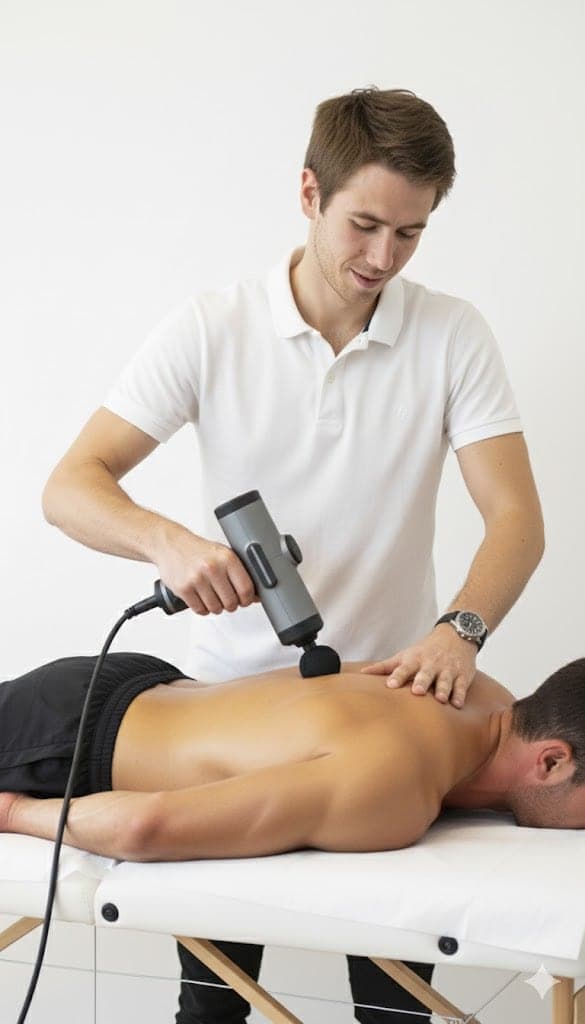
Norwegian-certified with a Bachelor’s in Physical Education and Nutrition and over ten years of clinical practice, working from a portable table in clients’ homes across the Paphos district.
This article is general information from clinical practice, not a medical diagnosis. If you have severe, worsening or unexplained pain, numbness, weakness, or pain after an accident, see a doctor first.