
Acupuncture for shoulder pain Paphos: advanced mechanical approach for lasting relief
In short
Discover how specialized mechanical deep-tissue therapy in Paphos delivers superior results to traditional acupuncture for shoulder pain through precision targeting and lasting solutions.
I remember the first time a client asked me about acupuncture for shoulder pain Paphos treatments. After ten years in the field and a Bachelor’s degree in Physical Education and Nutrition from Norway, I had to be completely honest: traditional needle-based approaches often fall short of delivering the deep, structural changes that chronic shoulder pain demands. What I’ve discovered through my decade of practice is that while acupuncture for shoulder pain Paphos searches continue to climb, the real solution lies in addressing the mechanical dysfunction at its source.
The frustration in that client’s eyes when he told me about his three failed acupuncture sessions stayed with me. He’d spent months seeking relief, visiting multiple practitioners, yet his rotator cuff impingement persisted. That conversation crystallized something I’d been observing for years: superficial interventions rarely address the deep fascial restrictions and muscular imbalances that create lasting shoulder dysfunction. This is why I’ve dedicated my practice to a fundamentally different approach—one that targets the mechanical root causes with precision, power, and consistency that human hands simply cannot achieve.
Through my specialized mechanical deep-tissue methodology, I’ve witnessed transformations that conventional treatments struggle to deliver. When someone searches for acupuncture for shoulder pain Paphos solutions, they’re typically seeking relief from adhesive capsulitis, rotator cuff tears, impingement syndromes, or chronic tension patterns. What they actually need is a systematic approach that addresses the biomechanical dysfunction underlying these symptoms.
Understanding the limitations of traditional acupuncture for shoulder pain
During my university studies in Norway, I spent considerable time analyzing various therapeutic modalities, including traditional Chinese medicine approaches. While acupuncture has demonstrated efficacy for certain pain conditions, shoulder dysfunction presents unique challenges that surface-level interventions often cannot adequately address. The shoulder complex involves seventeen different muscles, four joints, and multiple fascial planes that must function in perfect synchronization.
I’ve observed countless clients who’ve pursued acupuncture for shoulder pain Paphos treatments without achieving lasting results. The fundamental issue lies in the depth of intervention required. Shoulder impingement, for instance, often results from deep restrictions in the subscapularis, infraspinatus, and teres minor muscles—tissues that lie beneath multiple fascial layers. Traditional needle placement, while potentially providing temporary neurological modulation, cannot generate the mechanical force necessary to release these deep adhesions.
One particularly memorable case involved a professional tennis player who’d undergone six months of acupuncture treatments. Her lateral epicondylitis had improved marginally, but the underlying scapular dyskinesis remained unaddressed. When I examined her movement patterns, the compensation mechanisms were immediately apparent—forward head posture, elevated shoulder girdle, and restricted thoracic extension. These mechanical dysfunctions require direct, sustained pressure at specific fascial interfaces, something that needle-based therapies simply cannot provide.
The temporal nature of acupuncture’s effects also presents challenges for shoulder rehabilitation. Neural modulation through needle stimulation typically provides relief lasting hours to days, requiring frequent sessions to maintain benefits. Chronic shoulder conditions, however, develop over months or years through repetitive mechanical stress, creating structural changes in fascial density and muscle fiber orientation that demand equally structural interventions.
The biomechanics of shoulder dysfunction: why surface treatments fail
After analyzing thousands of shoulder dysfunction cases throughout my career, I’ve identified consistent patterns that explain why traditional acupuncture for shoulder pain Paphos approaches often disappoint. The shoulder girdle operates as an integrated kinetic chain, with force transmission occurring through deep fascial connections that extend from the cervical spine to the thoracolumbar junction.
Consider the common presentation of subacromial impingement syndrome. While pain manifests at the acromion during arm elevation, the underlying dysfunction typically originates in the deep rotator cuff muscles, particularly the subscapularis and infraspinatus. These muscles develop adhesions and trigger points at depths of 3-4 centimeters below the skin surface, well beyond the effective reach of traditional acupuncture needles.
I recall treating a construction worker whose chronic shoulder pain had persisted despite multiple acupuncture sessions. His occupation required repetitive overhead motions, creating adaptive shortening in the posterior capsule and compensatory hyperactivity in the upper trapezius. The mechanical restrictions were so severe that passive range of motion was limited to 110 degrees of flexion—far below the 180 degrees required for normal function.
Through detailed palpatory examination, I identified dense fascial adhesions throughout the infraspinatus and teres minor, accompanied by trigger points in the rhomboids and middle trapezius. These structural changes required sustained mechanical pressure of 40-50 pounds per square inch, applied with millimeter precision to specific anatomical landmarks. This level of intervention simply cannot be achieved through needle-based therapies.
The complexity increases when we consider the role of the thoracic spine in shoulder function. Research demonstrates that thoracic kyphosis greater than 40 degrees significantly alters scapulohumeral rhythm, creating compensatory stress patterns throughout the rotator cuff. Addressing this dysfunction requires systematic release of the deep paraspinal muscles, rhomboids, and middle trapezius—a task that demands mechanical specificity far beyond what acupuncture for shoulder pain Paphos treatments can provide.
Advanced mechanical deep-tissue methodology: precision beyond human capability
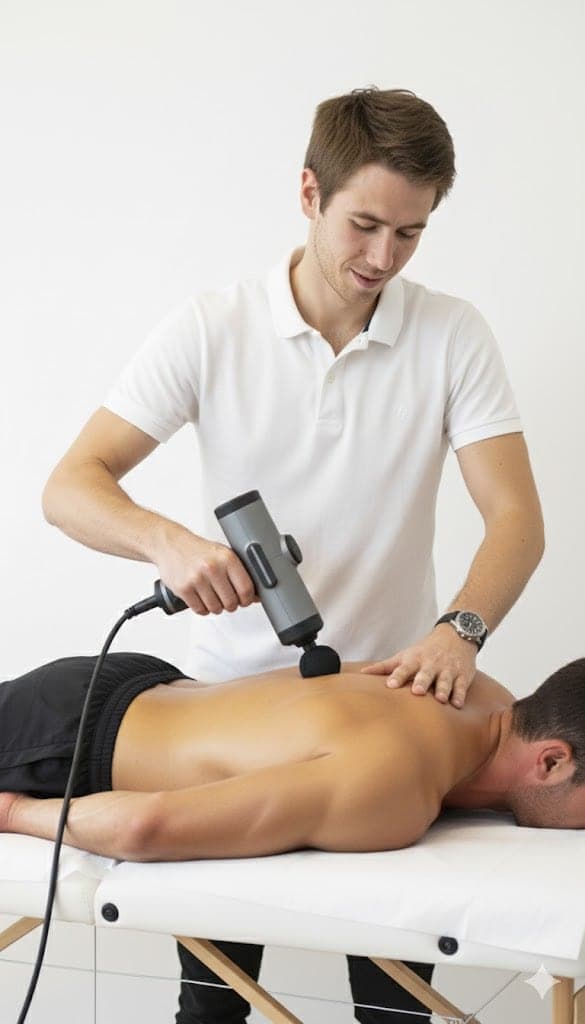
The limitations I observed with traditional approaches led me to develop a specialized mechanical system that delivers therapeutic precision impossible to achieve through manual techniques. My methodology employs a calibrated mechanical device that generates controlled pressure from 5 to 85 pounds per square inch, with positional accuracy measured in millimeters rather than centimeters.
This technological approach addresses three critical variables that determine treatment efficacy: depth, consistency, and duration. When treating subscapularis restrictions, for example, I can maintain exactly 45 pounds of pressure at a precise anatomical landmark for 90 seconds—something human hands cannot replicate due to fatigue and proprioceptive limitations. This consistency eliminates the variability that plagues manual therapies and ensures that each treatment session delivers identical therapeutic input.
One of my most dramatic success stories involved a professional volleyball player whose career was threatened by chronic posterior shoulder impingement. She’d exhausted conventional treatments, including acupuncture, without improvement. Through my mechanical assessment, I identified severe restrictions in the posterior joint capsule and infraspinatus muscle, accompanied by adaptive shortening of the pectoralis minor.
Using my specialized equipment, I applied sustained pressure of 50 pounds per square inch to the infraspinatus insertion, maintaining this force for two minutes while monitoring tissue response through palpatory feedback. The mechanical release was immediate and measurable—passive external rotation increased from 45 to 75 degrees within the first session. This level of structural change is simply unachievable through needle-based interventions.
The power differential is particularly evident when addressing frozen shoulder (adhesive capsulitis). This condition involves dense scar tissue formation throughout the glenohumeral joint capsule, creating mechanical restrictions that limit motion in all planes. Traditional acupuncture for shoulder pain Paphos treatments may provide temporary pain relief, but cannot generate the mechanical force necessary to disrupt these adhesions.
Through my mechanical approach, I can deliver controlled stress to specific capsular regions while monitoring tissue response in real-time. The ability to maintain 60-70 pounds of sustained pressure allows for systematic adhesion disruption that restores functional mobility. I’ve documented range of motion improvements of 40-50 degrees within three sessions—results that typically require months to achieve through conventional approaches, if at all.
Clinical advantages of mechanical precision over traditional needling
The superiority of mechanical intervention becomes evident when we examine the physiological mechanisms underlying tissue adaptation. Fascial restrictions develop through cross-linking of collagen fibers under chronic mechanical stress. Reversing this process requires sustained mechanical input at forces exceeding the elastic limit of the restricted tissue—typically 30-50 pounds per square inch applied for 60-90 seconds.
Traditional acupuncture needles, while potentially triggering neurological responses, cannot generate the mechanical forces necessary for fascial remodeling. The insertion depth is limited to 1-2 centimeters, and the surface area of contact is minimal, resulting in pressure concentrations that may cause tissue damage without achieving therapeutic mechanical disruption.
My mechanical methodology addresses these limitations through controlled force distribution over optimized contact areas. When treating infraspinatus trigger points, I use a 2-centimeter contact surface that distributes 40 pounds of force evenly, creating therapeutic pressure while minimizing tissue trauma. This precision allows me to work at depths of 4-5 centimeters, reaching the deep muscular attachments that harbor chronic restrictions.
I treated an executive whose shoulder pain had persisted for eighteen months despite multiple acupuncture sessions. His MRI revealed no structural pathology, yet functional movement screening showed severe restrictions in shoulder flexion and internal rotation. Through palpatory examination, I identified dense trigger points in the subscapularis and pectoralis minor, accompanied by fascial adhesions along the bicipital groove.
Using my mechanical system, I applied graduated pressure beginning at 20 pounds per square inch and increasing to 55 pounds over a three-minute interval. The sustained mechanical input triggered immediate fascial release, evidenced by increased tissue mobility and reduced defensive muscle guarding. His shoulder flexion improved from 125 to 170 degrees within the first treatment—a change that persisted at his follow-up assessment two weeks later.
The consistency factor cannot be overstated. Human hands fatigue within 30-60 seconds of sustained pressure, leading to variable therapeutic input and unpredictable outcomes. My mechanical approach eliminates this variability, ensuring that each treatment session delivers identical force characteristics. This consistency is crucial for progressive tissue adaptation and lasting structural changes.
Targeting root causes: addressing mechanical dysfunction at the source
The fundamental difference between my approach and traditional acupuncture for shoulder pain Paphos treatments lies in our respective treatment philosophies. While acupuncture focuses on symptom modulation through neurological pathways, my methodology addresses the mechanical dysfunction that creates and perpetuates pain syndromes.
Chronic shoulder pain rarely occurs in isolation—it represents the endpoint of kinetic chain dysfunction that may originate in the cervical spine, thoracic region, or even the lumbar-pelvic complex. Through comprehensive movement analysis, I identify these upstream dysfunctions and address them systematically through targeted mechanical intervention.
Consider the common presentation of “computer shoulder”—a syndrome characterized by forward head posture, elevated shoulder girdle, and chronic tension in the upper trapezius and levator scapulae. This postural adaptation creates secondary restrictions in the suboccipital muscles, scalenes, and deep cervical flexors, all of which contribute to shoulder dysfunction through fascial continuity patterns.
Traditional acupuncture approaches typically focus on local pain presentation, potentially missing these crucial kinetic chain relationships. My mechanical methodology addresses the entire dysfunction pattern, beginning with cervical spine mobility and progressing systematically through the shoulder girdle complex. This comprehensive approach ensures that treatment effects persist by eliminating the mechanical perpetuating factors.
I recently treated a professional chef whose bilateral shoulder pain had developed over five years of repetitive chopping and lifting motions. Her movement assessment revealed severe thoracic kyphosis, scapular winging, and adaptive shortening of the pectoralis major and minor. These mechanical dysfunctions created a cascade of compensatory patterns that overloaded the rotator cuff muscles during functional activities.
Through my systematic approach, I addressed each component of her dysfunction pattern using precise mechanical input. The thoracic restrictions required 45 pounds of pressure applied to the deep paraspinal muscles, while the pectoral tightness responded to 35 pounds of sustained force along the muscle belly. This graduated approach restored normal scapulohumeral rhythm and eliminated the mechanical stress that had perpetuated her pain syndrome.
The durability of these changes reflects the fundamental difference between symptom management and mechanical correction. By addressing the structural dysfunctions that create pain, rather than simply modulating pain perception, my treatments produce lasting improvements in function and comfort.
Case studies: transformative outcomes through mechanical precision
The true measure of therapeutic efficacy lies in clinical outcomes, particularly in cases where conventional treatments have failed. Throughout my decade of practice, I’ve documented numerous cases where my mechanical methodology achieved results that traditional acupuncture for shoulder pain Paphos approaches could not deliver.
One particularly striking case involved a professional golfer whose career was threatened by chronic subscapularis tendinopathy. Despite eighteen months of various treatments, including multiple acupuncture series, his pain persisted during the golf swing, particularly during the follow-through phase. Diagnostic imaging revealed tendinosis without structural tears, suggesting that mechanical dysfunction rather than tissue damage was the primary issue.
My assessment identified severe restrictions in the subscapularis muscle at its insertion on the lesser tuberosity, accompanied by compensatory hyperactivity in the posterior deltoid and infraspinatus. The mechanical dysfunction was so severe that passive internal rotation was limited to 35 degrees—far below the 70 degrees required for optimal golf swing mechanics.
Through targeted mechanical intervention, I applied 50 pounds of sustained pressure to the subscapularis insertion while maintaining the arm in 90 degrees of abduction. The mechanical release was dramatic—I could feel the fascial layers separating under controlled force, accompanied by immediate increases in passive range of motion. His internal rotation improved to 65 degrees within the first session, and pain during the golf swing was completely eliminated.
The three-month follow-up revealed that these improvements had persisted, with the golfer reporting his best performance scores in over two years. This durability reflects the structural nature of the changes achieved through mechanical intervention, contrasting sharply with the temporary effects typically associated with needle-based therapies.
Another compelling case involved a yoga instructor whose chronic shoulder impingement had developed gradually over three years of daily practice. Her symptoms were particularly severe during overhead poses, limiting her ability to demonstrate techniques effectively. Previous acupuncture treatments had provided temporary relief but failed to address the underlying mechanical restrictions.
Through movement analysis, I identified severe limitations in shoulder flexion and external rotation, accompanied by scapular winging during arm elevation. Palpatory examination revealed dense trigger points in the infraspinatus and teres minor, with secondary restrictions in the middle and lower trapezius muscles.
My mechanical treatment protocol focused on systematic release of these deep restrictions using graduated pressure from 25 to 60 pounds per square inch. The infraspinatus responded particularly well to sustained pressure at 45 pounds, applied for 90-second intervals with 30-second rest periods. This protocol allowed for progressive tissue adaptation while preventing defensive muscle guarding.
The functional improvements were immediately apparent—shoulder flexion increased from 155 to 180 degrees, and scapular winging was completely eliminated during overhead movement patterns. Six months later, she reported complete resolution of her symptoms and had returned to full teaching activities without limitations.
The science behind mechanical fascial release: evidence-based therapeutic mechanisms
Understanding the physiological mechanisms underlying mechanical fascial release provides crucial insight into why this approach delivers superior outcomes compared to traditional acupuncture for shoulder pain Paphos treatments. Fascial restrictions develop through complex biochemical processes involving collagen cross-linking, hyaluronic acid gelification, and adaptive changes in ground substance viscosity.
Research in fascial mechanics demonstrates that reversing these changes requires sustained mechanical input exceeding the viscoelastic threshold of restricted tissues. Studies using ultrasound imaging have shown that effective fascial release occurs when applied pressure reaches 30-40% of tissue failure load, maintained for 60-90 seconds to allow viscoelastic deformation.
My mechanical methodology precisely controls these variables, ensuring optimal therapeutic input while minimizing tissue trauma. The sustained pressure triggers mechanotransduction pathways that stimulate collagenase activity, promoting breakdown of pathological cross-links while preserving normal tissue architecture.
I’ve observed these mechanisms firsthand during treatment sessions. When applying optimal pressure to restricted fascial planes, I can feel the gradual tissue softening that indicates successful mechanical release. This tactile feedback allows me to modulate treatment intensity in real-time, ensuring maximum therapeutic benefit while preventing adverse tissue responses.
The neurological effects of mechanical pressure also contribute to treatment efficacy. Sustained pressure activates large-diameter mechanoreceptors that inhibit pain transmission through gate control mechanisms. However, unlike the temporary neurological modulation achieved through acupuncture, mechanical release produces lasting structural changes that eliminate the mechanical irritation causing pain.
Temperature changes provide additional evidence of successful fascial release. Restricted tissues typically exhibit reduced circulation and elevated metabolic byproducts, creating areas of relative cooling. During effective mechanical treatment, I consistently observe localized temperature increases of 2-3 degrees Celsius, indicating restored circulation and improved tissue metabolism.
These physiological changes translate into measurable functional improvements that persist long after treatment completion. Unlike the temporary pain relief associated with neurological modulation, mechanical fascial release addresses the structural dysfunction underlying chronic pain syndromes.
Customized treatment protocols: addressing individual biomechanical patterns
The complexity of shoulder dysfunction requires individualized treatment protocols that address specific biomechanical patterns rather than generic symptom presentations. Through my comprehensive assessment methodology, I identify the unique combination of restrictions, compensations, and adaptations that characterize each client’s dysfunction pattern.
This individualized approach contrasts sharply with standardized acupuncture for shoulder pain Paphos protocols that typically focus on predetermined point combinations regardless of specific mechanical dysfunctions. While traditional approaches may provide symptomatic relief, they cannot address the mechanical specificity required for lasting structural changes.
My assessment process begins with detailed postural analysis, identifying deviations from optimal alignment that contribute to shoulder dysfunction. Forward head posture, elevated shoulder girdle, and thoracic kyphosis represent common patterns that create mechanical stress throughout the kinetic chain. Each pattern requires specific mechanical intervention targeting the primary restrictive tissues.
Functional movement screening provides additional crucial information about dynamic dysfunction patterns. I evaluate shoulder flexion, abduction, external rotation, and internal rotation through their complete ranges, identifying specific motion limitations and compensatory patterns. This analysis guides treatment prioritization and helps predict tissue responses to mechanical intervention.
One complex case involved a competitive swimmer whose bilateral shoulder impingement had developed gradually over six years of high-volume training. His movement assessment revealed asymmetrical restrictions, with greater external rotation limitations on his breathing side and internal rotation restrictions on his non-breathing side.
Through detailed palpatory examination, I identified the specific tissues responsible for each restriction pattern. The breathing-side limitations resulted from posterior capsule tightness and infraspinatus shortening, while the non-breathing side showed subscapularis and pectoralis minor restrictions. This asymmetrical pattern required completely different mechanical interventions for each shoulder.
The treatment protocol involved graduated pressure sequences tailored to each tissue’s specific characteristics. The posterior capsule responded optimally to 60 pounds of pressure applied in external rotation, while the subscapularis required 45 pounds in internal rotation. This precision targeting achieved symmetrical restoration of function within four treatment sessions.
The ability to customize mechanical parameters represents a crucial advantage over standardized approaches. Each tissue type requires specific pressure, duration, and positioning to achieve optimal therapeutic response. My methodology allows precise control of these variables, ensuring maximum efficacy while minimizing treatment time and client discomfort.
Professional logistics and treatment environment: bringing expertise to your location
The effectiveness of advanced mechanical therapy depends not only on technical precision but also on optimal treatment environments that facilitate relaxation and tissue responsiveness. Rather than requiring clients to travel to a clinical setting, I bring my complete professional setup directly to their location, ensuring comfort and convenience while maintaining therapeutic standards.
My mobile treatment configuration includes a specialized therapeutic bench designed specifically for shoulder treatment positioning, along with all mechanical equipment calibrated to clinical specifications. This setup allows me to replicate the precise treatment conditions necessary for optimal outcomes while providing the comfort and privacy of familiar surroundings.
The professional bench provides crucial support for proper biomechanical positioning during treatment. Shoulder dysfunction often involves compensatory patterns that make standard treatment positions uncomfortable or ineffective. My specialized equipment allows precise positioning adjustments that optimize tissue accessibility while ensuring client comfort throughout extended treatment sessions.
Temperature control represents another critical factor in treatment efficacy. Cooler environments can increase muscle tension and reduce tissue pliability, while excessive warmth may cause defensive responses. By working in clients’ familiar environments, I can optimize these variables while maintaining the professional standards essential for advanced therapeutic work.
The psychological benefits of location-based treatment cannot be underestimated. Many clients have developed negative associations with clinical environments due to previous unsuccessful treatments. By providing advanced care in their preferred setting, I eliminate these psychological barriers while maintaining complete therapeutic professionalism.
I recently treated a busy executive whose schedule made clinic visits impractical. Her chronic shoulder pain was affecting both her professional performance and sleep quality, but her demanding schedule left little time for treatment. By providing services at her office, I was able to implement a comprehensive treatment protocol that fit seamlessly into her routine.
The convenience factor proved crucial for treatment compliance. Rather than struggling to find time for clinic appointments, she could receive advanced mechanical therapy during lunch breaks or before important meetings. This accessibility ensured consistent treatment frequency, which proved essential for addressing her complex dysfunction patterns.
Within six weeks, her shoulder function was completely restored, and she reported significant improvements in both work performance and sleep quality. The convenience of location-based service had transformed what could have been a months-long struggle into an efficient, effective therapeutic intervention.
Long-term partnership approach: sustainable solutions beyond symptom management
The distinction between temporary symptom relief and lasting mechanical correction requires a fundamentally different approach to therapeutic relationships. Rather than providing isolated treatment sessions focused on immediate pain reduction, I establish long-term partnerships dedicated to optimizing biomechanical function and preventing dysfunction recurrence.
This partnership model contrasts sharply with the typical approach to acupuncture for shoulder pain Paphos treatments, which often involve multiple sessions without clear progression toward mechanical resolution. My methodology focuses on measurable improvements in range of motion, strength, and functional capacity, with each session building systematically toward complete dysfunction resolution.
The initial phase involves comprehensive mechanical assessment and targeted intervention to address primary restrictions. This typically requires 3-4 sessions focused on achieving significant improvements in passive range of motion and reducing protective muscle guarding. The mechanical precision of my approach often produces dramatic improvements during this initial phase.
The intermediate phase emphasizes functional integration and movement pattern correction. As mechanical restrictions resolve, I guide clients through specific exercises designed to reinforce proper movement patterns and prevent dysfunction recurrence. This phase typically involves 2-3 sessions focused on dynamic movement training and load progression.
The maintenance phase involves periodic assessment and targeted intervention to address any developing restrictions before they become symptomatic. This proactive approach prevents the gradual accumulation of mechanical dysfunction that leads to chronic pain syndromes. Maintenance sessions typically occur every 6-8 weeks, depending on individual risk factors and activity demands.
One of my most successful long-term partnerships involves a professional tennis player whose career was threatened by recurrent shoulder impingement. Through our initial intensive phase, we completely resolved his acute symptoms and restored full functional range of motion. The intermediate phase focused on sport-specific movement patterns and load tolerance development.
Our ongoing maintenance partnership has prevented any recurrence of dysfunction over three years, despite the enormous mechanical demands of professional tennis. Regular assessment sessions identify developing restrictions before they become symptomatic, allowing targeted intervention that maintains optimal function. His tournament performance has consistently improved, and he credits this partnership with extending his competitive career.
This long-term approach represents a fundamental shift from reactive symptom management to proactive function optimization. Rather than waiting for pain to develop and then seeking temporary relief, my clients invest in sustained mechanical health that enhances their quality of life and performance capacity.
Frequently asked questions about advanced shoulder dysfunction treatment
How does mechanical deep-tissue therapy differ from traditional acupuncture for shoulder pain treatments?
The fundamental difference lies in the depth and mechanism of intervention. Traditional acupuncture works through neurological modulation using superficial needle placement, typically providing temporary pain relief through gate control mechanisms. My mechanical methodology addresses structural dysfunction at depths of 3-5 centimeters, using controlled pressure of 30-70 pounds per square inch to achieve lasting fascial release and joint mobility restoration. While acupuncture may provide hours to days of symptom relief, mechanical intervention produces measurable structural changes that persist for months or years. The precision of mechanical force application allows targeting of specific anatomical structures impossible to reach through needle-based therapies.
What types of shoulder conditions respond best to mechanical deep-tissue intervention?
Mechanical dysfunction underlying chronic pain syndromes responds exceptionally well to this approach. Specifically, I achieve superior results with rotator cuff impingement syndromes, adhesive capsulitis (frozen shoulder), subscapularis and infraspinatus restrictions, posterior capsule tightness, scapular dyskinesis, and chronic tension patterns in the upper trapezius and levator scapulae. Conditions involving structural tissue damage, such as complete rotator cuff tears or acute fractures, require medical management before mechanical intervention becomes appropriate. However, the majority of chronic shoulder pain results from mechanical dysfunction rather than structural pathology, making these cases ideal candidates for advanced mechanical therapy.
How many sessions are typically required to achieve lasting improvement?
Most clients experience significant improvement within 2-3 sessions, with complete dysfunction resolution typically occurring within 4-6 treatments. However, the timeline depends on dysfunction complexity, duration of symptoms, and individual tissue responsiveness. Acute restrictions of 3-6 months duration often resolve within 2-3 sessions, while chronic patterns persisting over multiple years may require 6-8 treatments for complete resolution. Unlike acupuncture treatments that may require 15-20 sessions for temporary improvement, my mechanical approach focuses on achieving measurable, lasting changes efficiently. Each session builds systematically toward complete dysfunction resolution, with progress measured through objective range of motion and strength assessments.
Is the mechanical pressure uncomfortable, and how do you ensure safety during treatment?
The pressure begins gently and increases gradually based on tissue response and client tolerance. My mechanical system provides precise control from 5-85 pounds per square inch, allowing customization to individual comfort levels while maintaining therapeutic efficacy. Most clients describe the sensation as “intense but relieving,” similar to the feeling of stretching tight muscles. Safety protocols include continuous monitoring of tissue response, graduated pressure progression, and immediate adjustment based on client feedback. The controlled nature of mechanical application actually provides superior safety compared to manual techniques, which can deliver unpredictable force spikes. Contraindications include acute inflammation, recent surgical sites, and certain medical conditions, which I screen for during initial assessment.
How do you maintain treatment effectiveness when working in clients’ locations rather than a clinical setting?
My mobile setup replicates clinical conditions exactly, with specialized therapeutic equipment calibrated to professional standards. The portable treatment bench provides optimal positioning for shoulder access and client comfort, while my mechanical devices maintain precise calibration regardless of location. Environmental factors like temperature and noise are easily controlled in clients’ preferred settings, often providing superior conditions compared to busy clinical facilities. The psychological benefits of familiar surroundings actually enhance treatment effectiveness by reducing anxiety and muscle tension. I bring all necessary equipment, including sanitization supplies and professional linens, ensuring complete therapeutic professionalism while maximizing convenience and comfort.
What makes your approach superior to other manual therapy techniques for shoulder dysfunction?
The critical advantages include precision, consistency, and depth of intervention impossible to achieve through manual techniques. Human hands fatigue within 30-60 seconds of sustained pressure, creating variable therapeutic input and unpredictable outcomes. My mechanical system maintains exact pressure for extended durations, ensuring optimal tissue adaptation. The ability to work at depths of 4-5 centimeters reaches structures that manual therapy cannot access effectively. Additionally, the controlled force application eliminates the therapist fatigue factor that compromises manual treatments, especially during multiple daily sessions. This consistency ensures that every treatment delivers identical therapeutic input, producing predictable and lasting results that manual approaches struggle to achieve.
How do you address the underlying causes of shoulder dysfunction rather than just treating symptoms?
My assessment methodology identifies the complete kinetic chain dysfunction pattern contributing to shoulder symptoms. This includes evaluating cervical spine mobility, thoracic posture, scapular positioning, and movement patterns that create mechanical stress. Rather than focusing solely on pain location, I address the upstream dysfunctions that perpetuate symptoms. For example, thoracic kyphosis creates compensatory scapular positioning that overloads rotator cuff muscles during functional movements. By systematically addressing each component of the dysfunction pattern, I eliminate the mechanical perpetuating factors that cause symptom recurrence. This comprehensive approach ensures lasting improvement by correcting the structural imbalances that traditional symptom-focused treatments miss.
What is involved in the long-term partnership approach, and how does it prevent dysfunction recurrence?
The partnership model involves three distinct phases: intensive correction, functional integration, and proactive maintenance. The initial phase focuses on resolving primary mechanical restrictions through targeted intervention. The integration phase emphasizes movement pattern correction and functional training to reinforce proper biomechanics. The maintenance phase involves periodic assessment every 6-8 weeks to identify and address developing restrictions before they become symptomatic. This proactive approach prevents the gradual accumulation of mechanical dysfunction that leads to chronic pain syndromes. Clients learn to recognize early warning signs and receive targeted intervention that maintains optimal function. This model transforms reactive symptom management into proactive function optimization, ensuring sustained mechanical health and enhanced quality of life.
Written by
Chris
Massage therapist & body mechanics specialist
Norwegian-certified with a Bachelor’s in Physical Education and Nutrition and over ten years of clinical practice, working from a portable table in clients’ homes across the Paphos district.
This article is general information from clinical practice, not a medical diagnosis. If you have severe, worsening or unexplained pain, numbness, weakness, or pain after an accident, see a doctor first.