
Massage for tension headaches: why I start at the neck, not the scalp
In short
Massage for tension headaches works best when it treats the neck and jaw muscles that refer pain into the head, not just the scalp. I release those trigger points at your home in Paphos.
Most people who ask me for a scalp massage for headaches are really asking for something else. The scalp is where the pain lands, but the muscles driving it usually sit lower down, at the base of the skull and in the jaw. That is why my trigger point massage in Paphos starts at the neck and works upwards.
I have been treating tension-type headaches for more than ten years, first in Norway and now across the Paphos district as a mobile therapist. In this article I want to explain what is actually going on when your head feels clamped in a band, why a pleasant scalp rub rarely changes it for long, and how a proper massage for tension headaches is structured so the effect outlasts the session.
What a tension headache usually is
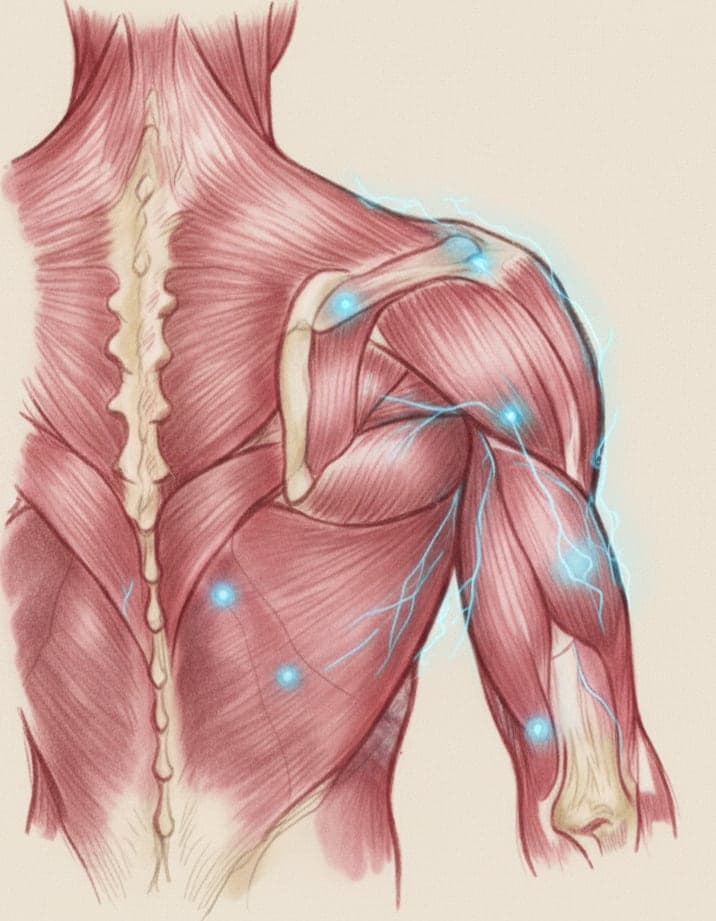
A tension-type headache is the dull, pressing, both-sided ache that most adults recognise. It is not throbbing, it is not usually made worse by climbing stairs, and it rarely comes with nausea or visual disturbance. What it does come with, in nearly every person I put my hands on, is a set of tender, over-shortened muscles that refer pain into the head.
The main culprits are predictable:
- The suboccipitals, four small muscles between the top of the neck and the base of the skull, which refer pain around the eye and forehead
- Upper trapezius, which refers up the side of the neck into the temple
- Sternocleidomastoid at the front of the neck, which sends pain behind the eye and across the forehead
- Temporalis and masseter, the jaw closers, which refer into the temple and along the teeth
- Splenius and semispinalis in the back of the neck, which refer to the top and back of the head
The pattern I see most often in Paphos is a desk or laptop worker, or a driver, whose head has drifted forward of the shoulders. Every centimetre of forward drift makes the neck extensors work harder to hold the head up. They fatigue, they develop trigger points, and those trigger points refer pain into the scalp. The scalp itself is rarely the origin. It is the screen the pain is projected onto.
Jaw clenching, particularly at night, adds a second engine. If you wake with a headache and tightness in front of the ears, the temporalis and masseter are almost certainly involved, and no amount of work on the back of the head will settle them.
Why scalp massage alone rarely holds
I am not against scalp massage. Slow, firm work across the temporalis and the galea does calm the nervous system, and for many clients it is the most pleasant part of a session. The problem is what it leaves untouched.
The scalp muscles are thin and sit directly on bone. You can release them thoroughly in a few minutes. But if the suboccipitals and the upper trapezius are still shortened and full of trigger points, they will re-tension the whole system within a day or two, and the referred ache returns. This is the cycle people describe to me as "it helps for an afternoon".
There is a second reason superficial work does not hold. Trigger points respond to sustained, specific pressure held on the exact spot until the tissue changes under the finger. Gliding strokes across the surface, however deep, pass over them. The technique matters as much as the location.
How I treat massage for tension headaches
My approach is mechanical and specific. I am a deep-tissue and trigger-point specialist by training, with a BSc in Physical Education and Nutrition behind the hands-on work, and I treat a headache the same way I treat a stiff shoulder: find the tissue that is doing the work it should not be doing, release it, and then reduce the reason it was overworking.
A typical headache session moves in this order:
| Stage | Where | Why this order |
|---|---|---|
| Warm-up | Upper back and shoulders, prone | Settles the nervous system and softens the trapezius before deeper work |
| Neck extensors | Splenius, semispinalis, levator scapulae | These hold the head up all day and refer to the back of the head |
| Suboccipitals | Base of the skull, supine | The commonest headache generator; sustained pressure, slow release |
| Front of neck | Sternocleidomastoid, scalenes | Often missed; refers behind the eye and to the forehead |
| Jaw | Temporalis, masseter | Essential if you clench or wake with a headache |
| Scalp | Frontalis, occipitalis, galea | Last, once the drivers below are quiet |
The pressure is deep but never brutal. On a trigger point I hold until the tissue softens and the referred sensation fades, which usually takes thirty to ninety seconds. Clients often recognise their own headache being reproduced under my thumb and then dissolving, and that recognition is a good sign: it confirms we have found a real source rather than an incidental tight spot.
Sixty minutes is enough for a focused headache session covering neck, jaw and scalp. If the shoulders and upper back are heavily involved, which they often are, ninety minutes lets me treat the whole chain without rushing. Prices are €90 for sixty minutes and €130 for ninety, with every fifth session free; the details are on the pricing page.
What a session looks like at your home
I work as a mobile therapist across the Paphos district, based in Chlorakas just north of Paphos town. For headache clients this is more than a convenience. Arriving at a clinic through traffic with your shoulders up round your ears undoes some of the work before it starts, and driving home immediately after deep neck work is not ideal either. Being treated where you live means you can lie quietly afterwards, drink water and let the tissue settle.
I bring everything:
- A professional treatment table and face cradle
- Bolsters for the neck and knees so the cervical spine is fully supported
- Oil, fresh linen and a heated pad for the upper back if the room is cool
- Enough space is all I need: roughly two metres by three, with room to walk round the table
You do not need to prepare anything special. Wear something loose, do not eat a heavy meal in the hour before, and if you have a headache on the day, do not cancel; the session is usually most useful precisely then, provided it is your normal tension pattern and not something new or unusual.
If you are further out, in Peyia, Tala, Coral Bay or the villages towards Polis, I cover those too; the Paphos areas page lists where I travel and how far ahead to book.
What you can do between sessions
The release I get in a session lasts longer when the reason the muscles were overworking is reduced. I am not going to hand you a long rehabilitation programme, but I do ask every headache client to do a small amount of specific work at home.
Heat on the upper trapezius in the evening helps some people; a tennis ball against the wall on the same spot helps others. Both are fine as long as they do not provoke the headache. Hydration matters, but not in the mystical way it is sometimes sold: dehydration simply lowers the threshold at which any headache starts.
To be clear about my scope: I can help with headaches that come from muscle tension in the neck, jaw and shoulders, and I can help you keep them at bay; I cannot treat migraine as a condition, cluster headache, or anything driven by blood pressure, medication or infection. See a doctor first if your headache is sudden and severe, the worst you have had, comes with fever, stiff neck, weakness, confusion, visual loss or speech change, follows a head injury, or is new after the age of fifty. Those are not massage problems and I would rather you had them checked before we start.
Frequently asked questions
Does massage actually help tension headaches or just relax you?
Both, and the two are not separate. Relaxation lowers the general muscle tone that keeps trigger points active. Specific pressure on the suboccipitals, upper trapezius and jaw muscles reduces the referred pain directly. In my experience, the combination gives most people a clear drop in frequency and intensity, and repeat sessions spaced two to three weeks apart tend to hold that gain, particularly alongside the postural work I describe above.
How many sessions will I need?
That depends on how long the pattern has been there and how much of the driver, mainly forward head posture and jaw clenching, you can change. Most people feel a difference after the first session. Long-standing patterns usually need a short run of sessions a couple of weeks apart, then a maintenance visit every month or so. I will tell you honestly after the first session what I think you need.
Will the neck work be painful?
It is firm and it is specific, and pressing on an active trigger point does reproduce your headache for a moment before it fades. That is expected and I will warn you before it happens. It should never be sharp, and you can ask me to ease off at any point. Some mild soreness for a day afterwards is common, similar to the day after a workout. Warm shower, water and gentle movement settle it.
Can you help if I wake up with a headache every morning?
Morning headaches with jaw tightness are usually a clenching pattern, and yes, the temporalis and masseter respond well to trigger-point work. I will also look at your pillow height and sleeping position, because a pillow that pushes the head forward keeps the neck extensors working all night. If you have not already, ask your dentist about a night guard; that and the massage together tend to work better than either alone.
Is a sixty-minute session enough for headaches?
For a focused session on the neck, jaw and scalp, sixty minutes is enough and it is what most of my headache clients book. If your shoulders and upper back are heavily involved, or you also want the lower back treated, ninety minutes is more comfortable and lets me work at the right pace. Either way I will tell you what I found and what I would recommend for next time.
Should I still take my usual painkillers on the day?
That is between you and your doctor, and I will not advise you to change any medication. What I can say is that you do not need to be pain-free for the session to work; if anything, an active headache helps me locate the source quickly. If you regularly take painkillers on more than ten days a month, mention it to your GP, because medication-overuse headache is a separate problem massage will not fix.
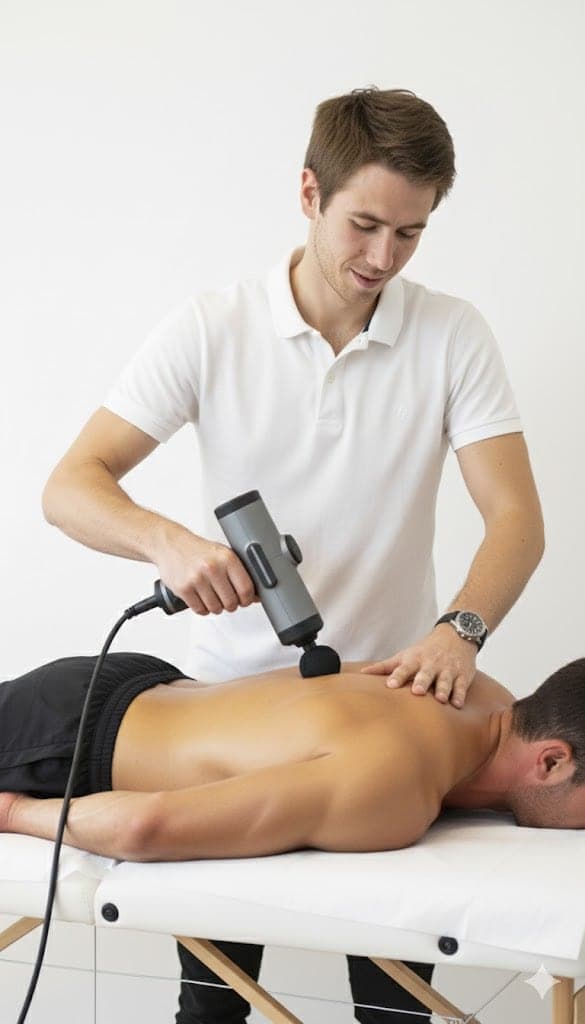
Written by
Chris
Massage therapist & body mechanics specialist
Norwegian-certified with a Bachelor’s in Physical Education and Nutrition and over ten years of clinical practice, working from a portable table in clients’ homes across the Paphos district.
- Norwegian-certified
- BSc Physical Education & Nutrition
- 10+ years clinical practice
- Based in Chlorakas · all of Paphos district
- No call-out fee anywhere in Paphos district
Last reviewed
This article is general information from clinical practice, not a medical diagnosis. If you have severe, worsening or unexplained pain, numbness, weakness, or pain after an accident, see a doctor first.